Among the monochrome-glazed wares produced by the Ming imperial kilns, yellow glaze, due to its phonetic resemblance to the word "emperor" (huang, 皇) and its brilliant colour, had been an exclusively imperial colour since the Sui and Tang dynasties. Building upon the achievements of the Yongle and Xuande eras, the Chenghua imperial kilns advanced the firing technology of low-temperature yellow glaze to new heights. This Chenghua-era Jiaohuang glaze dish, measuring 17 cm in diameter and 3.5 cm in height, possesses a regular form, an even and pure glaze, and a thin, light body. It represents a particularly rare category of Chenghua imperial monochromes, with fewer than twenty known examples surviving today, most of which are treasured in major museums worldwide.
Form and Glaze Colour: The Dawn of 'Jiaohuang' (Delicate Yellow)
This dish features a flared mouth, shallow curved walls, and a recessed foot ring; its form is elegantly crafted and well-proportioned. The entirety is covered in a low-temperature yellow glaze. The glaze surface is smooth, pure, and translucent, exhibiting a delicate, soft, and elegant tone that already possesses the embryonic character of the renowned "Jiaohuang" (娇黄, delicate yellow) of the subsequent Hongzhi era. The base is coated in a white glaze, which is rich and unctuous, moist and smooth like solidified fat. When held up to the light, it reveals the faint, characteristic pinkish tinge unique to Chenghua porcelain. The base bears an underglaze blue inscription of "Da Ming Chenghua Nian Zhi" (大明成化年制) in six characters arranged in two vertical lines, enclosed within a double blue circle (青花双圈) . The calligraphy has an archaic charm that belies an underlying innocence, typical of Chenghua imperial kiln marks.
Compared to the Yongle and Xuande periods, the colour of Chenghua yellow glaze is paler and more even. Compared to the Hongzhi and Zhengde eras, it appears slightly more subtle and restrained, occupying a crucial transitional phase as Ming yellow glaze progressed from its early development towards its pinnacle. Its tone is elegant and softly harmonious—neither as deep and intense as the Yongle-Xuande examples, nor as dazzlingly bright as those of the Hongzhi reign—aptly reflecting the gentle and introspective character of the Chenghua Emperor himself.
Exquisite Craftsmanship: The Twice-Fired Process
The name "Jiaohuang" (浇黄, poured yellow) derives from the method of glaze application, known as the "pouring glaze technique" (浇釉法). The process was exceptionally meticulous: first, a plain white porcelain body or biscuit was fired at a high temperature (approx. 1300°C). Then, a lead-based glaze coloured with an iron-rich natural mineral pigment was poured or ladled over the porcelain body. Finally, the piece was returned to the kiln for a second, low-temperature firing at 850-900°C. This "twice-fired" process demanded extreme precision in matching the body and glaze and controlling the kiln temperature; the slightest error would ruin the piece.
By the Chenghua period, the glaze surface of Jiaohuang wares had become remarkably even, the glaze quality was lustrous and smooth, and the colour was delicate. Although the glaze layer on this dish is thin, it is rich, unctuous, and sparkling, feeling like jade to the touch. There are no visible colour variations or traces of glaze flow, demonstrating the Chenghua kiln workers' masterful control over glaze recipes and firing temperatures. It was precisely this continuous exploration and refinement of yellow glaze technology during the Chenghua reign that laid a solid foundation for the "Jiaohuang" glaze, which would reach its historical zenith in the subsequent Hongzhi period.
Vessels of Ritual: Exclusively for Imperial Use
As the colour reserved for the emperor, yellow was strictly controlled by the imperial court during the Ming dynasty. Yellow-glazed porcelain was not only used for imperial dining ware but also designated for specific imperial rituals. According to the Collected Statutes of the Ming Dynasty (Da Ming Huidian): "In the ninth year of the Jiajing reign [1530], it was decreed that the porcelains for the four suburban altars and various imperial tombs be as follows: blue for the Circular Mound [Temple of Heaven], yellow for the Square Mound [Temple of Earth], red for the Altar of the Sun, and white for the Altar of the Moon." The Square Mound, or Altar of Earth, used yellow to represent the colour of the earth, making yellow-glazed wares the designated colour for rituals performed there.
Chenghua yellow-glazed porcelain is exceptionally rare in surviving collections. Aside from a few pieces in institutions such as the Palace Museum and the Guanfu Museum, examples in private hands are extremely scarce. At a Sotheby's Hong Kong spring auction in 2017, a Chenghua yellow-glazed flared-rim dish measuring 14.8 cm in diameter sold for HKD 10.3 million, a testament to its extreme rarity. This dish, slightly larger at 17 cm and preserved in excellent condition, is an even more remarkable and rare imperial treasure.
Conclusion
This Ming Chenghua Jiaohuang glaze dish, with its moderate size, elegant form, even glaze colour, and standard imperial mark, epitomises the unique character of Chenghua imperial porcelain: "superb quality, brilliant colours, and jade-like." It serves not only as a tangible reflection of the Chenghua Emperor's introverted personality and artistic taste but also as a crucial link in the historical chain of Ming yellow glaze's evolution from its early development to its ultimate peak. Having weathered over five centuries, its glaze remains lustrous and its colour as vibrant as new, truly a rare treasure among Chenghua monochrome wares.
明成化 浇黄釉盘赏析
在明代御窑颜色釉瓷器中,黄釉因其谐音"皇",且色泽明丽,自隋唐以来便成为帝王专属之色。成化朝御窑在继承永宣成就的基础上,将低温黄釉的烧造工艺推向了新的高度。这件口径17厘米,高3.5厘米的成化浇黄釉盘,造型规整,釉色匀净,胎薄体轻,是成化御窑颜色釉瓷中颇为罕见的品类,传世仅二十余件,多由世界各大博物馆珍藏。
造型与釉色:娇黄初成
此盘为撇口,浅弧壁,圈足,器形秀巧而规整。通体施低温黄釉,釉面匀净明澈,呈色娇嫩淡雅,已具后世弘治"娇黄"之雏形。盘底施白釉,釉质肥腴,润如凝脂,迎光透视,可见成化瓷特有的淡淡肉红色泽。器底书青花 "大明成化年制"六字双行楷书款,外罩青花双圈,字体稚拙古朴,为成化御窑之典型款识。
成化黄釉的呈色较永乐宣德时期更为浅淡匀净,较之弘治正德则略显含蓄内敛,正处在明代黄釉由初创走向巅峰的关键阶段。其色泽淡雅柔和,既不似永宣时期那般深浓,亦不若弘治朝那般明艳照人,恰如成化皇帝本人温和内敛的性格写照。
工艺之精:两次烧成
浇黄釉,因采用"浇釉法"施釉而得名。其工艺极为考究:先以高温(约1300℃)烧成素白瓷或涩胎,然后以含铁的天然矿物为着色剂的基础铅釉,采用浇淋之法施于瓷胎之上,再入窑经850-900℃的低温二次烘烧而成。这种"两次烧成"的工艺,对胎釉的匹配性、窑温的掌控要求极高,稍有不慎便前功尽弃。
成化时期的浇黄釉器,釉面已相当匀净,釉质莹润,呈色娇嫩。此盘釉层虽薄,却肥润晶莹,抚之如玉,无任何深浅不一的色差或流釉痕迹,展现出成化御窑窑工对釉料配方和烧成温度的精准把控。正是成化朝对黄釉工艺的不断探索和完善,为弘治时期达到历史巅峰的"娇黄"釉奠定了坚实基础。
礼制之器:皇家专享
黄色作为帝王御用之色,在明代受到朝廷的严格控制。黄釉瓷器不仅是御用餐具,更被用作皇家祭祀的专门用器。据《大明会典》记载:"嘉靖九年,定四郊各陵瓷器:圜丘青色,方丘黄色,日坛赤色,月坛白色"。方丘即地坛,以黄色代表大地之色,故黄釉瓷器被指定为地坛祭器的专用釉色。
成化朝黄釉瓷器传世极少,除故宫博物院、观复博物馆等机构有零星收藏外,民间流通者屈指可数。2017年香港苏富比春拍中,一件直径14.8cm的成化黄釉撇口盘以1030万港元的高价成交,足见其珍稀程度。此盘尺寸略大(17cm),保存完好,更是难得一见的御窑珍品。
结语
这件明成化浇黄釉盘,尺寸适中,造型典雅,釉色匀净,款识端正,集中体现了成化御窑"质精色良、如脂似玉"的独特风貌。它不仅是成化皇帝内敛性格与艺术审美的物化见证,更是明代黄釉由初创走向巅峰这一历史进程中的重要一环。历经五百余年沧桑,依然釉光莹润,色泽如新,堪称成化颜色釉瓷中的稀世珍品。
Among the monochrome-glazed wares produced by the Ming imperial kilns, yellow glaze, due to its phonetic resemblance to the word "emperor" (huang, 皇) and its brilliant colour, had been an exclusively imperial colour since the Sui and Tang dynasties. Building upon the achievements of the Yongle and Xuande eras, the Chenghua imperial kilns advanced the firing technology of low-temperature yellow glaze to new heights. This Chenghua-era Jiaohuang glaze dish, measuring 17 cm in diameter and 3.5 cm in height, possesses a regular form, an even and pure glaze, and a thin, light body. It represents a particularly rare category of Chenghua imperial monochromes, with fewer than twenty known examples surviving today, most of which are treasured in major museums worldwide.
Form and Glaze Colour: The Dawn of 'Jiaohuang' (Delicate Yellow)
This dish features a flared mouth, shallow curved walls, and a recessed foot ring; its form is elegantly crafted and well-proportioned. The entirety is covered in a low-temperature yellow glaze. The glaze surface is smooth, pure, and translucent, exhibiting a delicate, soft, and elegant tone that already possesses the embryonic character of the renowned "Jiaohuang" (娇黄, delicate yellow) of the subsequent Hongzhi era. The base is coated in a white glaze, which is rich and unctuous, moist and smooth like solidified fat. When held up to the light, it reveals the faint, characteristic pinkish tinge unique to Chenghua porcelain. The base bears an underglaze blue inscription of "Da Ming Chenghua Nian Zhi" (大明成化年制) in six characters arranged in two vertical lines, enclosed within a double blue circle (青花双圈) . The calligraphy has an archaic charm that belies an underlying innocence, typical of Chenghua imperial kiln marks.
Compared to the Yongle and Xuande periods, the colour of Chenghua yellow glaze is paler and more even. Compared to the Hongzhi and Zhengde eras, it appears slightly more subtle and restrained, occupying a crucial transitional phase as Ming yellow glaze progressed from its early development towards its pinnacle. Its tone is elegant and softly harmonious—neither as deep and intense as the Yongle-Xuande examples, nor as dazzlingly bright as those of the Hongzhi reign—aptly reflecting the gentle and introspective character of the Chenghua Emperor himself.
Exquisite Craftsmanship: The Twice-Fired Process
The name "Jiaohuang" (浇黄, poured yellow) derives from the method of glaze application, known as the "pouring glaze technique" (浇釉法). The process was exceptionally meticulous: first, a plain white porcelain body or biscuit was fired at a high temperature (approx. 1300°C). Then, a lead-based glaze coloured with an iron-rich natural mineral pigment was poured or ladled over the porcelain body. Finally, the piece was returned to the kiln for a second, low-temperature firing at 850-900°C. This "twice-fired" process demanded extreme precision in matching the body and glaze and controlling the kiln temperature; the slightest error would ruin the piece.
By the Chenghua period, the glaze surface of Jiaohuang wares had become remarkably even, the glaze quality was lustrous and smooth, and the colour was delicate. Although the glaze layer on this dish is thin, it is rich, unctuous, and sparkling, feeling like jade to the touch. There are no visible colour variations or traces of glaze flow, demonstrating the Chenghua kiln workers' masterful control over glaze recipes and firing temperatures. It was precisely this continuous exploration and refinement of yellow glaze technology during the Chenghua reign that laid a solid foundation for the "Jiaohuang" glaze, which would reach its historical zenith in the subsequent Hongzhi period.
Vessels of Ritual: Exclusively for Imperial Use
As the colour reserved for the emperor, yellow was strictly controlled by the imperial court during the Ming dynasty. Yellow-glazed porcelain was not only used for imperial dining ware but also designated for specific imperial rituals. According to the Collected Statutes of the Ming Dynasty (Da Ming Huidian): "In the ninth year of the Jiajing reign [1530], it was decreed that the porcelains for the four suburban altars and various imperial tombs be as follows: blue for the Circular Mound [Temple of Heaven], yellow for the Square Mound [Temple of Earth], red for the Altar of the Sun, and white for the Altar of the Moon." The Square Mound, or Altar of Earth, used yellow to represent the colour of the earth, making yellow-glazed wares the designated colour for rituals performed there.
Chenghua yellow-glazed porcelain is exceptionally rare in surviving collections. Aside from a few pieces in institutions such as the Palace Museum and the Guanfu Museum, examples in private hands are extremely scarce. At a Sotheby's Hong Kong spring auction in 2017, a Chenghua yellow-glazed flared-rim dish measuring 14.8 cm in diameter sold for HKD 10.3 million, a testament to its extreme rarity. This dish, slightly larger at 17 cm and preserved in excellent condition, is an even more remarkable and rare imperial treasure.
Conclusion
This Ming Chenghua Jiaohuang glaze dish, with its moderate size, elegant form, even glaze colour, and standard imperial mark, epitomises the unique character of Chenghua imperial porcelain: "superb quality, brilliant colours, and jade-like." It serves not only as a tangible reflection of the Chenghua Emperor's introverted personality and artistic taste but also as a crucial link in the historical chain of Ming yellow glaze's evolution from its early development to its ultimate peak. Having weathered over five centuries, its glaze remains lustrous and its colour as vibrant as new, truly a rare treasure among Chenghua monochrome wares.
明成化 浇黄釉盘赏析
在明代御窑颜色釉瓷器中,黄釉因其谐音"皇",且色泽明丽,自隋唐以来便成为帝王专属之色。成化朝御窑在继承永宣成就的基础上,将低温黄釉的烧造工艺推向了新的高度。这件口径17厘米,高3.5厘米的成化浇黄釉盘,造型规整,釉色匀净,胎薄体轻,是成化御窑颜色釉瓷中颇为罕见的品类,传世仅二十余件,多由世界各大博物馆珍藏。
造型与釉色:娇黄初成
此盘为撇口,浅弧壁,圈足,器形秀巧而规整。通体施低温黄釉,釉面匀净明澈,呈色娇嫩淡雅,已具后世弘治"娇黄"之雏形。盘底施白釉,釉质肥腴,润如凝脂,迎光透视,可见成化瓷特有的淡淡肉红色泽。器底书青花 "大明成化年制"六字双行楷书款,外罩青花双圈,字体稚拙古朴,为成化御窑之典型款识。
成化黄釉的呈色较永乐宣德时期更为浅淡匀净,较之弘治正德则略显含蓄内敛,正处在明代黄釉由初创走向巅峰的关键阶段。其色泽淡雅柔和,既不似永宣时期那般深浓,亦不若弘治朝那般明艳照人,恰如成化皇帝本人温和内敛的性格写照。
工艺之精:两次烧成
浇黄釉,因采用"浇釉法"施釉而得名。其工艺极为考究:先以高温(约1300℃)烧成素白瓷或涩胎,然后以含铁的天然矿物为着色剂的基础铅釉,采用浇淋之法施于瓷胎之上,再入窑经850-900℃的低温二次烘烧而成。这种"两次烧成"的工艺,对胎釉的匹配性、窑温的掌控要求极高,稍有不慎便前功尽弃。
成化时期的浇黄釉器,釉面已相当匀净,釉质莹润,呈色娇嫩。此盘釉层虽薄,却肥润晶莹,抚之如玉,无任何深浅不一的色差或流釉痕迹,展现出成化御窑窑工对釉料配方和烧成温度的精准把控。正是成化朝对黄釉工艺的不断探索和完善,为弘治时期达到历史巅峰的"娇黄"釉奠定了坚实基础。
礼制之器:皇家专享
黄色作为帝王御用之色,在明代受到朝廷的严格控制。黄釉瓷器不仅是御用餐具,更被用作皇家祭祀的专门用器。据《大明会典》记载:"嘉靖九年,定四郊各陵瓷器:圜丘青色,方丘黄色,日坛赤色,月坛白色"。方丘即地坛,以黄色代表大地之色,故黄釉瓷器被指定为地坛祭器的专用釉色。
成化朝黄釉瓷器传世极少,除故宫博物院、观复博物馆等机构有零星收藏外,民间流通者屈指可数。2017年香港苏富比春拍中,一件直径14.8cm的成化黄釉撇口盘以1030万港元的高价成交,足见其珍稀程度。此盘尺寸略大(17cm),保存完好,更是难得一见的御窑珍品。
结语
这件明成化浇黄釉盘,尺寸适中,造型典雅,釉色匀净,款识端正,集中体现了成化御窑"质精色良、如脂似玉"的独特风貌。它不仅是成化皇帝内敛性格与艺术审美的物化见证,更是明代黄釉由初创走向巅峰这一历史进程中的重要一环。历经五百余年沧桑,依然釉光莹润,色泽如新,堪称成化颜色釉瓷中的稀世珍品。
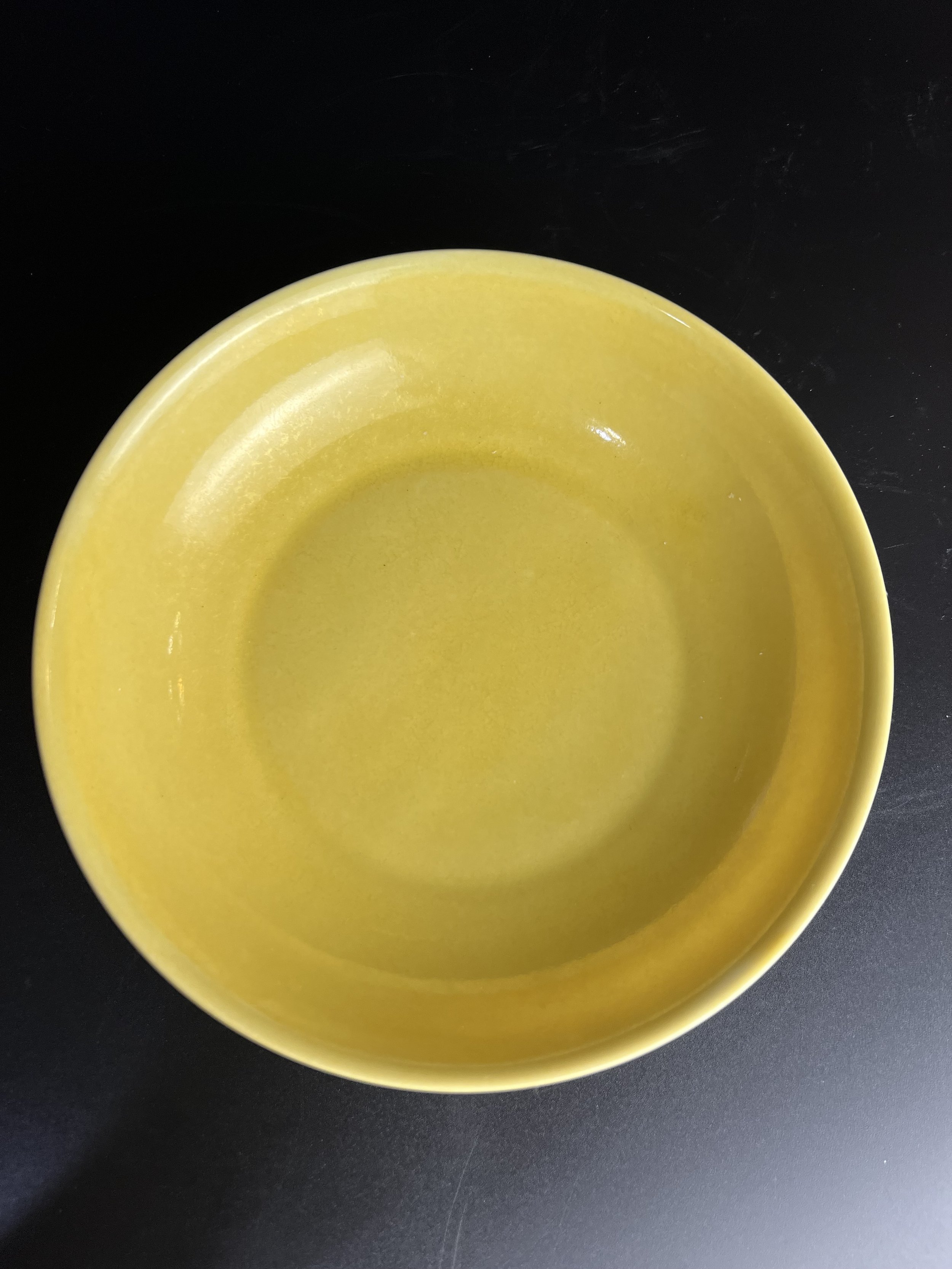 Image 1 of 12
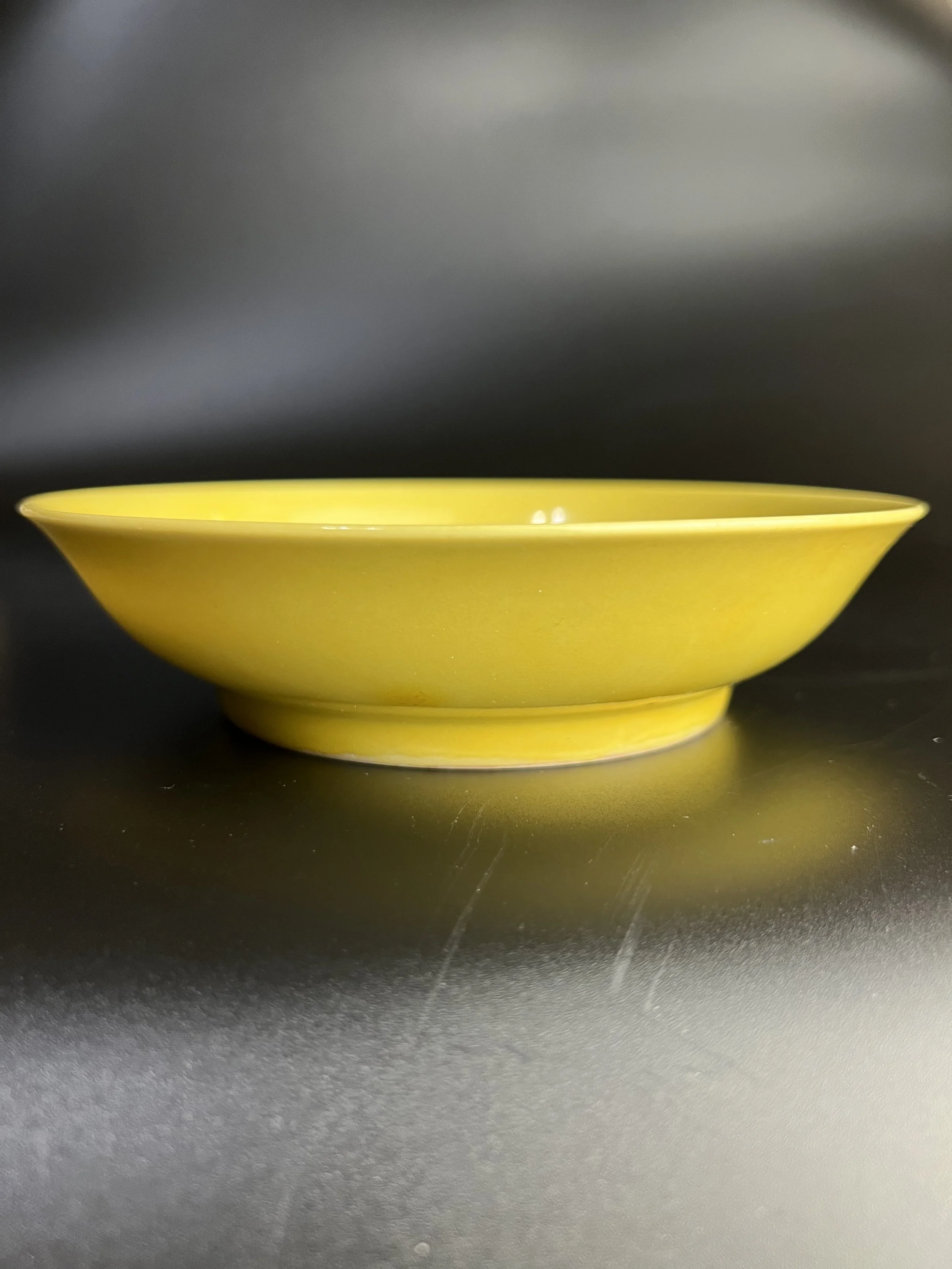 Image 2 of 12
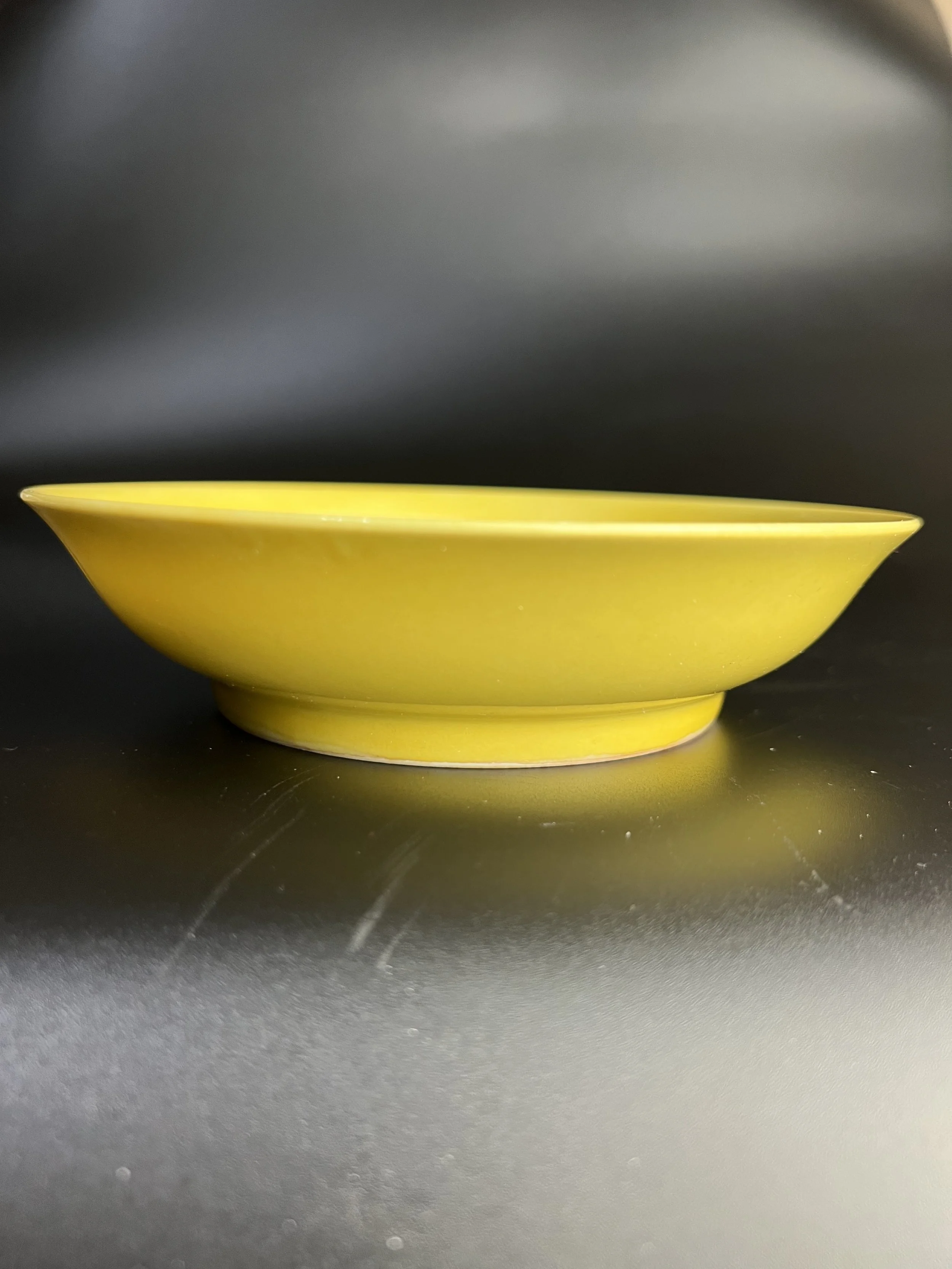 Image 3 of 12
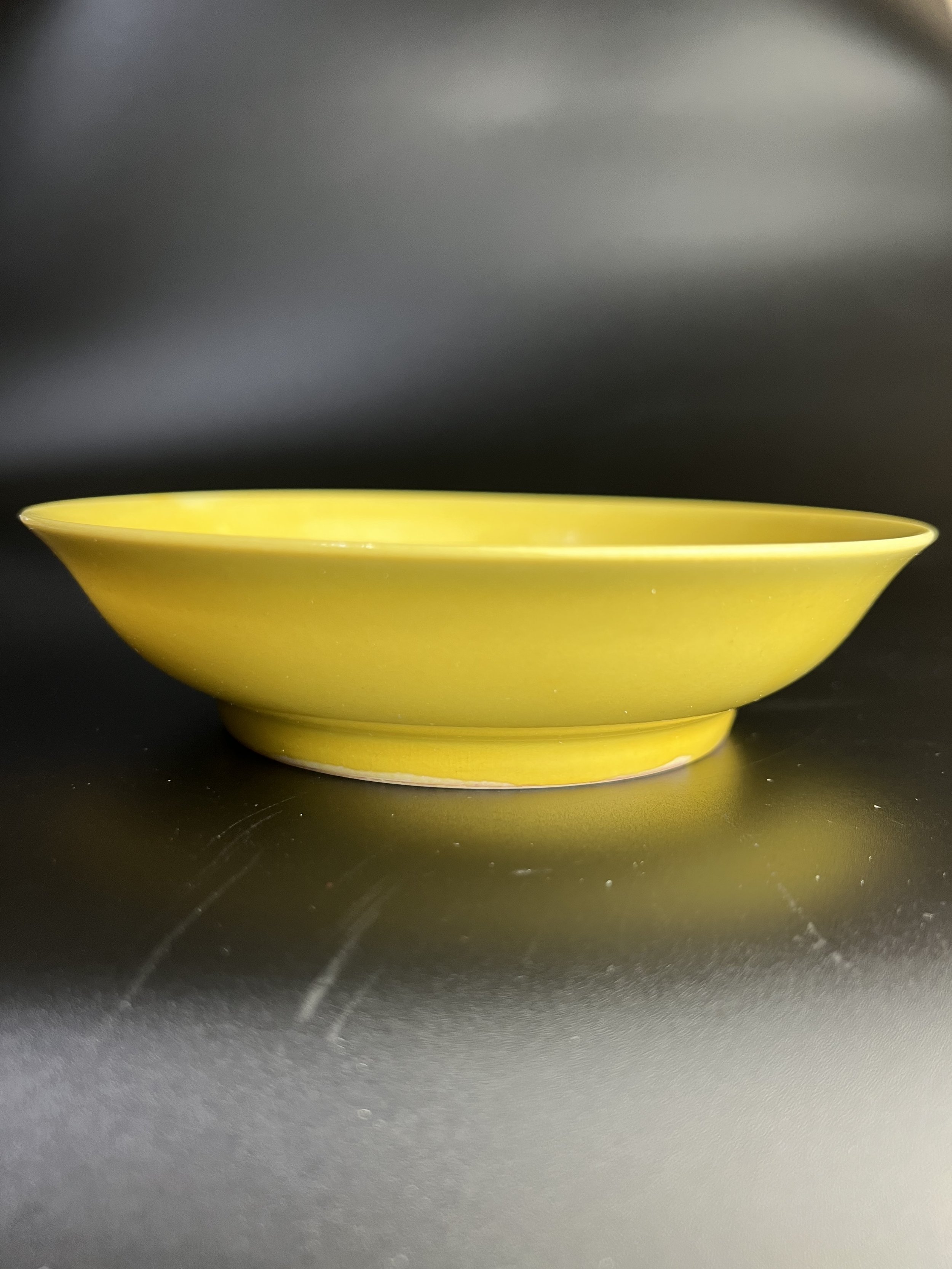 Image 4 of 12
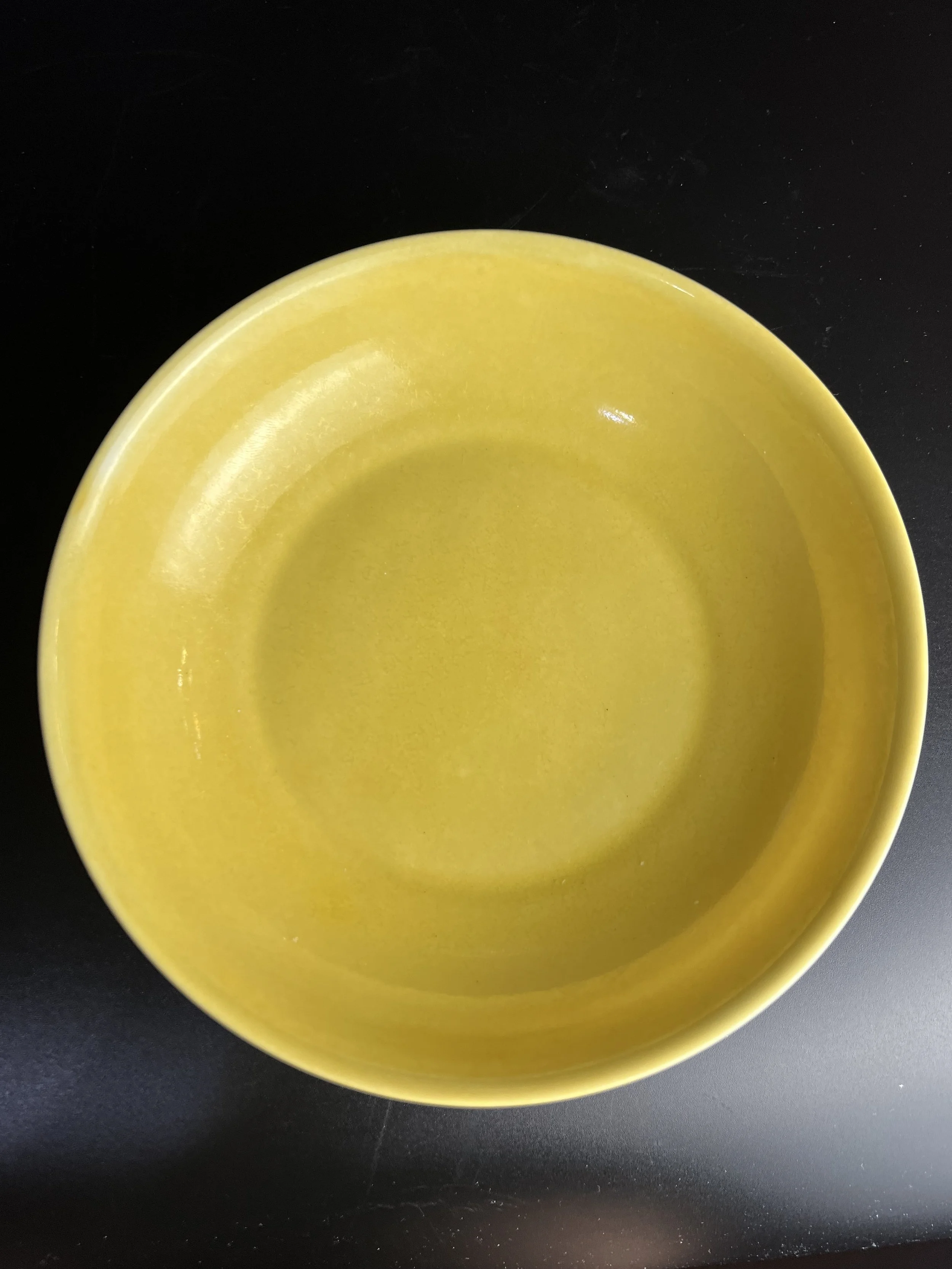 Image 5 of 12
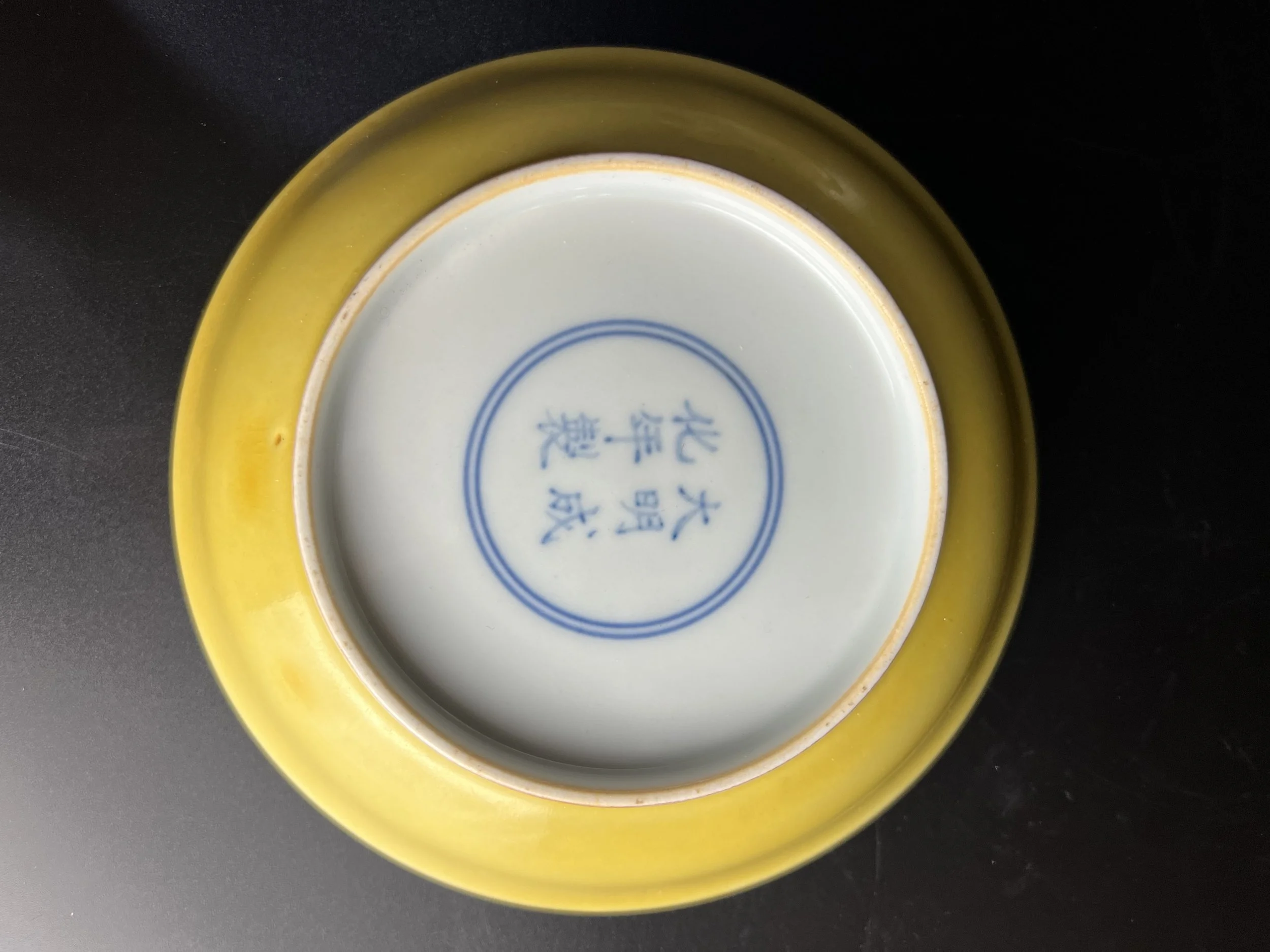 Image 6 of 12
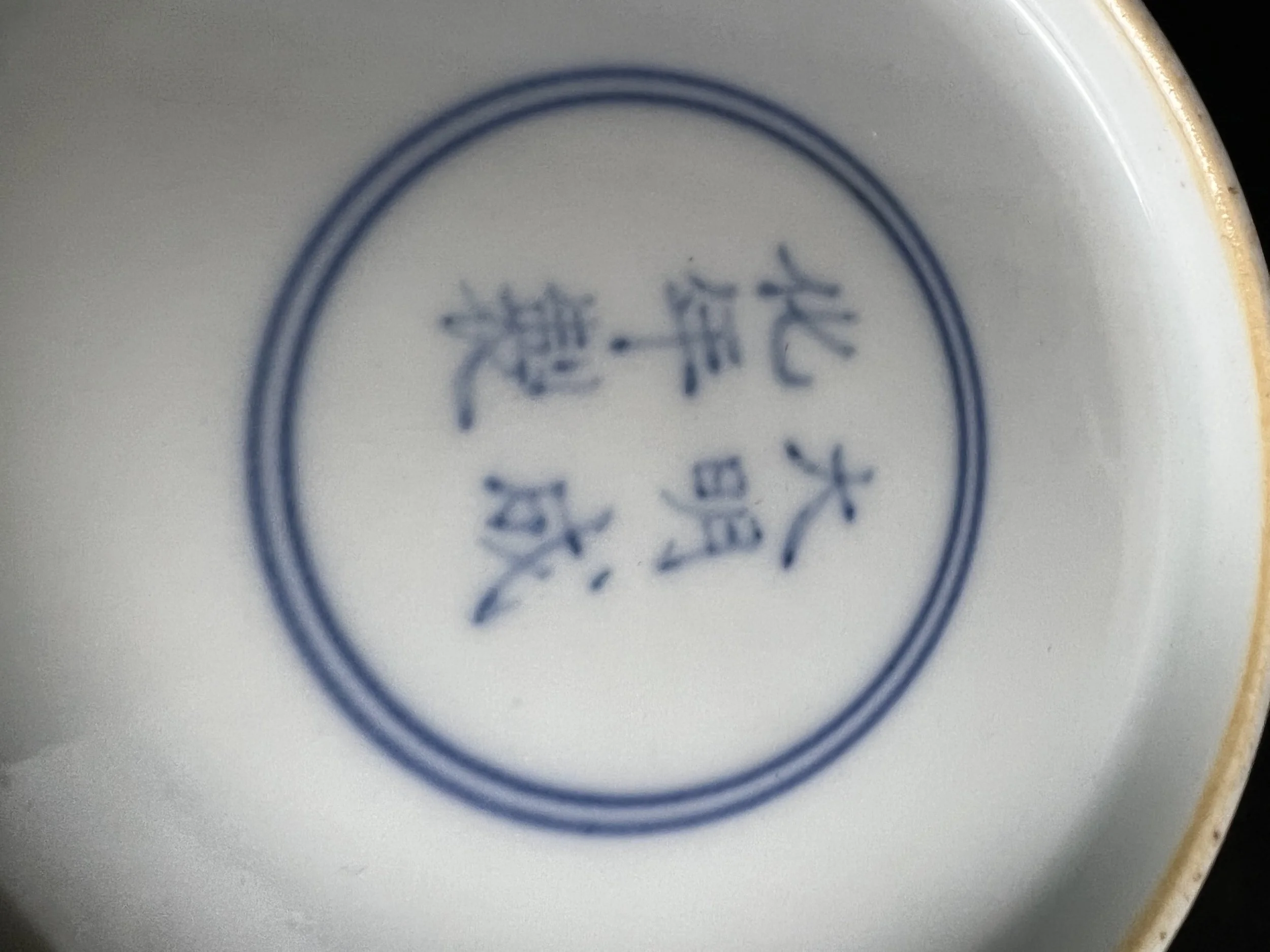 Image 7 of 12
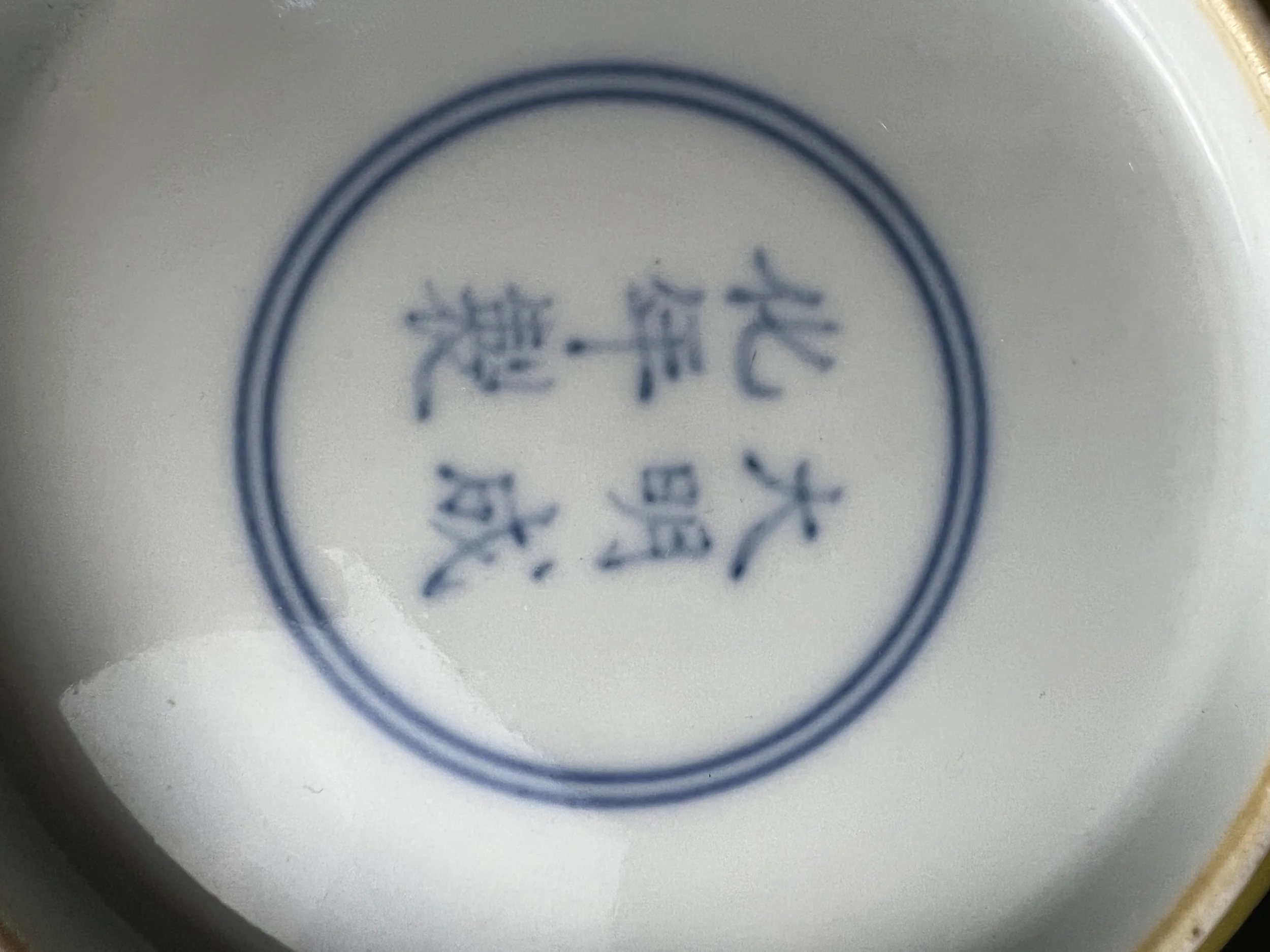 Image 8 of 12
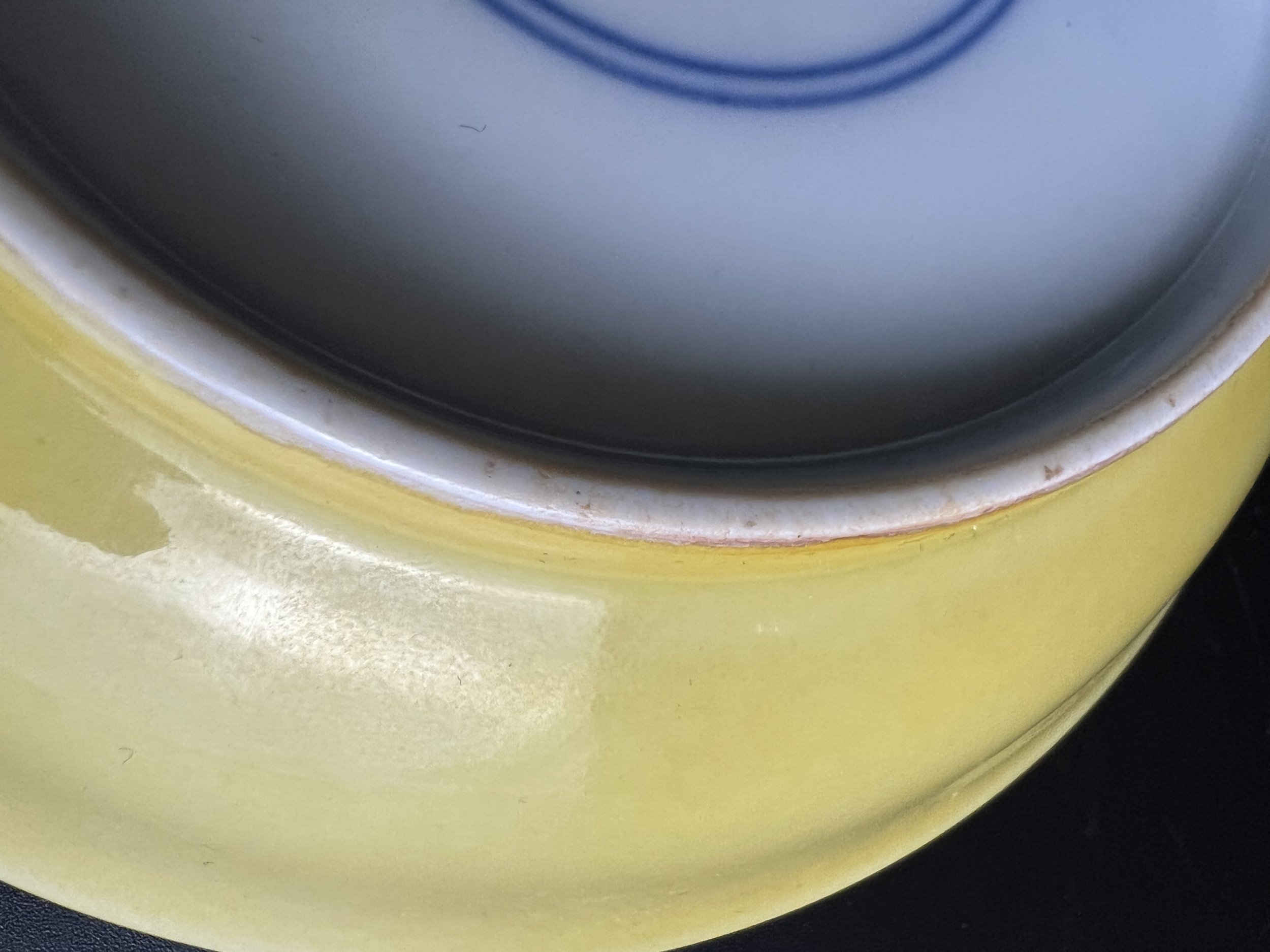 Image 9 of 12
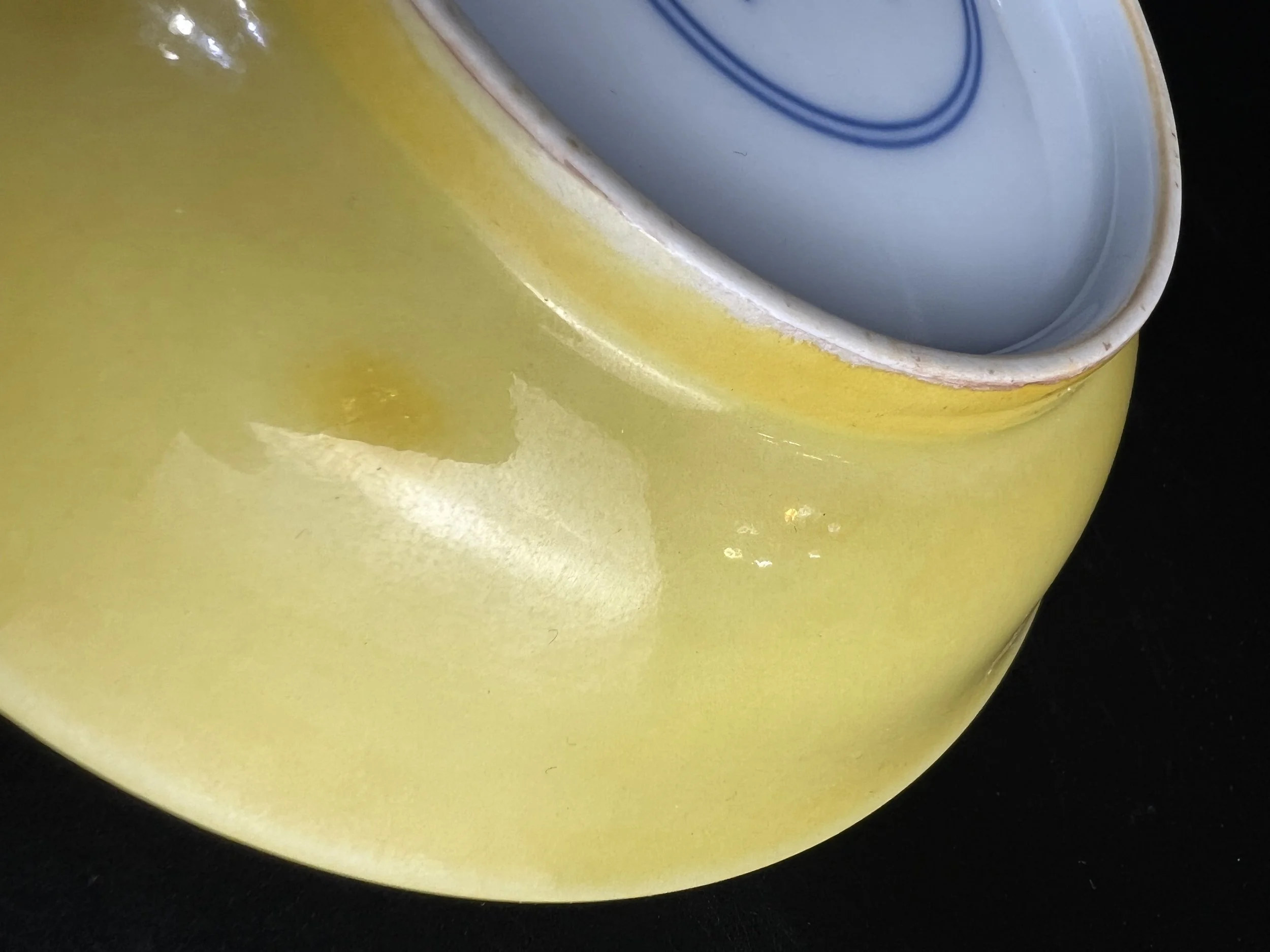 Image 10 of 12
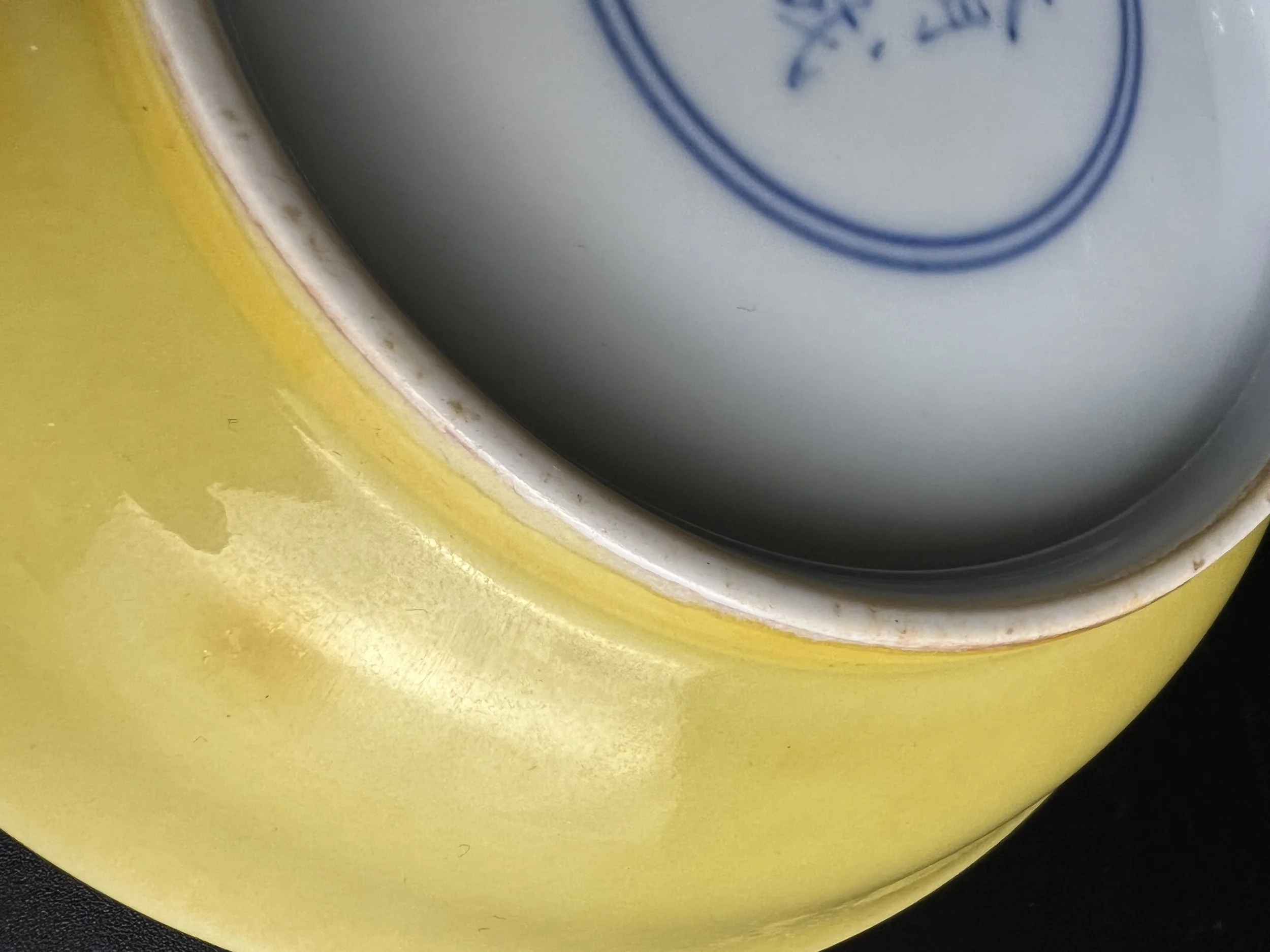 Image 11 of 12
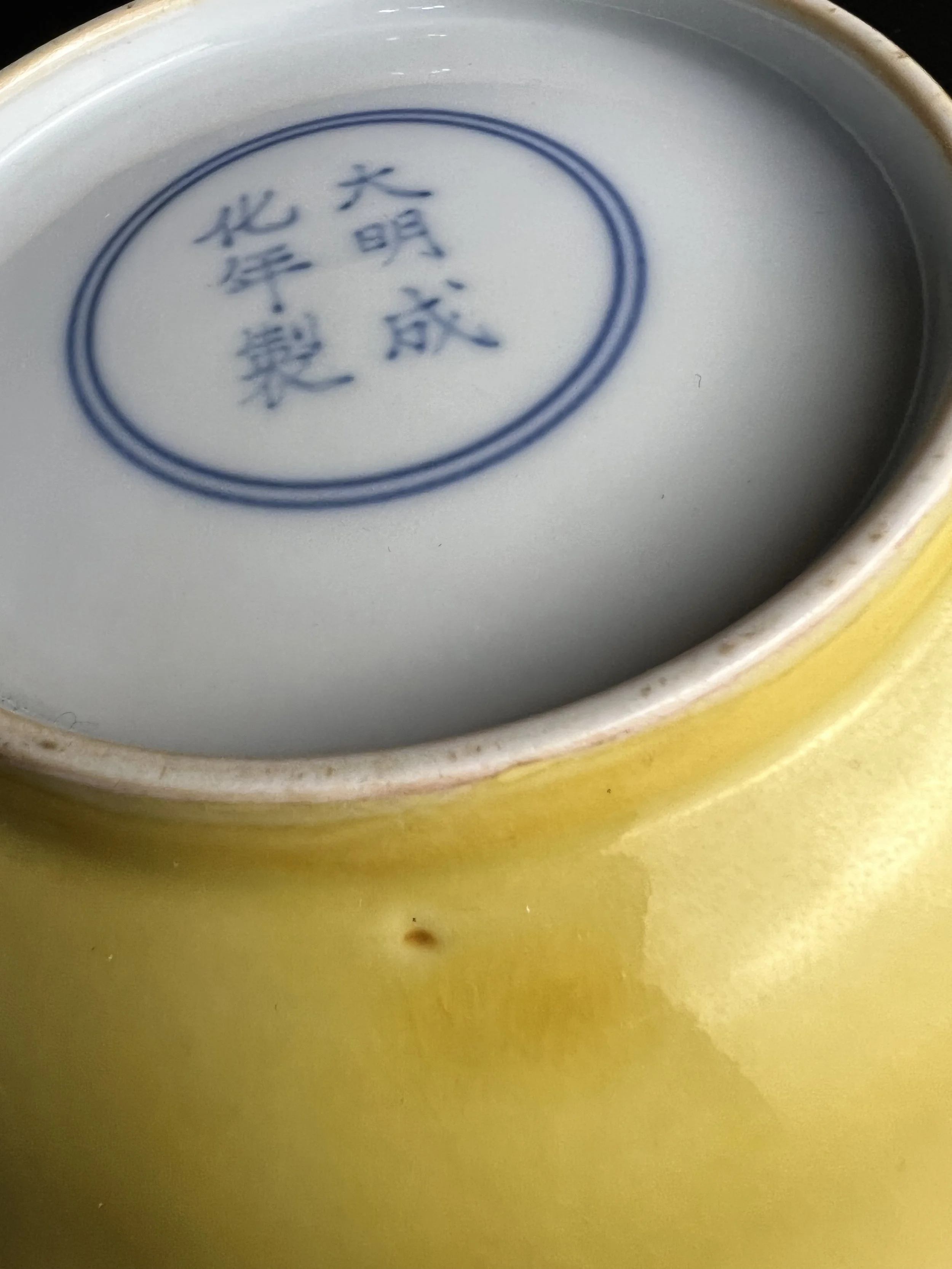 Image 12 of 12