Introduction to the Song Dynasty Guan Kiln Everted-Ear Bottle
The Song Dynasty Guan Kiln Everted-Ear Bottle is an outstanding representative of ancient Chinese porcelain art and one of the finest products from the renowned Five Great Kilns of the Song Dynasty. Guan kiln porcelains are celebrated for their exquisite craftsmanship, elegant shapes, and unique glazes, representing the pinnacle of Song Dynasty porcelain art.
Historical Background
The Guan kilns of the Song Dynasty are divided into those of the Northern Song and Southern Song periods. The exact location of the Northern Song Guan kiln remains undiscovered, while the Southern Song Guan kilns were located in present-day Hangzhou, Zhejiang Province. During the Southern Song period, to meet the needs of the imperial court, two specialized kilns were established: the Xiuneisi Kiln and the Jiaotanxia Kiln, both dedicated to producing porcelain for the royal family. The everted-ear bottle's design originates from ancient bronze ewers, reflecting the Song Dynasty literati's admiration for ancient culture and the contemporary society's fondness for archaism.
Shape and Craftsmanship
The everted-ear bottle features an elegant and dignified shape, typically characterized by a straight mouth, long neck, flat round belly, and ring foot, with tubular ears symmetrically placed on both sides of the neck. This design is both aesthetically pleasing and functional, as the ears could be used to thread ropes for carrying. The body of the bottle is thin, and the glaze is thick, smooth, and jade-like in texture. The glaze colors are often celadon or cream yellow, with a soft and restrained appearance.
The glaze surface of Guan kiln porcelain often features crackle patterns, known as "ice crackle," which are naturally formed due to the different expansion coefficients of the body and glaze. Song Dynasty craftsmen skillfully transformed this "flaw" into a unique decorative feature. Additionally, Guan kiln porcelain is characterized by "purple mouth and iron foot," where the rim and base reveal a purplish-black body due to the thin glaze.
Artistic and Cultural Value
The Song Dynasty Guan Kiln Everted-Ear Bottle is not only a functional piece of porcelain but also a work of high art. It embodies the minimalist aesthetics pursued by Song Dynasty literati, showcasing unique artistic charm through its understated decoration, dignified shape, and soft glaze. These porcelains were mostly used in the imperial court and served as symbols of status and identity.
The shape and decorative style of the everted-ear bottle were heavily influenced by Han Dynasty bronze ware, reflecting the Song Dynasty literati's inheritance and innovation of ancient culture. At the same time, it also reflects the aesthetic tastes of Song society, which favored naturalness, simplicity, and elegance.
Collecting Value
Porcelains from the Song Dynasty Guan kilns are extremely rare and hold great value in both art and collection. The everted-ear bottle, as a classic piece of Guan kiln porcelain, is highly sought after by collectors and museums. In recent years, Song Dynasty Guan kiln porcelains have achieved high prices at auctions, demonstrating their enduring status in the fields of art and collection.
In summary, the Song Dynasty Guan Kiln Everted-Ear Bottle is a treasure of Song Dynasty porcelain art. It not only showcases the superb craftsmanship of Song Dynasty craftsmen but also reflects the aesthetic pursuits and cultural connotations of Song Dynasty literati.
Introduction to the Song Dynasty Guan Kiln Everted-Ear Bottle
The Song Dynasty Guan Kiln Everted-Ear Bottle is an outstanding representative of ancient Chinese porcelain art and one of the finest products from the renowned Five Great Kilns of the Song Dynasty. Guan kiln porcelains are celebrated for their exquisite craftsmanship, elegant shapes, and unique glazes, representing the pinnacle of Song Dynasty porcelain art.
Historical Background
The Guan kilns of the Song Dynasty are divided into those of the Northern Song and Southern Song periods. The exact location of the Northern Song Guan kiln remains undiscovered, while the Southern Song Guan kilns were located in present-day Hangzhou, Zhejiang Province. During the Southern Song period, to meet the needs of the imperial court, two specialized kilns were established: the Xiuneisi Kiln and the Jiaotanxia Kiln, both dedicated to producing porcelain for the royal family. The everted-ear bottle's design originates from ancient bronze ewers, reflecting the Song Dynasty literati's admiration for ancient culture and the contemporary society's fondness for archaism.
Shape and Craftsmanship
The everted-ear bottle features an elegant and dignified shape, typically characterized by a straight mouth, long neck, flat round belly, and ring foot, with tubular ears symmetrically placed on both sides of the neck. This design is both aesthetically pleasing and functional, as the ears could be used to thread ropes for carrying. The body of the bottle is thin, and the glaze is thick, smooth, and jade-like in texture. The glaze colors are often celadon or cream yellow, with a soft and restrained appearance.
The glaze surface of Guan kiln porcelain often features crackle patterns, known as "ice crackle," which are naturally formed due to the different expansion coefficients of the body and glaze. Song Dynasty craftsmen skillfully transformed this "flaw" into a unique decorative feature. Additionally, Guan kiln porcelain is characterized by "purple mouth and iron foot," where the rim and base reveal a purplish-black body due to the thin glaze.
Artistic and Cultural Value
The Song Dynasty Guan Kiln Everted-Ear Bottle is not only a functional piece of porcelain but also a work of high art. It embodies the minimalist aesthetics pursued by Song Dynasty literati, showcasing unique artistic charm through its understated decoration, dignified shape, and soft glaze. These porcelains were mostly used in the imperial court and served as symbols of status and identity.
The shape and decorative style of the everted-ear bottle were heavily influenced by Han Dynasty bronze ware, reflecting the Song Dynasty literati's inheritance and innovation of ancient culture. At the same time, it also reflects the aesthetic tastes of Song society, which favored naturalness, simplicity, and elegance.
Collecting Value
Porcelains from the Song Dynasty Guan kilns are extremely rare and hold great value in both art and collection. The everted-ear bottle, as a classic piece of Guan kiln porcelain, is highly sought after by collectors and museums. In recent years, Song Dynasty Guan kiln porcelains have achieved high prices at auctions, demonstrating their enduring status in the fields of art and collection.
In summary, the Song Dynasty Guan Kiln Everted-Ear Bottle is a treasure of Song Dynasty porcelain art. It not only showcases the superb craftsmanship of Song Dynasty craftsmen but also reflects the aesthetic pursuits and cultural connotations of Song Dynasty literati.
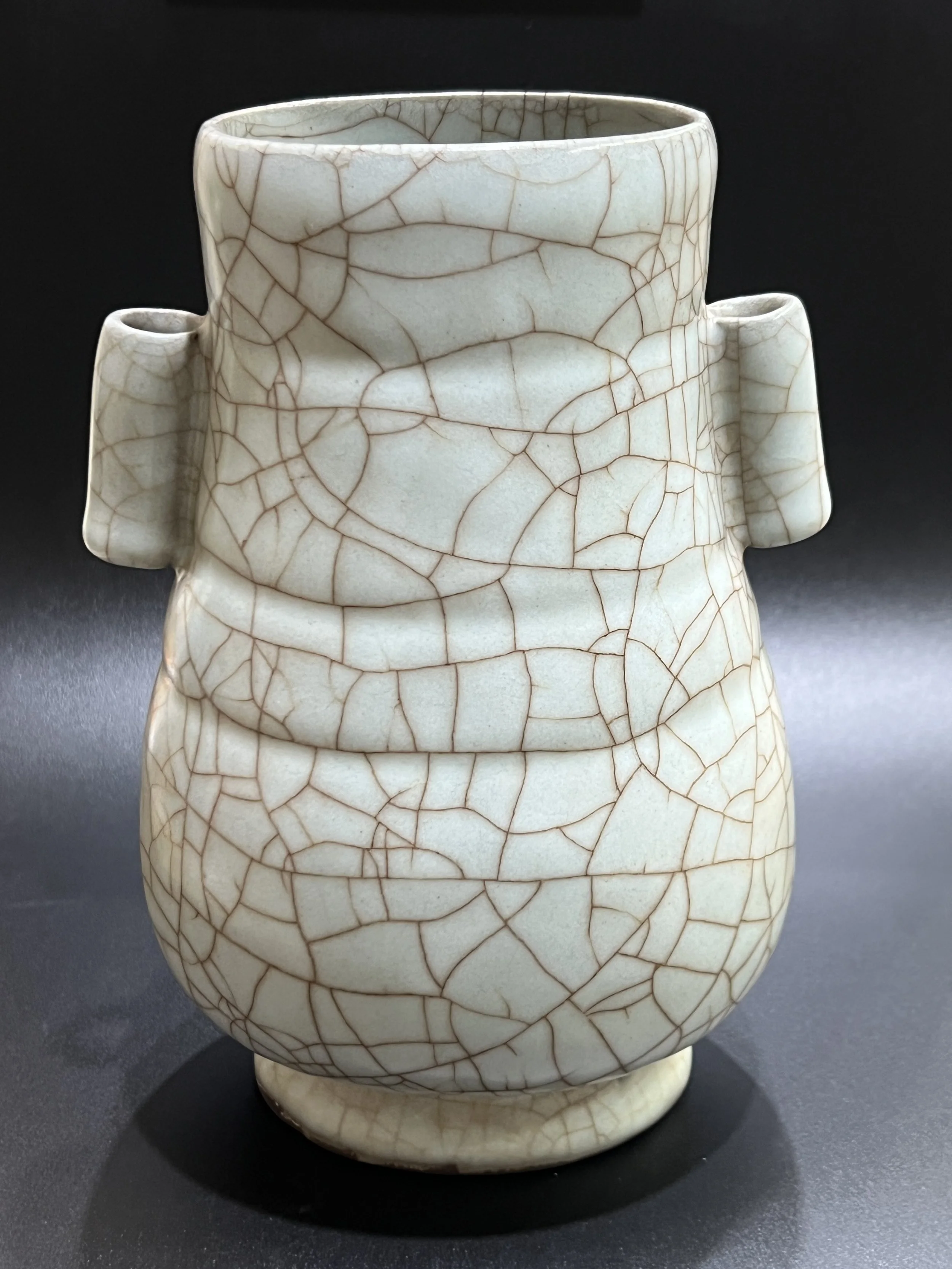 Image 1 of 12
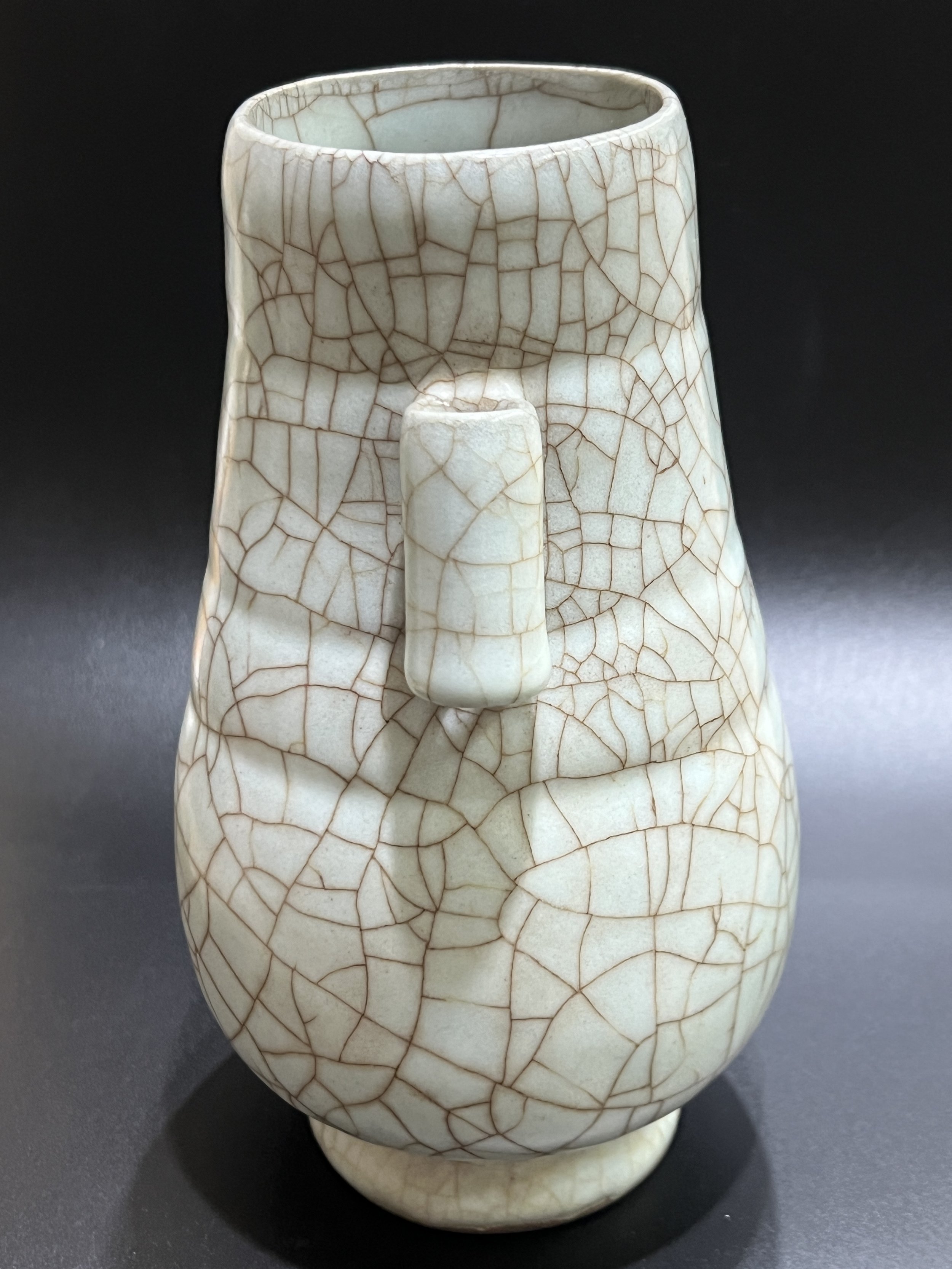 Image 2 of 12
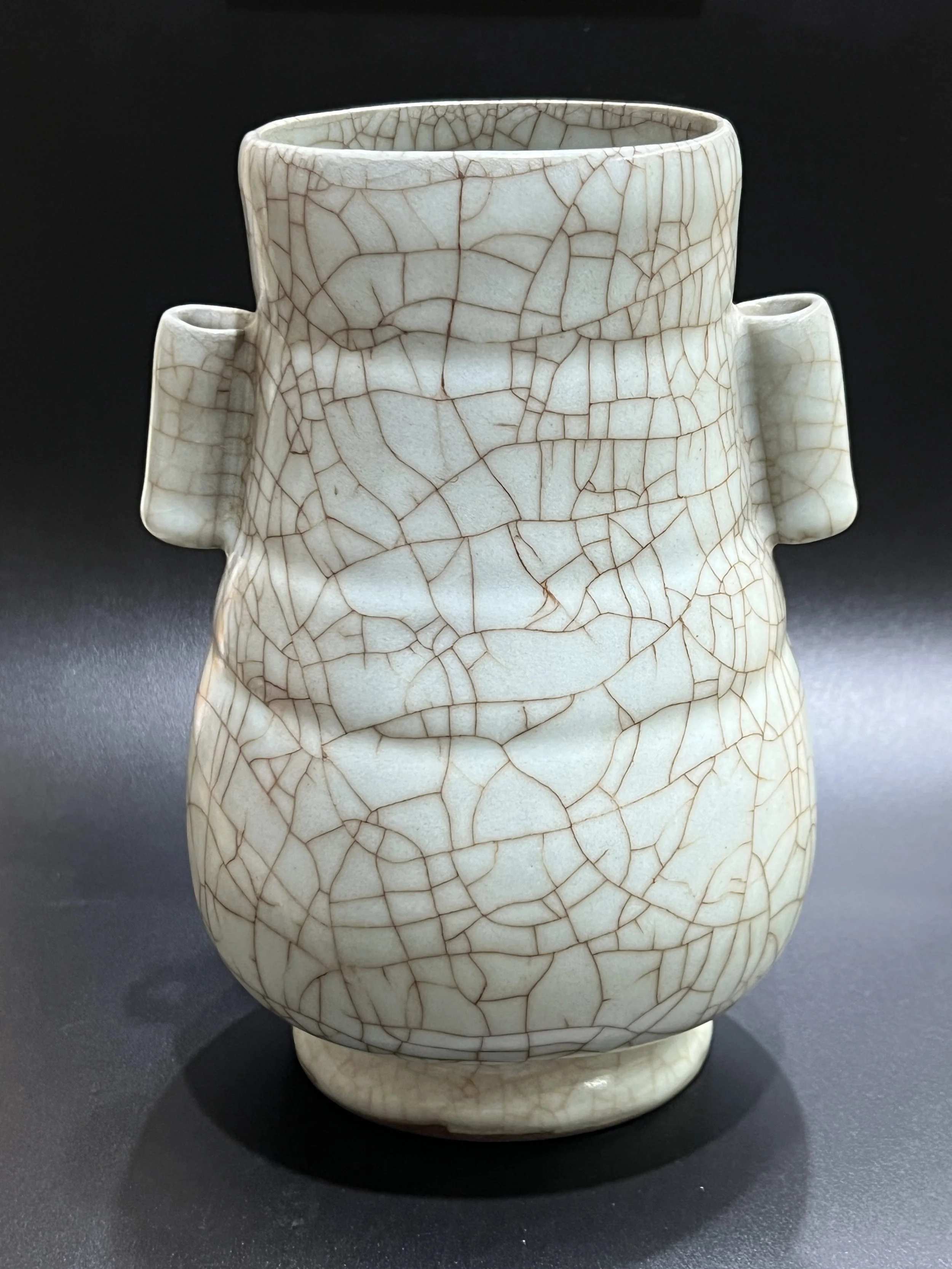 Image 3 of 12
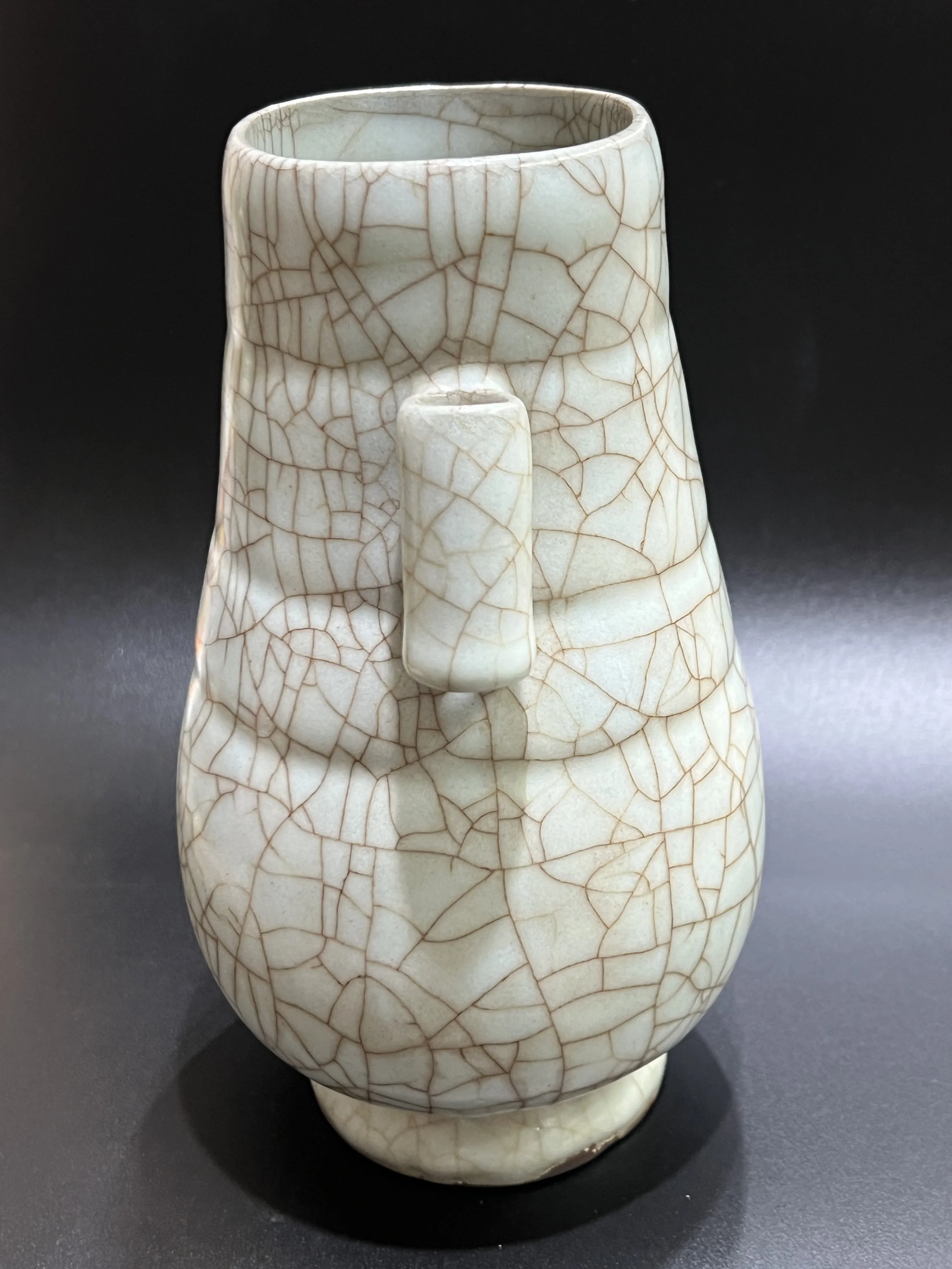 Image 4 of 12
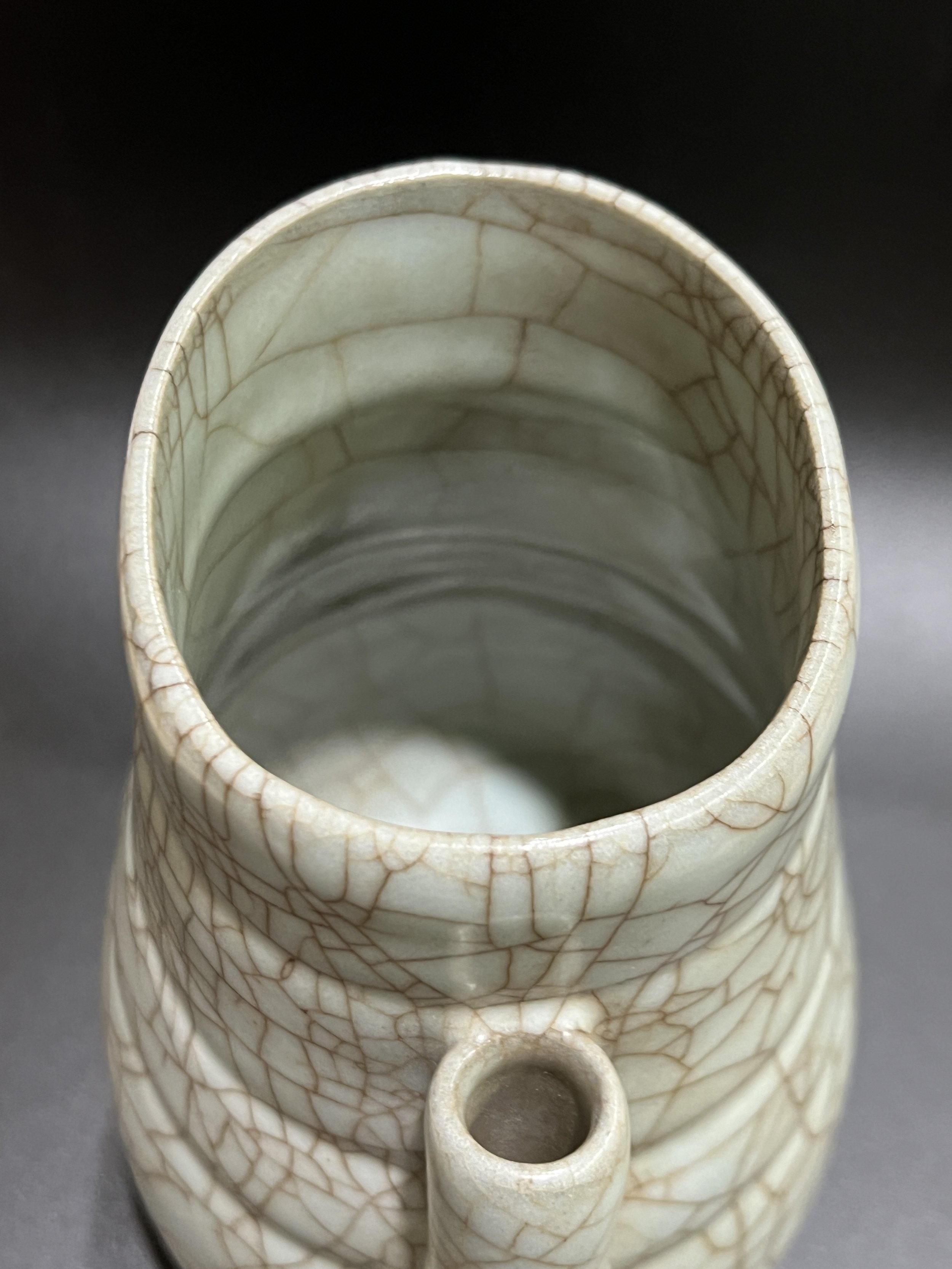 Image 5 of 12
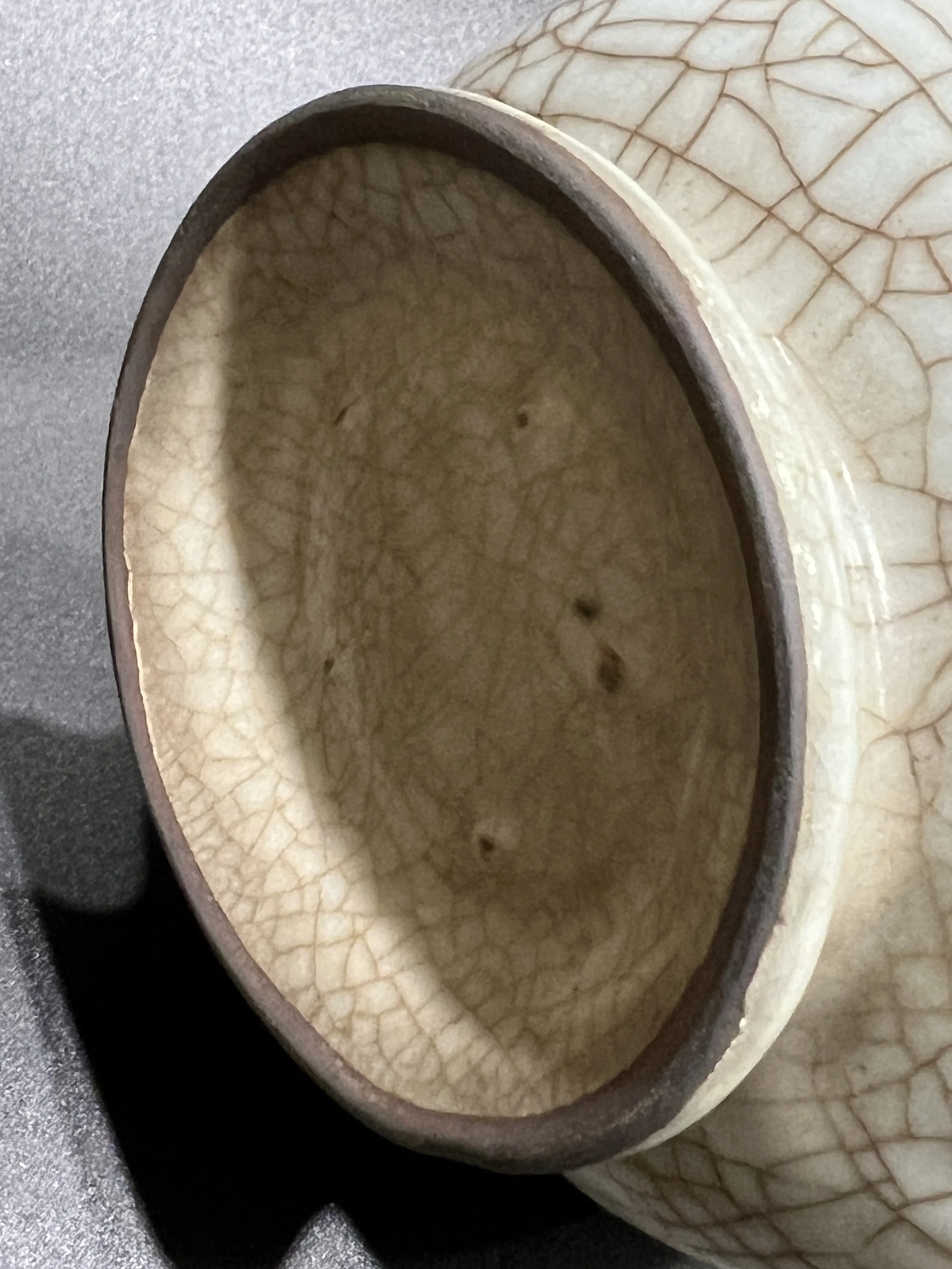 Image 6 of 12
 Image 7 of 12
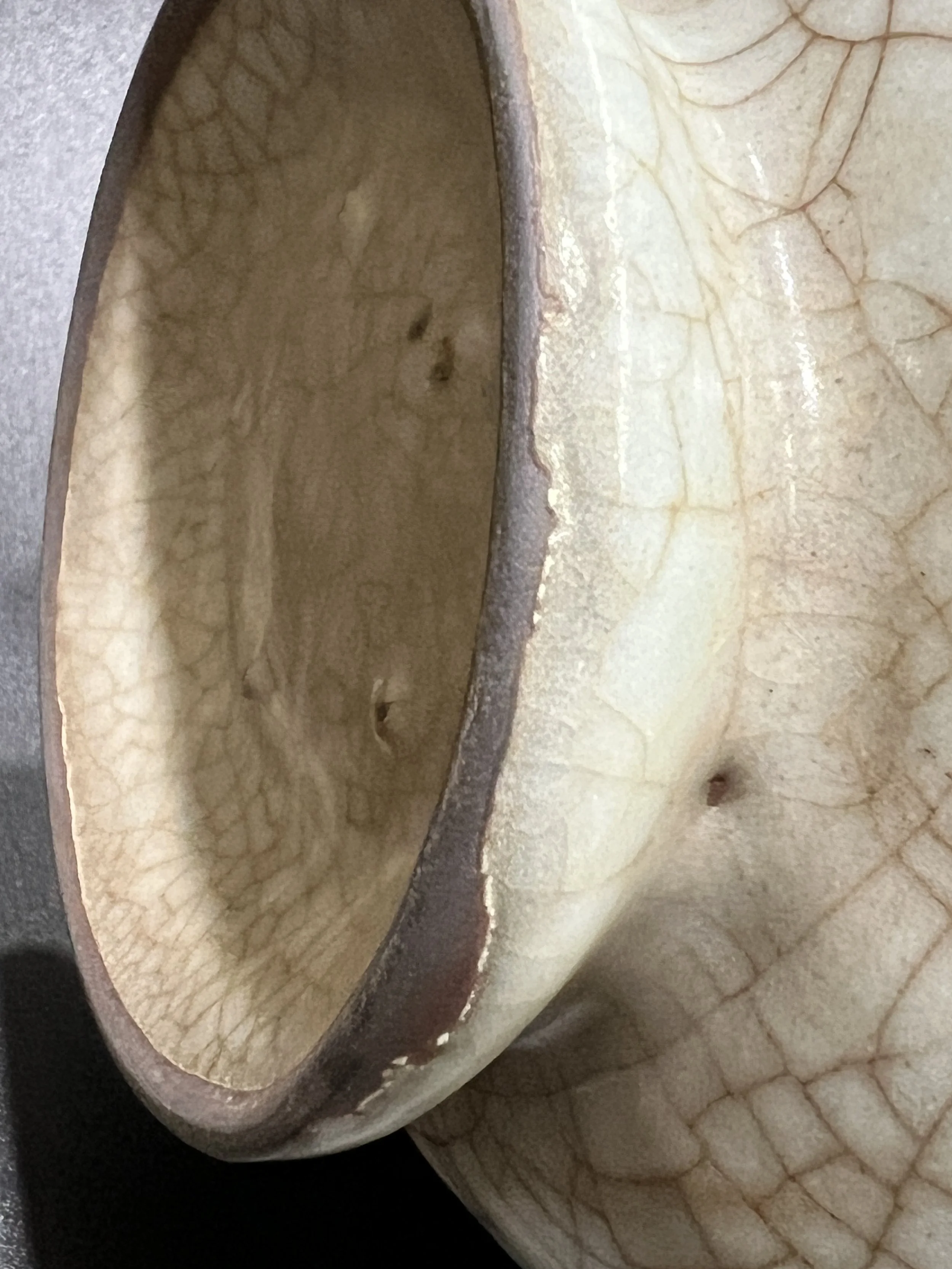 Image 8 of 12
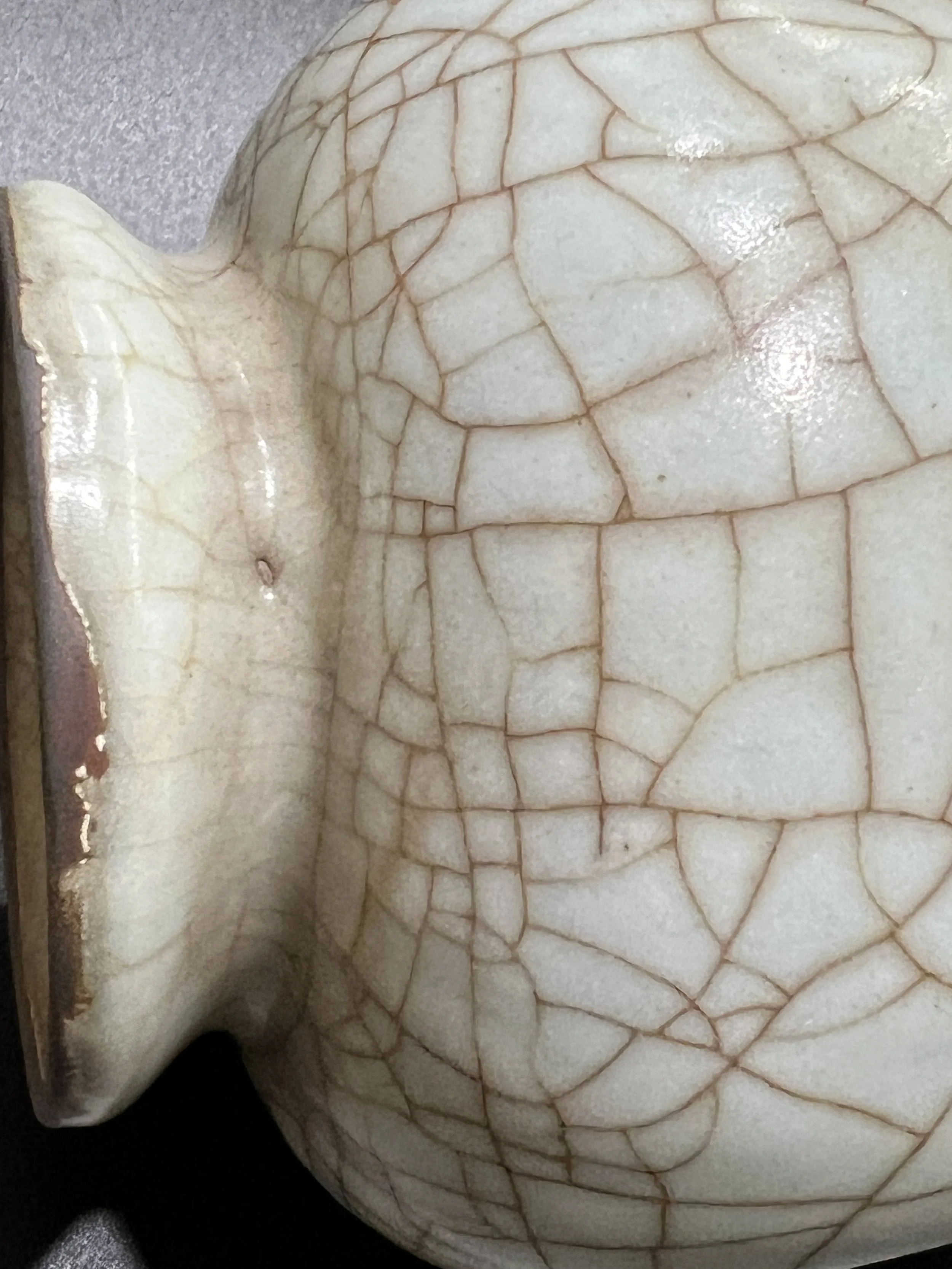 Image 9 of 12
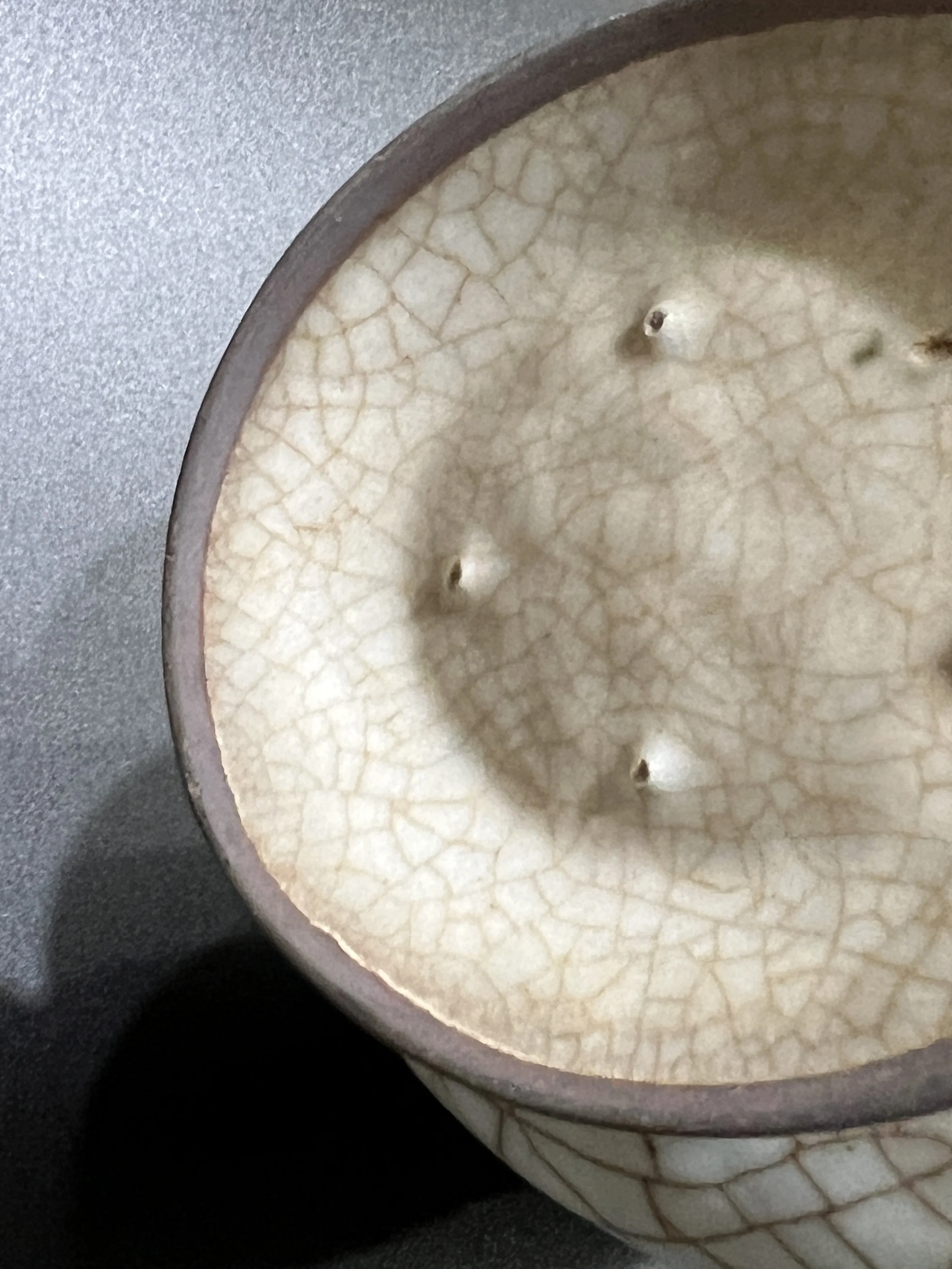 Image 10 of 12
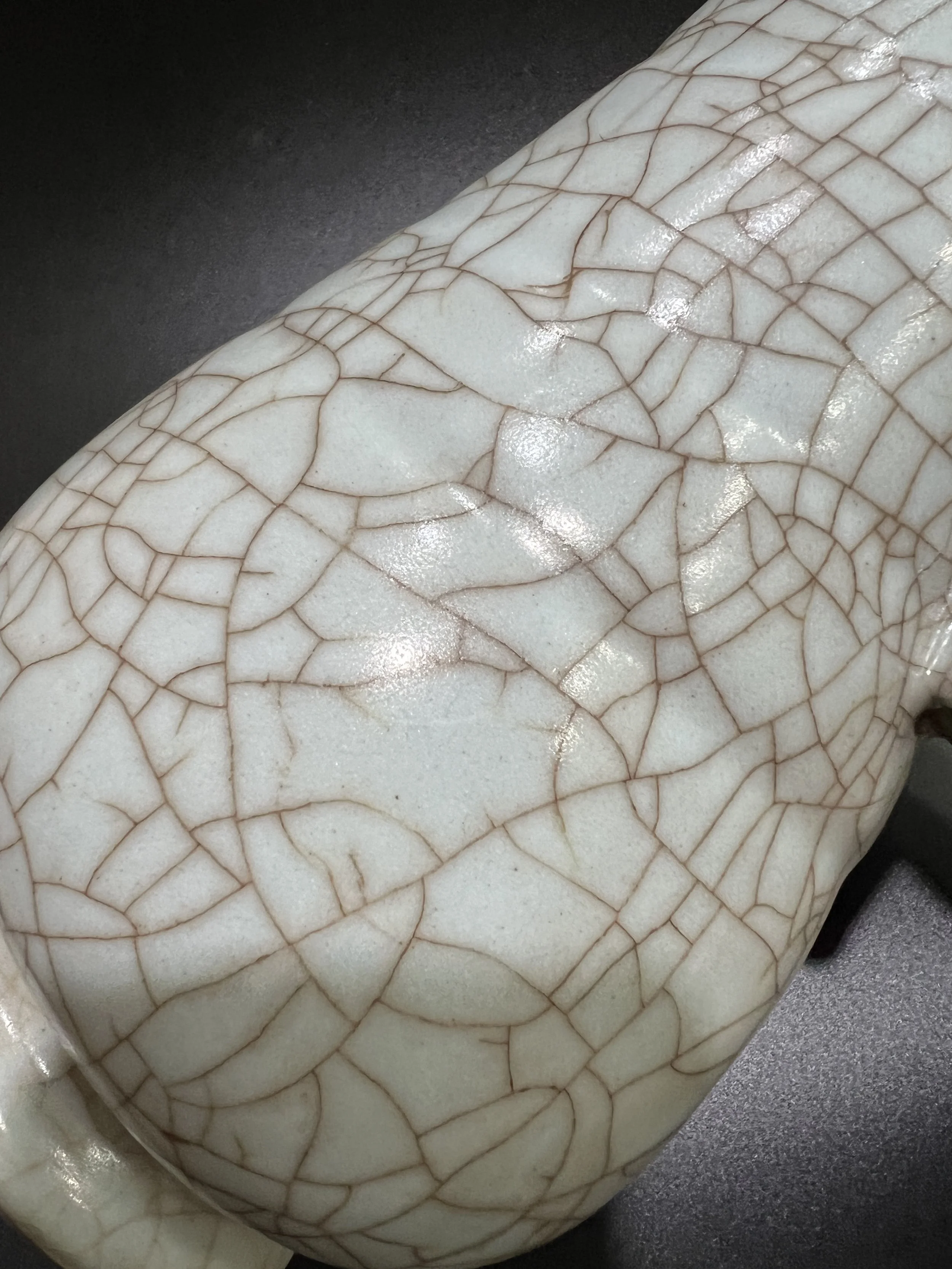 Image 11 of 12
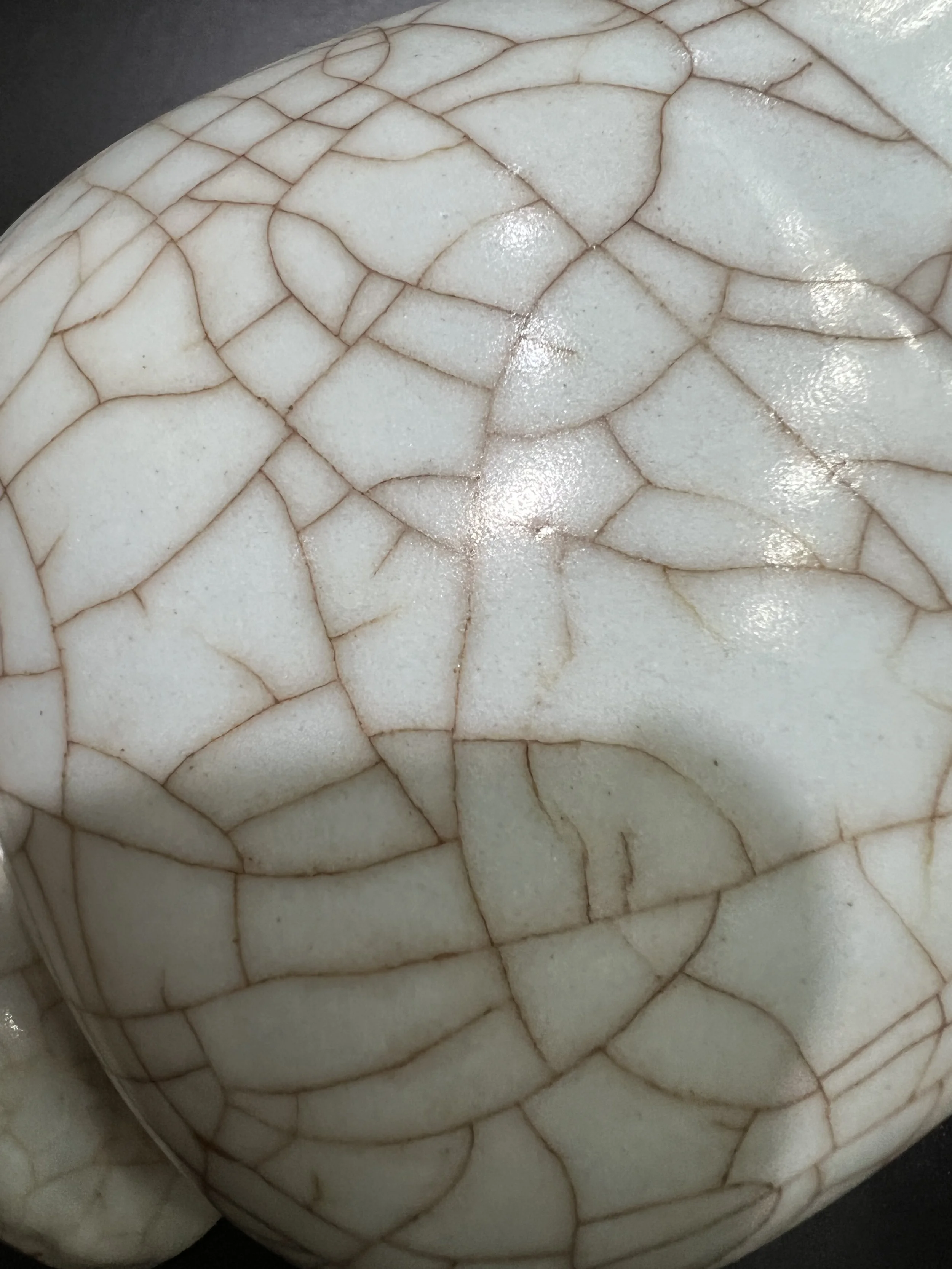 Image 12 of 12