Introduction to the Song Dynasty Ge Kiln Octagonal Cup
The Song Dynasty Ge Kiln Octagonal Cup is a masterpiece among the Ge Kiln porcelain, renowned for its unique shape and exquisite craftsmanship. Ge Kiln is one of the Five Great Kilns of the Song Dynasty, characterized by its distinctive “crackle glaze” (cracks on the surface), forming the unique “Golden Threads and Iron Lines” pattern.
Historical Background
The origin of Ge Kiln remains an enigma. According to historical records from the Ming and Qing Dynasties, it is believed that Ge Kiln was located in Longquan, Zhejiang Province. However, the exact site of the kiln has yet to be discovered. The porcelain-making techniques of Ge Kiln were highly sophisticated, with a wide range of glaze colors, including celadon, moon white, ash green, and rice yellow. The Song Dynasty Ge Kiln Octagonal Cup is a rare treasure, with only about a hundred pieces surviving worldwide.
Artistic Features
1. Shape: The Ge Kiln Octagonal Cup features an octagonal shape with smooth and natural lines, embodying the elegant simplicity of Song Dynasty porcelain.
2. Glaze and Crackle Pattern: The glaze is predominantly celadon or ash gray, with a thick and lustrous surface that exudes an understated elegance. The surface is covered with varying sizes of cracks, with larger ones in dark brown (“Iron Lines”) and smaller ones in light yellow (“Golden Threads”), interweaving into the unique “Golden Threads and Iron Lines” pattern.
3. Body and Craftsmanship: The body of Ge Kiln porcelain is dense and fine, often with a black or purple-brown base, known as the “iron foot” at the bottom. The firing process is complex, involving multiple glazing and high-temperature firing stages.
Cultural Value
The Song Dynasty Ge Kiln Octagonal Cup is not only a gem of ancient Chinese porcelain art but also an important symbol of Song Dynasty culture. Its unique artistic style and exquisite craftsmanship reflect the aesthetic tastes of the literati and scholars of the Song Dynasty. Moreover, the rarity of Ge Kiln porcelain makes it highly sought after in the world of collectors. In 1992, a Song Dynasty Ge Kiln octagonal bottle with ears was sold at Sotheby’s in Hong Kong for over 10 million Hong Kong dollars.
The Song Dynasty Ge Kiln Octagonal Cup, with its unique artistic charm and historical significance, remains an invaluable treasure in the history of Chinese ceramics, continuing to captivate the attention of collectors and scholars worldwide.
Introduction to the Song Dynasty Ge Kiln Octagonal Cup
The Song Dynasty Ge Kiln Octagonal Cup is a masterpiece among the Ge Kiln porcelain, renowned for its unique shape and exquisite craftsmanship. Ge Kiln is one of the Five Great Kilns of the Song Dynasty, characterized by its distinctive “crackle glaze” (cracks on the surface), forming the unique “Golden Threads and Iron Lines” pattern.
Historical Background
The origin of Ge Kiln remains an enigma. According to historical records from the Ming and Qing Dynasties, it is believed that Ge Kiln was located in Longquan, Zhejiang Province. However, the exact site of the kiln has yet to be discovered. The porcelain-making techniques of Ge Kiln were highly sophisticated, with a wide range of glaze colors, including celadon, moon white, ash green, and rice yellow. The Song Dynasty Ge Kiln Octagonal Cup is a rare treasure, with only about a hundred pieces surviving worldwide.
Artistic Features
1. Shape: The Ge Kiln Octagonal Cup features an octagonal shape with smooth and natural lines, embodying the elegant simplicity of Song Dynasty porcelain.
2. Glaze and Crackle Pattern: The glaze is predominantly celadon or ash gray, with a thick and lustrous surface that exudes an understated elegance. The surface is covered with varying sizes of cracks, with larger ones in dark brown (“Iron Lines”) and smaller ones in light yellow (“Golden Threads”), interweaving into the unique “Golden Threads and Iron Lines” pattern.
3. Body and Craftsmanship: The body of Ge Kiln porcelain is dense and fine, often with a black or purple-brown base, known as the “iron foot” at the bottom. The firing process is complex, involving multiple glazing and high-temperature firing stages.
Cultural Value
The Song Dynasty Ge Kiln Octagonal Cup is not only a gem of ancient Chinese porcelain art but also an important symbol of Song Dynasty culture. Its unique artistic style and exquisite craftsmanship reflect the aesthetic tastes of the literati and scholars of the Song Dynasty. Moreover, the rarity of Ge Kiln porcelain makes it highly sought after in the world of collectors. In 1992, a Song Dynasty Ge Kiln octagonal bottle with ears was sold at Sotheby’s in Hong Kong for over 10 million Hong Kong dollars.
The Song Dynasty Ge Kiln Octagonal Cup, with its unique artistic charm and historical significance, remains an invaluable treasure in the history of Chinese ceramics, continuing to captivate the attention of collectors and scholars worldwide.
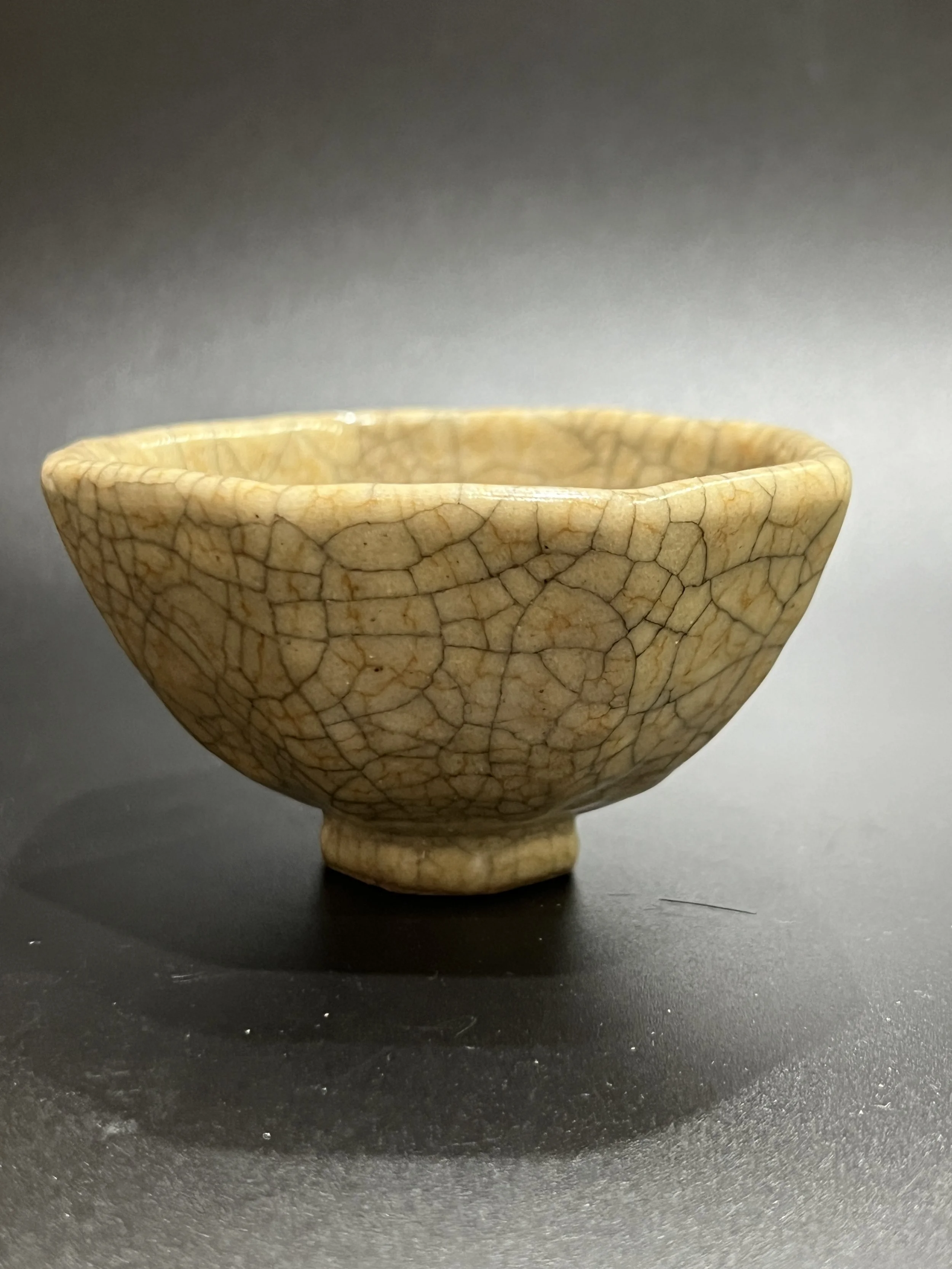 Image 1 of 10
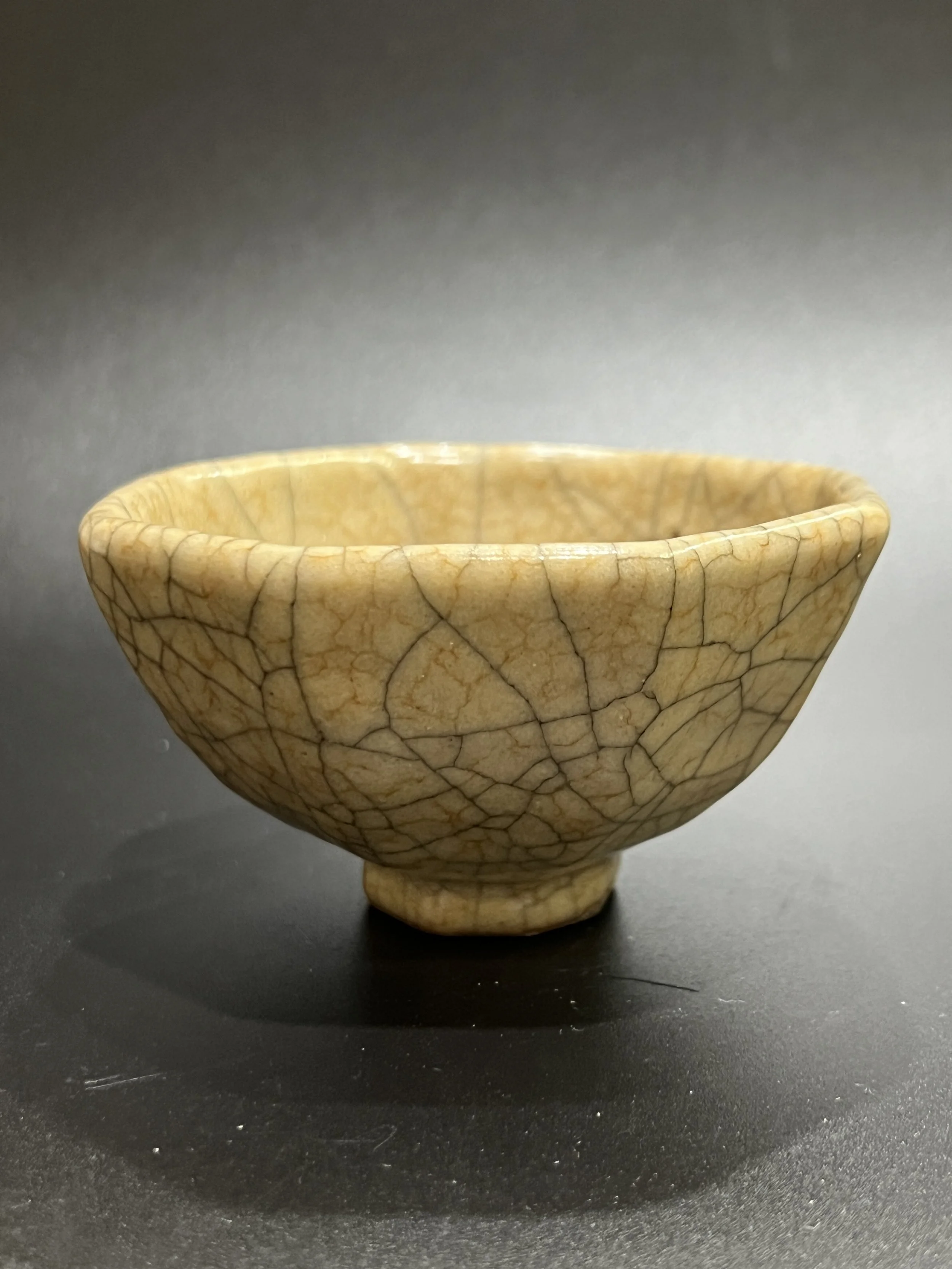 Image 2 of 10
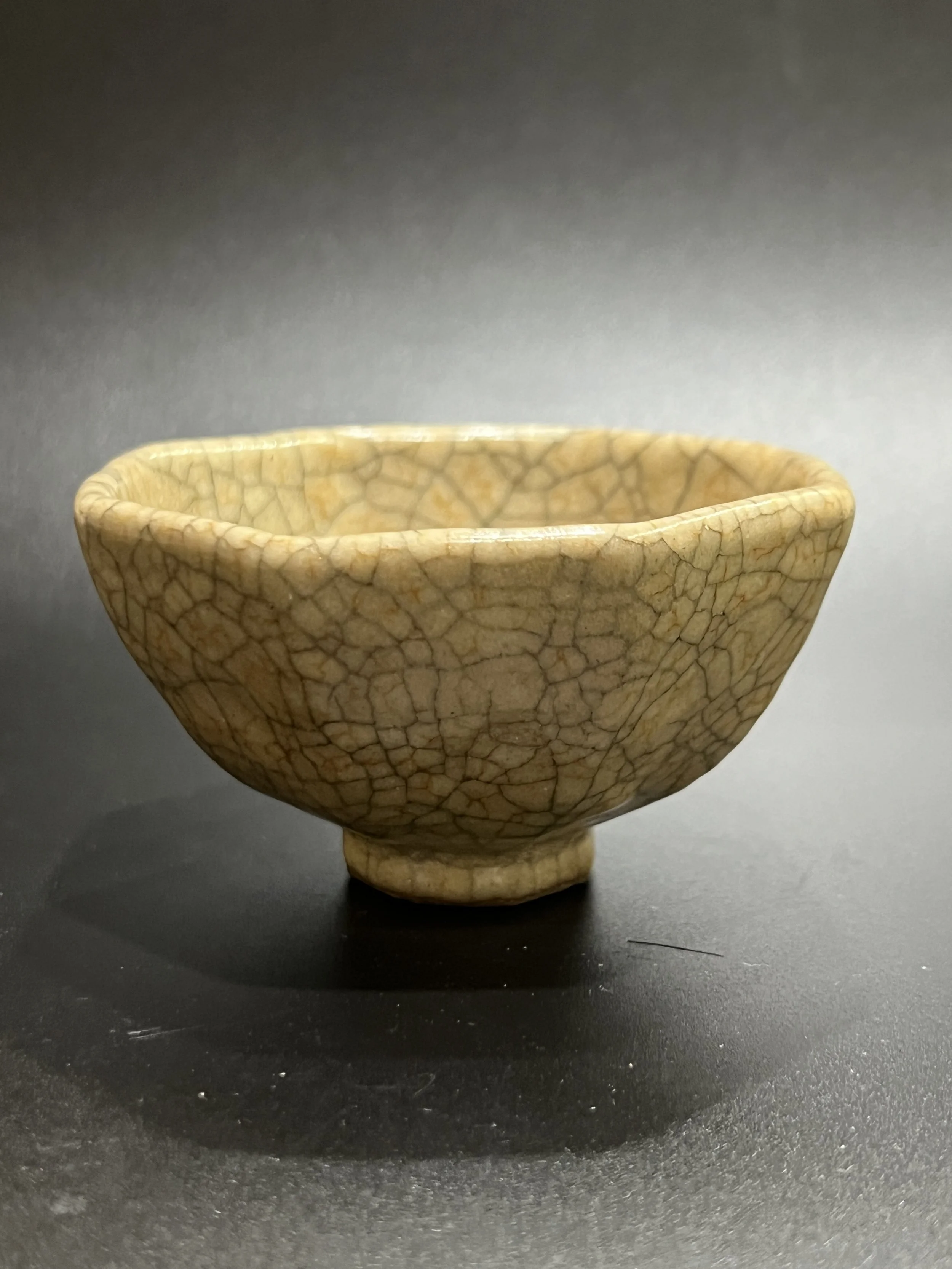 Image 3 of 10
 Image 4 of 10
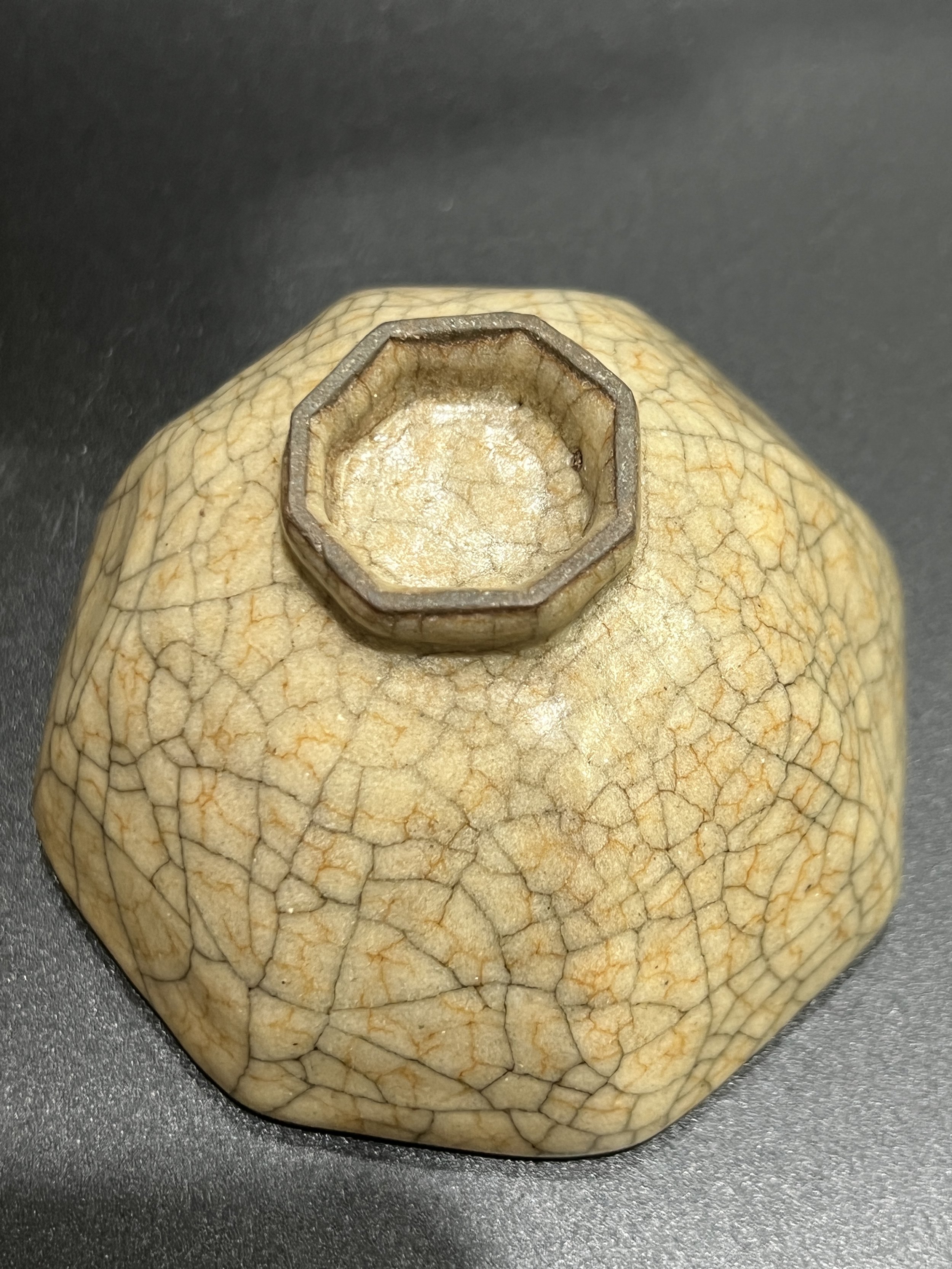 Image 5 of 10
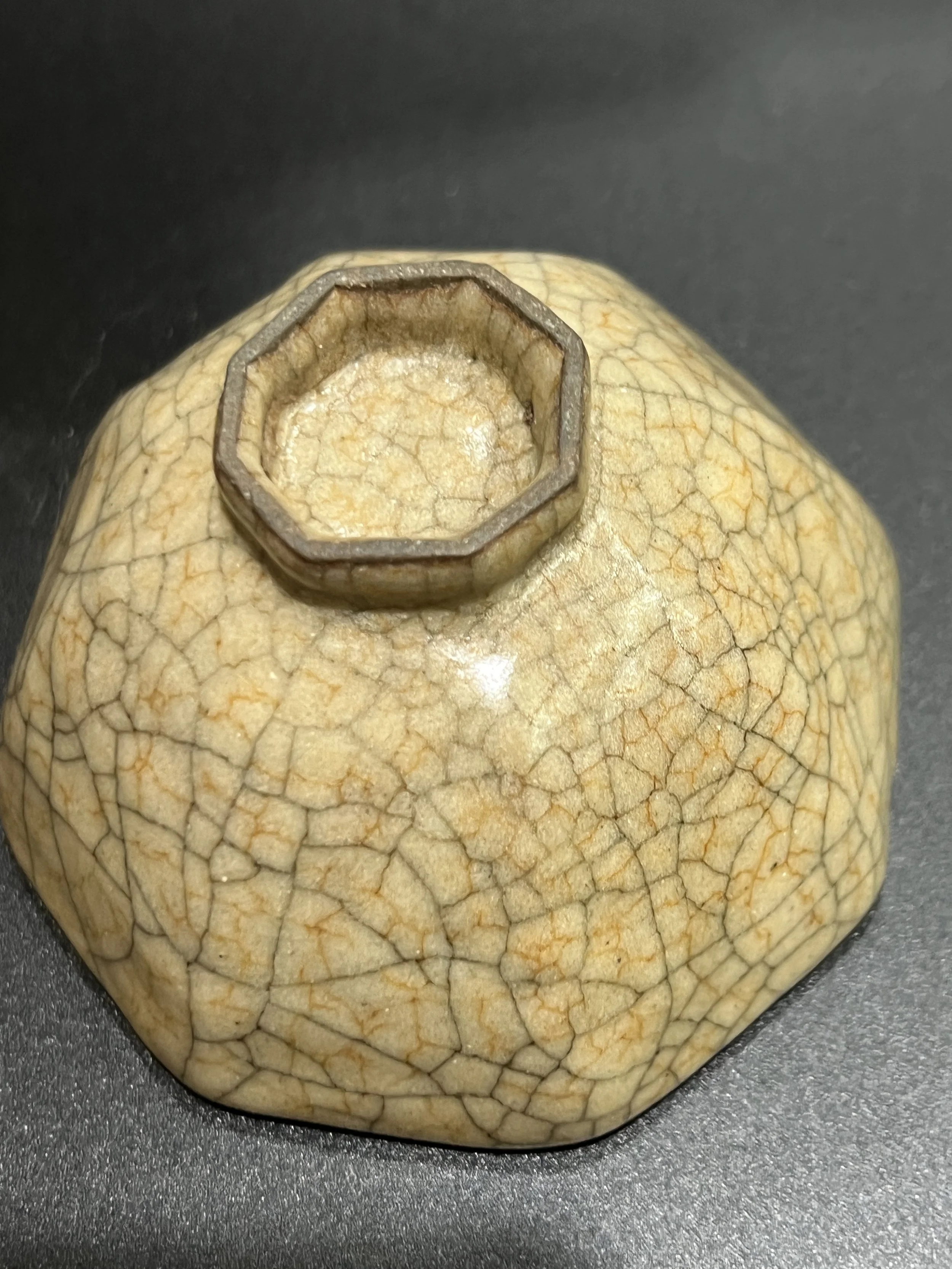 Image 6 of 10
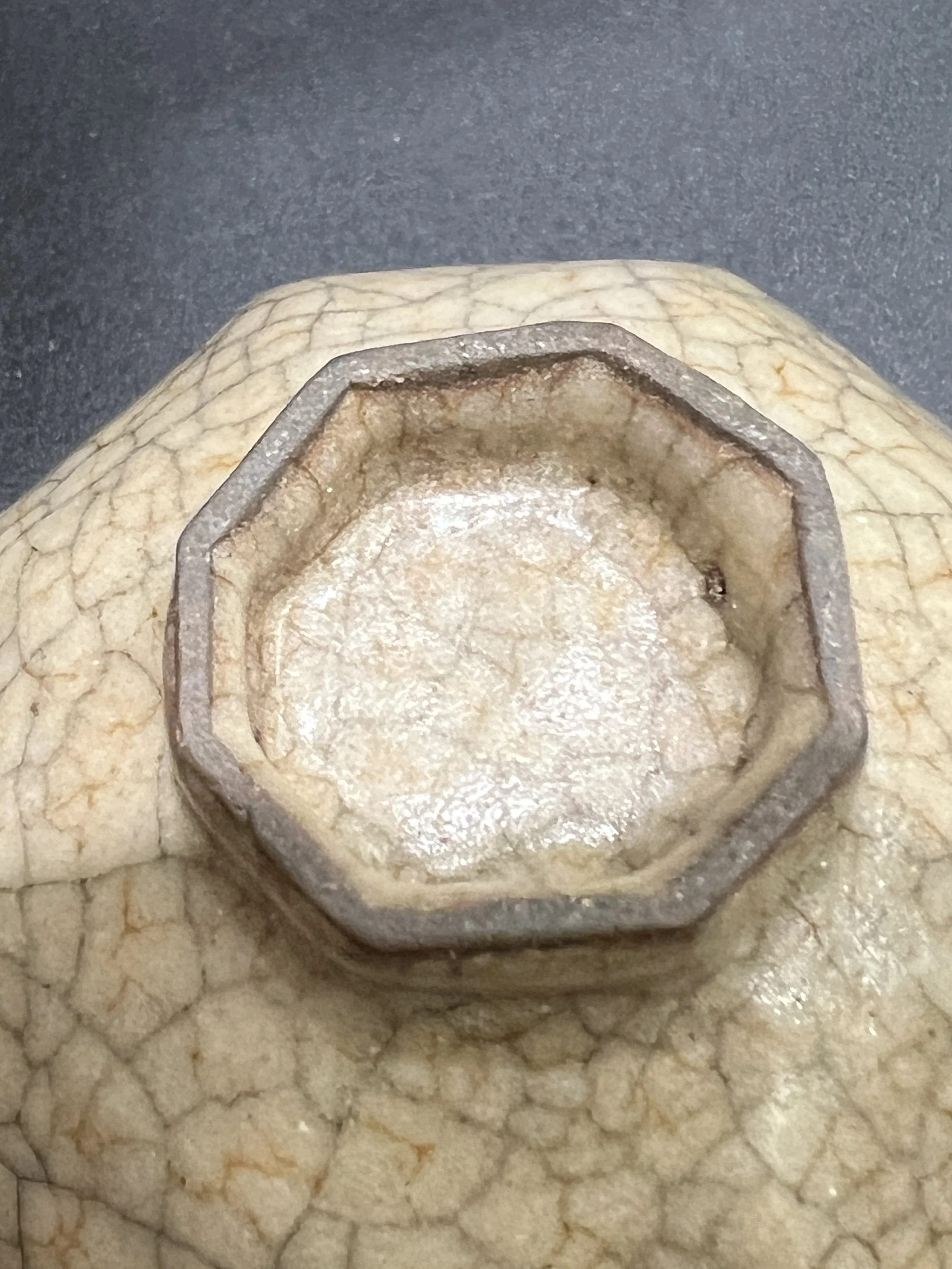 Image 7 of 10
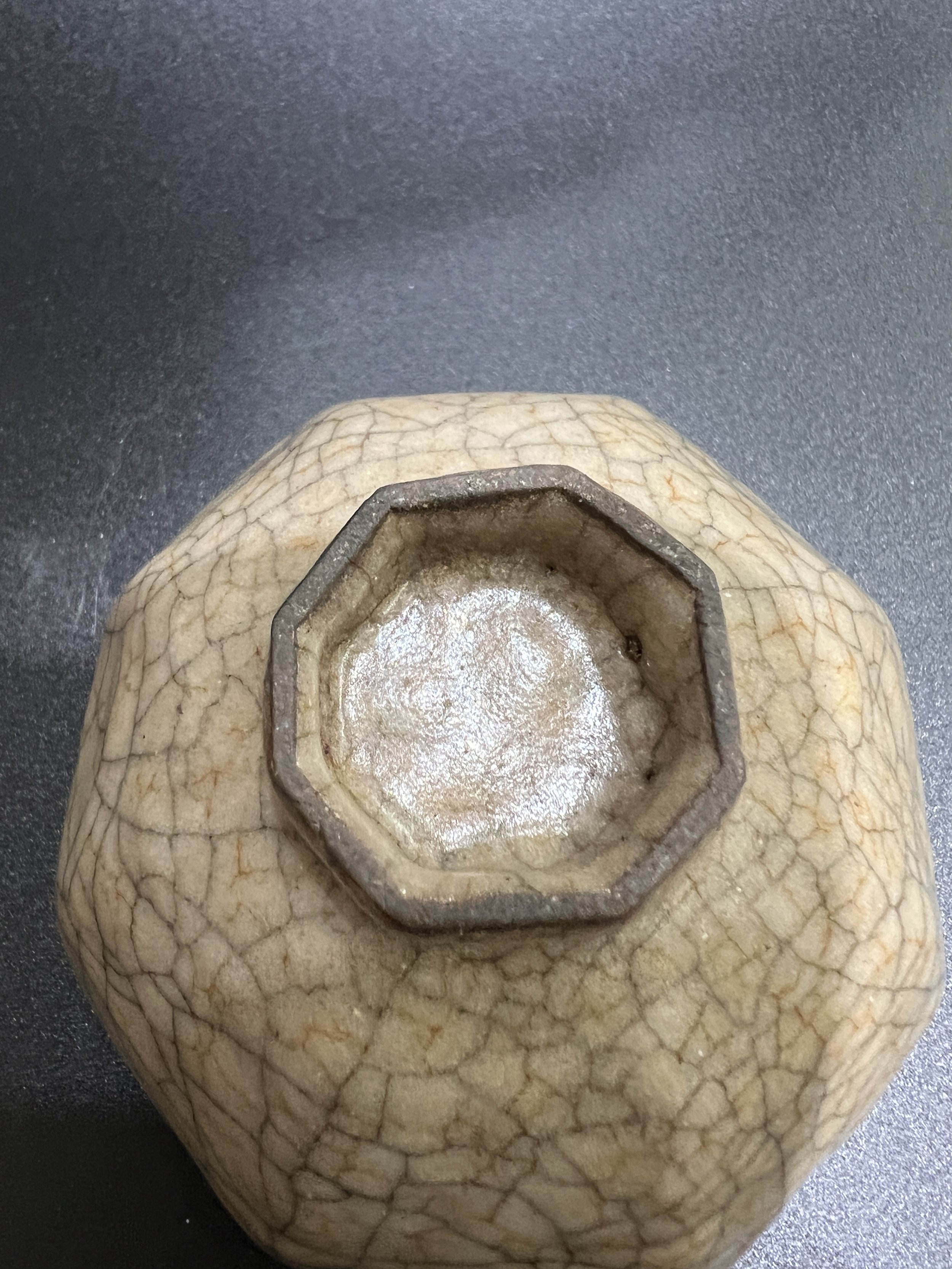 Image 8 of 10
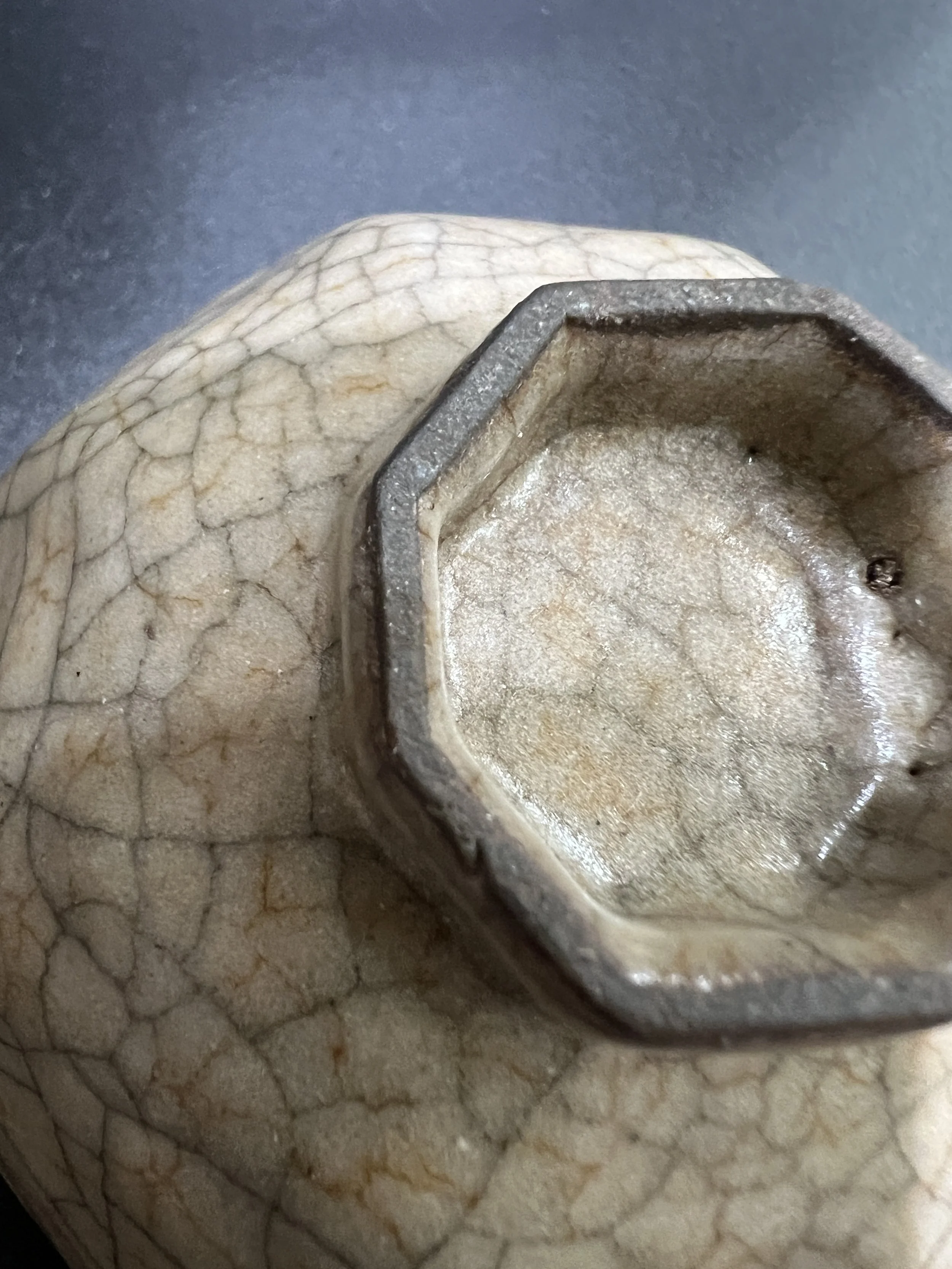 Image 9 of 10
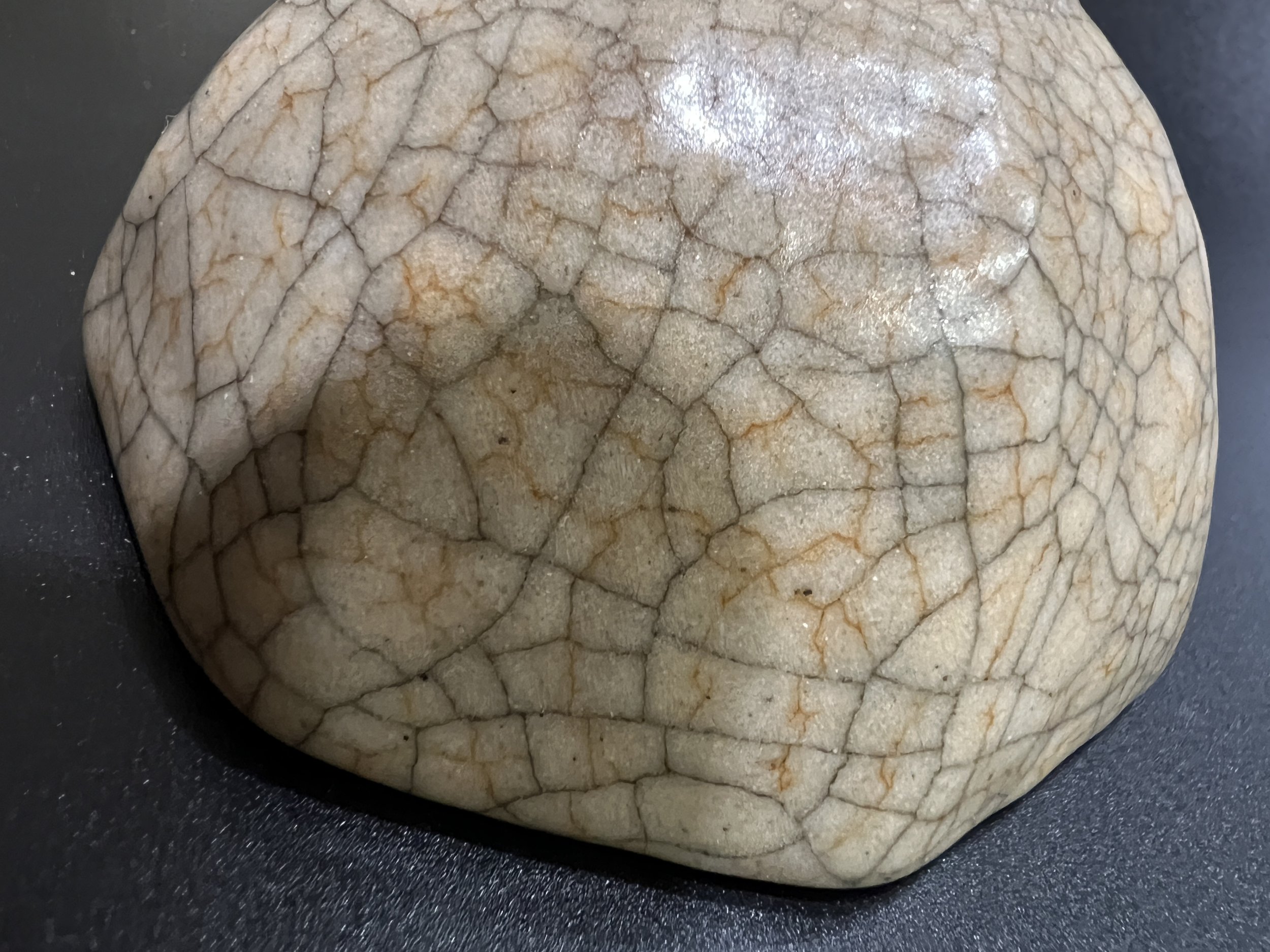 Image 10 of 10