Basic Information
The Tongzhi Period Yellow-Glazed Dish with Powdered Color and Auspicious “Shou” Characters is a piece of imperial porcelain produced by the Jingdezhen Imperial Kiln during the Tongzhi era of the Qing Dynasty. It holds significant artistic and historical value. The dish measures 15 centimeters in diameter, with a height of about 5 centimeters and a foot diameter of approximately 10 centimeters. It features a slightly flared rim, a shallow curved wall, and a ring foot. The interior of the dish is glazed in yellow, adorned with blue powdered color “Shou” (longevity) characters in seal script. The characters are arranged in concentric circles, with a central circular “Shou” character at the center and four additional concentric circles of characters radiating outward. The exterior is decorated with powdered color floral patterns on a white-glazed background. The base is inscribed with the red-glazed “Tongzhi Nianzhi” (Made in the Tongzhi Period) four-character regular script mark.
Artistic Features
• Color and Decoration: The dish features a yellow-glazed background with blue powdered color “Shou” characters in seal script. The color contrast is striking and elegant. The exterior is decorated with three groups of floral patterns on a white-glazed background, with the outlines of the patterns highlighted in gold, adding to the luxurious appearance typical of imperial porcelain.
• Craftsmanship: Powdered color is an overglaze enamel variety. The application process involves using arsenic-containing “glass white” as a base layer, with the colorants mixed with rose oil, allowing for the depiction of light and shadow, resulting in more delicate colors.
Historical Background
This dish was produced by the imperial kiln during the Tongzhi period as part of the porcelain ordered for Empress Dowager Cixi’s birthday celebration. Despite the decline of the Jingdezhen Imperial Kiln during the Tongzhi era, the powdered color porcelain still maintained a high level of craftsmanship. The production of this dish reflects the importance placed on birthday celebration porcelain by the imperial court and also showcases the porcelain-making skills of the late Qing Dynasty.
Cultural Significance
As a birthday celebration porcelain, the dish features auspicious “Shou” characters, symbolizing longevity and good fortune. The central “Shou” character, surrounded by concentric circles of additional “Shou” characters, conveys the wish for “eternal longevity.” The floral patterns on the exterior add to the artistic beauty of the dish.
The Qing Dynasty Tongzhi Period Yellow-Glazed Dish with Powdered Color and Auspicious “Shou” Characters is not only a beautiful work of art but also an important cultural artifact of the Qing Dynasty imperial court. It reflects the social customs and aesthetic tastes of the time.
清同治粉彩黄底寿字盘介绍
基本信息
清同治粉彩黄底寿字盘是清代同治年间景德镇御窑厂烧制的宫廷用瓷,具有极高的艺术价值和历史价值。该盘直径15厘米,高约5厘米,足径约10厘米,盘口微撇,浅弧壁,圈足。盘内施黄釉,地上绘有描金篆书“寿”字纹,以盘心团“寿”字为中心,由里向外排列4周,每周字数不同,但书写疏密一致。外壁饰白釉地粉彩折枝花卉纹3组。足内施白釉书红彩“同治年制”四字楷书款。
艺术特点
• 色彩与装饰:盘内以黄釉为底,施以蓝彩篆书“寿”字纹,色彩对比鲜明,古朴典雅。外壁白釉地上饰有三组折枝花卉,纹饰轮廓均用金彩勾勒,色彩富丽堂皇,充分展现了宫廷瓷器的奢华。
• 工艺:粉彩是釉上彩品种之一,施绘工艺是先用含砷的“玻璃白”打底,彩料用芸香油调合,能够表现出明暗层次,使颜色更加柔和。
历史背景
此盘是同治时期御窑厂为慈禧太后祝寿所订烧的瓷器之一。同治年间,景德镇御窑厂虽处于衰落时期,但粉彩瓷器仍保持了一定的艺术水准。该盘的烧制体现了当时宫廷对祝寿用瓷的重视,同时也反映了清代晚期的瓷器制作工艺。
文化寓意
寿字盘作为祝寿用瓷,其装饰图案多寓意吉祥。盘内以“寿”字为中心,四周环绕的“寿”字象征长寿和福气,寓意“万寿无疆”。外壁的折枝花卉则增添了盘子的艺术美感。
清同治粉彩黄底寿字盘不仅是一件精美的艺术品,更是清代宫廷文化的重要载体,反映了当时的社会风尚和审美趣味。
Basic Information
The Tongzhi Period Yellow-Glazed Dish with Powdered Color and Auspicious “Shou” Characters is a piece of imperial porcelain produced by the Jingdezhen Imperial Kiln during the Tongzhi era of the Qing Dynasty. It holds significant artistic and historical value. The dish measures 15 centimeters in diameter, with a height of about 5 centimeters and a foot diameter of approximately 10 centimeters. It features a slightly flared rim, a shallow curved wall, and a ring foot. The interior of the dish is glazed in yellow, adorned with blue powdered color “Shou” (longevity) characters in seal script. The characters are arranged in concentric circles, with a central circular “Shou” character at the center and four additional concentric circles of characters radiating outward. The exterior is decorated with powdered color floral patterns on a white-glazed background. The base is inscribed with the red-glazed “Tongzhi Nianzhi” (Made in the Tongzhi Period) four-character regular script mark.
Artistic Features
• Color and Decoration: The dish features a yellow-glazed background with blue powdered color “Shou” characters in seal script. The color contrast is striking and elegant. The exterior is decorated with three groups of floral patterns on a white-glazed background, with the outlines of the patterns highlighted in gold, adding to the luxurious appearance typical of imperial porcelain.
• Craftsmanship: Powdered color is an overglaze enamel variety. The application process involves using arsenic-containing “glass white” as a base layer, with the colorants mixed with rose oil, allowing for the depiction of light and shadow, resulting in more delicate colors.
Historical Background
This dish was produced by the imperial kiln during the Tongzhi period as part of the porcelain ordered for Empress Dowager Cixi’s birthday celebration. Despite the decline of the Jingdezhen Imperial Kiln during the Tongzhi era, the powdered color porcelain still maintained a high level of craftsmanship. The production of this dish reflects the importance placed on birthday celebration porcelain by the imperial court and also showcases the porcelain-making skills of the late Qing Dynasty.
Cultural Significance
As a birthday celebration porcelain, the dish features auspicious “Shou” characters, symbolizing longevity and good fortune. The central “Shou” character, surrounded by concentric circles of additional “Shou” characters, conveys the wish for “eternal longevity.” The floral patterns on the exterior add to the artistic beauty of the dish.
The Qing Dynasty Tongzhi Period Yellow-Glazed Dish with Powdered Color and Auspicious “Shou” Characters is not only a beautiful work of art but also an important cultural artifact of the Qing Dynasty imperial court. It reflects the social customs and aesthetic tastes of the time.
清同治粉彩黄底寿字盘介绍
基本信息
清同治粉彩黄底寿字盘是清代同治年间景德镇御窑厂烧制的宫廷用瓷,具有极高的艺术价值和历史价值。该盘直径15厘米,高约5厘米,足径约10厘米,盘口微撇,浅弧壁,圈足。盘内施黄釉,地上绘有描金篆书“寿”字纹,以盘心团“寿”字为中心,由里向外排列4周,每周字数不同,但书写疏密一致。外壁饰白釉地粉彩折枝花卉纹3组。足内施白釉书红彩“同治年制”四字楷书款。
艺术特点
• 色彩与装饰:盘内以黄釉为底,施以蓝彩篆书“寿”字纹,色彩对比鲜明,古朴典雅。外壁白釉地上饰有三组折枝花卉,纹饰轮廓均用金彩勾勒,色彩富丽堂皇,充分展现了宫廷瓷器的奢华。
• 工艺:粉彩是釉上彩品种之一,施绘工艺是先用含砷的“玻璃白”打底,彩料用芸香油调合,能够表现出明暗层次,使颜色更加柔和。
历史背景
此盘是同治时期御窑厂为慈禧太后祝寿所订烧的瓷器之一。同治年间,景德镇御窑厂虽处于衰落时期,但粉彩瓷器仍保持了一定的艺术水准。该盘的烧制体现了当时宫廷对祝寿用瓷的重视,同时也反映了清代晚期的瓷器制作工艺。
文化寓意
寿字盘作为祝寿用瓷,其装饰图案多寓意吉祥。盘内以“寿”字为中心,四周环绕的“寿”字象征长寿和福气,寓意“万寿无疆”。外壁的折枝花卉则增添了盘子的艺术美感。
清同治粉彩黄底寿字盘不仅是一件精美的艺术品,更是清代宫廷文化的重要载体,反映了当时的社会风尚和审美趣味。
 Image 1 of 8
 Image 2 of 8
 Image 3 of 8
 Image 4 of 8
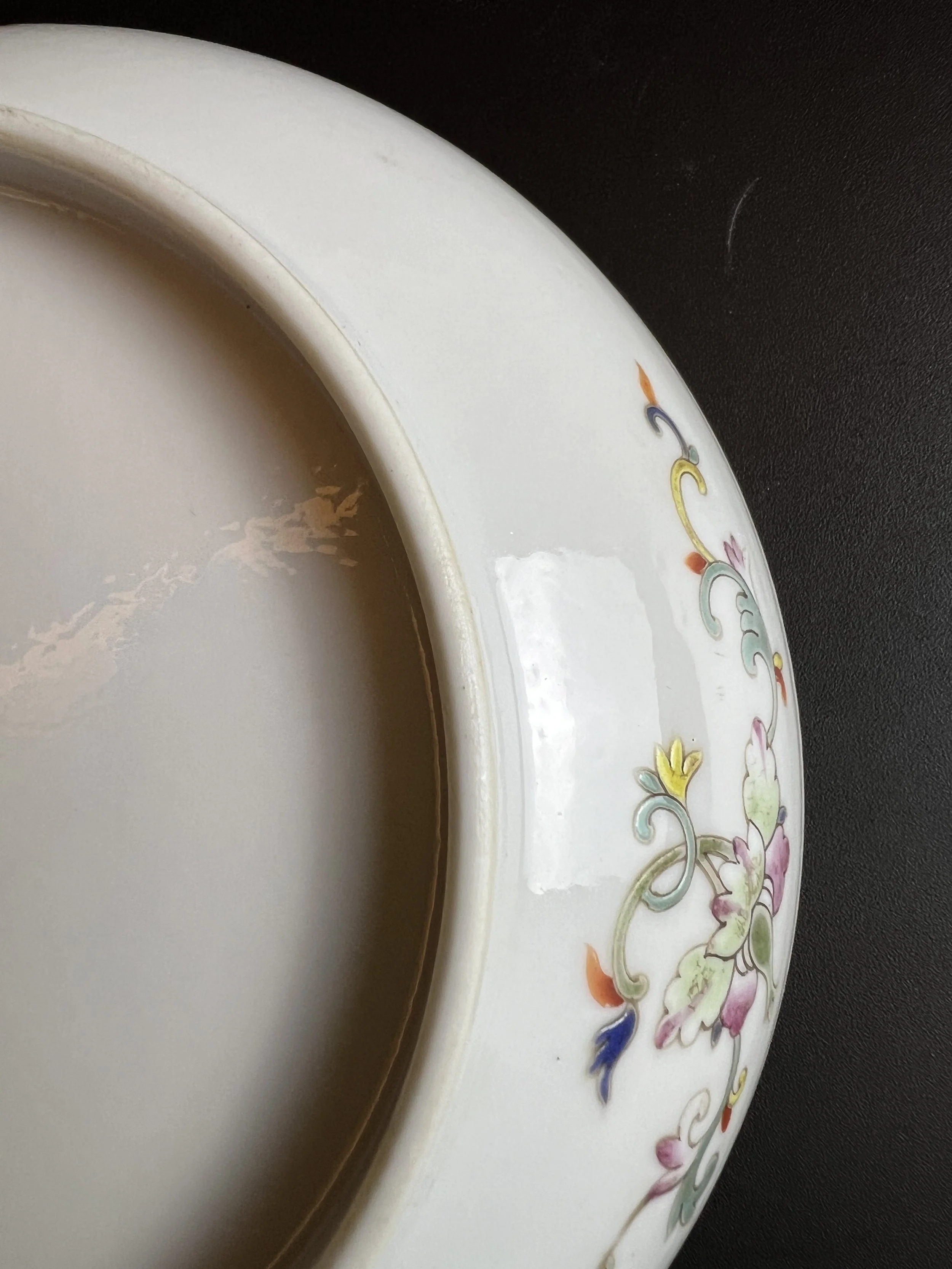 Image 5 of 8
 Image 6 of 8
 Image 7 of 8
 Image 8 of 8