The Yuan Dynasty underglaze red "wild geese and reeds" decorated yí (a ceremonial water vessel) is a treasure in the history of Chinese ceramics. It represents the pinnacle of underglaze red technology at the Jingdezhen kilns during the Yuan Dynasty, renowned particularly for its rare "incised and red-filled" technique and the unique "goose holding a reed" motif.
The table below provides a quick overview of its key features:
ItemDetailsType of ObjectYí (an ancient ceremonial water vessel; porcelain yí began production in the Tang Dynasty)DimensionsHeight: approx. 4.9–5.5 cm; Mouth diameter: approx. 14.3–14.5 cm; Base diameter: approx. 8.7–9 cmDecoration FeaturesCentral motif inside the base: incised "goose holding a reed" pattern; Inner wall: a band of incised water wave patternsFiring TechniqueBody uses the "binary clay formula"; Decoration uses the underglaze red "incise first, then apply red pigment" techniqueGlaze CharacteristicsWhite glaze with a bluish tint, luminous and translucentCollection InformationExcavated from the Yuan Dynasty hoard in Gao'an, Jiangxi; currently housed in the Gao'an Museum, Jiangxi Province
🎨 Exquisite Form and Decoration
This yí has a dignified and practical form, combining artistic beauty:
Form Design: The body is bowl-shaped, with a wide mouth and a slightly convex flat base. One side has a practical short spout for pouring liquids. Below the spout, a small appliquéd scroll-shaped lug is attached, likely for securing with a cord or hanging, serving both functional and decorative purposes.
Decoration Layout: The decoration is concentrated inside the vessel. The visual focus at the center of the interior base is a large goose diving with wings spread, holding a reed in its beak (the "goose holding a reed" motif). The inner wall is incised with a continuous band of water wave patterns, echoing the central motif and together composing a vivid scene of wild geese among reeds by water.
⚙️ Masterful Technique and the Beauty of "Kiln Transformation"
The rarity of this yí is largely due to its superb and successfully executed underglaze red technique.
Core Technique: Underglaze Red: Underglaze red was an innovative product of Yuan Dynasty Jingdezhen. It uses copper oxide as the coloring agent. The design is applied on the unglazed body, then covered with transparent glaze and fired once in a reducing atmosphere at around 1300°C. Copper ions are extremely sensitive to kiln temperature and atmosphere, making firing very difficult. Hence, underglaze red ware with a pure red color is exceptionally rare.
Unique "Incise and Fill with Red" Method: This yí was not decorated by direct painting. Instead, the outlines of the goose and water waves were finely incised into the body first, and then copper red pigment was applied evenly into the incised lines. This method effectively controls the diffusion of the copper red during high-temperature firing, resulting in sharp, clear lines in the fired decoration, akin to meticulous brushwork. Experts consider this one of the best examples of the application of underglaze red on incised decoration from the Yuan period.
Atmosphere Imparted by the Kiln: The fired red color is not uniform. Under the reducing atmosphere, the copper red naturally diffused, concentrating in the deeper incisions as vibrant red lines and rendering as pale greyish-red in shallower areas, creating natural gradations and a "flying red" effect. This adds an ink-wash painting-like artistic conception to the goose's feathers and the churning water waves.
🏛️ Deep Cultural Origins and Symbolism of the Motif
Origins of "Goose Holding a Reed": The "goose holding a reed" is a highly distinctive Yuan Dynasty motif. Its design inspiration may derive from the embroidered patterns on the chest and back of military officials' robes during the Yuan period. This reflects the era's characteristic of absorbing diverse cultural elements into porcelain decoration, moving towards stylization and patterning.
Auspicious Symbolism of the Motif:
Auspicious Omen for Imperial Examinations: As the Chinese word for "wild goose" (yàn) is a homophone for "rank/fame" (yàn), and "reed" (lú) for "first-place" (lú), the "reed and wild goose" motif has, since the Qing Dynasty, carried the auspicious meaning of "ranking first in the highest imperial examination."
Smooth Official Career: Reeds grow in connected patches, symbolizing "continuous success in examinations" (liánkē). Therefore, the motif also conveys wishes for "uninterrupted success along the official path" (lùlù liánkē), praying for a smooth career and a bright future.
Practical and Ritual Function: The yí was an ancient ceremonial water vessel. However, Yuan Dynasty underglaze red ware had extremely low output and was a precious variety. Given its exquisite craftsmanship, this yí was likely not for daily use but rather a vessel for high-level ceremonial occasions or used by the upper echelons of society.
🔍 Historical Context and Unique Value
Hoard Excavation: This yí was unearthed from the famous Yuan Dynasty hoard in Gao'an, Jiangxi, which yielded numerous national treasures like Yuan blue-and-white porcelain. The hoard's owner was of prominent status, and its contents represent the highest level of Yuan Dynasty porcelain.
Shared Artistic Style: Researchers have pointed out that the brushwork style of this yí is similar to that on two other underglaze red stem cups with revolving tops from the same Gao'an hoard. They may have been made by the same highly skilled kiln painter, providing clues for understanding the organization and styles of Yuan Dynasty kiln artisans.
Connecting Past and Future: It was created during a critical period for Jingdezhen's porcelain industry. The porcelain body uses the "porcelain stone + kaolin" binary formula, allowing it to withstand higher firing temperatures. This yí is a paradigmatic work from the phase when underglaze red technology was transitioning from exploration to maturity, laying the groundwork for the flourishing development of underglaze red in the Ming and Qing dynasties.
In summary, the Yuan Dynasty underglaze red "wild geese and reeds" decorated yí is not merely a ceramic artifact of exceptional craftsmanship. It is a material object that fuses the era's aesthetics, social customs, and technological innovation. Quietly displayed in the museum, it silently narrates the wisdom of Chinese ceramic artisans seven hundred years ago and the brilliance of that diverse era.
元代釉里红芦雁纹匜(音yí)是中国陶瓷史上的瑰宝,它代表了元代景德镇在釉下彩技术上的巅峰,尤以罕见的“刻划填红”工艺和独特的“雁衔芦”纹饰闻名。
下面这个表格,能帮你快速了解它的基本情况:
项目具体信息器物类型匜(古代盥洗用具,瓷匜始烧于唐代)尺寸高约4.9-5.5厘米,口径约14.3-14.5厘米,底径约8.7-9厘米纹饰特征内底心刻划“雁衔芦纹”,内壁刻划水波纹一周烧制工艺胎体采用“二元配方”;纹饰采用“先刻划后涂染”的釉里红工艺釉面特征釉色白中闪青,莹润透亮收藏信息出土于江西高安元代窖藏,现藏于江西省高安市博物馆
🎨 精妙的造型与装饰
此匜造型端庄实用,兼具艺术之美:
⚙️ 顶尖的工艺与“窑变”之美
这件匜的珍贵,很大程度上源于其高超且成功的釉里红工艺。
核心技艺“釉里红”:釉里红是元代景德镇的创新品种。它以氧化铜作为呈色剂,在素胎上绘画后罩透明釉,再在约1300℃的还原焰中一次性烧成。铜离子对窑内温度和气氛极为敏感,烧成难度极大,故纯正红色的釉里红器极为稀少。
独特的“刻划填红”法:此匜没有采用直接绘画,而是先在胎体上精细刻划出大雁和水波的轮廓,再在刻痕内平涂填入铜红料。此法能有效约束铜红在高温下的晕散,使烧成后的纹饰线条清晰锐利,如工笔画般精致。专家评价,这是目前所见元代釉里红在刻划纹饰上使用效果最佳的器物之一。
窑火赋予的意境:烧成后的红彩并非呆板一色。在还原气氛下,铜红自然晕散,于刻痕深处凝聚为鲜丽的红线,浅处则渲染为淡雅的灰红,形成自然的深浅过渡和“飞红”现象。这为大雁的翎羽和翻腾的水波增添了水墨画般的笔墨意趣。
🏛️ 深厚的纹饰源流与文化寓意
🔍 历史背景与独特价值
窖藏出土:此匜出土于著名的江西高安元代窖藏,同出有大量元青花等国宝。窖藏主人身份显赫,其藏品代表了元代瓷器最高水平。
画意相通:有研究者指出,此匜与高安窖藏出土的另两件釉里红高足转杯的纹饰笔意相近,可能出自同一位技艺高超的窑工之手,这为我们理解元代窑场画工的组织与风格提供了线索。
承上启下:它诞生于景德镇制瓷业的关键时期。瓷胎采用“瓷石+高岭土”的二元配方,使胎体能承受更高的烧成温度。这件匜是釉里红技术从探索走向成熟阶段的典范之作,为明清釉里红技术的蓬勃发展奠定了基础。
总而言之,元代釉里红芦雁纹匜不仅是一件技艺卓绝的陶瓷工艺品,更是融合了时代审美、社会风尚与科技创新的物质载体。它静置于博物馆中,无声诉说着七百年前中国瓷器匠人的智慧与那个多元时代的辉煌。
The Yuan Dynasty underglaze red "wild geese and reeds" decorated yí (a ceremonial water vessel) is a treasure in the history of Chinese ceramics. It represents the pinnacle of underglaze red technology at the Jingdezhen kilns during the Yuan Dynasty, renowned particularly for its rare "incised and red-filled" technique and the unique "goose holding a reed" motif.
The table below provides a quick overview of its key features:
ItemDetailsType of ObjectYí (an ancient ceremonial water vessel; porcelain yí began production in the Tang Dynasty)DimensionsHeight: approx. 4.9–5.5 cm; Mouth diameter: approx. 14.3–14.5 cm; Base diameter: approx. 8.7–9 cmDecoration FeaturesCentral motif inside the base: incised "goose holding a reed" pattern; Inner wall: a band of incised water wave patternsFiring TechniqueBody uses the "binary clay formula"; Decoration uses the underglaze red "incise first, then apply red pigment" techniqueGlaze CharacteristicsWhite glaze with a bluish tint, luminous and translucentCollection InformationExcavated from the Yuan Dynasty hoard in Gao'an, Jiangxi; currently housed in the Gao'an Museum, Jiangxi Province
🎨 Exquisite Form and Decoration
This yí has a dignified and practical form, combining artistic beauty:
Form Design: The body is bowl-shaped, with a wide mouth and a slightly convex flat base. One side has a practical short spout for pouring liquids. Below the spout, a small appliquéd scroll-shaped lug is attached, likely for securing with a cord or hanging, serving both functional and decorative purposes.
Decoration Layout: The decoration is concentrated inside the vessel. The visual focus at the center of the interior base is a large goose diving with wings spread, holding a reed in its beak (the "goose holding a reed" motif). The inner wall is incised with a continuous band of water wave patterns, echoing the central motif and together composing a vivid scene of wild geese among reeds by water.
⚙️ Masterful Technique and the Beauty of "Kiln Transformation"
The rarity of this yí is largely due to its superb and successfully executed underglaze red technique.
Core Technique: Underglaze Red: Underglaze red was an innovative product of Yuan Dynasty Jingdezhen. It uses copper oxide as the coloring agent. The design is applied on the unglazed body, then covered with transparent glaze and fired once in a reducing atmosphere at around 1300°C. Copper ions are extremely sensitive to kiln temperature and atmosphere, making firing very difficult. Hence, underglaze red ware with a pure red color is exceptionally rare.
Unique "Incise and Fill with Red" Method: This yí was not decorated by direct painting. Instead, the outlines of the goose and water waves were finely incised into the body first, and then copper red pigment was applied evenly into the incised lines. This method effectively controls the diffusion of the copper red during high-temperature firing, resulting in sharp, clear lines in the fired decoration, akin to meticulous brushwork. Experts consider this one of the best examples of the application of underglaze red on incised decoration from the Yuan period.
Atmosphere Imparted by the Kiln: The fired red color is not uniform. Under the reducing atmosphere, the copper red naturally diffused, concentrating in the deeper incisions as vibrant red lines and rendering as pale greyish-red in shallower areas, creating natural gradations and a "flying red" effect. This adds an ink-wash painting-like artistic conception to the goose's feathers and the churning water waves.
🏛️ Deep Cultural Origins and Symbolism of the Motif
Origins of "Goose Holding a Reed": The "goose holding a reed" is a highly distinctive Yuan Dynasty motif. Its design inspiration may derive from the embroidered patterns on the chest and back of military officials' robes during the Yuan period. This reflects the era's characteristic of absorbing diverse cultural elements into porcelain decoration, moving towards stylization and patterning.
Auspicious Symbolism of the Motif:
Auspicious Omen for Imperial Examinations: As the Chinese word for "wild goose" (yàn) is a homophone for "rank/fame" (yàn), and "reed" (lú) for "first-place" (lú), the "reed and wild goose" motif has, since the Qing Dynasty, carried the auspicious meaning of "ranking first in the highest imperial examination."
Smooth Official Career: Reeds grow in connected patches, symbolizing "continuous success in examinations" (liánkē). Therefore, the motif also conveys wishes for "uninterrupted success along the official path" (lùlù liánkē), praying for a smooth career and a bright future.
Practical and Ritual Function: The yí was an ancient ceremonial water vessel. However, Yuan Dynasty underglaze red ware had extremely low output and was a precious variety. Given its exquisite craftsmanship, this yí was likely not for daily use but rather a vessel for high-level ceremonial occasions or used by the upper echelons of society.
🔍 Historical Context and Unique Value
Hoard Excavation: This yí was unearthed from the famous Yuan Dynasty hoard in Gao'an, Jiangxi, which yielded numerous national treasures like Yuan blue-and-white porcelain. The hoard's owner was of prominent status, and its contents represent the highest level of Yuan Dynasty porcelain.
Shared Artistic Style: Researchers have pointed out that the brushwork style of this yí is similar to that on two other underglaze red stem cups with revolving tops from the same Gao'an hoard. They may have been made by the same highly skilled kiln painter, providing clues for understanding the organization and styles of Yuan Dynasty kiln artisans.
Connecting Past and Future: It was created during a critical period for Jingdezhen's porcelain industry. The porcelain body uses the "porcelain stone + kaolin" binary formula, allowing it to withstand higher firing temperatures. This yí is a paradigmatic work from the phase when underglaze red technology was transitioning from exploration to maturity, laying the groundwork for the flourishing development of underglaze red in the Ming and Qing dynasties.
In summary, the Yuan Dynasty underglaze red "wild geese and reeds" decorated yí is not merely a ceramic artifact of exceptional craftsmanship. It is a material object that fuses the era's aesthetics, social customs, and technological innovation. Quietly displayed in the museum, it silently narrates the wisdom of Chinese ceramic artisans seven hundred years ago and the brilliance of that diverse era.
元代釉里红芦雁纹匜(音yí)是中国陶瓷史上的瑰宝,它代表了元代景德镇在釉下彩技术上的巅峰,尤以罕见的“刻划填红”工艺和独特的“雁衔芦”纹饰闻名。
下面这个表格,能帮你快速了解它的基本情况:
项目具体信息器物类型匜(古代盥洗用具,瓷匜始烧于唐代)尺寸高约4.9-5.5厘米,口径约14.3-14.5厘米,底径约8.7-9厘米纹饰特征内底心刻划“雁衔芦纹”,内壁刻划水波纹一周烧制工艺胎体采用“二元配方”;纹饰采用“先刻划后涂染”的釉里红工艺釉面特征釉色白中闪青,莹润透亮收藏信息出土于江西高安元代窖藏,现藏于江西省高安市博物馆
🎨 精妙的造型与装饰
此匜造型端庄实用,兼具艺术之美:
⚙️ 顶尖的工艺与“窑变”之美
这件匜的珍贵,很大程度上源于其高超且成功的釉里红工艺。
核心技艺“釉里红”:釉里红是元代景德镇的创新品种。它以氧化铜作为呈色剂,在素胎上绘画后罩透明釉,再在约1300℃的还原焰中一次性烧成。铜离子对窑内温度和气氛极为敏感,烧成难度极大,故纯正红色的釉里红器极为稀少。
独特的“刻划填红”法:此匜没有采用直接绘画,而是先在胎体上精细刻划出大雁和水波的轮廓,再在刻痕内平涂填入铜红料。此法能有效约束铜红在高温下的晕散,使烧成后的纹饰线条清晰锐利,如工笔画般精致。专家评价,这是目前所见元代釉里红在刻划纹饰上使用效果最佳的器物之一。
窑火赋予的意境:烧成后的红彩并非呆板一色。在还原气氛下,铜红自然晕散,于刻痕深处凝聚为鲜丽的红线,浅处则渲染为淡雅的灰红,形成自然的深浅过渡和“飞红”现象。这为大雁的翎羽和翻腾的水波增添了水墨画般的笔墨意趣。
🏛️ 深厚的纹饰源流与文化寓意
🔍 历史背景与独特价值
窖藏出土:此匜出土于著名的江西高安元代窖藏,同出有大量元青花等国宝。窖藏主人身份显赫,其藏品代表了元代瓷器最高水平。
画意相通:有研究者指出,此匜与高安窖藏出土的另两件釉里红高足转杯的纹饰笔意相近,可能出自同一位技艺高超的窑工之手,这为我们理解元代窑场画工的组织与风格提供了线索。
承上启下:它诞生于景德镇制瓷业的关键时期。瓷胎采用“瓷石+高岭土”的二元配方,使胎体能承受更高的烧成温度。这件匜是釉里红技术从探索走向成熟阶段的典范之作,为明清釉里红技术的蓬勃发展奠定了基础。
总而言之,元代釉里红芦雁纹匜不仅是一件技艺卓绝的陶瓷工艺品,更是融合了时代审美、社会风尚与科技创新的物质载体。它静置于博物馆中,无声诉说着七百年前中国瓷器匠人的智慧与那个多元时代的辉煌。
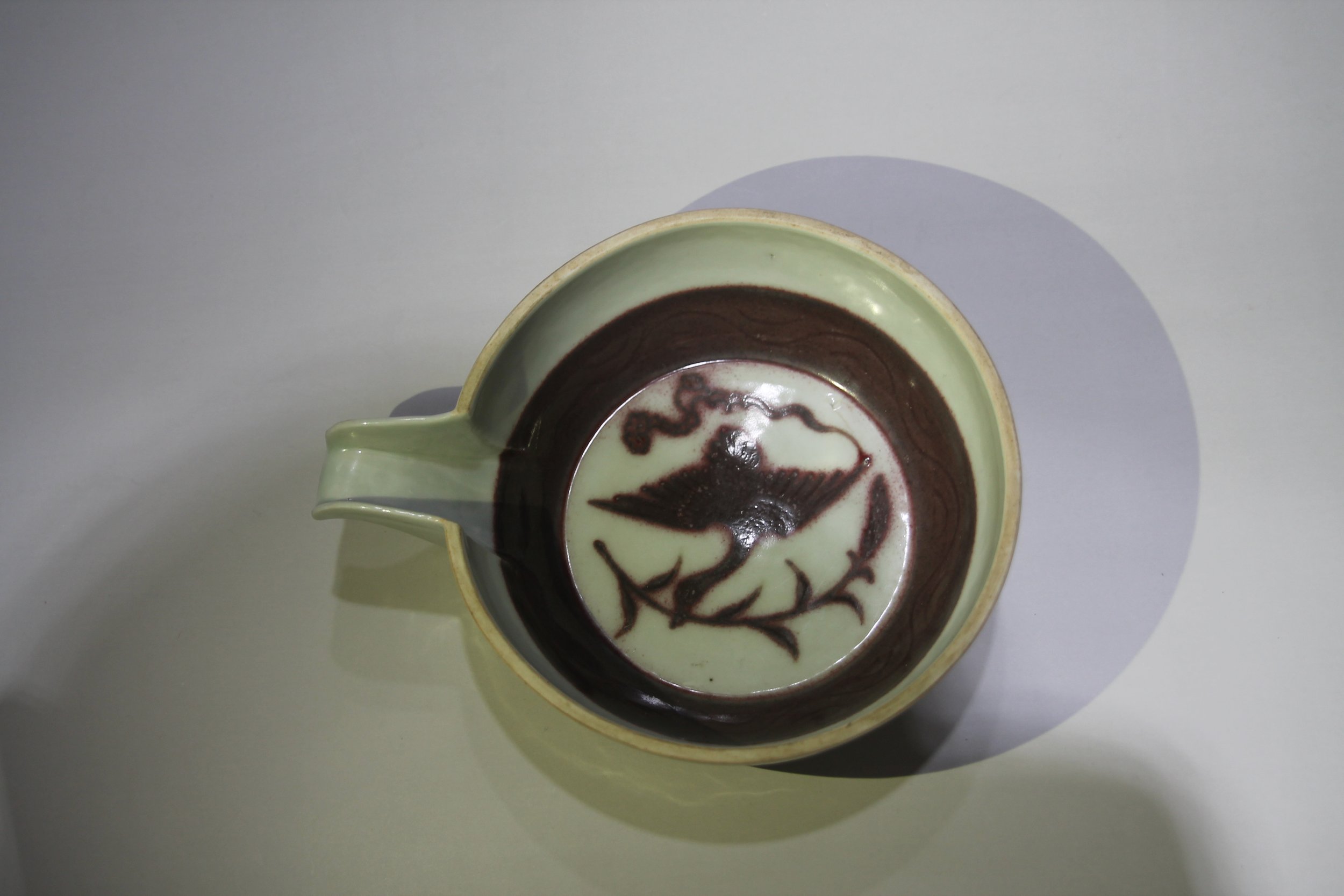 Image 1 of 10
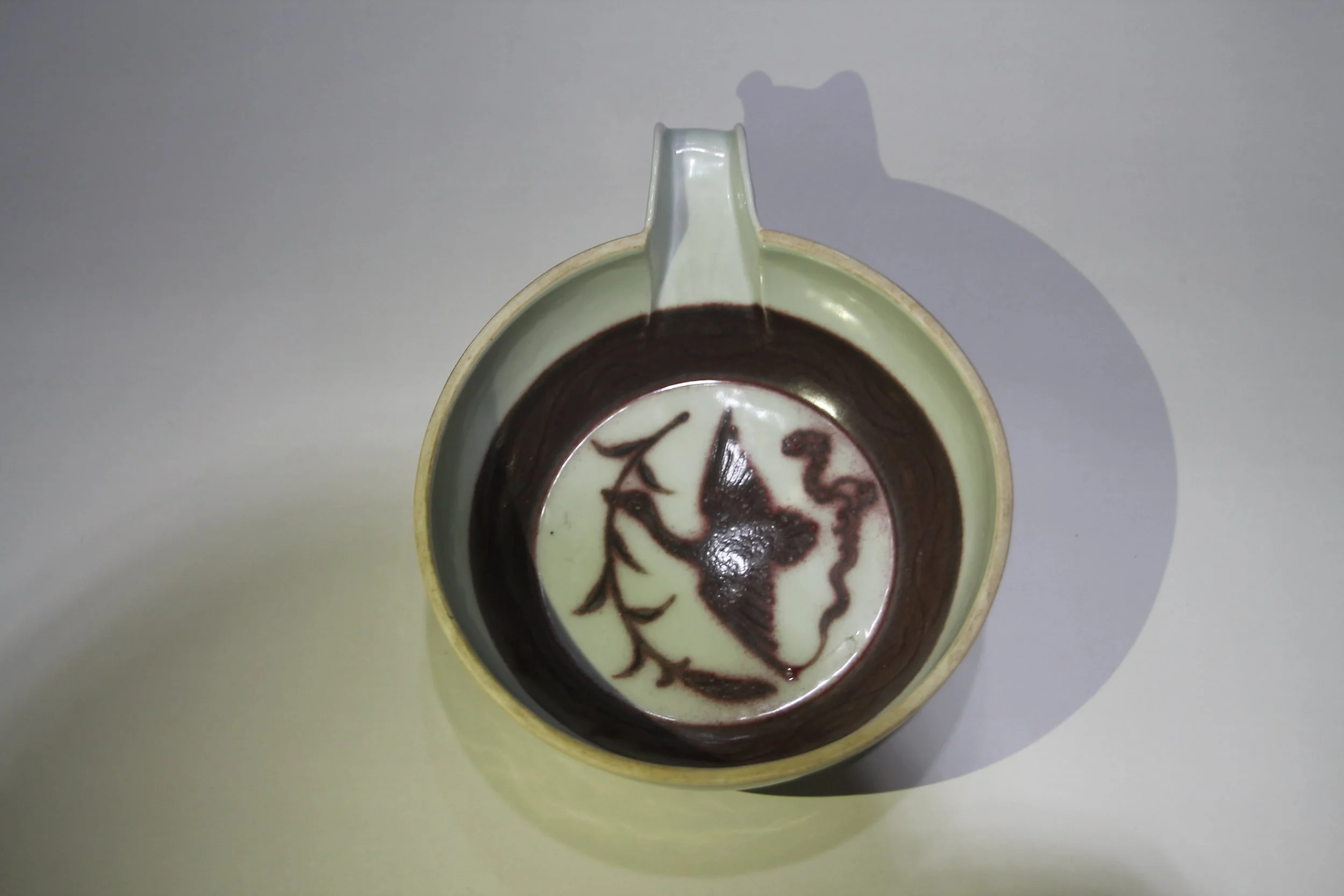 Image 2 of 10
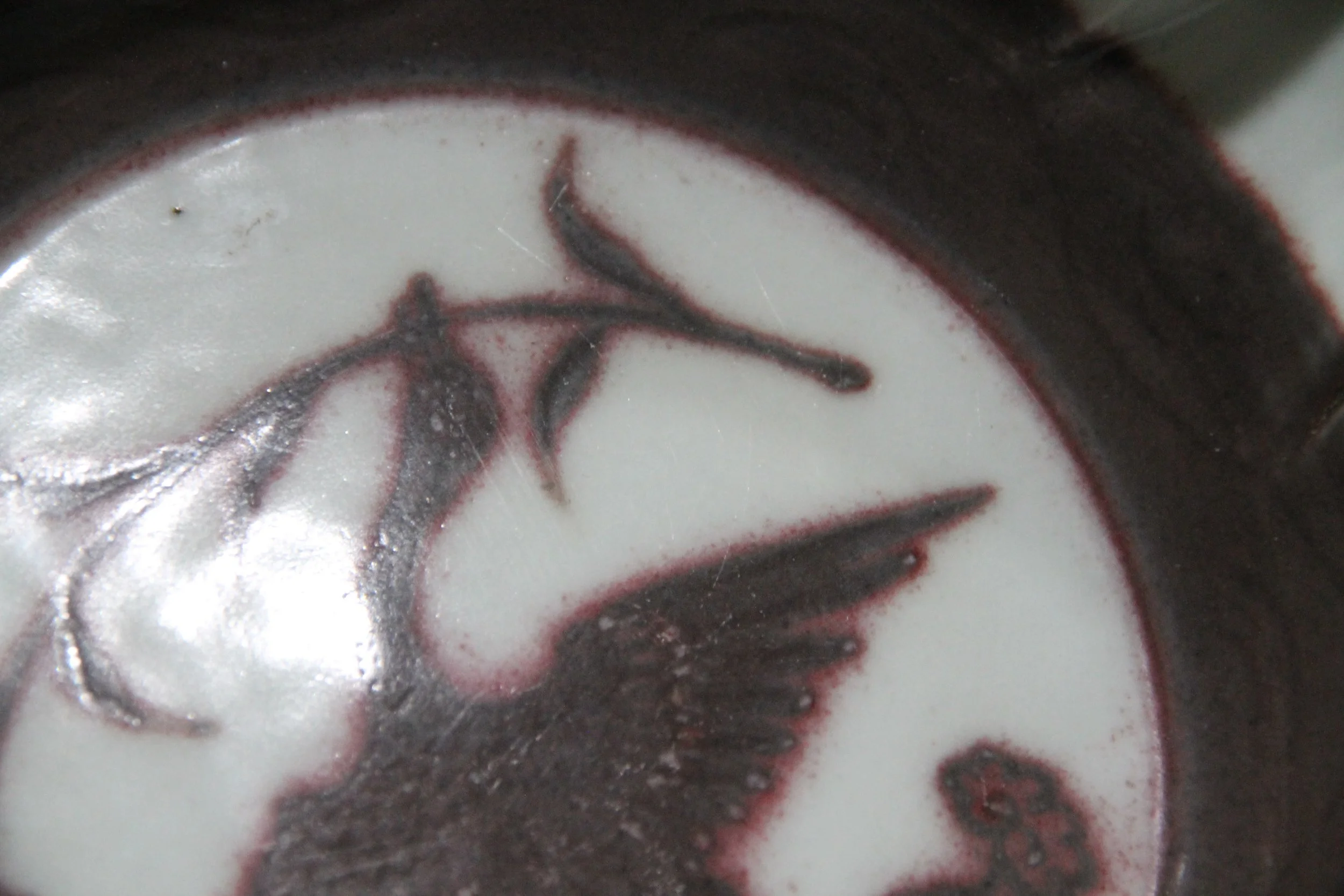 Image 3 of 10
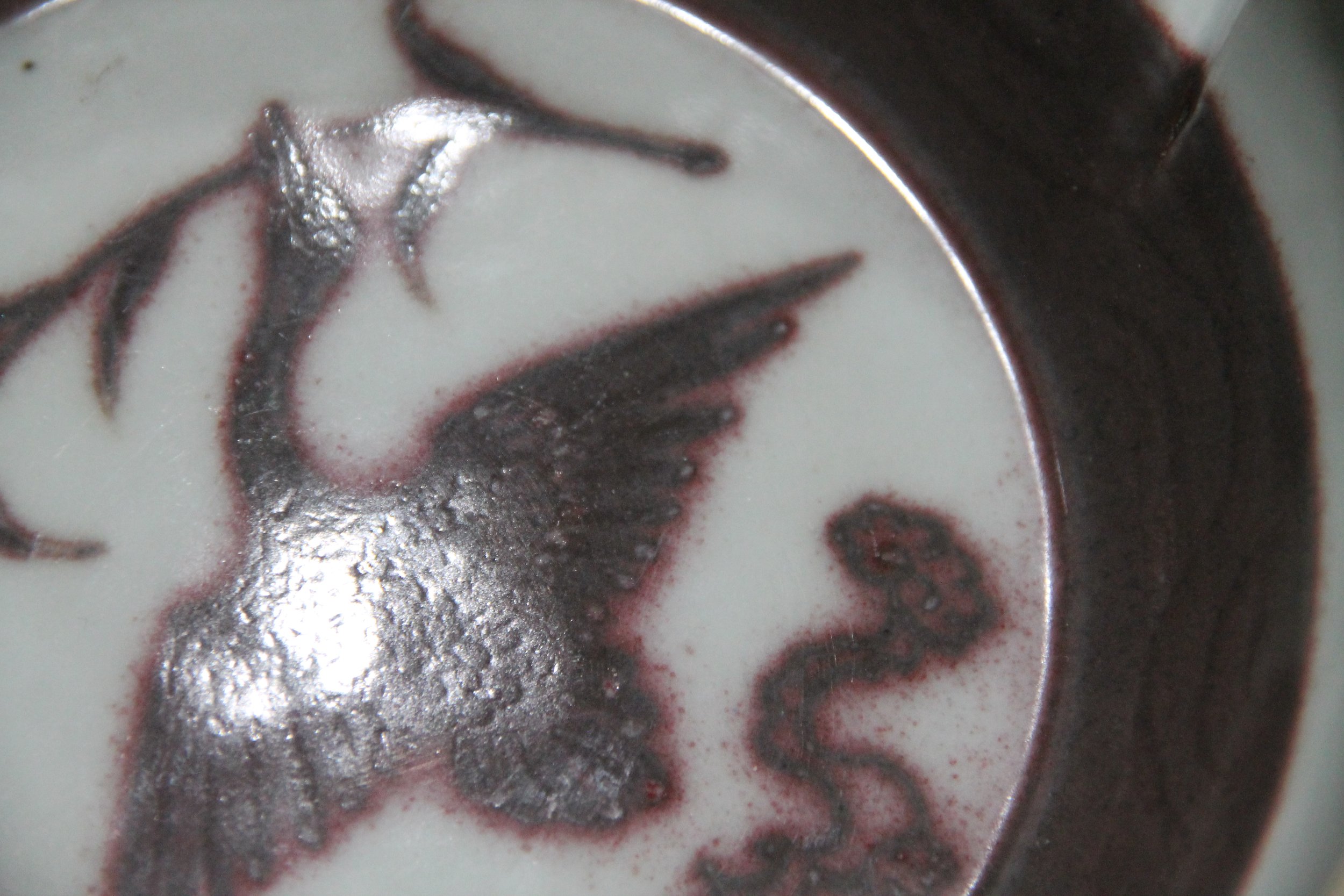 Image 4 of 10
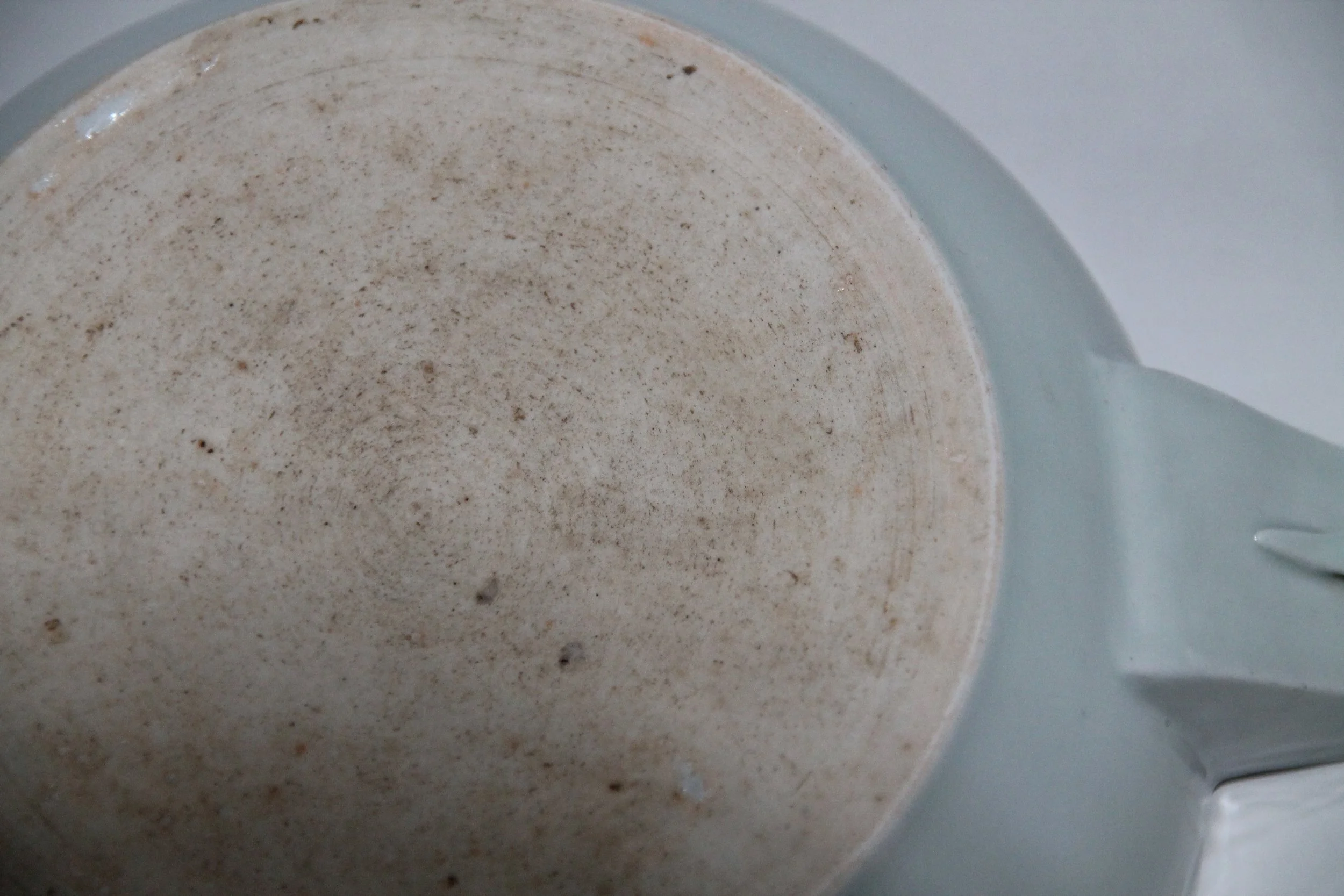 Image 5 of 10
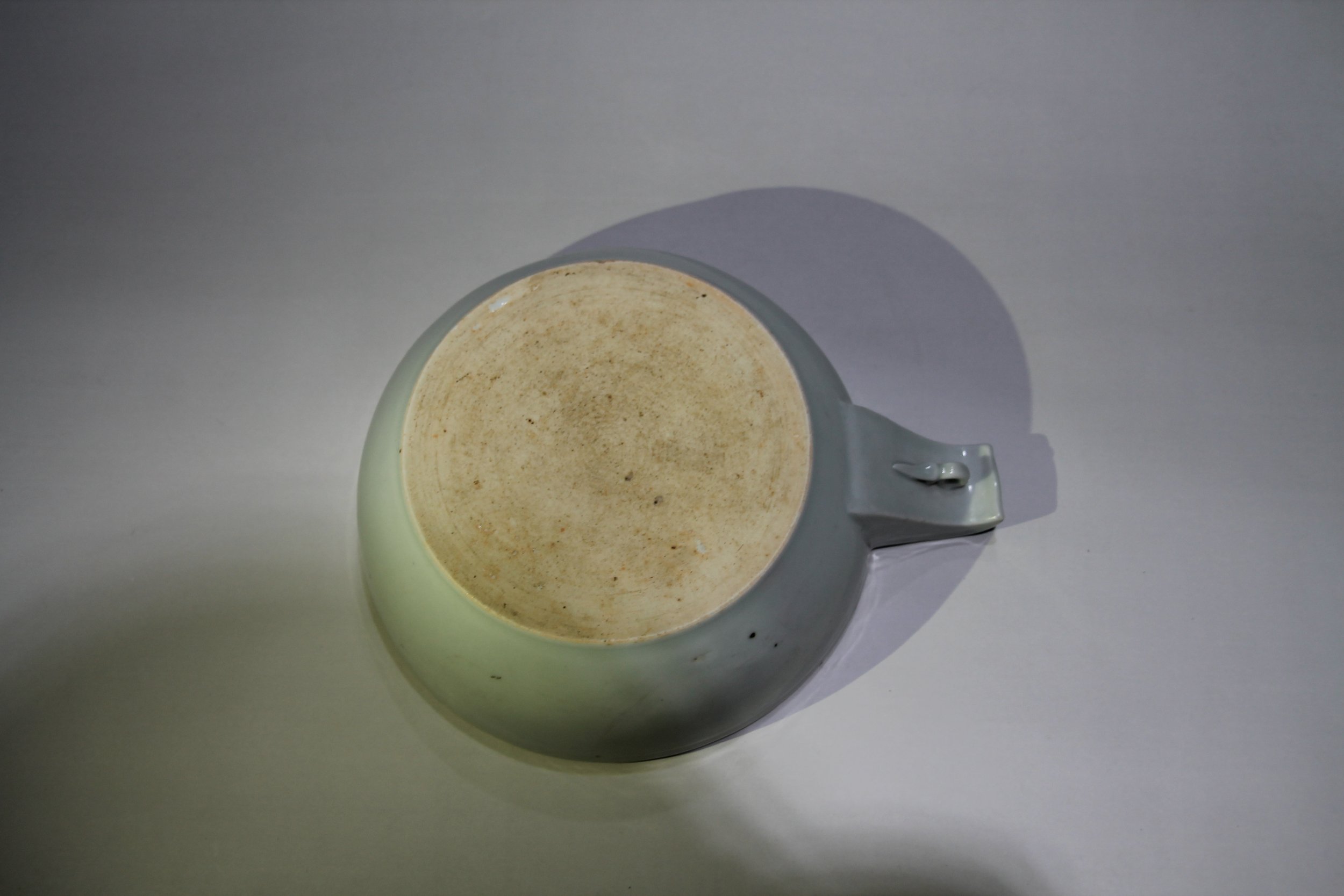 Image 6 of 10
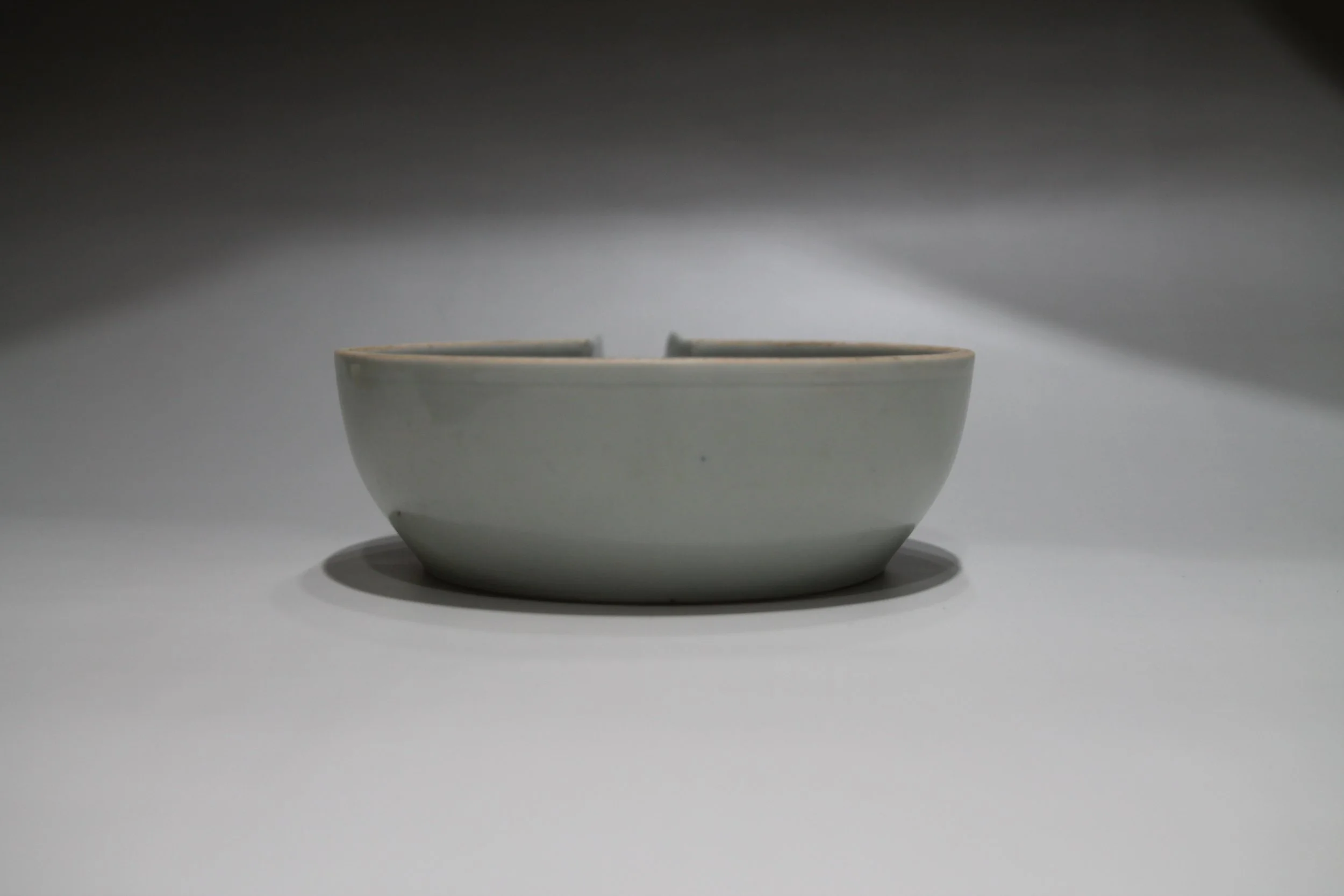 Image 7 of 10
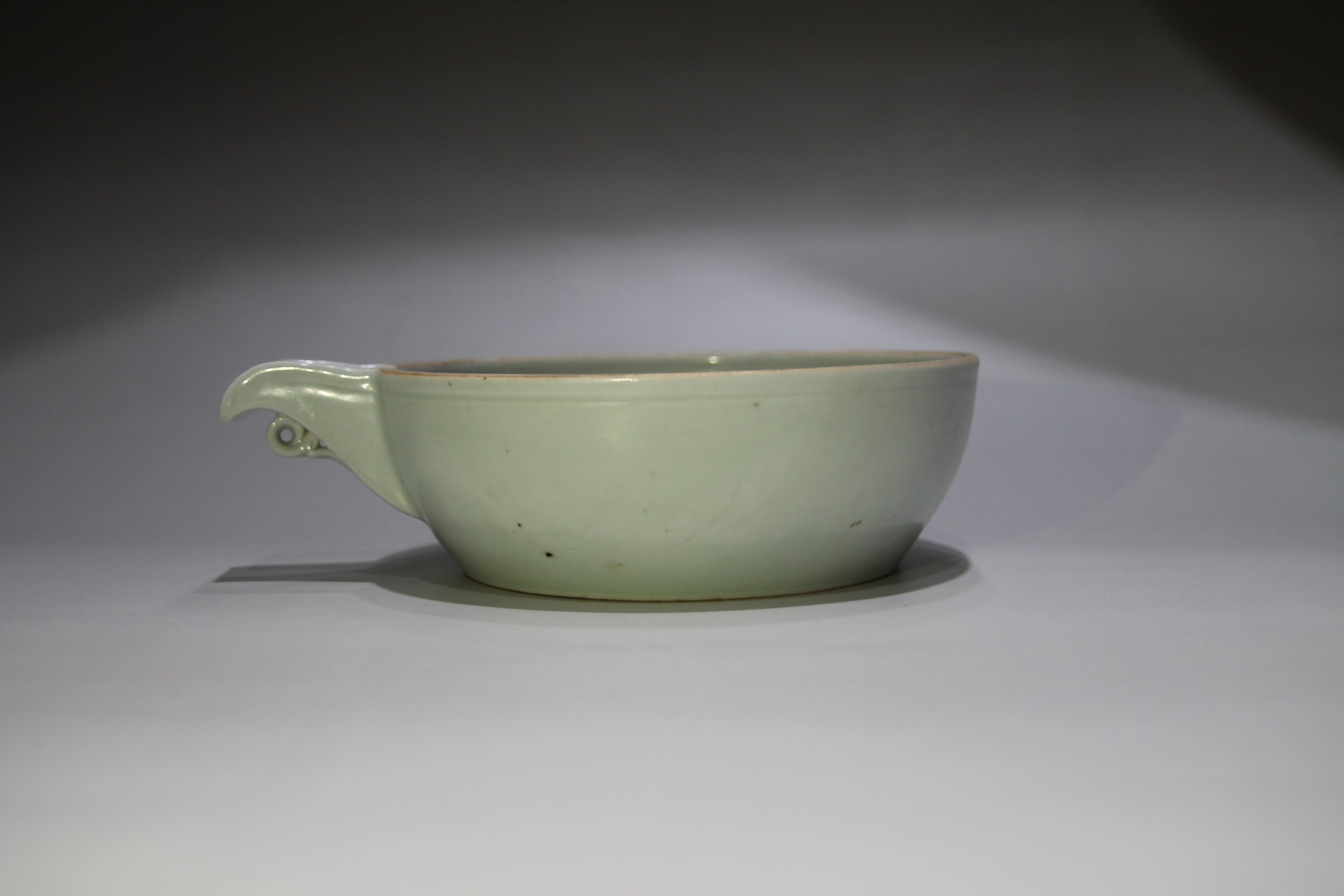 Image 8 of 10
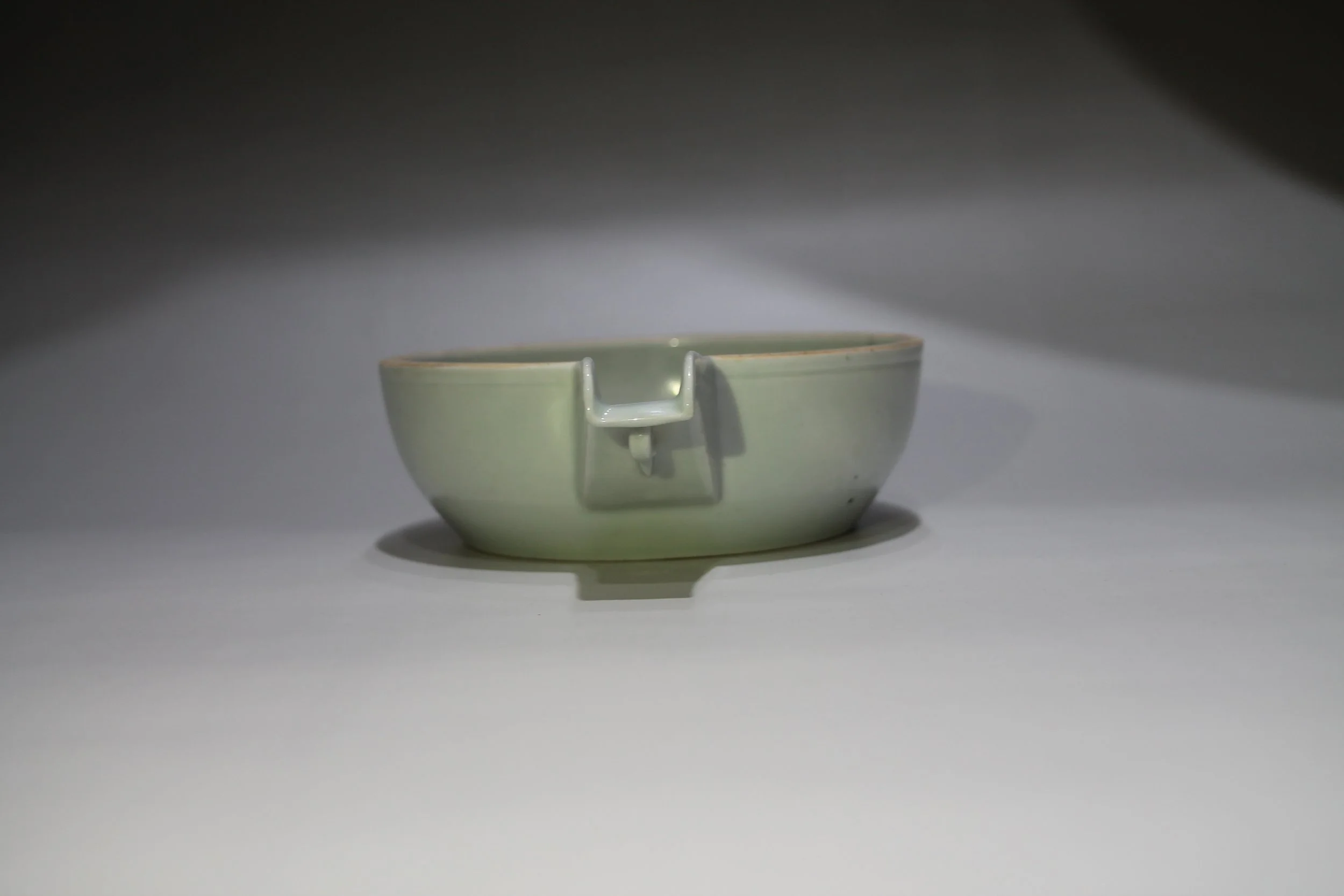 Image 9 of 10
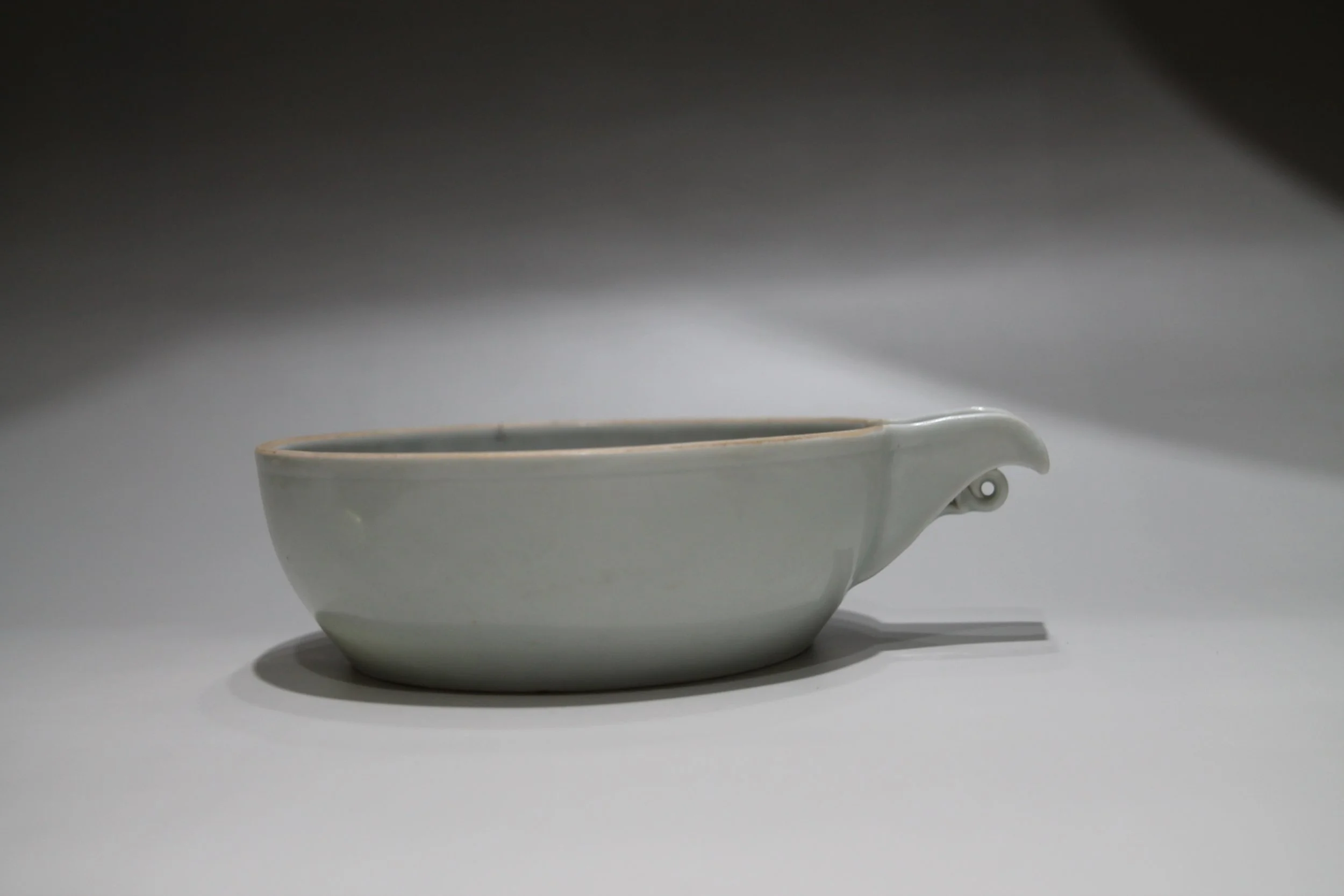 Image 10 of 10