Form and Structure
Standing 16 cm tall, this vase masterfully integrates round and square forms, reflecting the Xuande period craftsmen’s philosophical pursuit of harmonizing “the round heaven and the square earth.” The upper section features a slender, cylindrical neck flanked by a pair of elephant-head handles holding rings—a robust and solemn motif symbolizing “peace and magnificence.” The lower body transitions into a square shape with crisp edges softened by subtle chamfers, blending strength with grace. The unglazed ring foot reveals a fine, firm clay body with natural oxidized reddish-brown spots, a hallmark of Xuande porcelain. The elegant interplay of round and square contours showcases the pinnacle of three-dimensional design in Ming dynasty ceramics.
Decoration and Technique
The main body is painted with a scrolling morning glory vine in a rich cobalt blue. Intense areas show the characteristic “iron-rust” spots typical of Sumali blue pigment. The vine winds dynamically like a roaming dragon, while the leaves display the distinct “gourd-shaped” style of the Xuande era. The flowers are rendered in various postures—some blooming openly, others tilting gently—creating a lively rhythm. The design follows symmetrical principles yet retains a natural vitality, combining precise outlining with expressive washes to demonstrate the painter’s exceptional skill in balancing pattern and spontaneity. The elephant-head handles are accentuated with blue-and-white details, capturing both form and spirit of the auspicious animal.
Mark and Authentication
The base is evenly glazed, bearing a six-character reign mark in underglaze blue: “Made in the Great Ming Xuande Reign,” arranged in two columns within a double square frame. The calligraphy is vigorous and regular, consistent with standard Xuande official ware markings. The precisely drawn double frame and the harmonious blue tone align with period characteristics, serving as a key reference for authentication.
Historical Significance
Square vases are rare among Xuande porcelains, and this piece is especially precious for combining elephant-head handles with a morning glory motif. During the 15th century, the morning glory symbolized diligence and mutual encouragement among literati, while the elephant motif embodied imperial dignity. Their union reflects the Xuande court’s blending of scholarly refinement with ceremonial decorum. Though modest in size, this vase synthesizes exceptional form, brilliant cobalt artistry, and layered symbolism, representing a miniature masterpiece of the Xuande official kiln’s shift toward literati taste and artistic refinement.
Legacy
This vase fully embodies the technical excellence and aesthetic vision of the Yongle-Xuande golden age of porcelain, encapsulated in the saying “casting clay as its bone, transforming cobalt into its soul.” Its philosophical shape, freely yet masterfully painted blue-and-white decoration, and meticulous reign mark together form a tangible testament to the cultural and artistic achievements of the Ming dynasty. More than an ornamental object, it serves as a vital material artifact for understanding the craftsmanship, aesthetics, and cultural spirit of the Xuande reign.
宣德青花牵牛花纹象耳四方瓶
器型特征
此瓶高16厘米,造型融合方圆之趣,体现了宣德时期制瓷匠人“天圆地方”的哲学巧思。上部为挺拔圆颈,两侧饰以象首衔环耳,象耳造型浑厚敦实,寓意“太平有象”;下部器身转为四方体,棱线挺拔而边沿作含蓄倒角处理,刚柔并济。底承露胎圈足,胎骨坚实细腻,火石红自然渗出,为宣德胎土典型特征。整器轮廓线变化丰富,方圆转换流畅自如,堪称明代立体造型设计的典范。
纹饰工艺
瓶身主体绘缠枝牵牛花纹,青花发色浓艳靛蓝,深处可见铁锈斑凝结,乃苏麻离青料典型呈色。藤蔓婉转如游龙,叶片呈现宣德特有的“葫芦形”制式,花朵俯仰开合各具姿态。纹饰布局遵循轴对称法则却富于自然生趣,笔触既有工致的勾描,又见豪放的皴染,展现画师将图案性与写意性完美融合的高超技艺。象耳处以青花点睛,细节精微,使瑞兽形神兼备。
款识考证
底部釉面匀净,青花双圈内书“大明宣德年制”六字双行楷书款,笔力劲健,结字端庄,为宣德官窑标准款识格式。双圈描绘工整,青花色泽与纹饰浑然一体,时代特征鲜明。此类款识常见于宣德精品器物,成为后世鉴定的重要依据。
历史价值
宣德瓷器中四方瓶制式罕见,本品融合象耳装饰与牵牛花纹,尤显珍贵。牵牛花纹在十五世纪瓷器装饰中蕴含“勤劳共勉”的文人意趣,而象耳则彰显皇室威仪,二者结合折射出宣德时期宫廷审美中世俗情趣与礼制规范的交融。此器虽尺寸精巧,却集造型之妙、青花之美、寓意之深于一体,堪称宣德官窑文人化、艺术化转向的微型典范。
传承意义
该器完整传承了永乐、宣德时期“铸瓷为骨,化青为魂”的工艺精髓,其方圆相济的哲学造型、挥洒自如的青花笔墨、严谨工致的官窑款识,共同构成明代瓷器黄金时代的立体注脚。它不仅是一件陈设雅器,更是解码宣德朝工艺美学与文化气象的珍贵物质载体。
Form and Structure
Standing 16 cm tall, this vase masterfully integrates round and square forms, reflecting the Xuande period craftsmen’s philosophical pursuit of harmonizing “the round heaven and the square earth.” The upper section features a slender, cylindrical neck flanked by a pair of elephant-head handles holding rings—a robust and solemn motif symbolizing “peace and magnificence.” The lower body transitions into a square shape with crisp edges softened by subtle chamfers, blending strength with grace. The unglazed ring foot reveals a fine, firm clay body with natural oxidized reddish-brown spots, a hallmark of Xuande porcelain. The elegant interplay of round and square contours showcases the pinnacle of three-dimensional design in Ming dynasty ceramics.
Decoration and Technique
The main body is painted with a scrolling morning glory vine in a rich cobalt blue. Intense areas show the characteristic “iron-rust” spots typical of Sumali blue pigment. The vine winds dynamically like a roaming dragon, while the leaves display the distinct “gourd-shaped” style of the Xuande era. The flowers are rendered in various postures—some blooming openly, others tilting gently—creating a lively rhythm. The design follows symmetrical principles yet retains a natural vitality, combining precise outlining with expressive washes to demonstrate the painter’s exceptional skill in balancing pattern and spontaneity. The elephant-head handles are accentuated with blue-and-white details, capturing both form and spirit of the auspicious animal.
Mark and Authentication
The base is evenly glazed, bearing a six-character reign mark in underglaze blue: “Made in the Great Ming Xuande Reign,” arranged in two columns within a double square frame. The calligraphy is vigorous and regular, consistent with standard Xuande official ware markings. The precisely drawn double frame and the harmonious blue tone align with period characteristics, serving as a key reference for authentication.
Historical Significance
Square vases are rare among Xuande porcelains, and this piece is especially precious for combining elephant-head handles with a morning glory motif. During the 15th century, the morning glory symbolized diligence and mutual encouragement among literati, while the elephant motif embodied imperial dignity. Their union reflects the Xuande court’s blending of scholarly refinement with ceremonial decorum. Though modest in size, this vase synthesizes exceptional form, brilliant cobalt artistry, and layered symbolism, representing a miniature masterpiece of the Xuande official kiln’s shift toward literati taste and artistic refinement.
Legacy
This vase fully embodies the technical excellence and aesthetic vision of the Yongle-Xuande golden age of porcelain, encapsulated in the saying “casting clay as its bone, transforming cobalt into its soul.” Its philosophical shape, freely yet masterfully painted blue-and-white decoration, and meticulous reign mark together form a tangible testament to the cultural and artistic achievements of the Ming dynasty. More than an ornamental object, it serves as a vital material artifact for understanding the craftsmanship, aesthetics, and cultural spirit of the Xuande reign.
宣德青花牵牛花纹象耳四方瓶
器型特征
此瓶高16厘米,造型融合方圆之趣,体现了宣德时期制瓷匠人“天圆地方”的哲学巧思。上部为挺拔圆颈,两侧饰以象首衔环耳,象耳造型浑厚敦实,寓意“太平有象”;下部器身转为四方体,棱线挺拔而边沿作含蓄倒角处理,刚柔并济。底承露胎圈足,胎骨坚实细腻,火石红自然渗出,为宣德胎土典型特征。整器轮廓线变化丰富,方圆转换流畅自如,堪称明代立体造型设计的典范。
纹饰工艺
瓶身主体绘缠枝牵牛花纹,青花发色浓艳靛蓝,深处可见铁锈斑凝结,乃苏麻离青料典型呈色。藤蔓婉转如游龙,叶片呈现宣德特有的“葫芦形”制式,花朵俯仰开合各具姿态。纹饰布局遵循轴对称法则却富于自然生趣,笔触既有工致的勾描,又见豪放的皴染,展现画师将图案性与写意性完美融合的高超技艺。象耳处以青花点睛,细节精微,使瑞兽形神兼备。
款识考证
底部釉面匀净,青花双圈内书“大明宣德年制”六字双行楷书款,笔力劲健,结字端庄,为宣德官窑标准款识格式。双圈描绘工整,青花色泽与纹饰浑然一体,时代特征鲜明。此类款识常见于宣德精品器物,成为后世鉴定的重要依据。
历史价值
宣德瓷器中四方瓶制式罕见,本品融合象耳装饰与牵牛花纹,尤显珍贵。牵牛花纹在十五世纪瓷器装饰中蕴含“勤劳共勉”的文人意趣,而象耳则彰显皇室威仪,二者结合折射出宣德时期宫廷审美中世俗情趣与礼制规范的交融。此器虽尺寸精巧,却集造型之妙、青花之美、寓意之深于一体,堪称宣德官窑文人化、艺术化转向的微型典范。
传承意义
该器完整传承了永乐、宣德时期“铸瓷为骨,化青为魂”的工艺精髓,其方圆相济的哲学造型、挥洒自如的青花笔墨、严谨工致的官窑款识,共同构成明代瓷器黄金时代的立体注脚。它不仅是一件陈设雅器,更是解码宣德朝工艺美学与文化气象的珍贵物质载体。
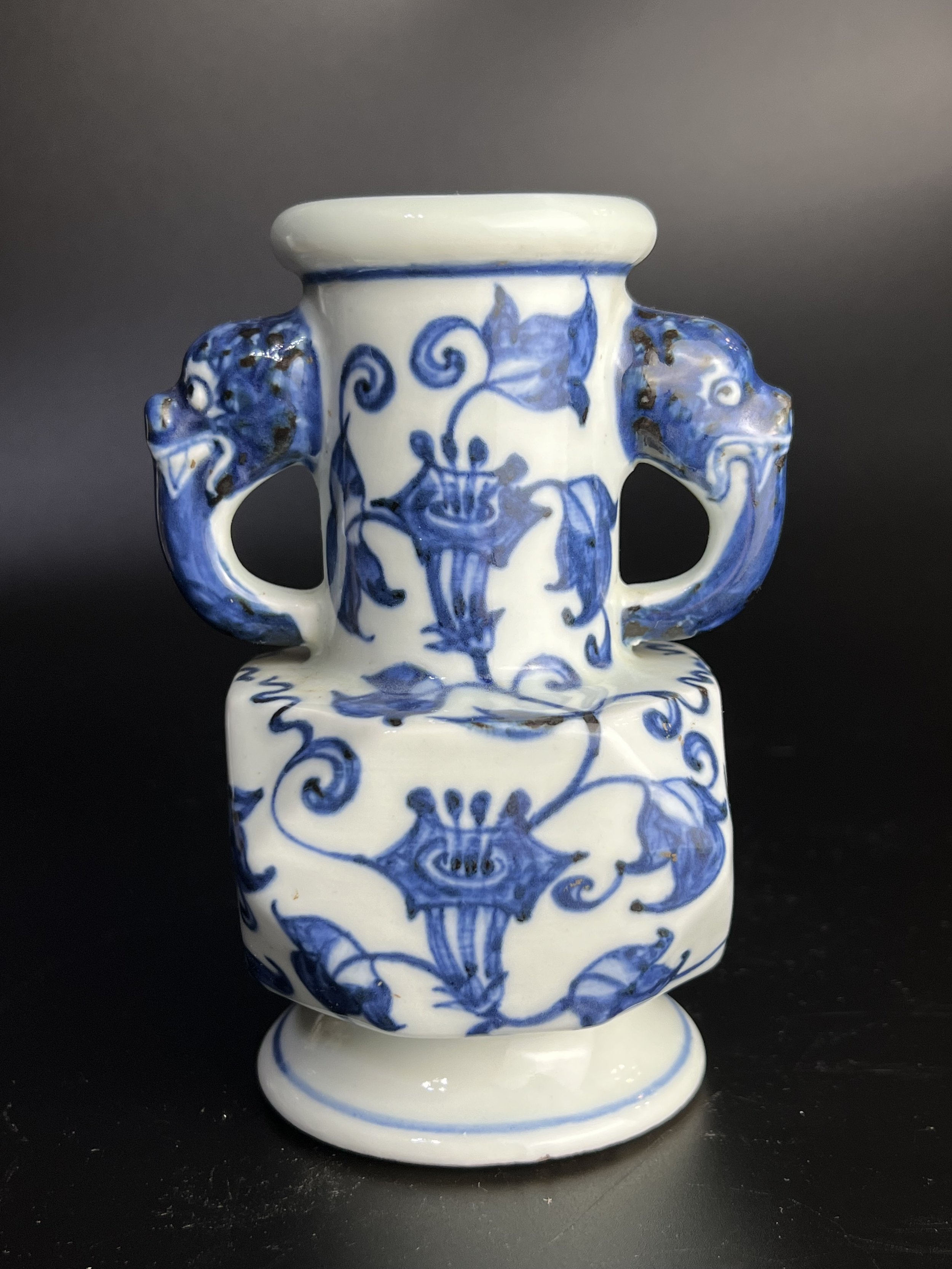 Image 1 of 11
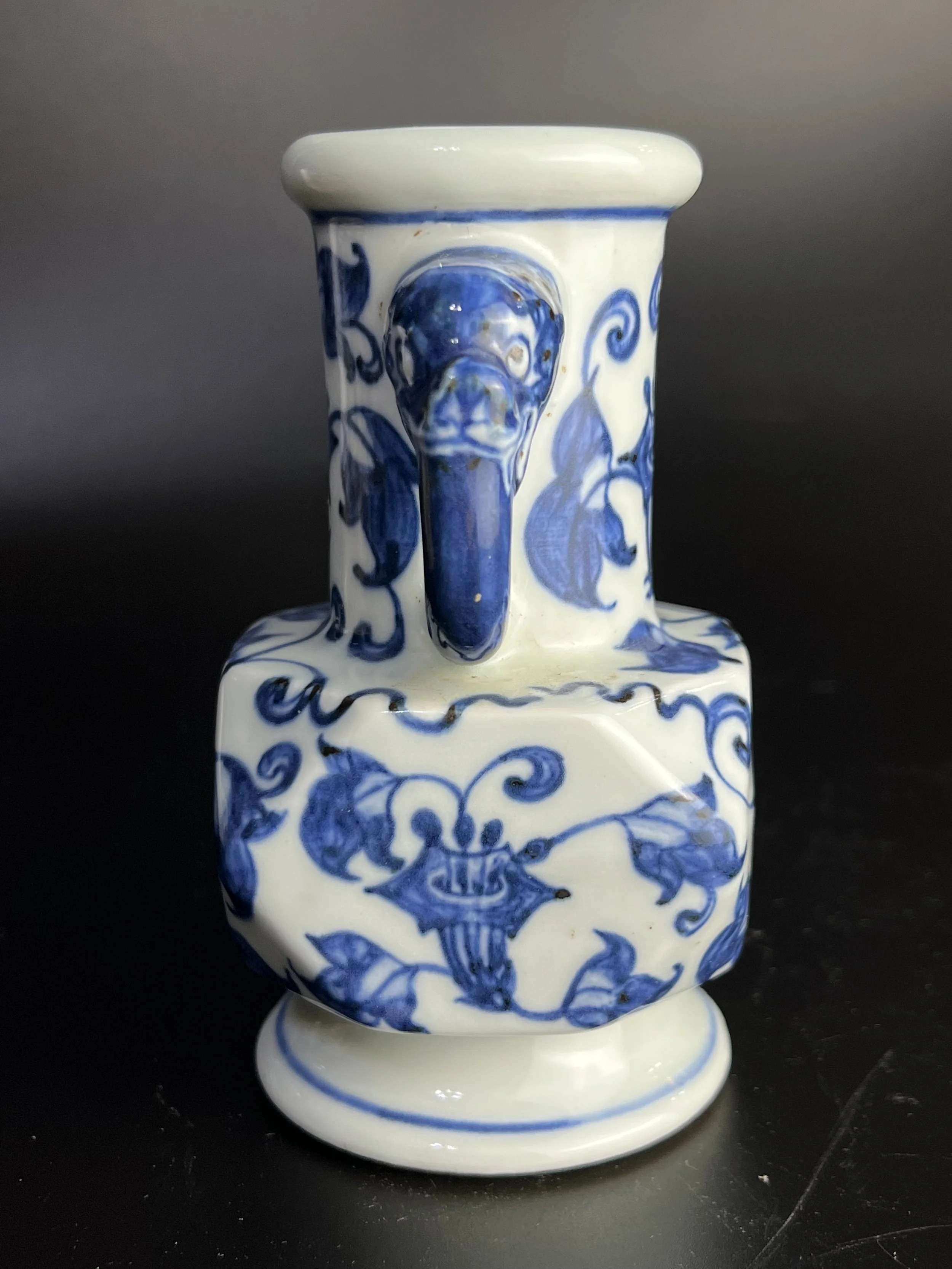 Image 2 of 11
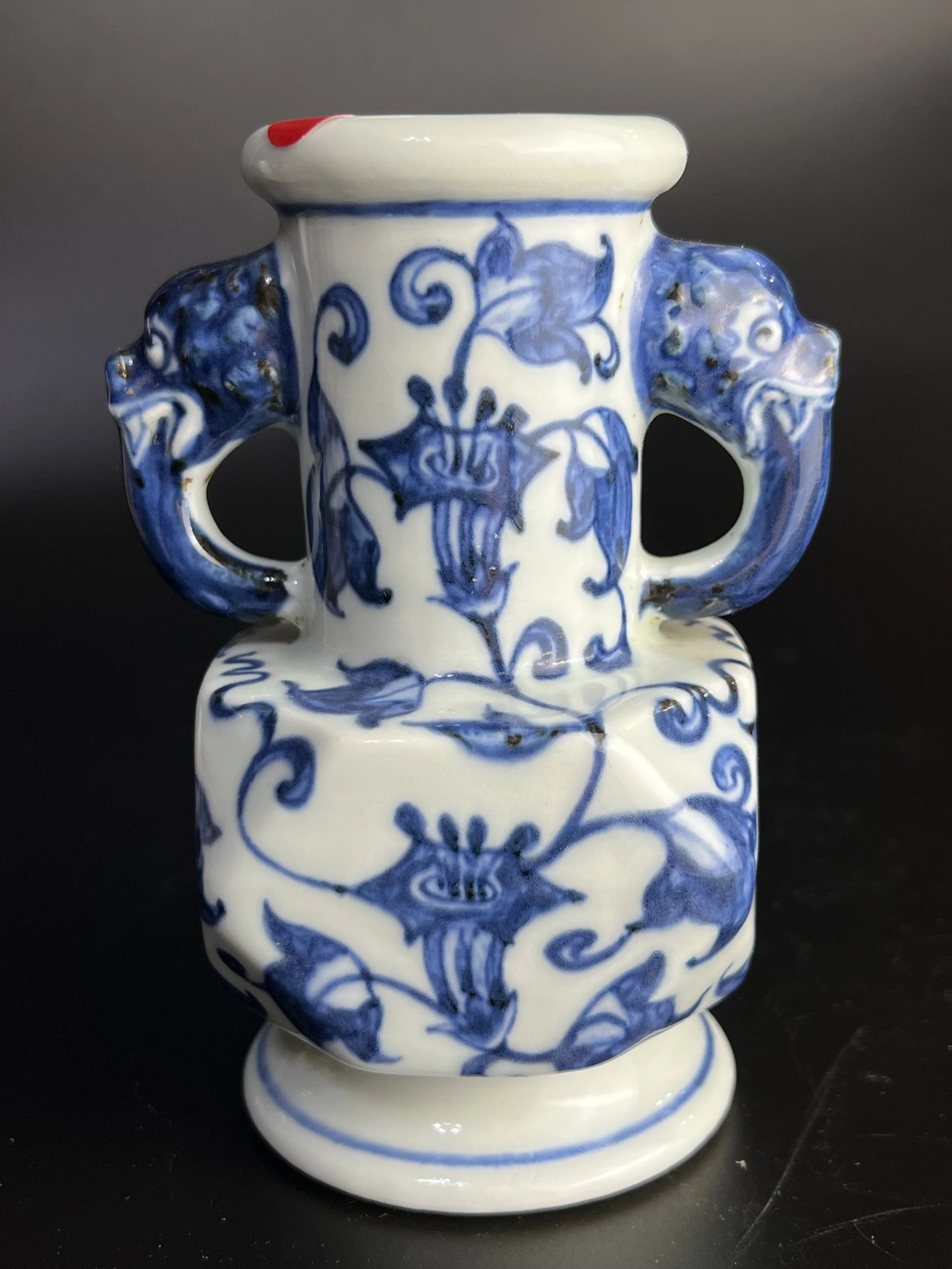 Image 3 of 11
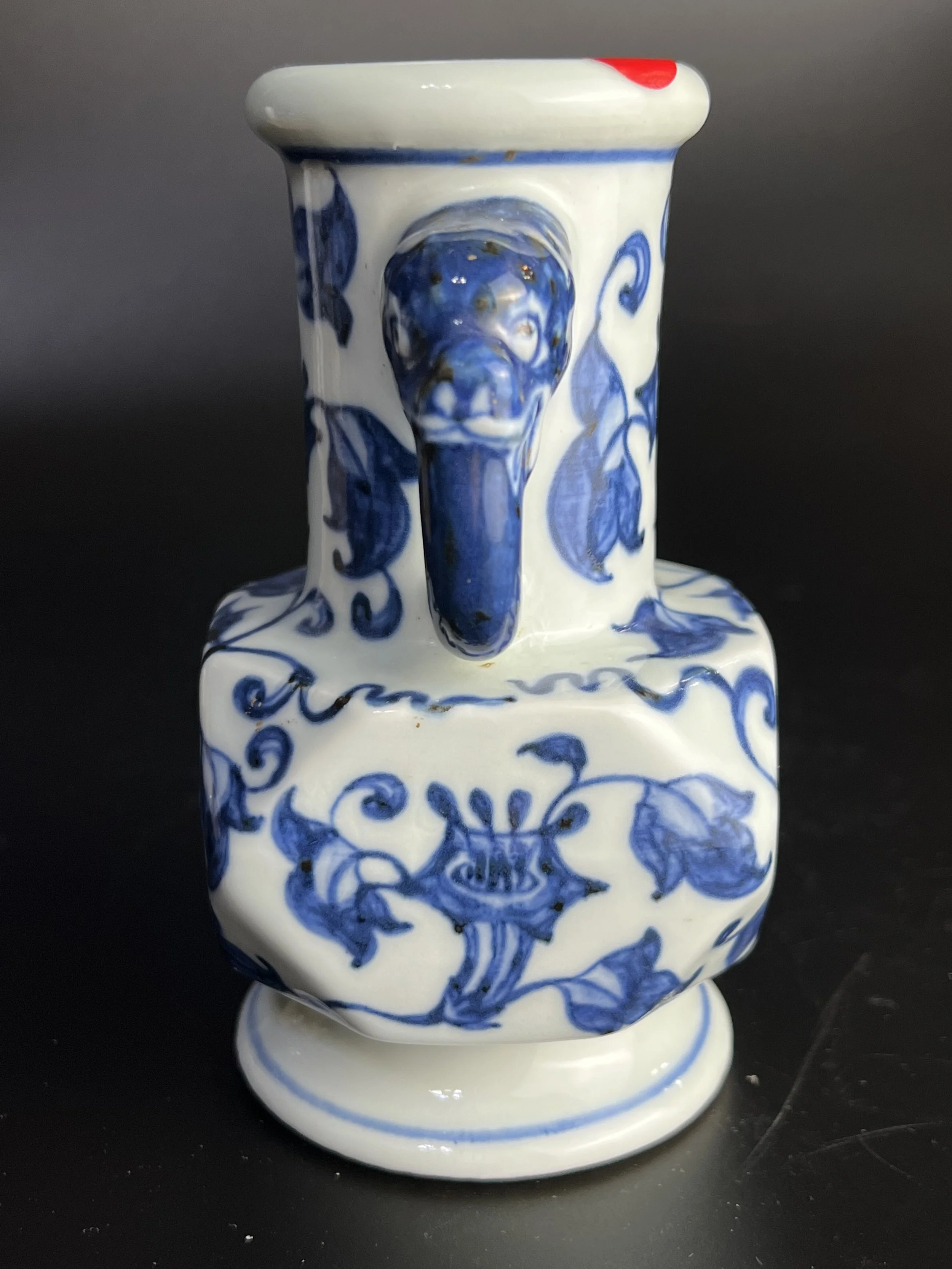 Image 4 of 11
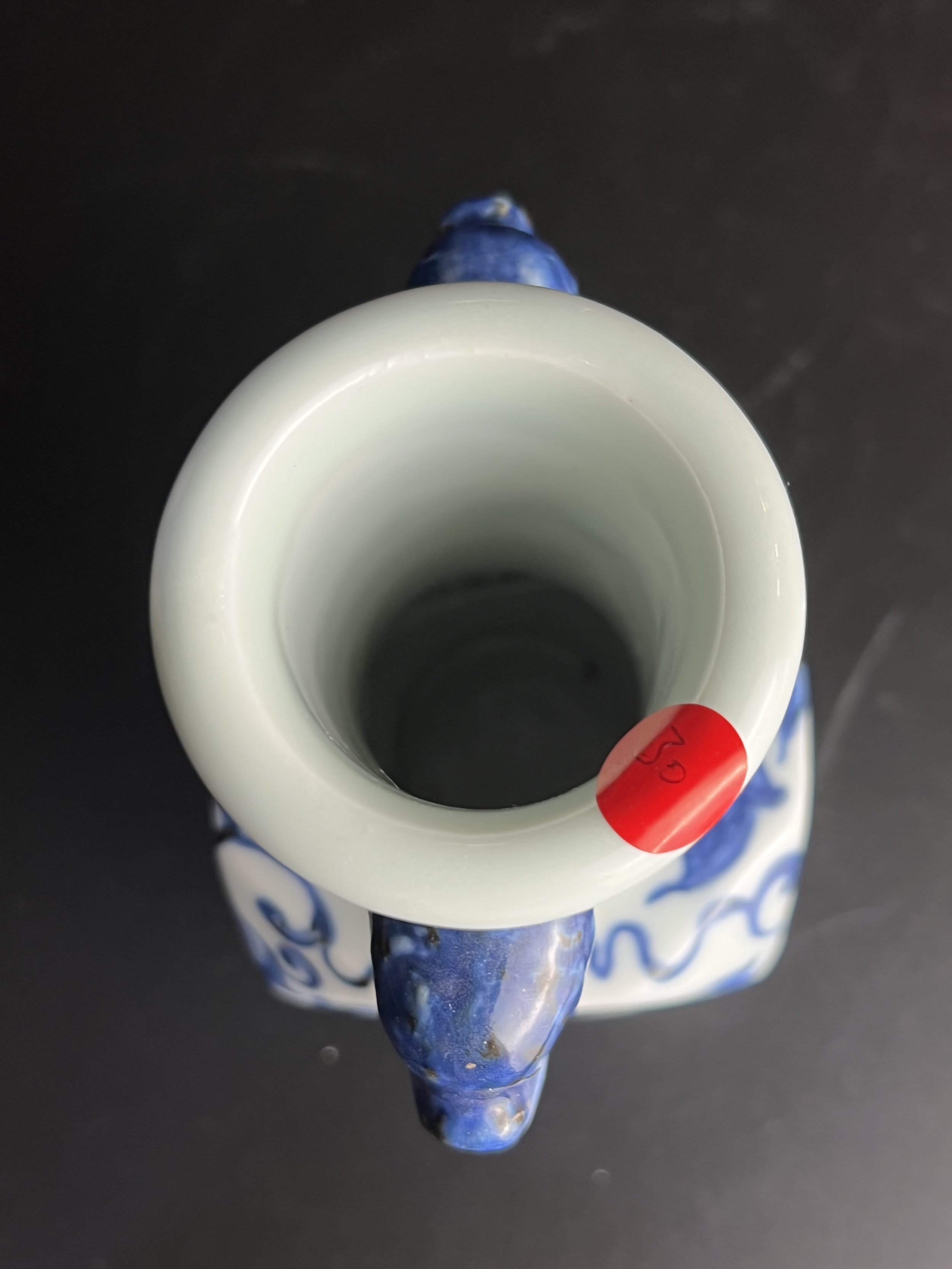 Image 5 of 11
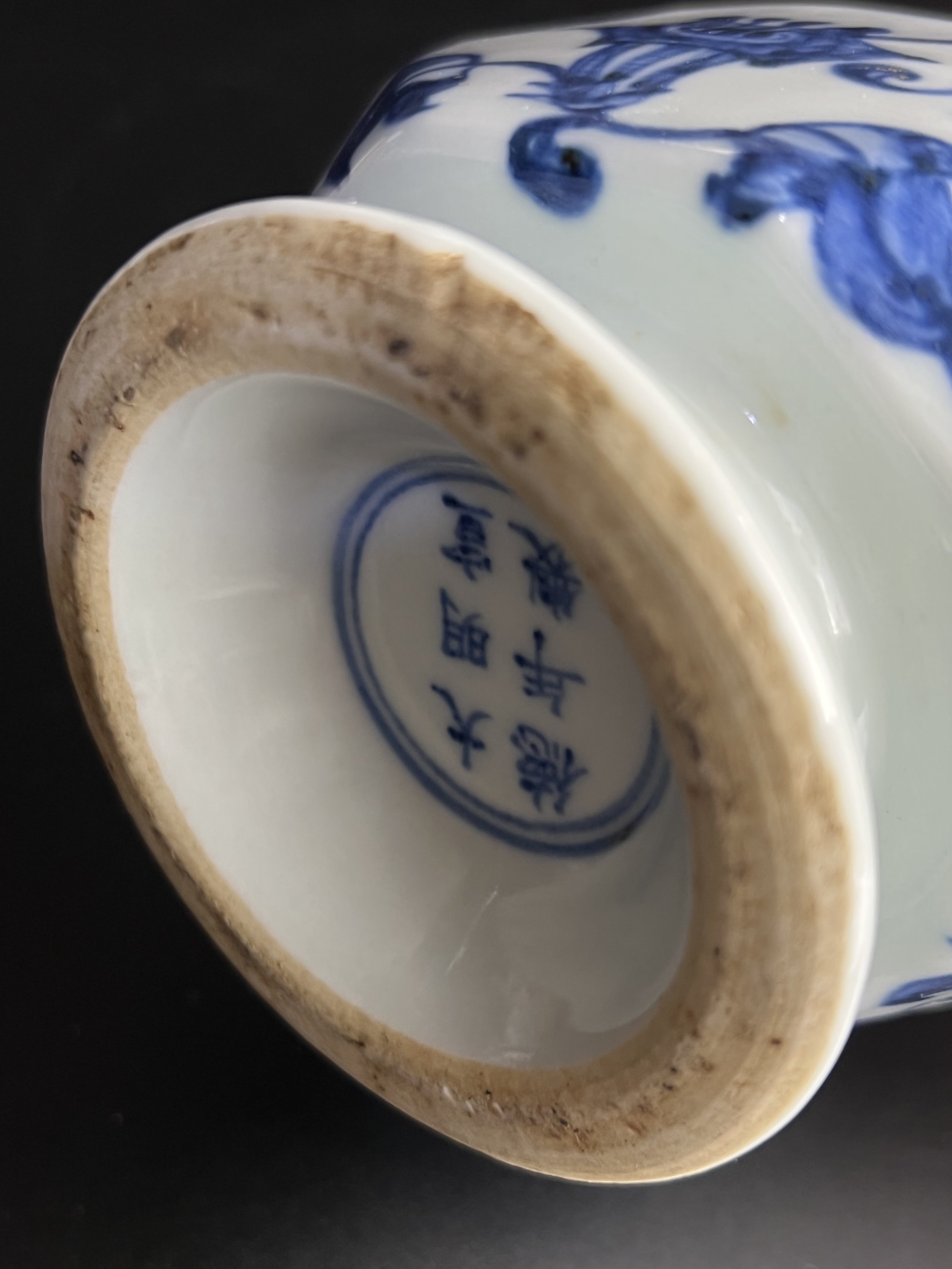 Image 6 of 11
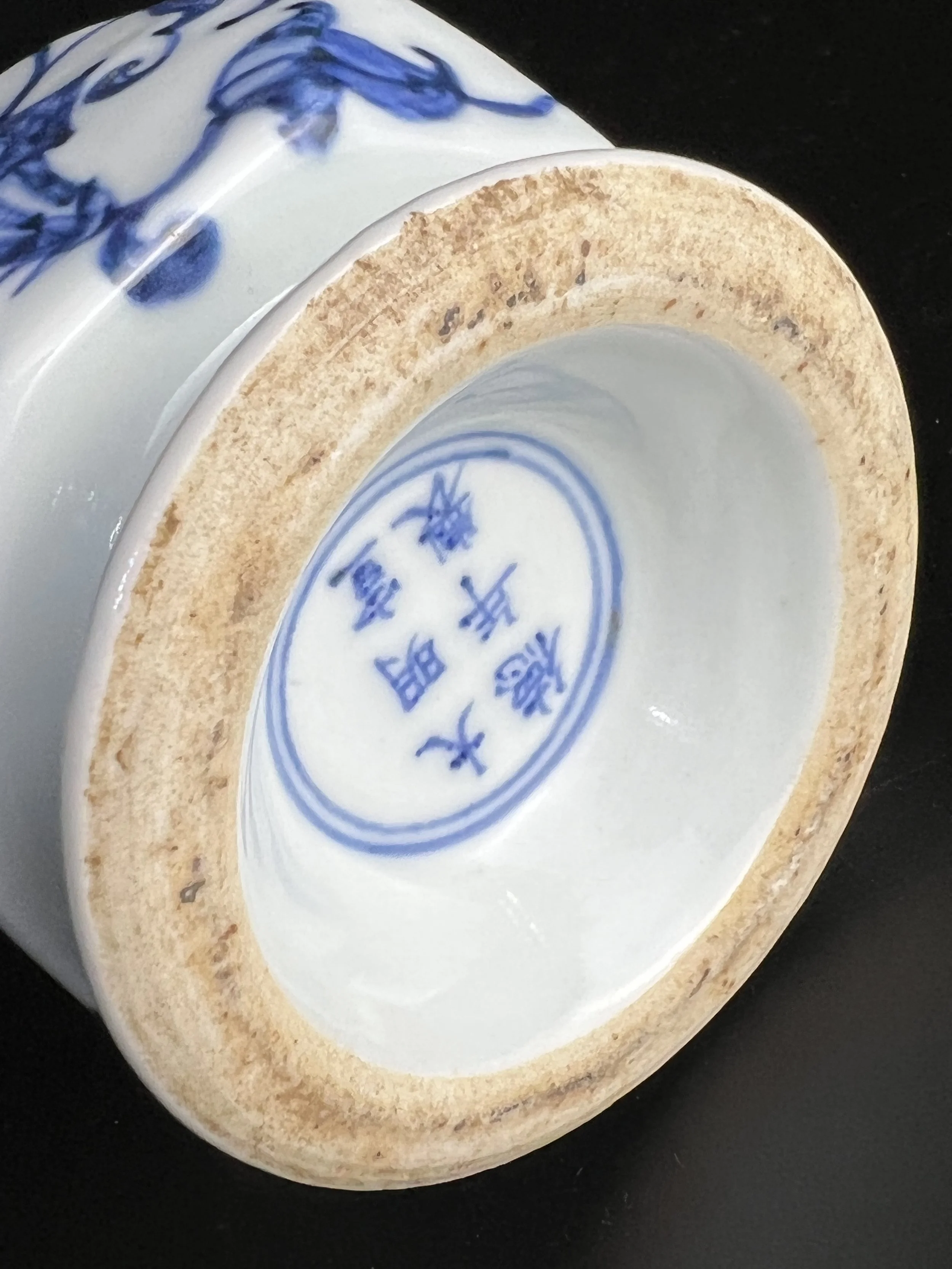 Image 7 of 11
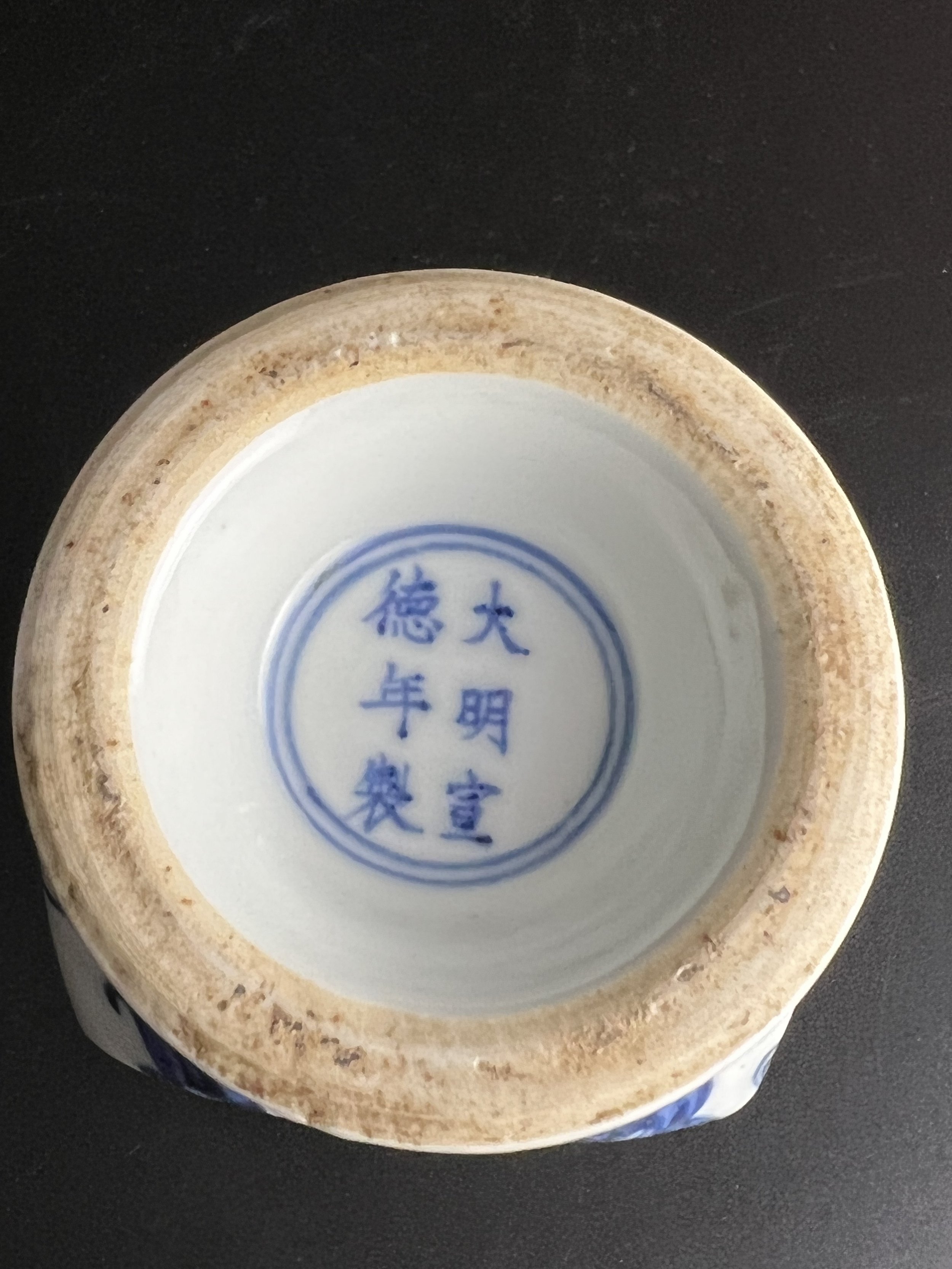 Image 8 of 11
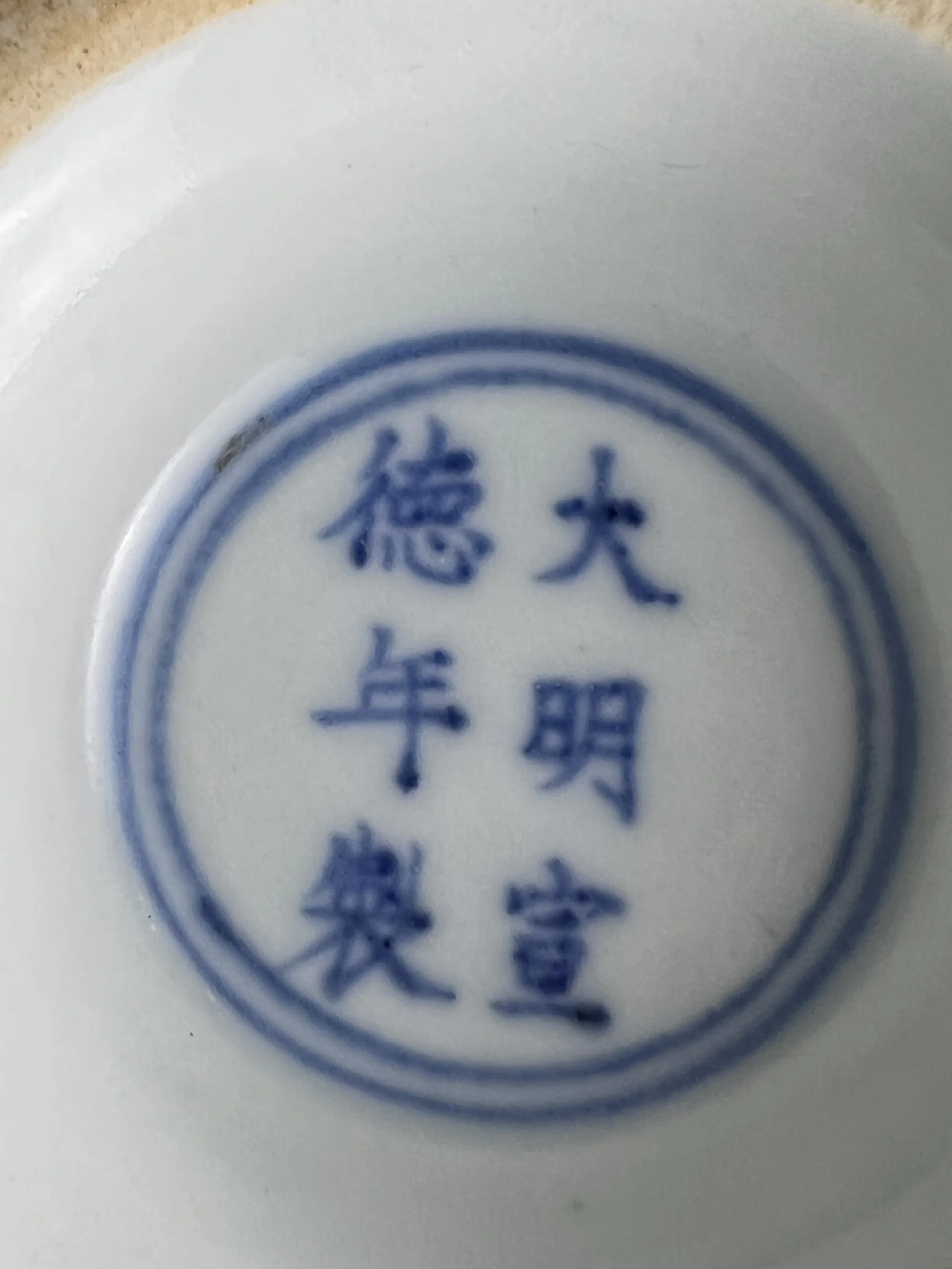 Image 9 of 11
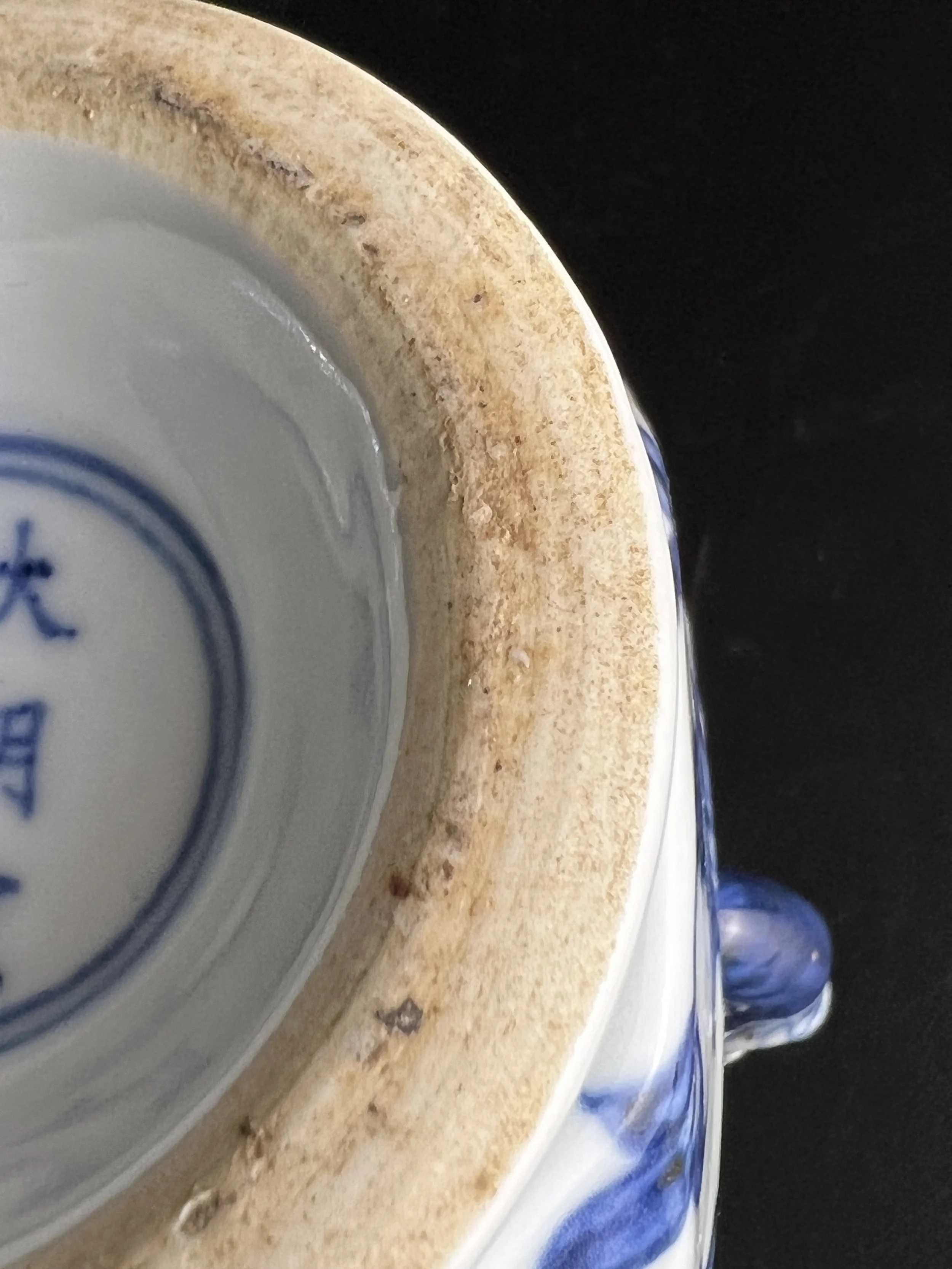 Image 10 of 11
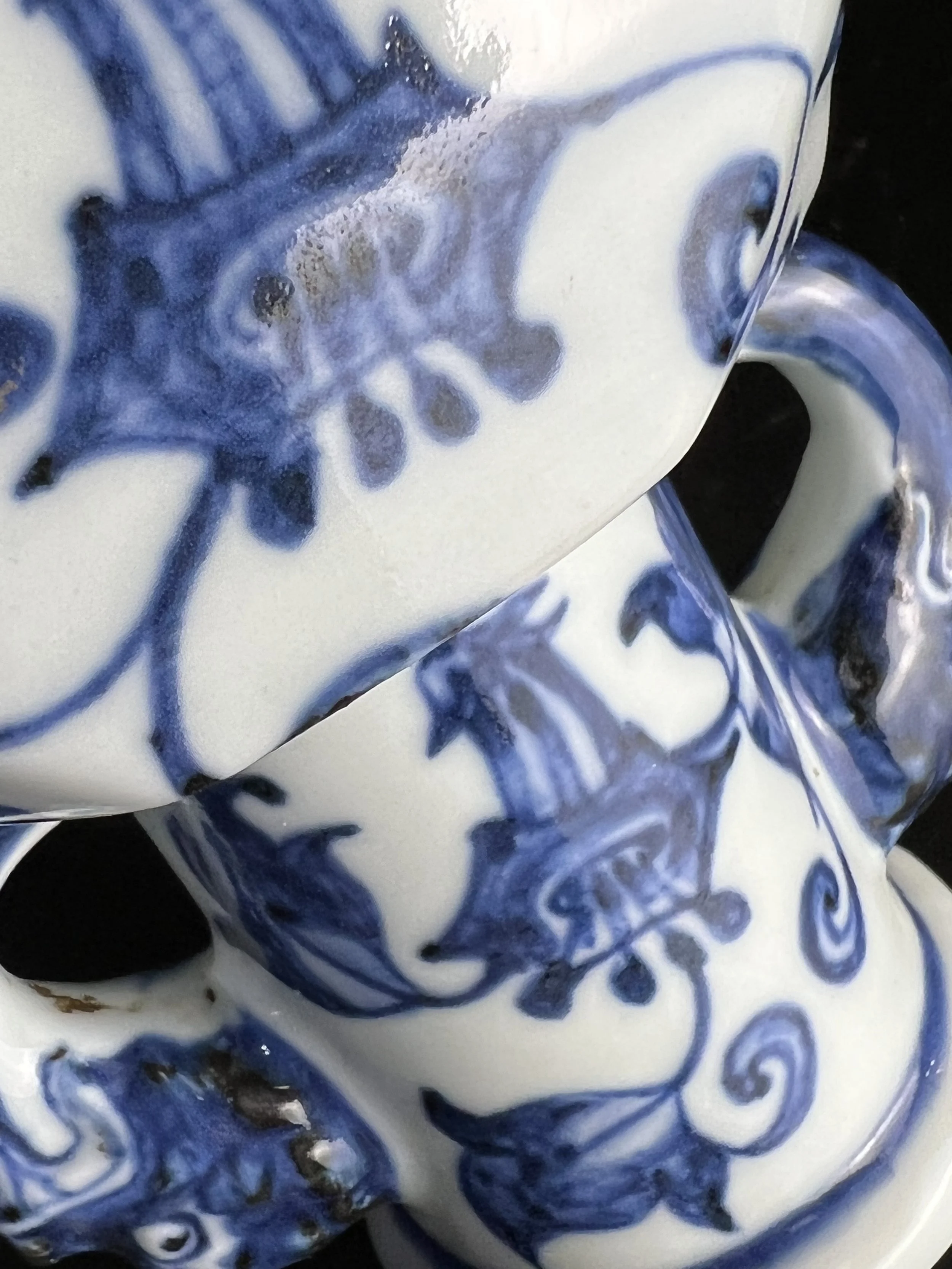 Image 11 of 11