 Image 1 of 12
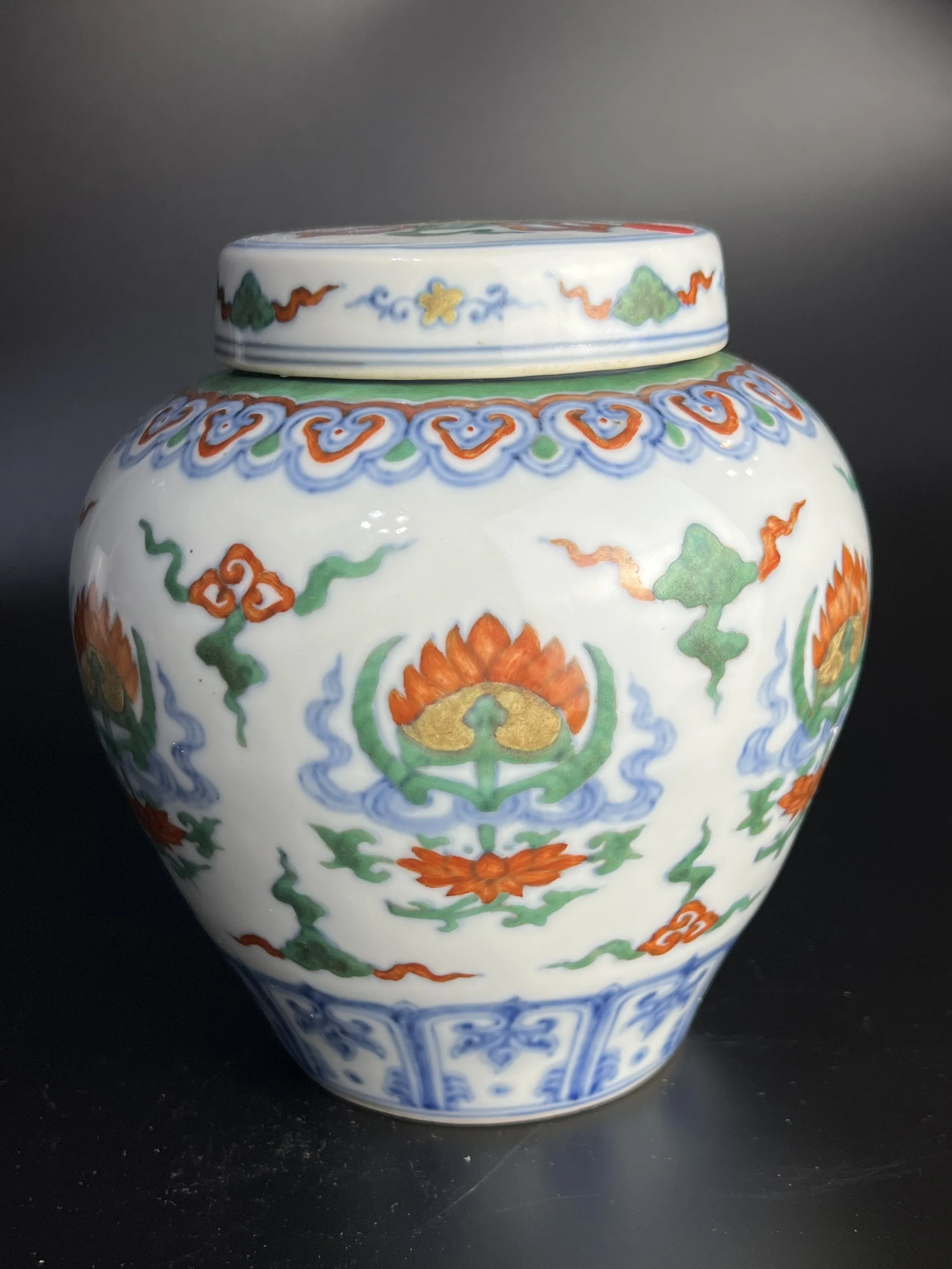 Image 2 of 12
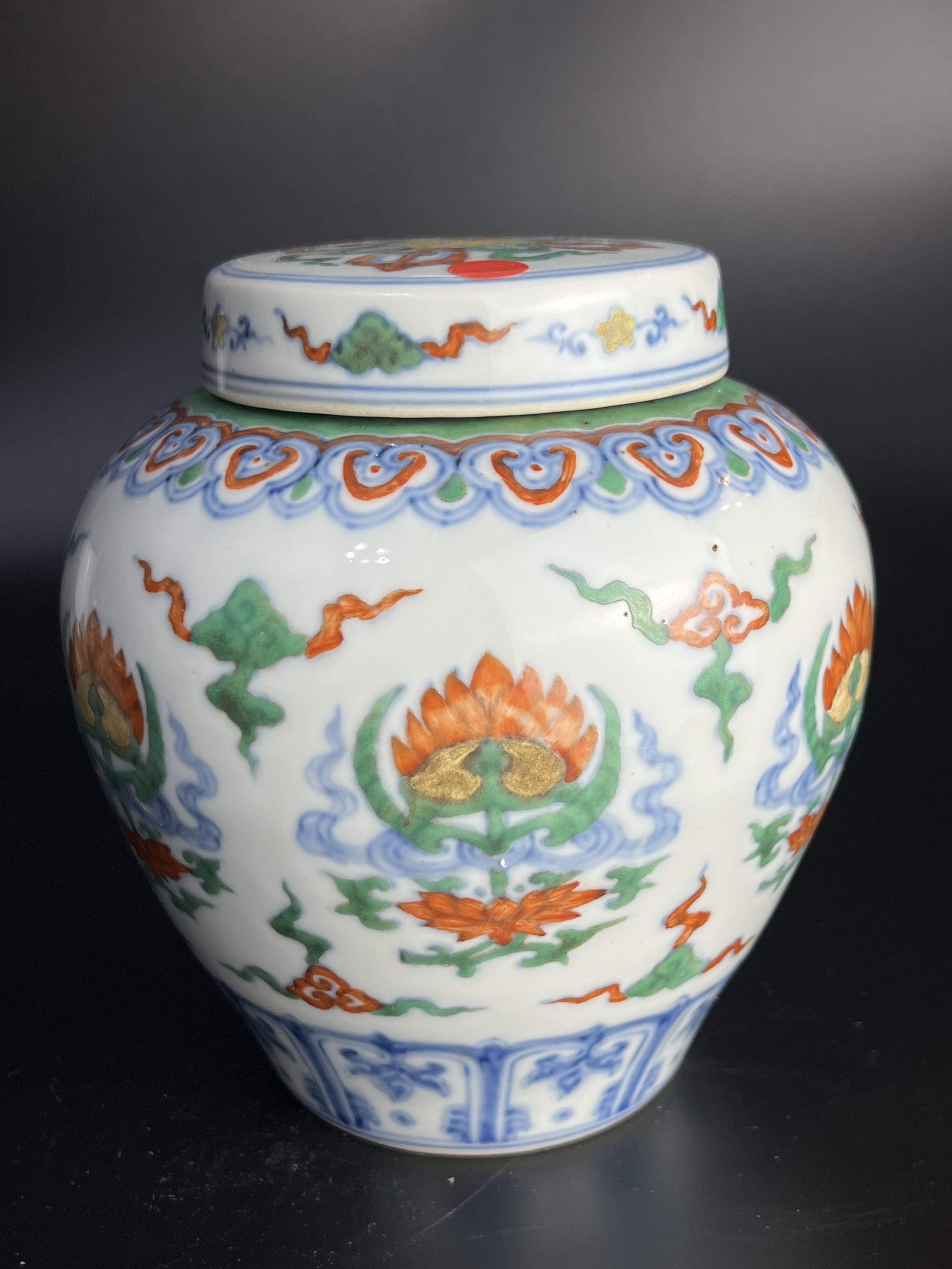 Image 3 of 12
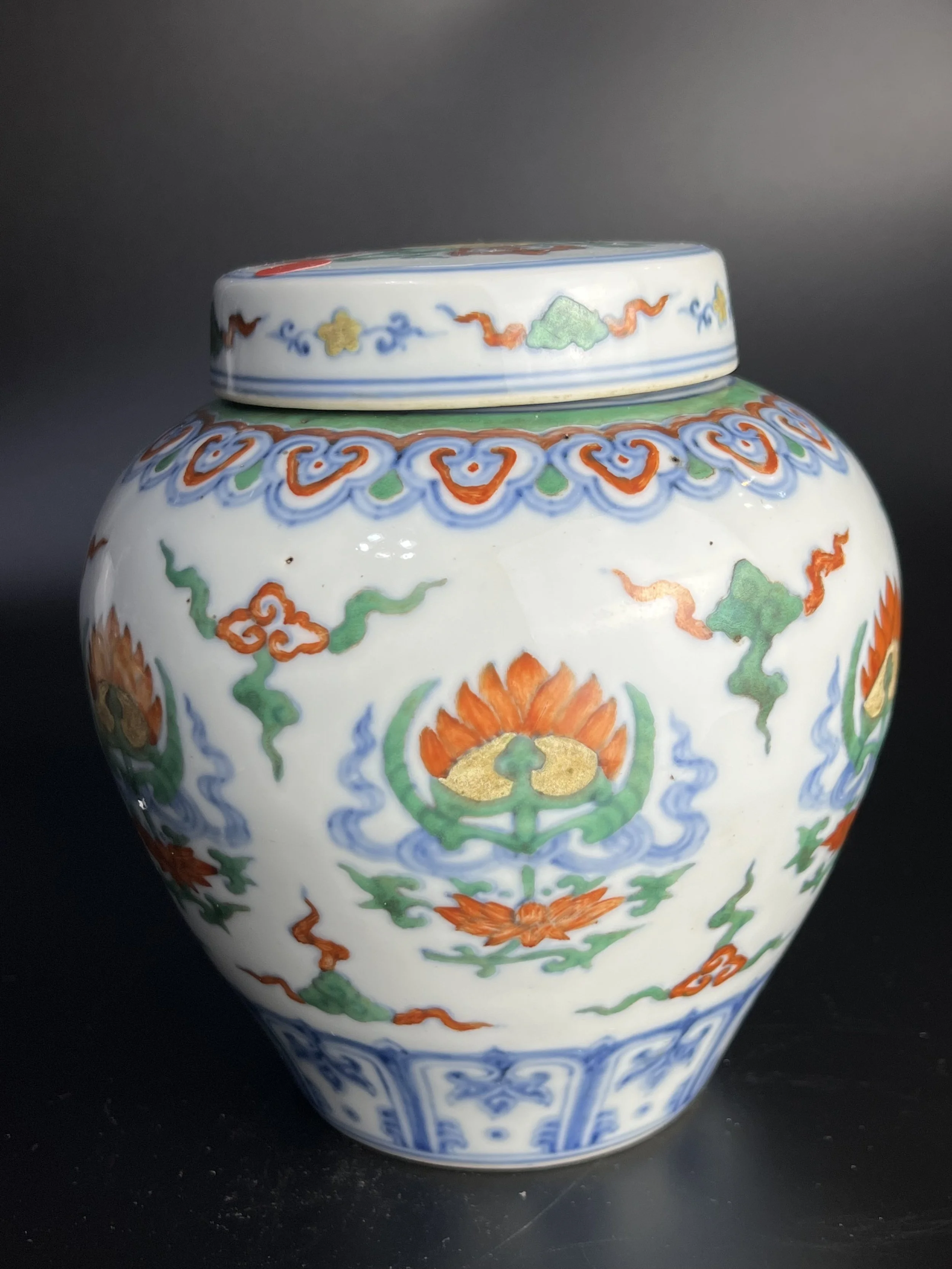 Image 4 of 12
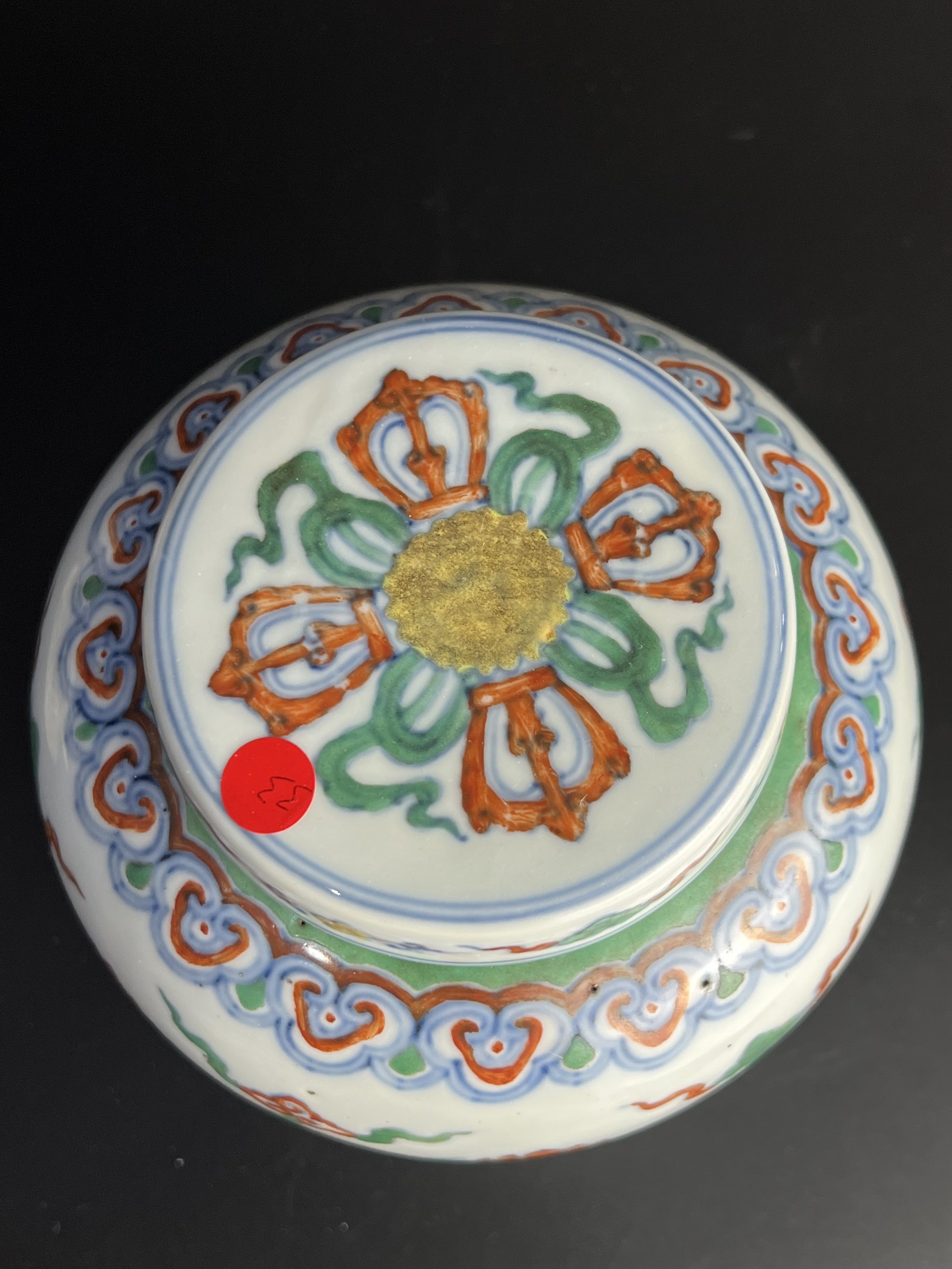 Image 5 of 12
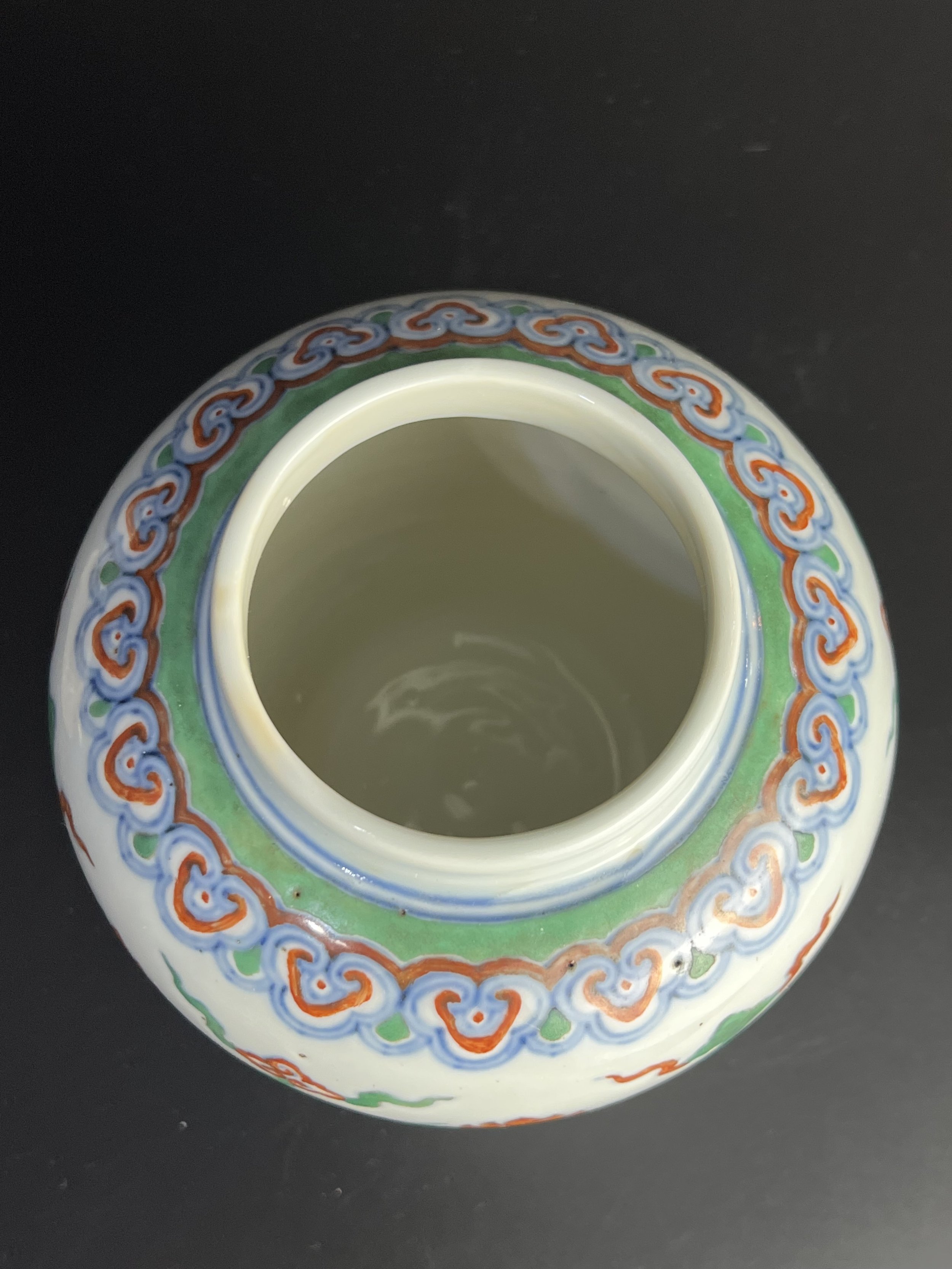 Image 6 of 12
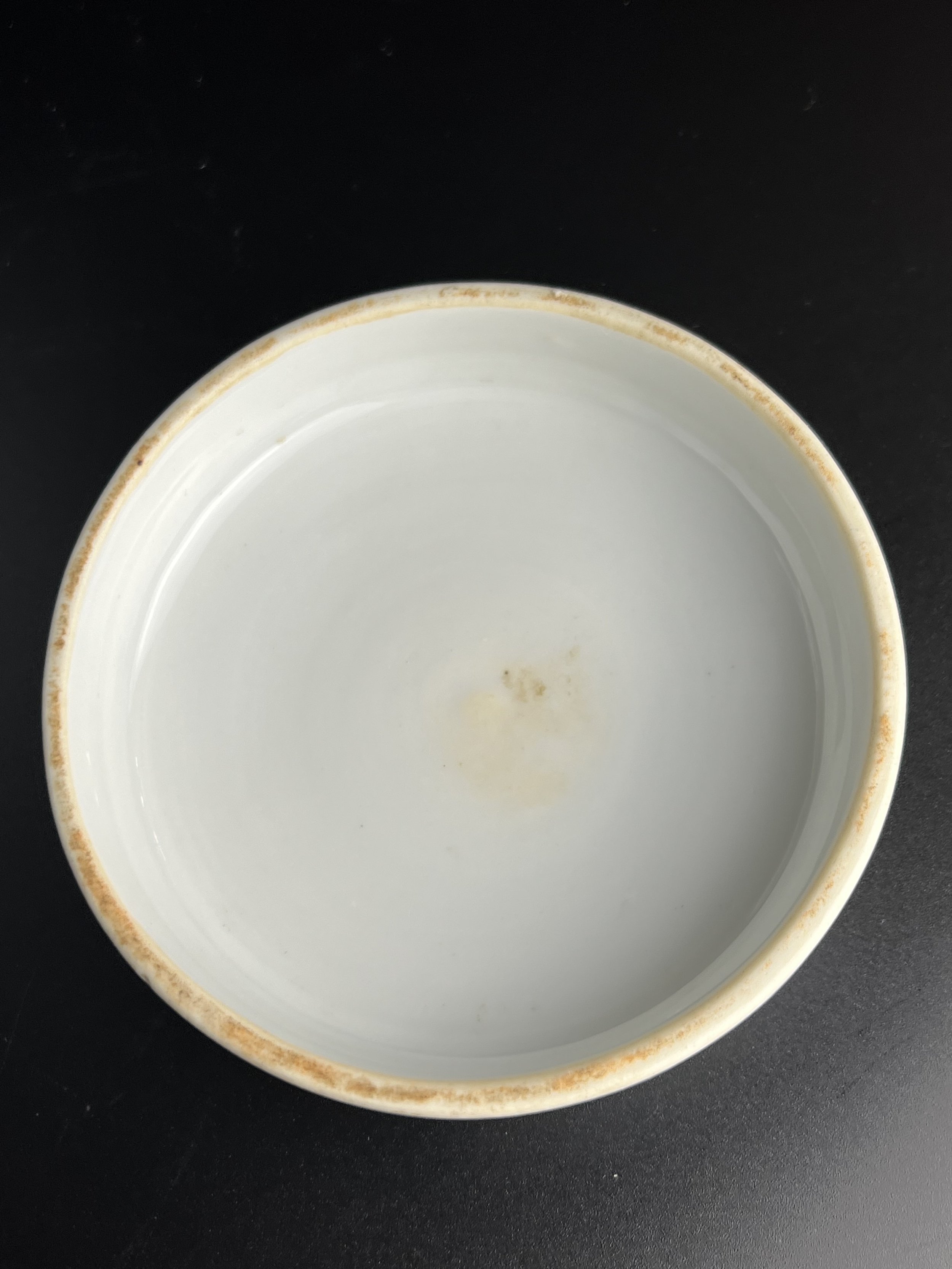 Image 7 of 12
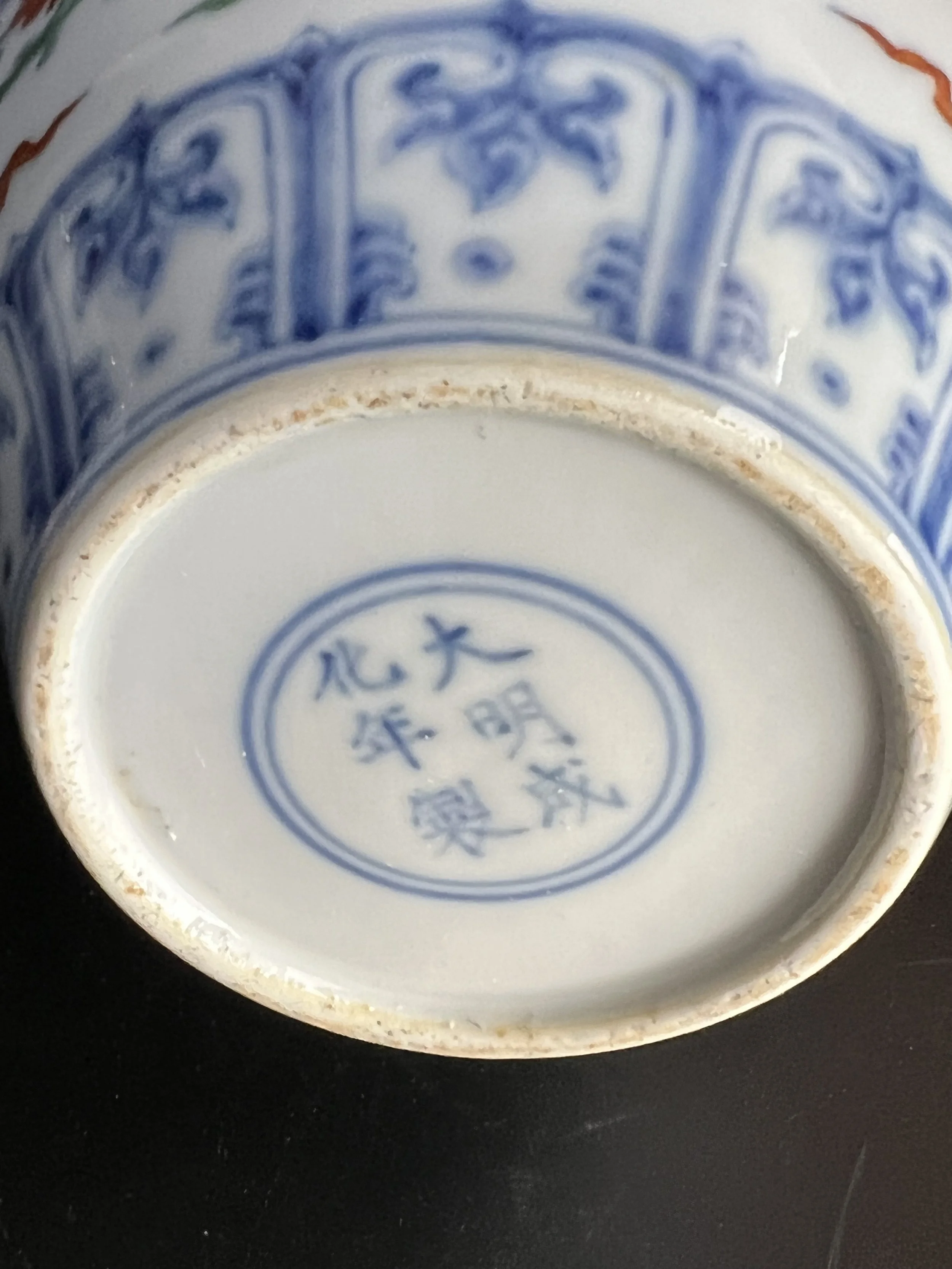 Image 8 of 12
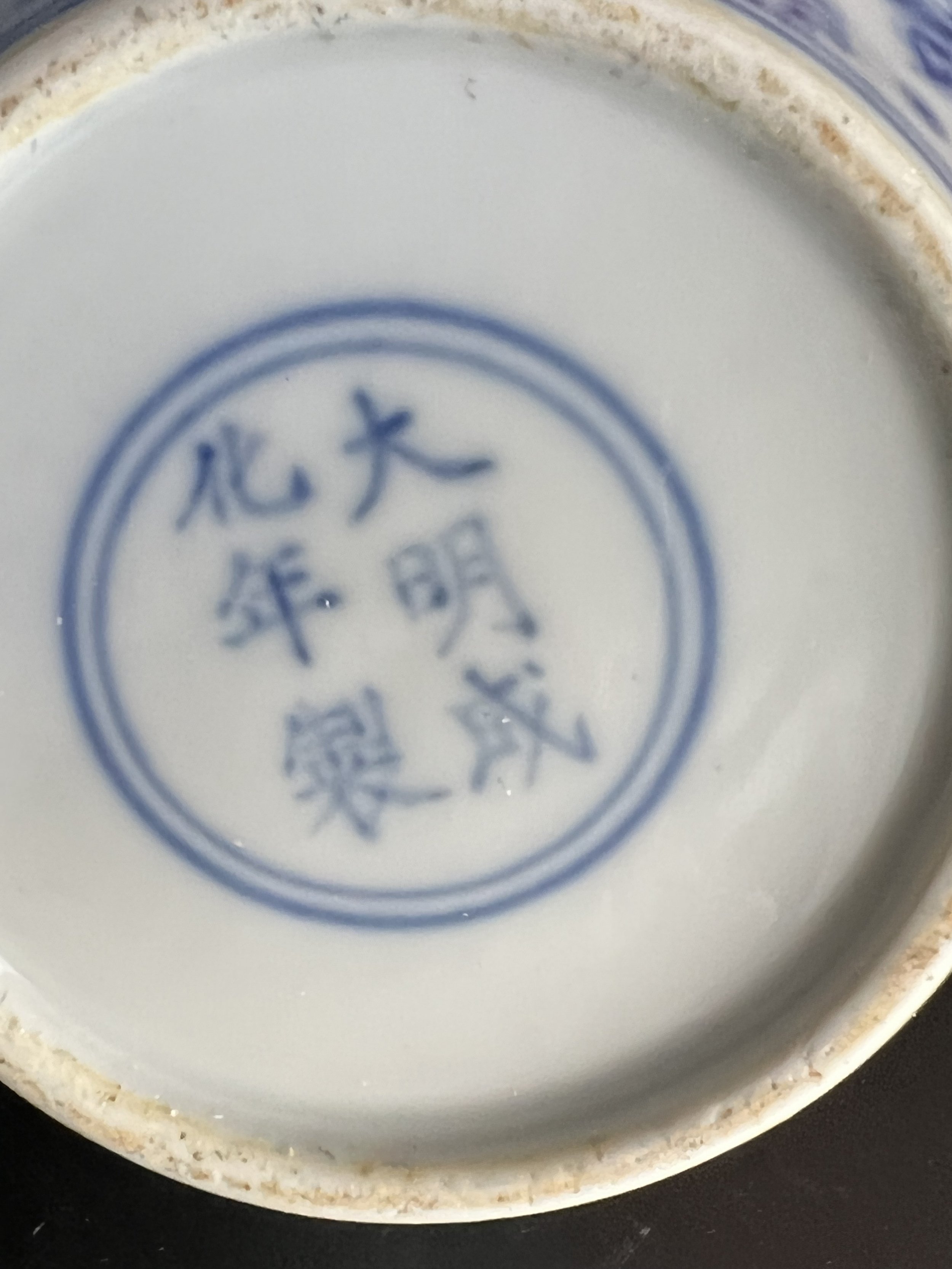 Image 9 of 12
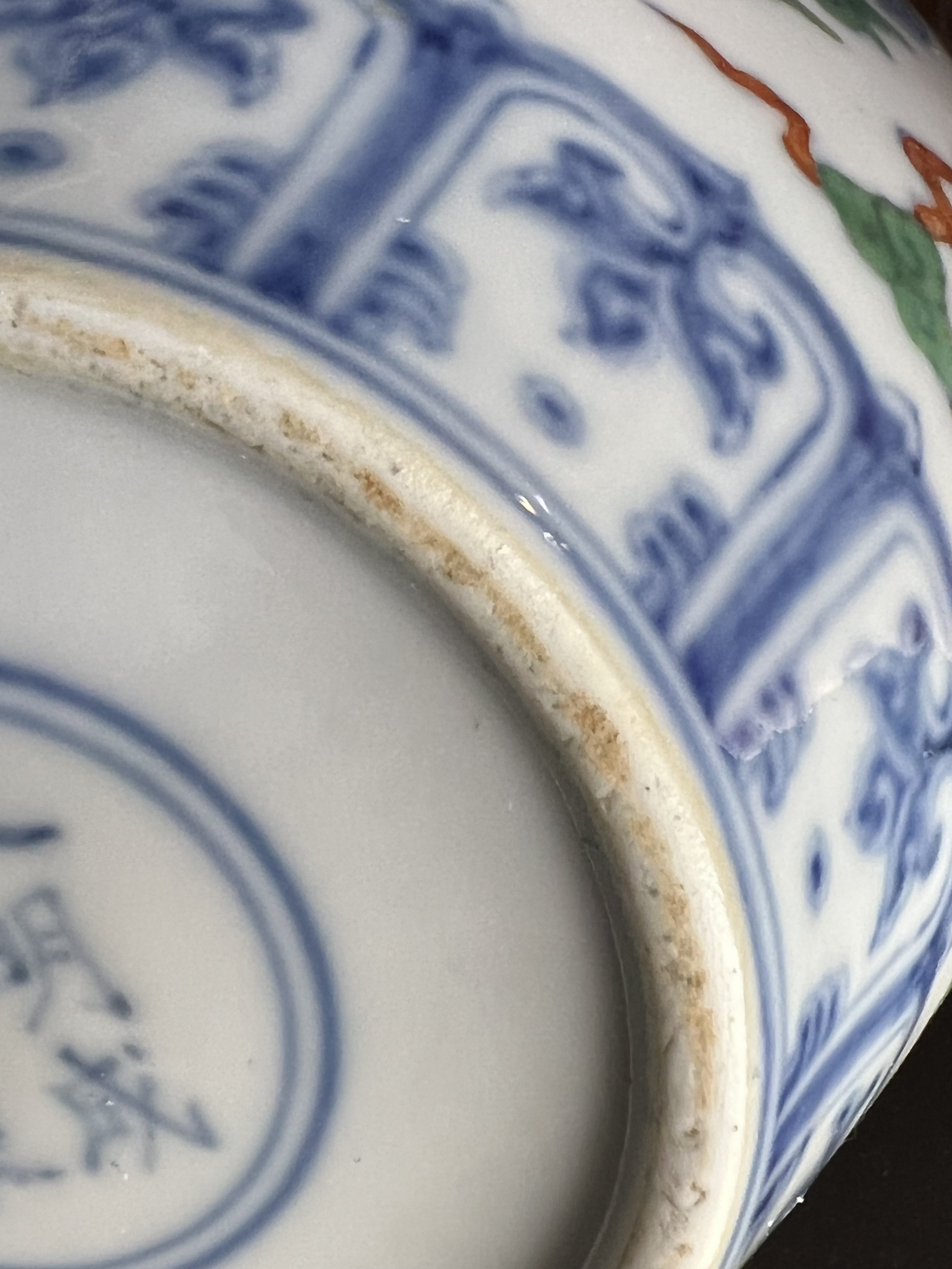 Image 10 of 12
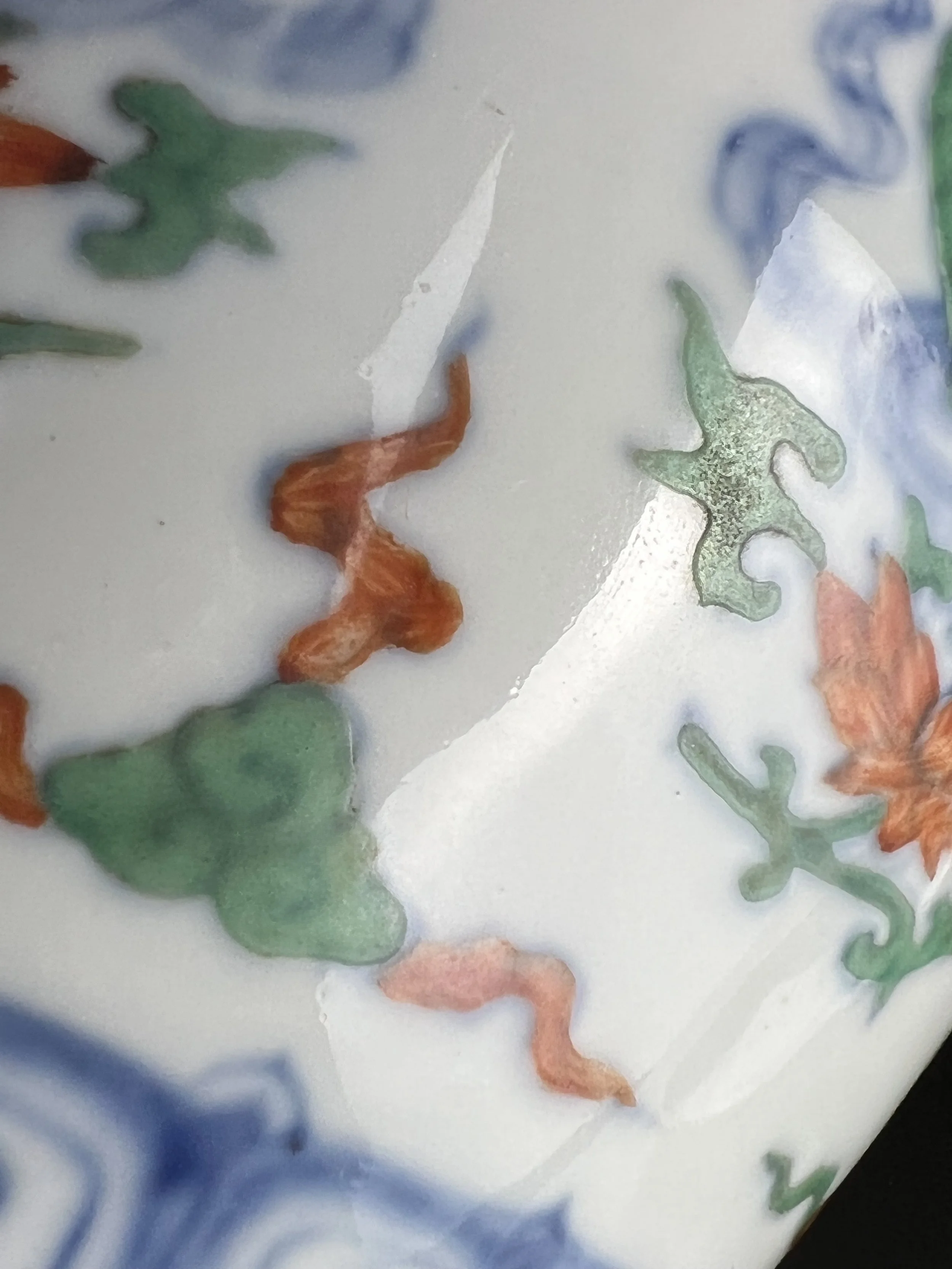 Image 11 of 12
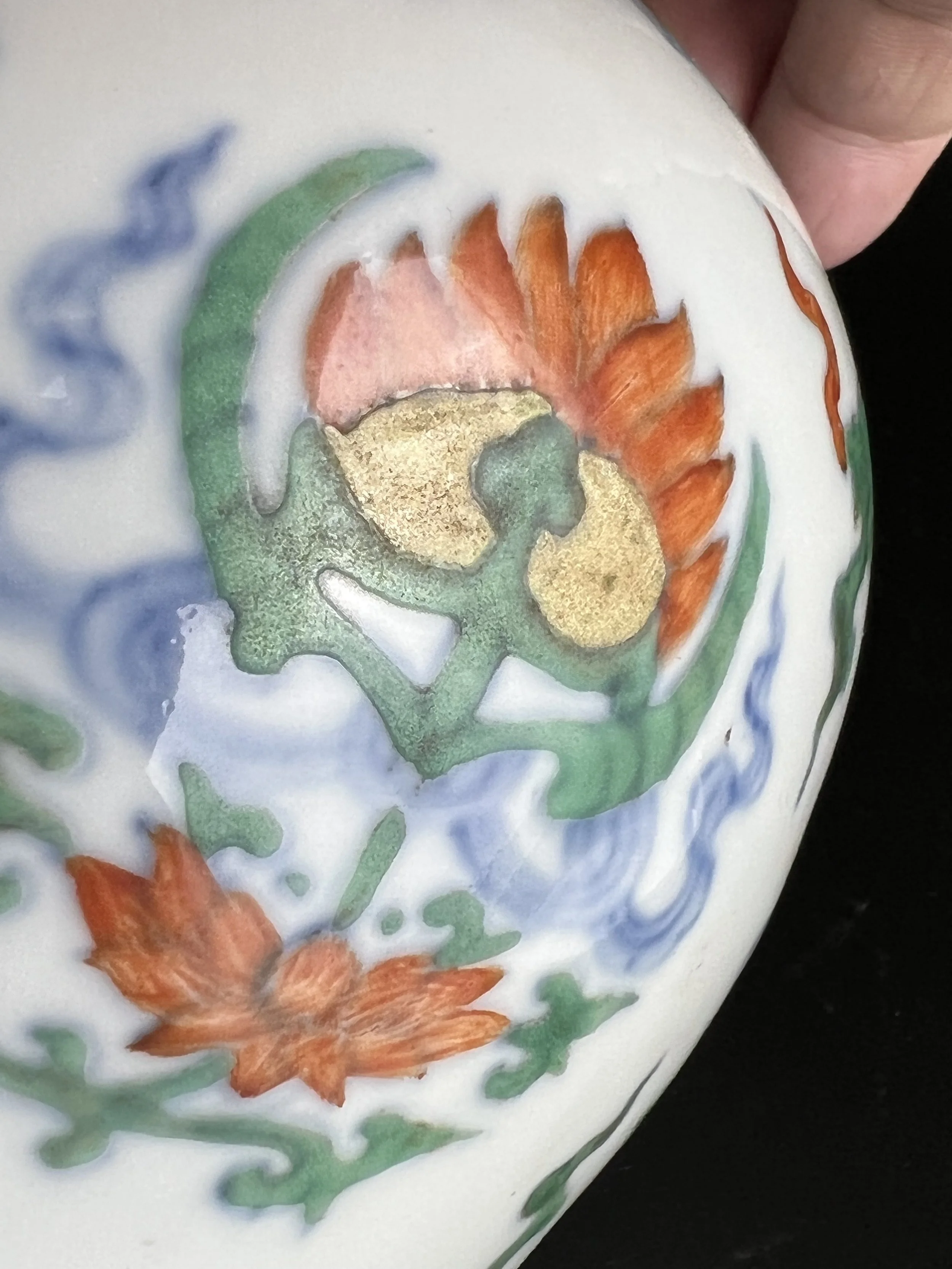 Image 12 of 12
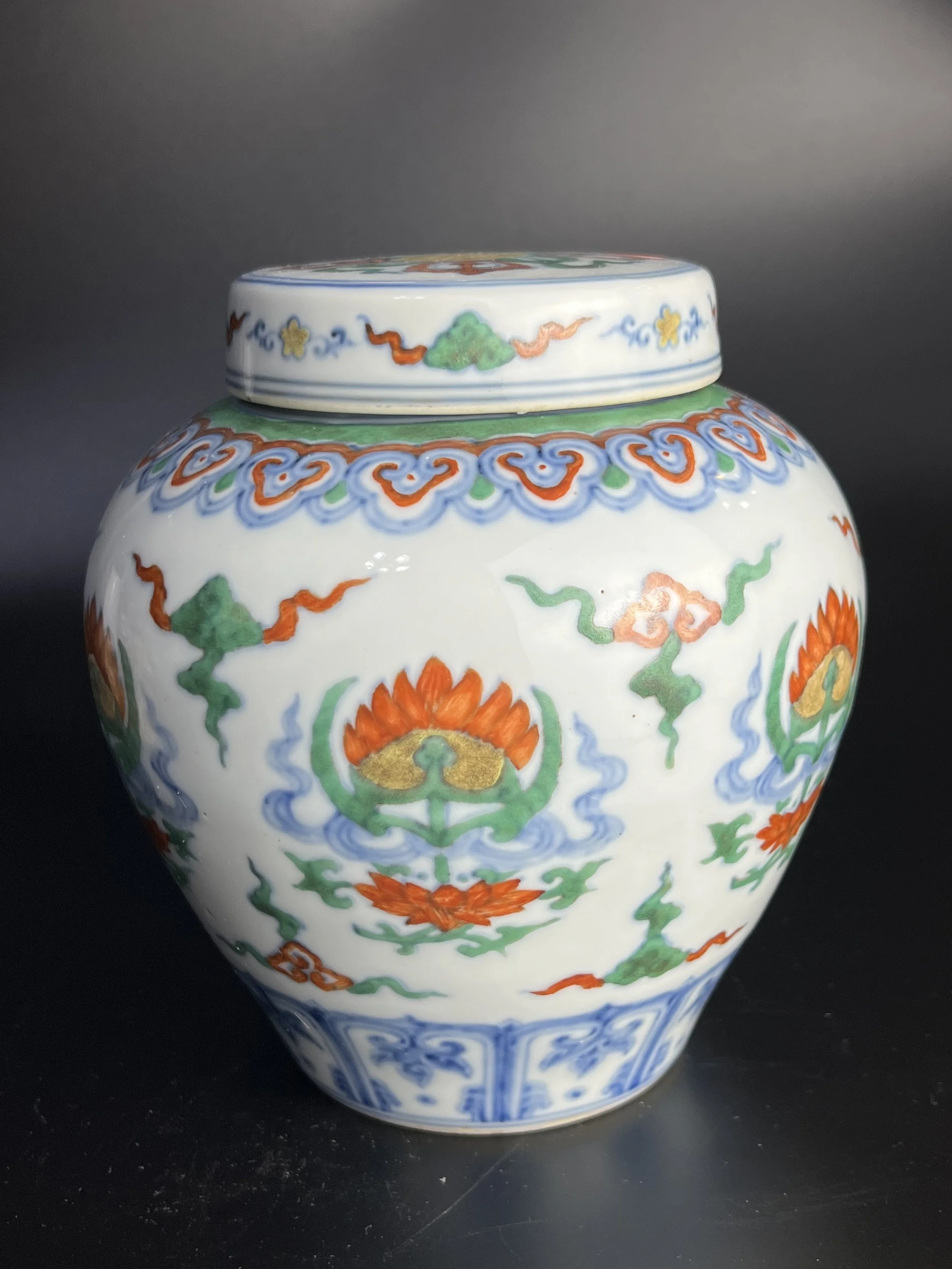
A Doucai 'Lotus' Jar and Cover, Chenghua Mark and Period
Overview
This doucai 'lotus' jar and cover, bearing the Chenghua six-character mark, has a total height of 15 cm. It is an elegant and refined example of doucai ware from the Ming Chenghua imperial kilns. The form is full and rounded, with the cover fitting the body precisely. The decoration takes the serene delight of a lotus pond as its theme, employing the doucai technique: outlines are drawn in underglaze blue, then filled over the glaze with iron-red, tender yellow, 'dull' purple (chazi), and emerald green enamels. The coloring is bright, pure, and elegant, the painting delicate and meticulous. The unique iron-red (and possibly gilt) 'vajra' (jingangchu, a Buddhist ritual scepter) in the form of a cross-shaped flower on the cover's top adds a layer of religious significance and opulence. This jar combines beautiful form, ingenious coloring, and elegant painting, making it a treasure among Chenghua doucai that merges naturalistic charm with exquisite decoration. It showcases the Chenghua imperial kilns' unparalleled aesthetic taste and technical mastery.
I. Overview of Core Characteristics
Feature DimensionSpecific DescriptionObject DesignationDoucai 'Lotus' Jar and Cover, Chenghua mark and period (with original cover)Historical PeriodMing Dynasty, Chenghua reign (1465-1487 AD)DimensionsTotal Height: approx. 15 cmBasic FormStraight mouth, short neck, full rounded shoulders, a swelling belly tapering to a shallow ring foot. The cover is domed with a flat top and a recessed flange ('male-female' mouth), fitting the jar body tightly.Decorative LayoutCover Top: Painted with an iron-red (possibly gilt) cross-shaped floral vajra (jingangchu) motif, highly distinctive. Cover Side (Edge): A band of underglaze-blue ruyi (wish-granting) cloud scrolls. Jar Shoulders: A band of doucai ruyi cloud-head motifs, filled alternately with red, green, and blue enamels. Main Body (Belly): Each of the four sides is painted with a group of doucai lotus flowers. The blossoms are rendered in red, blue, yellow, green, etc.; stems and leaves are outlined in underglaze blue. The spaces above and below these lotus groups are filled with underglaze-blue ruyi cloud scrolls, echoing the cover's decoration. Lower Body (Foot): A band of underglaze-blue upward-facing lotus petal panels.Doucai TechniqueClassic "doucai" (joined or contending colors) technique. First, all decorative outlines were drawn in underglaze 'Pingtangqing' blue. After the high-temperature firing, overglaze enamels (iron-red, tender yellow, leaf green, 'dull' purple, etc.) were applied within the blue outlines, followed by a second, lower-temperature firing in the enamel kiln.Enamel CharacteristicsOverglaze enamels are bright, pure, and elegant: iron-red is vivid and沉稳 (steady), tender yellow is透明如蜜 (transparent like honey), leaf green is翠色欲滴 (a dripping emerald green). Particularly unique is the 'dull' purple (chazi)—intense and lacking gloss—a hallmark of Chenghua doucai. The underglaze blue is a subtle, greyish-blue.MarkThe base center bears the underglaze-blue six-character mark in two columns of regular script within a double circle: "Da Ming Chenghua Nian Zhi". The calligraphy is upright,秀逸 (elegant and free), with strokes that are含蓄有力 (reserved yet powerful).
II. In-Depth Analysis of Artistry and Craftsmanship
1. Exquisite and Elegant Form
This jar, at 15 cm, is moderately sized, suitable as a hand-held treasure or a desk ornament. Its lines are soft and fluid, the shoulders and belly full, the taper to the foot well-proportioned. The overall balance gives a sense of圆融秀美 (harmonious, elegant beauty). The cover and body are well-proportioned and fit tightly, reflecting extremely high forming skill.
2. Clearly Layered Decorative Design
Theme and Layout: Inspired by a lotus pond scene, the four-sided lotus decoration on the belly creates a three-dimensional "flowers on all sides" pictorial effect. The layout follows the Chenghua period's typical "multi-tiered banded distribution" principle, with clear bands on the shoulder, belly, and foot, well-defined primary and secondary elements—dense but not chaotic.
Core Motifs:
Lotus Motifs: Lotuses are shown budding or blooming. Petals are in red enamel, anthers dotted in yellow, leaves in green, with water plants or seed pods in blue. The color scheme is fresh and refined, the brushwork delicate, vividly capturing the lotus's elegant stance of "emerging unstained from mud."
Vajra Motif: The cross-shaped floral vajra on the cover top is a Tibetan Buddhist ritual implement symbolizing wisdom and indestructibility. Rendered in iron-red (or gilt) at the center of the cover, it becomes the visual focal point. This reflects the close ties between the Chenghua court and Tibetan Buddhism, adding a touch of solemn religious artistry to the serene lotus pond theme.
Secondary Motifs: The ruyi cloud scrolls and lotus petal panels covering the vessel not only separate and link the various decorative bands but also collectively build a system of auspicious meanings: "continuous good fortune" and "pure auspiciousness."
3. Pinnacle Chenghua Doucai Technique
Enamel Formulation: The reason later imitations fail lies in the unique formulas and resulting colors of Chenghua overglaze enamels. The 'dull' purple (chazi), in particular, is unique to the Chenghua period and a key authentication point.
Enamel Application Technique: The "flat-fill" method was used. Enamels were applied precisely within the underglaze-blue double outlines, without overflow, achieving remarkable neatness. Color transitions are natural; though bright, the colors lack harshness, presenting a warm, reserved, jade-like quality.
Underglaze Blue Outlines: Outlines are drawn in the subtle, soft 'Pingtangqing' blue. The lines are纤细流畅 (slender and flowing), elastic like gossamer, perfectly framing the patterns and providing an ideal skeleton for the overglaze enamels.
4. Standard Chenghua Mark
The six-character regular script mark within a double blue circle on the base has natural, flowing calligraphy with an open structure. Features like the slanted dot in the final stroke of "成" (Cheng), the lower left radical in "化" (Hua), and the horizontal stroke in the lower part of "製" (Zhi) not extending past the 'knife' component are all typical of Chenghua marks.
III. Historical Context and Proposed Function
Courtly Treasure and Religious Connotation: This jar's small size and exquisite manufacture indicate it was for imperial use or appreciation within the Chenghua court. The vajra motif on the cover clearly points to a possible religious context—perhaps a gift from the emperor to a high monk, for use in a Buddhist hall, or reflecting the emperor's personal religious sentiment. The lotus motif symbolizes purity and integrity, aligning with courtly taste.
Embodiment of the Chenghua Aesthetic Zenith: This jar lacks the robust vigor of Yongle-Xuande ware and the dense opulence of Jiajing-Wanli ware. It represents the Chenghua period's unique pursuit of极致精巧 (ultimate refinement) and淡雅秀逸 (subtle, elegant beauty)—a highly literati aesthetic. Its柔美 (graceful) form,清丽 (pure and lovely) colors, and纤巧 (delicate) painting are astonishing.
Paragon of Doucai Craftsmanship: It gathers all the virtues of Chenghua doucai: a small, exquisite form; warm, jade-like body and glaze; subtle blue outlines; rich, bright enamels; and fresh, meaningful painting. It is an invaluable standard reference for studying and authenticating Chenghua doucai.
IV. Authentication Key Points
Chenghua doucai has always been considered supreme, imitated continuously from the Ming dynasty to the present. Authenticating this jar requires focusing on these要害 (key points):
Enamel Qualities: The color and texture of the original enamels (especially chazi purple and tender yellow) are its soul. Imitation colors are often gaudy and浮亮 (flashy) or dull and呆滞 (lifeless), never achieving the original's warm, jade-like宝光 (treasured glow) with its natural tonal variations.
Underglaze Blue and Outlines: Original blue is a subtle greyish-blue; outlines are slender, flowing, and有力 (forceful). Imitation blue is often too dark, bright blue, or艳蓝 (vivid blue); outlines are either clumsy or weak.
Body, Glaze, and Mark: The original body is fine and white, the glaze thick and lustrous. The spirit of the base mark's calligraphy is crucial; brushwork, structure, and vitality must be carefully compared with standard examples. Imitation marks often lose their秀逸 (elegant freedom), with stiff strokes.
Overall Vitality: The original possesses an overall aura of静谧、高贵、精雅 (tranquility, nobility, and refined elegance). Even accurate imitations inevitably betray a sense of拘谨、板滞 (constraint, rigidity), or俗艳 (vulgar showiness) characteristic of modern craftsmanship.
Conclusion
This Chenghua doucai 'lotus' jar and cover is a polychrome porcelain treasure that fits in the palm of one's hand. Like a three-dimensional meticulous flower-and-bird painting, it condenses the serene vitality of a summer lotus pond and the solemn wisdom of Buddhist Dharma within a small porcelain space. The tenderness of its glazes, the freshness of its painting, and the perfection of its technique all evoke the sensitive,细腻 (subtle) inner world of the Chenghua Emperor. It is not only the crystallization of the wisdom and skill of Chenghua imperial kiln artisans but also the most moving smile of an aesthetic era in Chinese ceramic history. Its artistic value and historical status are eternal and radiant.
大明成化年制”款斗彩荷花纹盖罐
概述
此件 “大明成化年制”款斗彩荷花纹盖罐,通高15厘米,为明成化朝御窑斗彩之隽雅典范。其造型饱满圆润,盖、身契合严密。纹饰以荷塘清趣为主题,运用斗彩工艺,以釉下青花勾勒,釉上填绘矾红、娇黄、姹紫、翠绿诸彩,设色清丽典雅,画工纤巧精微。盖顶独特的矾红描金十字花形金刚杵纹饰,更添宗教意趣与华贵气息。此罐集造型之美、设色之妙、画意之雅于一体,是成化斗彩中融合自然意趣与精巧装饰的珍品,展现了成化官窑无与伦比的审美格调与工艺水准。
一、 核心特征总览
特征维度具体描述器物定名明成化 斗彩荷花纹盖罐(带原盖)历史年代明成化时期(1465-1487年)器物尺寸通高约15厘米基本器型直口,短颈,丰肩,鼓腹下收,浅圈足。带穹窿式盖,盖面平顶,子母口,与罐身扣合紧密。纹饰布局盖顶:以矾红彩绘十字花形金刚杵纹,或描金装饰,极具特色。盖沿侧面:绘一周青花如意云纹。罐身肩部:绘一圈斗彩如意云头纹,以红、绿、蓝三色相同填绘。罐腹主体:四面各绘一组斗彩荷花纹,荷花以红、蓝、黄、绿等色表现,枝叶以青花勾勒。各组荷花纹上下间隙,填充青花如意云纹,与盖沿纹饰呼应。罐身下部(胫部):绘一周青花仰莲瓣纹。斗彩工艺典型“斗彩”工艺。先以“平等青”料釉下勾勒全部纹饰轮廓,高温烧成后,再于釉上在青花轮廓内填绘矾红、娇黄、草绿、姹紫等低温彩料,复入彩炉焙烧。彩料特征釉上彩明丽清雅:矾红鲜艳沉稳,娇黄透亮如蜜,草绿翠色欲滴,尤以独有的“姹紫”色(浓而无光)为成化斗彩标志。青花发色淡雅灰蓝。款识罐底心书青花双圈 “大明成化年制”六字双行楷书款,字体挺拔秀逸,笔道含蓄有力。
二、 艺术与工艺深度解析
1. 玲珑秀雅的造型
此罐高15厘米,尺寸适中,属手中珍玩或案头清供之器。造型线条柔和流畅,肩腹饱满,收胫得体,整体比例匀停,予人圆融秀美、亭亭玉立之感。盖与身比例协调,结合紧密,体现了极高的成型工艺。
2. 层次分明的纹饰设计
主题与布局:以荷塘景象为灵感,罐腹四面荷花为主体,呈现“四面生花”的立体画面效果。纹饰布局遵循成化时期典型的“多层次带状分布”原则,肩、腹、胫部纹饰带清晰,主次分明,繁而不乱。
核心纹样:
荷花纹:荷花或含苞或绽放,以红彩绘花瓣,黄彩点花蕊,绿彩绘荷叶,蓝彩点缀水草或莲蓬,色彩搭配清新脱俗,笔触细腻,生动表现了荷花“出淤泥而不染”的清雅姿态。
金刚杵纹:盖顶的十字花形金刚杵纹,是藏传佛教的法器图案,寓意智慧、坚不可摧。以矾红(或描金)绘于盖顶中心,成为视觉焦点,反映了成化时期宫廷与藏传佛教的密切关联,也为清雅的荷塘主题增添了一丝庄严的宗教艺术色彩。
辅助纹饰:遍布器身的如意云纹、莲瓣纹,不仅起到了间隔、衔接各层纹饰的作用,更共同构建了“如意连连”、“清净祥瑞”的吉祥寓意体系。
3. 登峰造极的成化斗彩工艺
彩料配制:成化斗彩之所以后世难仿,核心在于其釉上彩料的独特配方与呈色。尤其是那抹“姹紫”,色浓无光,为成化朝所独有,是鉴定要害。
填彩技法:采用“平涂填彩”法,彩料填充于青花双勾线内,精准而不溢出,工整至极。色彩过渡自然,虽艳丽却无火气,呈现出一种温润、内敛的玉质感。
青花勾线:以淡雅柔和的平等青料勾勒,线条纤细流畅,如游丝般富有弹性,完美地框定了图案轮廓,为釉上填彩提供了绝佳的骨架。
4. 标准的成化款识
罐底青花双圈六字楷书款,笔法自然流畅,字体结构疏朗,“成”字最后一笔斜点,“化”字人旁低于匕部,“製”字下“衣”横画不越刀等特征,均为典型成化款识写法。
三、 历史内涵与用途推测
宫廷珍玩与宗教意涵:此罐尺寸玲珑,制作极精,应为成化宫廷御用或赏玩之器。盖顶的金刚杵纹明确指向其可能具有的宗教背景,或为皇帝赏赐高僧、供奉佛堂之用,或反映了皇帝个人的宗教情怀。荷花纹则象征高洁清廉,符合宫廷审美。
成化审美极致的体现:此罐毫无永乐、宣德的雄健之风,也不同于嘉靖、万历的浓艳繁缛,它代表的是成化朝独有的、追求极致精巧、淡雅秀逸的文人化审美趣味。其造型之柔美、设色之清丽、画工之纤巧,无不令人叹为观止。
斗彩工艺的典范之作:它将成化斗彩的所有优点集于一身:造型小巧精致、胎釉温润如玉、青花淡雅勾线、彩料丰富鲜丽、画意清新隽永。是研究、鉴识成化斗彩不可多得的标准器。
四、 鉴藏要点
成化斗彩历来冠绝古今,仿品自明至今不绝。鉴藏此罐,需聚焦以下要害:
彩料特质:真品彩料(尤其是姹紫、娇黄)的呈色与质感是灵魂。仿品之色或艳俗浮亮,或暗淡呆滞,绝难仿出真品那种温润如玉、浓淡自然的宝光。
青花与勾线:真品青花淡雅灰蓝,勾线纤细流畅,有力度。仿品青花色常偏深蓝或艳蓝,勾线或粗笨或软弱。
胎釉与款识:真品胎质细腻洁白,釉面肥厚莹润。底款字体神韵至关重要,需与标准器仔细比对笔法、结构与气韵。仿款常失其秀逸之神,笔划僵硬。
整体气韵:真品具有一种静谧、高贵、精雅的整体气息,仿品即使形似,也难免流露出拘谨、板滞或俗艳的现代工艺感。
结语
此成化斗彩荷花纹盖罐,是一件盈握于掌中的彩瓷奇珍。它如一幅立体的工笔花鸟画,将夏日荷塘的静谧生机与佛法的庄严智慧,浓缩于方寸瓷间。其釉彩之娇嫩、画意之清新、工艺之精绝,无不令人联想到成化皇帝敏感而细腻的内心世界。它不仅是成化官窑工匠智慧与技艺的结晶,更是中国陶瓷史上一个唯美时代最动人的微笑,其艺术价值与历史地位,永恒而璀璨。
Overview
This doucai 'lotus' jar and cover, bearing the Chenghua six-character mark, has a total height of 15 cm. It is an elegant and refined example of doucai ware from the Ming Chenghua imperial kilns. The form is full and rounded, with the cover fitting the body precisely. The decoration takes the serene delight of a lotus pond as its theme, employing the doucai technique: outlines are drawn in underglaze blue, then filled over the glaze with iron-red, tender yellow, 'dull' purple (chazi), and emerald green enamels. The coloring is bright, pure, and elegant, the painting delicate and meticulous. The unique iron-red (and possibly gilt) 'vajra' (jingangchu, a Buddhist ritual scepter) in the form of a cross-shaped flower on the cover's top adds a layer of religious significance and opulence. This jar combines beautiful form, ingenious coloring, and elegant painting, making it a treasure among Chenghua doucai that merges naturalistic charm with exquisite decoration. It showcases the Chenghua imperial kilns' unparalleled aesthetic taste and technical mastery.
I. Overview of Core Characteristics
Feature DimensionSpecific DescriptionObject DesignationDoucai 'Lotus' Jar and Cover, Chenghua mark and period (with original cover)Historical PeriodMing Dynasty, Chenghua reign (1465-1487 AD)DimensionsTotal Height: approx. 15 cmBasic FormStraight mouth, short neck, full rounded shoulders, a swelling belly tapering to a shallow ring foot. The cover is domed with a flat top and a recessed flange ('male-female' mouth), fitting the jar body tightly.Decorative LayoutCover Top: Painted with an iron-red (possibly gilt) cross-shaped floral vajra (jingangchu) motif, highly distinctive. Cover Side (Edge): A band of underglaze-blue ruyi (wish-granting) cloud scrolls. Jar Shoulders: A band of doucai ruyi cloud-head motifs, filled alternately with red, green, and blue enamels. Main Body (Belly): Each of the four sides is painted with a group of doucai lotus flowers. The blossoms are rendered in red, blue, yellow, green, etc.; stems and leaves are outlined in underglaze blue. The spaces above and below these lotus groups are filled with underglaze-blue ruyi cloud scrolls, echoing the cover's decoration. Lower Body (Foot): A band of underglaze-blue upward-facing lotus petal panels.Doucai TechniqueClassic "doucai" (joined or contending colors) technique. First, all decorative outlines were drawn in underglaze 'Pingtangqing' blue. After the high-temperature firing, overglaze enamels (iron-red, tender yellow, leaf green, 'dull' purple, etc.) were applied within the blue outlines, followed by a second, lower-temperature firing in the enamel kiln.Enamel CharacteristicsOverglaze enamels are bright, pure, and elegant: iron-red is vivid and沉稳 (steady), tender yellow is透明如蜜 (transparent like honey), leaf green is翠色欲滴 (a dripping emerald green). Particularly unique is the 'dull' purple (chazi)—intense and lacking gloss—a hallmark of Chenghua doucai. The underglaze blue is a subtle, greyish-blue.MarkThe base center bears the underglaze-blue six-character mark in two columns of regular script within a double circle: "Da Ming Chenghua Nian Zhi". The calligraphy is upright,秀逸 (elegant and free), with strokes that are含蓄有力 (reserved yet powerful).
II. In-Depth Analysis of Artistry and Craftsmanship
1. Exquisite and Elegant Form
This jar, at 15 cm, is moderately sized, suitable as a hand-held treasure or a desk ornament. Its lines are soft and fluid, the shoulders and belly full, the taper to the foot well-proportioned. The overall balance gives a sense of圆融秀美 (harmonious, elegant beauty). The cover and body are well-proportioned and fit tightly, reflecting extremely high forming skill.
2. Clearly Layered Decorative Design
Theme and Layout: Inspired by a lotus pond scene, the four-sided lotus decoration on the belly creates a three-dimensional "flowers on all sides" pictorial effect. The layout follows the Chenghua period's typical "multi-tiered banded distribution" principle, with clear bands on the shoulder, belly, and foot, well-defined primary and secondary elements—dense but not chaotic.
Core Motifs:
Lotus Motifs: Lotuses are shown budding or blooming. Petals are in red enamel, anthers dotted in yellow, leaves in green, with water plants or seed pods in blue. The color scheme is fresh and refined, the brushwork delicate, vividly capturing the lotus's elegant stance of "emerging unstained from mud."
Vajra Motif: The cross-shaped floral vajra on the cover top is a Tibetan Buddhist ritual implement symbolizing wisdom and indestructibility. Rendered in iron-red (or gilt) at the center of the cover, it becomes the visual focal point. This reflects the close ties between the Chenghua court and Tibetan Buddhism, adding a touch of solemn religious artistry to the serene lotus pond theme.
Secondary Motifs: The ruyi cloud scrolls and lotus petal panels covering the vessel not only separate and link the various decorative bands but also collectively build a system of auspicious meanings: "continuous good fortune" and "pure auspiciousness."
3. Pinnacle Chenghua Doucai Technique
Enamel Formulation: The reason later imitations fail lies in the unique formulas and resulting colors of Chenghua overglaze enamels. The 'dull' purple (chazi), in particular, is unique to the Chenghua period and a key authentication point.
Enamel Application Technique: The "flat-fill" method was used. Enamels were applied precisely within the underglaze-blue double outlines, without overflow, achieving remarkable neatness. Color transitions are natural; though bright, the colors lack harshness, presenting a warm, reserved, jade-like quality.
Underglaze Blue Outlines: Outlines are drawn in the subtle, soft 'Pingtangqing' blue. The lines are纤细流畅 (slender and flowing), elastic like gossamer, perfectly framing the patterns and providing an ideal skeleton for the overglaze enamels.
4. Standard Chenghua Mark
The six-character regular script mark within a double blue circle on the base has natural, flowing calligraphy with an open structure. Features like the slanted dot in the final stroke of "成" (Cheng), the lower left radical in "化" (Hua), and the horizontal stroke in the lower part of "製" (Zhi) not extending past the 'knife' component are all typical of Chenghua marks.
III. Historical Context and Proposed Function
Courtly Treasure and Religious Connotation: This jar's small size and exquisite manufacture indicate it was for imperial use or appreciation within the Chenghua court. The vajra motif on the cover clearly points to a possible religious context—perhaps a gift from the emperor to a high monk, for use in a Buddhist hall, or reflecting the emperor's personal religious sentiment. The lotus motif symbolizes purity and integrity, aligning with courtly taste.
Embodiment of the Chenghua Aesthetic Zenith: This jar lacks the robust vigor of Yongle-Xuande ware and the dense opulence of Jiajing-Wanli ware. It represents the Chenghua period's unique pursuit of极致精巧 (ultimate refinement) and淡雅秀逸 (subtle, elegant beauty)—a highly literati aesthetic. Its柔美 (graceful) form,清丽 (pure and lovely) colors, and纤巧 (delicate) painting are astonishing.
Paragon of Doucai Craftsmanship: It gathers all the virtues of Chenghua doucai: a small, exquisite form; warm, jade-like body and glaze; subtle blue outlines; rich, bright enamels; and fresh, meaningful painting. It is an invaluable standard reference for studying and authenticating Chenghua doucai.
IV. Authentication Key Points
Chenghua doucai has always been considered supreme, imitated continuously from the Ming dynasty to the present. Authenticating this jar requires focusing on these要害 (key points):
Enamel Qualities: The color and texture of the original enamels (especially chazi purple and tender yellow) are its soul. Imitation colors are often gaudy and浮亮 (flashy) or dull and呆滞 (lifeless), never achieving the original's warm, jade-like宝光 (treasured glow) with its natural tonal variations.
Underglaze Blue and Outlines: Original blue is a subtle greyish-blue; outlines are slender, flowing, and有力 (forceful). Imitation blue is often too dark, bright blue, or艳蓝 (vivid blue); outlines are either clumsy or weak.
Body, Glaze, and Mark: The original body is fine and white, the glaze thick and lustrous. The spirit of the base mark's calligraphy is crucial; brushwork, structure, and vitality must be carefully compared with standard examples. Imitation marks often lose their秀逸 (elegant freedom), with stiff strokes.
Overall Vitality: The original possesses an overall aura of静谧、高贵、精雅 (tranquility, nobility, and refined elegance). Even accurate imitations inevitably betray a sense of拘谨、板滞 (constraint, rigidity), or俗艳 (vulgar showiness) characteristic of modern craftsmanship.
Conclusion
This Chenghua doucai 'lotus' jar and cover is a polychrome porcelain treasure that fits in the palm of one's hand. Like a three-dimensional meticulous flower-and-bird painting, it condenses the serene vitality of a summer lotus pond and the solemn wisdom of Buddhist Dharma within a small porcelain space. The tenderness of its glazes, the freshness of its painting, and the perfection of its technique all evoke the sensitive,细腻 (subtle) inner world of the Chenghua Emperor. It is not only the crystallization of the wisdom and skill of Chenghua imperial kiln artisans but also the most moving smile of an aesthetic era in Chinese ceramic history. Its artistic value and historical status are eternal and radiant.
大明成化年制”款斗彩荷花纹盖罐
概述
此件 “大明成化年制”款斗彩荷花纹盖罐,通高15厘米,为明成化朝御窑斗彩之隽雅典范。其造型饱满圆润,盖、身契合严密。纹饰以荷塘清趣为主题,运用斗彩工艺,以釉下青花勾勒,釉上填绘矾红、娇黄、姹紫、翠绿诸彩,设色清丽典雅,画工纤巧精微。盖顶独特的矾红描金十字花形金刚杵纹饰,更添宗教意趣与华贵气息。此罐集造型之美、设色之妙、画意之雅于一体,是成化斗彩中融合自然意趣与精巧装饰的珍品,展现了成化官窑无与伦比的审美格调与工艺水准。
一、 核心特征总览
特征维度具体描述器物定名明成化 斗彩荷花纹盖罐(带原盖)历史年代明成化时期(1465-1487年)器物尺寸通高约15厘米基本器型直口,短颈,丰肩,鼓腹下收,浅圈足。带穹窿式盖,盖面平顶,子母口,与罐身扣合紧密。纹饰布局盖顶:以矾红彩绘十字花形金刚杵纹,或描金装饰,极具特色。盖沿侧面:绘一周青花如意云纹。罐身肩部:绘一圈斗彩如意云头纹,以红、绿、蓝三色相同填绘。罐腹主体:四面各绘一组斗彩荷花纹,荷花以红、蓝、黄、绿等色表现,枝叶以青花勾勒。各组荷花纹上下间隙,填充青花如意云纹,与盖沿纹饰呼应。罐身下部(胫部):绘一周青花仰莲瓣纹。斗彩工艺典型“斗彩”工艺。先以“平等青”料釉下勾勒全部纹饰轮廓,高温烧成后,再于釉上在青花轮廓内填绘矾红、娇黄、草绿、姹紫等低温彩料,复入彩炉焙烧。彩料特征釉上彩明丽清雅:矾红鲜艳沉稳,娇黄透亮如蜜,草绿翠色欲滴,尤以独有的“姹紫”色(浓而无光)为成化斗彩标志。青花发色淡雅灰蓝。款识罐底心书青花双圈 “大明成化年制”六字双行楷书款,字体挺拔秀逸,笔道含蓄有力。
二、 艺术与工艺深度解析
1. 玲珑秀雅的造型
此罐高15厘米,尺寸适中,属手中珍玩或案头清供之器。造型线条柔和流畅,肩腹饱满,收胫得体,整体比例匀停,予人圆融秀美、亭亭玉立之感。盖与身比例协调,结合紧密,体现了极高的成型工艺。
2. 层次分明的纹饰设计
主题与布局:以荷塘景象为灵感,罐腹四面荷花为主体,呈现“四面生花”的立体画面效果。纹饰布局遵循成化时期典型的“多层次带状分布”原则,肩、腹、胫部纹饰带清晰,主次分明,繁而不乱。
核心纹样:
荷花纹:荷花或含苞或绽放,以红彩绘花瓣,黄彩点花蕊,绿彩绘荷叶,蓝彩点缀水草或莲蓬,色彩搭配清新脱俗,笔触细腻,生动表现了荷花“出淤泥而不染”的清雅姿态。
金刚杵纹:盖顶的十字花形金刚杵纹,是藏传佛教的法器图案,寓意智慧、坚不可摧。以矾红(或描金)绘于盖顶中心,成为视觉焦点,反映了成化时期宫廷与藏传佛教的密切关联,也为清雅的荷塘主题增添了一丝庄严的宗教艺术色彩。
辅助纹饰:遍布器身的如意云纹、莲瓣纹,不仅起到了间隔、衔接各层纹饰的作用,更共同构建了“如意连连”、“清净祥瑞”的吉祥寓意体系。
3. 登峰造极的成化斗彩工艺
彩料配制:成化斗彩之所以后世难仿,核心在于其釉上彩料的独特配方与呈色。尤其是那抹“姹紫”,色浓无光,为成化朝所独有,是鉴定要害。
填彩技法:采用“平涂填彩”法,彩料填充于青花双勾线内,精准而不溢出,工整至极。色彩过渡自然,虽艳丽却无火气,呈现出一种温润、内敛的玉质感。
青花勾线:以淡雅柔和的平等青料勾勒,线条纤细流畅,如游丝般富有弹性,完美地框定了图案轮廓,为釉上填彩提供了绝佳的骨架。
4. 标准的成化款识
罐底青花双圈六字楷书款,笔法自然流畅,字体结构疏朗,“成”字最后一笔斜点,“化”字人旁低于匕部,“製”字下“衣”横画不越刀等特征,均为典型成化款识写法。
三、 历史内涵与用途推测
宫廷珍玩与宗教意涵:此罐尺寸玲珑,制作极精,应为成化宫廷御用或赏玩之器。盖顶的金刚杵纹明确指向其可能具有的宗教背景,或为皇帝赏赐高僧、供奉佛堂之用,或反映了皇帝个人的宗教情怀。荷花纹则象征高洁清廉,符合宫廷审美。
成化审美极致的体现:此罐毫无永乐、宣德的雄健之风,也不同于嘉靖、万历的浓艳繁缛,它代表的是成化朝独有的、追求极致精巧、淡雅秀逸的文人化审美趣味。其造型之柔美、设色之清丽、画工之纤巧,无不令人叹为观止。
斗彩工艺的典范之作:它将成化斗彩的所有优点集于一身:造型小巧精致、胎釉温润如玉、青花淡雅勾线、彩料丰富鲜丽、画意清新隽永。是研究、鉴识成化斗彩不可多得的标准器。
四、 鉴藏要点
成化斗彩历来冠绝古今,仿品自明至今不绝。鉴藏此罐,需聚焦以下要害:
彩料特质:真品彩料(尤其是姹紫、娇黄)的呈色与质感是灵魂。仿品之色或艳俗浮亮,或暗淡呆滞,绝难仿出真品那种温润如玉、浓淡自然的宝光。
青花与勾线:真品青花淡雅灰蓝,勾线纤细流畅,有力度。仿品青花色常偏深蓝或艳蓝,勾线或粗笨或软弱。
胎釉与款识:真品胎质细腻洁白,釉面肥厚莹润。底款字体神韵至关重要,需与标准器仔细比对笔法、结构与气韵。仿款常失其秀逸之神,笔划僵硬。
整体气韵:真品具有一种静谧、高贵、精雅的整体气息,仿品即使形似,也难免流露出拘谨、板滞或俗艳的现代工艺感。
结语
此成化斗彩荷花纹盖罐,是一件盈握于掌中的彩瓷奇珍。它如一幅立体的工笔花鸟画,将夏日荷塘的静谧生机与佛法的庄严智慧,浓缩于方寸瓷间。其釉彩之娇嫩、画意之清新、工艺之精绝,无不令人联想到成化皇帝敏感而细腻的内心世界。它不仅是成化官窑工匠智慧与技艺的结晶,更是中国陶瓷史上一个唯美时代最动人的微笑,其艺术价值与历史地位,永恒而璀璨。