 Image 1 of 13
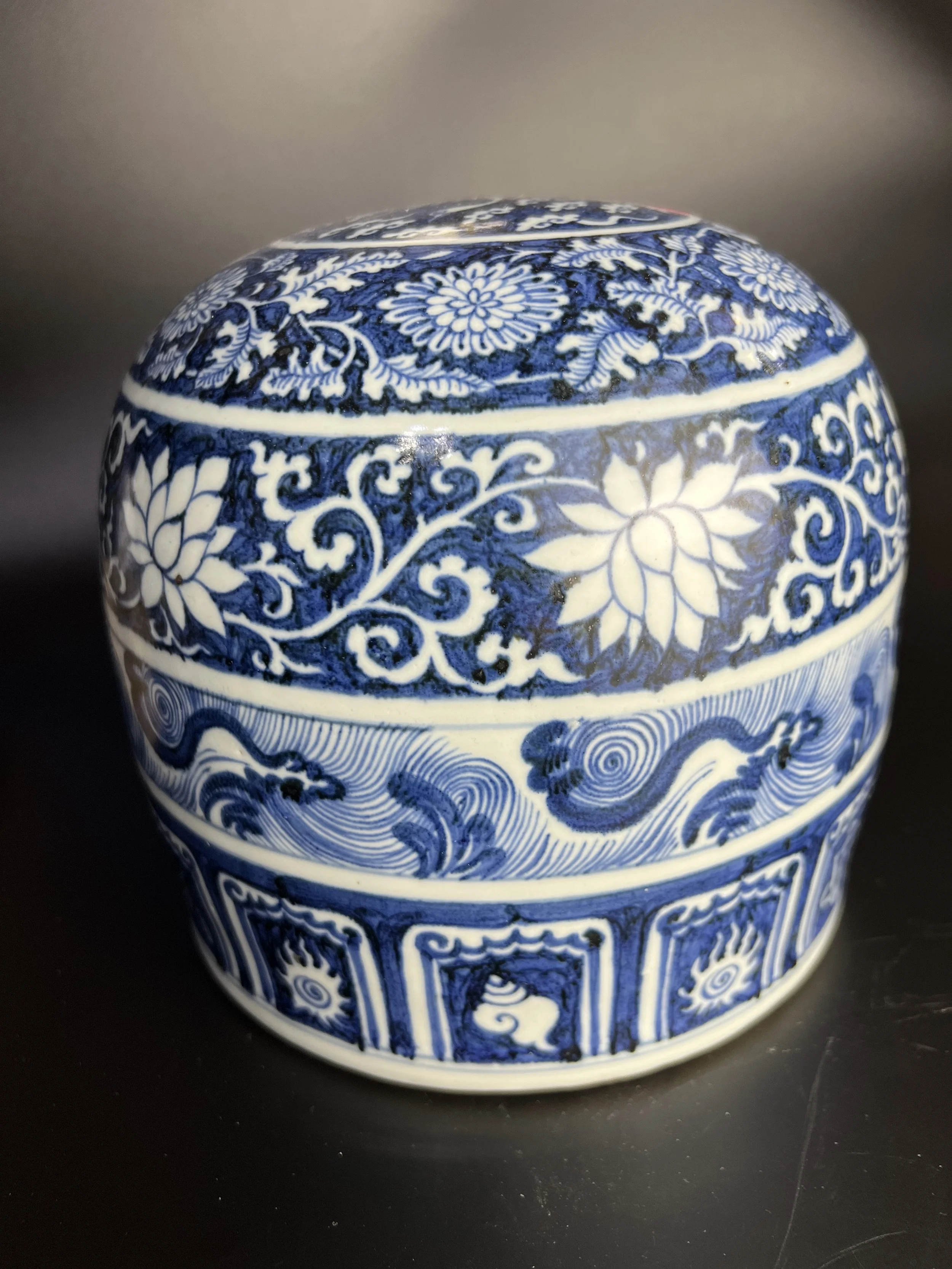 Image 2 of 13
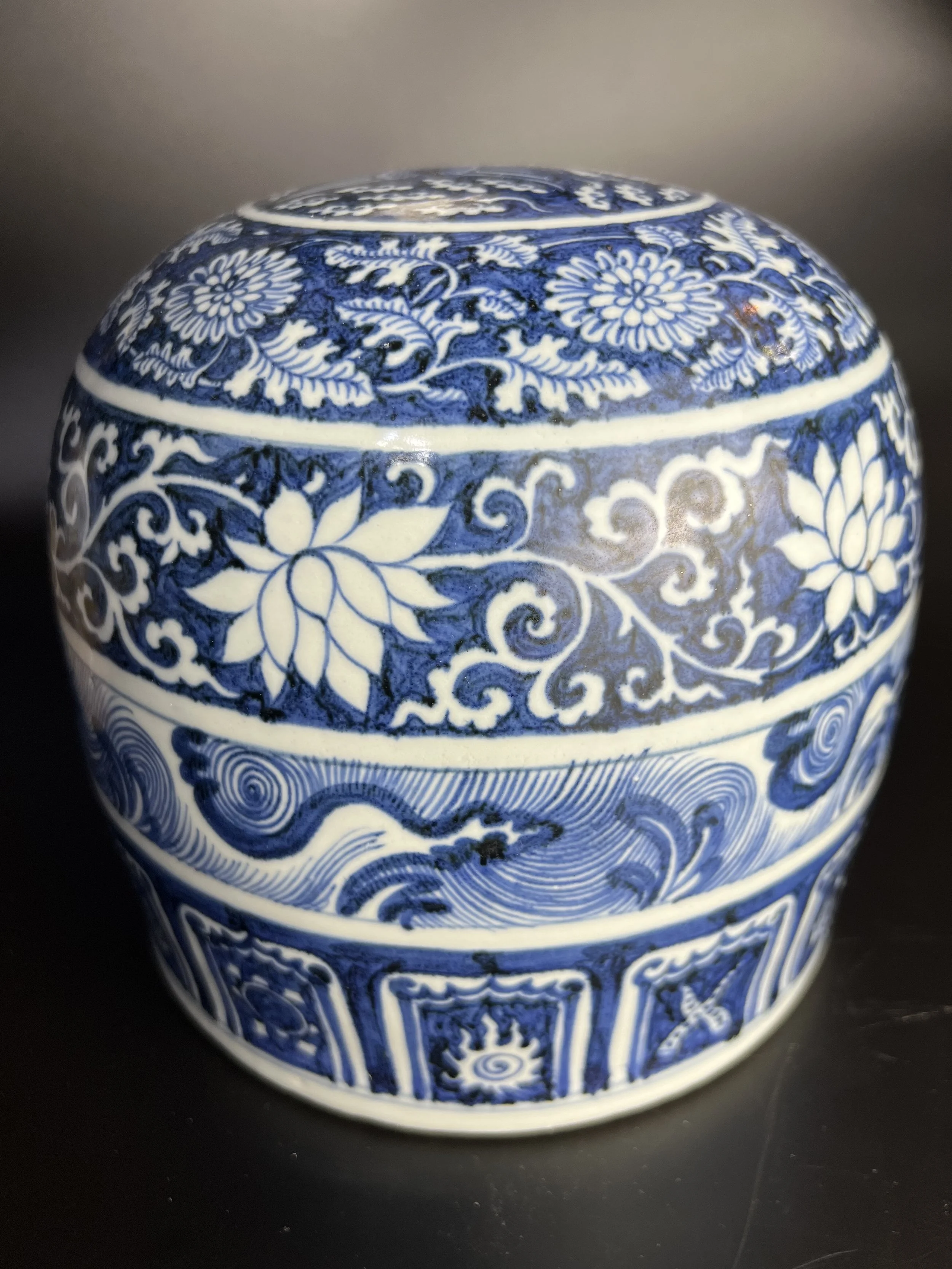 Image 3 of 13
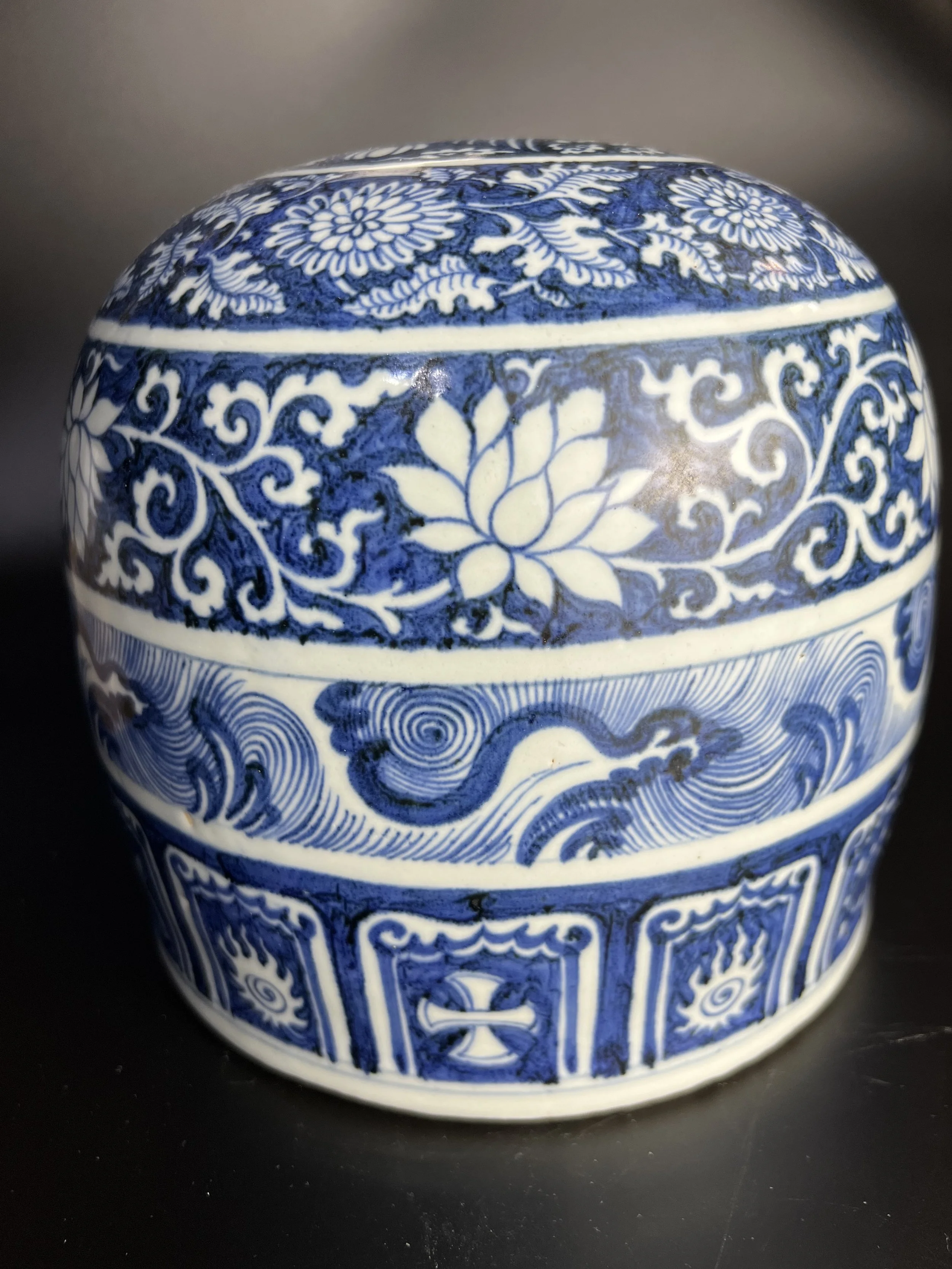 Image 4 of 13
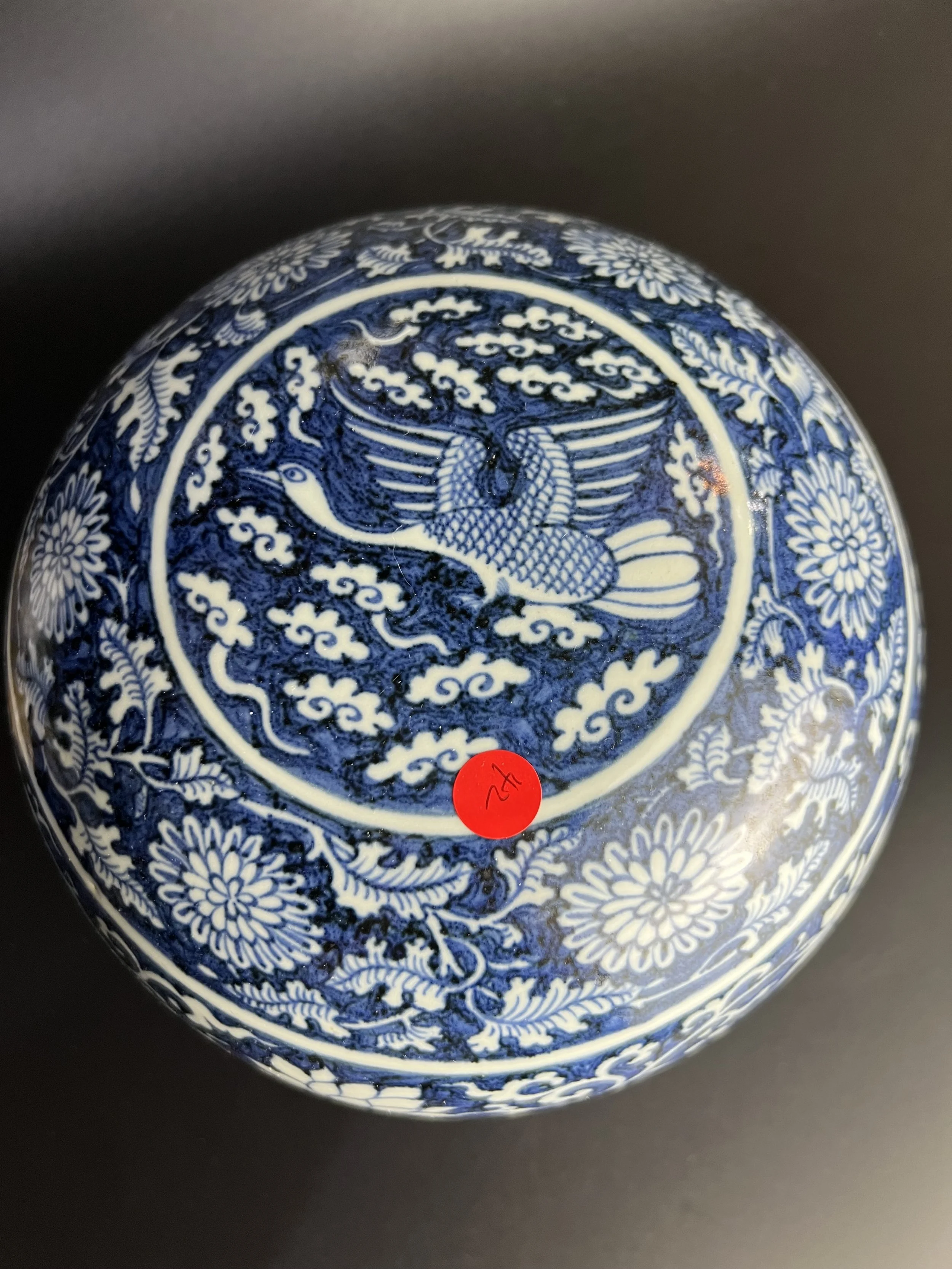 Image 5 of 13
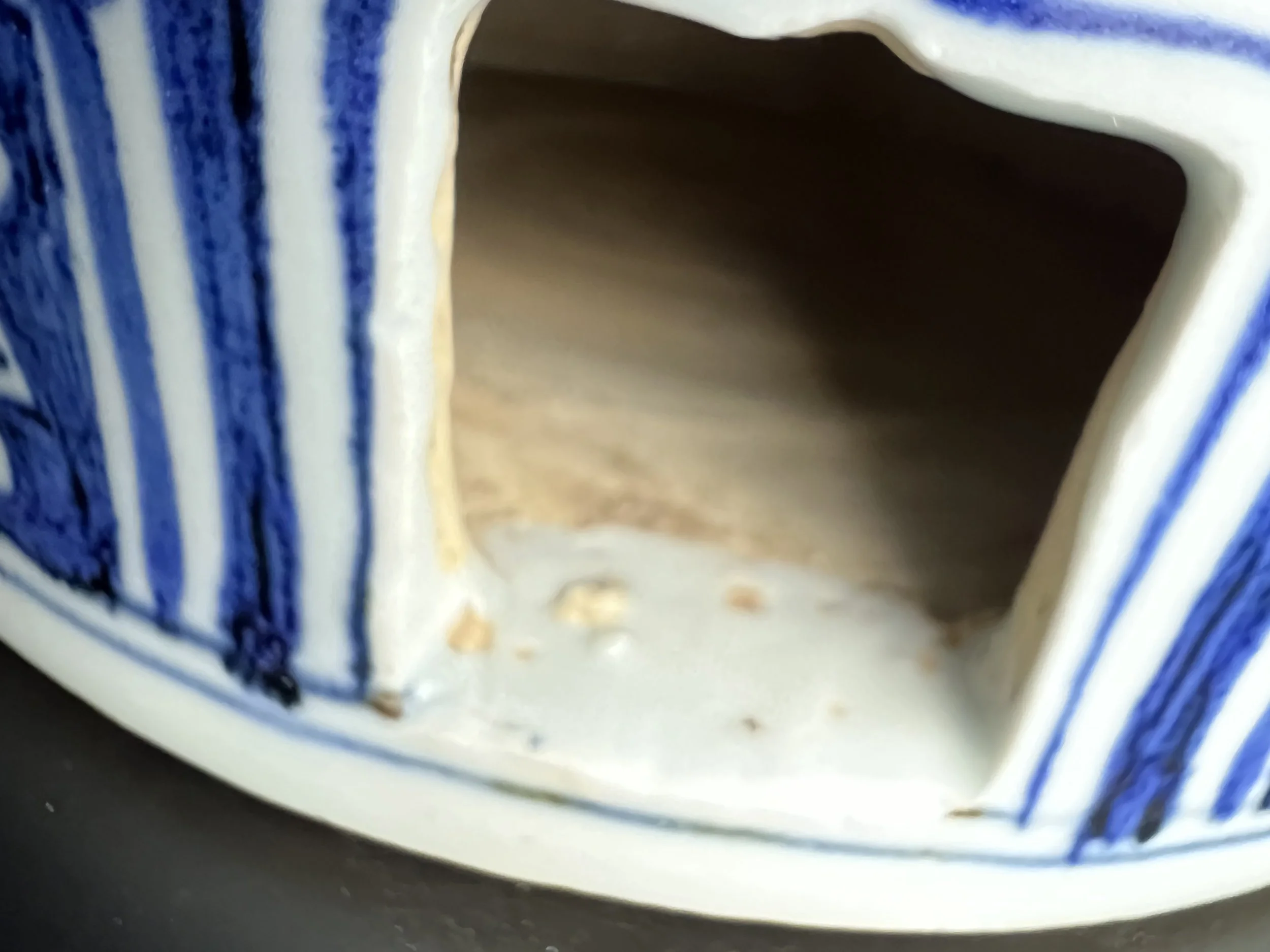 Image 6 of 13
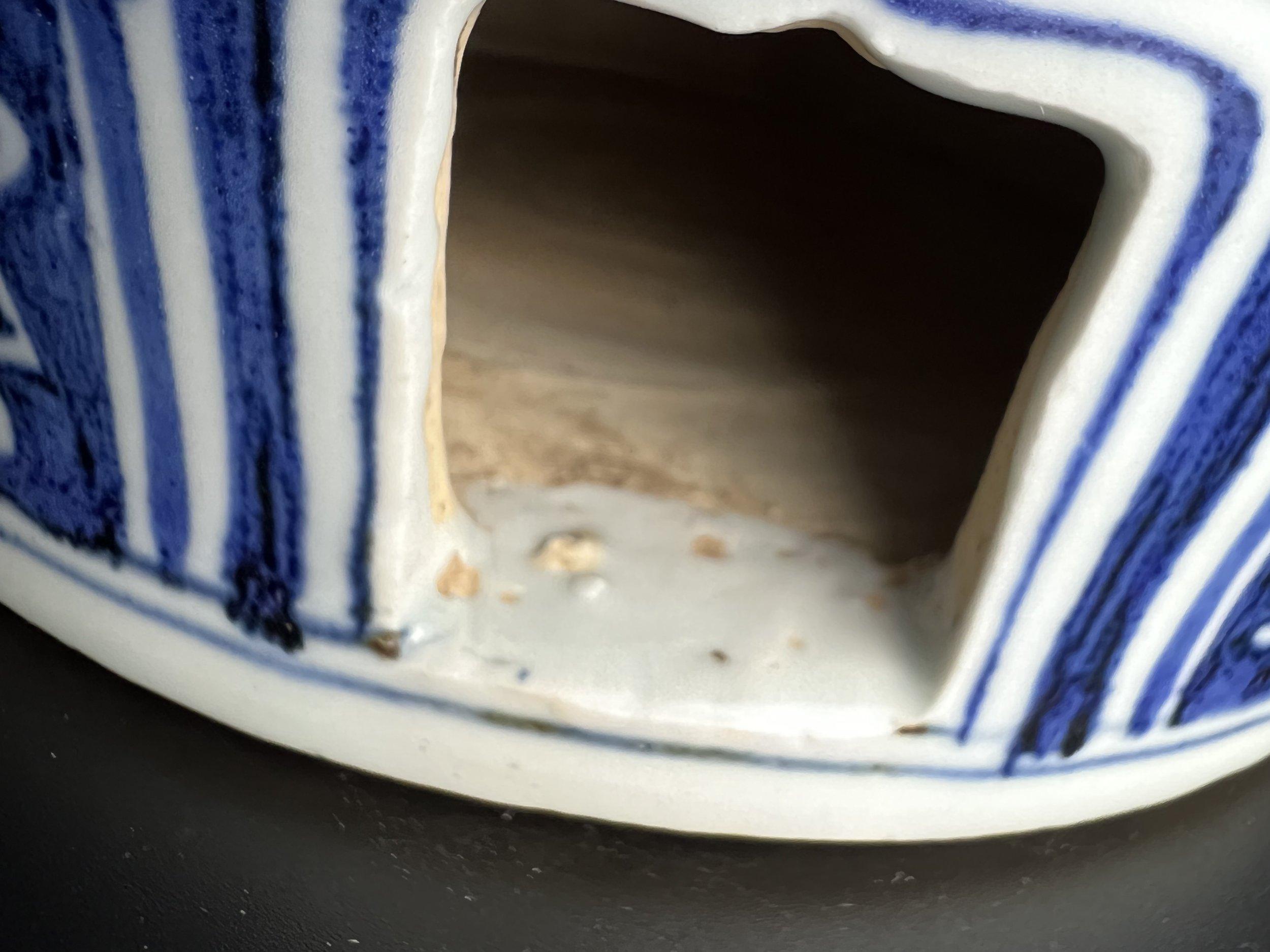 Image 7 of 13
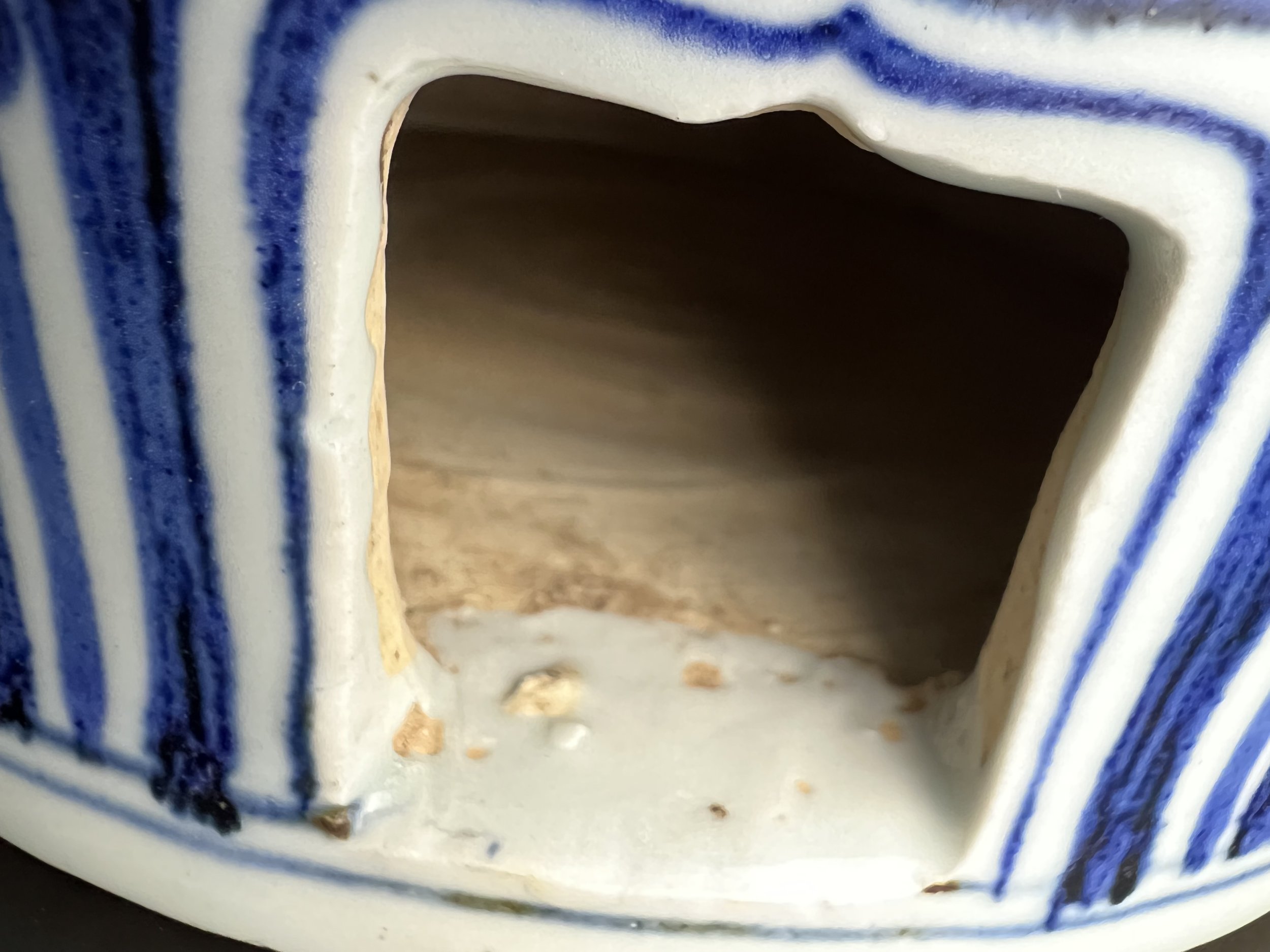 Image 8 of 13
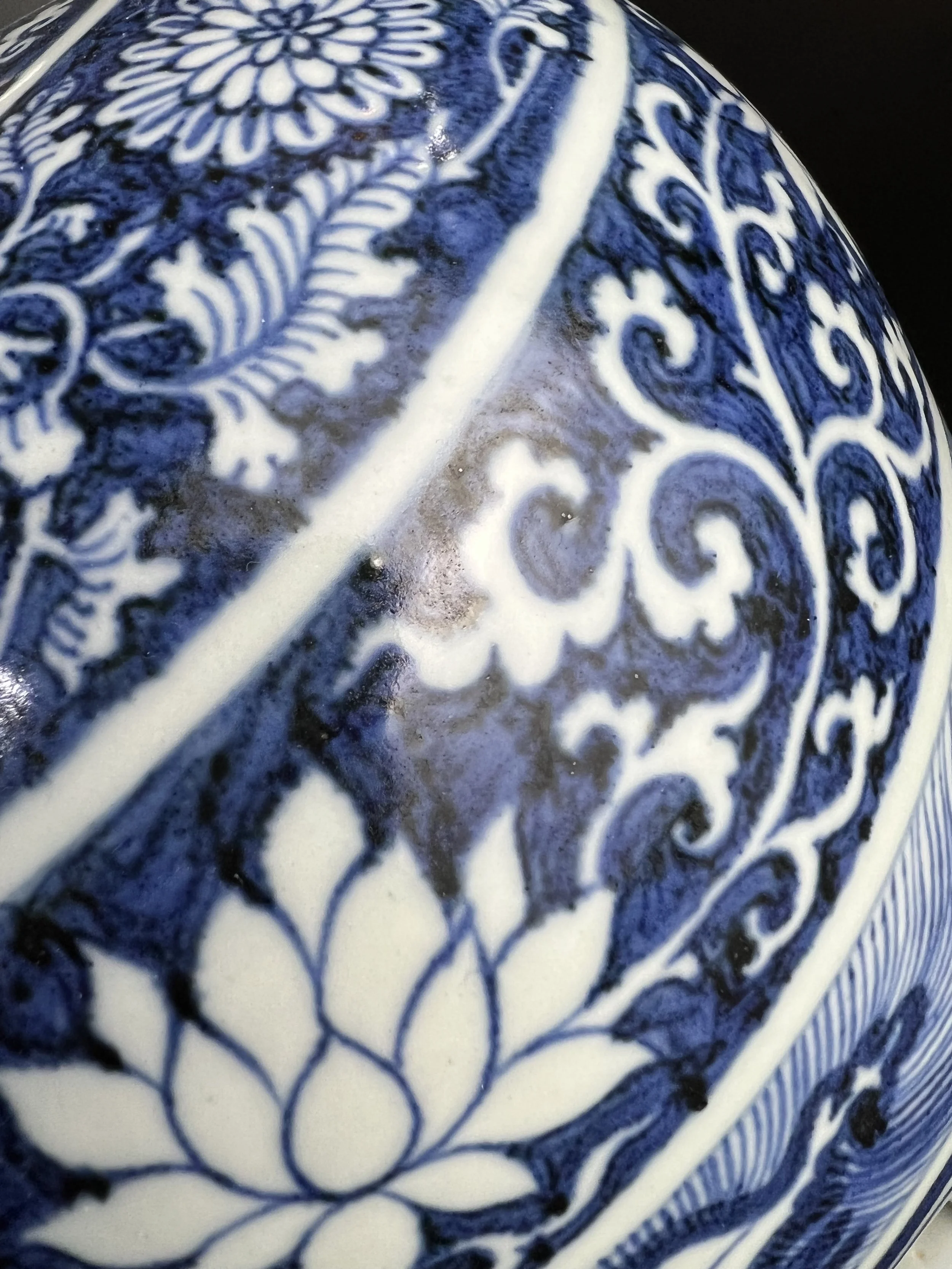 Image 9 of 13
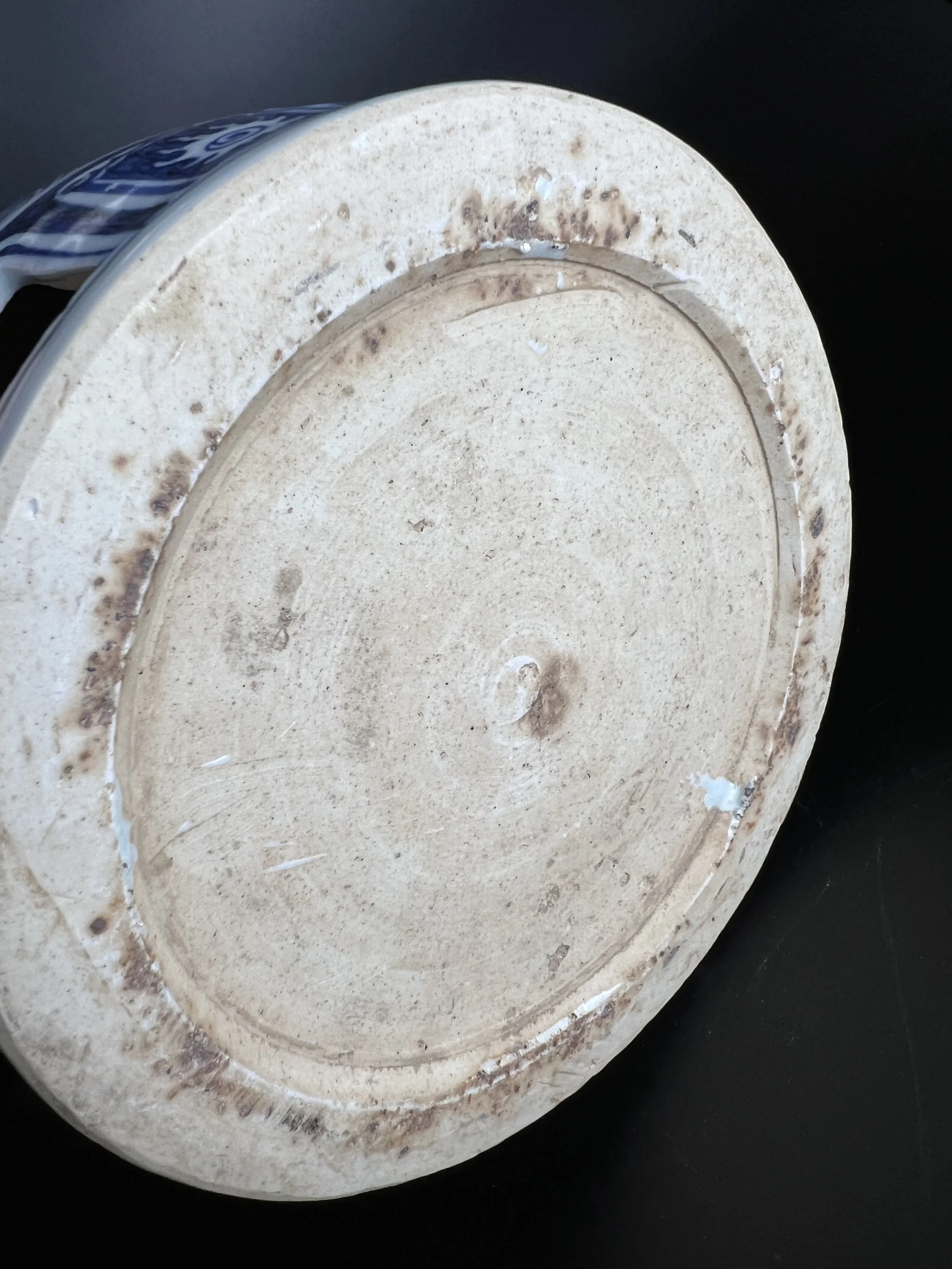 Image 10 of 13
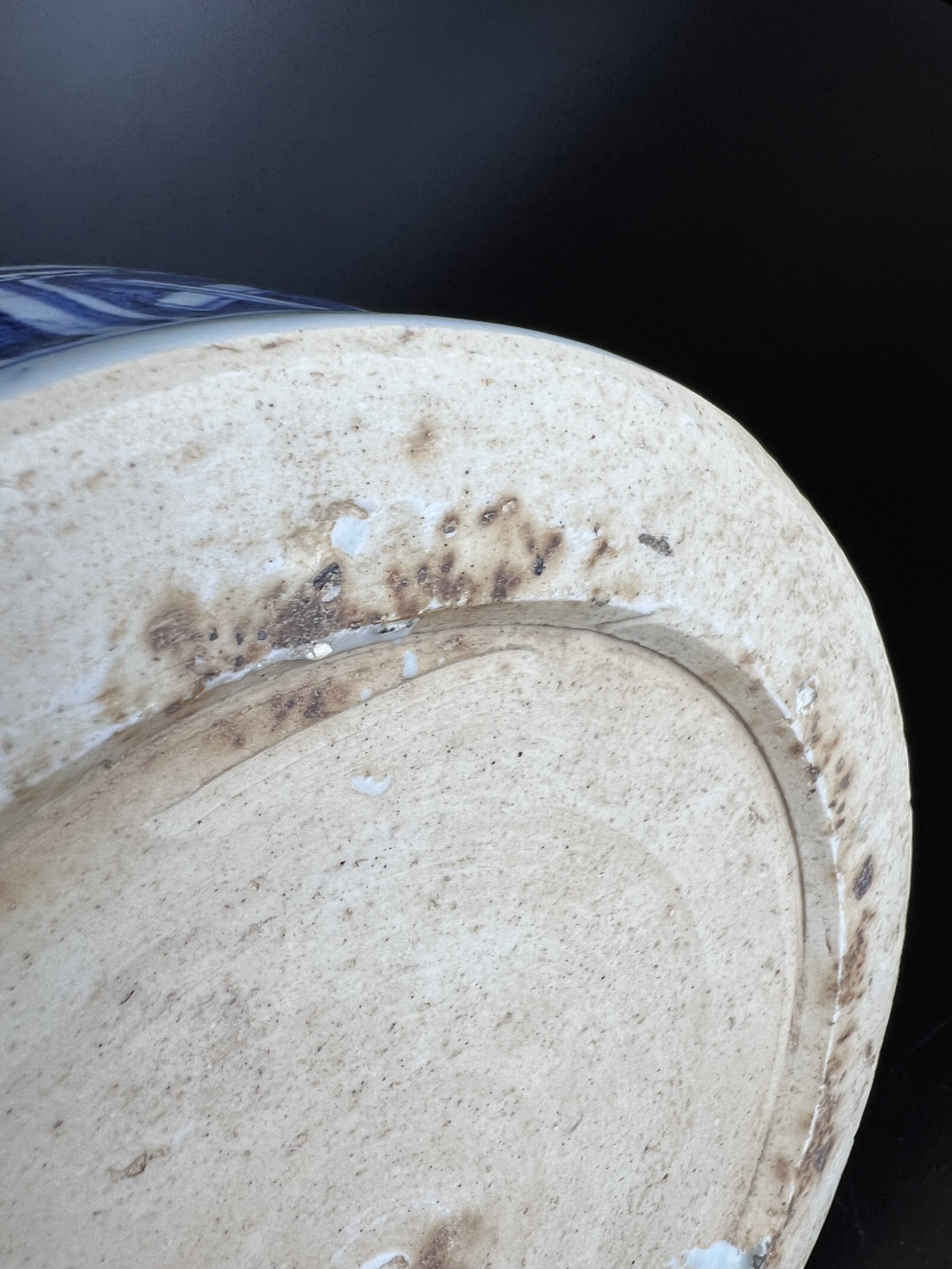 Image 11 of 13
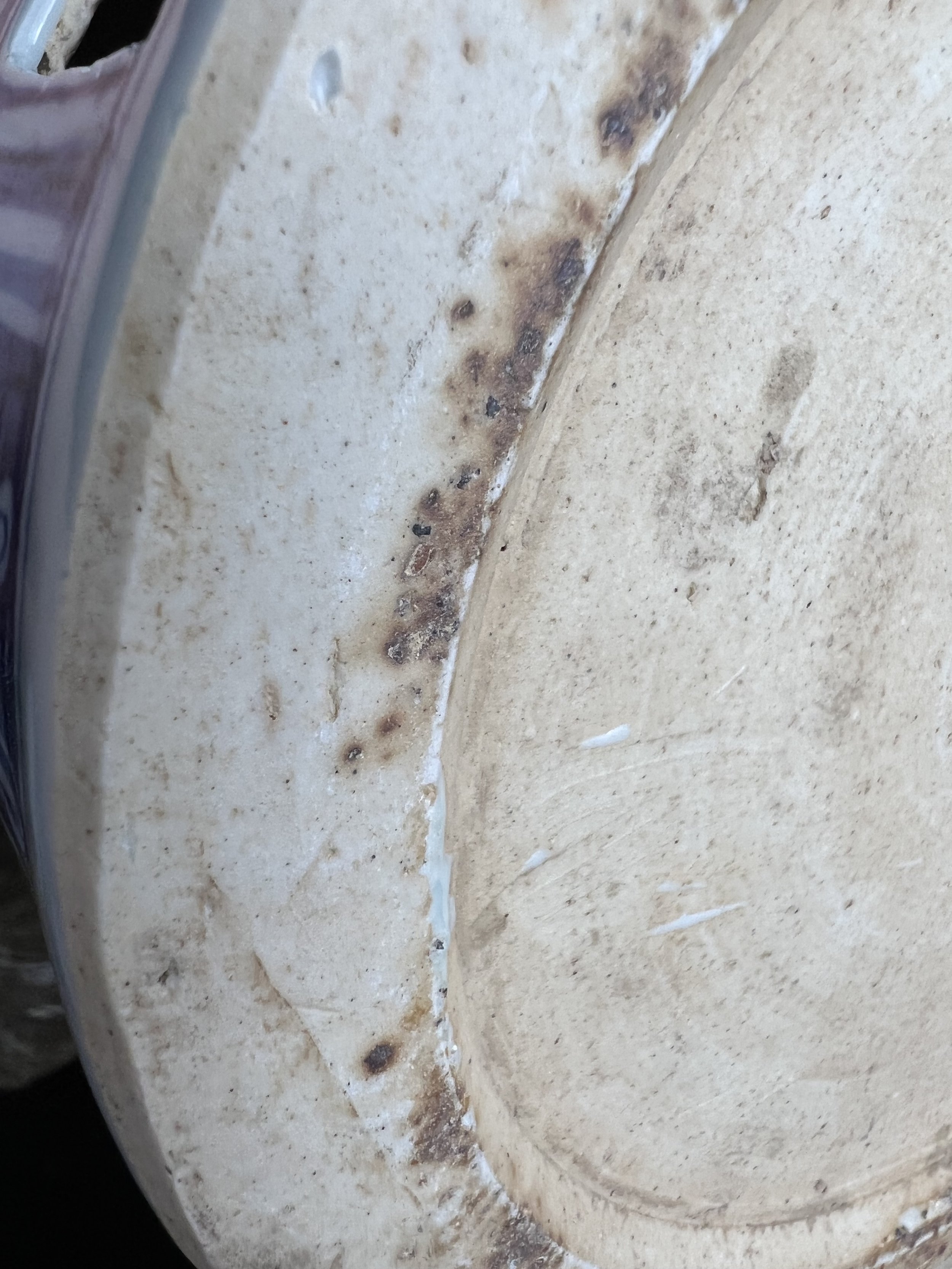 Image 12 of 13
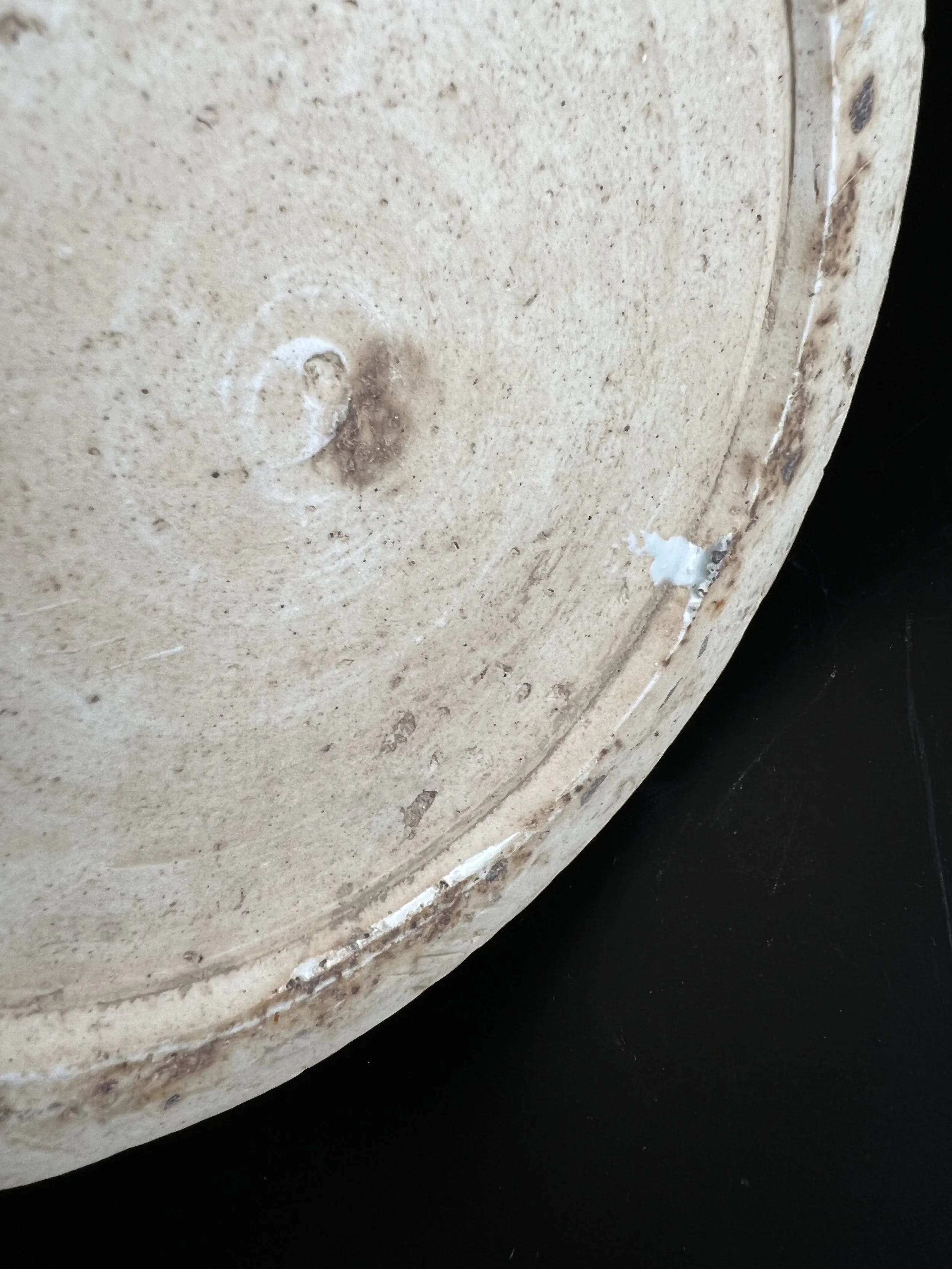 Image 13 of 13
A Blue-and-White 'Yurt'-Form Vessel with Phoenix, Lotus, and Wave Patterns, Yuan Dynasty
Overview
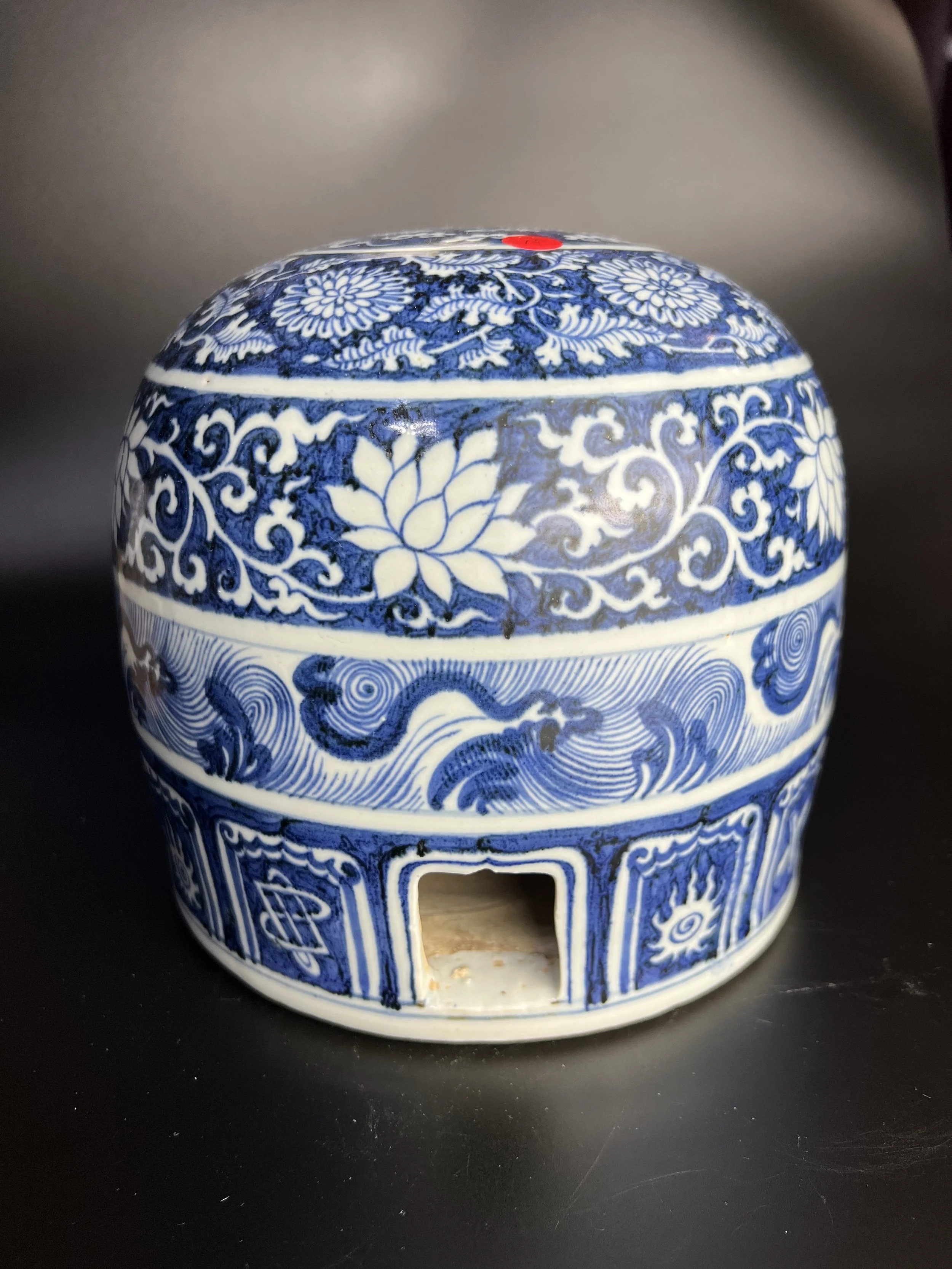
This Yuan Dynasty blue-and-white 'yurt'-form vessel with phoenix, lotus, and wave patterns, standing at 19 cm tall, represents an exceptionally rare three-dimensional biomimetic form in Yuan blue-and-white porcelain. Its design is uniquely inspired by the ger, the dwelling of nomadic peoples, and exhibits complex craftsmanship. The entire vessel is painted in multiple decorative registers using imported 'Sumali' blue pigment. The motifs encompass phoenixes, lotuses, waves, and the Eight Buddhist Emblems, arranged in a dense, lavish layout with bold, unrestrained brushwork. The blue hue is intense and vivid, with prominent 'iron-rust speckle' characteristics. This object synthesizes Yuan ceramic artistry, imagery from steppe culture, and multi-religious decoration. It is not only an outstanding representative of Yuan blue-and-white technology but also a precious material witness to ethnic integration and cultural convergence during the Mongol-Yuan period.
I. Overview of Core Characteristics
Feature DimensionSpecific DescriptionObject DesignationBlue-and-White 'Yurt'-Form (or Dome-Form) Vessel with Phoenix, Lotus, and Wave Patterns, Yuan dynastyHistorical PeriodYuan Dynasty (mid-to-late 14th century)DimensionsHeight: approx. 19 cmBasic FormYurt-shaped: Imitating the dome-like ger of the steppe. The overall shape is a rounded dome, resting on relatively short, straight or slightly curved walls, with a broad, thick ring foot at the base. The form is饱满 (full) and stable, strongly embodying nomadic ethnic characteristics.Special StructureSide Aperture: The side wall features a lotus-petal-shaped aperture (window), outlined in underglaze blue. Hollow Interior: It is not a functional container and is speculated to be an incense burner, lamp, or special display object.Decorative LayoutDivided into five tiers from top to bottom: 1. Top (Dome): Painted with a phoenix moving among auspicious clouds. 2. Upper Shoulder: A band of scrolling or sprigged chrysanthemum motifs. 3. Mid-Belly: The main decorative band of scrolling lotus vines. 4. Lower Body: A band of crashing wave patterns (or 'sea and rocky outcrop' pattern). 5. Base, above foot: A band of upward-facing lotus petal panels. Each lotus petal contains one of the Eight Buddhist Emblems (babao), such as the Dharma wheel, precious parasol, golden fish, endless knot, etc.Cobalt-blue HueUses imported 'Sumali' blue pigment. The color is deep, intense, and vibrant, with a purplish tinge. Areas of heavy pigment application show distinct blackish-brown 'iron-rust speckles,' natural 'diffusion,' and a strong metallic sheen.Body, Foot, and MarkThe body is heavy and substantial, the texture somewhat coarse, and the body color is greyish-white. The ring foot is unglazed. The foot trimming is bold and unrefined, commonly showing sand adhesion, kiln red (fiery red), and turning marks. The base bears no mark, consistent with Yuan dynasty porcelain characteristics.
II. In-Depth Analysis of Artistry and Craftsmanship
1. Unique Biomimetic Form and Cultural Significance
Form Origins: This vessel is a model example of Yuan dynasty ceramic innovation. The yurt (ger) is a core symbol of steppe nomadic life. Its translation into a ceramic form strongly reflects the ethnic identity and aesthetic preferences of the Yuan ruling class. It was likely a special display or ritual object made for the court or aristocracy.
Structure and Speculated Function: The lotus-petal-shaped aperture and hollow structure are key to its functionality. This design possibly served as: 1) An Incense Burner: The aperture allows fragrance to disperse, the dome to accumulate scent; 2) A Lamp: The aperture acts as a window for light, with an oil lamp inside; 3) A Pure Display Object. The aperture's shape resembles the 'lotus-petal niche' in Buddhist art, adding a sense of religious sanctity.
2. Dense, Ornate Decoration and Multicultural Fusion
Symbolism of the Motif Combination: The decoration fuses multicultural elements:
Phoenix: An auspicious bird in Han Chinese culture, symbolizing peace under heaven, related to Mongol rulers' adoption of Han culture.
Lotus Motifs: Symbols of Buddhist purity, extremely popular in the Yuan dynasty.
Wave Patterns: Reflect concepts of "peace across the seas" and "eternal stability of the realm."
Lotus Petals with Eight Emblems: Directly derived from Tibetan Buddhism's 'Eight Auspicious Symbols,' a clear marker of the Yuan imperial family's patronage of Tibetan Buddhism.
This combination of Han Chinese florals, auspicious symbols, Buddhist emblems, and a steppe-derived form is the artistic embodiment of the Yuan "All-under-Heaven as One Family" political ideal.
Painting Style: The painting exhibits classic Yuan blue-and-white traits: brushwork is free, fluid, bold, and powerful. Lotus petals are plump, the phoenix posture vigorous, the sea waves turbulent—all executed with broad, sweeping strokes and fine detailing. The composition is full yet clearly layered,磅礴 (vast and majestic) in atmosphere.
3. Typical 'Zhizheng'-Type Blue-and-White Characteristics
Pigment and Coloration: Uses imported cobalt with high iron and low manganese content, resulting in a rich, intense color with great tonal variation. Due to kiln temperature and material properties, the following features are inevitably present:
'Iron-rust Speckles': Blackish-brown speckles formed where pigment is concentrated, sinking into the body, showing a metallic luster when viewed sideways.
Diffusion: A hazy, ink-bleeding effect at the edges of lines, giving pattern outlines a朦胧 (misty) ink-wash quality.
Metallic Sheen: The shimmering effect on the surface of iron-rust speckles due to crystallization.
Body and Glaze Technology: The glaze is a bluish-white, duck-egg green color, thick, lustrous, and moist. The body, using a porcelain stone/kaolin二元配方 (two-material formula), is less refined than Ming/Qing porcelain. The unglazed areas show pores and iron spots, and it feels substantial and heavy.
III. Historical Context and Proposed Function
Microcosm of Mongol-Yuan Court Culture: This vessel is not everyday porcelain. Its unique form and high-level blue-and-white craftsmanship indicate it was a high-grade product of the "official-designated, civilian-kiln-fired" system. It was likely used in the Yuan capital Dadu, the summer capital Shangdu, in imperial palaces, princely mansions, or royal temples. It is the product of Mongol aristocratic "native" aesthetics combined with Central Plains high craftsmanship.
Religious and Ritual Function: The strong Buddhist elements (lotus petals with eight emblems) suggest it may have been associated with religious offerings or rituals. The yurt form itself might also carry symbolic meaning as a ritual "dome," making it a ceremonial object connecting secular power and religious sanctity.
Product of East-West Exchange: The cobalt came from Persia, the decoration fused Han, Tibetan, and Mongol cultures, the form originated from the steppe, and it was fired at Jingdezhen. This vessel itself is a three-dimensional monument to the Yuan era of pan-Eurasian, multicultural exchange.
IV. Authentication Key Points
Yuan blue-and-white with such peculiar forms are extremely rare; most seen on the market are modern reproductions. Authentication demands the highest scrutiny:
Form and Craftsmanship: Originals have an archaic, robust form, clear hand-throwing marks, and a hand-carved lotus aperture with natural edges. Reproductions often have stiff forms, overly regular apertures with a machine-made feel.
Cobalt Blue and 'Iron-rust Speckles': Originals show natural diffusion; speckles are randomly distributed, sunken under the glaze, with a soft sheen. Reproductions often have浮艳 (flashy, floating) blue (using chemical pigments); speckles are artificially applied, appearing stiff, dull, and overly uniform.
Body, Foot, and Aging Signs: Original unglazed foot rings show a coarse, sandy base; fiery red appears naturally from within, with variations in shade and signs of age-related wear. Reproductions often have overly white/fine clay; fiery red is sprayed on, floating on the surface; wear marks look contrived.
Decoration and Painting: Original painting is confident and spontaneous, with powerful, swift brushlines. Reproductions often have拘谨迟疑 (hesitant, constrained) painting,绵软 (weak) lines, and overly symmetrical, rigid compositions, losing the Yuan's bold spirit.
Overall Vitality: Originals feel厚重古拙 (substantial and archaic), with the treasured sheen of centuries. Reproductions only approximate the form, lacking the inner robust grandeur and sense of historical sedimentation.
Conclusion
This Yuan blue-and-white yurt-form vessel is a "curious object" that pays homage to steppe tradition in form, converges multiple civilizations in decoration, and showcases the pinnacle of its era's technology. It transcends the utilitarian realm of ordinary porcelain, becoming a sculptural historical document承载 (carrying) imperial memory, religious faith, and cultural exchange. Its existence allows us a glimpse into that era of vast conquests, where different civilizations collided and fused within fire and clay, ultimately crystallizing into this stunningly audacious幽蓝神采 (mysterious blue brilliance). Its rarity and unique historical value occupy an irreplaceable position in the history of Yuan blue-and-white and indeed Chinese ceramics.
元 青花凤穿莲花海浪纹蒙古包形器
概述
此件 元 青花凤穿莲花海浪纹蒙古包形器,高19厘米,是元代青花瓷中极为罕见的立体仿生造型器物。其造型灵感源于游牧民族居住的穹庐——蒙古包,设计独特,工艺复杂。通体以进口“苏麻离青”料绘多层纹饰,主题涵盖凤凰、莲花、海浪及八宝,布局繁密,笔意豪放,青花发色浓艳,铁锈斑特征显著。此器集元代瓷艺、草原文化意象与多元宗教纹饰于一体,不仅是元代青花瓷技术的卓越代表,更是蒙元时期民族融合与文化交汇的珍贵物质见证。
一、 核心特征总览
特征维度具体描述器物定名元 青花凤穿莲花海浪纹蒙古包形器(或称穹庐形器)历史年代元代(约十四世纪中后期)器物尺寸高约19厘米基本器型蒙古包形:仿草原穹庐造型,整体呈浑圆穹顶状,下承较矮的直壁或微弧壁,底部为宽厚圈足。造型饱满稳重,极具草原民族特色。特殊结构侧部开光:器物侧壁设有一莲瓣形开光(窗口),边缘以青花勾勒。内部中空,非实用容器,疑为香薰、灯盏或特殊陈设器。纹饰布局自上而下分五层:1. 顶部:绘凤鸟穿梭于祥云之间(凤穿云)。2. 上层肩部:一周缠枝或折枝菊花纹。3. 中层腹部:主体纹饰为缠枝莲花纹。4. 下层胫部:一周海浪纹(或海水江崖纹)。5. 最底部近足处:一周仰莲瓣纹,莲瓣内饰杂宝(八宝)纹,如法轮、宝伞、双鱼、盘长等。青花发色使用进口“苏麻离青”料,发色浓艳深沉,蓝中泛紫,积料处可见明显的黑褐色“铁锈斑”结晶与自然“晕散”,锡光感强。胎足与款识胎体厚重,质地略粗,胎色灰白。圈足露胎,不施釉,修足粗犷,常见粘砂、窑红(火石红)及切削旋痕。底部无任何款识,符合元代瓷器特征。
二、 艺术与工艺深度解析
1. 独特的仿生造型与文化寓意
造型源流:此器是元代瓷器造型创新的典范。蒙古包(穹庐)是草原游牧生活的核心象征,将其转化为瓷器造型,强烈反映了元代统治阶层的民族身份认同与审美偏好,很可能是为宫廷或贵族特制的陈设器或礼仪用器。
结构与功能推测:侧壁的莲瓣形开光与中空结构是其功能性关键。此设计可能用于:1) 香薰器:开口便于香气散发,穹顶可积聚香味;2) 灯盏:开口作为灯窗,内部置油灯;3) 纯陈设器。开光造型与佛教艺术中的“莲瓣形龛”相似,增添了宗教神圣感。
2. 繁密华丽的纹饰与多元文化融合
纹饰组合的象征:纹饰融合了多元文化元素:
凤纹:汉文化中的祥瑞之鸟,象征天下太平,与蒙古统治者吸收汉文化有关。
莲花纹:佛教圣洁的象征,在元代极为流行。
海浪纹:体现“四海升平”、“江山永固”的天下观。
莲瓣八宝纹:直接来源于藏传佛教的“八吉祥”,是元朝皇室崇奉藏传佛教的明确标志。
这种将汉地花卉、祥瑞、佛教符号与草原造型结合的装饰,是元代“四海一家”政治理念的艺术体现。
绘画风格:画风典型元青花特点,笔触酣畅淋漓,豪放有力。莲花花瓣丰满,凤鸟姿态矫健,海水波涛汹涌,均以大笔挥洒,小笔点睛,构图虽满但层次清晰,气势磅礴。
3. 典型的至正型青花特征
青料与发色:使用高铁低锰的进口钴料,呈色浓艳,色阶丰富。由于窑温与料性,必然产生以下特征:
铁锈斑:青料浓集处形成的黑褐色斑点,深入胎骨,侧看有金属光泽。
晕散:线条边缘如墨晕开,使图案轮廓产生朦胧的水墨画效果。
锡光:铁锈斑表面因结晶产生的闪烁效果。
胎釉工艺:釉面白中泛青,呈鸭蛋青色,釉质肥厚莹润。胎体因使用瓷石加高岭土二元配方,但淘炼不如明清精细,故露胎处可见孔隙和黑痣,手感沉甸。
三、 历史内涵与用途推测
蒙元宫廷文化的缩影:此器并非日常用瓷,其独特的造型与高级的青花工艺表明它属于“官搭民烧”性质的高等级产品,可能用于元大都或上都的宫廷、王府或皇家寺庙,是蒙元贵族“本俗”审美与中原高端工艺结合的产物。
宗教与礼仪功能:纹饰中强烈的佛教元素(莲瓣八宝)暗示其可能与宗教供奉、法事活动有关。蒙古包造型本身也可能具有祭祀“穹庐”的象征意义,使其成为连通世俗权力与宗教神圣的礼仪器物。
中西交流的产物:青花钴料来自波斯,纹饰融合汉、藏、蒙古文化,造型源于草原,烧造于景德镇。此器本身就是元代横跨欧亚、多元文化大交流时代的立体纪念碑。
四、 鉴藏要点
此类奇特造型元青花极为罕见,市场所见几乎皆为新仿,鉴藏要求极高:
造型与工艺:真品造型古朴雄浑,手工拉坯痕迹明显,莲瓣开光为手工雕刻,边沿自然。仿品往往造型僵硬,开光过于规整,有机器加工感。
青花与铁锈斑:真品青花晕散自然,铁锈斑分布随机,沉入釉下,锡光柔和。仿品青花色浮艳(多用化学料),铁锈斑为人工点染,生硬呆板,过于均匀。
胎足与老化痕迹:真品圈足露胎处可见粗砂底,火石红自然由内泛出,有深浅变化和岁月磨痕。仿品胎土过白过细,火石红为喷涂,浮于表面,磨损做作。
纹饰画工:真品画风率意、自信,笔线有力度和速度感。仿品画工常拘谨迟疑,线条绵软,图案布局过于对称死板,失去元代豪迈神韵。
综合气韵:真品厚重古拙,有历经数百年的沧桑宝光。仿品仅得形似,缺乏内在的雄浑气度与历史沉淀感。
结语
此元青花蒙古包形器,是一件在造型上致敬草原传统,在纹饰上汇聚多元文明,在工艺上彰显时代巅峰的“奇器”。它超越了普通瓷器的实用范畴,成为一件承载着帝国记忆、宗教信念与文化交流的雕塑性史证。其存在,让我们得以窥见那个纵横捭阖的时代里,不同文明如何在火焰与泥土中碰撞、交融,最终凝结成这一抹惊世骇俗的幽蓝神采。它的珍稀性与独特历史价值,在元青花乃至中国陶瓷史中,均占有无可替代的一席之地。
Overview
This Yuan Dynasty blue-and-white 'yurt'-form vessel with phoenix, lotus, and wave patterns, standing at 19 cm tall, represents an exceptionally rare three-dimensional biomimetic form in Yuan blue-and-white porcelain. Its design is uniquely inspired by the ger, the dwelling of nomadic peoples, and exhibits complex craftsmanship. The entire vessel is painted in multiple decorative registers using imported 'Sumali' blue pigment. The motifs encompass phoenixes, lotuses, waves, and the Eight Buddhist Emblems, arranged in a dense, lavish layout with bold, unrestrained brushwork. The blue hue is intense and vivid, with prominent 'iron-rust speckle' characteristics. This object synthesizes Yuan ceramic artistry, imagery from steppe culture, and multi-religious decoration. It is not only an outstanding representative of Yuan blue-and-white technology but also a precious material witness to ethnic integration and cultural convergence during the Mongol-Yuan period.
I. Overview of Core Characteristics
Feature DimensionSpecific DescriptionObject DesignationBlue-and-White 'Yurt'-Form (or Dome-Form) Vessel with Phoenix, Lotus, and Wave Patterns, Yuan dynastyHistorical PeriodYuan Dynasty (mid-to-late 14th century)DimensionsHeight: approx. 19 cmBasic FormYurt-shaped: Imitating the dome-like ger of the steppe. The overall shape is a rounded dome, resting on relatively short, straight or slightly curved walls, with a broad, thick ring foot at the base. The form is饱满 (full) and stable, strongly embodying nomadic ethnic characteristics.Special StructureSide Aperture: The side wall features a lotus-petal-shaped aperture (window), outlined in underglaze blue. Hollow Interior: It is not a functional container and is speculated to be an incense burner, lamp, or special display object.Decorative LayoutDivided into five tiers from top to bottom: 1. Top (Dome): Painted with a phoenix moving among auspicious clouds. 2. Upper Shoulder: A band of scrolling or sprigged chrysanthemum motifs. 3. Mid-Belly: The main decorative band of scrolling lotus vines. 4. Lower Body: A band of crashing wave patterns (or 'sea and rocky outcrop' pattern). 5. Base, above foot: A band of upward-facing lotus petal panels. Each lotus petal contains one of the Eight Buddhist Emblems (babao), such as the Dharma wheel, precious parasol, golden fish, endless knot, etc.Cobalt-blue HueUses imported 'Sumali' blue pigment. The color is deep, intense, and vibrant, with a purplish tinge. Areas of heavy pigment application show distinct blackish-brown 'iron-rust speckles,' natural 'diffusion,' and a strong metallic sheen.Body, Foot, and MarkThe body is heavy and substantial, the texture somewhat coarse, and the body color is greyish-white. The ring foot is unglazed. The foot trimming is bold and unrefined, commonly showing sand adhesion, kiln red (fiery red), and turning marks. The base bears no mark, consistent with Yuan dynasty porcelain characteristics.
II. In-Depth Analysis of Artistry and Craftsmanship
1. Unique Biomimetic Form and Cultural Significance
Form Origins: This vessel is a model example of Yuan dynasty ceramic innovation. The yurt (ger) is a core symbol of steppe nomadic life. Its translation into a ceramic form strongly reflects the ethnic identity and aesthetic preferences of the Yuan ruling class. It was likely a special display or ritual object made for the court or aristocracy.
Structure and Speculated Function: The lotus-petal-shaped aperture and hollow structure are key to its functionality. This design possibly served as: 1) An Incense Burner: The aperture allows fragrance to disperse, the dome to accumulate scent; 2) A Lamp: The aperture acts as a window for light, with an oil lamp inside; 3) A Pure Display Object. The aperture's shape resembles the 'lotus-petal niche' in Buddhist art, adding a sense of religious sanctity.
2. Dense, Ornate Decoration and Multicultural Fusion
Symbolism of the Motif Combination: The decoration fuses multicultural elements:
Phoenix: An auspicious bird in Han Chinese culture, symbolizing peace under heaven, related to Mongol rulers' adoption of Han culture.
Lotus Motifs: Symbols of Buddhist purity, extremely popular in the Yuan dynasty.
Wave Patterns: Reflect concepts of "peace across the seas" and "eternal stability of the realm."
Lotus Petals with Eight Emblems: Directly derived from Tibetan Buddhism's 'Eight Auspicious Symbols,' a clear marker of the Yuan imperial family's patronage of Tibetan Buddhism.
This combination of Han Chinese florals, auspicious symbols, Buddhist emblems, and a steppe-derived form is the artistic embodiment of the Yuan "All-under-Heaven as One Family" political ideal.
Painting Style: The painting exhibits classic Yuan blue-and-white traits: brushwork is free, fluid, bold, and powerful. Lotus petals are plump, the phoenix posture vigorous, the sea waves turbulent—all executed with broad, sweeping strokes and fine detailing. The composition is full yet clearly layered,磅礴 (vast and majestic) in atmosphere.
3. Typical 'Zhizheng'-Type Blue-and-White Characteristics
Pigment and Coloration: Uses imported cobalt with high iron and low manganese content, resulting in a rich, intense color with great tonal variation. Due to kiln temperature and material properties, the following features are inevitably present:
'Iron-rust Speckles': Blackish-brown speckles formed where pigment is concentrated, sinking into the body, showing a metallic luster when viewed sideways.
Diffusion: A hazy, ink-bleeding effect at the edges of lines, giving pattern outlines a朦胧 (misty) ink-wash quality.
Metallic Sheen: The shimmering effect on the surface of iron-rust speckles due to crystallization.
Body and Glaze Technology: The glaze is a bluish-white, duck-egg green color, thick, lustrous, and moist. The body, using a porcelain stone/kaolin二元配方 (two-material formula), is less refined than Ming/Qing porcelain. The unglazed areas show pores and iron spots, and it feels substantial and heavy.
III. Historical Context and Proposed Function
Microcosm of Mongol-Yuan Court Culture: This vessel is not everyday porcelain. Its unique form and high-level blue-and-white craftsmanship indicate it was a high-grade product of the "official-designated, civilian-kiln-fired" system. It was likely used in the Yuan capital Dadu, the summer capital Shangdu, in imperial palaces, princely mansions, or royal temples. It is the product of Mongol aristocratic "native" aesthetics combined with Central Plains high craftsmanship.
Religious and Ritual Function: The strong Buddhist elements (lotus petals with eight emblems) suggest it may have been associated with religious offerings or rituals. The yurt form itself might also carry symbolic meaning as a ritual "dome," making it a ceremonial object connecting secular power and religious sanctity.
Product of East-West Exchange: The cobalt came from Persia, the decoration fused Han, Tibetan, and Mongol cultures, the form originated from the steppe, and it was fired at Jingdezhen. This vessel itself is a three-dimensional monument to the Yuan era of pan-Eurasian, multicultural exchange.
IV. Authentication Key Points
Yuan blue-and-white with such peculiar forms are extremely rare; most seen on the market are modern reproductions. Authentication demands the highest scrutiny:
Form and Craftsmanship: Originals have an archaic, robust form, clear hand-throwing marks, and a hand-carved lotus aperture with natural edges. Reproductions often have stiff forms, overly regular apertures with a machine-made feel.
Cobalt Blue and 'Iron-rust Speckles': Originals show natural diffusion; speckles are randomly distributed, sunken under the glaze, with a soft sheen. Reproductions often have浮艳 (flashy, floating) blue (using chemical pigments); speckles are artificially applied, appearing stiff, dull, and overly uniform.
Body, Foot, and Aging Signs: Original unglazed foot rings show a coarse, sandy base; fiery red appears naturally from within, with variations in shade and signs of age-related wear. Reproductions often have overly white/fine clay; fiery red is sprayed on, floating on the surface; wear marks look contrived.
Decoration and Painting: Original painting is confident and spontaneous, with powerful, swift brushlines. Reproductions often have拘谨迟疑 (hesitant, constrained) painting,绵软 (weak) lines, and overly symmetrical, rigid compositions, losing the Yuan's bold spirit.
Overall Vitality: Originals feel厚重古拙 (substantial and archaic), with the treasured sheen of centuries. Reproductions only approximate the form, lacking the inner robust grandeur and sense of historical sedimentation.
Conclusion
This Yuan blue-and-white yurt-form vessel is a "curious object" that pays homage to steppe tradition in form, converges multiple civilizations in decoration, and showcases the pinnacle of its era's technology. It transcends the utilitarian realm of ordinary porcelain, becoming a sculptural historical document承载 (carrying) imperial memory, religious faith, and cultural exchange. Its existence allows us a glimpse into that era of vast conquests, where different civilizations collided and fused within fire and clay, ultimately crystallizing into this stunningly audacious幽蓝神采 (mysterious blue brilliance). Its rarity and unique historical value occupy an irreplaceable position in the history of Yuan blue-and-white and indeed Chinese ceramics.
元 青花凤穿莲花海浪纹蒙古包形器
概述
此件 元 青花凤穿莲花海浪纹蒙古包形器,高19厘米,是元代青花瓷中极为罕见的立体仿生造型器物。其造型灵感源于游牧民族居住的穹庐——蒙古包,设计独特,工艺复杂。通体以进口“苏麻离青”料绘多层纹饰,主题涵盖凤凰、莲花、海浪及八宝,布局繁密,笔意豪放,青花发色浓艳,铁锈斑特征显著。此器集元代瓷艺、草原文化意象与多元宗教纹饰于一体,不仅是元代青花瓷技术的卓越代表,更是蒙元时期民族融合与文化交汇的珍贵物质见证。
一、 核心特征总览
特征维度具体描述器物定名元 青花凤穿莲花海浪纹蒙古包形器(或称穹庐形器)历史年代元代(约十四世纪中后期)器物尺寸高约19厘米基本器型蒙古包形:仿草原穹庐造型,整体呈浑圆穹顶状,下承较矮的直壁或微弧壁,底部为宽厚圈足。造型饱满稳重,极具草原民族特色。特殊结构侧部开光:器物侧壁设有一莲瓣形开光(窗口),边缘以青花勾勒。内部中空,非实用容器,疑为香薰、灯盏或特殊陈设器。纹饰布局自上而下分五层:1. 顶部:绘凤鸟穿梭于祥云之间(凤穿云)。2. 上层肩部:一周缠枝或折枝菊花纹。3. 中层腹部:主体纹饰为缠枝莲花纹。4. 下层胫部:一周海浪纹(或海水江崖纹)。5. 最底部近足处:一周仰莲瓣纹,莲瓣内饰杂宝(八宝)纹,如法轮、宝伞、双鱼、盘长等。青花发色使用进口“苏麻离青”料,发色浓艳深沉,蓝中泛紫,积料处可见明显的黑褐色“铁锈斑”结晶与自然“晕散”,锡光感强。胎足与款识胎体厚重,质地略粗,胎色灰白。圈足露胎,不施釉,修足粗犷,常见粘砂、窑红(火石红)及切削旋痕。底部无任何款识,符合元代瓷器特征。
二、 艺术与工艺深度解析
1. 独特的仿生造型与文化寓意
造型源流:此器是元代瓷器造型创新的典范。蒙古包(穹庐)是草原游牧生活的核心象征,将其转化为瓷器造型,强烈反映了元代统治阶层的民族身份认同与审美偏好,很可能是为宫廷或贵族特制的陈设器或礼仪用器。
结构与功能推测:侧壁的莲瓣形开光与中空结构是其功能性关键。此设计可能用于:1) 香薰器:开口便于香气散发,穹顶可积聚香味;2) 灯盏:开口作为灯窗,内部置油灯;3) 纯陈设器。开光造型与佛教艺术中的“莲瓣形龛”相似,增添了宗教神圣感。
2. 繁密华丽的纹饰与多元文化融合
纹饰组合的象征:纹饰融合了多元文化元素:
凤纹:汉文化中的祥瑞之鸟,象征天下太平,与蒙古统治者吸收汉文化有关。
莲花纹:佛教圣洁的象征,在元代极为流行。
海浪纹:体现“四海升平”、“江山永固”的天下观。
莲瓣八宝纹:直接来源于藏传佛教的“八吉祥”,是元朝皇室崇奉藏传佛教的明确标志。
这种将汉地花卉、祥瑞、佛教符号与草原造型结合的装饰,是元代“四海一家”政治理念的艺术体现。
绘画风格:画风典型元青花特点,笔触酣畅淋漓,豪放有力。莲花花瓣丰满,凤鸟姿态矫健,海水波涛汹涌,均以大笔挥洒,小笔点睛,构图虽满但层次清晰,气势磅礴。
3. 典型的至正型青花特征
青料与发色:使用高铁低锰的进口钴料,呈色浓艳,色阶丰富。由于窑温与料性,必然产生以下特征:
铁锈斑:青料浓集处形成的黑褐色斑点,深入胎骨,侧看有金属光泽。
晕散:线条边缘如墨晕开,使图案轮廓产生朦胧的水墨画效果。
锡光:铁锈斑表面因结晶产生的闪烁效果。
胎釉工艺:釉面白中泛青,呈鸭蛋青色,釉质肥厚莹润。胎体因使用瓷石加高岭土二元配方,但淘炼不如明清精细,故露胎处可见孔隙和黑痣,手感沉甸。
三、 历史内涵与用途推测
蒙元宫廷文化的缩影:此器并非日常用瓷,其独特的造型与高级的青花工艺表明它属于“官搭民烧”性质的高等级产品,可能用于元大都或上都的宫廷、王府或皇家寺庙,是蒙元贵族“本俗”审美与中原高端工艺结合的产物。
宗教与礼仪功能:纹饰中强烈的佛教元素(莲瓣八宝)暗示其可能与宗教供奉、法事活动有关。蒙古包造型本身也可能具有祭祀“穹庐”的象征意义,使其成为连通世俗权力与宗教神圣的礼仪器物。
中西交流的产物:青花钴料来自波斯,纹饰融合汉、藏、蒙古文化,造型源于草原,烧造于景德镇。此器本身就是元代横跨欧亚、多元文化大交流时代的立体纪念碑。
四、 鉴藏要点
此类奇特造型元青花极为罕见,市场所见几乎皆为新仿,鉴藏要求极高:
造型与工艺:真品造型古朴雄浑,手工拉坯痕迹明显,莲瓣开光为手工雕刻,边沿自然。仿品往往造型僵硬,开光过于规整,有机器加工感。
青花与铁锈斑:真品青花晕散自然,铁锈斑分布随机,沉入釉下,锡光柔和。仿品青花色浮艳(多用化学料),铁锈斑为人工点染,生硬呆板,过于均匀。
胎足与老化痕迹:真品圈足露胎处可见粗砂底,火石红自然由内泛出,有深浅变化和岁月磨痕。仿品胎土过白过细,火石红为喷涂,浮于表面,磨损做作。
纹饰画工:真品画风率意、自信,笔线有力度和速度感。仿品画工常拘谨迟疑,线条绵软,图案布局过于对称死板,失去元代豪迈神韵。
综合气韵:真品厚重古拙,有历经数百年的沧桑宝光。仿品仅得形似,缺乏内在的雄浑气度与历史沉淀感。
结语
此元青花蒙古包形器,是一件在造型上致敬草原传统,在纹饰上汇聚多元文明,在工艺上彰显时代巅峰的“奇器”。它超越了普通瓷器的实用范畴,成为一件承载着帝国记忆、宗教信念与文化交流的雕塑性史证。其存在,让我们得以窥见那个纵横捭阖的时代里,不同文明如何在火焰与泥土中碰撞、交融,最终凝结成这一抹惊世骇俗的幽蓝神采。它的珍稀性与独特历史价值,在元青花乃至中国陶瓷史中,均占有无可替代的一席之地。