From the kiln fires of Yuan Dynasty Jingdezhen emerged a category of porcelain unprecedented in Chinese ceramic history, which would become a radiant jewel in the world's artistic treasury—Yuan blue-and-white ware. Among its various forms, the large, substantial jars are particularly striking, often bearing the most intricate and splendid decorations. A prime example is the "Yuan Blue-and-White Jar with Dragons Amidst Interlocking Peonies," whose decoration is identical to the masterpiece housed in the Osaka Museum of Oriental Ceramics (whose predecessor was the Ataka Collection). This jar represents the pinnacle of its era.
I. Imposing Form: The Grandeur of an Empire
The jar's form is robust and dignified, epitomizing the "Zhizheng-type" style of large Yuan blue-and-white ware. It is of impressive size: approximately 38.7 cm in height, 32.6 cm in mouth diameter, and weighs about 7.64 kg. Holding it, one feels its substantial heft. The classic jar shape features a straight mouth, short neck, full shoulders, and a rounded belly, with饱满流畅的线条 that convey a sense of magnificent scale. On either side of the shoulders are symmetrically applied mask-shaped lugs holding rings. These beast masks, boldly outlined in cobalt blue with wide, glaring eyes, appear majestic and awe-inspiring. They add a three-dimensional quality and imbue the vessel with an air of guardianship and authority.
Jars of this size and quality, extremely difficult to fire with a low success rate, were likely not for daily household use. They were probably commissioned by the Yuan imperial family and nobility or were key commodities for foreign trade, serving as tangible symbols of the empire's power and aesthetic confidence.
II. Iconic Decoration: A Symphony of Dragon Power and Peony Prosperity
Yuan blue-and-white decoration is renowned for its dense, layered compositions, and this jar is a perfect example. Its ornamentation is divided into distinct horizontal bands from top to bottom, clear in hierarchy and intricate yet orderly.
Central Theme: Dragons Chasing Amidst Peonies: The most eye-catching decorative band encircles the jar's belly. The upper section depicts a pair of fierce three-clawed dragons soaring dynamically amidst clouds. Their long, powerful bodies twist and turn, displaying the characteristic ferocity and vitality of Yuan dragon designs. Below, the space is filled with a lush pattern of interlocking peonies (scroll peonies), with winding stems, continuous foliage, and fully bloomed flowers in various postures. The dragon symbolizes supreme imperial power and strength, while the peony represents wealth, honor, and prosperity. The combination of these two top-tier motifs is exceptionally rare in Yuan blue-and-white, a true "marriage of the mighty," merging the ruler's authority with wishes for a flourishing, prosperous age.
Exquisite Craftsmanship: The Dance of Incising and Cobalt: The decoration on this jar was not created by brushwork alone. Upon close inspection of the peony petals and leaves, one can see that their outlines are not simply painted. The designs were first finely incised into the porcelain body, and then the cobalt blue pigment was applied within the incised lines. This "incising and filling with blue" technique allowed the cobalt to pool more thickly in the grooves. After firing, these areas emerged in a deeper, more intense blue, creating striking contrasts in shade and a unique three-dimensional visual effect—a testament to the extraordinary skill of Yuan artisans.
III. Cobalt and Kiln Fire: The Cobalt Blue that Crossed Oceans
The jar exhibits a rich, vivid blue coloration with distinct "iron-rust" spots, the hallmark of using imported "Sumali" cobalt. This cobalt pigment, sourced from the Persian region with high iron content, tended to bleed and form these deep, metallic spots during high-temperature firing in a reducing atmosphere. This very characteristic contributed to the unique, majestic, and ink-wash-like artistic effect of Yuan blue-and-white.
Its creation was intimately linked to the unprecedented East-West exchanges of the Yuan period. Such an exquisitely made large jar was likely transported via the Maritime Silk Road to destinations like the Middle East and Southeast Asia, becoming a treasure coveted by royalty and nobility. The identical jar in the former Ataka Collection, which found its way to Japan, stands as a witness to this era of globalized trade.
IV. Provenance and Home: From the Ataka Collection to the Hall of Oriental Ceramics
The jar with identical decoration mentioned by the user was originally a treasure of the renowned Ataka Collection, assembled by the Japanese collector Eiichi Ataka. The Ataka Collection was famous for its exceptional discernment in Chinese ceramics. Following changes in the corporate group, this precious collection was donated by the Sumitomo Group to the City of Osaka. To house and display it, the Osaka Museum of Oriental Ceramics was specially established in 1982. Therefore, this Yuan blue-and-white jar now rests securely within this premier museum dedicated to ceramic art. As a cornerstone exhibit of its "Ataka Collection," it narrates a story of art transcending time and space to visitors from around the world.
Conclusion
The Yuan Blue-and-White Jar with Dragons Amidst Interlocking Peonies represents the highest synthesis of Yuan ceramic technology. It fuses the traditional Chinese symbolism of dragon authority and peony prosperity into a single vessel, disseminated across the seas by the era's wave of globalization. It is far more than a piece of porcelain; it is a microcosm of a magnificent age, an epic poem composed jointly by kiln fire, cobalt, and artistic vision. Standing before it, one can still sense the unparalleled creativity and imperial grandeur of seven centuries past.
元青花龙纹缠枝牡丹大罐:帝皇之气的海上华章
在元代景德镇的窑火中,一种前所未有的瓷器品类横空出世,它不仅改写了中国陶瓷史,更成为世界艺术宝库中的璀璨明珠——这便是元青花。在众多器型中,硕大饱满的大罐尤为引人瞩目,它们往往承载着最为繁复华丽的纹饰。其中,一件纹饰与日本大阪市立东洋陶瓷美术馆(其前身即安宅美术馆)镇馆之宝完全相同的“元青花龙纹缠枝牡丹大罐”,堪称这一时代的巅峰代表作。
一、雄浑器型:帝国的气度
此罐器型浑厚庄重,是元代大型器物“至正型”青花的典型风格。其尺寸硕大,高约38.7厘米,口径约32.6厘米,重达7.64公斤,捧之在手,沉甸甸的质感扑面而来。罐身为经典的直口、短颈、丰肩、鼓腹造型,线条饱满流畅,气势恢宏。肩部两侧对称贴塑兽面衔环耳,兽耳以粗笔青料渲染,双目圆睁,威风凛凛,不仅增强了立体感,更赋予了器物镇守四方的威严。
这种体量的大罐并非日常家用之器,其烧造难度极高,成品率极低,很可能是为元代皇室贵族定制,或用于对外贸易的重要商品,是帝国实力与审美自信的物化象征。
二、经典纹饰:龙权与富贵的交响
元青花纹饰以布局繁密、层次丰富著称,此罐便是绝佳例证。其纹饰自上而下分为多个带状区间,主次分明,密而不乱。
核心主题:云龙追牡丹:罐腹中部是最引人注目的主题纹饰带。上方绘一对三爪云龙,龙身细长矫健,在祥云间追逐翻腾,动感十足,展现出元代龙纹特有的凶猛与活力。下方则满绘缠枝牡丹纹,枝叶缠绕,连绵不断,花朵饱满,姿态各异。龙纹象征至高无上的皇权与力量,牡丹则寓意富贵荣华。这两种顶级纹样的组合,在元青花中极为罕见,堪称“强强联合”,将统治者的权威与对盛世繁华的祈愿融为一体。
精湛工艺:刻花与青花的共舞:此罐纹饰的绘制并非简单的笔绘。观察牡丹的花瓣与叶片,可以发现其轮廓线并非青料描绘,而是先在瓷胎上精细阴刻出纹样,再在刻痕内填绘青花钴料。这种“刻花填青”的工艺,使得青料在凹陷处积聚更厚,烧成后颜色尤为深沉浓艳,形成了鲜明的深浅对比和独特的立体视觉效果,是元代窑工高超技艺的体现。
三、青料与窑火:跨越海洋的钴蓝
此罐青花发色浓艳,带有明显的铁锈斑痕,这是使用进口“苏麻离青”钴料的典型特征。这种来自波斯地区的钴料含铁量高,在高温烧制时容易产生晕散和深沉的锡光斑点,恰恰形成了元青花苍翠雄浑、水墨淋漓般的独特艺术效果。
它的诞生与元代空前的东西方交流密切相关。如此精美的大罐,很可能通过海上丝绸之路运销至中东、东南亚等地,成为皇室贵族争相收藏的珍宝。安宅收藏中的同纹饰大罐流传至日本,正是这段全球化贸易历史的见证。
四、流传与归宿:从安宅旧藏到东洋陶艺圣殿
用户所提及的这件同纹饰大罐,原为日本著名收藏家安宅英一的“安宅收藏”之瑰宝。安宅收藏以其对中国陶瓷的卓越鉴赏力闻名于世。后因财团变动,这批珍贵藏品由住友集团捐赠给大阪市政府,并为此专门于1982年成立了大阪市立东洋陶瓷美术馆予以保存和展示。因此,这件元青花大罐如今便安然栖息于这座以陶瓷为主题的顶级美术馆中,作为其“安宅收藏”的核心展品,向世人诉说着跨越时空的艺术故事。
结语
元青花龙纹缠枝牡丹大罐,集元代制瓷工艺之大成,融中国传统的龙纹权威与牡丹富贵于一器,并借助时代的全球化浪潮远播海外。它不仅仅是一件瓷器,更是一个波澜壮阔时代的缩影,一首由窑火、钴料与画意共同谱写出的史诗。驻足于它面前,我们依然能感受到七百年前那份无与伦比的创造力与帝国气象。
From the kiln fires of Yuan Dynasty Jingdezhen emerged a category of porcelain unprecedented in Chinese ceramic history, which would become a radiant jewel in the world's artistic treasury—Yuan blue-and-white ware. Among its various forms, the large, substantial jars are particularly striking, often bearing the most intricate and splendid decorations. A prime example is the "Yuan Blue-and-White Jar with Dragons Amidst Interlocking Peonies," whose decoration is identical to the masterpiece housed in the Osaka Museum of Oriental Ceramics (whose predecessor was the Ataka Collection). This jar represents the pinnacle of its era.
I. Imposing Form: The Grandeur of an Empire
The jar's form is robust and dignified, epitomizing the "Zhizheng-type" style of large Yuan blue-and-white ware. It is of impressive size: approximately 38.7 cm in height, 32.6 cm in mouth diameter, and weighs about 7.64 kg. Holding it, one feels its substantial heft. The classic jar shape features a straight mouth, short neck, full shoulders, and a rounded belly, with饱满流畅的线条 that convey a sense of magnificent scale. On either side of the shoulders are symmetrically applied mask-shaped lugs holding rings. These beast masks, boldly outlined in cobalt blue with wide, glaring eyes, appear majestic and awe-inspiring. They add a three-dimensional quality and imbue the vessel with an air of guardianship and authority.
Jars of this size and quality, extremely difficult to fire with a low success rate, were likely not for daily household use. They were probably commissioned by the Yuan imperial family and nobility or were key commodities for foreign trade, serving as tangible symbols of the empire's power and aesthetic confidence.
II. Iconic Decoration: A Symphony of Dragon Power and Peony Prosperity
Yuan blue-and-white decoration is renowned for its dense, layered compositions, and this jar is a perfect example. Its ornamentation is divided into distinct horizontal bands from top to bottom, clear in hierarchy and intricate yet orderly.
Central Theme: Dragons Chasing Amidst Peonies: The most eye-catching decorative band encircles the jar's belly. The upper section depicts a pair of fierce three-clawed dragons soaring dynamically amidst clouds. Their long, powerful bodies twist and turn, displaying the characteristic ferocity and vitality of Yuan dragon designs. Below, the space is filled with a lush pattern of interlocking peonies (scroll peonies), with winding stems, continuous foliage, and fully bloomed flowers in various postures. The dragon symbolizes supreme imperial power and strength, while the peony represents wealth, honor, and prosperity. The combination of these two top-tier motifs is exceptionally rare in Yuan blue-and-white, a true "marriage of the mighty," merging the ruler's authority with wishes for a flourishing, prosperous age.
Exquisite Craftsmanship: The Dance of Incising and Cobalt: The decoration on this jar was not created by brushwork alone. Upon close inspection of the peony petals and leaves, one can see that their outlines are not simply painted. The designs were first finely incised into the porcelain body, and then the cobalt blue pigment was applied within the incised lines. This "incising and filling with blue" technique allowed the cobalt to pool more thickly in the grooves. After firing, these areas emerged in a deeper, more intense blue, creating striking contrasts in shade and a unique three-dimensional visual effect—a testament to the extraordinary skill of Yuan artisans.
III. Cobalt and Kiln Fire: The Cobalt Blue that Crossed Oceans
The jar exhibits a rich, vivid blue coloration with distinct "iron-rust" spots, the hallmark of using imported "Sumali" cobalt. This cobalt pigment, sourced from the Persian region with high iron content, tended to bleed and form these deep, metallic spots during high-temperature firing in a reducing atmosphere. This very characteristic contributed to the unique, majestic, and ink-wash-like artistic effect of Yuan blue-and-white.
Its creation was intimately linked to the unprecedented East-West exchanges of the Yuan period. Such an exquisitely made large jar was likely transported via the Maritime Silk Road to destinations like the Middle East and Southeast Asia, becoming a treasure coveted by royalty and nobility. The identical jar in the former Ataka Collection, which found its way to Japan, stands as a witness to this era of globalized trade.
IV. Provenance and Home: From the Ataka Collection to the Hall of Oriental Ceramics
The jar with identical decoration mentioned by the user was originally a treasure of the renowned Ataka Collection, assembled by the Japanese collector Eiichi Ataka. The Ataka Collection was famous for its exceptional discernment in Chinese ceramics. Following changes in the corporate group, this precious collection was donated by the Sumitomo Group to the City of Osaka. To house and display it, the Osaka Museum of Oriental Ceramics was specially established in 1982. Therefore, this Yuan blue-and-white jar now rests securely within this premier museum dedicated to ceramic art. As a cornerstone exhibit of its "Ataka Collection," it narrates a story of art transcending time and space to visitors from around the world.
Conclusion
The Yuan Blue-and-White Jar with Dragons Amidst Interlocking Peonies represents the highest synthesis of Yuan ceramic technology. It fuses the traditional Chinese symbolism of dragon authority and peony prosperity into a single vessel, disseminated across the seas by the era's wave of globalization. It is far more than a piece of porcelain; it is a microcosm of a magnificent age, an epic poem composed jointly by kiln fire, cobalt, and artistic vision. Standing before it, one can still sense the unparalleled creativity and imperial grandeur of seven centuries past.
元青花龙纹缠枝牡丹大罐:帝皇之气的海上华章
在元代景德镇的窑火中,一种前所未有的瓷器品类横空出世,它不仅改写了中国陶瓷史,更成为世界艺术宝库中的璀璨明珠——这便是元青花。在众多器型中,硕大饱满的大罐尤为引人瞩目,它们往往承载着最为繁复华丽的纹饰。其中,一件纹饰与日本大阪市立东洋陶瓷美术馆(其前身即安宅美术馆)镇馆之宝完全相同的“元青花龙纹缠枝牡丹大罐”,堪称这一时代的巅峰代表作。
一、雄浑器型:帝国的气度
此罐器型浑厚庄重,是元代大型器物“至正型”青花的典型风格。其尺寸硕大,高约38.7厘米,口径约32.6厘米,重达7.64公斤,捧之在手,沉甸甸的质感扑面而来。罐身为经典的直口、短颈、丰肩、鼓腹造型,线条饱满流畅,气势恢宏。肩部两侧对称贴塑兽面衔环耳,兽耳以粗笔青料渲染,双目圆睁,威风凛凛,不仅增强了立体感,更赋予了器物镇守四方的威严。
这种体量的大罐并非日常家用之器,其烧造难度极高,成品率极低,很可能是为元代皇室贵族定制,或用于对外贸易的重要商品,是帝国实力与审美自信的物化象征。
二、经典纹饰:龙权与富贵的交响
元青花纹饰以布局繁密、层次丰富著称,此罐便是绝佳例证。其纹饰自上而下分为多个带状区间,主次分明,密而不乱。
核心主题:云龙追牡丹:罐腹中部是最引人注目的主题纹饰带。上方绘一对三爪云龙,龙身细长矫健,在祥云间追逐翻腾,动感十足,展现出元代龙纹特有的凶猛与活力。下方则满绘缠枝牡丹纹,枝叶缠绕,连绵不断,花朵饱满,姿态各异。龙纹象征至高无上的皇权与力量,牡丹则寓意富贵荣华。这两种顶级纹样的组合,在元青花中极为罕见,堪称“强强联合”,将统治者的权威与对盛世繁华的祈愿融为一体。
精湛工艺:刻花与青花的共舞:此罐纹饰的绘制并非简单的笔绘。观察牡丹的花瓣与叶片,可以发现其轮廓线并非青料描绘,而是先在瓷胎上精细阴刻出纹样,再在刻痕内填绘青花钴料。这种“刻花填青”的工艺,使得青料在凹陷处积聚更厚,烧成后颜色尤为深沉浓艳,形成了鲜明的深浅对比和独特的立体视觉效果,是元代窑工高超技艺的体现。
三、青料与窑火:跨越海洋的钴蓝
此罐青花发色浓艳,带有明显的铁锈斑痕,这是使用进口“苏麻离青”钴料的典型特征。这种来自波斯地区的钴料含铁量高,在高温烧制时容易产生晕散和深沉的锡光斑点,恰恰形成了元青花苍翠雄浑、水墨淋漓般的独特艺术效果。
它的诞生与元代空前的东西方交流密切相关。如此精美的大罐,很可能通过海上丝绸之路运销至中东、东南亚等地,成为皇室贵族争相收藏的珍宝。安宅收藏中的同纹饰大罐流传至日本,正是这段全球化贸易历史的见证。
四、流传与归宿:从安宅旧藏到东洋陶艺圣殿
用户所提及的这件同纹饰大罐,原为日本著名收藏家安宅英一的“安宅收藏”之瑰宝。安宅收藏以其对中国陶瓷的卓越鉴赏力闻名于世。后因财团变动,这批珍贵藏品由住友集团捐赠给大阪市政府,并为此专门于1982年成立了大阪市立东洋陶瓷美术馆予以保存和展示。因此,这件元青花大罐如今便安然栖息于这座以陶瓷为主题的顶级美术馆中,作为其“安宅收藏”的核心展品,向世人诉说着跨越时空的艺术故事。
结语
元青花龙纹缠枝牡丹大罐,集元代制瓷工艺之大成,融中国传统的龙纹权威与牡丹富贵于一器,并借助时代的全球化浪潮远播海外。它不仅仅是一件瓷器,更是一个波澜壮阔时代的缩影,一首由窑火、钴料与画意共同谱写出的史诗。驻足于它面前,我们依然能感受到七百年前那份无与伦比的创造力与帝国气象。
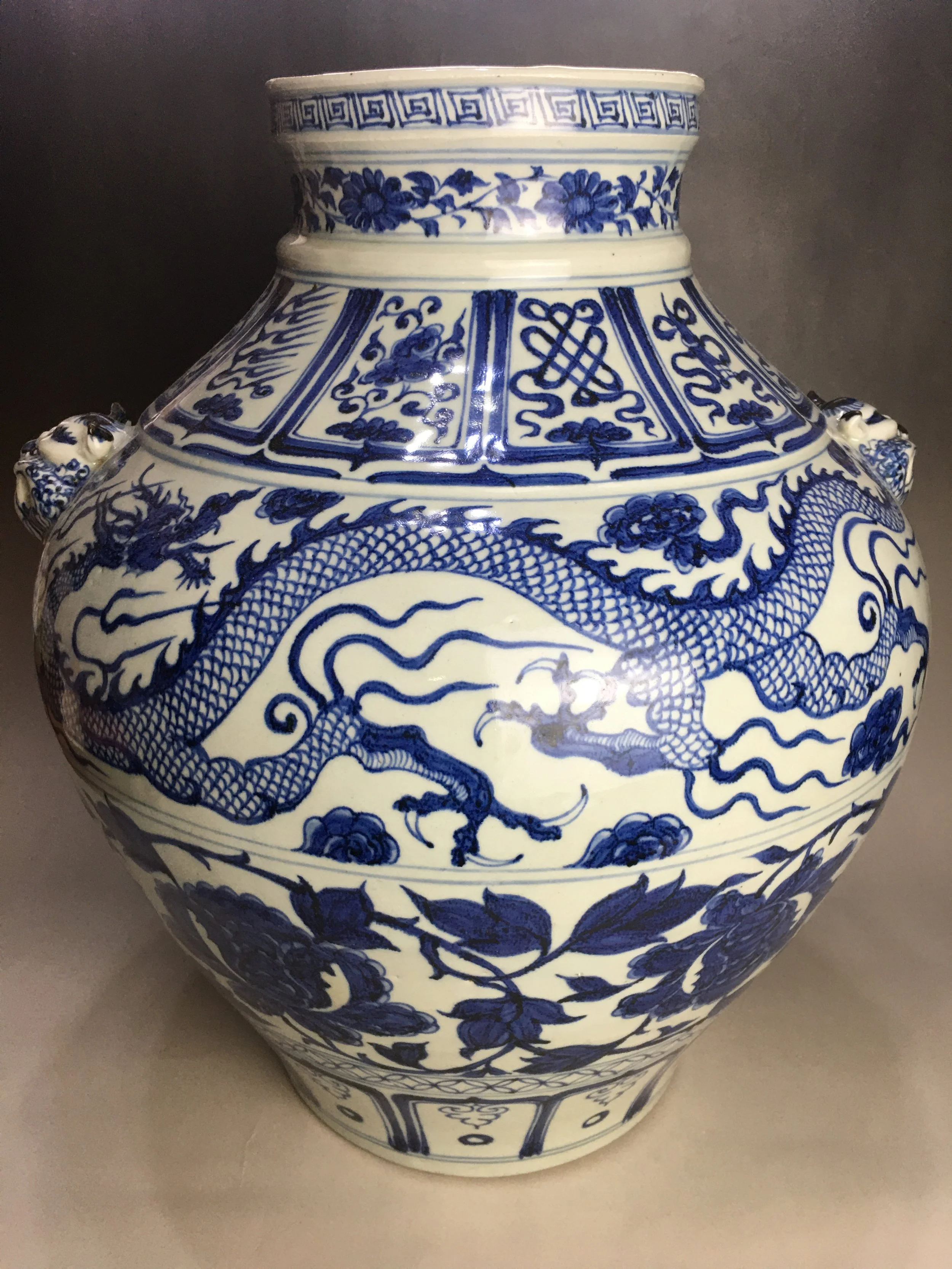 Image 1 of 17
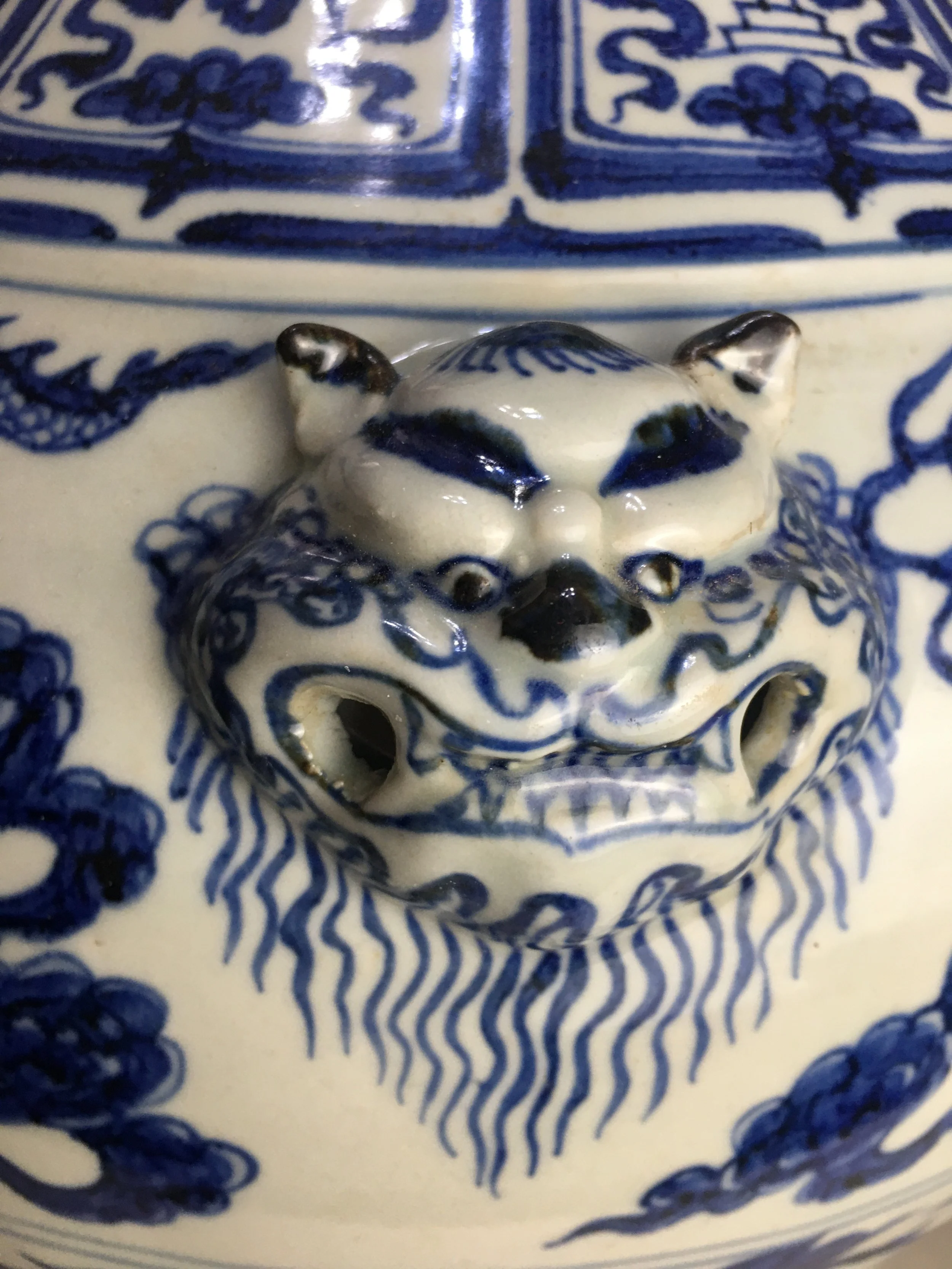 Image 2 of 17
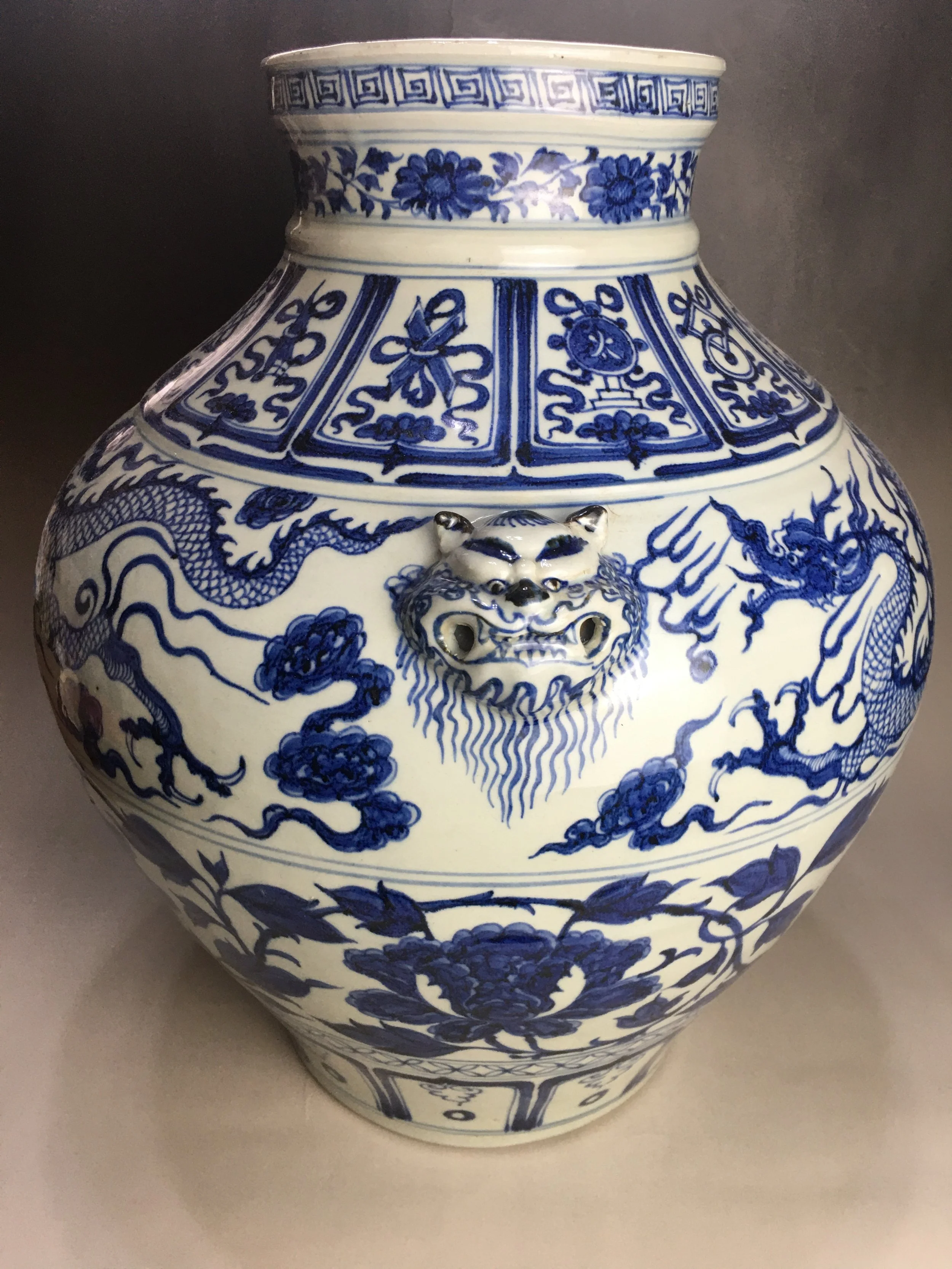 Image 3 of 17
 Image 4 of 17
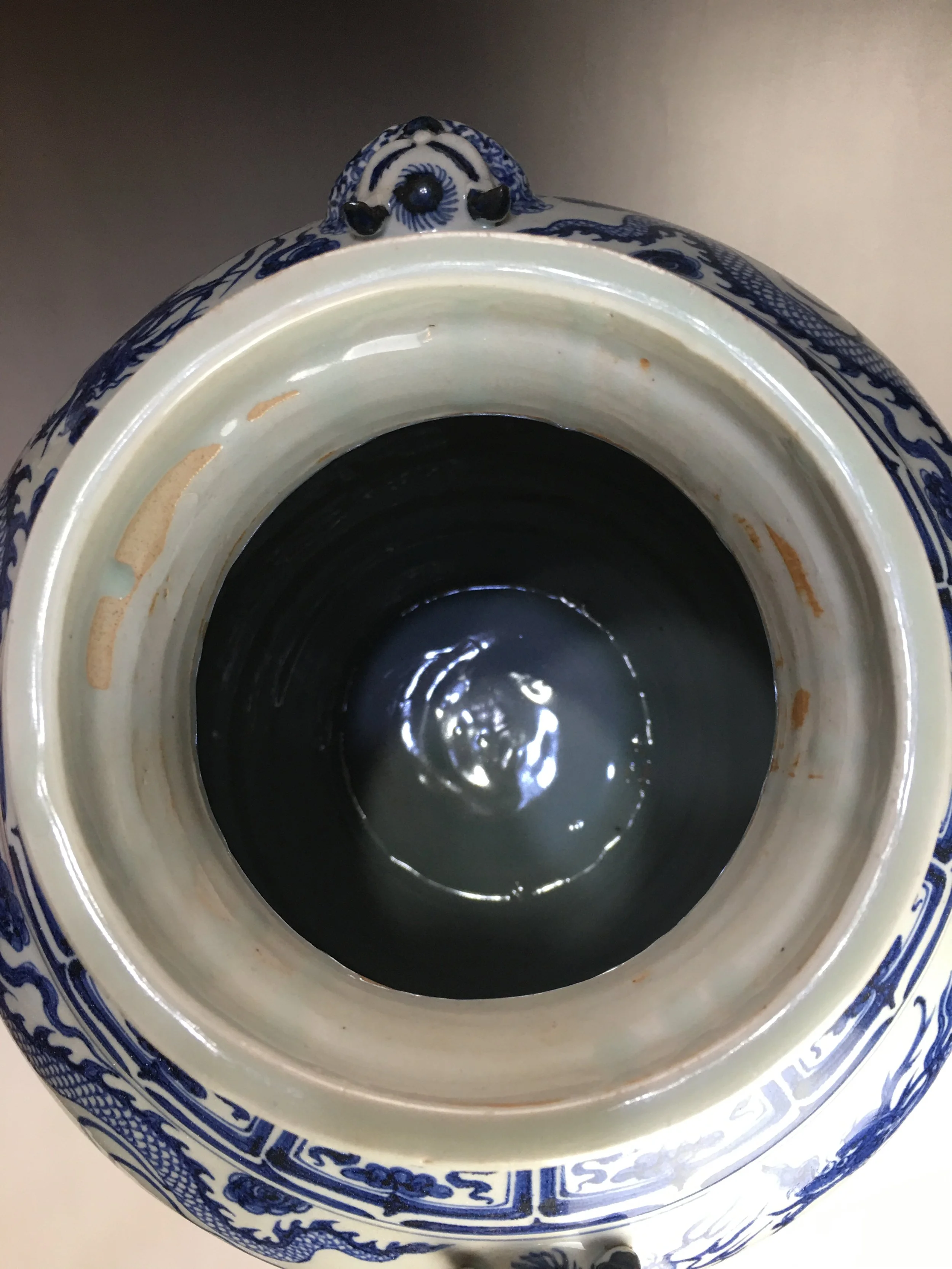 Image 5 of 17
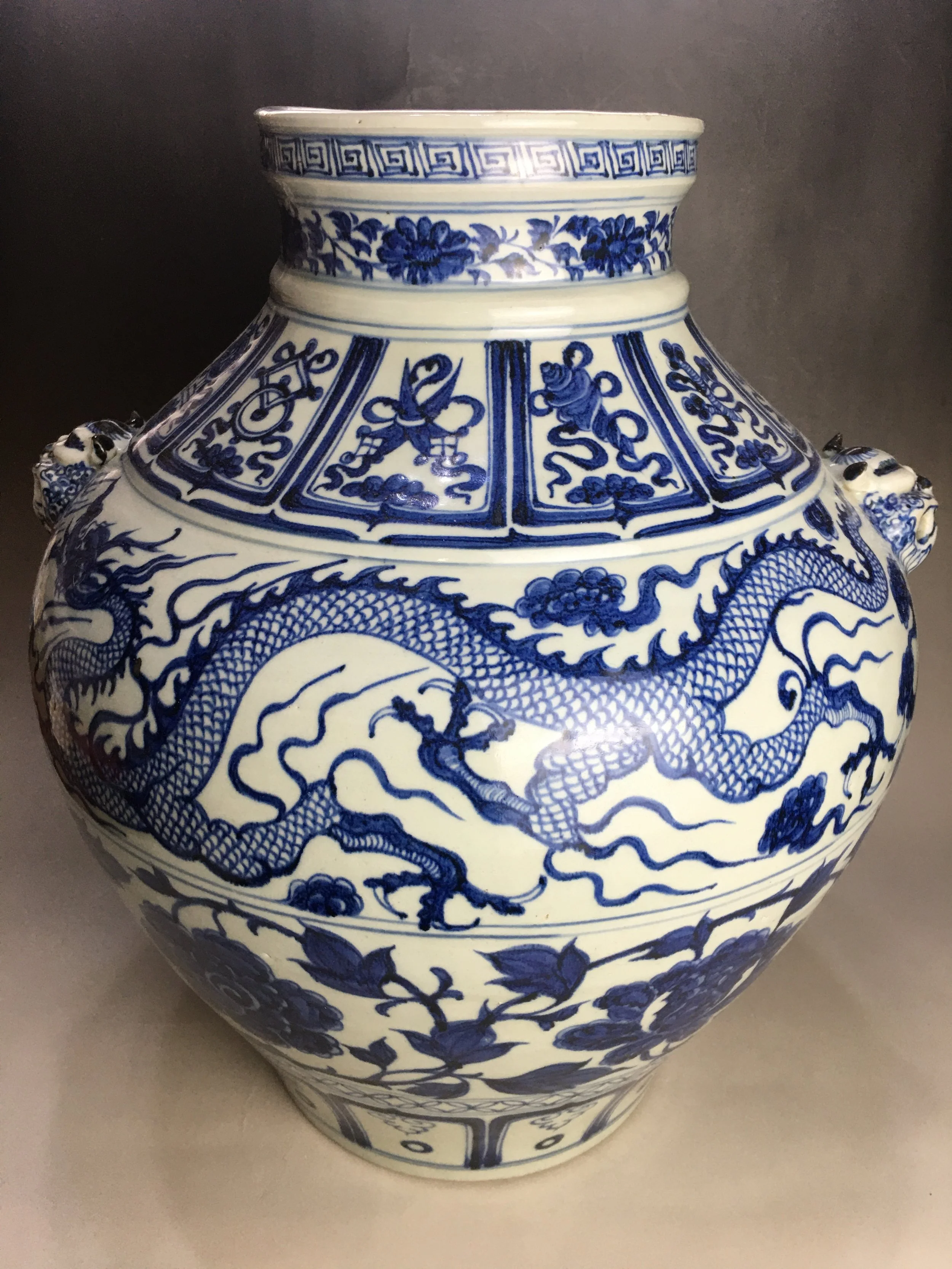 Image 6 of 17
 Image 7 of 17
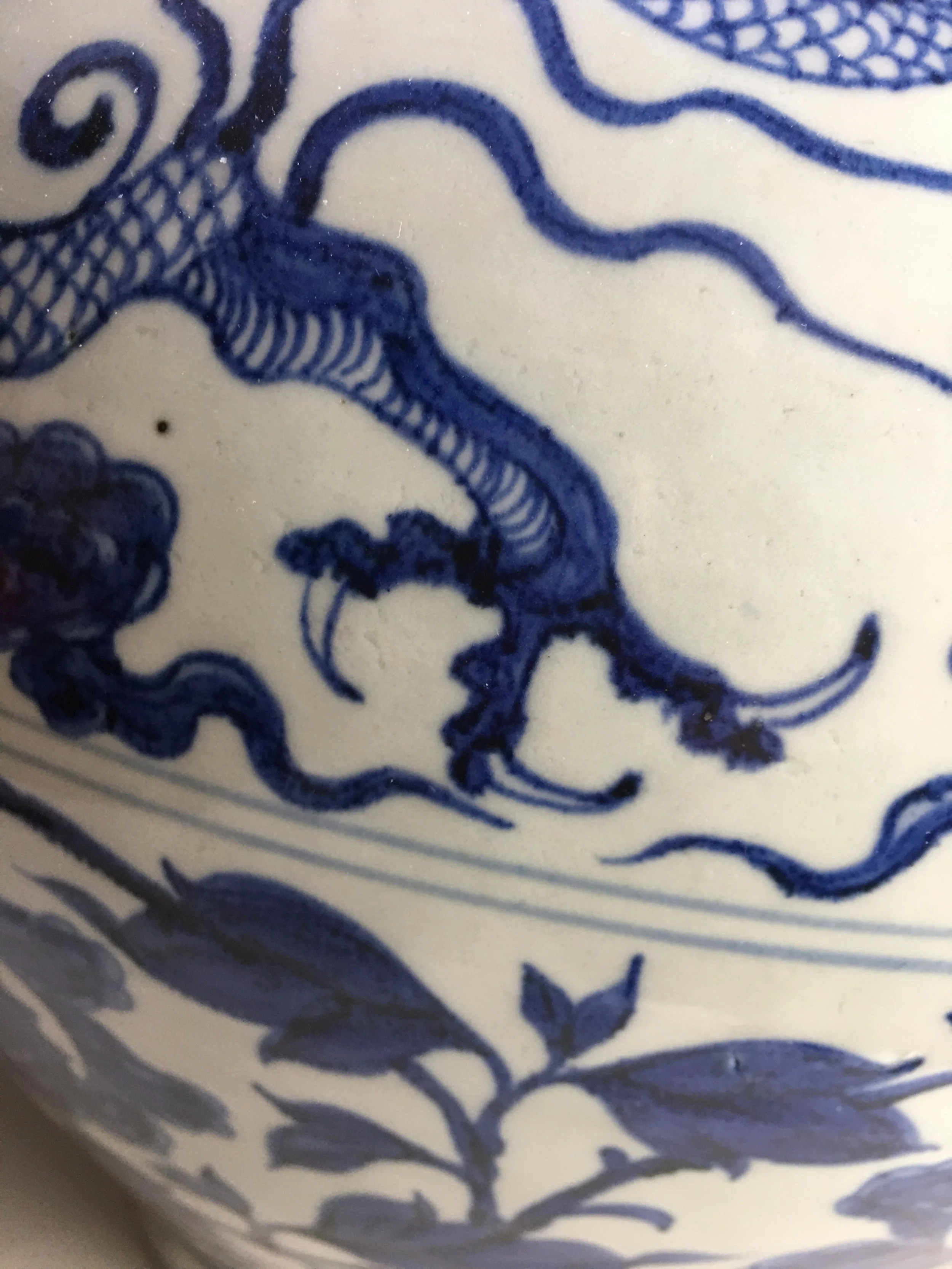 Image 8 of 17
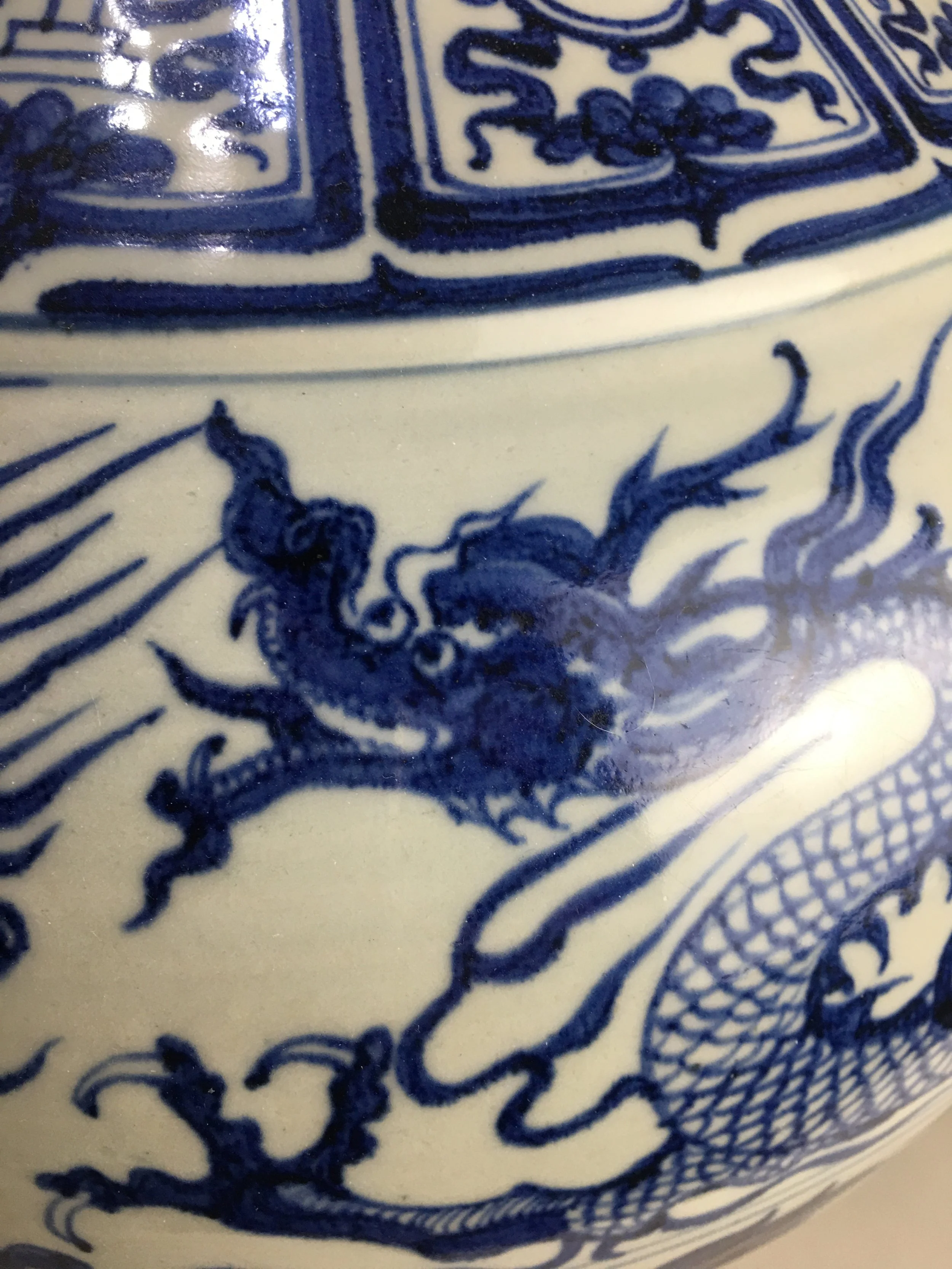 Image 9 of 17
 Image 10 of 17
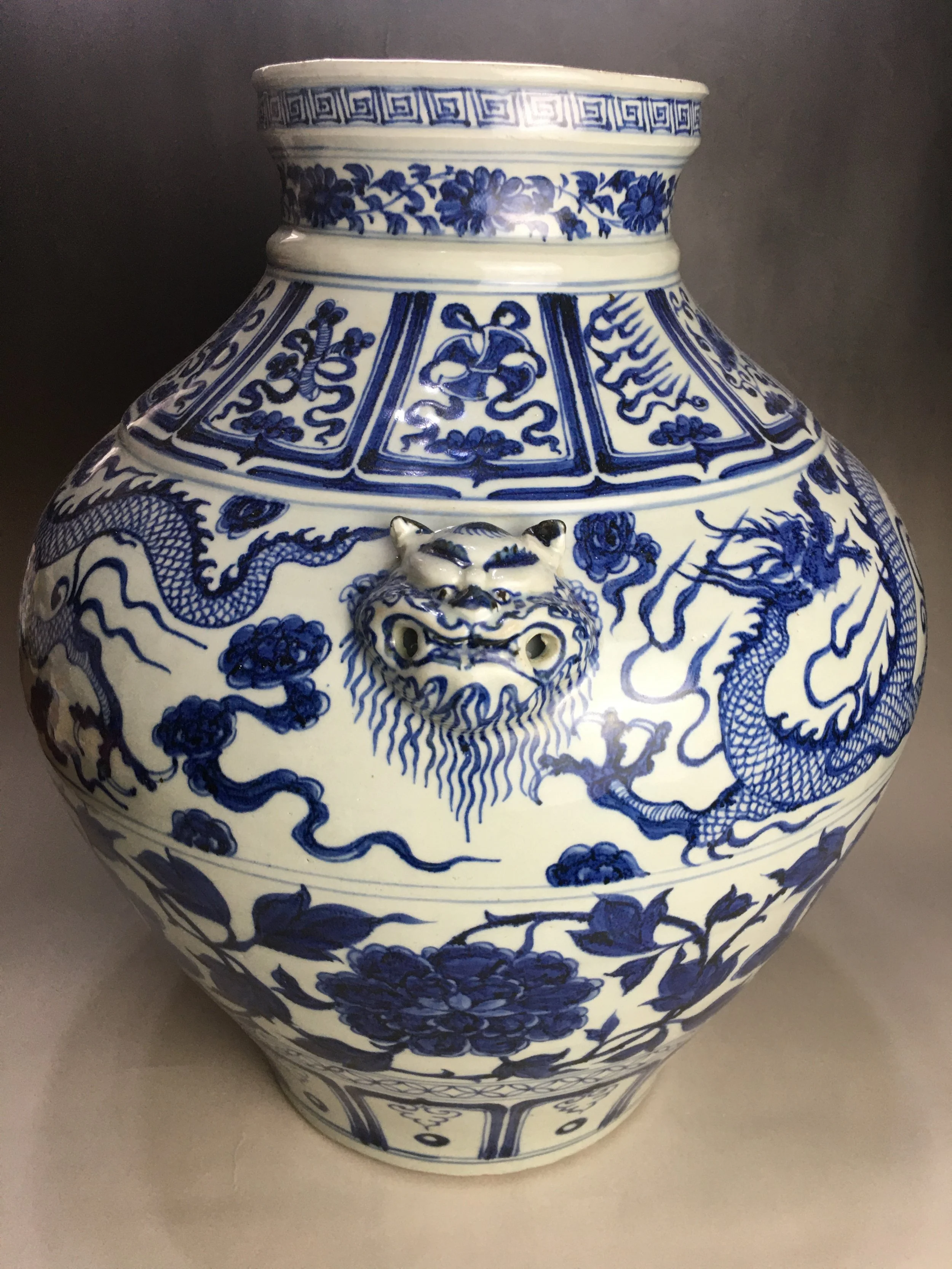 Image 11 of 17
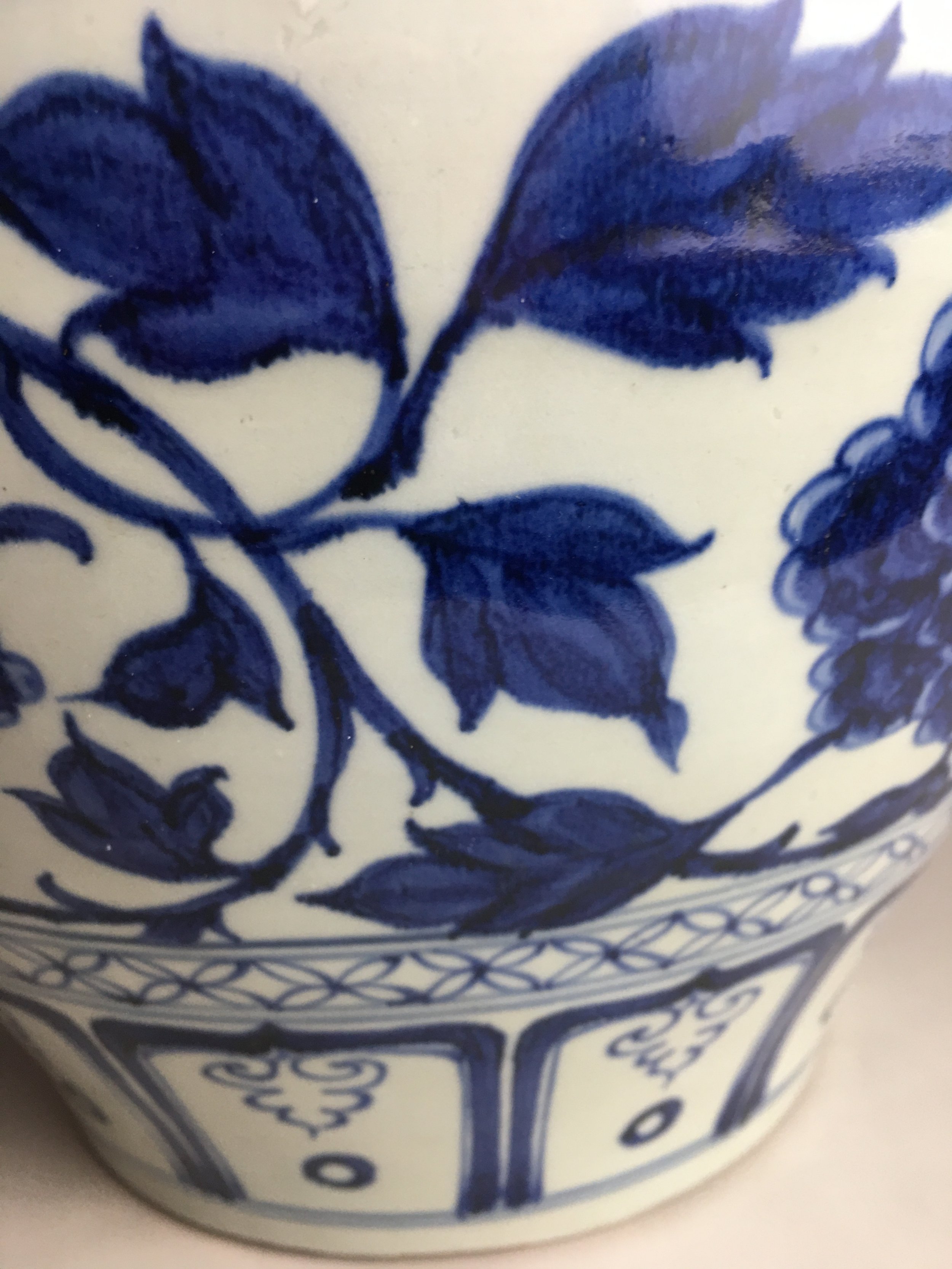 Image 12 of 17
 Image 13 of 17
 Image 14 of 17
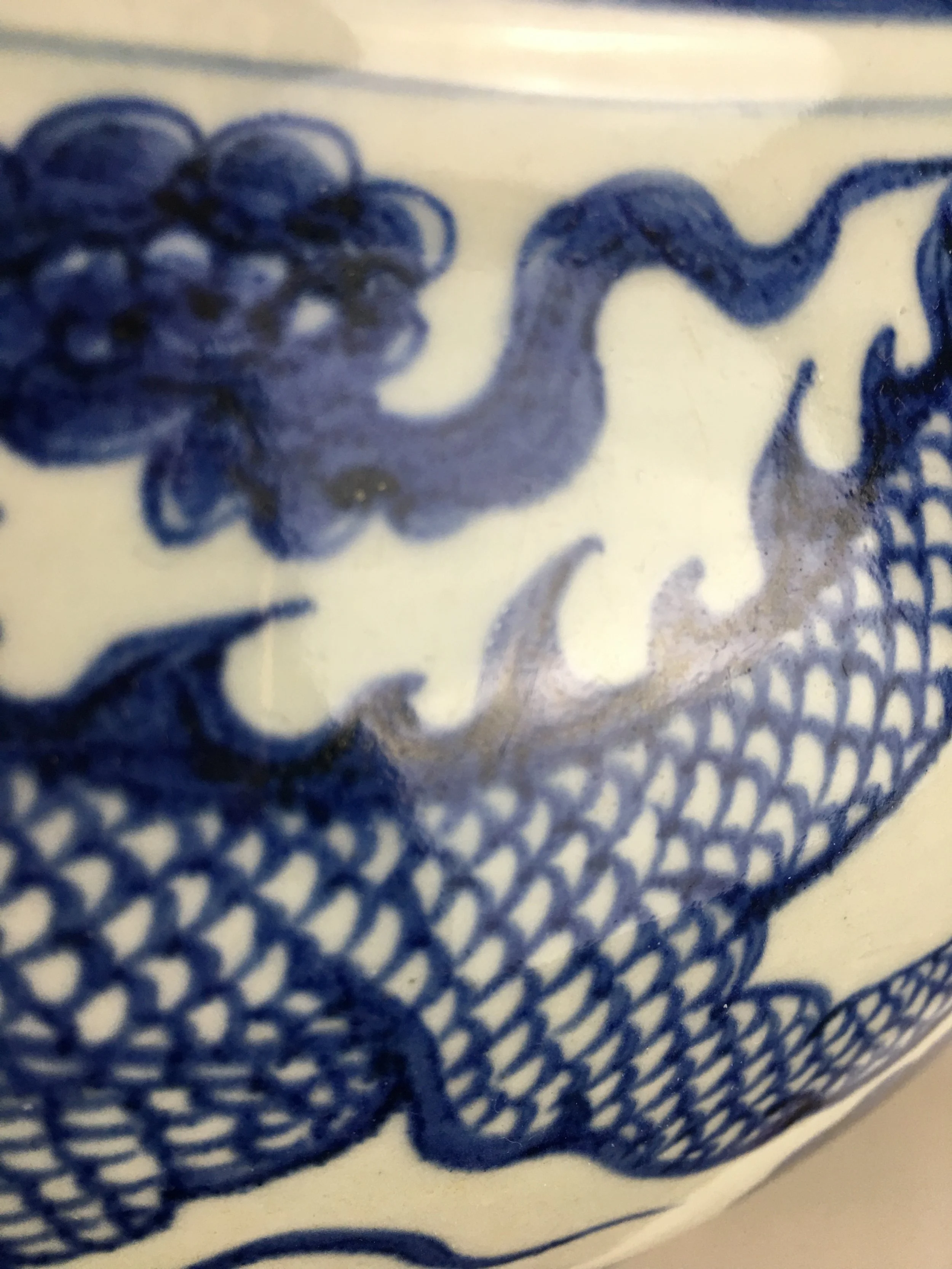 Image 15 of 17
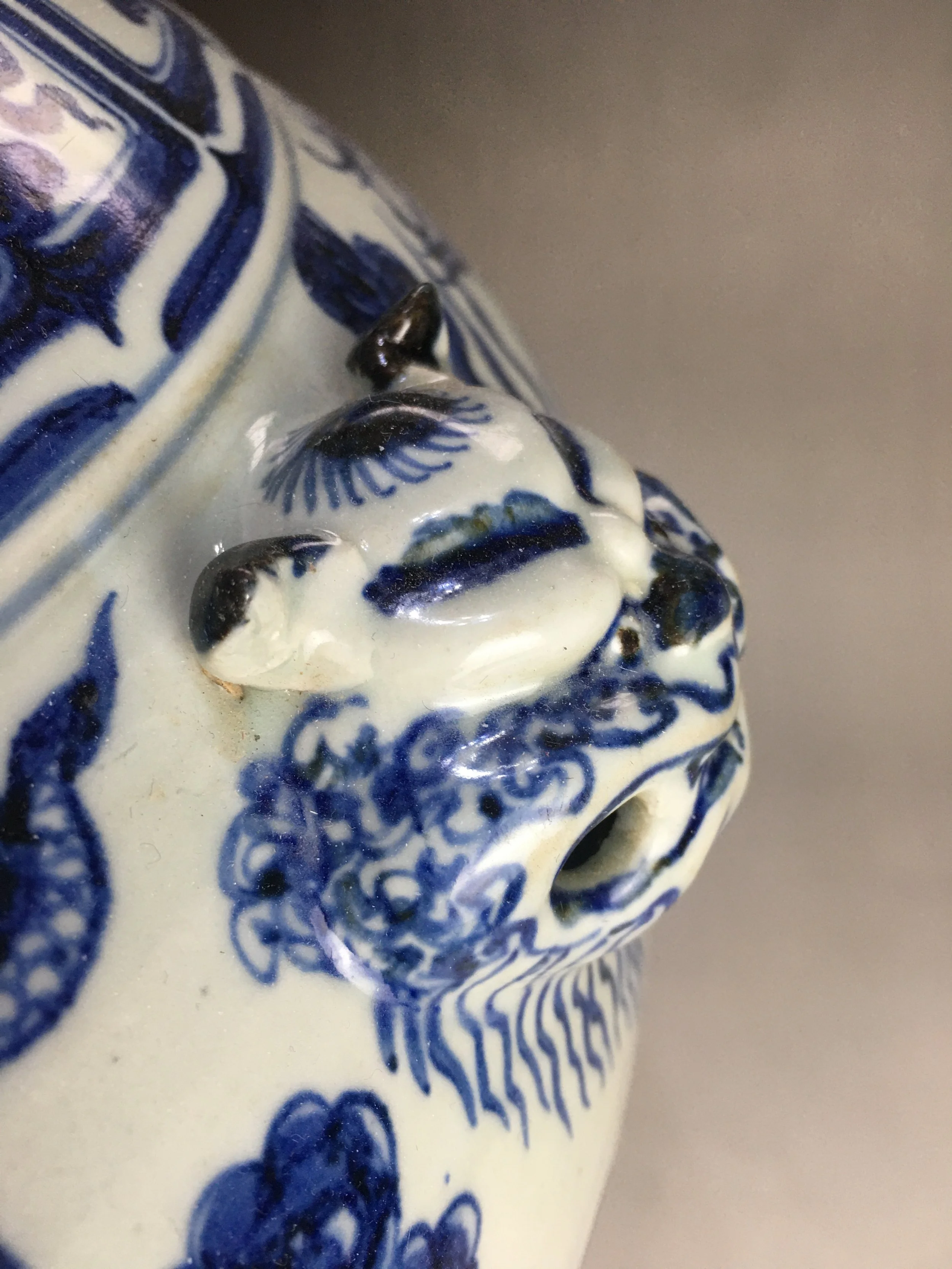 Image 16 of 17
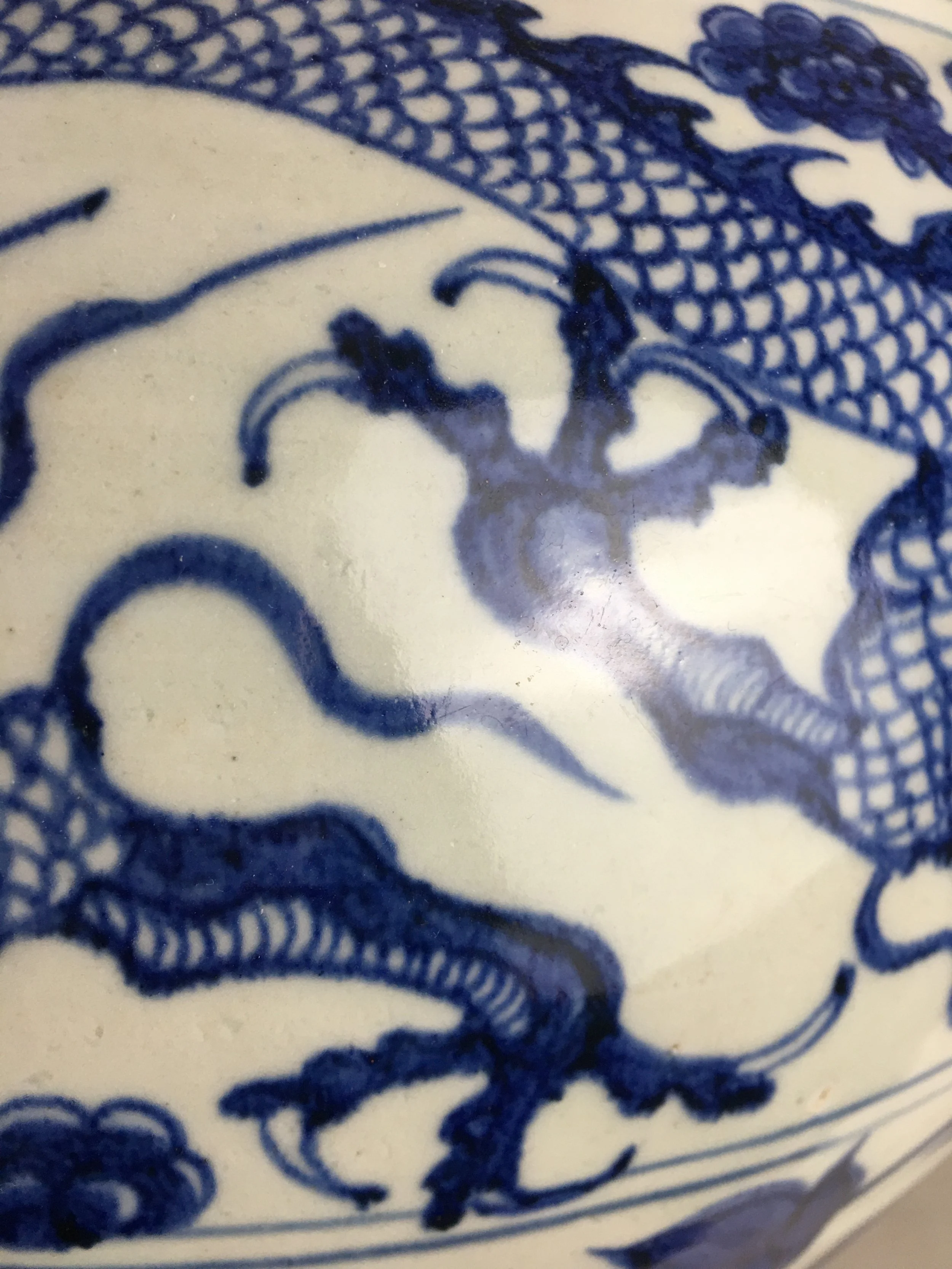 Image 17 of 17