Specifications: Height: 8 cm, Mouth Diameter: 13 cm
Reign Mark: "Da Ming Chenghua Nian Zhi" (Made in the Chenghua Reign of the Great Ming) in six-character, two-line regular script within a double square frame in underglaze blue on the base.
I. Form, Body, and Glaze: The Timeless Beauty of Chenghua Imperial Ware
This bowl is of a classic, regular, and dignified palace bowl form. It has a slightly open mouth, a full and rounded belly, and a tapered ring foot. Its lines flow gracefully from top to bottom, presenting the characteristically light, elegant, and slender posture unique to Chenghua porcelain. The body material is exceptionally refined; the paste is thin, hard, and fine, appearing pure when held to light, with a smooth and warm feel. The glaze is rich, lustrous, and has a faint bluish-white tone reminiscent of lake water. Its surface is smooth as a mirror, with a soft, restrained sheen, like fat or jade, perfectly illustrating the supreme achievement of Chenghua imperial glaze described as "lustrous like jade." This provides an ideal background for the blue-and-white decoration.
II. Decoration and Technique: An Exemplar of Dense and Ornate Blue-and-White
The exterior (and interior, if fully decorated) is completely covered with a continuous scene of blue-and-white rosettes (baoxiang hua). The composition is dense, luxurious, and clearly layered, fully displaying the majestic splendor of imperial ware.
Primary Motif: The design is laid out in an interlocking scrolling pattern. The rosettes are full and plump, with petals layered upon each other in a symmetrical, ruyi-cloudhead shape. The leaves twist and curl, with vines extending continuously. The design is highly stylized and patterned, opulent and solemn, bearing strong influences from Buddhist decorative art and symbolizing auspiciousness, sanctity, and perfection.
Blue Coloring: The cobalt used is the typical Chenghua Pingdeng qing (also known as "Bitang qing"). The color is subtle, elegant, clear, and pleasing to the eye—a blue with a grayish tint, stable in tone, lacking the intense, dark spots of Xuande blue-and-white, and not yet showing the dull, blurred appearance common after the Zhengde period. The transitions between light and dark are natural, with lines exhibiting a slight, hazy diffusion at the edges, presenting a uniquely soft and refined beauty.
Painting Technique: The double-outline and fill technique is employed, with brushwork that is slender, soft, fluid, and free. The outline lines are like floating threads, lively and elegant; the color filling is precise and well-graded. Despite the density, the design does not appear cluttered, showcasing the imperial kiln painters' extraordinary compositional skill and meticulous approach.
III. Reign Mark and Period: The Identity of a Standard Chenghua Imperial Piece
The center of the base bears the underglaze-blue, double-square framed mark containing the six-character Chenghua reign mark in regular script. Its calligraphic features are highly distinctive: the characters appear somewhat naive, with a structure that is not entirely regular, yet the brushwork is deep and powerful, with brush tips hidden at the start and deliberate pauses at the end, conveying a unique sense of simplicity and solidity. The cobalt has sunk into the body, presenting a soft grayish-blue tone. This form of mark is one of the most core and reliable bases for authenticating genuine Chenghua imperial ware.
IV. Historical Context and Value: A Representative of Chenghua's Elegance
Chenghua blue-and-white broke from the vigorous style of the Yongle and Xuande periods, inaugurating a new fashion of subtle, graceful elegance. The rosette, as a traditional auspicious motif, was infused with a softer, more beautiful character during the Chenghua era.
Artistic Value: This piece combines a timeless form, jade-like glaze, subtle blue-and-white coloring, and dense ornamentation. It is a perfect embodiment of the mature, restrained, and literati-oriented artistic style of Chenghua blue-and-white. Its dense, ornate decoration is particularly outstanding among Chenghua blue-and-white, representing another facet of imperial taste.
Technical Value: It demonstrates the pinnacle of technical skill achieved by the Chenghua imperial kilns in refining clay, controlling glaze materials, mastering domestic Pingdeng qing cobalt, and executing fine painting. It can be regarded as a reference piece for Chenghua blue-and-white.
Collectibility: Blue-and-white imperial bowls with clear Chenghua reign marks and in excellent condition have always been important pieces in the market. Such fully decorated rosette bowls, with their classic motif, exquisite craftsmanship, and distinct period characteristics, have long been treasured by connoisseurs and collectors, representing a significant entry point into the artistic realm of Chenghua porcelain.
In summary, this Chenghua blue-and-white bowl with rosette design is more than a utilitarian vessel; it is a magnificent painting rendered on porcelain with cobalt blue. With its unique subtle coloring and dense workmanship, it凝固 the aesthetic taste and technical pinnacle of the mid-15th century Ming court, silently radiating a timeless charm across the ages.
明成化青花宝相花纹碗
规格数据:高8厘米,口径13厘米
款识:碗底青花双框内书“大明成化年制”六字双行楷书款。
一、器型与胎釉:成化官窑的隽永之美
此碗器型规整端雅,为经典的宫碗制式。口沿微敞,弧腹圆润饱满,下承内敛圈足,线条自上而下流畅舒展,呈现出成化瓷器特有的轻盈秀雅、亭亭玉立之姿。胎质尤为精粹,胎骨轻薄坚致,迎光透视可见胎体匀净,手感温润细腻。釉面肥厚莹润,白中微泛淡淡的湖水绿色,釉质平滑如镜,光泽柔和内敛,如脂似玉,完美诠释了成化官窑顶级胎釉“莹润如玉”的至高境界,为青花纹饰提供了绝佳底色。
二、纹饰与工艺:满密华丽的青花典范
碗外壁及内壁(若为满工)通景绘饰青花宝相花纹,构图满密繁丽,层次分明,尽显宫廷用器的华贵气派。
主题纹饰:以缠枝勾连的形式布局,宝相花花朵饱满,花瓣层层叠叠,呈对称的如意云头状;花叶婉转卷曲,枝蔓连绵不断。纹样设计高度程式化与图案化,富丽庄重,带有浓厚的佛教装饰艺术色彩,寓意吉祥、圣洁与圆满。
青花发色:所用青料为典型的成化平等青(又称“陂塘青”)。发色淡雅清丽,柔和悦目,蓝中泛灰,色泽稳定,已无宣德青花之浓艳黑斑,亦未现正德后之灰暗晕散。浓淡过渡自然,线条边缘略有朦胧的晕散感,呈现出独一无二的柔和雅致之美。
绘画技法:采用双勾填色,笔触纤细柔和,流畅自如。勾勒线条如游丝,灵动飘逸;填色精准,深浅有致,虽繁密而不显杂乱,展现出御窑画师超凡的构图功力和严谨态度。
三、款识与时代:标准成化官窑的身份证
碗底中心落青花双框方章款,内书“大明成化年制”六字楷书。其笔法特征极为鲜明:字体略显稚拙,结构并不完全工整,但笔力深沉,起笔藏锋,收笔顿挫,透出独特的敦厚感。青花色料沉入胎骨,呈现淡雅的灰蓝色。此款识形态是后世鉴定成化本朝官窑最为核心、可靠的依据之一。
四、历史与价值:成化风华的代表
成化青花一改永宣雄健,开创了淡雅婉约的新风尚。宝相花作为传统吉祥纹样,在成化时期被赋予了更加柔和秀美的时代气息。
艺术价值:本品集隽永器型、如玉釉质、淡雅青花、满密纹饰于一身,是成化青花艺术风格趋于成熟、内敛化与文人化的完美体现。其满密华丽的装饰,在成化青花中尤为突出,代表了宫廷审美的另一面。
工艺价值:它展示了成化官窑在淘炼胎土、控制釉料、驾驭国产平等青料以及精细绘画等方面登峰造极的工艺水平,堪称成化青花的标准器。
收藏价值:带有明确成化年款、品相完好的青花官窑碗,在市场中始终是收藏重器。此类满工宝相花纹碗,因其纹样经典、工艺精湛、时代特征显著,历来为鉴藏家所珍视,是通往成化瓷器艺术殿堂的重要藏品。
总而言之,此成化青花宝相花纹碗,不仅是一件实用器皿,更是一幅以瓷为卷、以青花为墨绘就的华丽画卷。它以其独特的淡雅之色与繁密之工,凝固了十五世纪下半叶大明宫廷的审美情趣与工艺巅峰,静默地散发着跨越时空的隽永魅力。
Specifications: Height: 8 cm, Mouth Diameter: 13 cm
Reign Mark: "Da Ming Chenghua Nian Zhi" (Made in the Chenghua Reign of the Great Ming) in six-character, two-line regular script within a double square frame in underglaze blue on the base.
I. Form, Body, and Glaze: The Timeless Beauty of Chenghua Imperial Ware
This bowl is of a classic, regular, and dignified palace bowl form. It has a slightly open mouth, a full and rounded belly, and a tapered ring foot. Its lines flow gracefully from top to bottom, presenting the characteristically light, elegant, and slender posture unique to Chenghua porcelain. The body material is exceptionally refined; the paste is thin, hard, and fine, appearing pure when held to light, with a smooth and warm feel. The glaze is rich, lustrous, and has a faint bluish-white tone reminiscent of lake water. Its surface is smooth as a mirror, with a soft, restrained sheen, like fat or jade, perfectly illustrating the supreme achievement of Chenghua imperial glaze described as "lustrous like jade." This provides an ideal background for the blue-and-white decoration.
II. Decoration and Technique: An Exemplar of Dense and Ornate Blue-and-White
The exterior (and interior, if fully decorated) is completely covered with a continuous scene of blue-and-white rosettes (baoxiang hua). The composition is dense, luxurious, and clearly layered, fully displaying the majestic splendor of imperial ware.
Primary Motif: The design is laid out in an interlocking scrolling pattern. The rosettes are full and plump, with petals layered upon each other in a symmetrical, ruyi-cloudhead shape. The leaves twist and curl, with vines extending continuously. The design is highly stylized and patterned, opulent and solemn, bearing strong influences from Buddhist decorative art and symbolizing auspiciousness, sanctity, and perfection.
Blue Coloring: The cobalt used is the typical Chenghua Pingdeng qing (also known as "Bitang qing"). The color is subtle, elegant, clear, and pleasing to the eye—a blue with a grayish tint, stable in tone, lacking the intense, dark spots of Xuande blue-and-white, and not yet showing the dull, blurred appearance common after the Zhengde period. The transitions between light and dark are natural, with lines exhibiting a slight, hazy diffusion at the edges, presenting a uniquely soft and refined beauty.
Painting Technique: The double-outline and fill technique is employed, with brushwork that is slender, soft, fluid, and free. The outline lines are like floating threads, lively and elegant; the color filling is precise and well-graded. Despite the density, the design does not appear cluttered, showcasing the imperial kiln painters' extraordinary compositional skill and meticulous approach.
III. Reign Mark and Period: The Identity of a Standard Chenghua Imperial Piece
The center of the base bears the underglaze-blue, double-square framed mark containing the six-character Chenghua reign mark in regular script. Its calligraphic features are highly distinctive: the characters appear somewhat naive, with a structure that is not entirely regular, yet the brushwork is deep and powerful, with brush tips hidden at the start and deliberate pauses at the end, conveying a unique sense of simplicity and solidity. The cobalt has sunk into the body, presenting a soft grayish-blue tone. This form of mark is one of the most core and reliable bases for authenticating genuine Chenghua imperial ware.
IV. Historical Context and Value: A Representative of Chenghua's Elegance
Chenghua blue-and-white broke from the vigorous style of the Yongle and Xuande periods, inaugurating a new fashion of subtle, graceful elegance. The rosette, as a traditional auspicious motif, was infused with a softer, more beautiful character during the Chenghua era.
Artistic Value: This piece combines a timeless form, jade-like glaze, subtle blue-and-white coloring, and dense ornamentation. It is a perfect embodiment of the mature, restrained, and literati-oriented artistic style of Chenghua blue-and-white. Its dense, ornate decoration is particularly outstanding among Chenghua blue-and-white, representing another facet of imperial taste.
Technical Value: It demonstrates the pinnacle of technical skill achieved by the Chenghua imperial kilns in refining clay, controlling glaze materials, mastering domestic Pingdeng qing cobalt, and executing fine painting. It can be regarded as a reference piece for Chenghua blue-and-white.
Collectibility: Blue-and-white imperial bowls with clear Chenghua reign marks and in excellent condition have always been important pieces in the market. Such fully decorated rosette bowls, with their classic motif, exquisite craftsmanship, and distinct period characteristics, have long been treasured by connoisseurs and collectors, representing a significant entry point into the artistic realm of Chenghua porcelain.
In summary, this Chenghua blue-and-white bowl with rosette design is more than a utilitarian vessel; it is a magnificent painting rendered on porcelain with cobalt blue. With its unique subtle coloring and dense workmanship, it凝固 the aesthetic taste and technical pinnacle of the mid-15th century Ming court, silently radiating a timeless charm across the ages.
明成化青花宝相花纹碗
规格数据:高8厘米,口径13厘米
款识:碗底青花双框内书“大明成化年制”六字双行楷书款。
一、器型与胎釉:成化官窑的隽永之美
此碗器型规整端雅,为经典的宫碗制式。口沿微敞,弧腹圆润饱满,下承内敛圈足,线条自上而下流畅舒展,呈现出成化瓷器特有的轻盈秀雅、亭亭玉立之姿。胎质尤为精粹,胎骨轻薄坚致,迎光透视可见胎体匀净,手感温润细腻。釉面肥厚莹润,白中微泛淡淡的湖水绿色,釉质平滑如镜,光泽柔和内敛,如脂似玉,完美诠释了成化官窑顶级胎釉“莹润如玉”的至高境界,为青花纹饰提供了绝佳底色。
二、纹饰与工艺:满密华丽的青花典范
碗外壁及内壁(若为满工)通景绘饰青花宝相花纹,构图满密繁丽,层次分明,尽显宫廷用器的华贵气派。
主题纹饰:以缠枝勾连的形式布局,宝相花花朵饱满,花瓣层层叠叠,呈对称的如意云头状;花叶婉转卷曲,枝蔓连绵不断。纹样设计高度程式化与图案化,富丽庄重,带有浓厚的佛教装饰艺术色彩,寓意吉祥、圣洁与圆满。
青花发色:所用青料为典型的成化平等青(又称“陂塘青”)。发色淡雅清丽,柔和悦目,蓝中泛灰,色泽稳定,已无宣德青花之浓艳黑斑,亦未现正德后之灰暗晕散。浓淡过渡自然,线条边缘略有朦胧的晕散感,呈现出独一无二的柔和雅致之美。
绘画技法:采用双勾填色,笔触纤细柔和,流畅自如。勾勒线条如游丝,灵动飘逸;填色精准,深浅有致,虽繁密而不显杂乱,展现出御窑画师超凡的构图功力和严谨态度。
三、款识与时代:标准成化官窑的身份证
碗底中心落青花双框方章款,内书“大明成化年制”六字楷书。其笔法特征极为鲜明:字体略显稚拙,结构并不完全工整,但笔力深沉,起笔藏锋,收笔顿挫,透出独特的敦厚感。青花色料沉入胎骨,呈现淡雅的灰蓝色。此款识形态是后世鉴定成化本朝官窑最为核心、可靠的依据之一。
四、历史与价值:成化风华的代表
成化青花一改永宣雄健,开创了淡雅婉约的新风尚。宝相花作为传统吉祥纹样,在成化时期被赋予了更加柔和秀美的时代气息。
艺术价值:本品集隽永器型、如玉釉质、淡雅青花、满密纹饰于一身,是成化青花艺术风格趋于成熟、内敛化与文人化的完美体现。其满密华丽的装饰,在成化青花中尤为突出,代表了宫廷审美的另一面。
工艺价值:它展示了成化官窑在淘炼胎土、控制釉料、驾驭国产平等青料以及精细绘画等方面登峰造极的工艺水平,堪称成化青花的标准器。
收藏价值:带有明确成化年款、品相完好的青花官窑碗,在市场中始终是收藏重器。此类满工宝相花纹碗,因其纹样经典、工艺精湛、时代特征显著,历来为鉴藏家所珍视,是通往成化瓷器艺术殿堂的重要藏品。
总而言之,此成化青花宝相花纹碗,不仅是一件实用器皿,更是一幅以瓷为卷、以青花为墨绘就的华丽画卷。它以其独特的淡雅之色与繁密之工,凝固了十五世纪下半叶大明宫廷的审美情趣与工艺巅峰,静默地散发着跨越时空的隽永魅力。
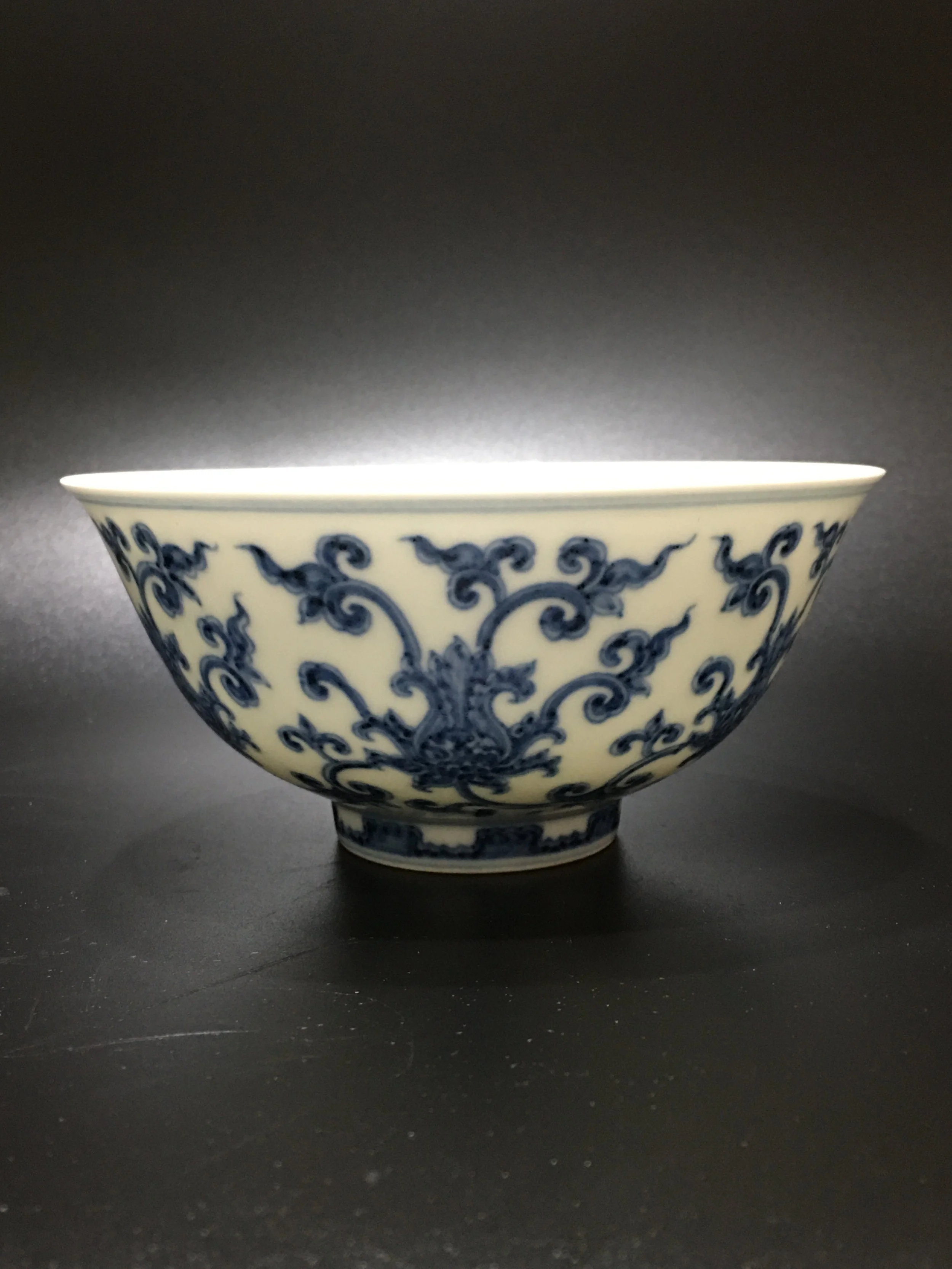 Image 1 of 13
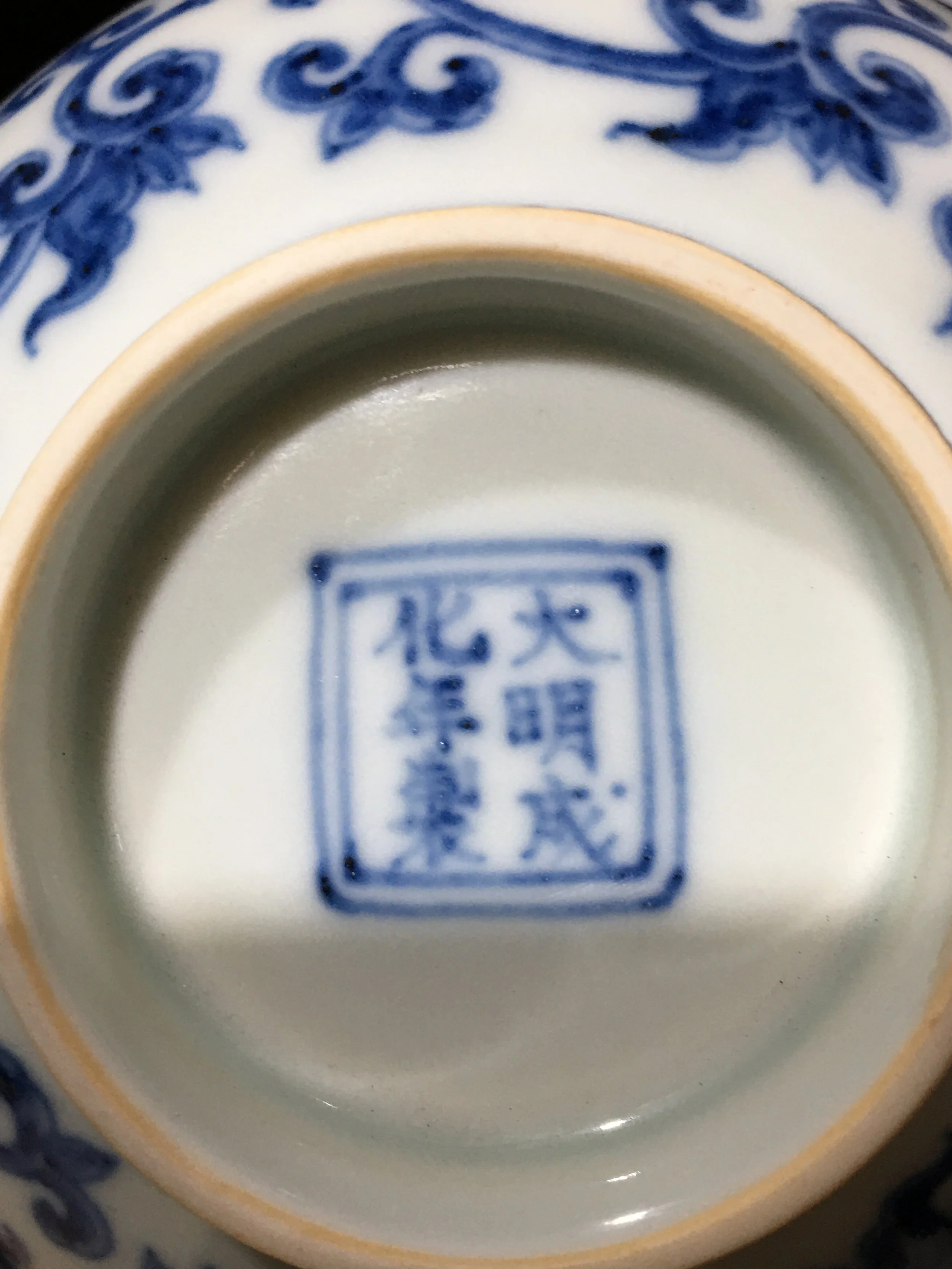 Image 2 of 13
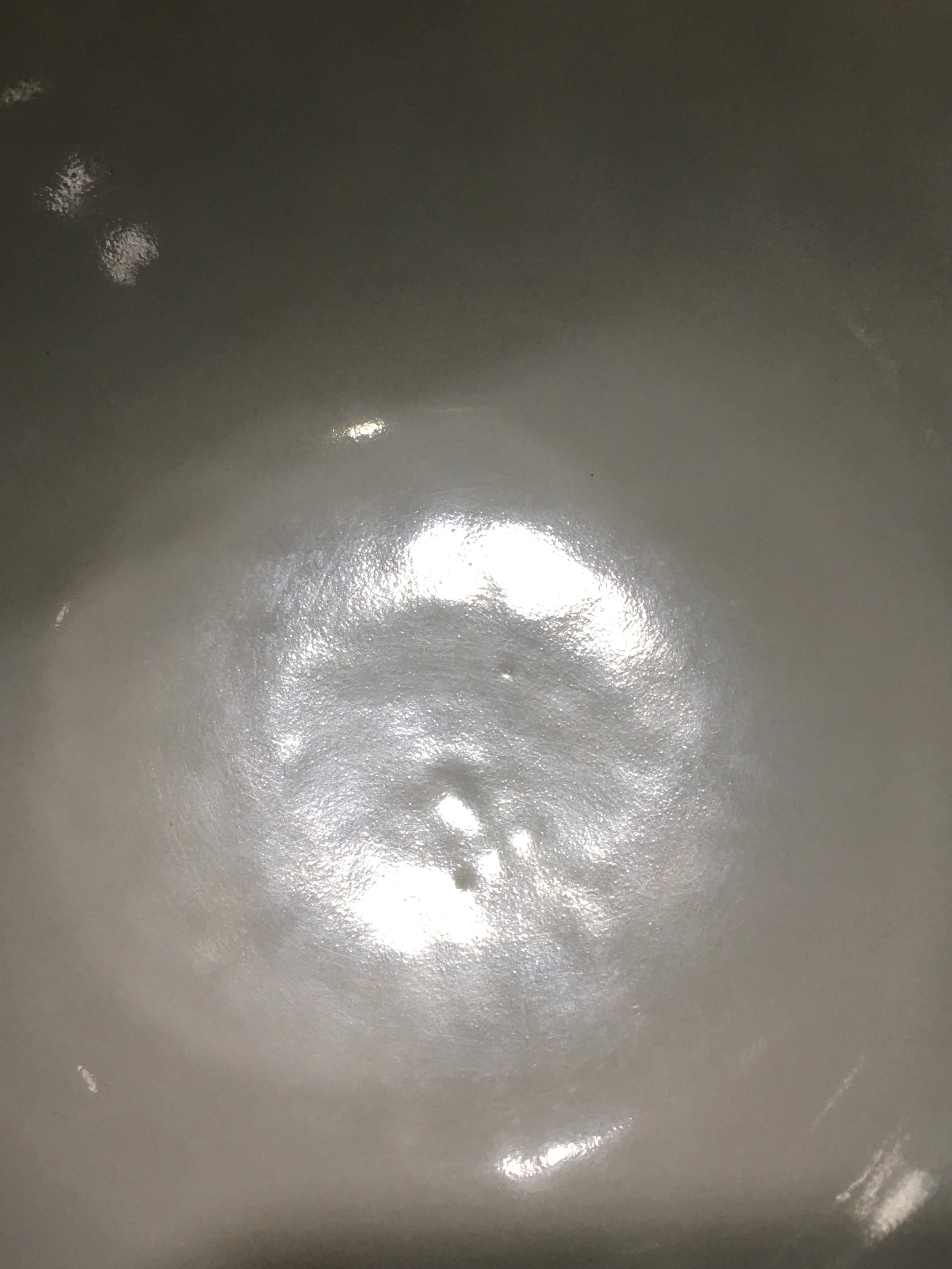 Image 3 of 13
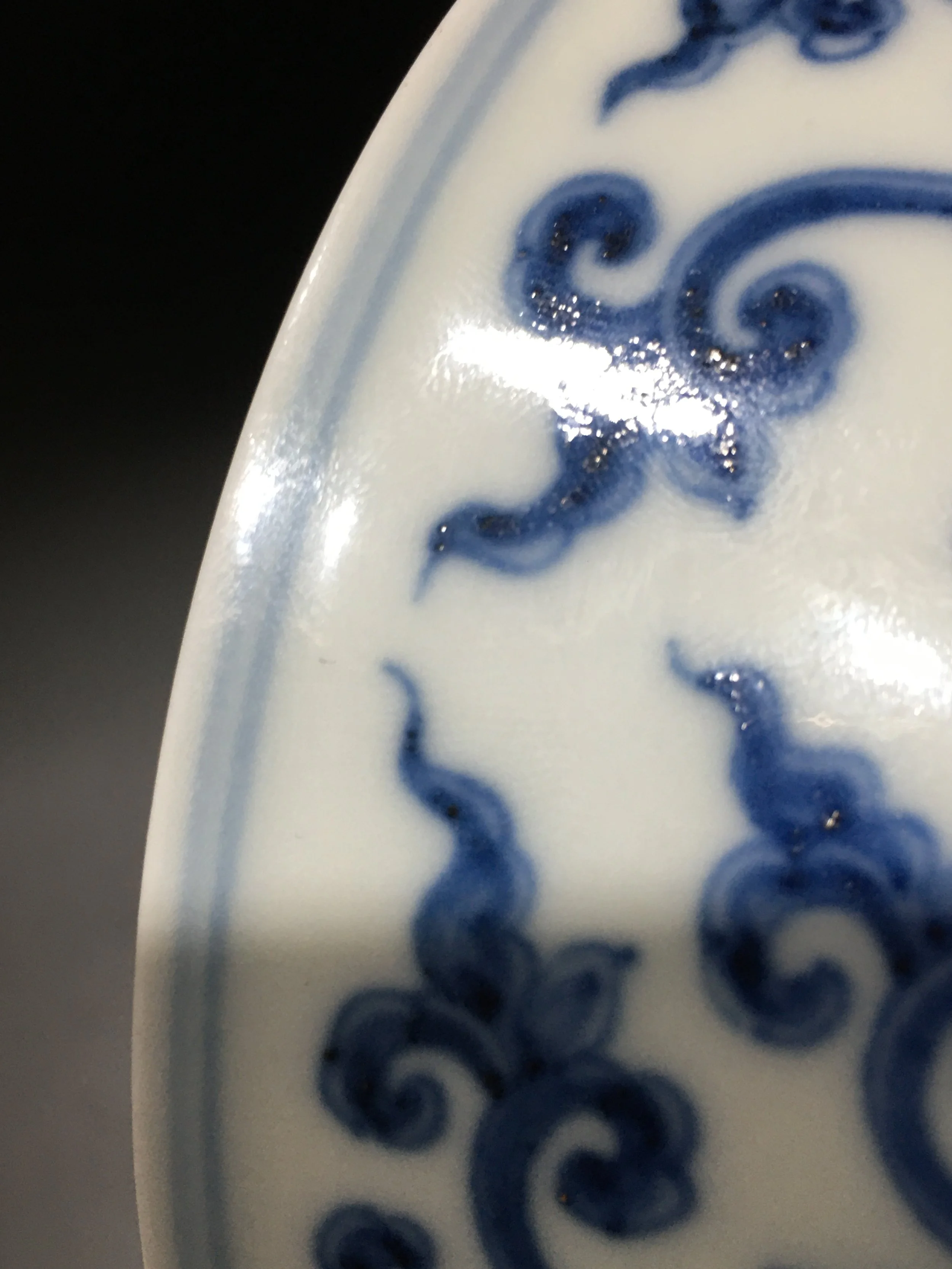 Image 4 of 13
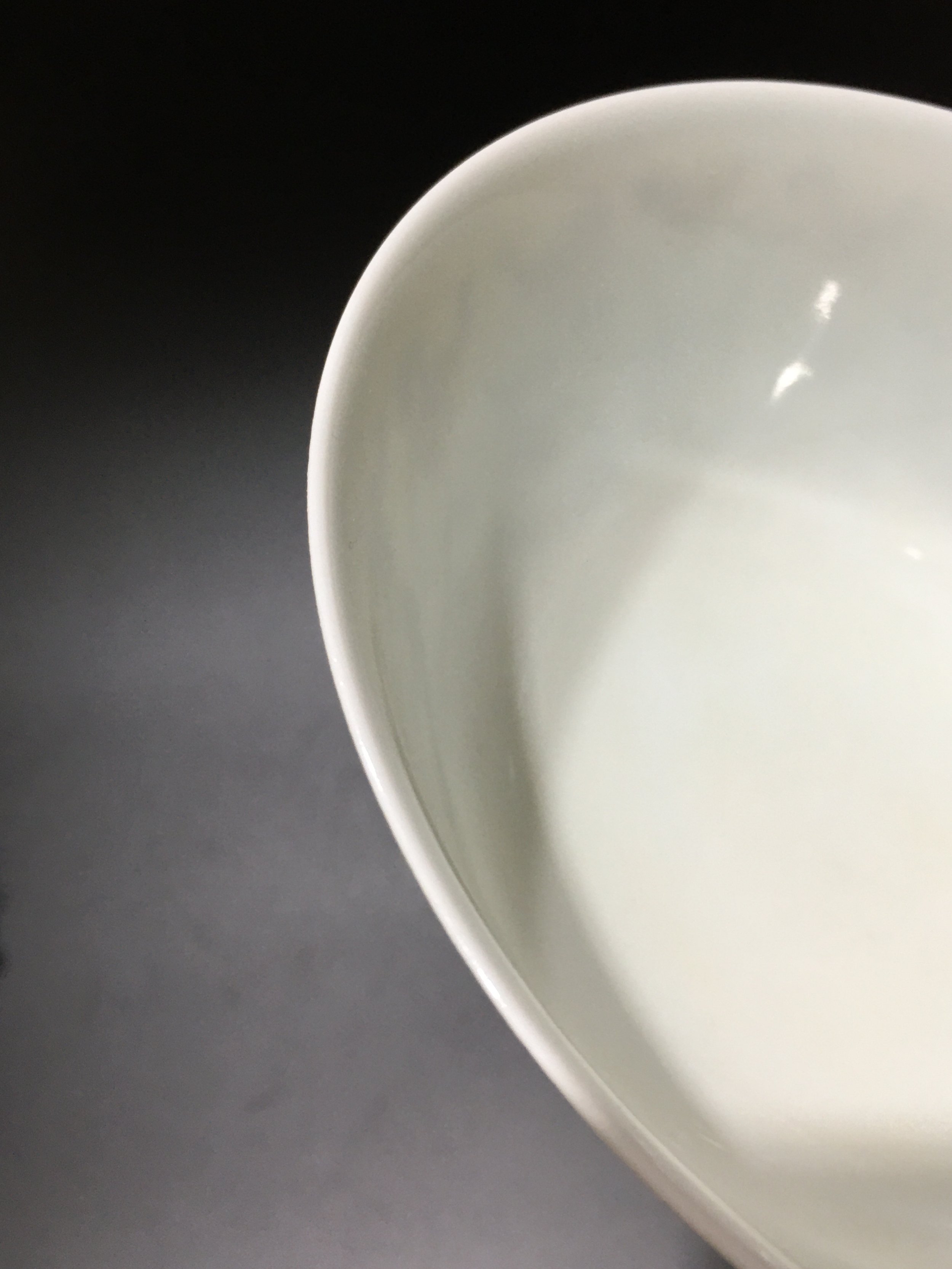 Image 5 of 13
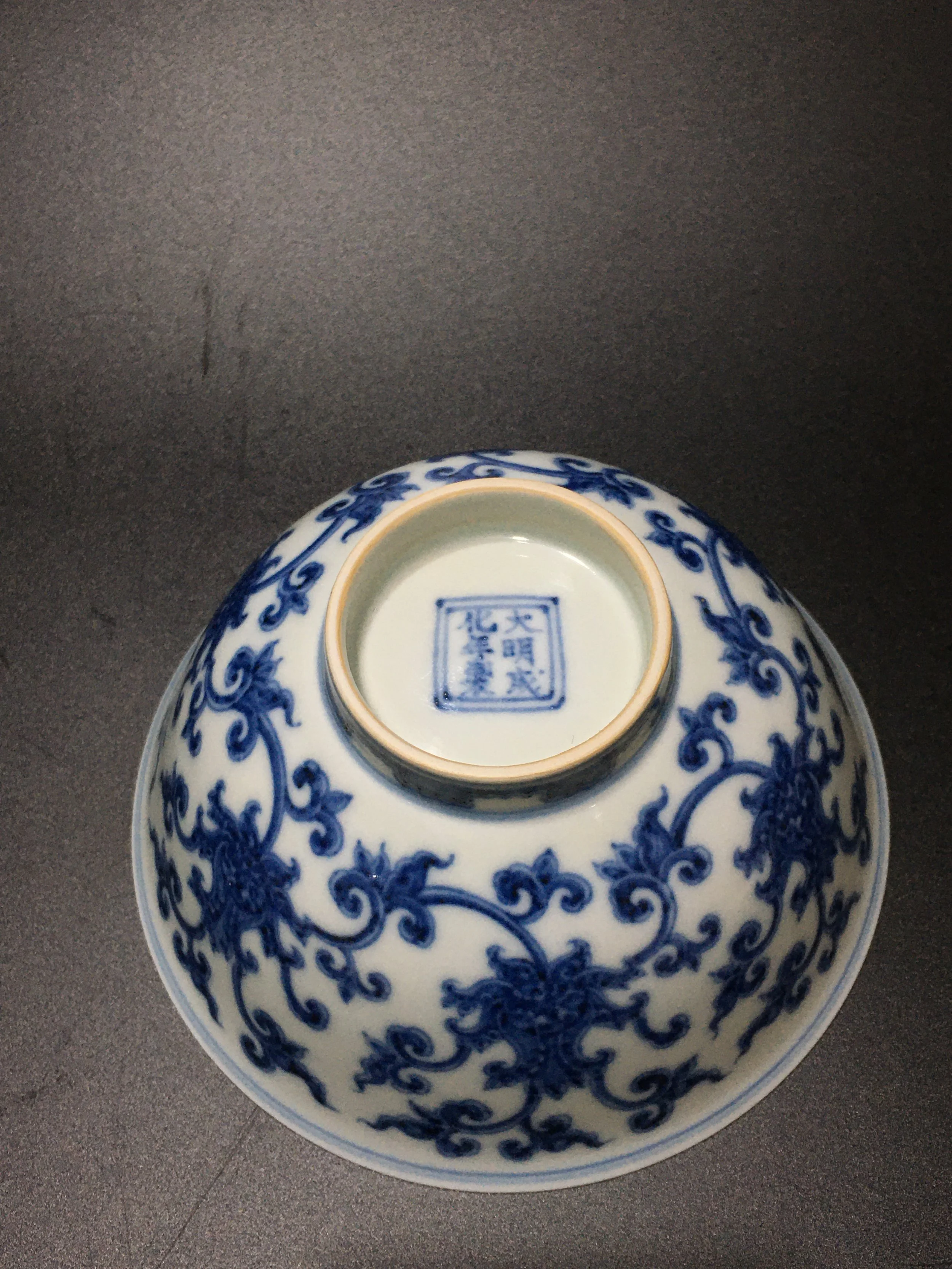 Image 6 of 13
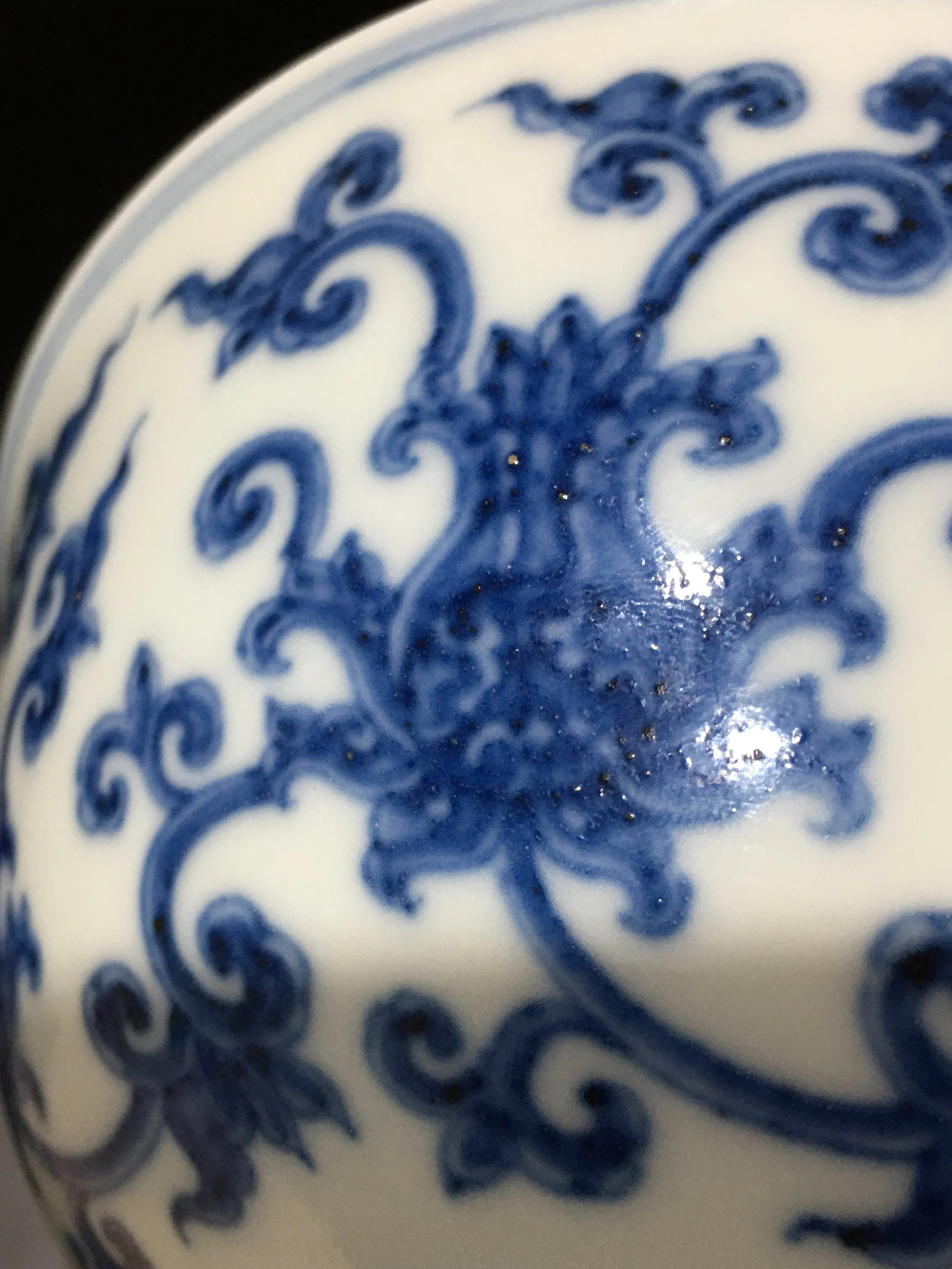 Image 7 of 13
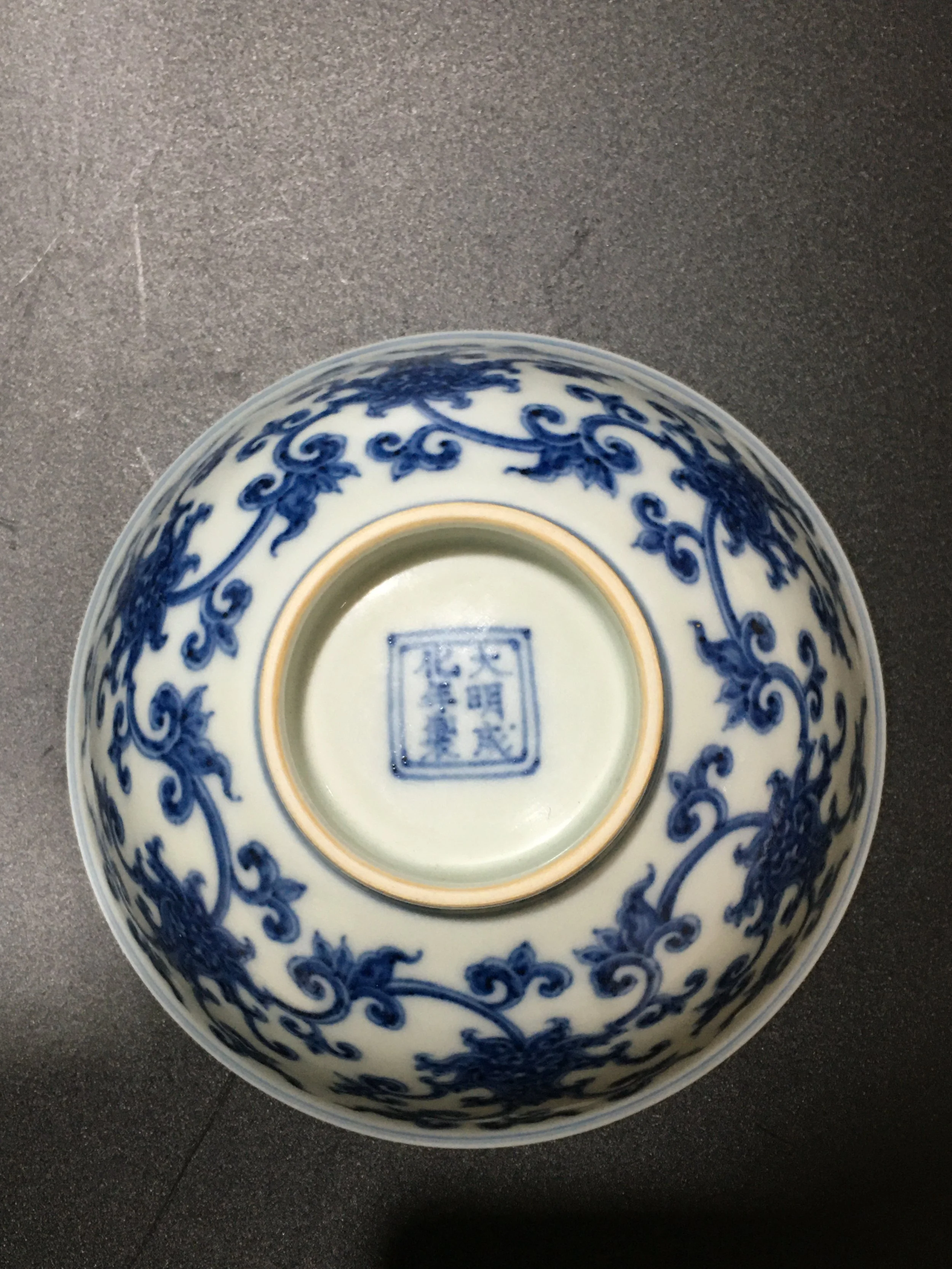 Image 8 of 13
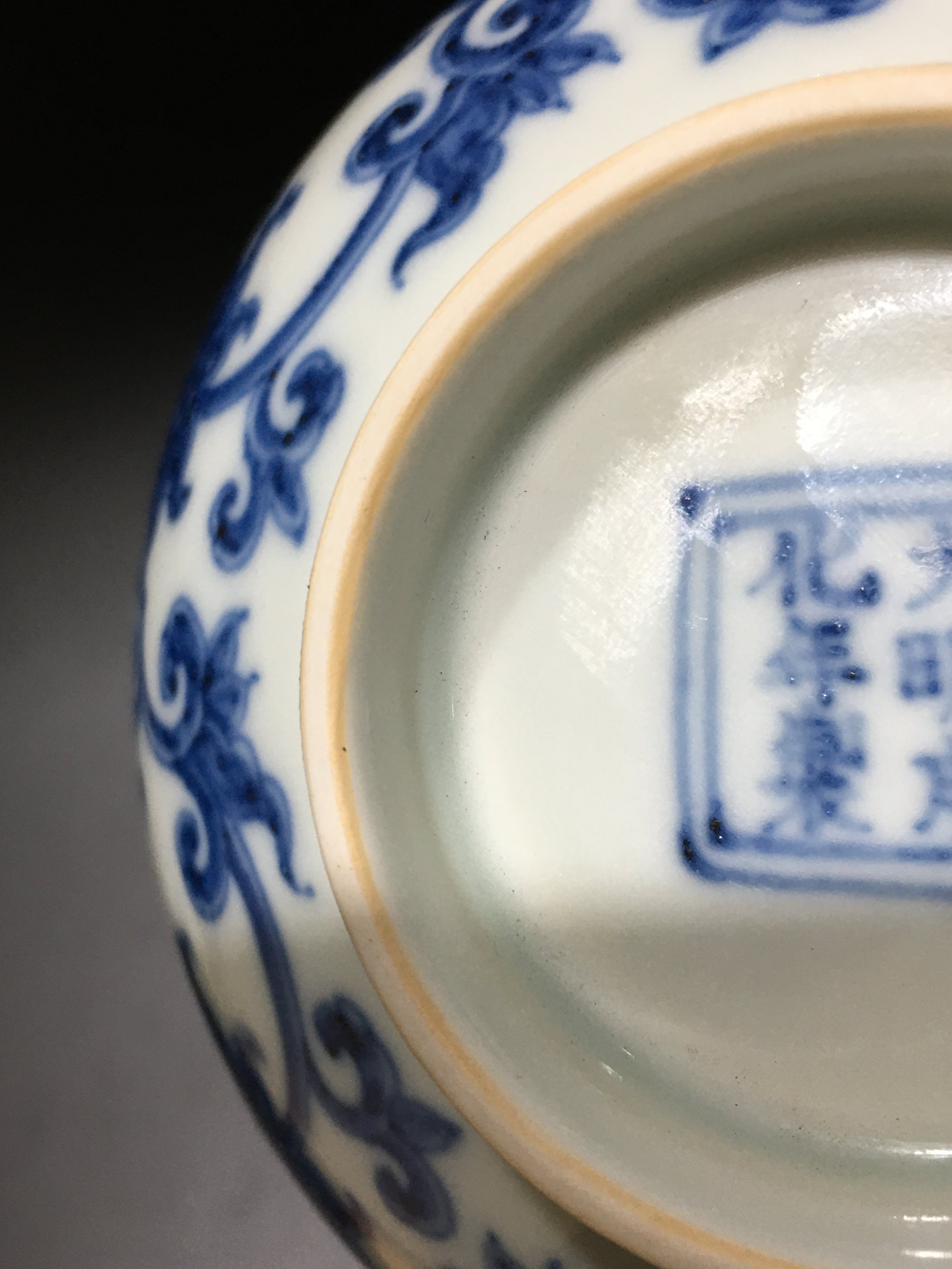 Image 9 of 13
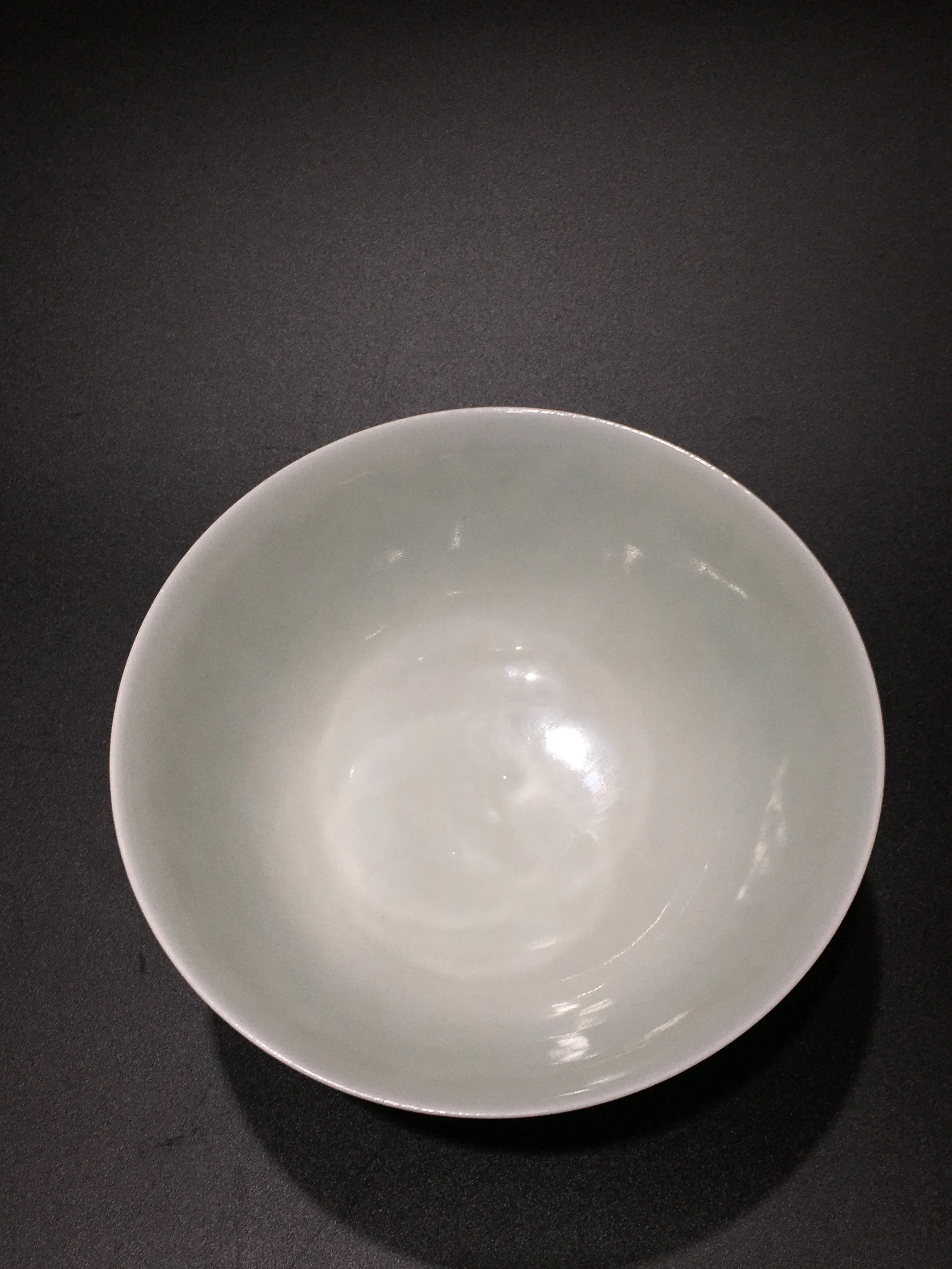 Image 10 of 13
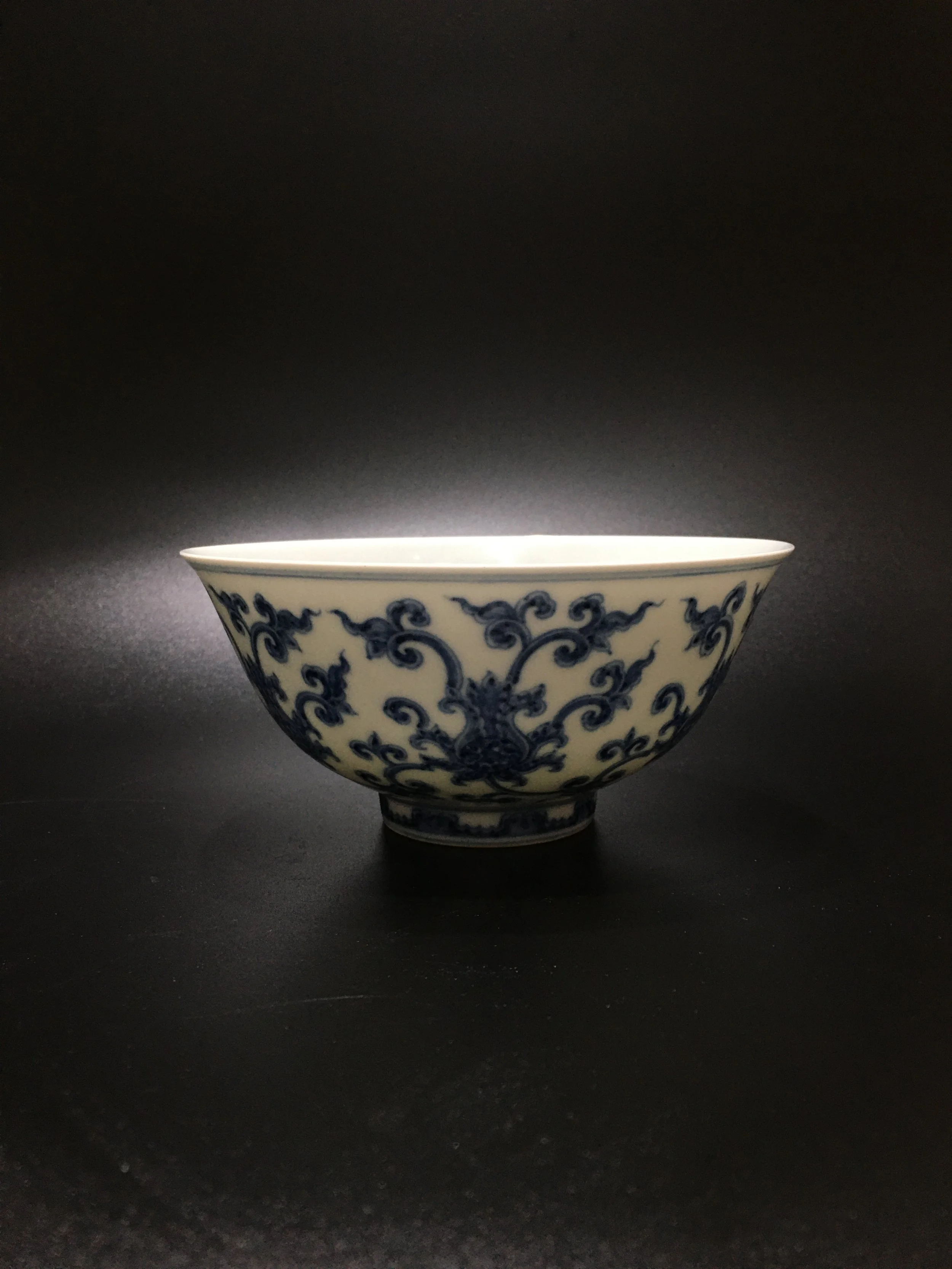 Image 11 of 13
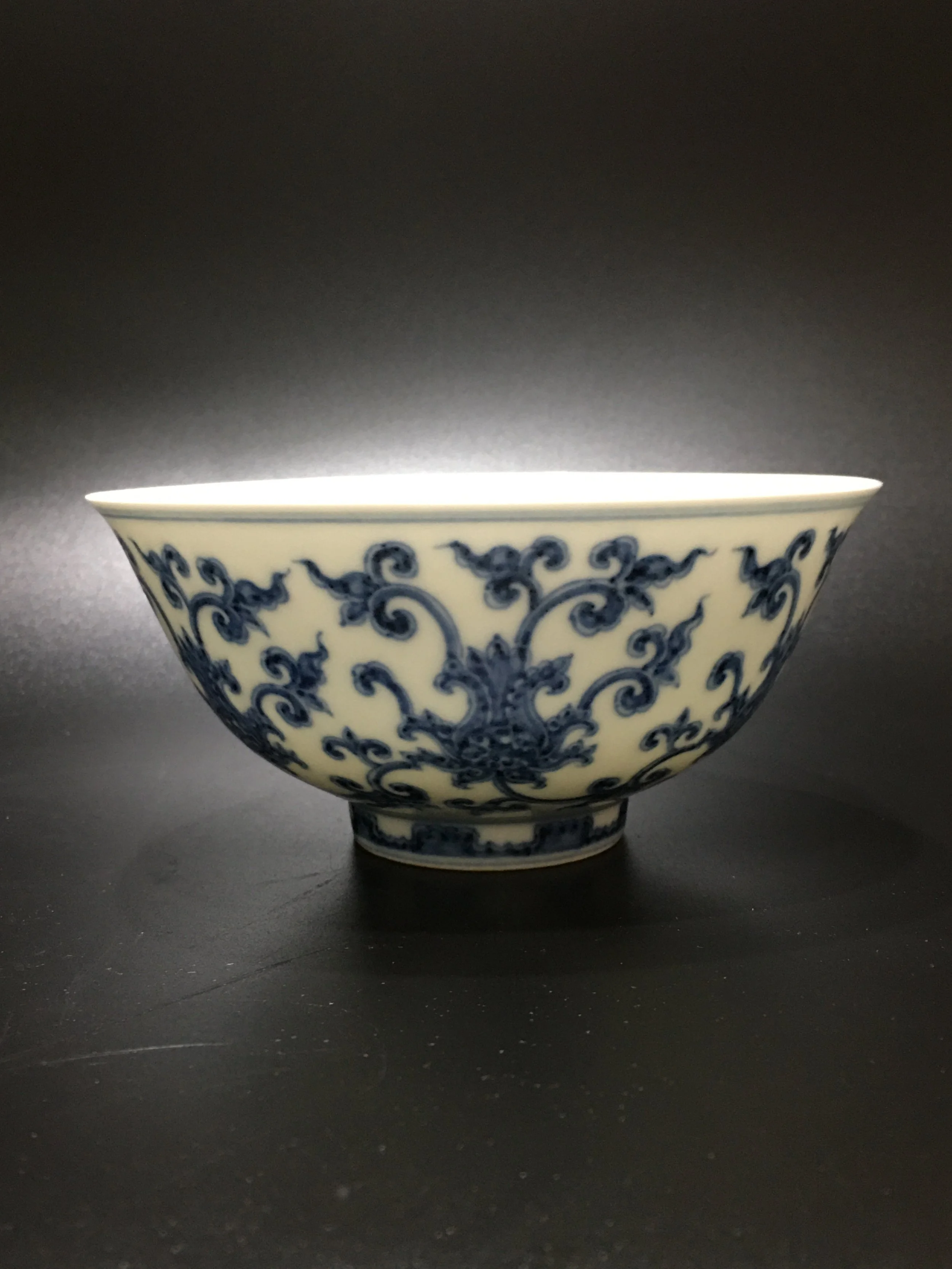 Image 12 of 13
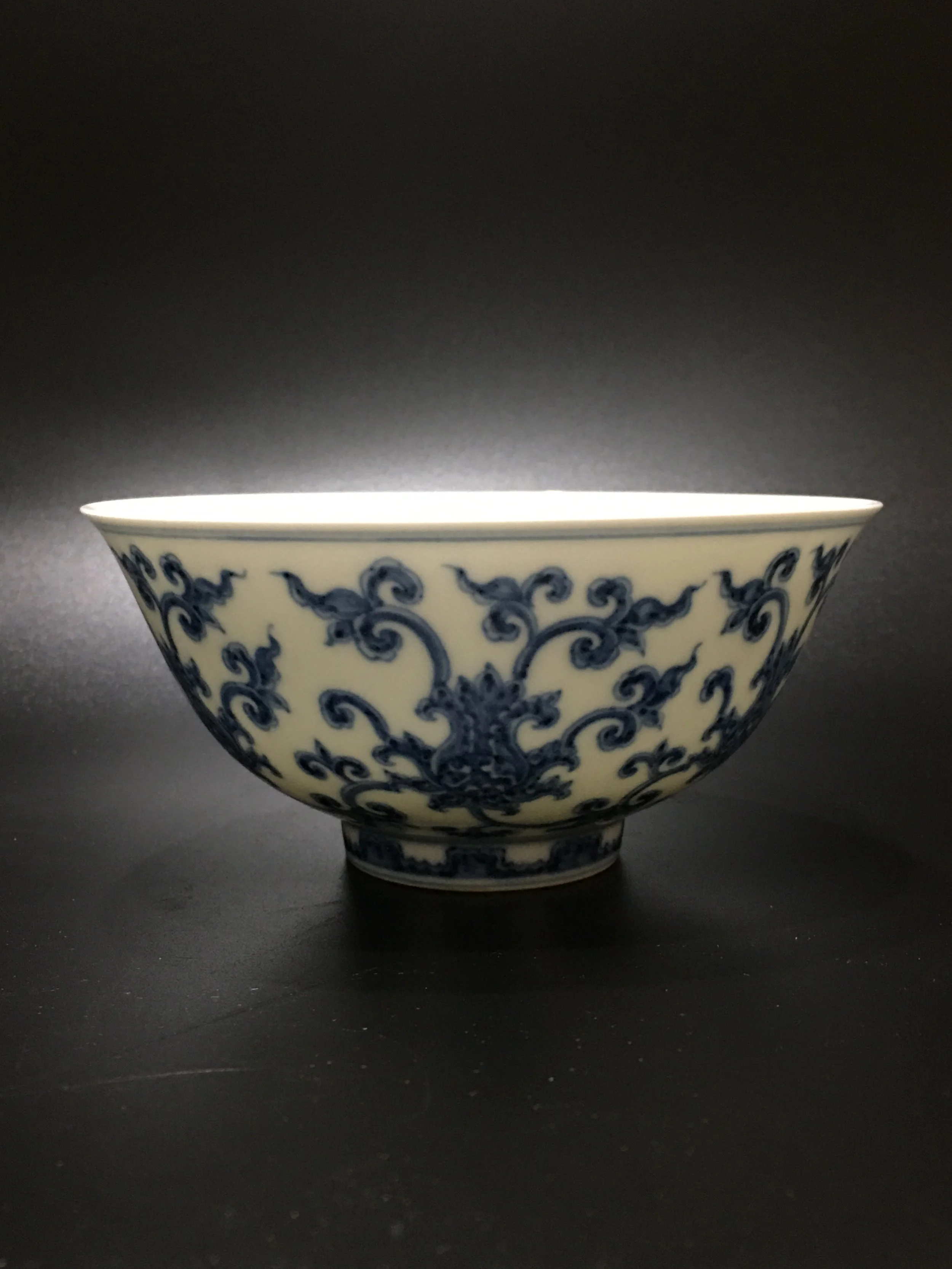 Image 13 of 13