Height: 5 cm, Mouth Diameter: 6.5 cm
This exquisite vessel, produced by the imperial kilns of the Ming Chenghua period, features a compact and delicate form with a recessed base and a gently flared rim, showcasing soft and full contours. The body is made of fine, pure white porcelain, and the glaze is lustrous like jade, embodying the characteristically warm and smooth texture distinctive to Chenghua porcelain. Its unique decoration lies in the use of Sanskrit script, blending religious symbolism with scholarly refinement—a rare style among Chenghua wares.
On the exterior, two lines of Sanskrit are elegantly inscribed in underglaze blue. The strokes are neat and flowing, arranged in a balanced and spacious layout. The blue tone is subtle and clear, typical of the pingdeng qing cobalt used during the Chenghua period. The color is stable, with a gentle grayish-blue hue and natural tonal transitions, harmonizing with the luminous white glaze to create an aura of tranquility and mystery. The Sanskrit text likely consists of Buddhist mantras or blessings, reflecting the Ming court’s reverence for Tibetan Buddhism and its cultural integration, while also demonstrating the diversity of decorative themes in Chenghua porcelain.
At the center of the base, a six-character reign mark in regular script is enclosed within a double-square frame: “Da Ming Chenghua Nian Zhi” (Made in the Chenghua Reign of the Great Ming). The calligraphy exhibits restrained yet firm brushwork and a precise structure, conforming to the standard mark style of Chenghua imperial kilns. Notably, inside the cup at the center of the interior base, a single Sanskrit character is painted within a double-circle in underglaze blue. Its exact meaning remains unidentified today—it may be a seed syllable (bīja), a protective symbol, or a representation of a specific Buddha or bodhisattva, adding a layer of mystical interpretation and meditative space.
Historical and Cultural Significance
Chenghua porcelain is celebrated for its delicate form, exceptional craftsmanship, and exquisite material quality. Wares adorned with Sanskrit inscriptions were particularly prominent during the Yongle, Xuande, and Chenghua reigns, serving as testaments to the cultural and religious exchanges between the imperial court and Tibetan Buddhist traditions. This piece combines superb porcelain quality, classic blue-and-white coloring, a standard Chenghua reign mark, and distinctive Sanskrit decoration. The pairing of extended Sanskrit verses on the exterior with a mysterious seed syllable (or character) inside the cup is exceptionally rare. It is not only a masterpiece of imperial craftsmanship but also an artistic treasure rich in religious and cultural significance, quietly reflecting the dual pursuit of aesthetic excellence and spiritual devotion during the Chenghua era.
明成化青花梵文卧足杯
高5厘米,口径6.5厘米
此杯为明成化官窑烧造之雅器,器型小巧玲珑,卧足,口沿微撇,线条圆润饱满。胎质细腻洁白,釉面莹润如玉,呈现出成化朝特有的温润质感。其独特之处在于以梵文为饰,融宗教意蕴于文人雅趣之中,在成化瓷中别具一格。
杯之外壁以青花书写两行梵文,笔划工整流畅,布局疏朗有致。青花发色淡雅清丽,为典型成化平等青料之特征,呈色稳定,蓝中泛灰,浓淡过渡自然,与莹白釉面相映,显得静谧而神秘。梵文内容多与佛教真言、祈福祝祷相关,展现了明代宫廷对藏传佛教的崇奉与融合,亦体现了成化时期瓷器装饰题材的多元化。
杯底中心落青花双框方章款,内书“大明成化年制”六字楷书。款识笔力内蕴,字体结构严谨,为成化官窑标准款识格式。尤为特别的是,杯内底心于青花双圈内书有一个独立的梵文字符,其具体寓意今已难确考,或为种子字、护符,或为某一尊佛、菩萨的象征,增添了一重解读的玄妙与冥想空间。
历史与价值
成化瓷器素以小巧精雅、瓷质绝伦著称,梵文装饰器物则多见于永乐、宣德、成化三朝,是宫廷与西域宗教文化交流的见证。本品集绝佳胎釉、典型青花发色、标准成化款识与特殊的梵文装饰于一体,其外壁长篇梵文与内底神秘种子字(或字符)的组合,极为罕见。它不仅是一件工艺精湛的宫廷用器,更是一件蕴含丰富宗教文化信息与时代精神的艺术珍品,静默地诉说着成化一朝在工艺美学与精神信仰上的双重追求。
Height: 5 cm, Mouth Diameter: 6.5 cm
This exquisite vessel, produced by the imperial kilns of the Ming Chenghua period, features a compact and delicate form with a recessed base and a gently flared rim, showcasing soft and full contours. The body is made of fine, pure white porcelain, and the glaze is lustrous like jade, embodying the characteristically warm and smooth texture distinctive to Chenghua porcelain. Its unique decoration lies in the use of Sanskrit script, blending religious symbolism with scholarly refinement—a rare style among Chenghua wares.
On the exterior, two lines of Sanskrit are elegantly inscribed in underglaze blue. The strokes are neat and flowing, arranged in a balanced and spacious layout. The blue tone is subtle and clear, typical of the pingdeng qing cobalt used during the Chenghua period. The color is stable, with a gentle grayish-blue hue and natural tonal transitions, harmonizing with the luminous white glaze to create an aura of tranquility and mystery. The Sanskrit text likely consists of Buddhist mantras or blessings, reflecting the Ming court’s reverence for Tibetan Buddhism and its cultural integration, while also demonstrating the diversity of decorative themes in Chenghua porcelain.
At the center of the base, a six-character reign mark in regular script is enclosed within a double-square frame: “Da Ming Chenghua Nian Zhi” (Made in the Chenghua Reign of the Great Ming). The calligraphy exhibits restrained yet firm brushwork and a precise structure, conforming to the standard mark style of Chenghua imperial kilns. Notably, inside the cup at the center of the interior base, a single Sanskrit character is painted within a double-circle in underglaze blue. Its exact meaning remains unidentified today—it may be a seed syllable (bīja), a protective symbol, or a representation of a specific Buddha or bodhisattva, adding a layer of mystical interpretation and meditative space.
Historical and Cultural Significance
Chenghua porcelain is celebrated for its delicate form, exceptional craftsmanship, and exquisite material quality. Wares adorned with Sanskrit inscriptions were particularly prominent during the Yongle, Xuande, and Chenghua reigns, serving as testaments to the cultural and religious exchanges between the imperial court and Tibetan Buddhist traditions. This piece combines superb porcelain quality, classic blue-and-white coloring, a standard Chenghua reign mark, and distinctive Sanskrit decoration. The pairing of extended Sanskrit verses on the exterior with a mysterious seed syllable (or character) inside the cup is exceptionally rare. It is not only a masterpiece of imperial craftsmanship but also an artistic treasure rich in religious and cultural significance, quietly reflecting the dual pursuit of aesthetic excellence and spiritual devotion during the Chenghua era.
明成化青花梵文卧足杯
高5厘米,口径6.5厘米
此杯为明成化官窑烧造之雅器,器型小巧玲珑,卧足,口沿微撇,线条圆润饱满。胎质细腻洁白,釉面莹润如玉,呈现出成化朝特有的温润质感。其独特之处在于以梵文为饰,融宗教意蕴于文人雅趣之中,在成化瓷中别具一格。
杯之外壁以青花书写两行梵文,笔划工整流畅,布局疏朗有致。青花发色淡雅清丽,为典型成化平等青料之特征,呈色稳定,蓝中泛灰,浓淡过渡自然,与莹白釉面相映,显得静谧而神秘。梵文内容多与佛教真言、祈福祝祷相关,展现了明代宫廷对藏传佛教的崇奉与融合,亦体现了成化时期瓷器装饰题材的多元化。
杯底中心落青花双框方章款,内书“大明成化年制”六字楷书。款识笔力内蕴,字体结构严谨,为成化官窑标准款识格式。尤为特别的是,杯内底心于青花双圈内书有一个独立的梵文字符,其具体寓意今已难确考,或为种子字、护符,或为某一尊佛、菩萨的象征,增添了一重解读的玄妙与冥想空间。
历史与价值
成化瓷器素以小巧精雅、瓷质绝伦著称,梵文装饰器物则多见于永乐、宣德、成化三朝,是宫廷与西域宗教文化交流的见证。本品集绝佳胎釉、典型青花发色、标准成化款识与特殊的梵文装饰于一体,其外壁长篇梵文与内底神秘种子字(或字符)的组合,极为罕见。它不仅是一件工艺精湛的宫廷用器,更是一件蕴含丰富宗教文化信息与时代精神的艺术珍品,静默地诉说着成化一朝在工艺美学与精神信仰上的双重追求。
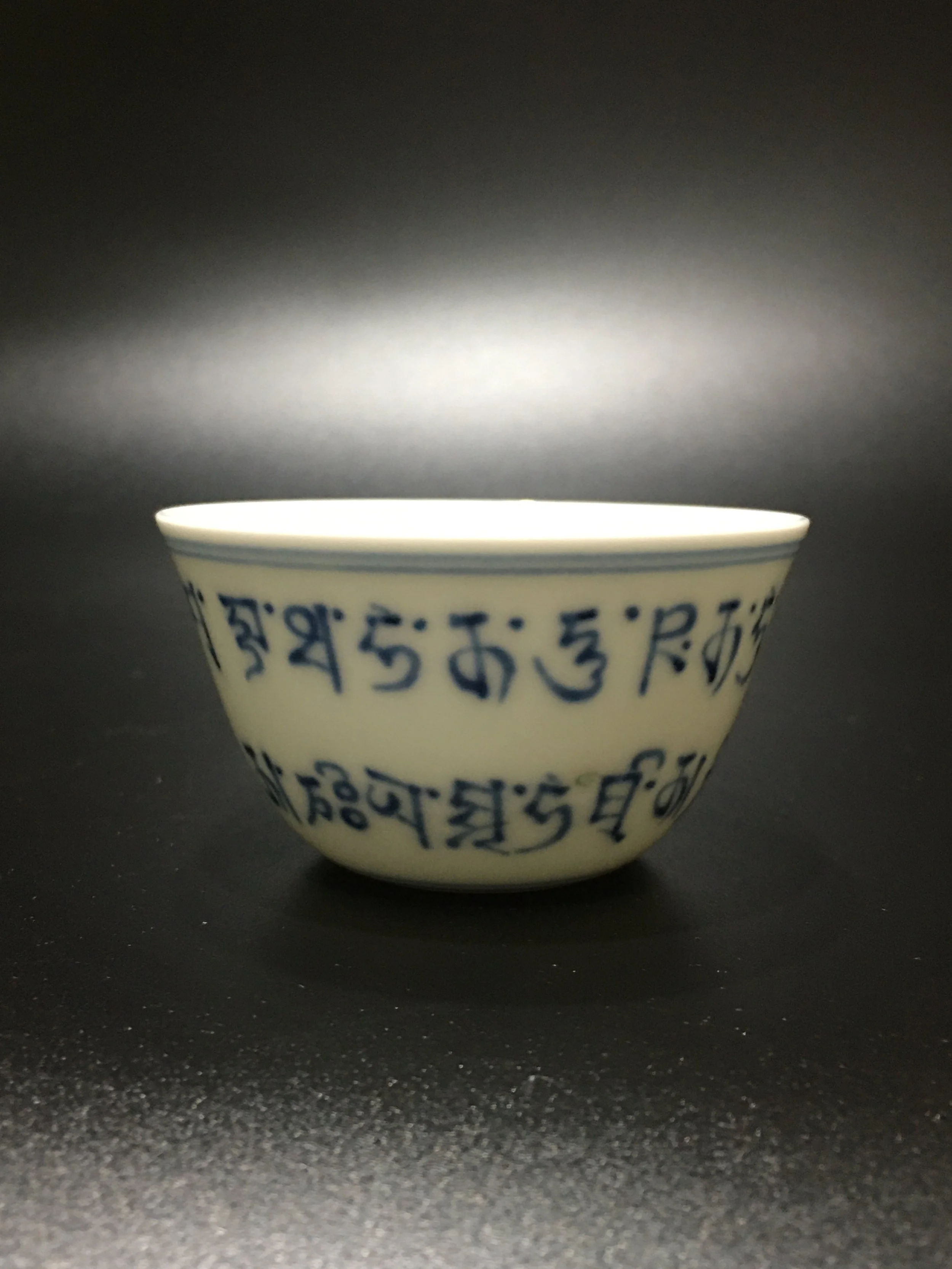 Image 1 of 13
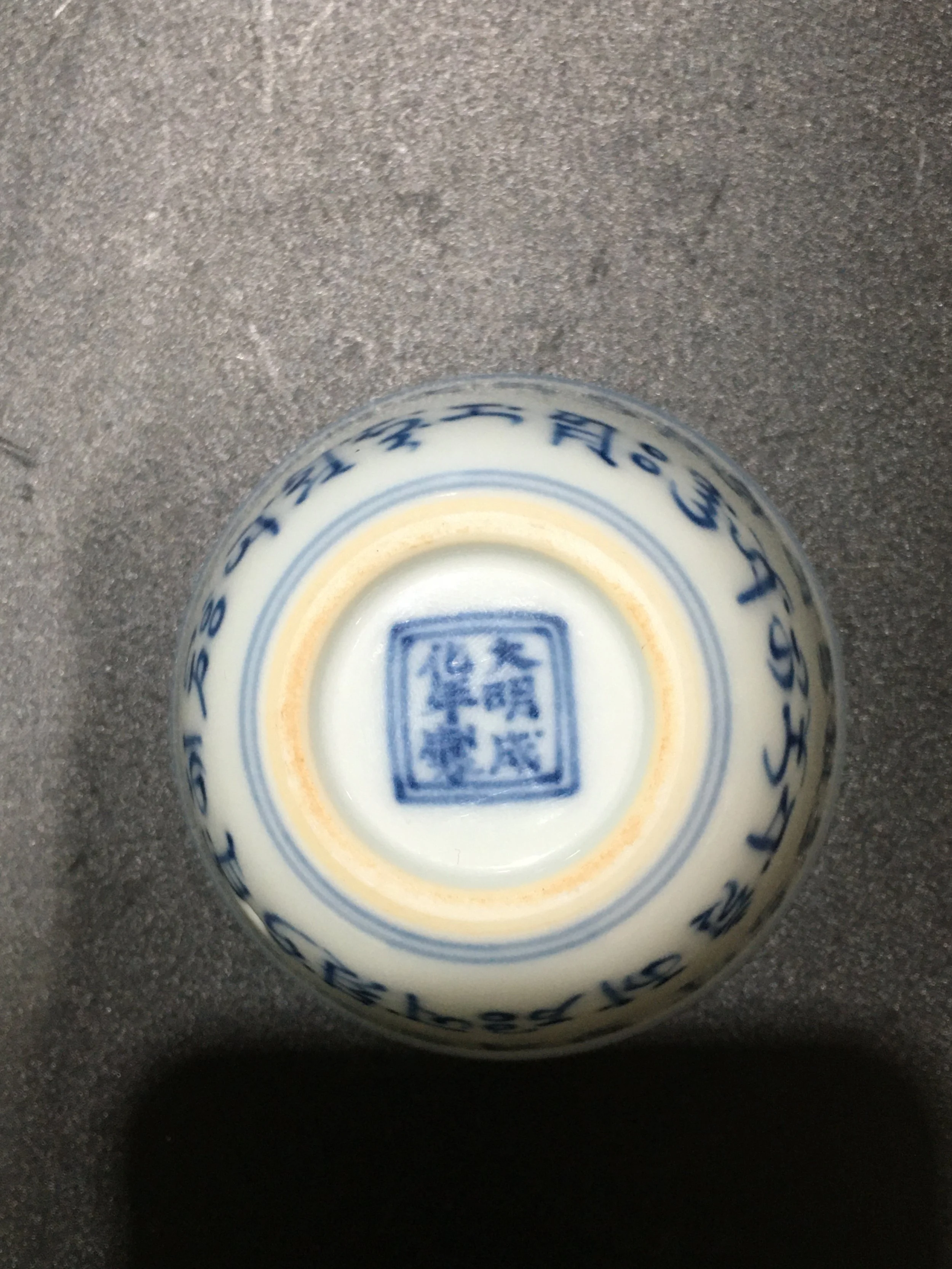 Image 2 of 13
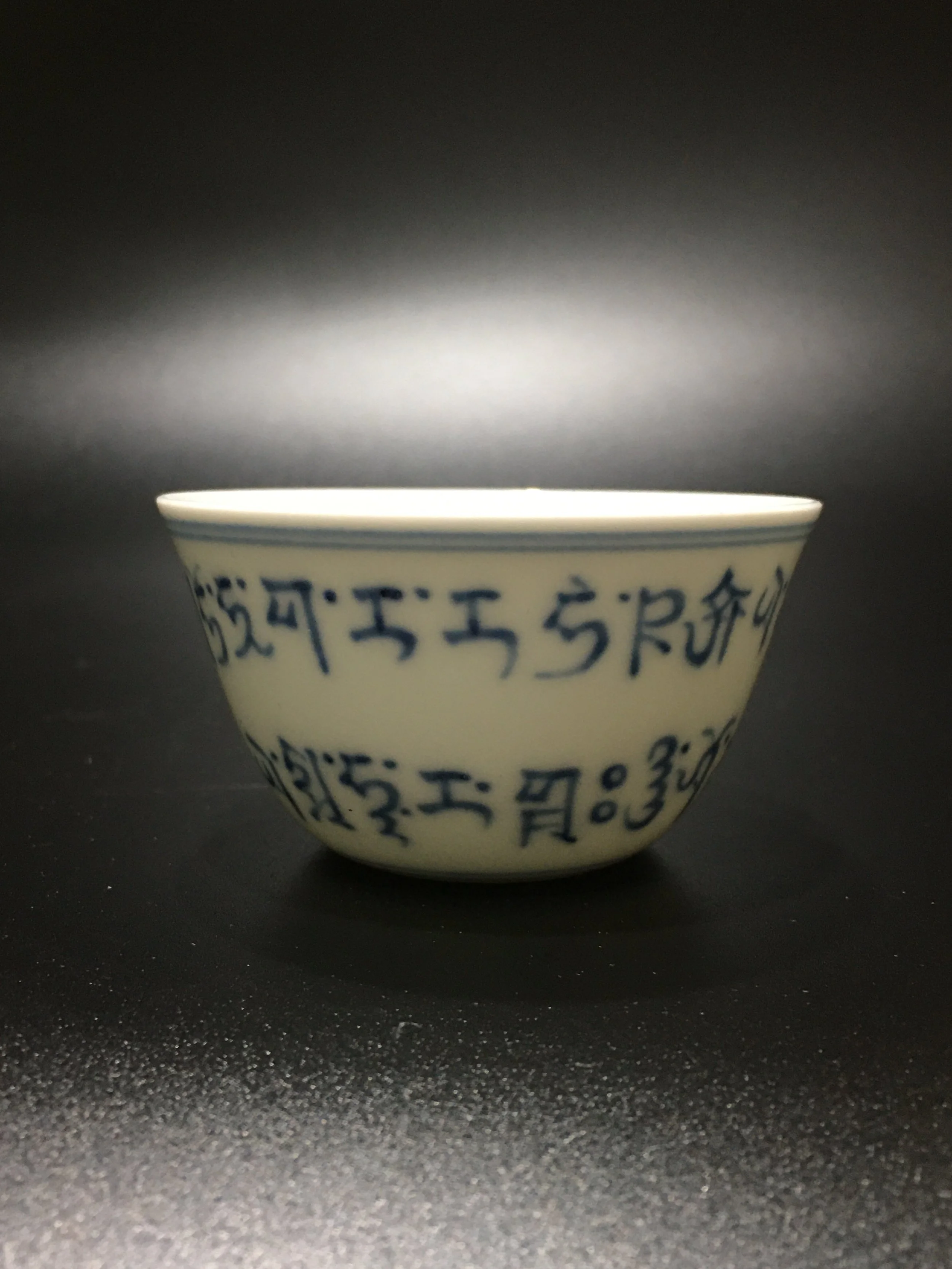 Image 3 of 13
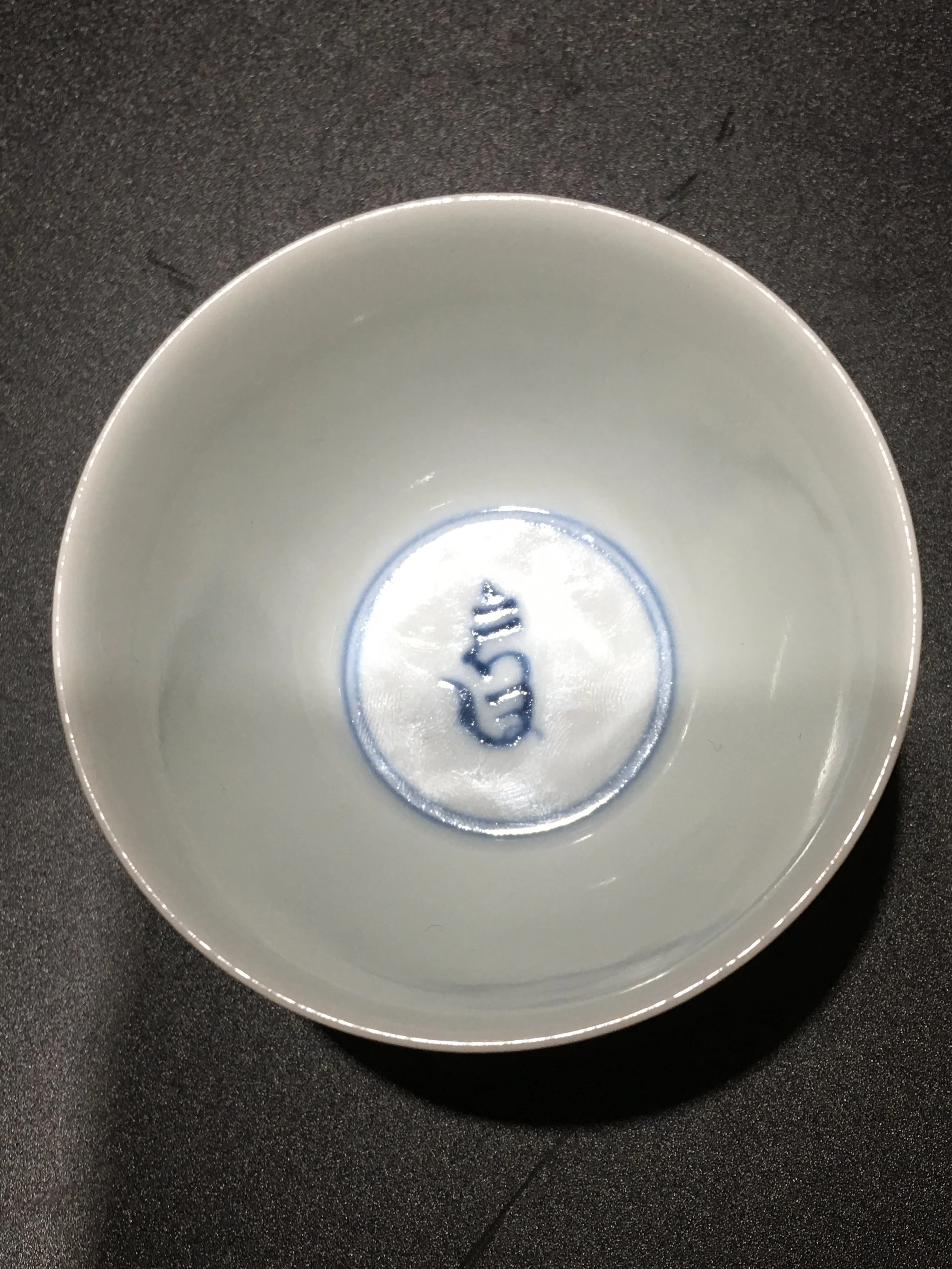 Image 4 of 13
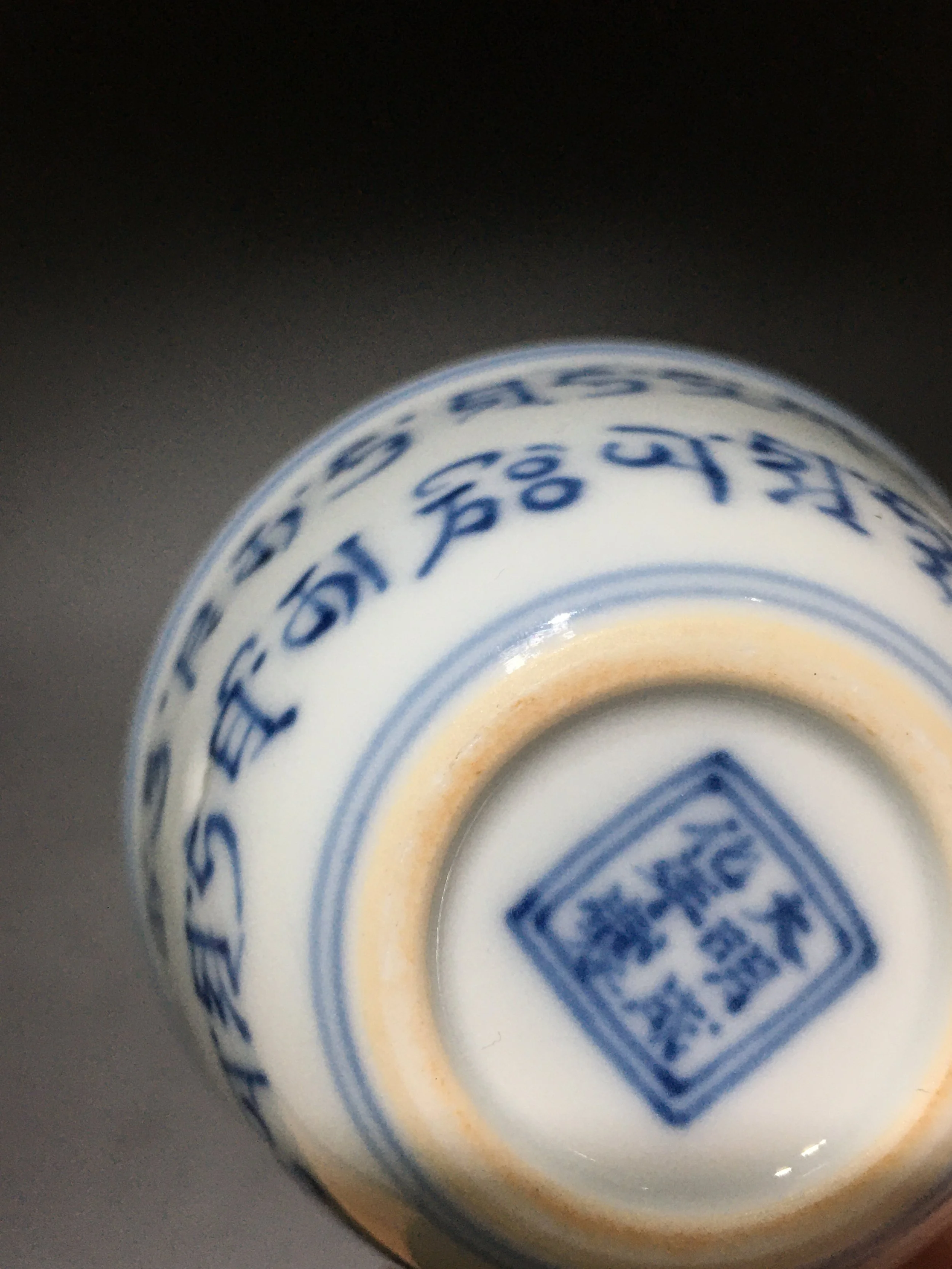 Image 5 of 13
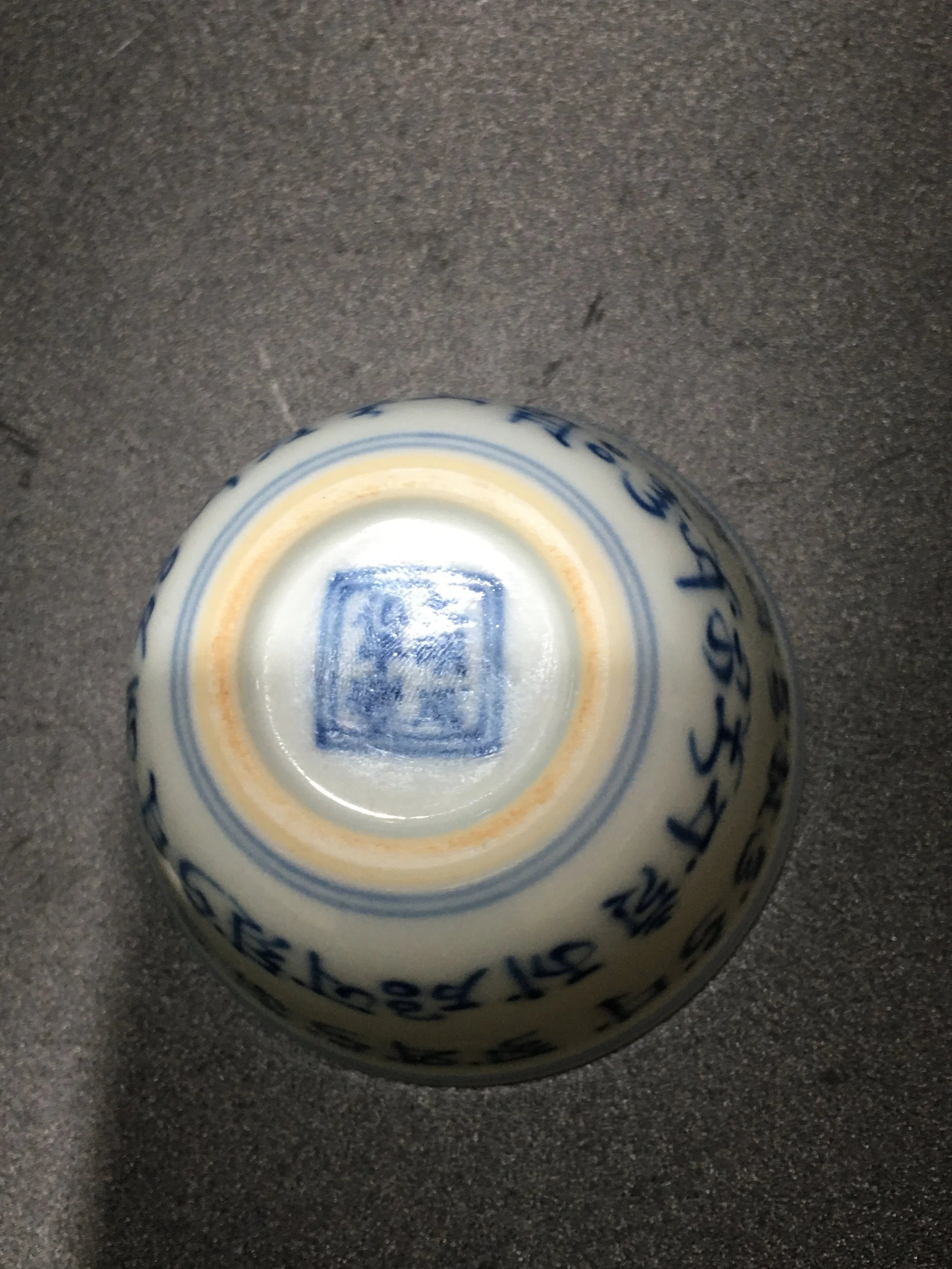 Image 6 of 13
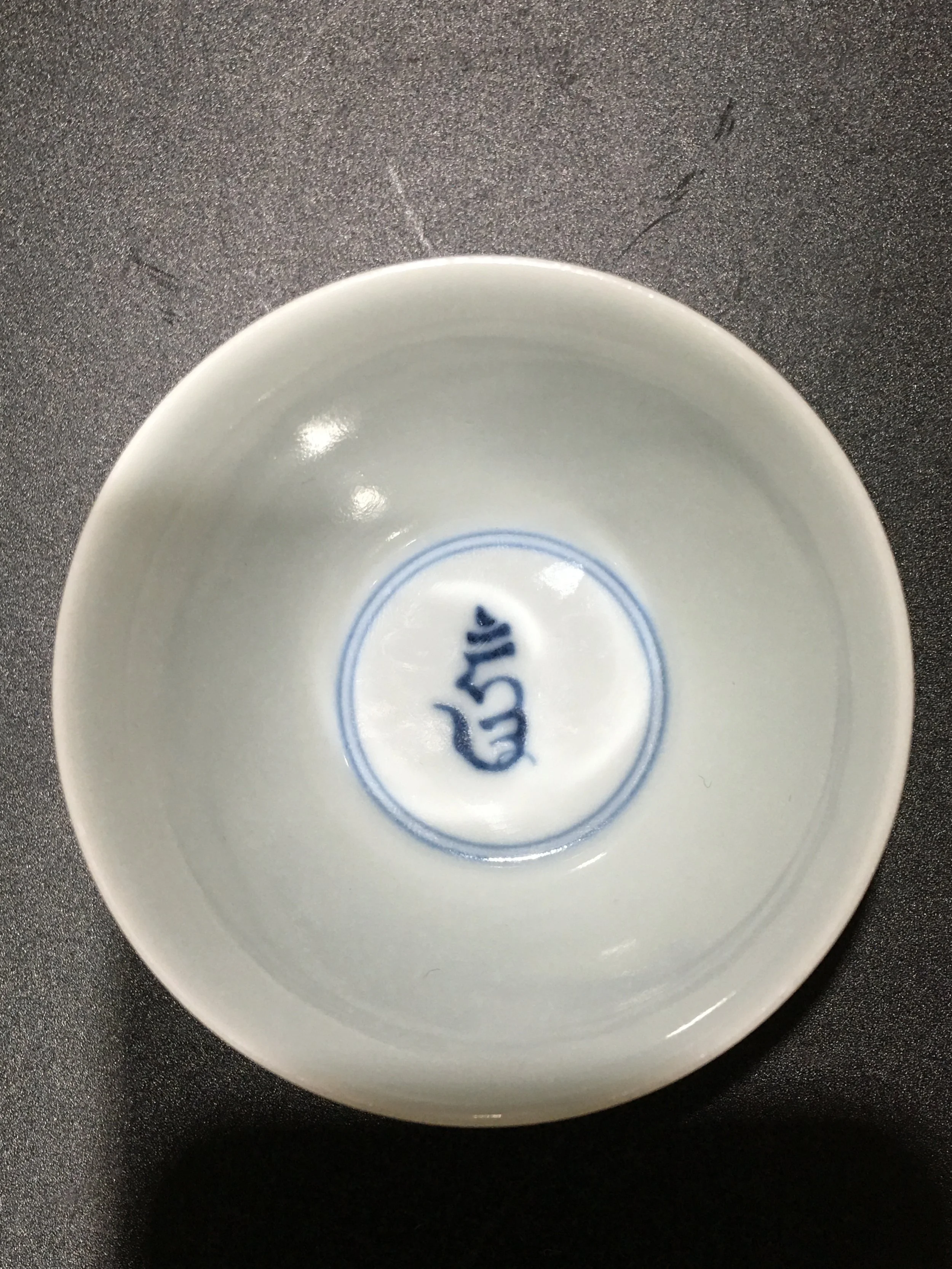 Image 7 of 13
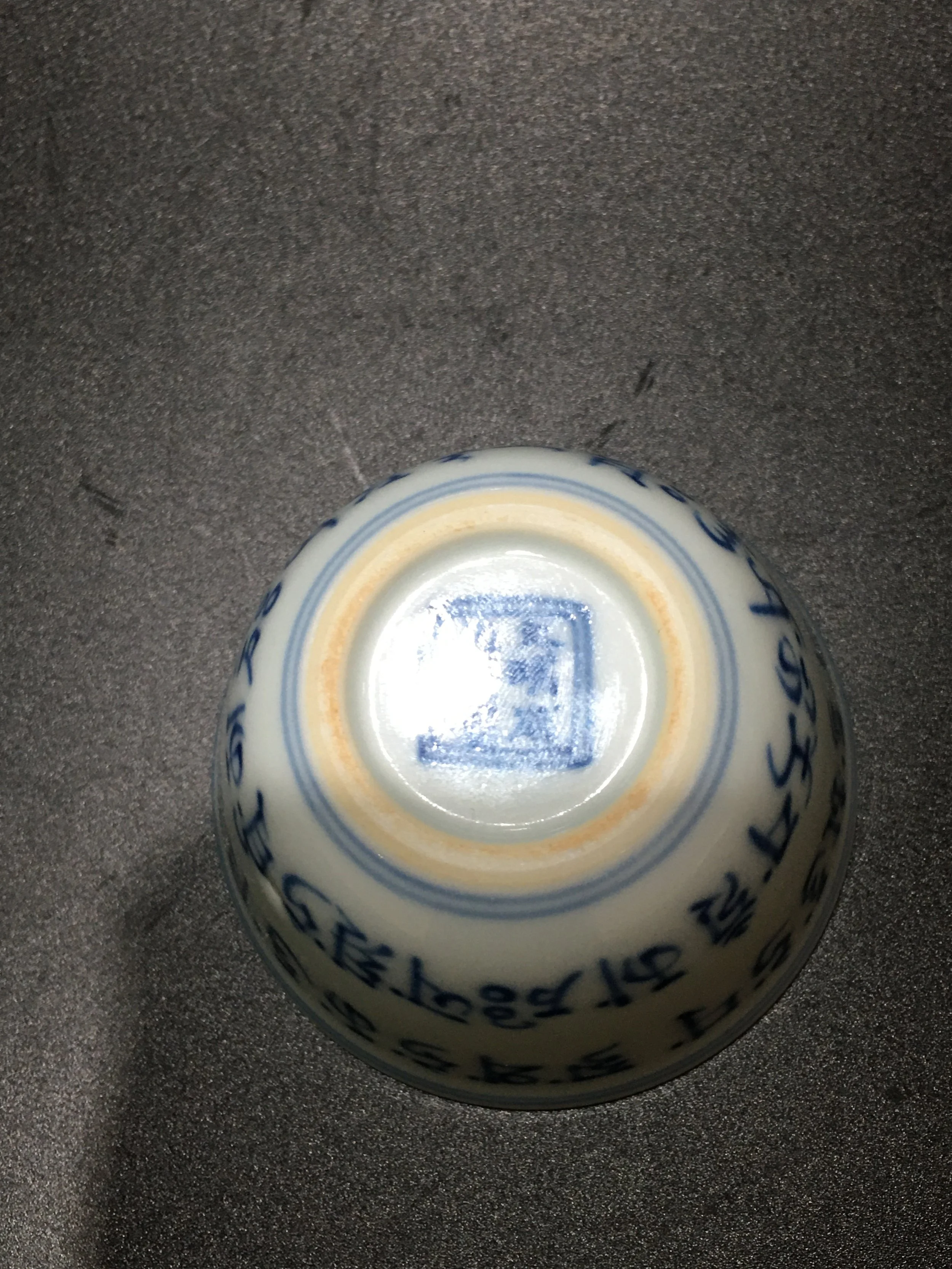 Image 8 of 13
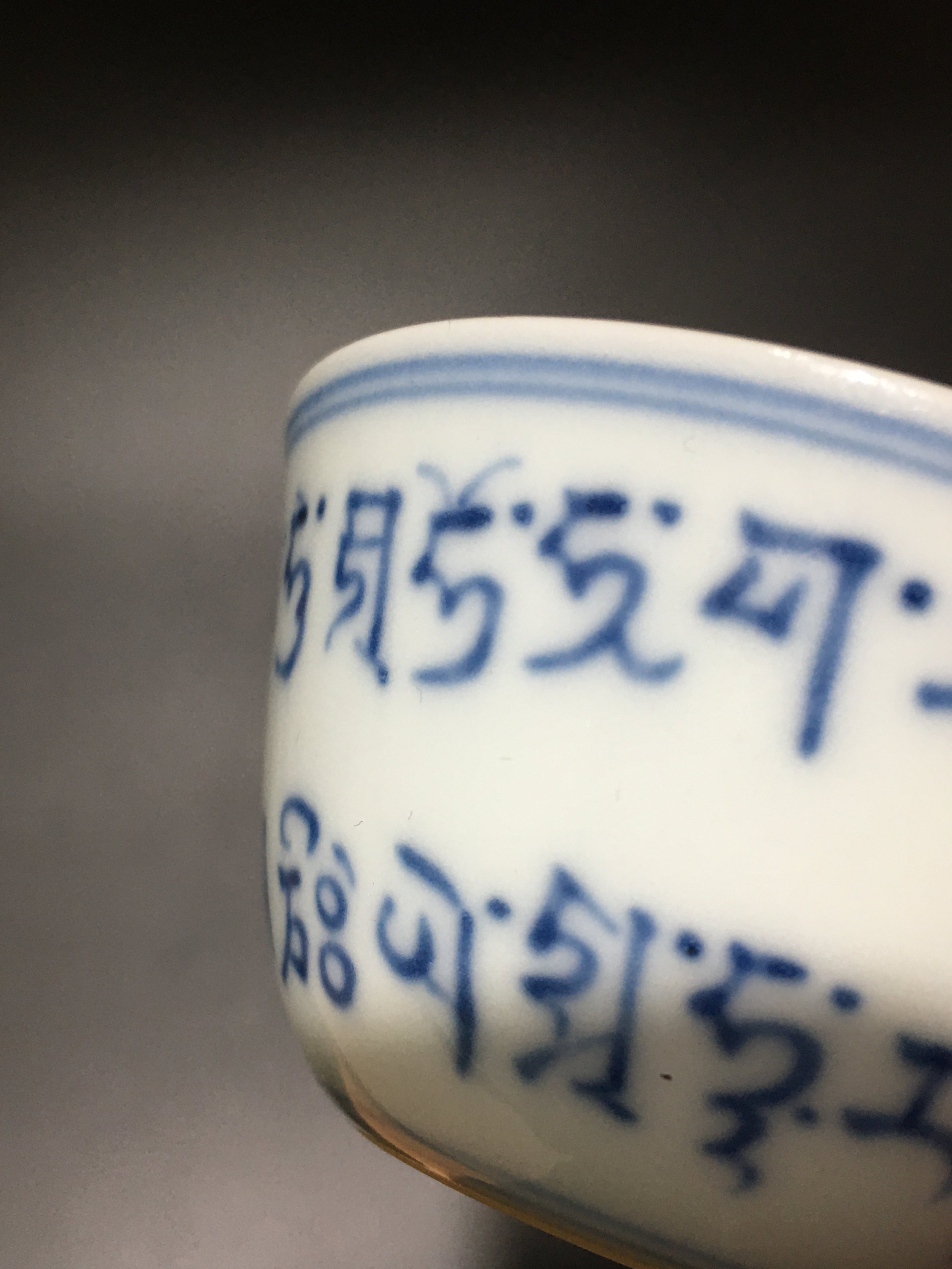 Image 9 of 13
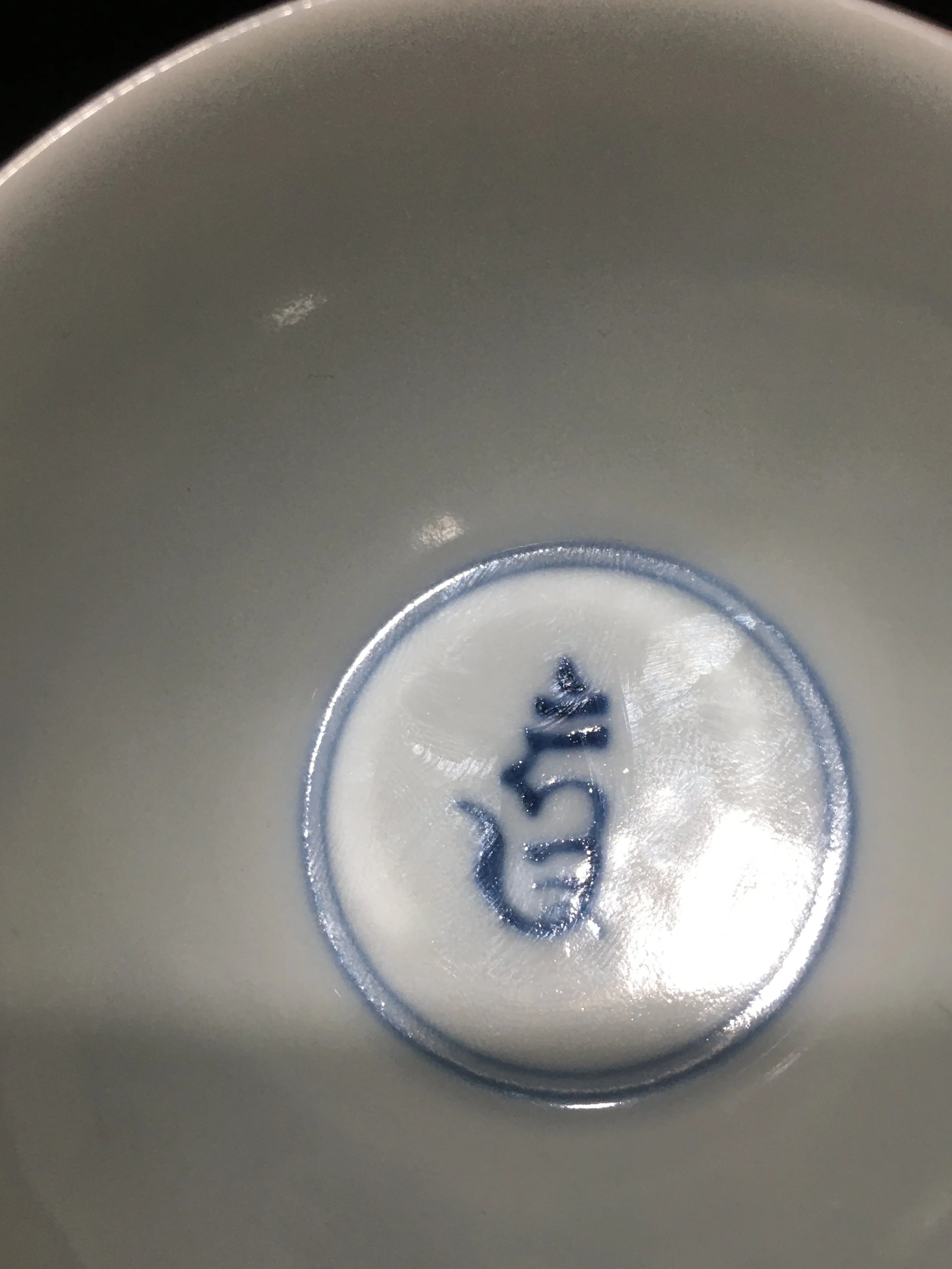 Image 10 of 13
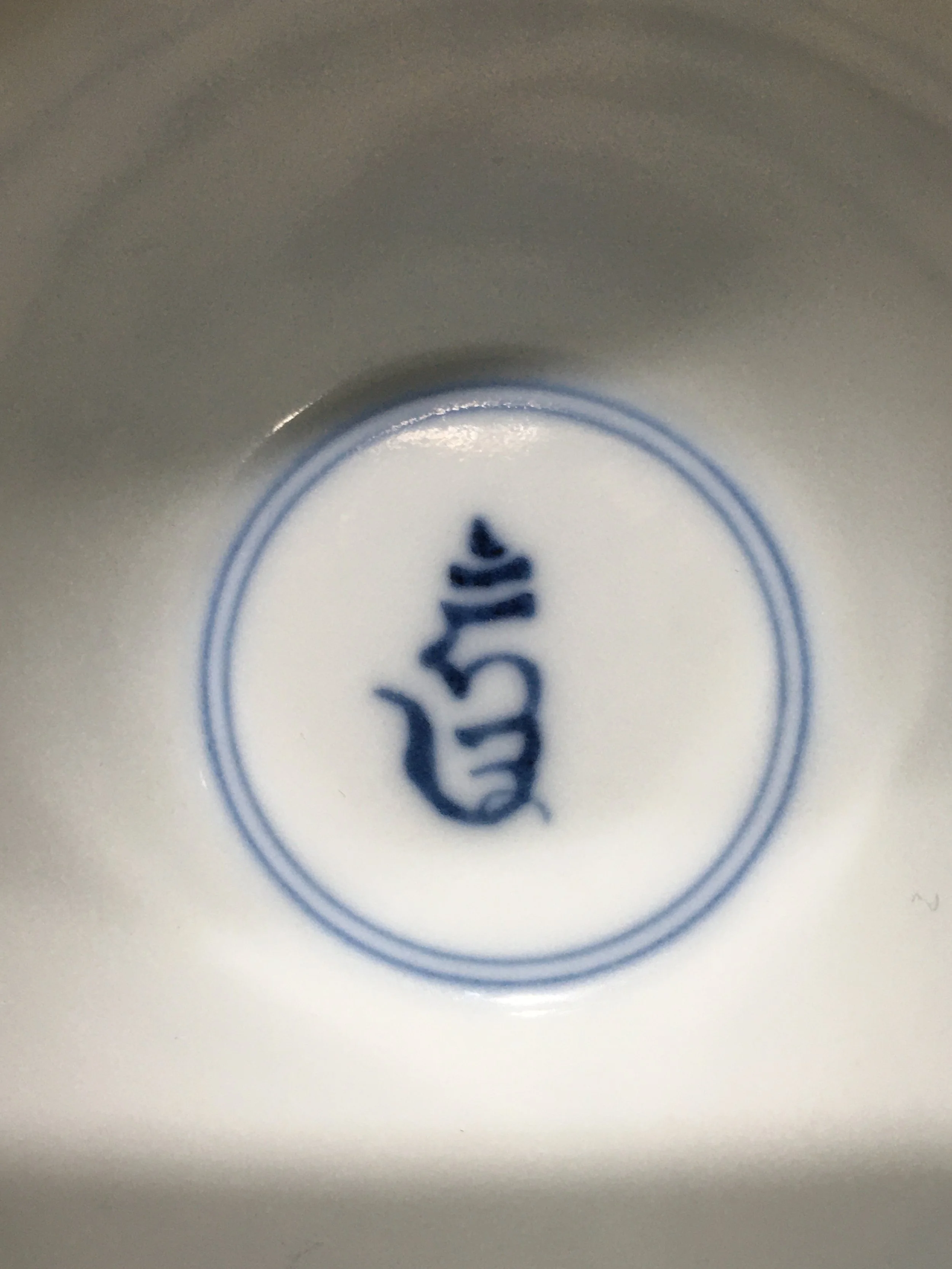 Image 11 of 13
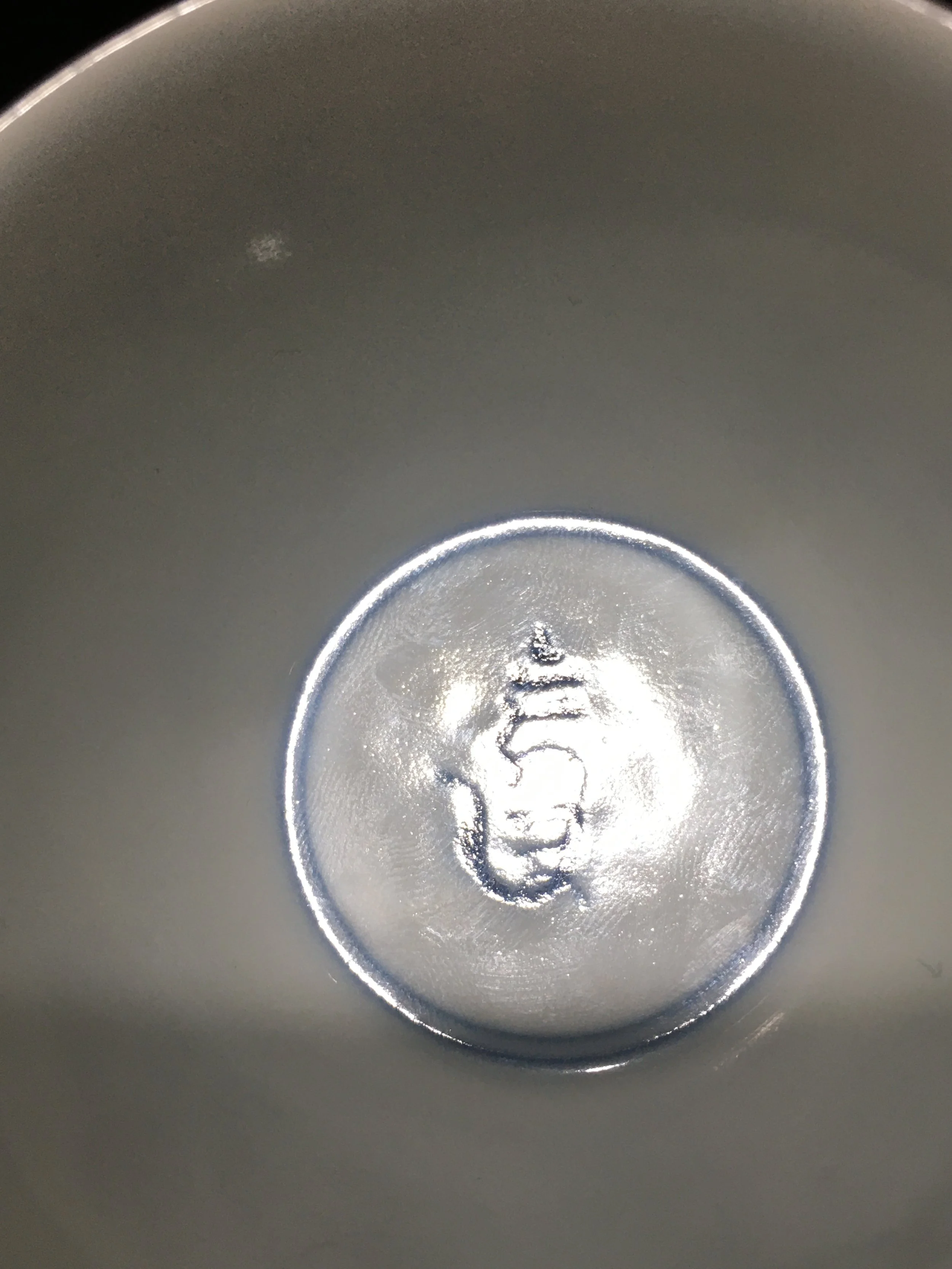 Image 12 of 13
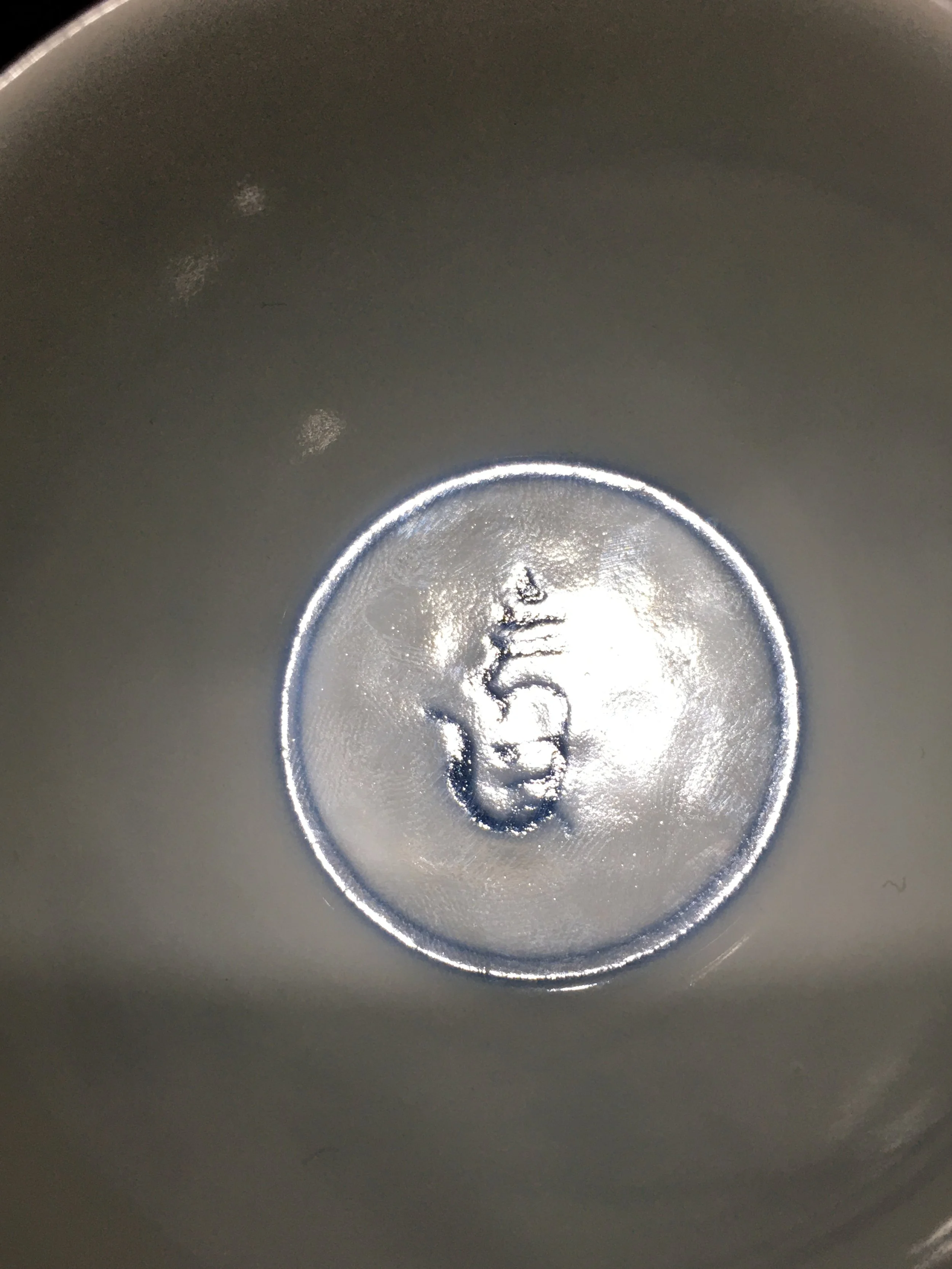 Image 13 of 13