Dimensions: Height: 8 cm, Mouth Diameter: 14.5 cm
Reign Mark: "Da Ming Chenghua Nian Zhi" (Made in the Chenghua Reign of the Great Ming) in six-character, two-line regular script within a double circle in underglaze blue on the base.
I. Form, Body, and Glaze: The Paradigm of a Chenghua Palace Bowl
This bowl exemplifies the most representative palace bowl form of the Ming Chenghua period. Its shape is dignified and elegantly proportioned. Characterized by a slightly flared rim, curved walls that taper gracefully toward a small, neat ring foot, it presents a beautifully balanced silhouette that is expansive yet restrained. Renowned for its perfect proportions and remarkably light weight, it is celebrated as the epitome of the refined elegance of Chenghua ware. The porcelain body is exceptionally pure and finely levigated. It is famously thin as paper, yet hard, compact, and fine-grained, exhibiting a faint fleshy-pink hue when held to light—a hallmark of the finest Chenghua imperial clay. The glaze is rich, lustrous, and has a bluish-white tone reminiscent of mutton-fat jade. Its warm, soft texture provides a perfect complement to the subtle blue-and-white decoration.
II. Decoration and Technique: A Blue-and-White Scroll of Subtlety and Lasting Grace
The primary decoration on the exterior consists of a blue-and-white interlocking gardenia scroll; the interior is typically left plain or adorned with a simple motif.
Design and Composition: It employs the classic interlocking scroll composition. The gardenia flowers are rendered as full, plump blossoms with layered petals, while their stems and leaves twist and turn in a continuous, unbroken rhythm, creating a sense of endless, vital movement. The layout is spacious and well-ordered, dense yet never cluttered, fully embodying the rigor and sophistication of imperial design.
Characteristics of the Blue: The bowl uses the typical Pingdeng qing cobalt (also known as Bitang qing) of the Chenghua period. The color is soft, elegant, clear, and distinctly grayish-blue, stable and even without the dark spots or "rust" marks seen earlier. The brushwork is纤细 and gentle, utilizing the double-outline and fill technique. The lines flow with the delicacy of a floating silk thread, and the color fill is precise and pale, resulting in a unique beauty of hazy tranquility. This stands in sharp contrast to the powerful, intense blues of the Yongle and Xuande periods.
Cultural Symbolism: In traditional culture, the gardenia, prized for its pure white color and fragrance, symbolizes refined elegance, chastity, and auspiciousness. The interlocking scroll pattern carries connotations of "endless regeneration" and "continuous longevity." Their combination offers not only decorative beauty but also embodies auspicious wishes for life.
III. Reign Mark: Conclusive Evidence of Period Style
The six-character Chenghua reign mark within the double underglaze-blue circle on the base displays distinctive calligraphic traits. The characters appear somewhat naive, yet executed with deep, forceful brushwork. The strokes start with a hidden tip and end with a deliberate pause, conveying a unique sense of unadorned solidity. The blue tone matches that of the decoration—soft, gentle, and sunken into the body. This mark is one of the core standards for authenticating genuine Chenghua imperial ware; later imitations consistently fail to capture its essential spirit.
IV. Historical Significance and Collectibility
Chenghua palace bowls have long been treasured masterpieces among Chinese porcelain, revered throughout the ages.
An Artistic Zenith: This bowl combines a beautifully proportioned form, jade-like glaze, subtle blue-and-white tones, and timeless decoration. It represents the artistic peak of the Chenghua period's aesthetic shift—from robustness to restraint, from intensity to subtlety. It is a milestone in Chinese ceramic history, marking the perfect fusion of literati sensibility with imperial craftsmanship.
Technical Pinnacle: Its extreme thinness, lustrous glaze, and masterful control of domestic cobalt pigments demonstrate the unparalleled technical prowess achieved by the Chenghua imperial kilns.
Rarity and Prestige: Surviving Chenghua palace bowls are rare; those decorated with the gardenia motif are even more precious. In the world's foremost collections and auction markets, a Chenghua blue-and-white palace bowl in excellent condition with a clear reign mark remains a pinnacle collectible of extraordinary value. It is more than an object; it is the crystallized aesthetic spirit of an era.
In summary, this Chenghua blue-and-white palace bowl with interlocking gardenia design transcends the category of a utilitarian vessel. It is an artistic treasure that凝聚 the spirit of its age, the taste of an emperor, and the transcendent skill of its craftsmen. Through the most minimalist palette and graceful lines, it诠释 the supreme Eastern aesthetic ideal of "subtle elegance" (dan ya), its风华 undiminished, indeed enhanced, over centuries.
明成化青花缠枝栀子花纹宫碗
规格数据:高8厘米,口径14.5厘米
款识:碗底青花双圈内书“大明成化年制”六字双行楷书款。
一、器型与胎釉:成化宫碗的典范
此碗为明代成化朝最具代表性的宫碗式样。器型端庄秀雅,口沿微撇,弧壁自上而下圆润内收,底承小巧圈足,形成外张内敛的优美轮廓。其比例权衡恰到好处,手感轻盈,被誉为“成窑之秀”的典范。胎质精纯,淘洗至极,胎骨轻薄如纸,却坚致细腻,迎光透视呈肉红色,此为成化官窑顶级胎土特征。釉面肥厚莹润,白中泛青,如羊脂美玉,温润柔和,与淡雅青花相映生辉。
二、纹饰与工艺:淡雅隽永的青花画卷
碗外壁以青花绘缠枝栀子花纹为主题,内壁常为素白或饰简练纹样。
纹样布局:采用经典的缠枝构图,栀子花朵饱满丰腴,花瓣层叠;枝叶婉转缠绕,连绵不断,形成循环往复、生生不息的律动感。布局疏朗有致,繁而不乱,尽显宫廷设计的严谨与高雅。
青花特色:使用成化时期典型的平等青料(陂塘青)。发色淡雅清丽,蓝中泛灰,呈色稳定均匀,无黑斑锈斑。笔触纤细柔和,采用双勾填色之法,线条流畅如游丝,填色精准淡雅,形成独特的朦胧静谧之美,与永宣青花的雄健浓艳形成鲜明对比。
文化寓意:栀子花因其洁白芳香,在传统文化中象征清雅、贞洁与祥瑞。缠枝纹则寓意“生生不息”、“绵长不断”。二者结合,既富装饰美感,又寄托了美好的生活愿景。
三、款识:时代风格的铁证
碗底“大明成化年制”六字双圈楷书款,笔法风格鲜明。字体略显稚拙,笔力深沉,起笔藏锋,收笔顿挫,有一种独特的敦厚感。青花发色与纹饰一致,淡雅柔和,沉入胎骨。此款识是鉴定成化本朝官窑的核心标准之一,后世仿品难及其神韵。
四、历史地位与收藏价值
成化宫碗素为瓷中珍品,备受历代推崇。
艺术巅峰:此碗集秀美器型、如玉釉质、淡雅青花、隽永纹饰于一体,代表了成化瓷器审美从雄浑走向内敛、从浓烈转向淡雅的艺术高峰,是中国陶瓷史上文人意趣与宫廷工艺完美结合的里程碑。
工艺极致:其极致的薄胎、温润的釉质及对国产青料的纯熟驾驭,展现了成化御窑登峰造极的工艺水平。
稀缺珍贵:传世成化宫碗本就稀少,绘栀子花纹者更为珍贵。在国内外顶级收藏与拍卖市场中,品相完好、款识清晰的成化青花宫碗,始终是金字塔尖的藏品,价值非凡,不仅是一件器物,更是一个时代美学精神的结晶。
总而言之,此成化青花缠枝栀子花纹宫碗,超越了实用器的范畴,是一件凝聚了时代精神、帝王品味与匠人神技的艺术瑰宝。它以最简约淡雅的色彩与线条,诠释了东方美学中至高无上的“淡雅”境界,历数百年而风华愈显。
Dimensions: Height: 8 cm, Mouth Diameter: 14.5 cm
Reign Mark: "Da Ming Chenghua Nian Zhi" (Made in the Chenghua Reign of the Great Ming) in six-character, two-line regular script within a double circle in underglaze blue on the base.
I. Form, Body, and Glaze: The Paradigm of a Chenghua Palace Bowl
This bowl exemplifies the most representative palace bowl form of the Ming Chenghua period. Its shape is dignified and elegantly proportioned. Characterized by a slightly flared rim, curved walls that taper gracefully toward a small, neat ring foot, it presents a beautifully balanced silhouette that is expansive yet restrained. Renowned for its perfect proportions and remarkably light weight, it is celebrated as the epitome of the refined elegance of Chenghua ware. The porcelain body is exceptionally pure and finely levigated. It is famously thin as paper, yet hard, compact, and fine-grained, exhibiting a faint fleshy-pink hue when held to light—a hallmark of the finest Chenghua imperial clay. The glaze is rich, lustrous, and has a bluish-white tone reminiscent of mutton-fat jade. Its warm, soft texture provides a perfect complement to the subtle blue-and-white decoration.
II. Decoration and Technique: A Blue-and-White Scroll of Subtlety and Lasting Grace
The primary decoration on the exterior consists of a blue-and-white interlocking gardenia scroll; the interior is typically left plain or adorned with a simple motif.
Design and Composition: It employs the classic interlocking scroll composition. The gardenia flowers are rendered as full, plump blossoms with layered petals, while their stems and leaves twist and turn in a continuous, unbroken rhythm, creating a sense of endless, vital movement. The layout is spacious and well-ordered, dense yet never cluttered, fully embodying the rigor and sophistication of imperial design.
Characteristics of the Blue: The bowl uses the typical Pingdeng qing cobalt (also known as Bitang qing) of the Chenghua period. The color is soft, elegant, clear, and distinctly grayish-blue, stable and even without the dark spots or "rust" marks seen earlier. The brushwork is纤细 and gentle, utilizing the double-outline and fill technique. The lines flow with the delicacy of a floating silk thread, and the color fill is precise and pale, resulting in a unique beauty of hazy tranquility. This stands in sharp contrast to the powerful, intense blues of the Yongle and Xuande periods.
Cultural Symbolism: In traditional culture, the gardenia, prized for its pure white color and fragrance, symbolizes refined elegance, chastity, and auspiciousness. The interlocking scroll pattern carries connotations of "endless regeneration" and "continuous longevity." Their combination offers not only decorative beauty but also embodies auspicious wishes for life.
III. Reign Mark: Conclusive Evidence of Period Style
The six-character Chenghua reign mark within the double underglaze-blue circle on the base displays distinctive calligraphic traits. The characters appear somewhat naive, yet executed with deep, forceful brushwork. The strokes start with a hidden tip and end with a deliberate pause, conveying a unique sense of unadorned solidity. The blue tone matches that of the decoration—soft, gentle, and sunken into the body. This mark is one of the core standards for authenticating genuine Chenghua imperial ware; later imitations consistently fail to capture its essential spirit.
IV. Historical Significance and Collectibility
Chenghua palace bowls have long been treasured masterpieces among Chinese porcelain, revered throughout the ages.
An Artistic Zenith: This bowl combines a beautifully proportioned form, jade-like glaze, subtle blue-and-white tones, and timeless decoration. It represents the artistic peak of the Chenghua period's aesthetic shift—from robustness to restraint, from intensity to subtlety. It is a milestone in Chinese ceramic history, marking the perfect fusion of literati sensibility with imperial craftsmanship.
Technical Pinnacle: Its extreme thinness, lustrous glaze, and masterful control of domestic cobalt pigments demonstrate the unparalleled technical prowess achieved by the Chenghua imperial kilns.
Rarity and Prestige: Surviving Chenghua palace bowls are rare; those decorated with the gardenia motif are even more precious. In the world's foremost collections and auction markets, a Chenghua blue-and-white palace bowl in excellent condition with a clear reign mark remains a pinnacle collectible of extraordinary value. It is more than an object; it is the crystallized aesthetic spirit of an era.
In summary, this Chenghua blue-and-white palace bowl with interlocking gardenia design transcends the category of a utilitarian vessel. It is an artistic treasure that凝聚 the spirit of its age, the taste of an emperor, and the transcendent skill of its craftsmen. Through the most minimalist palette and graceful lines, it诠释 the supreme Eastern aesthetic ideal of "subtle elegance" (dan ya), its风华 undiminished, indeed enhanced, over centuries.
明成化青花缠枝栀子花纹宫碗
规格数据:高8厘米,口径14.5厘米
款识:碗底青花双圈内书“大明成化年制”六字双行楷书款。
一、器型与胎釉:成化宫碗的典范
此碗为明代成化朝最具代表性的宫碗式样。器型端庄秀雅,口沿微撇,弧壁自上而下圆润内收,底承小巧圈足,形成外张内敛的优美轮廓。其比例权衡恰到好处,手感轻盈,被誉为“成窑之秀”的典范。胎质精纯,淘洗至极,胎骨轻薄如纸,却坚致细腻,迎光透视呈肉红色,此为成化官窑顶级胎土特征。釉面肥厚莹润,白中泛青,如羊脂美玉,温润柔和,与淡雅青花相映生辉。
二、纹饰与工艺:淡雅隽永的青花画卷
碗外壁以青花绘缠枝栀子花纹为主题,内壁常为素白或饰简练纹样。
纹样布局:采用经典的缠枝构图,栀子花朵饱满丰腴,花瓣层叠;枝叶婉转缠绕,连绵不断,形成循环往复、生生不息的律动感。布局疏朗有致,繁而不乱,尽显宫廷设计的严谨与高雅。
青花特色:使用成化时期典型的平等青料(陂塘青)。发色淡雅清丽,蓝中泛灰,呈色稳定均匀,无黑斑锈斑。笔触纤细柔和,采用双勾填色之法,线条流畅如游丝,填色精准淡雅,形成独特的朦胧静谧之美,与永宣青花的雄健浓艳形成鲜明对比。
文化寓意:栀子花因其洁白芳香,在传统文化中象征清雅、贞洁与祥瑞。缠枝纹则寓意“生生不息”、“绵长不断”。二者结合,既富装饰美感,又寄托了美好的生活愿景。
三、款识:时代风格的铁证
碗底“大明成化年制”六字双圈楷书款,笔法风格鲜明。字体略显稚拙,笔力深沉,起笔藏锋,收笔顿挫,有一种独特的敦厚感。青花发色与纹饰一致,淡雅柔和,沉入胎骨。此款识是鉴定成化本朝官窑的核心标准之一,后世仿品难及其神韵。
四、历史地位与收藏价值
成化宫碗素为瓷中珍品,备受历代推崇。
艺术巅峰:此碗集秀美器型、如玉釉质、淡雅青花、隽永纹饰于一体,代表了成化瓷器审美从雄浑走向内敛、从浓烈转向淡雅的艺术高峰,是中国陶瓷史上文人意趣与宫廷工艺完美结合的里程碑。
工艺极致:其极致的薄胎、温润的釉质及对国产青料的纯熟驾驭,展现了成化御窑登峰造极的工艺水平。
稀缺珍贵:传世成化宫碗本就稀少,绘栀子花纹者更为珍贵。在国内外顶级收藏与拍卖市场中,品相完好、款识清晰的成化青花宫碗,始终是金字塔尖的藏品,价值非凡,不仅是一件器物,更是一个时代美学精神的结晶。
总而言之,此成化青花缠枝栀子花纹宫碗,超越了实用器的范畴,是一件凝聚了时代精神、帝王品味与匠人神技的艺术瑰宝。它以最简约淡雅的色彩与线条,诠释了东方美学中至高无上的“淡雅”境界,历数百年而风华愈显。
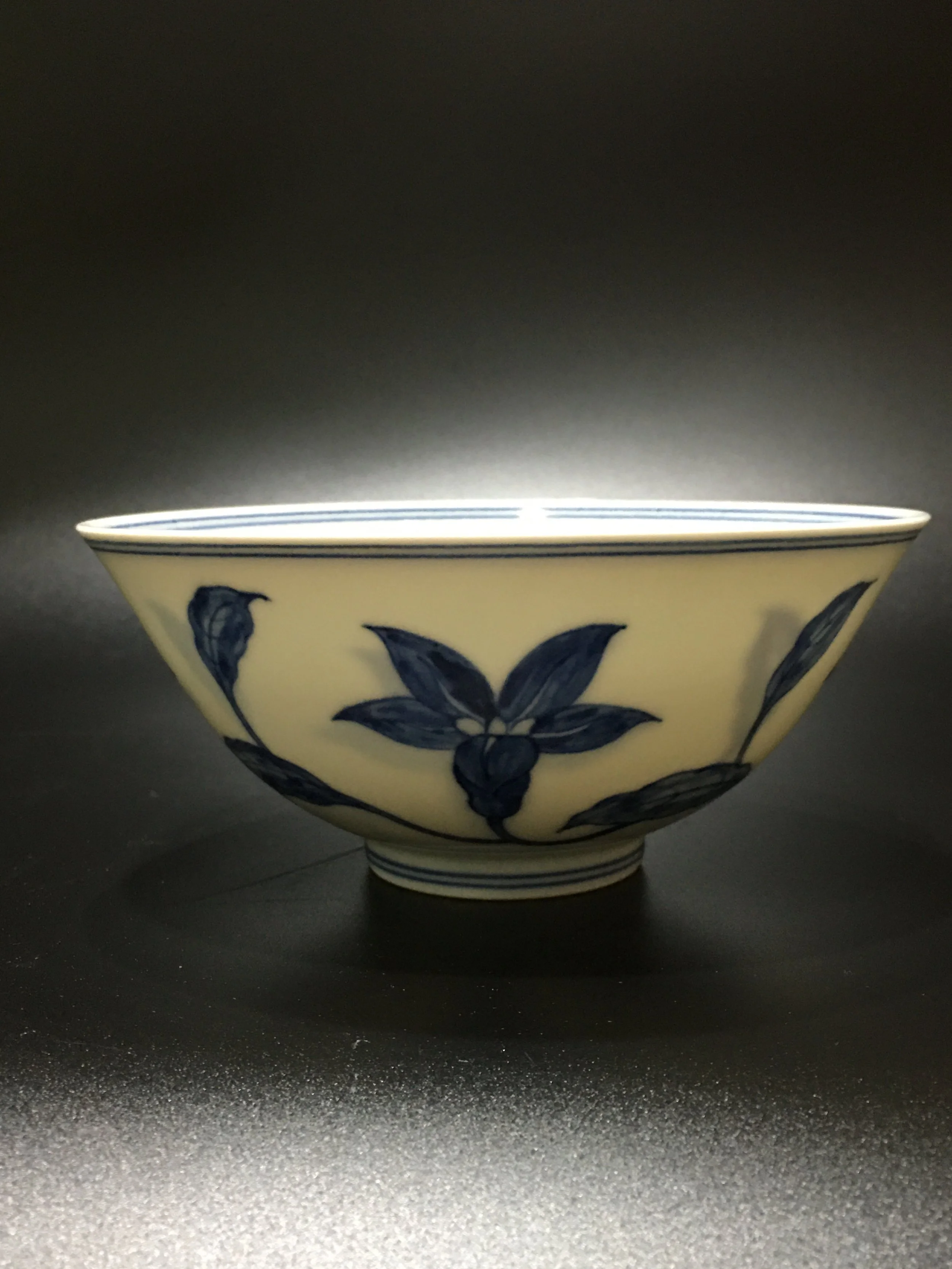 Image 1 of 7
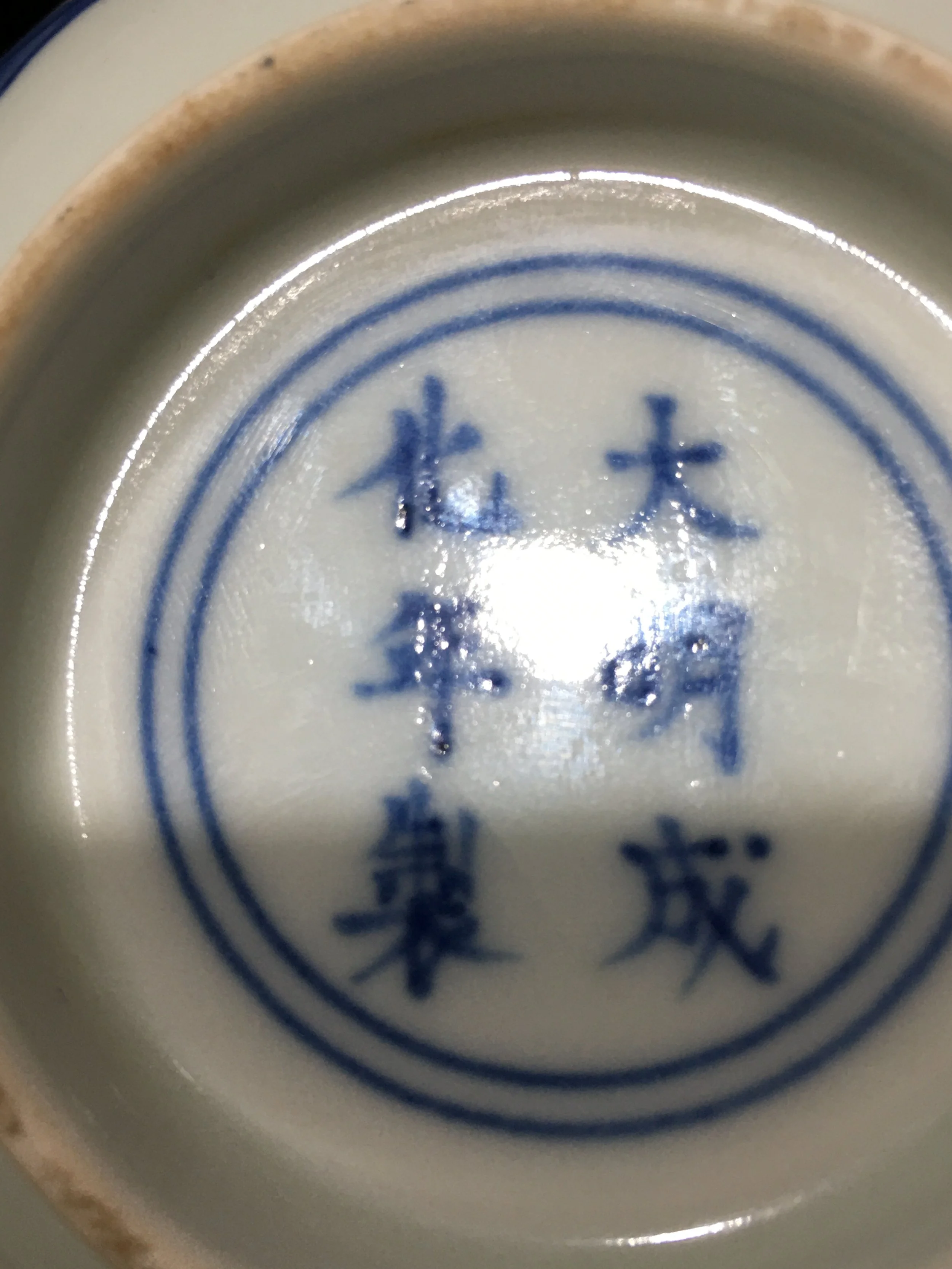 Image 2 of 7
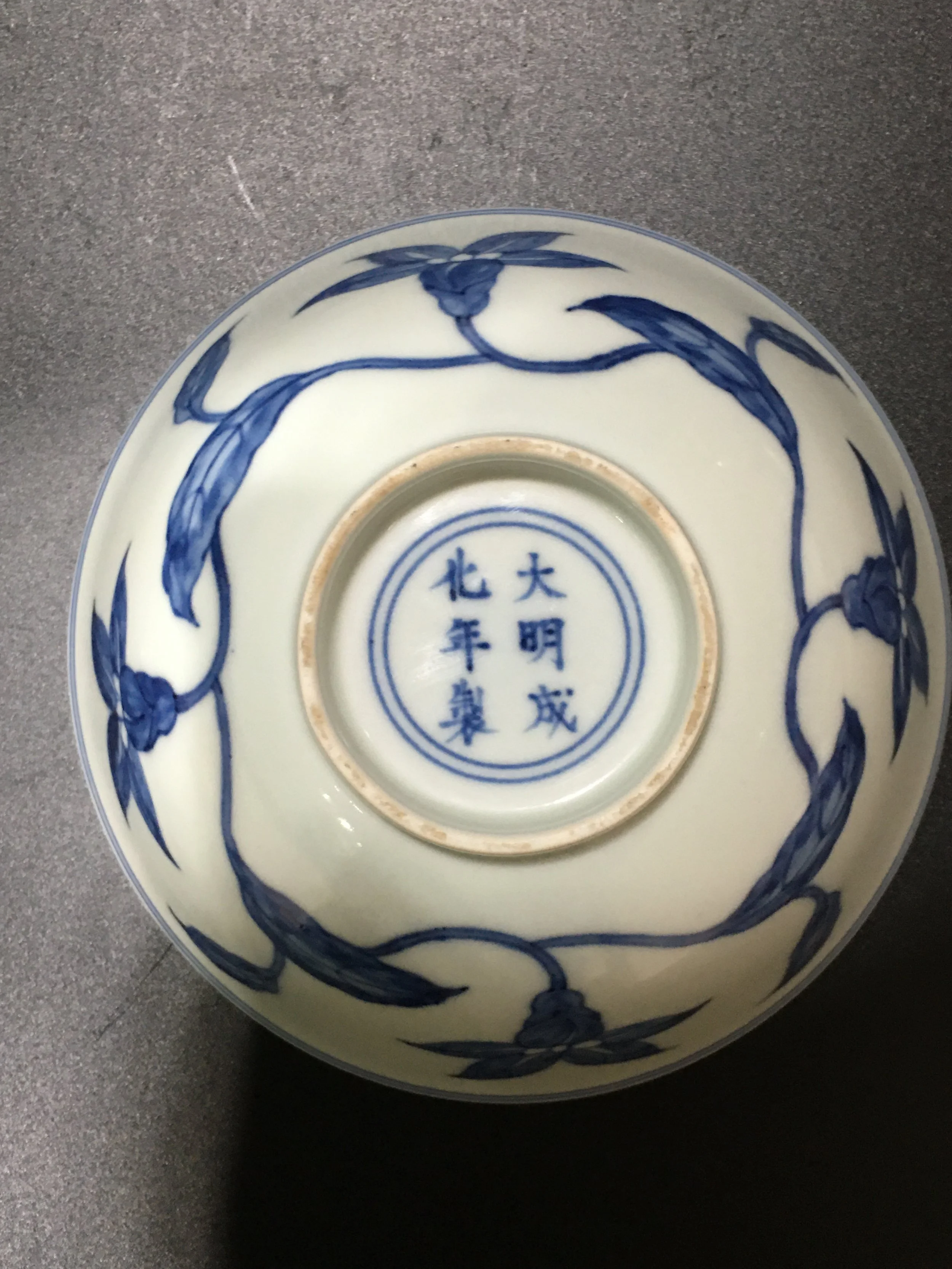 Image 3 of 7
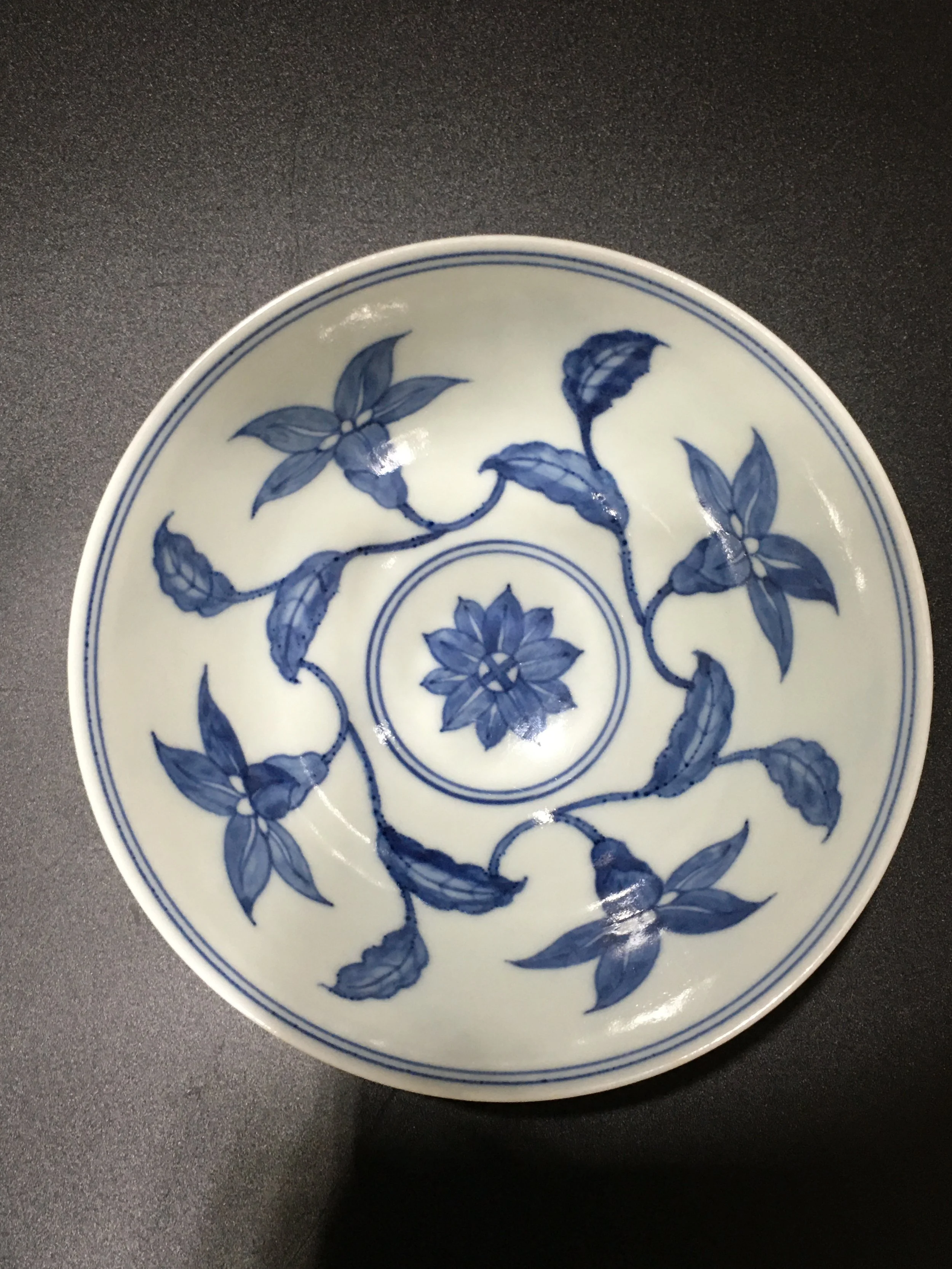 Image 4 of 7
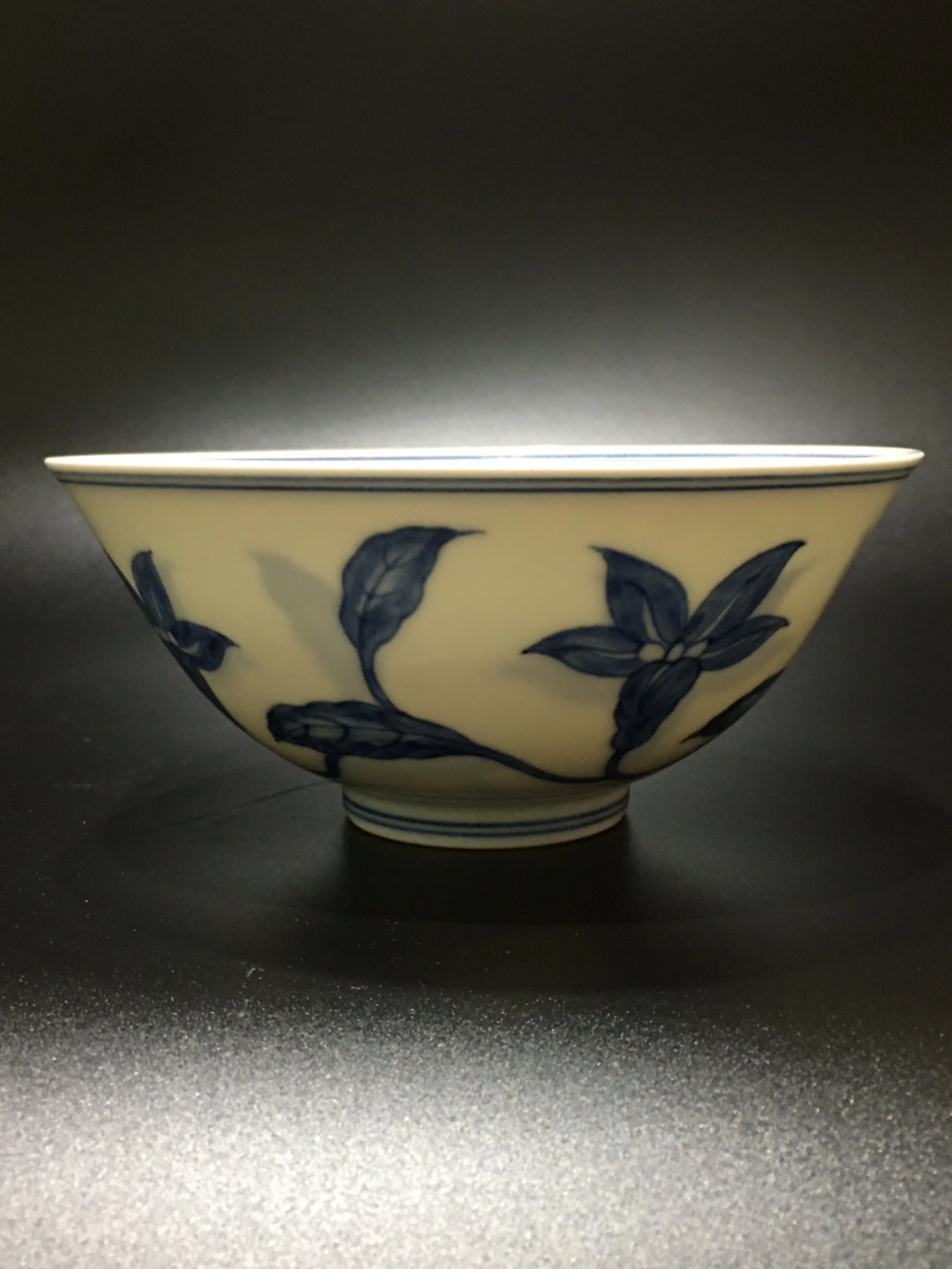 Image 5 of 7
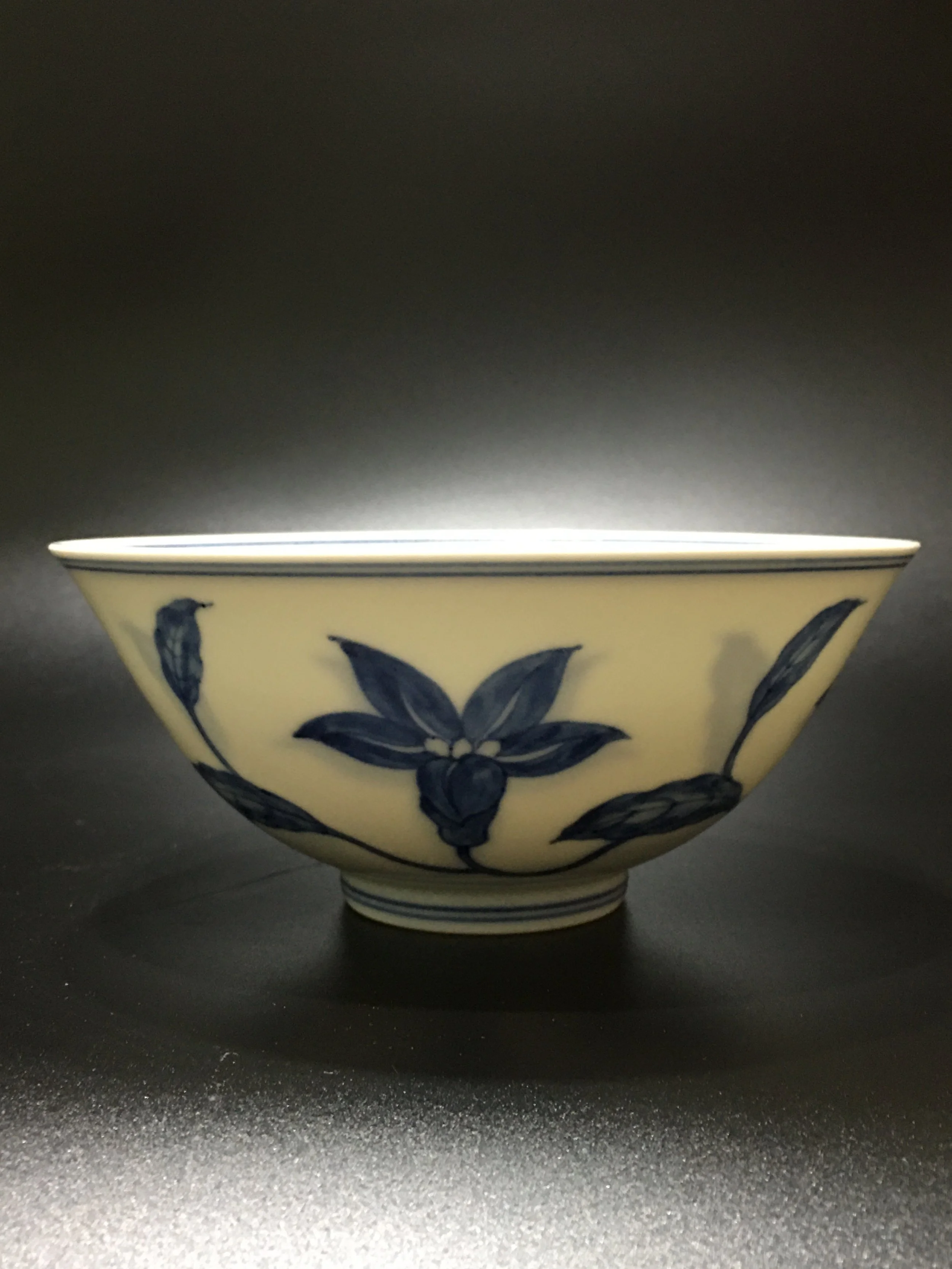 Image 6 of 7
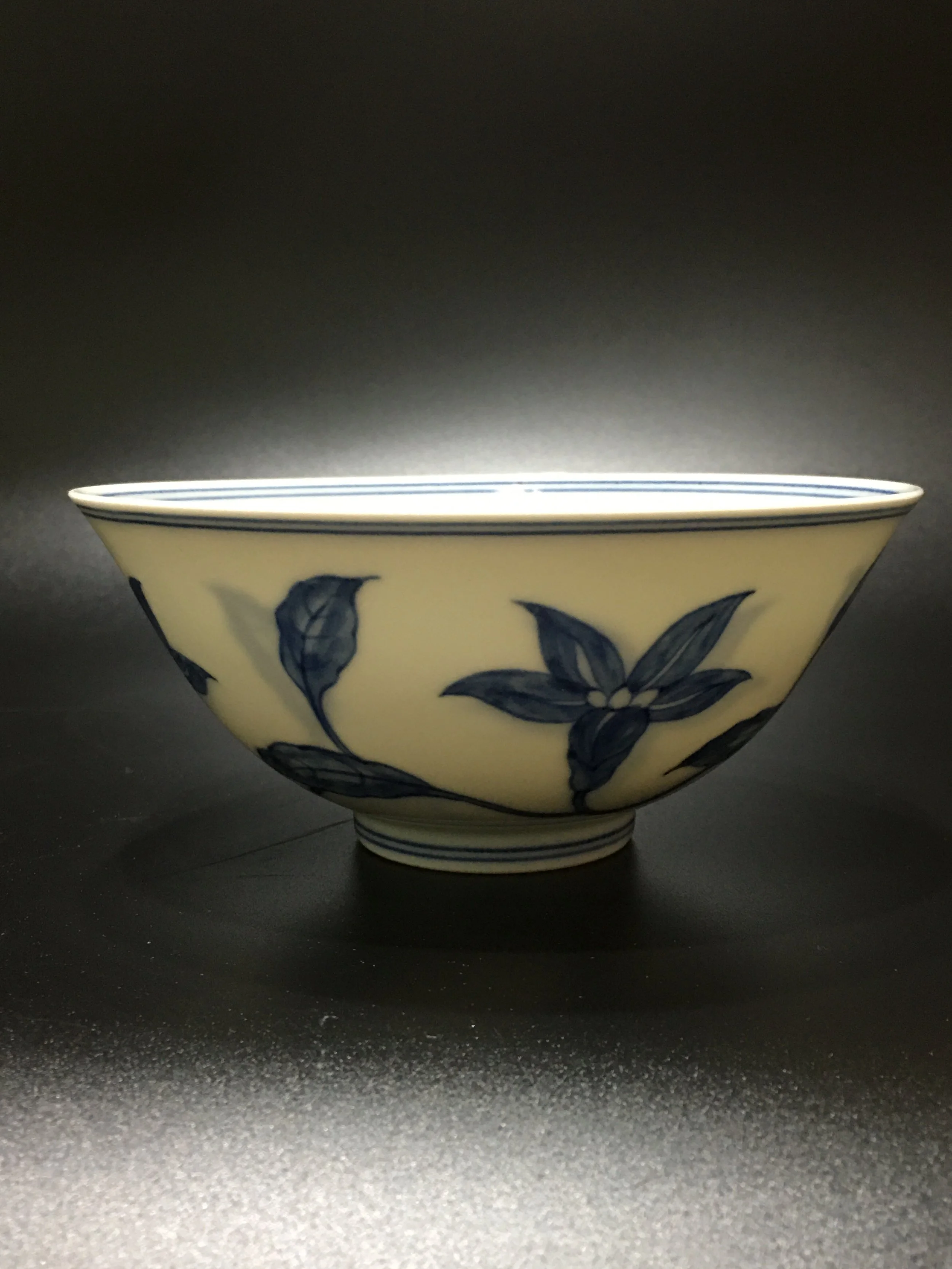 Image 7 of 7