Specifications: Height: 6 cm, Mouth Diameter: 8 cm, Base Diameter: 4.5 cm
Reign Mark: "Da Ming Cheng Hua Nian Zhi" (Made in the Chenghua Reign of the Great Ming) in six-character, two-line regular script within a double-square framed mark in underglaze blue on the base.
I. Form and Glaze: An Exemplar of Chenghua Official Kiln's Elegance
The cup follows the classic form of a Chenghua palace bowl, small and exquisite, fitting perfectly in the palm. It has a slightly flared rim, a full and rounded belly, and a tapered ring foot. Its lines are fluid and harmonious, showcasing the slender and graceful beauty characteristic of Chenghua porcelain. The body material is exceptionally fine and pure white, with thin, evenly potted walls that are slightly translucent when held to light. The glaze is rich, lustrous, and has a faint blueish-white tone, resembling mutton-fat jade—a perfect embodiment of the supreme craftsmanship of Chenghua official kiln glazes. A double blue-and-white line decorates the interior and exterior of the rim, defining its contour and enhancing its refinement.
II. Decoration and Technique: The Fusion of Sanskrit Mantra and Imperial Symbolism
The decoration on the exterior is divided into two distinct zones, demonstrating meticulous composition and profound meaning:
Primary Sanskrit Motif: The main body of the cup is inscribed with six Sanskrit characters (likely a mantra or seed syllables) in a neat, fluid calligraphic style. The Sanskrit is elegantly structured, with clear strokes arranged in a spacious layout. The blue coloring is typical of Chenghua's pingdeng qing cobalt, appearing soft, clear, and slightly grayish-blue, with a subtle pooling in denser areas. This tone, set against the warm glaze, creates a tranquil and mysterious religious ambiance. This decoration directly reflects the deep devotion of the Ming court, particularly during the Chenghua period, to Tibetan Buddhism.
Secondary Coiled Dragon Band: The lower section of the cup, near the foot, is encircled by eight simplified coiled dragon motifs. Though small, the dragons are vividly depicted with fierce heads and powerfully coiled bodies. This band, serving as a secondary border, enriches the visual hierarchy and imbues the object with clear imperial symbolism, achieving a skillful fusion of religious invocation and regal authority.
III. Reign Mark: The Key Standard for Period Identification
The center of the base bears the underglaze-blue, double-square framed mark containing the six-character Chenghua reign mark in regular script. Its calligraphic features are distinct: the characters appear somewhat delicate yet are upright in structure; the strokes are vigorous and powerful, with brush tips hidden at the start and deliberate pauses at the end; the cobalt has sunk deeply into the body. This mark is a standard format for late-Chenghua official ware and is one of the most authoritative benchmarks for authenticating artifacts from this period.
IV. Historical Context and Unique Value
During the reign of the Chenghua Emperor Zhu Jianshen, frequent Buddhist rituals at court led to the production of a batch of official porcelain adorned with Sanskrit or Tibetan script, intended for bestowal or ceremonial use. Such pieces are far rarer than those with common floral patterns and have always been regarded as treasures.
Artistic Originality: The combination of Sanskrit mantra with the traditional Chinese coiled dragon motif on a single vessel is extremely rare. It is not merely a fine craft but a three-dimensional, material witness to the cultural exchange between Han and Tibetan peoples, and the fusion of courtly religious belief and aesthetic taste in the Ming Dynasty.
Technical Representativeness: It concentrates all the pinnacle features of Chenghua porcelain: extraordinary thinness, jade-like glaze, subdued blue-and-white, precise composition, and a standard reign mark. It can be considered a "reference artifact" for Chenghua blue-and-white official ware.
Collectible Rarity: Chenghua Sanskrit porcelain with a clear reign mark and in excellent condition is exceptionally rare in both public and private collections. Its scholarly and historical value far surpasses that of ordinary Chenghua blue-and-white ware, granting it an exalted market status and making it a coveted category for collectors.
In summary, this Chenghua blue-and-white cup with Sanskrit inscription and coiled dragon design transcends the category of a mere imperial teacup. Like a seal凝固 in time, it integrates courtly piety, supreme ceramic artistry, and unique decorative creativity, silently narrating the spiritual world and artistic zenith of an era five centuries ago.
明成化青花梵文蟠龙纹杯
规格数据:高6厘米,口径8厘米,底足径4.5厘米
款识:杯底青花双框方章内书“大明成化年制”六字双行楷书款。
一、器型与釉质:成化官窑的秀雅典范
此杯器型为经典的成化宫碗式样,小巧玲珑,盈手可握。口沿微撇,弧腹圆润饱满,下承内敛的圈足,整体线条流畅舒展,比例协调,展现出成化瓷器特有的轻盈秀雅、亭亭玉立之美。胎质极为细腻洁白,胎体轻薄匀称,迎光透影。釉面肥厚莹润,白中微微泛青,如羊脂美玉,温润可人,是成化官窑顶级胎釉工艺的完美体现。口沿内外各饰一道青花弦纹,勾勒出清晰轮廓,更显精致。
二、纹饰与工艺:梵语真言与皇家威仪的融合
杯身外壁的装饰分为上下两部分,构图严谨,寓意深远:
主题梵文:杯腹主体以工整流畅的笔法书写六字梵文真言(或为种子字)。梵文字体结构优美,笔画清晰,排列疏朗有致。青花发色为典型的成化平等青料,呈色淡雅清丽,蓝中泛灰,浓处略有沉滞感,与温润的釉面相映成趣,营造出一种静谧神秘的宗教氛围。此装饰直接反映了明代宫廷,特别是成化时期对藏传佛教的笃信与推崇。
辅助蟠龙纹:杯身下部近足处,环饰八组精简的蟠龙纹。龙纹虽小,但勾画生动,龙首威猛,龙身蟠曲有力。此纹样作为辅助边饰,既丰富了视觉层次,又赋予了器物鲜明的皇家属性,形成了宗教祈福与皇权象征的巧妙结合。
三、款识:时代断代的关键标准
杯底中心落青花双框方章款,内书“大明成化年制”六字楷书。其笔法特征鲜明:字体略显柔弱,但架构端正;笔画苍劲有力,起笔藏锋,收笔顿挫;青花色料下沉,深入胎骨。此款识为成化晚期官窑的标准格式,是鉴定该时期器物最具权威性的依据之一。
四、历史溯源与独特价值
成化皇帝朱见深在位时期,宫廷佛事活动频繁,故烧造了一批以梵文、藏文为饰的官窑瓷器,用于赏赐或法事。此类器物数量远少于常见的花卉纹饰,历来被视为珍品。
艺术独创性:本品将梵文真言与汉族传统的蟠龙纹共绘一器,极为罕见。它不仅是精美的工艺品,更是明代汉藏文化交流、宫廷宗教信仰与审美趣味交融的立体实物见证。
工艺代表性:它集中展现了成化瓷器的所有巅峰特征:超凡的薄胎、如玉的釉质、淡雅的青花、严谨的构图以及标准的款识,堪称成化青花官窑的“标准器”。
收藏稀缺性:带有明确纪年款且品相完好的成化梵文瓷器,在公私收藏中均属凤毛麟角。其学术价值与历史价值远高于一般的成化青花器,市场地位崇高,是收藏家梦寐以求的品类。
总而言之,这只成化青花梵文蟠龙纹杯,超越了普通御用茶盏的范畴。它如同一枚凝固时间的印章,集宫廷的虔诚信仰、顶尖的陶瓷工艺、独特的纹饰创意于一身,静默地诉说着五百年前那个时代的精神世界与艺术巅峰。
Specifications: Height: 6 cm, Mouth Diameter: 8 cm, Base Diameter: 4.5 cm
Reign Mark: "Da Ming Cheng Hua Nian Zhi" (Made in the Chenghua Reign of the Great Ming) in six-character, two-line regular script within a double-square framed mark in underglaze blue on the base.
I. Form and Glaze: An Exemplar of Chenghua Official Kiln's Elegance
The cup follows the classic form of a Chenghua palace bowl, small and exquisite, fitting perfectly in the palm. It has a slightly flared rim, a full and rounded belly, and a tapered ring foot. Its lines are fluid and harmonious, showcasing the slender and graceful beauty characteristic of Chenghua porcelain. The body material is exceptionally fine and pure white, with thin, evenly potted walls that are slightly translucent when held to light. The glaze is rich, lustrous, and has a faint blueish-white tone, resembling mutton-fat jade—a perfect embodiment of the supreme craftsmanship of Chenghua official kiln glazes. A double blue-and-white line decorates the interior and exterior of the rim, defining its contour and enhancing its refinement.
II. Decoration and Technique: The Fusion of Sanskrit Mantra and Imperial Symbolism
The decoration on the exterior is divided into two distinct zones, demonstrating meticulous composition and profound meaning:
Primary Sanskrit Motif: The main body of the cup is inscribed with six Sanskrit characters (likely a mantra or seed syllables) in a neat, fluid calligraphic style. The Sanskrit is elegantly structured, with clear strokes arranged in a spacious layout. The blue coloring is typical of Chenghua's pingdeng qing cobalt, appearing soft, clear, and slightly grayish-blue, with a subtle pooling in denser areas. This tone, set against the warm glaze, creates a tranquil and mysterious religious ambiance. This decoration directly reflects the deep devotion of the Ming court, particularly during the Chenghua period, to Tibetan Buddhism.
Secondary Coiled Dragon Band: The lower section of the cup, near the foot, is encircled by eight simplified coiled dragon motifs. Though small, the dragons are vividly depicted with fierce heads and powerfully coiled bodies. This band, serving as a secondary border, enriches the visual hierarchy and imbues the object with clear imperial symbolism, achieving a skillful fusion of religious invocation and regal authority.
III. Reign Mark: The Key Standard for Period Identification
The center of the base bears the underglaze-blue, double-square framed mark containing the six-character Chenghua reign mark in regular script. Its calligraphic features are distinct: the characters appear somewhat delicate yet are upright in structure; the strokes are vigorous and powerful, with brush tips hidden at the start and deliberate pauses at the end; the cobalt has sunk deeply into the body. This mark is a standard format for late-Chenghua official ware and is one of the most authoritative benchmarks for authenticating artifacts from this period.
IV. Historical Context and Unique Value
During the reign of the Chenghua Emperor Zhu Jianshen, frequent Buddhist rituals at court led to the production of a batch of official porcelain adorned with Sanskrit or Tibetan script, intended for bestowal or ceremonial use. Such pieces are far rarer than those with common floral patterns and have always been regarded as treasures.
Artistic Originality: The combination of Sanskrit mantra with the traditional Chinese coiled dragon motif on a single vessel is extremely rare. It is not merely a fine craft but a three-dimensional, material witness to the cultural exchange between Han and Tibetan peoples, and the fusion of courtly religious belief and aesthetic taste in the Ming Dynasty.
Technical Representativeness: It concentrates all the pinnacle features of Chenghua porcelain: extraordinary thinness, jade-like glaze, subdued blue-and-white, precise composition, and a standard reign mark. It can be considered a "reference artifact" for Chenghua blue-and-white official ware.
Collectible Rarity: Chenghua Sanskrit porcelain with a clear reign mark and in excellent condition is exceptionally rare in both public and private collections. Its scholarly and historical value far surpasses that of ordinary Chenghua blue-and-white ware, granting it an exalted market status and making it a coveted category for collectors.
In summary, this Chenghua blue-and-white cup with Sanskrit inscription and coiled dragon design transcends the category of a mere imperial teacup. Like a seal凝固 in time, it integrates courtly piety, supreme ceramic artistry, and unique decorative creativity, silently narrating the spiritual world and artistic zenith of an era five centuries ago.
明成化青花梵文蟠龙纹杯
规格数据:高6厘米,口径8厘米,底足径4.5厘米
款识:杯底青花双框方章内书“大明成化年制”六字双行楷书款。
一、器型与釉质:成化官窑的秀雅典范
此杯器型为经典的成化宫碗式样,小巧玲珑,盈手可握。口沿微撇,弧腹圆润饱满,下承内敛的圈足,整体线条流畅舒展,比例协调,展现出成化瓷器特有的轻盈秀雅、亭亭玉立之美。胎质极为细腻洁白,胎体轻薄匀称,迎光透影。釉面肥厚莹润,白中微微泛青,如羊脂美玉,温润可人,是成化官窑顶级胎釉工艺的完美体现。口沿内外各饰一道青花弦纹,勾勒出清晰轮廓,更显精致。
二、纹饰与工艺:梵语真言与皇家威仪的融合
杯身外壁的装饰分为上下两部分,构图严谨,寓意深远:
主题梵文:杯腹主体以工整流畅的笔法书写六字梵文真言(或为种子字)。梵文字体结构优美,笔画清晰,排列疏朗有致。青花发色为典型的成化平等青料,呈色淡雅清丽,蓝中泛灰,浓处略有沉滞感,与温润的釉面相映成趣,营造出一种静谧神秘的宗教氛围。此装饰直接反映了明代宫廷,特别是成化时期对藏传佛教的笃信与推崇。
辅助蟠龙纹:杯身下部近足处,环饰八组精简的蟠龙纹。龙纹虽小,但勾画生动,龙首威猛,龙身蟠曲有力。此纹样作为辅助边饰,既丰富了视觉层次,又赋予了器物鲜明的皇家属性,形成了宗教祈福与皇权象征的巧妙结合。
三、款识:时代断代的关键标准
杯底中心落青花双框方章款,内书“大明成化年制”六字楷书。其笔法特征鲜明:字体略显柔弱,但架构端正;笔画苍劲有力,起笔藏锋,收笔顿挫;青花色料下沉,深入胎骨。此款识为成化晚期官窑的标准格式,是鉴定该时期器物最具权威性的依据之一。
四、历史溯源与独特价值
成化皇帝朱见深在位时期,宫廷佛事活动频繁,故烧造了一批以梵文、藏文为饰的官窑瓷器,用于赏赐或法事。此类器物数量远少于常见的花卉纹饰,历来被视为珍品。
艺术独创性:本品将梵文真言与汉族传统的蟠龙纹共绘一器,极为罕见。它不仅是精美的工艺品,更是明代汉藏文化交流、宫廷宗教信仰与审美趣味交融的立体实物见证。
工艺代表性:它集中展现了成化瓷器的所有巅峰特征:超凡的薄胎、如玉的釉质、淡雅的青花、严谨的构图以及标准的款识,堪称成化青花官窑的“标准器”。
收藏稀缺性:带有明确纪年款且品相完好的成化梵文瓷器,在公私收藏中均属凤毛麟角。其学术价值与历史价值远高于一般的成化青花器,市场地位崇高,是收藏家梦寐以求的品类。
总而言之,这只成化青花梵文蟠龙纹杯,超越了普通御用茶盏的范畴。它如同一枚凝固时间的印章,集宫廷的虔诚信仰、顶尖的陶瓷工艺、独特的纹饰创意于一身,静默地诉说着五百年前那个时代的精神世界与艺术巅峰。
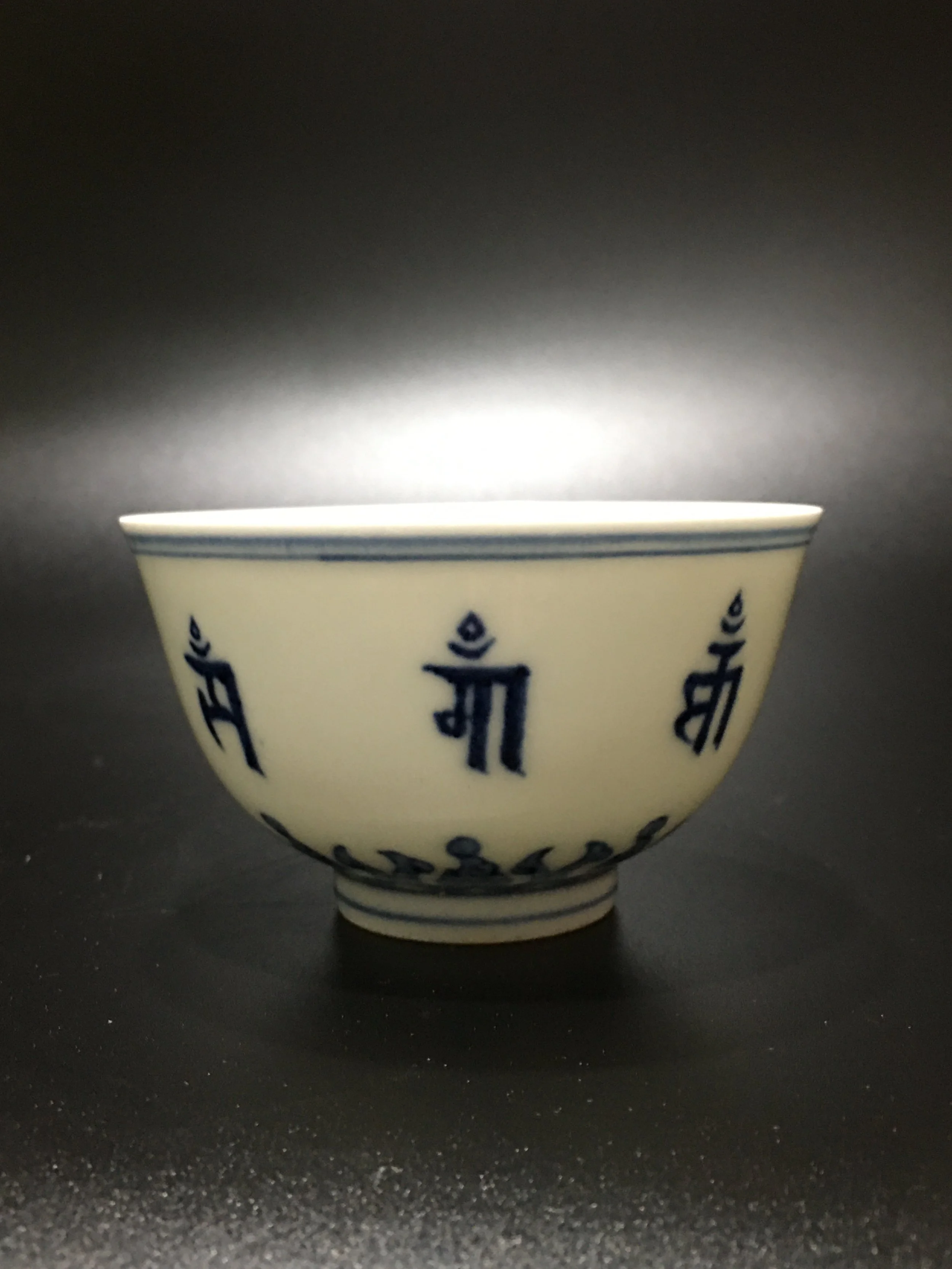 Image 1 of 12
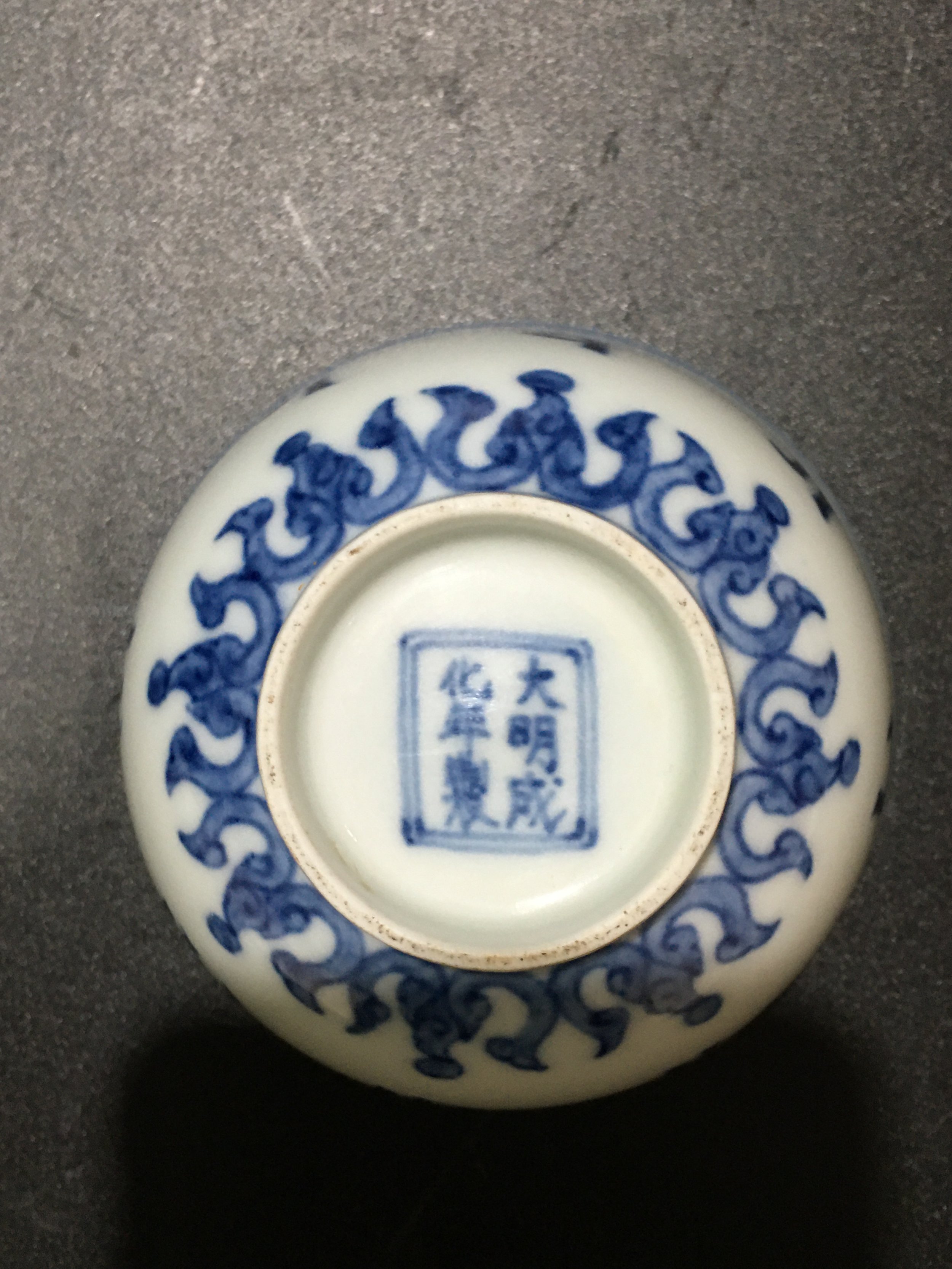 Image 2 of 12
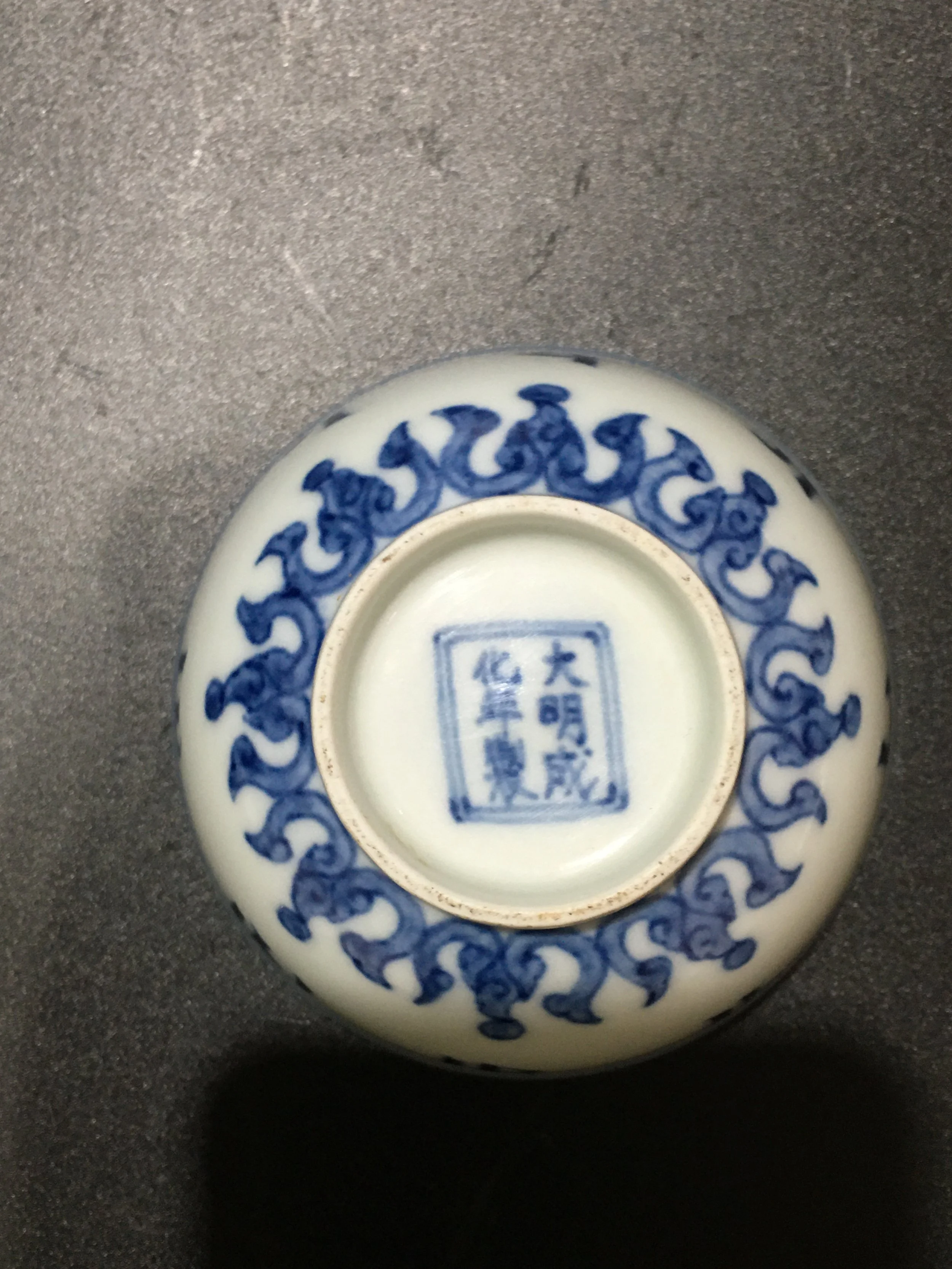 Image 3 of 12
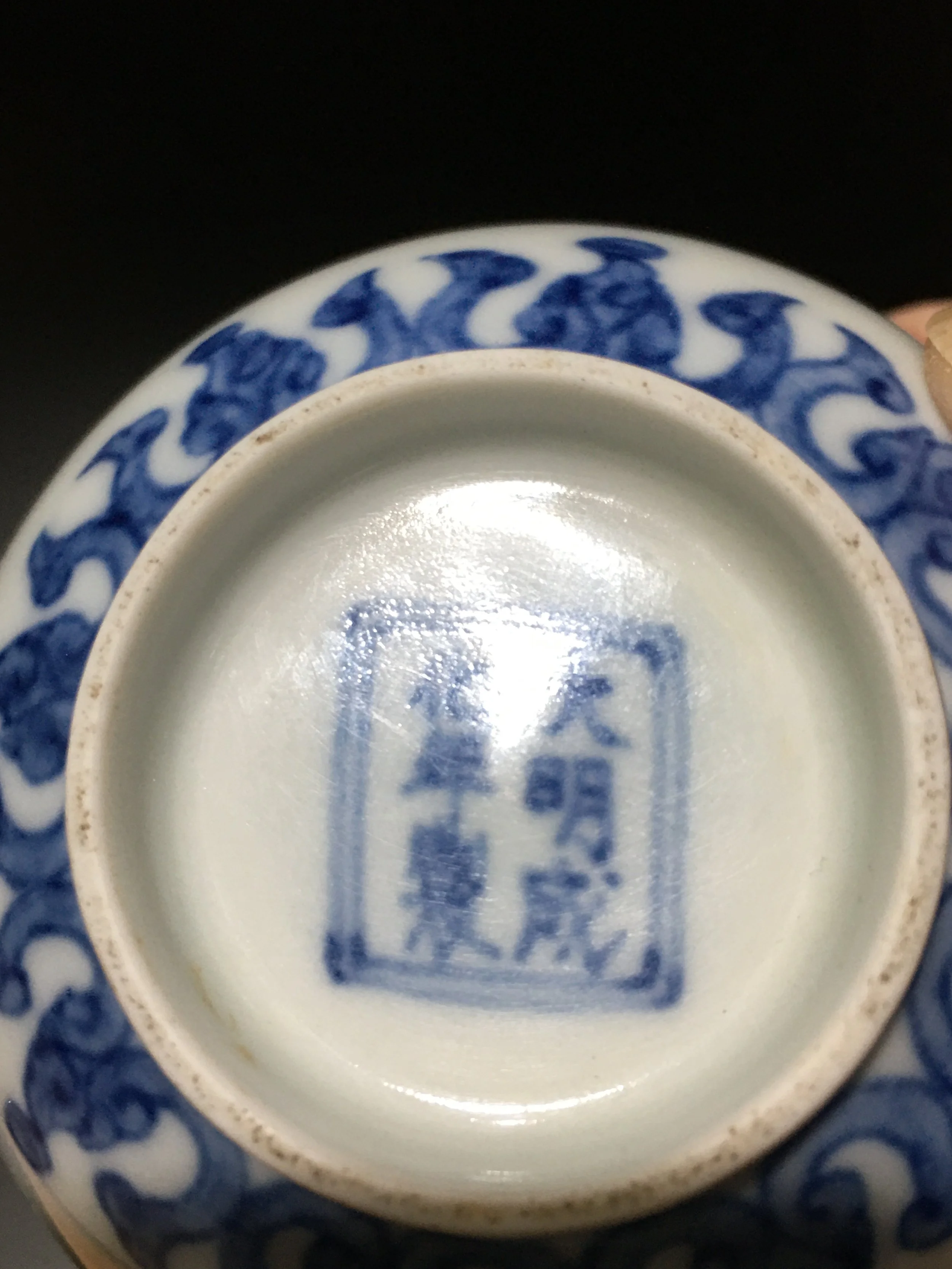 Image 4 of 12
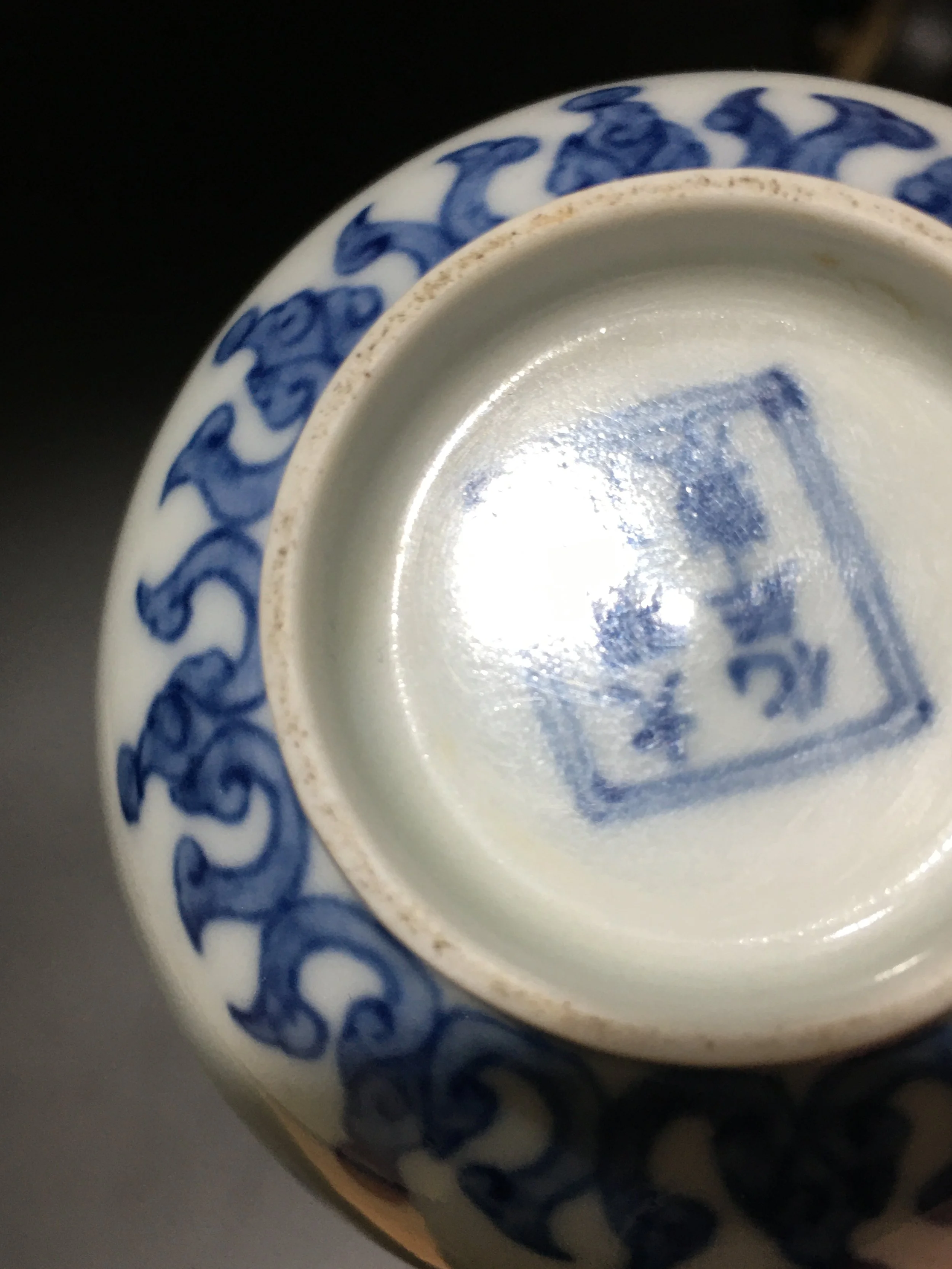 Image 5 of 12
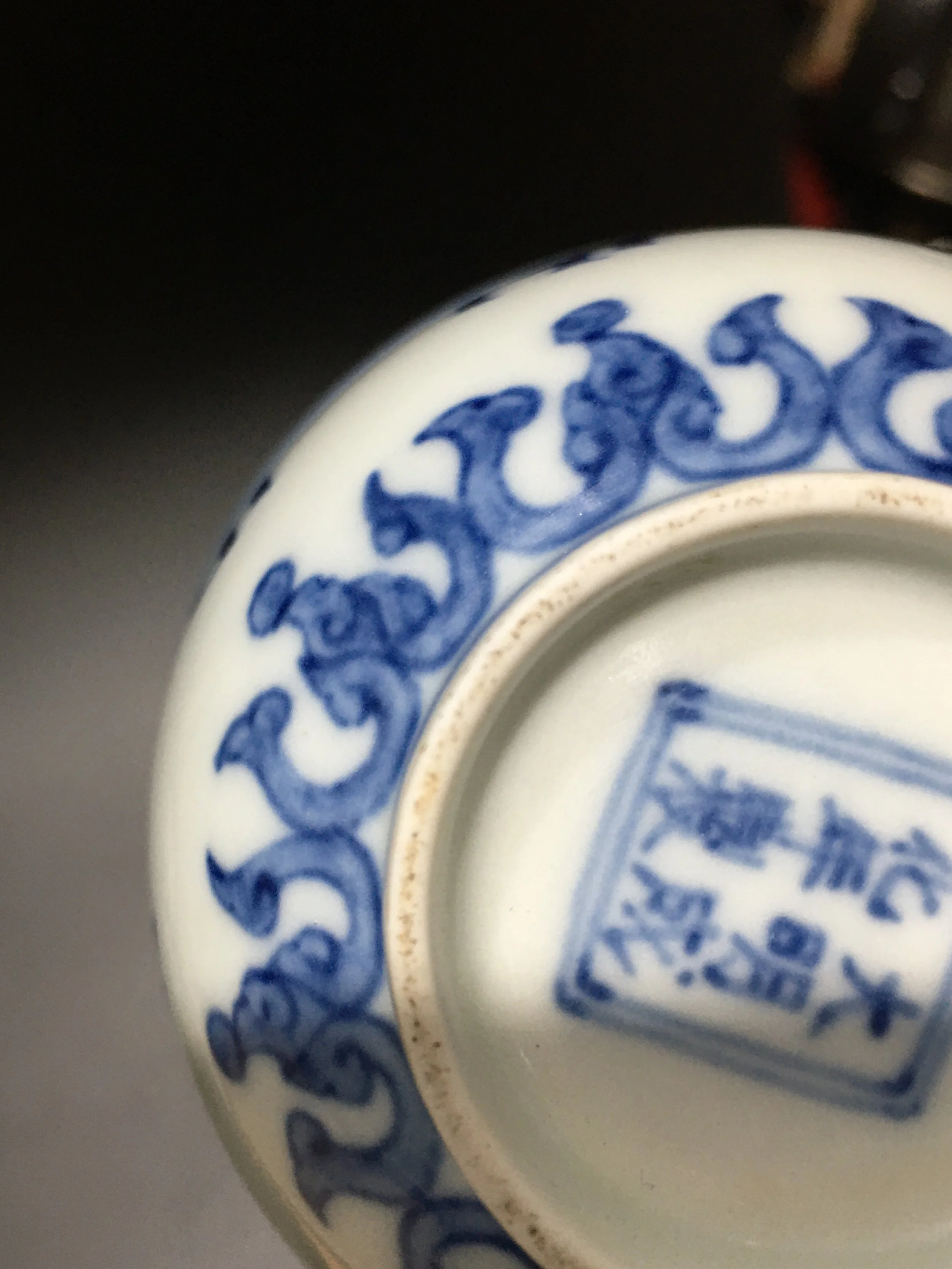 Image 6 of 12
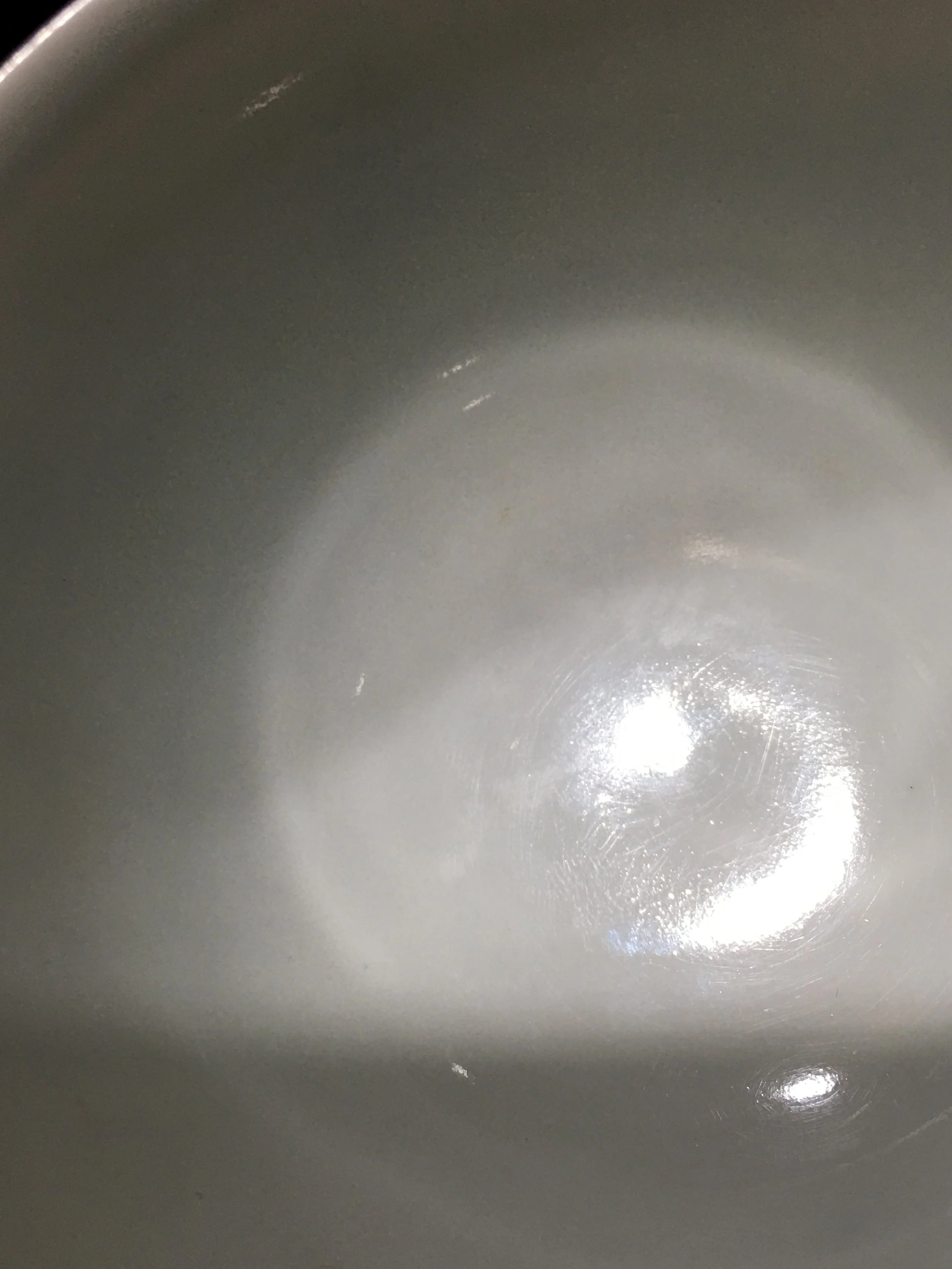 Image 7 of 12
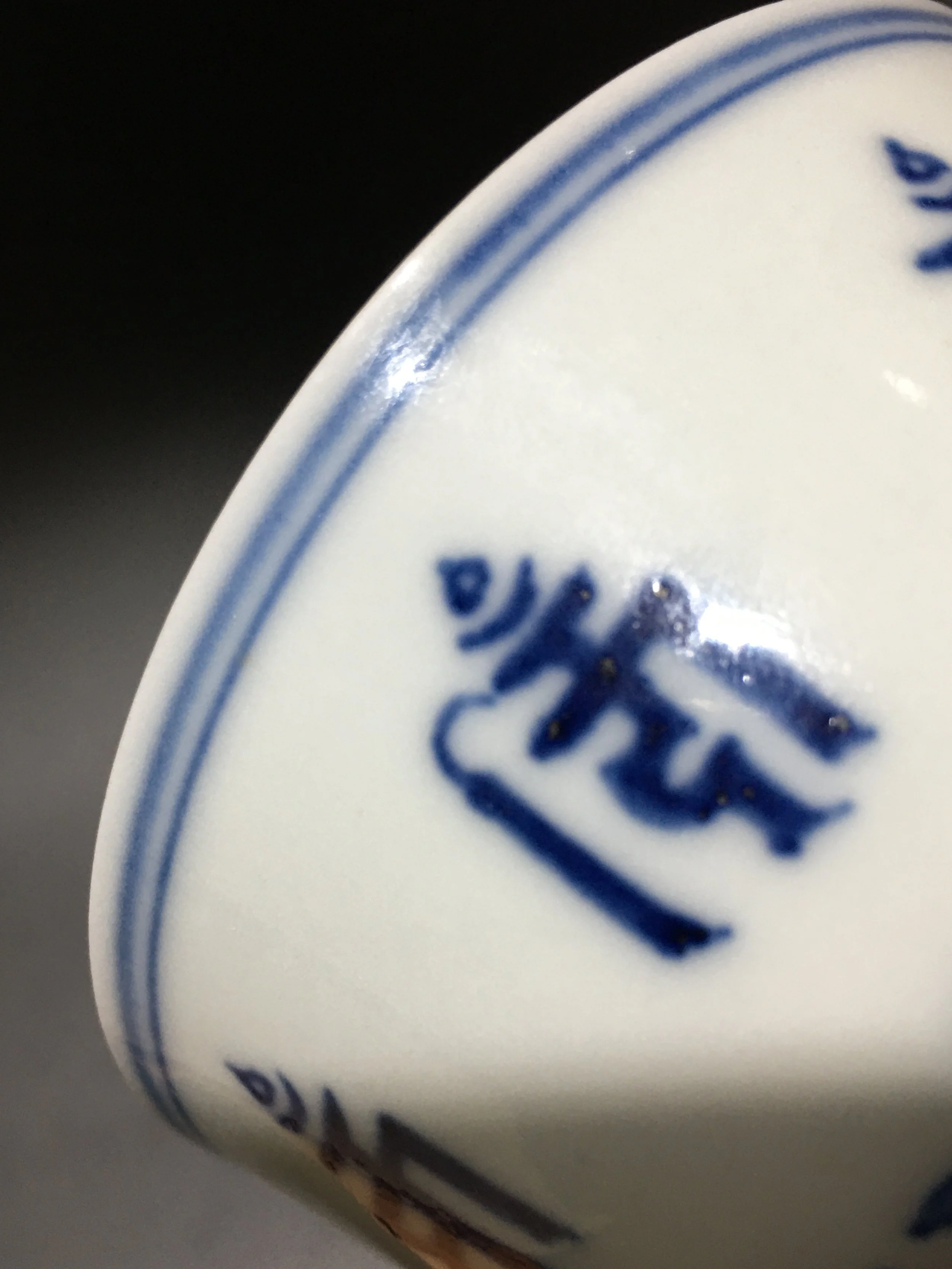 Image 8 of 12
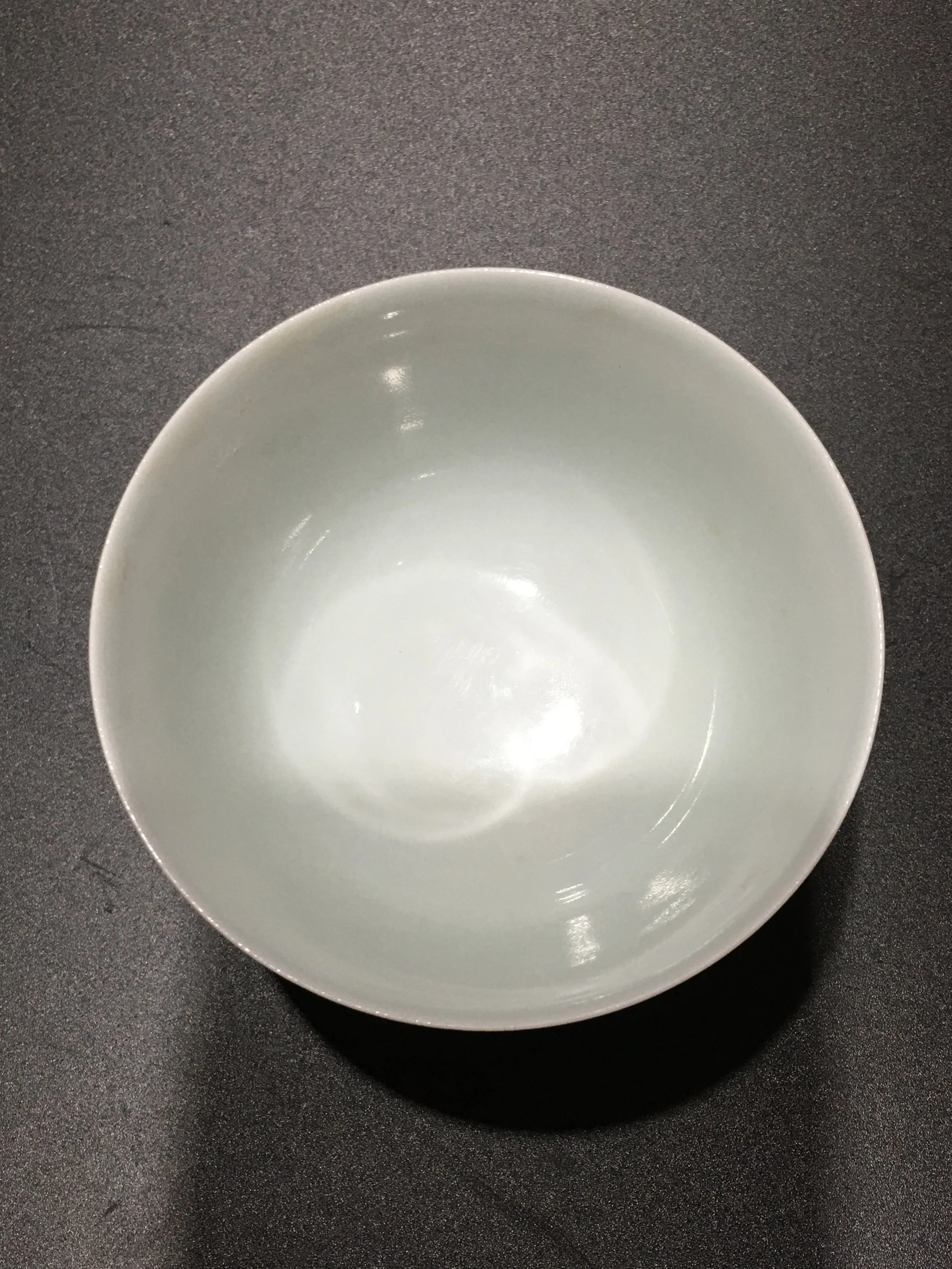 Image 9 of 12
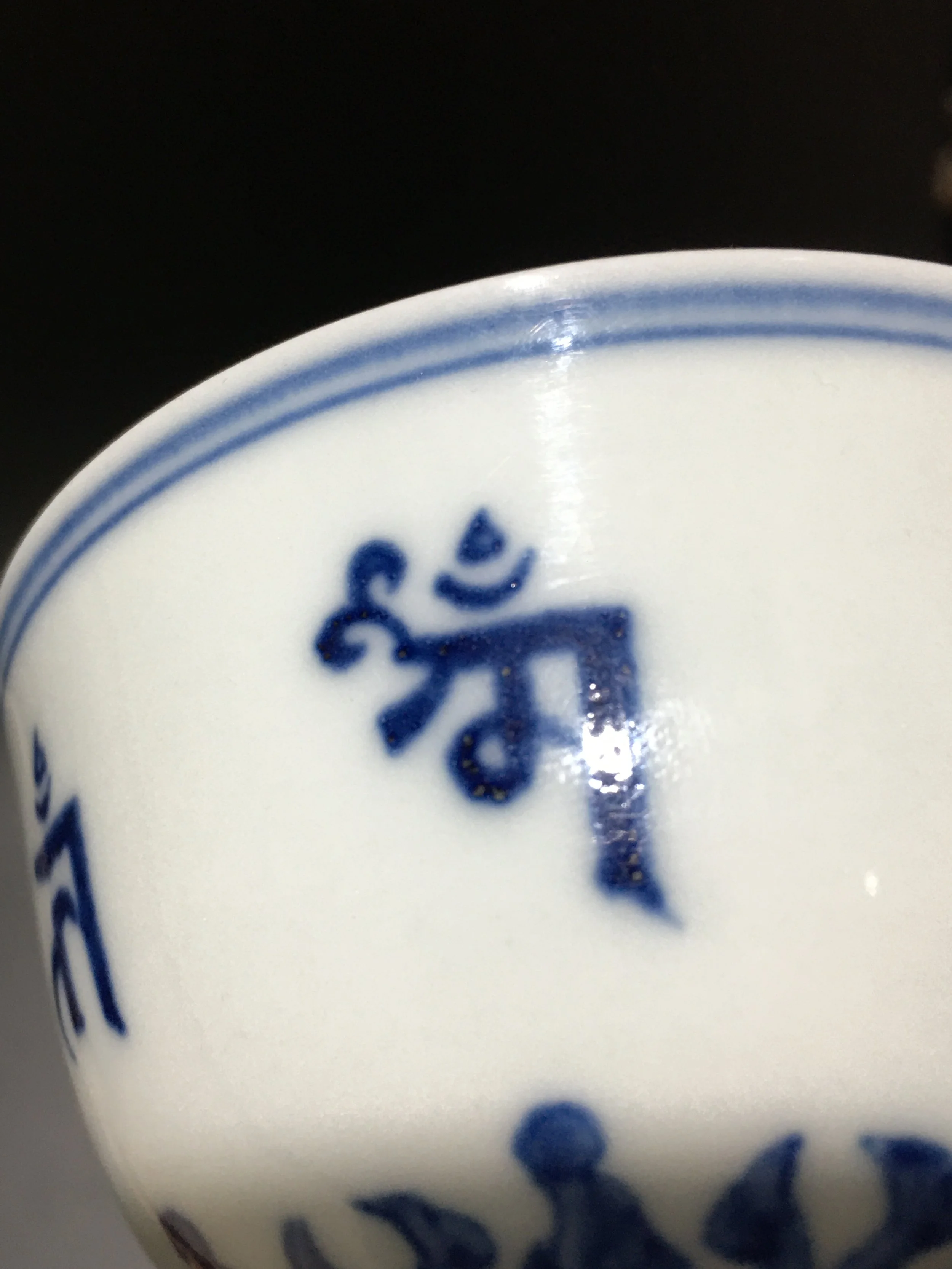 Image 10 of 12
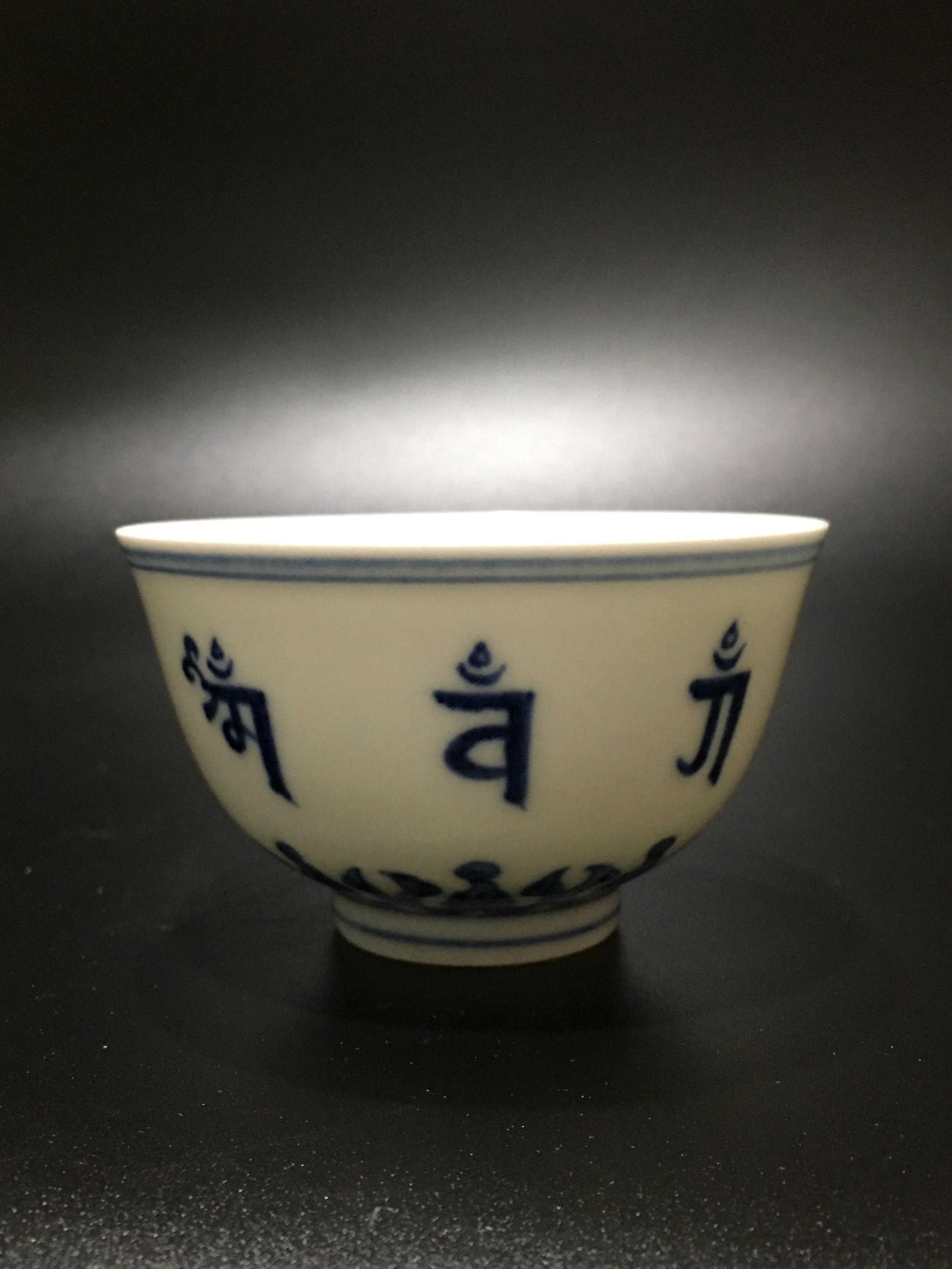 Image 11 of 12
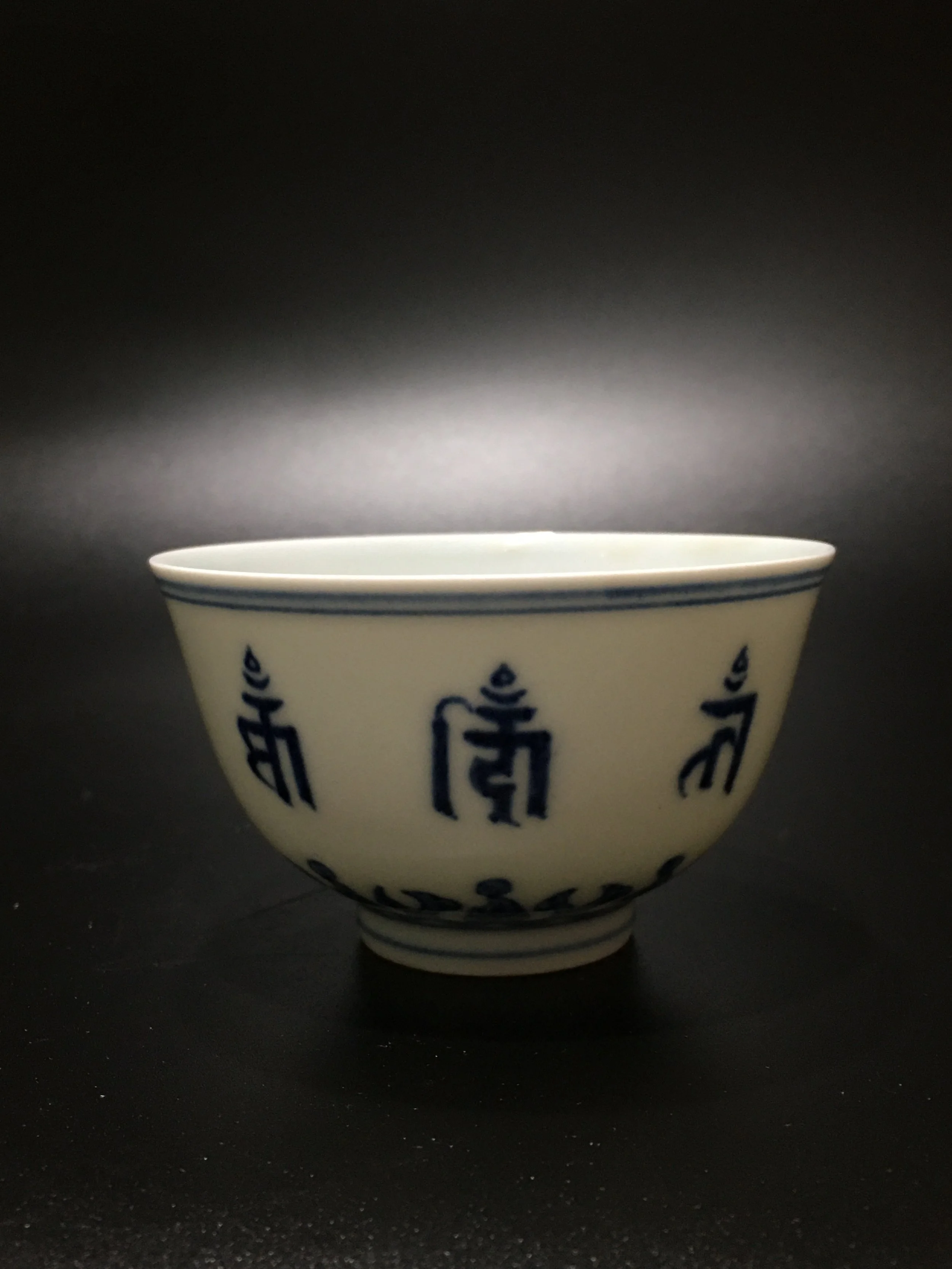 Image 12 of 12