Based on the clues you provided—"28cm height, 8cm base side length, Ming Wanli period, Blue-and-White Dragon Decoration, Double Phoenixes, and Animal-Mask Handles"—while no exact matching extant artifact image was found, I have compiled information according to the typical characteristics of official kiln porcelain from the Ming Wanli period to construct a highly representative introduction to such an object.
Overview of Core Features
Feature DimensionSpecific DescriptionObject NameMing Wanli Blue-and-White Square Vase with "Dragon amidst Flowers" Pattern, Double Phoenixes, and Animal-Mask Ring HandlesHistorical PeriodMing Dynasty, Wanli Reign (1573-1620 AD)DimensionsHeight approx. 28 cm, Base side length approx. 8 cmBasic FormSquare shape, flared mouth, constricted neck, folded shoulders, straight sides, square foot slightly flared.Core DecorationMain body features a "dragon amidst flowers" pattern; shoulders decorated with phoenixes; two sides applied with animal-mask handles holding rings.Blue-and-White HueTypical "Mohammedan blue" pigment, producing a rich, vivid color with purplish tones, blue with a greyish tint.MarkThe base center likely bears a six-character underglaze blue mark in regular script within a double circle: "Da Ming Wanli Nian Zhi" (Made in the Great Ming Wanli Reign).
Detailed Analysis: Period Style and Artistic Interpretation
This object embodies the quintessential style of Wanli period porcelain. The following is a detailed interpretation of its various aspects:
1. Robust Square Form and Manufacturing Technique
Stylistic Features: Forming square ware is significantly more challenging than round ware, requiring the joining of clay slabs, which makes it highly prone to warping or cracking during firing. This vase, standing at 28 cm, is moderately sized with upright, vigorous lines and clear, sharp edges, demonstrating the advanced throwing skills of Jingdezhen kiln artisans during the Wanli period.
Design Intent: The square form originates from ancient bronze vessels, conveying solemnity and grandeur. It was typically used as palace display ware or ritual sacrificial vessels, highlighting imperial authority.
2. Intricate and Ornate Decorative Motifs
Main Motif—Dragon amidst Flowers: The four main sides of the vase body are painted with dragons winding through scrolling lotus or peony branches. Wanli period dragon motifs have distinct characteristics: often a "hog-snout dragon" (with a protruding upper lip), upward-bristling mane, robust body, windmill-like claws, and a fierce, powerful posture. The "dragon amidst flowers" motif adds opulence and liveliness to the inherent majesty.
Secondary Motifs—Double Phoenixes and Animal-Mask Handles:
Double Phoenixes: Often decorate the shoulder or neck of the vase, forming the classic auspicious theme of "dragon and phoenix bringing prosperity" with the main dragon motif.
Animal-Mask Handles (Fushou): The beast masks holding rings applied to both sides of the vase are direct imitations of Shang and Zhou dynasty bronze vessel decorations. They reflect the Wanli period's antiquarian taste and pursuit of three-dimensional adornment, lending an archaic, bronzeware-like aesthetic to the porcelain.
Decorative Style: The overall layout is dense and饱满 (full), leaving little blank space. This "packed to the brim" decorative style is a hallmark of Wanli porcelain, reflecting the aesthetic tendencies of society at the time.
3. Distinctive Period Characteristics in Pigment and Glaze
Blue-and-White Hue: Uses imported "Mohammedan blue" (huiqing) mixed with domestic cobalt, resulting in a rich, vivid color with purplish tones, a blue with a greyish tint that is eye-catching and layered—the signature tone of Wanli blue-and-white.
Glaze Surface and Body: The glaze is typically a bluish-white, lustrous and "fat," but often exhibits an undulating "wavy glaze" surface. The body is thick and heavy, feeling substantial in hand. The unglazed foot rim often shows a somewhat coarse texture with "yellow seepage" (huangyi) or "fiery red" (huoshi hong) spots.
4. Mark and Historical Positioning
The base mark reads "Da Ming Wanli Nian Zhi" in six characters in two columns of regular script. The calligraphy is neat, upright, with strong, deliberate brushstrokes. Early Wanli marks show considerable skill, while later ones can appear more careless.
This vase combines (1) the highly difficult square form, (2) typical Wanli dragon motifs and intricate decoration, (3) the signature blue-and-white hue, and (4) archaic-inspired animal-mask elements. It represents the comprehensive production capabilities of the official kilns at the height of the Wanli period. It was not ordinary utilitarian ware but a higher-grade palace decorative treasure.
Collecting and Appreciation Key Points
Such objects belong to an important category of Ming official kiln ware in the collecting market. Authentication requires a comprehensive examination of:
Form and Strength: Whether the square shape is regular and the lines are sharp.
Blue-and-White Hue: Whether it possesses the typical rich, purplish tone of the Wanli period.
Decoration and Brushwork: Whether the dragon motif exhibits period characteristics, if the painting style is bold and powerful, and if the layout is full.
Body and Glaze Details: Whether the glaze texture, foot-rim finishing, and fiery red spots appear natural.
Mark Style: Whether the calligraphy conforms to the characteristics of Wanli official kiln marks.
I hope this integrated description based on period characteristics helps you deeply envision the complete artistic picture of this square vase. If you have further interest in other types of Wanli porcelain (such as wucai or doucai) or specific authentication details, I can provide more related information.
根据您提供的“高28cm、底足边长8cm、明万历青花龙纹双凤辅首四方瓶”这一线索,虽然未能找到完全相同的传世实物图片,但结合明代万历时期官窑瓷器的典型特征,我为您整合资料,构建出这样一件具有高度代表性的器物介绍。
器物核心特征概览
特征维度具体描述器物名称明万历 青花穿花龙纹双凤辅首衔环四方瓶历史年代明万历时期(1573-1620年)器物尺寸高约28厘米,底足边长约8厘米基本器型四方形制,撇口,束颈,折肩,直腹,方足微外撇。核心纹饰主体为“穿花龙纹”,双肩饰凤纹,两侧贴塑辅首衔环。青花发色典型的“回青”料,发色浓艳泛紫,蓝中带灰。款识底足中心应有青花双圈“大明万历年制”六字楷书款。
详述:时代风格与艺术解析
这件器物集中体现了万历朝瓷器的典型风貌,以下是对其各个方面的深度解读:
1. 刚健的四方器型与成型工艺
2. 繁缛华丽的纹饰组合
3. 时代印记鲜明的青料与釉面
4. 款识与历史定位
收藏与鉴藏要点
此类器物在收藏市场中属于明代官窑的重要品类。鉴定时需综合考察:
器型力度:方器是否周正,线条是否硬朗。
青花发色:是否具备万历时期浓艳泛紫的典型色调。
纹饰笔法:龙纹是否具有时代特征,画风是否率意有力,布局是否饱满。
胎釉细节:釉面质感、底足修胎工艺及火石红现象是否自然。
款识风格:字体是否符合万历官窑款识的书写特征。
希望这份基于时代特征的整合介绍,能帮助您深入构想这件四方瓶的艺术全貌。如果您对万历瓷器的其他类型(如五彩、斗彩)或具体鉴定细节有进一步兴趣,我可以为您提供更多相关信息。
Based on the clues you provided—"28cm height, 8cm base side length, Ming Wanli period, Blue-and-White Dragon Decoration, Double Phoenixes, and Animal-Mask Handles"—while no exact matching extant artifact image was found, I have compiled information according to the typical characteristics of official kiln porcelain from the Ming Wanli period to construct a highly representative introduction to such an object.
Overview of Core Features
Feature DimensionSpecific DescriptionObject NameMing Wanli Blue-and-White Square Vase with "Dragon amidst Flowers" Pattern, Double Phoenixes, and Animal-Mask Ring HandlesHistorical PeriodMing Dynasty, Wanli Reign (1573-1620 AD)DimensionsHeight approx. 28 cm, Base side length approx. 8 cmBasic FormSquare shape, flared mouth, constricted neck, folded shoulders, straight sides, square foot slightly flared.Core DecorationMain body features a "dragon amidst flowers" pattern; shoulders decorated with phoenixes; two sides applied with animal-mask handles holding rings.Blue-and-White HueTypical "Mohammedan blue" pigment, producing a rich, vivid color with purplish tones, blue with a greyish tint.MarkThe base center likely bears a six-character underglaze blue mark in regular script within a double circle: "Da Ming Wanli Nian Zhi" (Made in the Great Ming Wanli Reign).
Detailed Analysis: Period Style and Artistic Interpretation
This object embodies the quintessential style of Wanli period porcelain. The following is a detailed interpretation of its various aspects:
1. Robust Square Form and Manufacturing Technique
Stylistic Features: Forming square ware is significantly more challenging than round ware, requiring the joining of clay slabs, which makes it highly prone to warping or cracking during firing. This vase, standing at 28 cm, is moderately sized with upright, vigorous lines and clear, sharp edges, demonstrating the advanced throwing skills of Jingdezhen kiln artisans during the Wanli period.
Design Intent: The square form originates from ancient bronze vessels, conveying solemnity and grandeur. It was typically used as palace display ware or ritual sacrificial vessels, highlighting imperial authority.
2. Intricate and Ornate Decorative Motifs
Main Motif—Dragon amidst Flowers: The four main sides of the vase body are painted with dragons winding through scrolling lotus or peony branches. Wanli period dragon motifs have distinct characteristics: often a "hog-snout dragon" (with a protruding upper lip), upward-bristling mane, robust body, windmill-like claws, and a fierce, powerful posture. The "dragon amidst flowers" motif adds opulence and liveliness to the inherent majesty.
Secondary Motifs—Double Phoenixes and Animal-Mask Handles:
Double Phoenixes: Often decorate the shoulder or neck of the vase, forming the classic auspicious theme of "dragon and phoenix bringing prosperity" with the main dragon motif.
Animal-Mask Handles (Fushou): The beast masks holding rings applied to both sides of the vase are direct imitations of Shang and Zhou dynasty bronze vessel decorations. They reflect the Wanli period's antiquarian taste and pursuit of three-dimensional adornment, lending an archaic, bronzeware-like aesthetic to the porcelain.
Decorative Style: The overall layout is dense and饱满 (full), leaving little blank space. This "packed to the brim" decorative style is a hallmark of Wanli porcelain, reflecting the aesthetic tendencies of society at the time.
3. Distinctive Period Characteristics in Pigment and Glaze
Blue-and-White Hue: Uses imported "Mohammedan blue" (huiqing) mixed with domestic cobalt, resulting in a rich, vivid color with purplish tones, a blue with a greyish tint that is eye-catching and layered—the signature tone of Wanli blue-and-white.
Glaze Surface and Body: The glaze is typically a bluish-white, lustrous and "fat," but often exhibits an undulating "wavy glaze" surface. The body is thick and heavy, feeling substantial in hand. The unglazed foot rim often shows a somewhat coarse texture with "yellow seepage" (huangyi) or "fiery red" (huoshi hong) spots.
4. Mark and Historical Positioning
The base mark reads "Da Ming Wanli Nian Zhi" in six characters in two columns of regular script. The calligraphy is neat, upright, with strong, deliberate brushstrokes. Early Wanli marks show considerable skill, while later ones can appear more careless.
This vase combines (1) the highly difficult square form, (2) typical Wanli dragon motifs and intricate decoration, (3) the signature blue-and-white hue, and (4) archaic-inspired animal-mask elements. It represents the comprehensive production capabilities of the official kilns at the height of the Wanli period. It was not ordinary utilitarian ware but a higher-grade palace decorative treasure.
Collecting and Appreciation Key Points
Such objects belong to an important category of Ming official kiln ware in the collecting market. Authentication requires a comprehensive examination of:
Form and Strength: Whether the square shape is regular and the lines are sharp.
Blue-and-White Hue: Whether it possesses the typical rich, purplish tone of the Wanli period.
Decoration and Brushwork: Whether the dragon motif exhibits period characteristics, if the painting style is bold and powerful, and if the layout is full.
Body and Glaze Details: Whether the glaze texture, foot-rim finishing, and fiery red spots appear natural.
Mark Style: Whether the calligraphy conforms to the characteristics of Wanli official kiln marks.
I hope this integrated description based on period characteristics helps you deeply envision the complete artistic picture of this square vase. If you have further interest in other types of Wanli porcelain (such as wucai or doucai) or specific authentication details, I can provide more related information.
根据您提供的“高28cm、底足边长8cm、明万历青花龙纹双凤辅首四方瓶”这一线索,虽然未能找到完全相同的传世实物图片,但结合明代万历时期官窑瓷器的典型特征,我为您整合资料,构建出这样一件具有高度代表性的器物介绍。
器物核心特征概览
特征维度具体描述器物名称明万历 青花穿花龙纹双凤辅首衔环四方瓶历史年代明万历时期(1573-1620年)器物尺寸高约28厘米,底足边长约8厘米基本器型四方形制,撇口,束颈,折肩,直腹,方足微外撇。核心纹饰主体为“穿花龙纹”,双肩饰凤纹,两侧贴塑辅首衔环。青花发色典型的“回青”料,发色浓艳泛紫,蓝中带灰。款识底足中心应有青花双圈“大明万历年制”六字楷书款。
详述:时代风格与艺术解析
这件器物集中体现了万历朝瓷器的典型风貌,以下是对其各个方面的深度解读:
1. 刚健的四方器型与成型工艺
2. 繁缛华丽的纹饰组合
3. 时代印记鲜明的青料与釉面
4. 款识与历史定位
收藏与鉴藏要点
此类器物在收藏市场中属于明代官窑的重要品类。鉴定时需综合考察:
器型力度:方器是否周正,线条是否硬朗。
青花发色:是否具备万历时期浓艳泛紫的典型色调。
纹饰笔法:龙纹是否具有时代特征,画风是否率意有力,布局是否饱满。
胎釉细节:釉面质感、底足修胎工艺及火石红现象是否自然。
款识风格:字体是否符合万历官窑款识的书写特征。
希望这份基于时代特征的整合介绍,能帮助您深入构想这件四方瓶的艺术全貌。如果您对万历瓷器的其他类型(如五彩、斗彩)或具体鉴定细节有进一步兴趣,我可以为您提供更多相关信息。
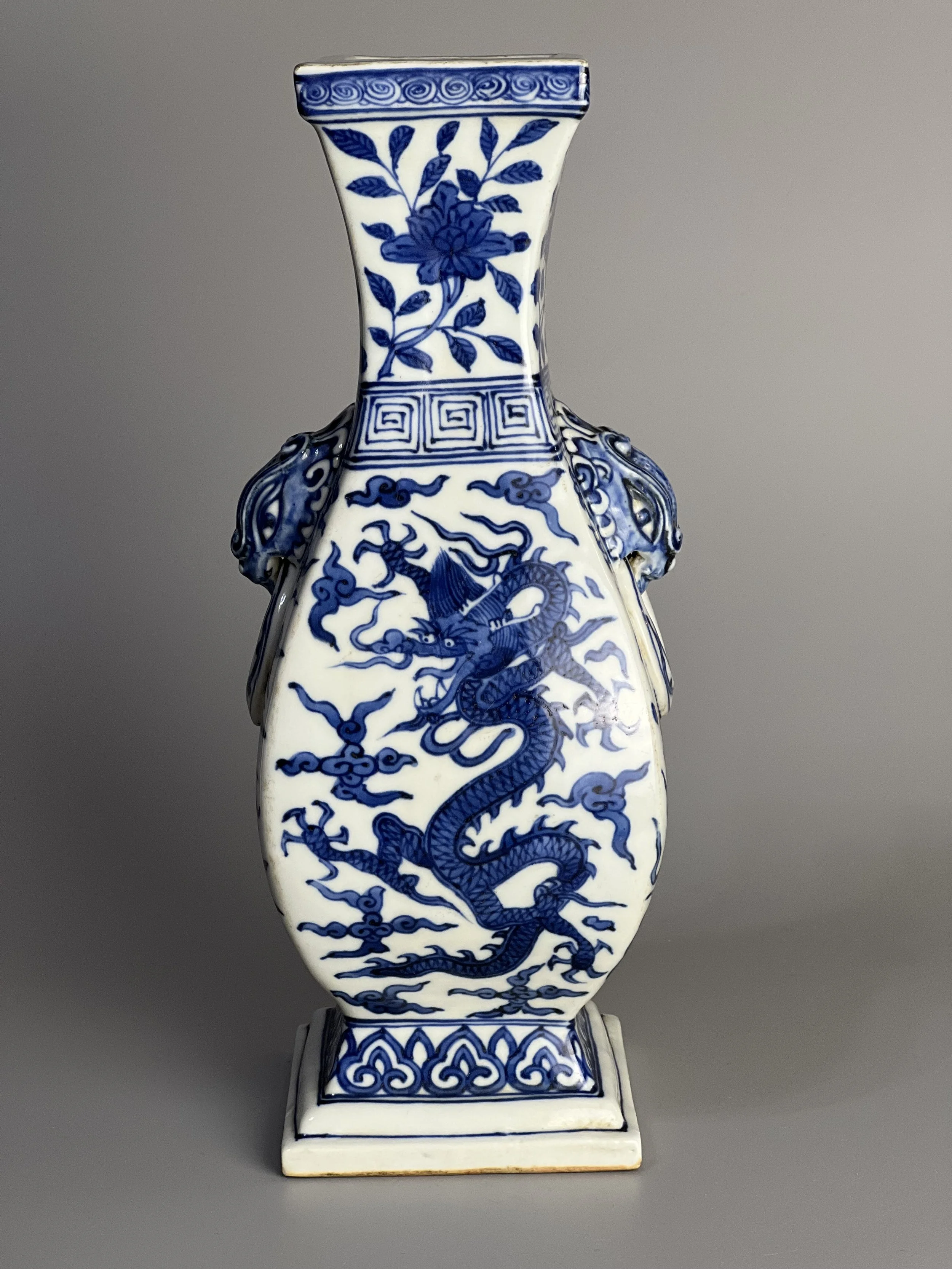 Image 1 of 19
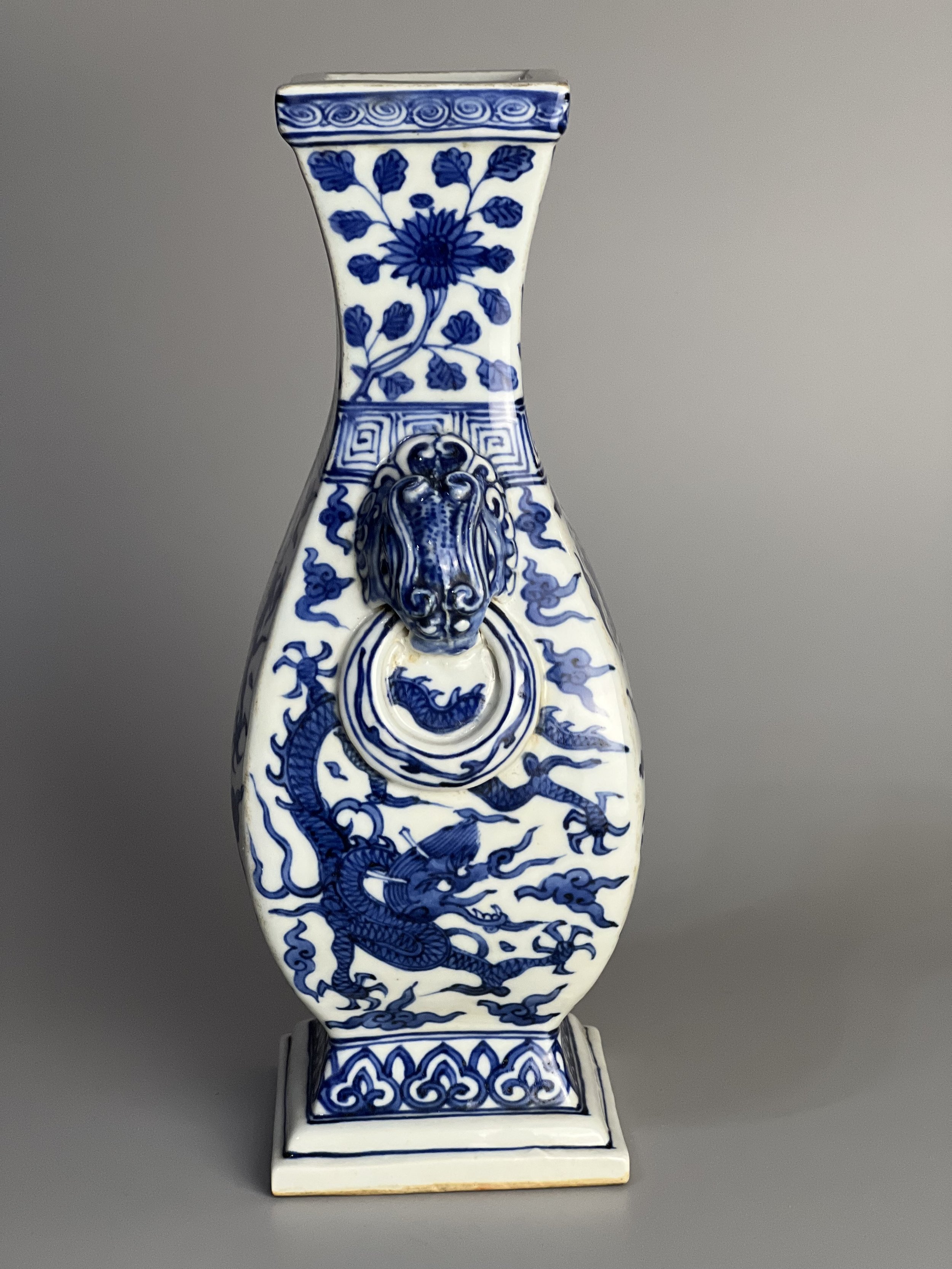 Image 2 of 19
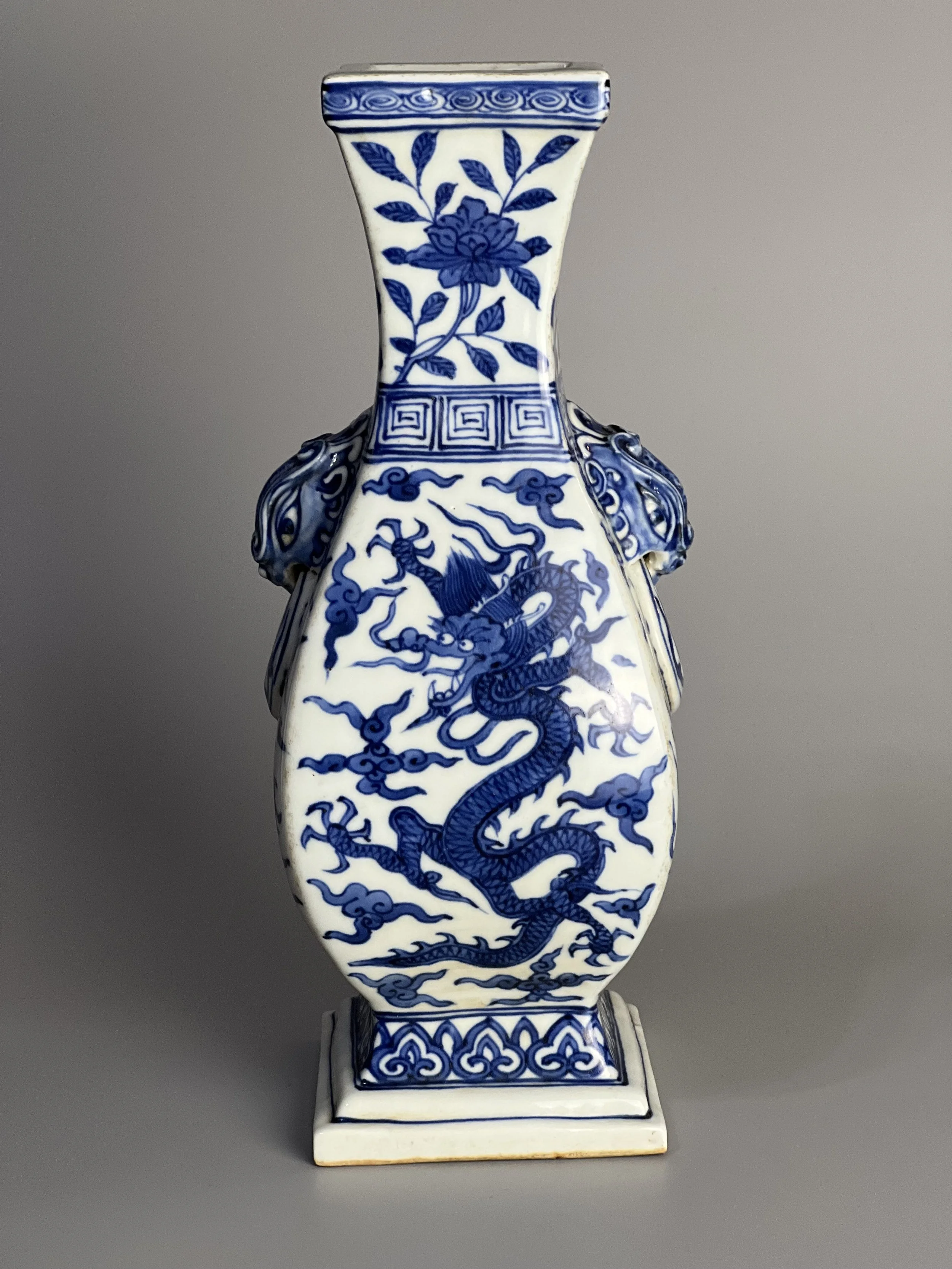 Image 3 of 19
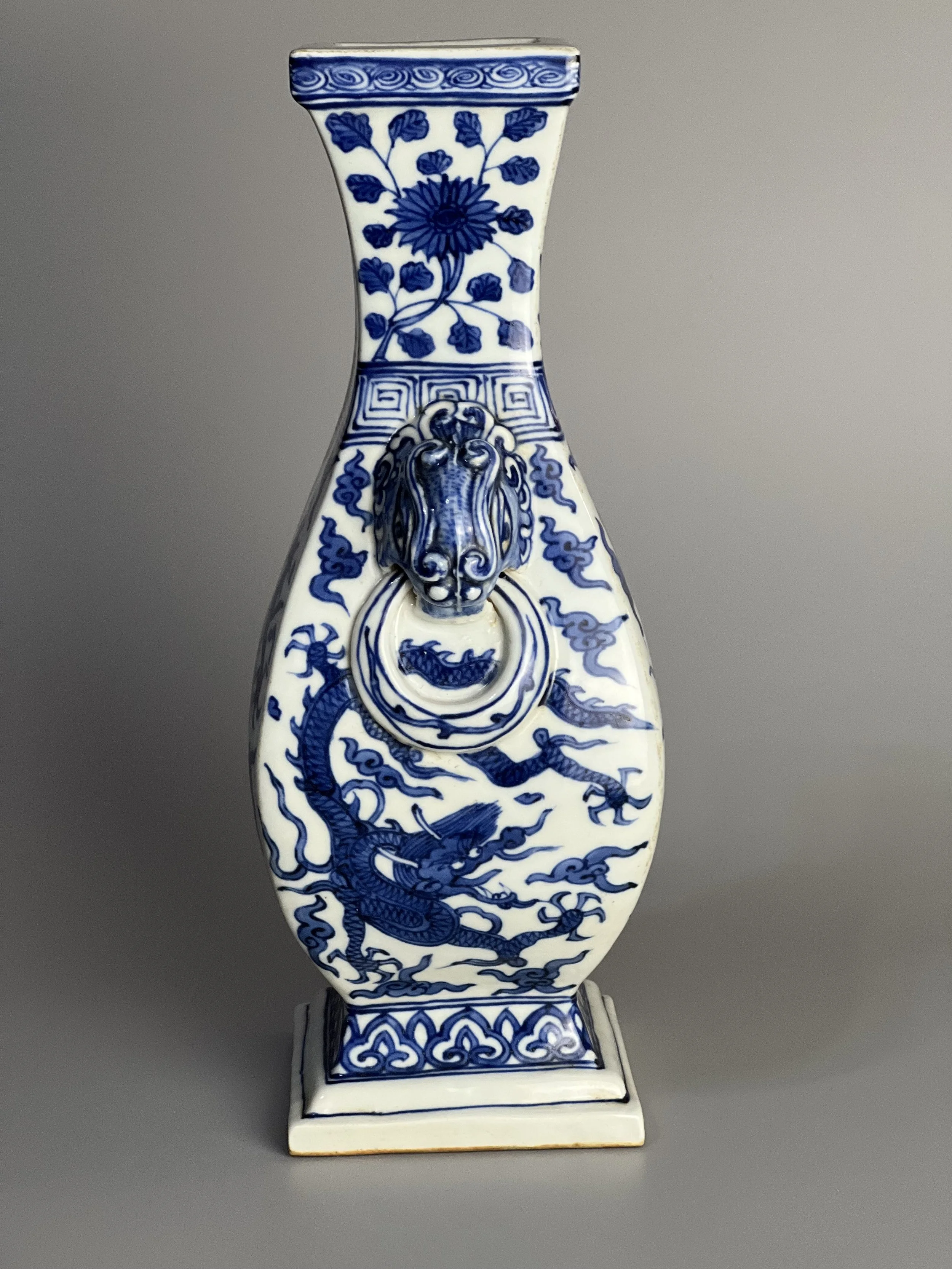 Image 4 of 19
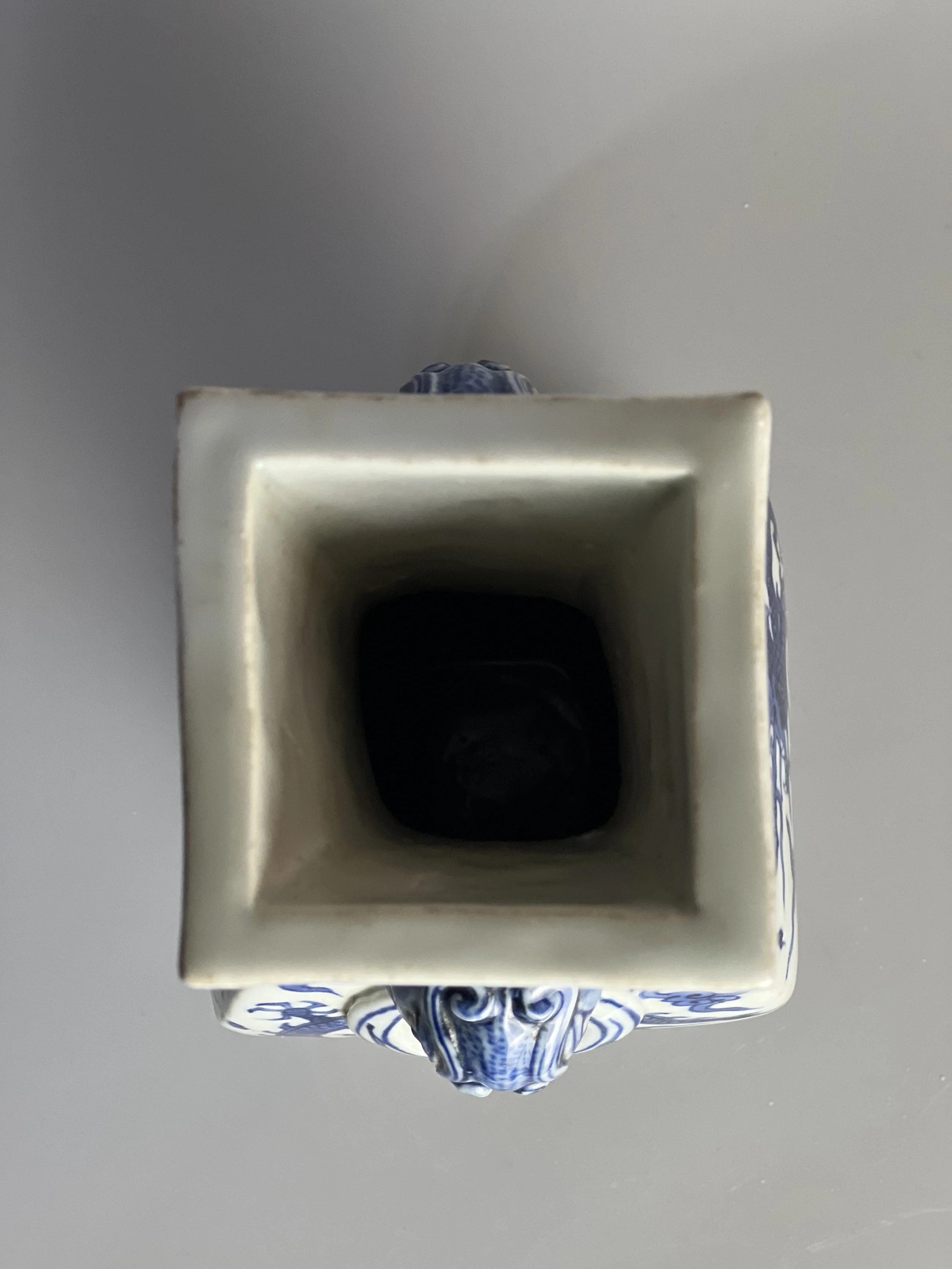 Image 5 of 19
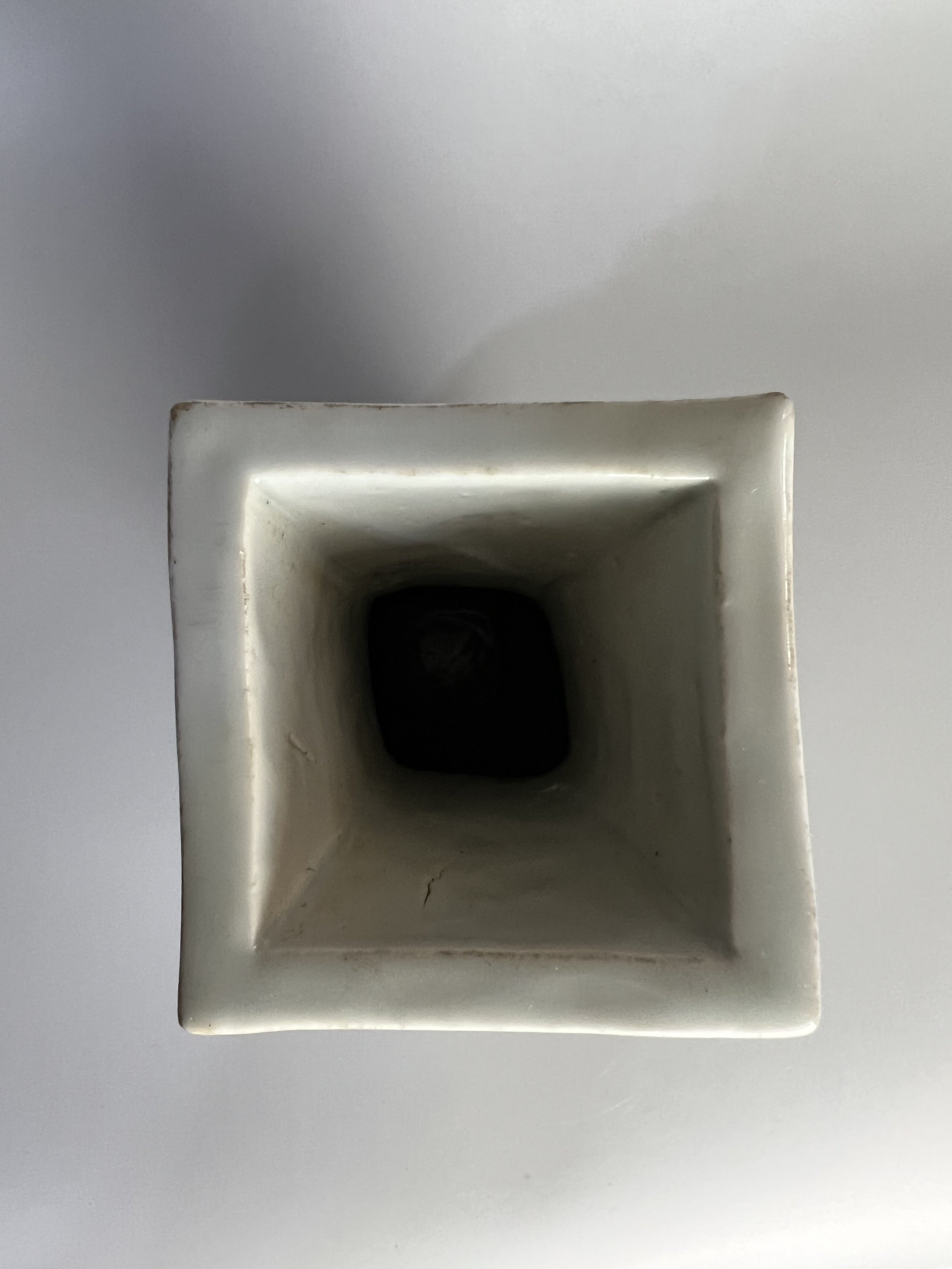 Image 6 of 19
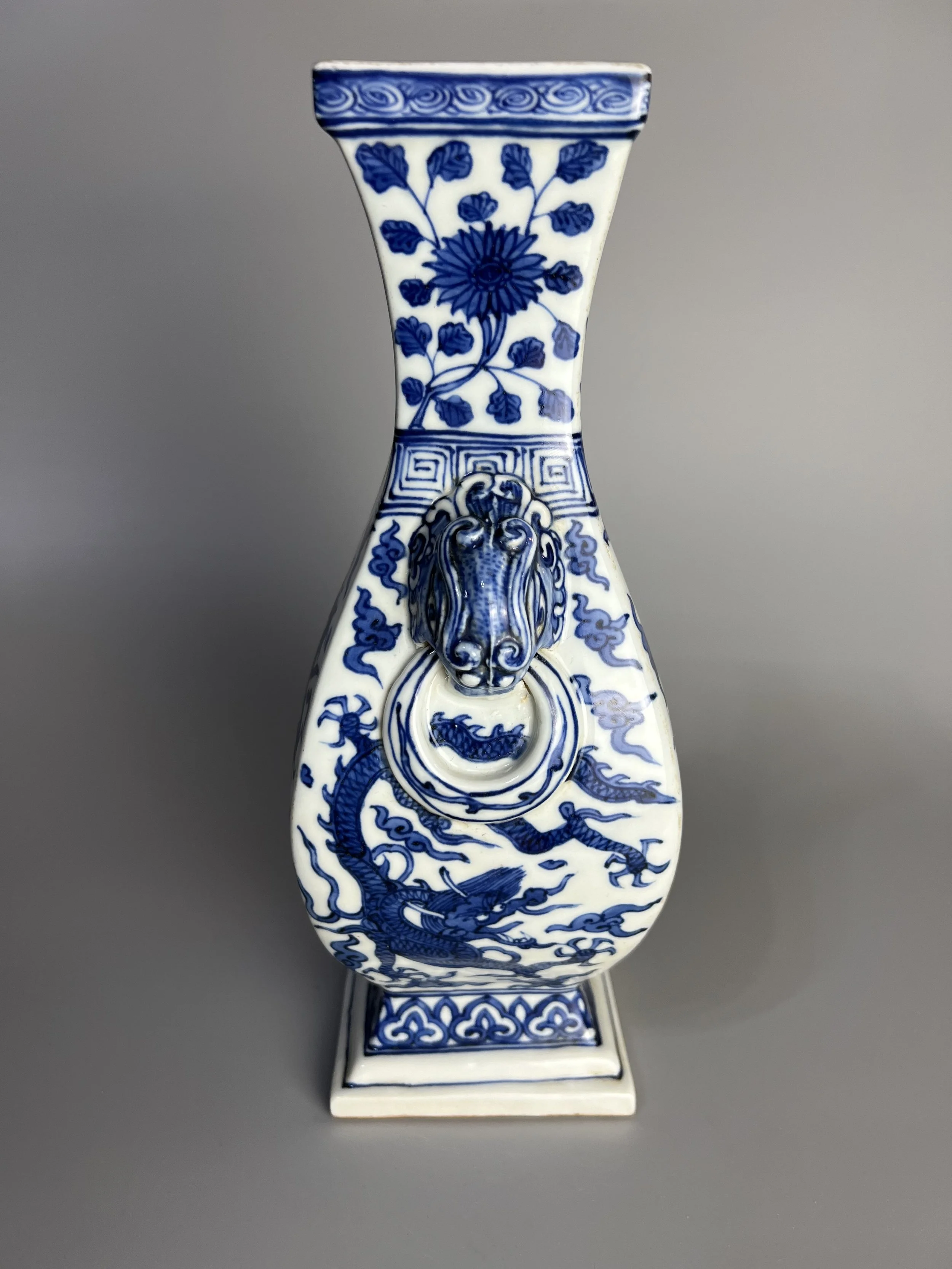 Image 7 of 19
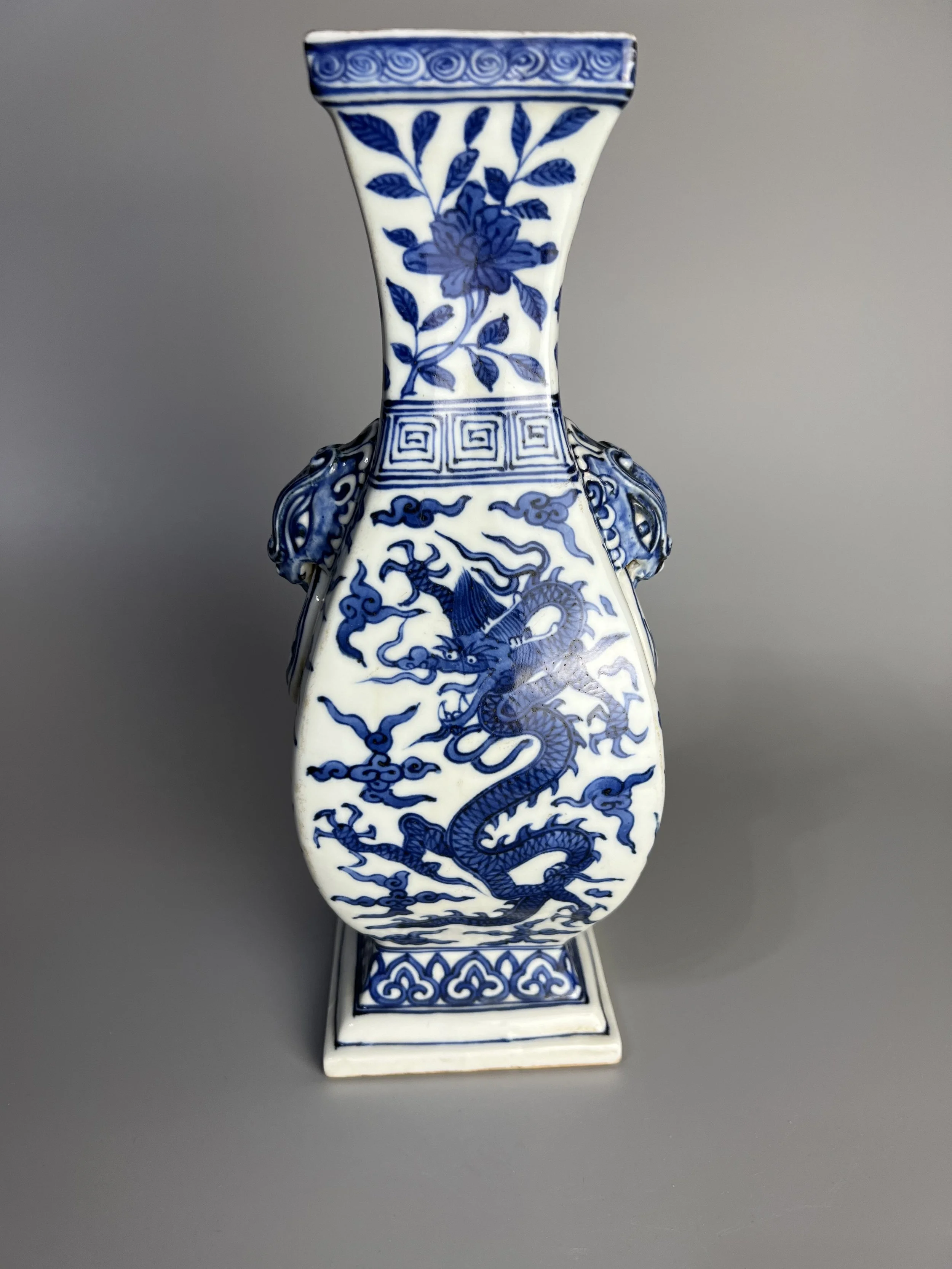 Image 8 of 19
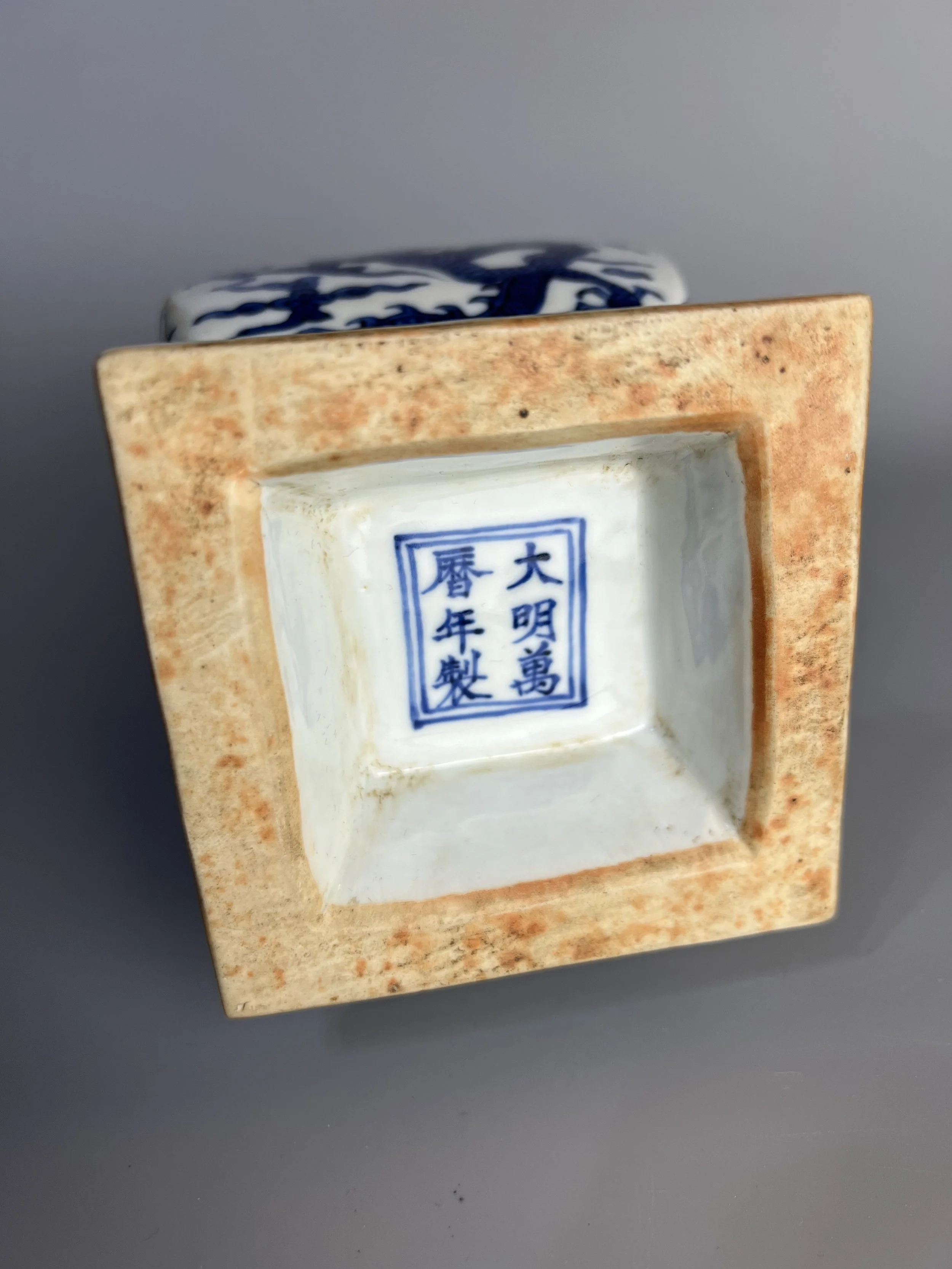 Image 9 of 19
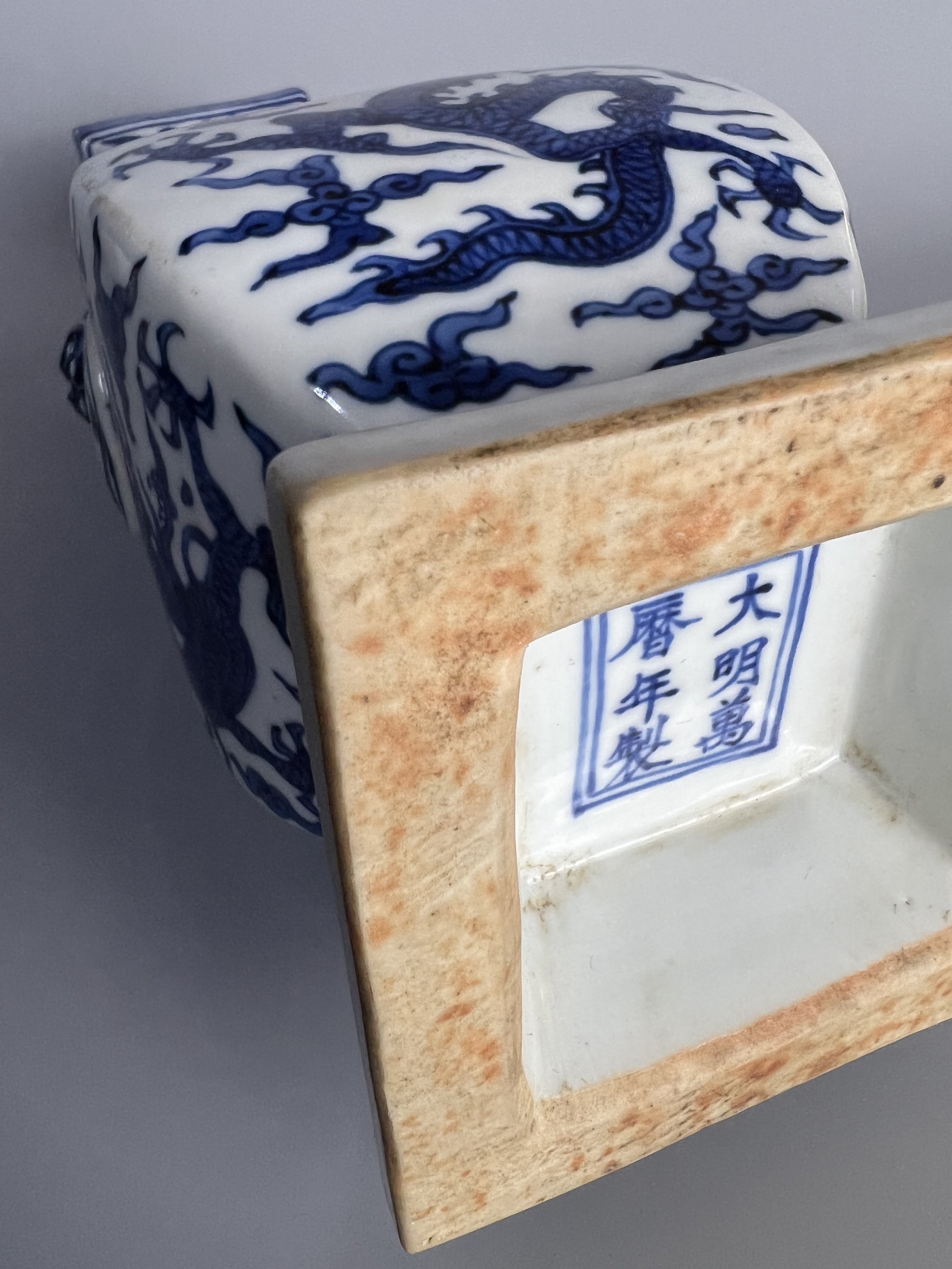 Image 10 of 19
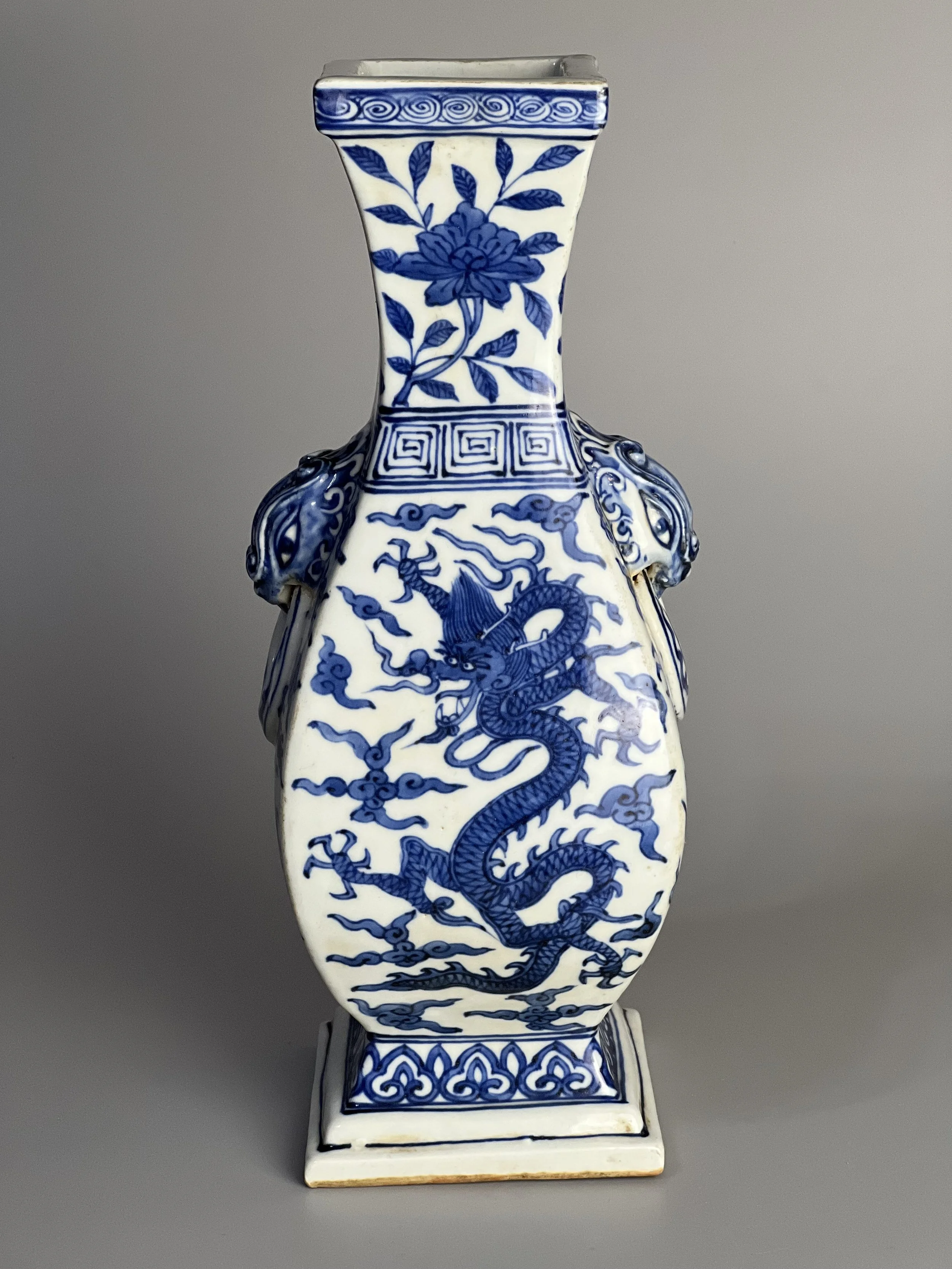 Image 11 of 19
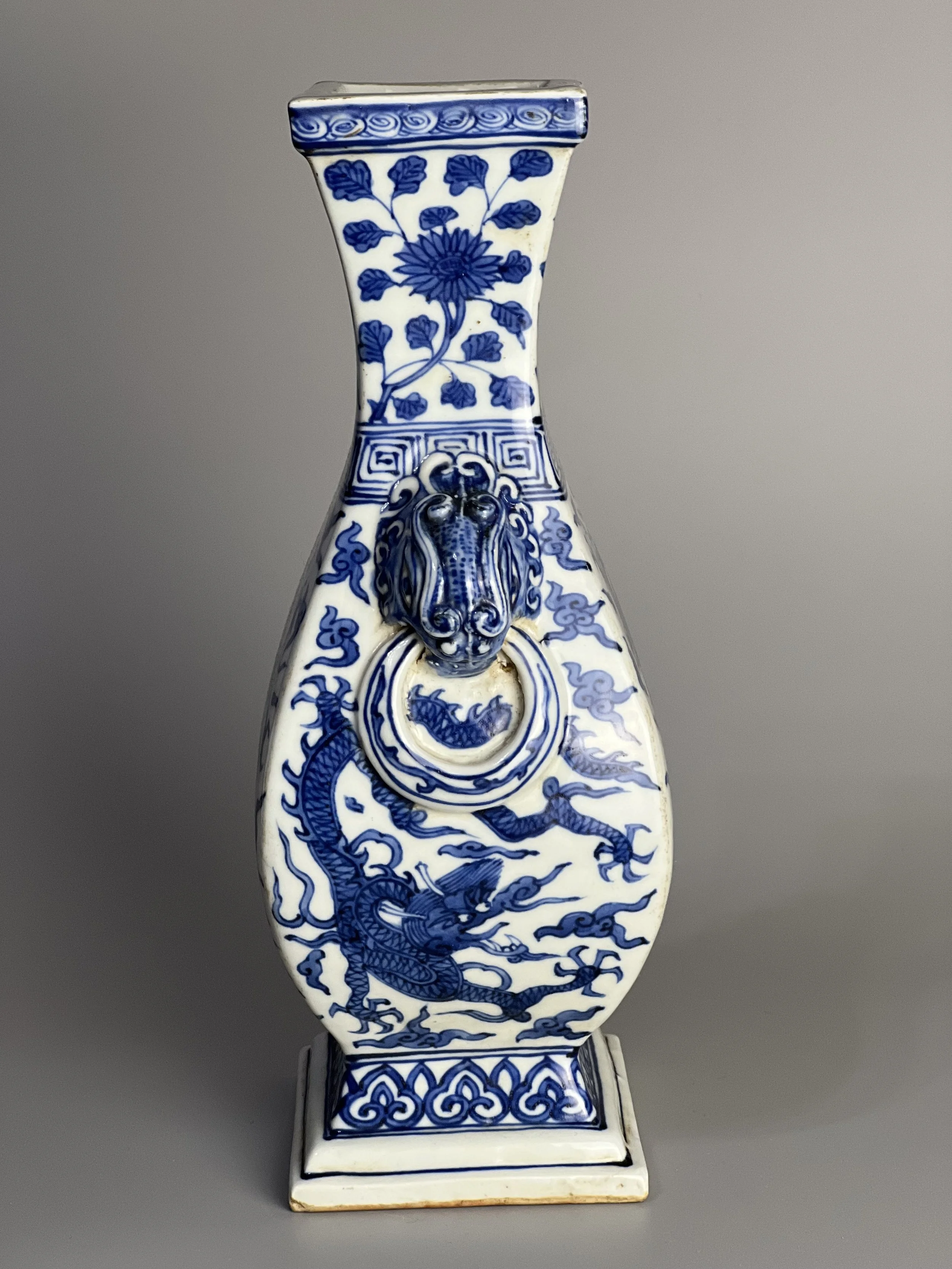 Image 12 of 19
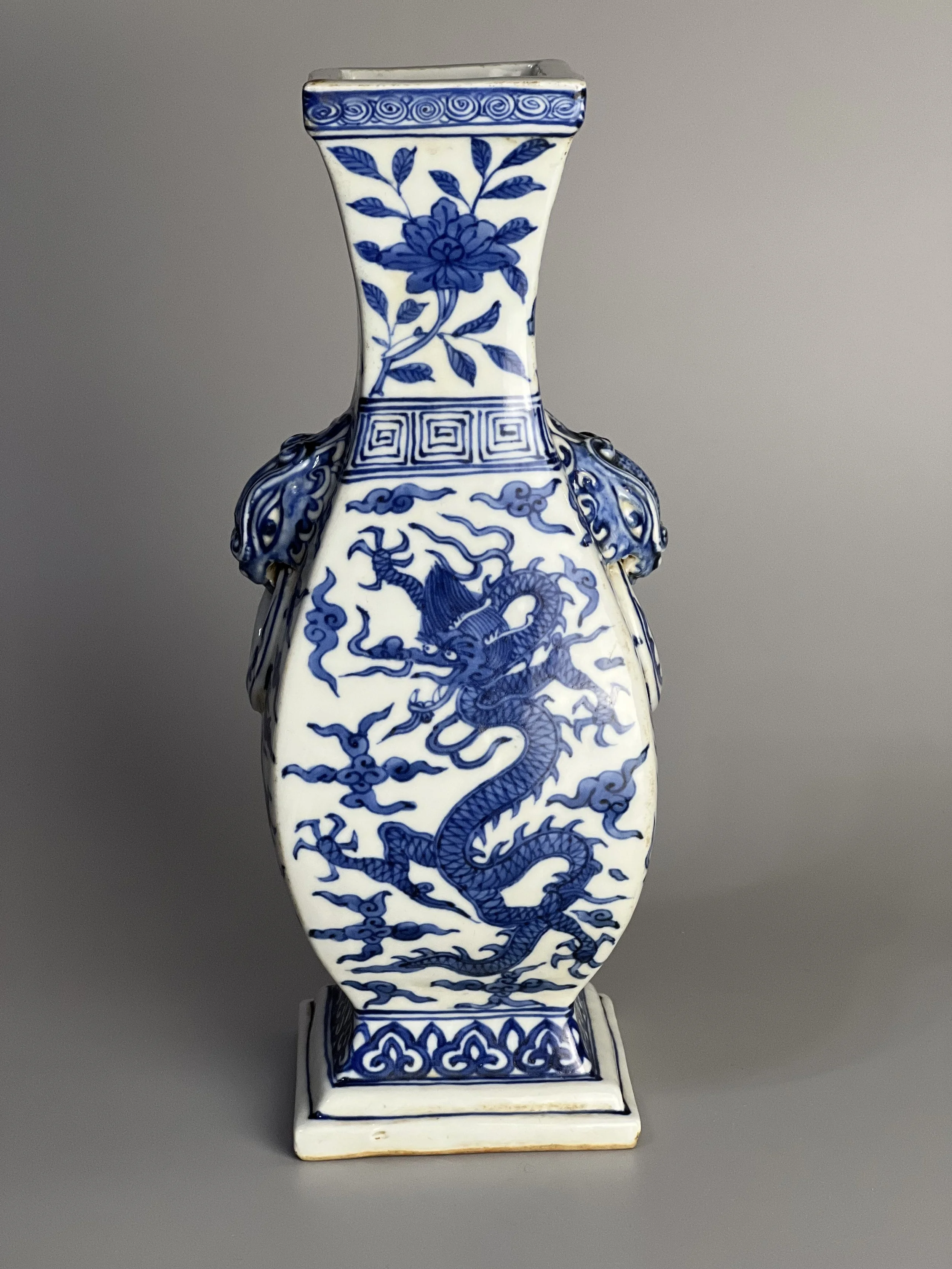 Image 13 of 19
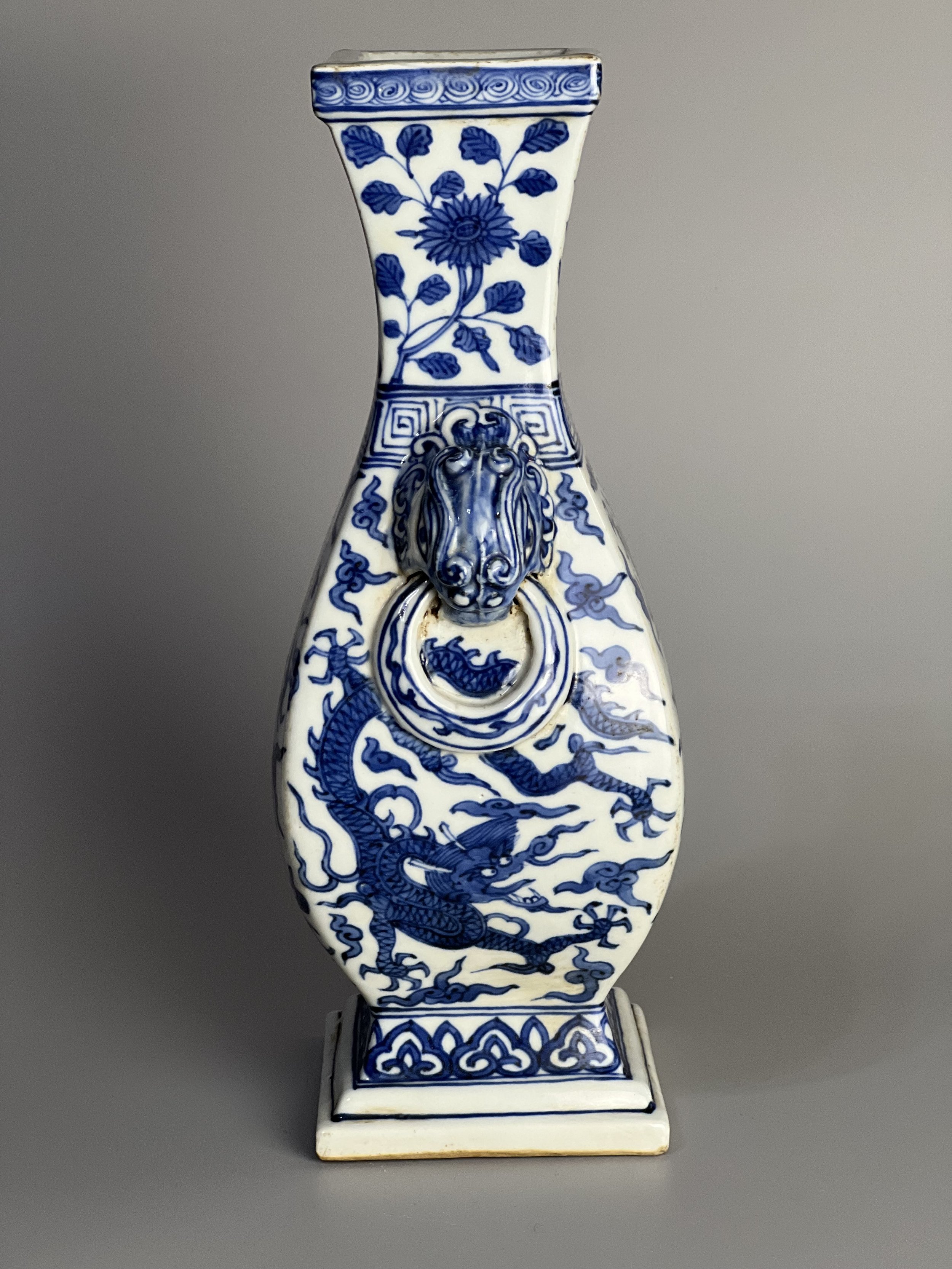 Image 14 of 19
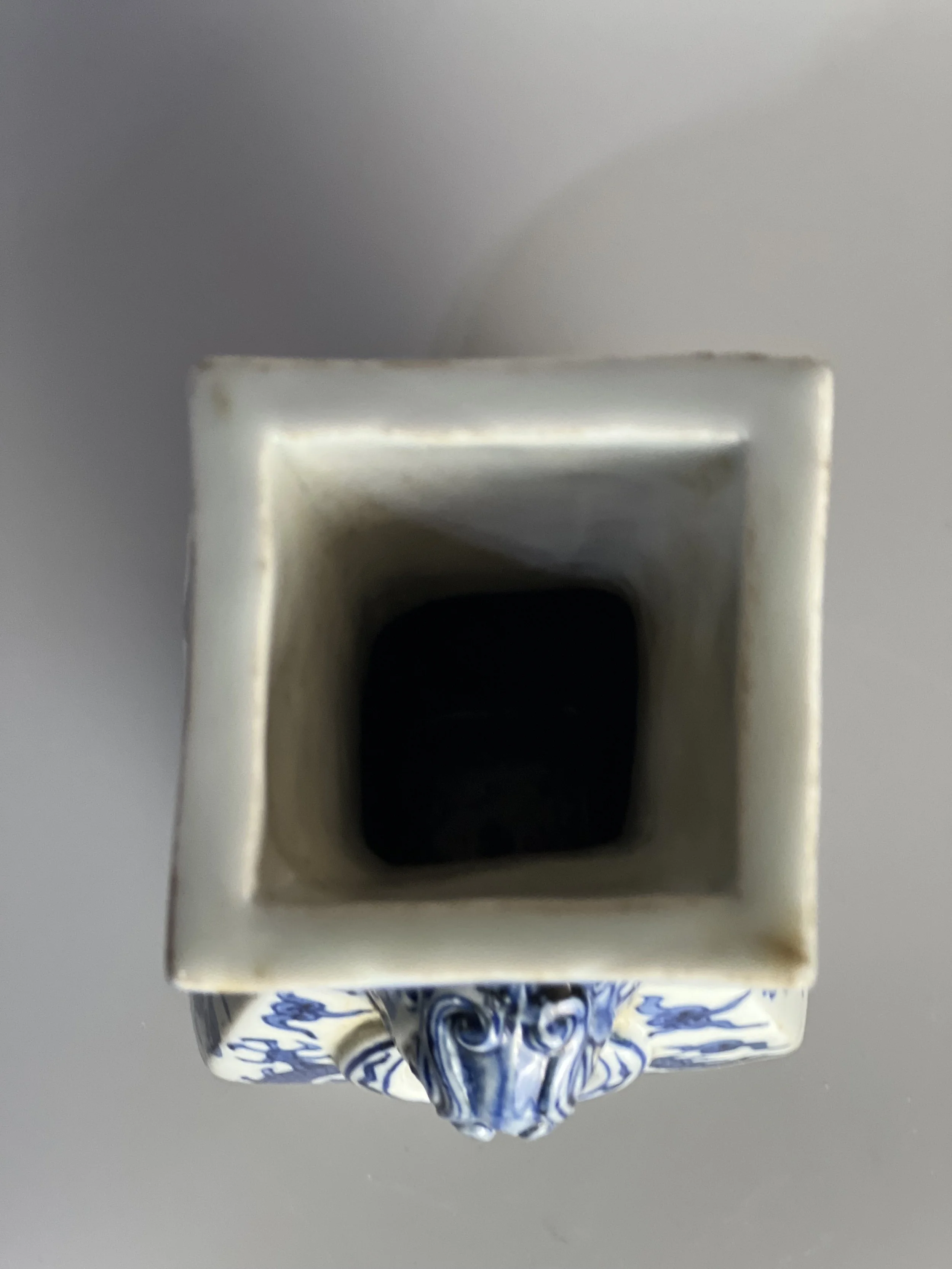 Image 15 of 19
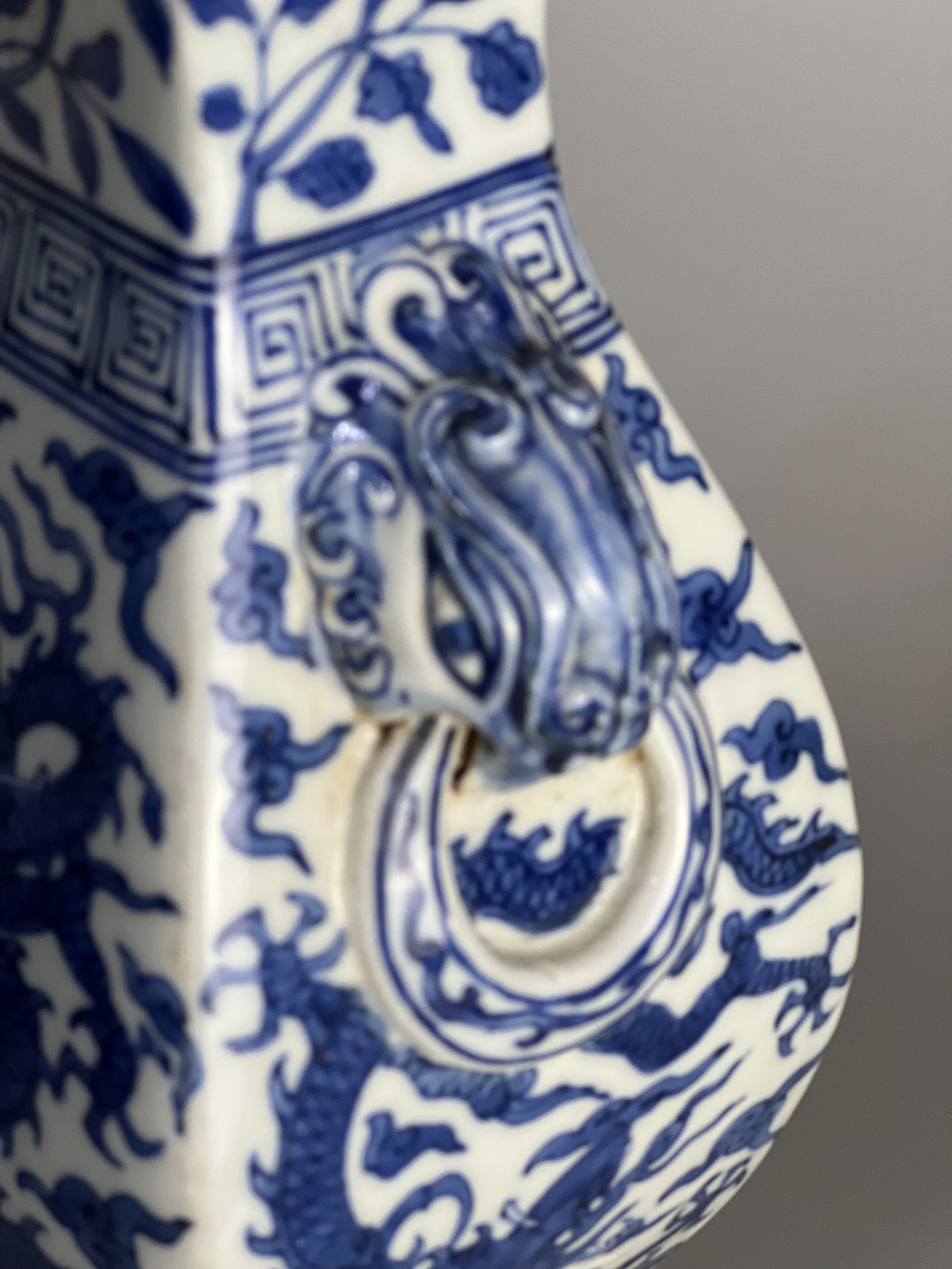 Image 16 of 19
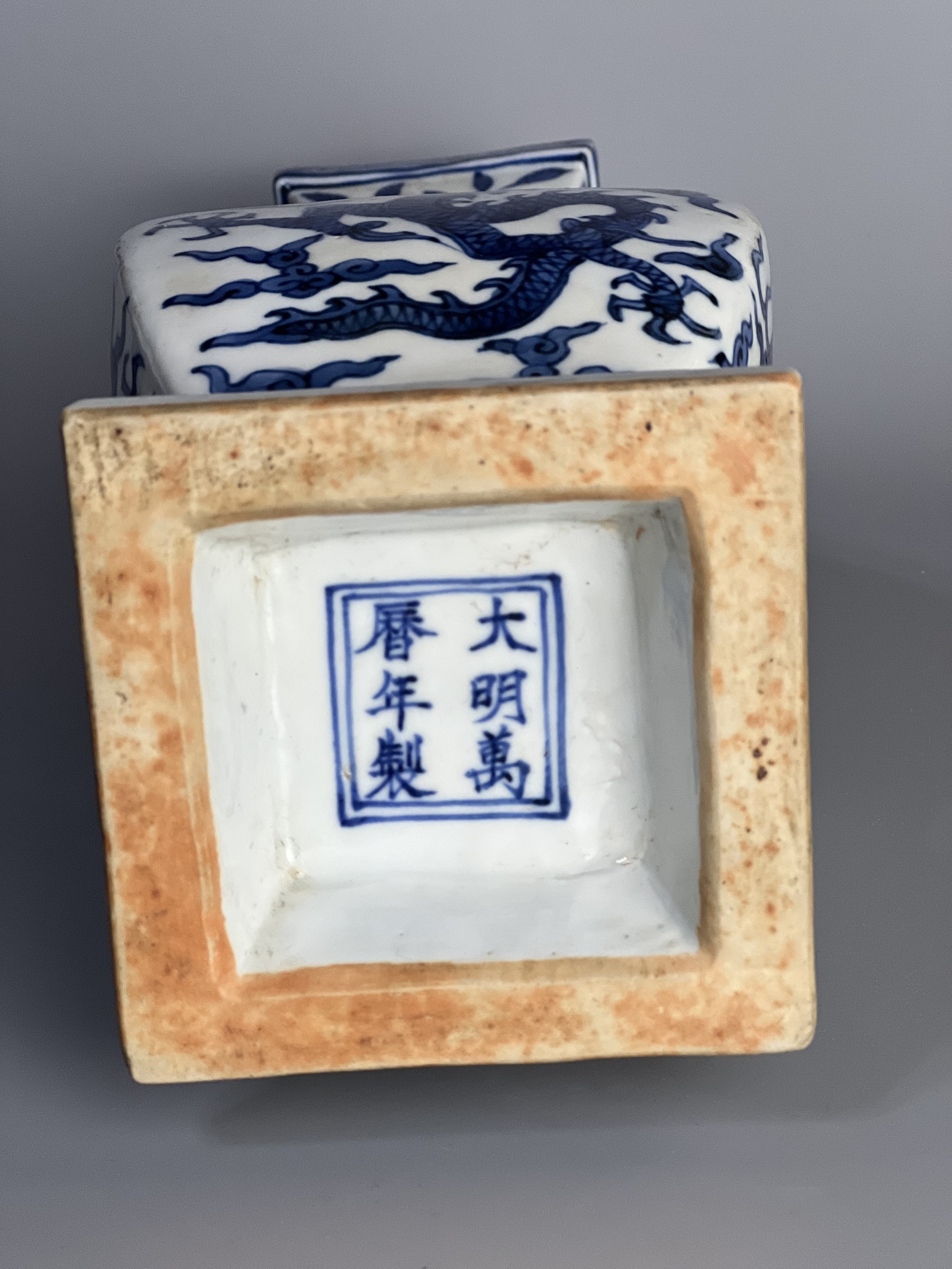 Image 17 of 19
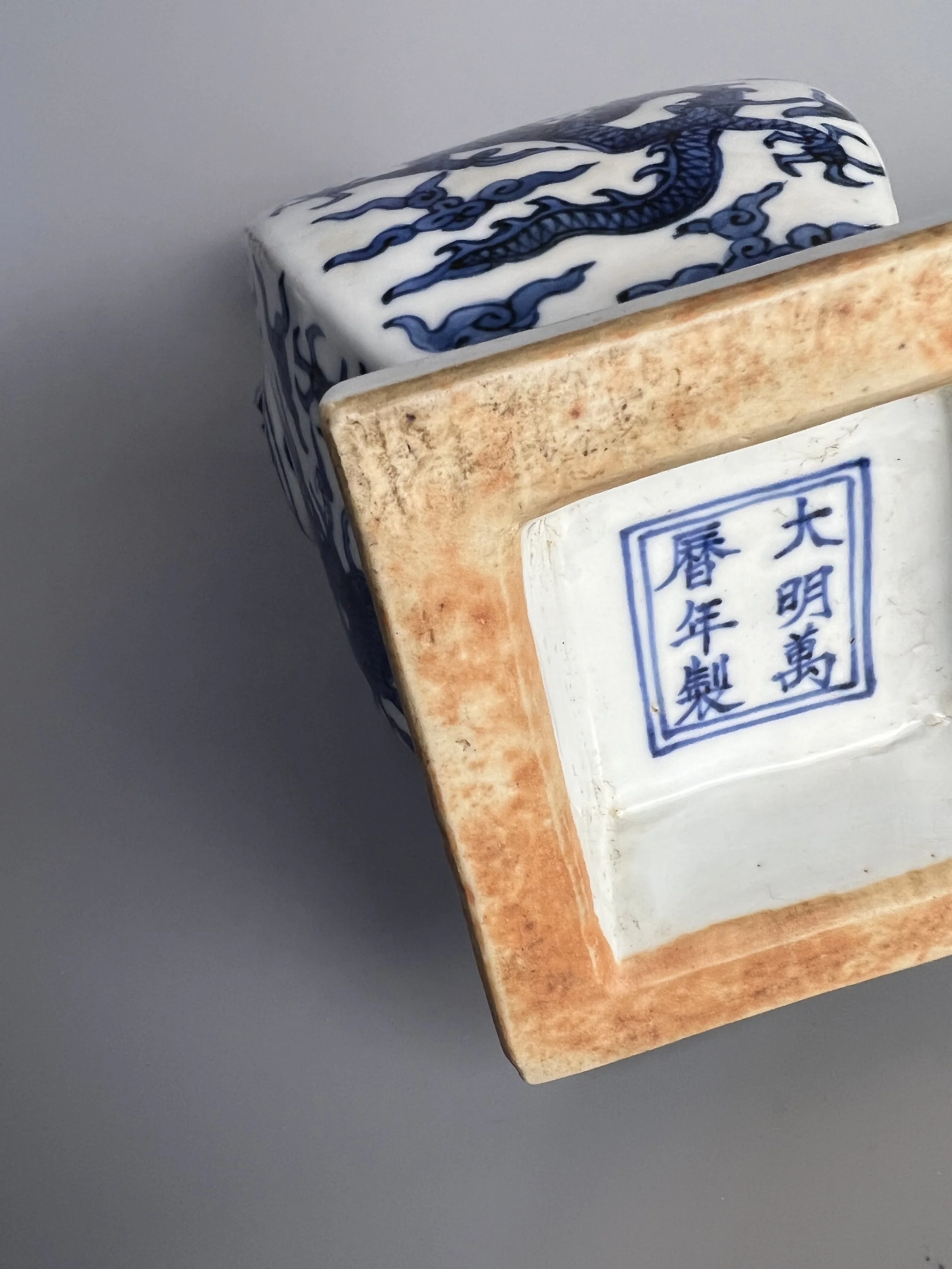 Image 18 of 19
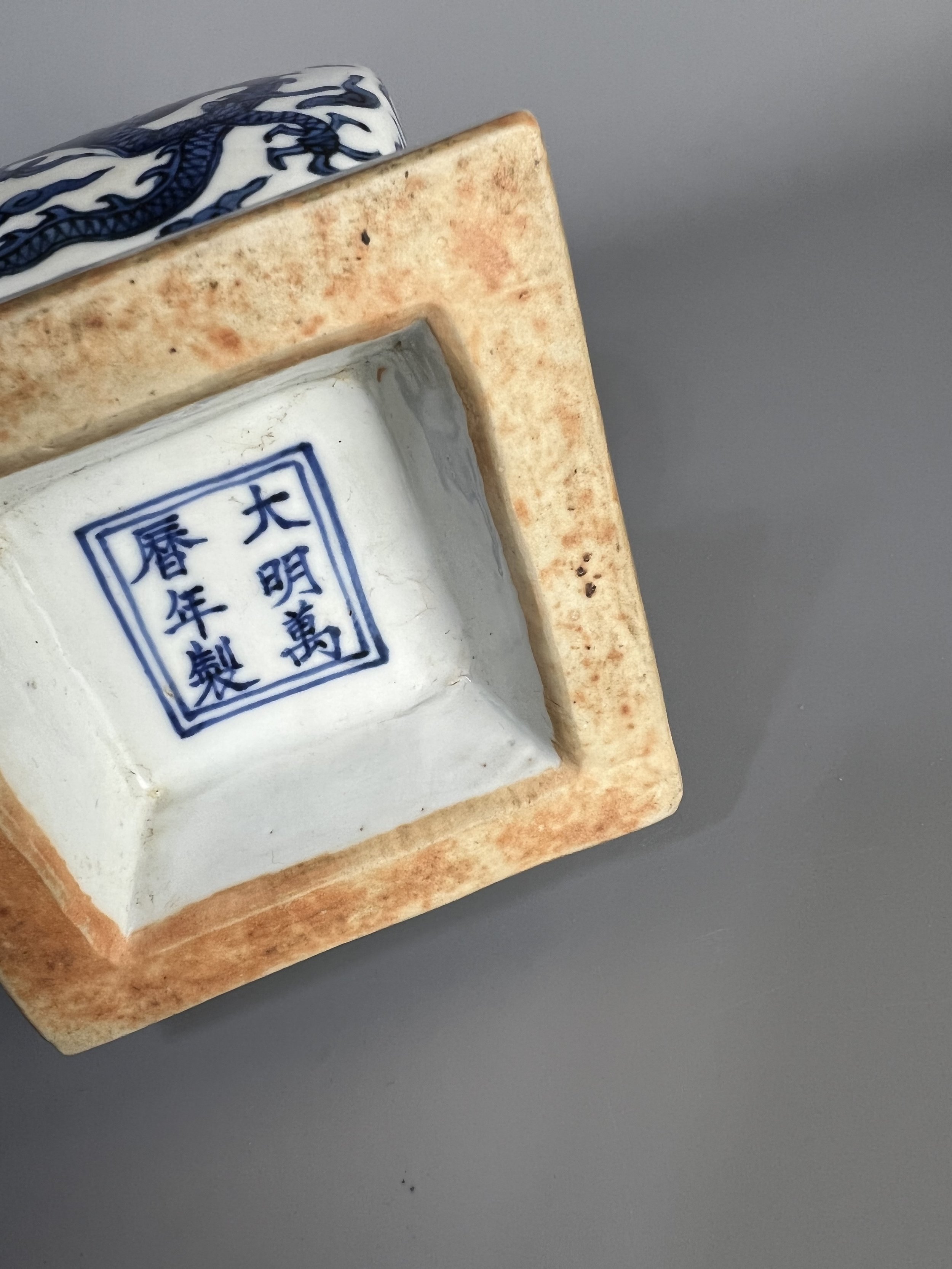 Image 19 of 19