Overview
This large blue-and-white 'prunus vase' (meiping) with flower and fruit sprays, measuring 41 cm in height, is notable for its substantial size and robust, majestic form. It represents a classic type of imperial blue-and-white display ware from the Yongle period. The decoration is rich in layers and exquisitely painted, featuring flowering and fruiting branches symbolizing "numerous offspring, purity, and longevity." The cobalt-blue pigment exhibits a characteristic vivid hue, with areas of heavy application showing distinctive 'iron-rust' speckles. The absence of a reign mark on the base is entirely consistent with the typical features of top-quality imperial blue-and-white wares of the Yongle reign, epitomizing the first artistic peak in the production of Ming dynasty blue-and-white porcelain.
I. Overview of Core Characteristics
Feature DimensionSpecific DescriptionObject DesignationBlue-and-white 'Prunus Vase' (Meiping) with Flower and Fruit Sprays, Yongle mark and periodHistorical PeriodMing Dynasty, Yongle reign (1403-1424 AD)DimensionsHeight: 41 cmBasic FormClassic meiping shape: small mouth, short neck, full, rounded shoulders tapering to a slightly flared foot, with a ring foot. The silhouette is饱满 (full) and fluid, presenting a dignified and imposing posture.Decorative LayoutShoulders: A band of ruyi (wish-granting) cloud-head motifs, each filled with floral and leaf designs. Main Body: Divided into two horizontal registers, each painted with four clusters of flowering and fruiting branch motifs. The clusters in the upper register are slightly larger than those below, arranged in staggered formation.Floral & Fruit MotifsIdentifiable fruits likely include pomegranate (numerous offspring), peach (longevity), and plum (purity/heralding spring), combined with corresponding flowers and leaves, forming an auspicious pattern symbolizing the "Three Abundances" (sanduo) or seasonal themes.Cobalt-blue HueUses the famous imported 'Sumali' blue pigment. The color is intense and vibrant, a purplish-blue, with visible tonal variations in the brushstrokes and crystalline 'iron-rust' speckles. Natural diffusion creates a rich, layered effect.Glaze and BodyThe glaze is thick, lustrous, and moist, white with a bluish tinge, exhibiting a "fat" and bright texture. The body is fine, white, and meticulously refined, feeling smooth like glutinous rice flour. The ring foot is neatly finished, with a pale 'fiery red' (huoshi hong) visible on the unglazed areas.MarkThe interior of the ring foot is unmarked. This is a common feature of Yongle imperial blue-and-white porcelain, especially among early pieces and large vessels, and is consistent with period characteristics.
II. In-Depth Analysis of Artistry and Craftsmanship
1. Exemplary Form and Grandeur
Meiping Form: Exceeding 40 cm, this vase is among the larger meiping examples. While inheriting the elegance of Song and Yuan meiping, its shoulders are broader and fuller, its belly more globular, with a high center of gravity. This conveys a sense of solid stability and magnificent composure, reflecting the grandeur of the Yongle heyday.
Harmonious Proportions: The 41 cm height and the proportions of each section are masterfully calibrated. The convergence of the mouth and neck, the expansion of the shoulders, the curve of the belly, and the slight flare of the foot create a harmonious yet dynamic visual line.
2. Meaningful Decoration and Masterful Painting
Compositional Structure: The decoration employs the classic Yongle "multi-tiered banded" layout. The shoulder band of ruyi motifs perfectly transitions and frames the design. The two main registers, comprising eight clusters in total, use a "staggered upper and lower" arrangement, avoiding rigidity and introducing variation within order. The composition is full yet spacious.
Symbolism of Motifs: The selected floral and fruit motifs are rich in auspicious meaning:
Pomegranate: Symbolizes "numerous offspring and blessings."
Peach: Symbolizes "longevity," often combined with lingzhi fungus to convey wishes for long life.
Plum: Symbolizes "purity," "fortitude," and "heralding spring."
This combination expresses courtly wishes for prosperous descendants, health, longevity, and virtuous character, typical of imperial祝福式 (benedictory) patterns.
Painting Technique: The painter integrated the expressive brushwork of traditional Chinese ink painting with detailed execution. The rendering of flowers, fruit, and leaves is fluid and natural, with variations in brushstroke thickness and ink tone. The natural diffusion of the Sumali blue, in particular, creates a misty, ink-wash effect at the edges of leaves and lends a饱满立体 (full and three-dimensional) quality to the fruit, demonstrating great artistic appeal.
3. Signature 'Sumali' Blue Effects
4. Period Characteristic of "No Mark"
Most Yongle imperial blue-and-white wares bear no reign mark, especially large carved vessels like meiping, yuhuchunping, and large jars. This may stem from institutional norms still being established in the early Yongle period and, more importantly, reflects the confidence of the era in allowing the vessel's form, decoration, and the quality of its body and glaze to serve as the ultimate standard and identifier. The absence of a mark thus becomes a key factor in its attribution.
III. Historical Context and Proposed Function
Important Palace Display Vessel: A meiping of such large size and exquisite craftsmanship was certainly not ordinary utilitarian ware. It was likely used for display in important palace halls or bestowed as high-level gifts to feudal princes, high-ranking officials, and foreign envoys. It materially embodies the strong national power and the highly developed court arts of the Yongle period.
Wine Storage Function and Ritual Significance: The meiping was originally a wine storage vessel. A meiping of this caliber was likely used in grand court ceremonies or banquets. The combination of its auspicious decoration and wine-storage function imbued it with ritual meanings of "offering longevity" and "praying for blessings."
Witness to the Zheng He Voyages: The pinnacle achievement of Yongle blue-and-white is directly linked to the superior Sumali blue pigment brought back by Zheng He's maritime expeditions. The vivid color of this vase is a direct product of this great history of Sino-foreign exchange.
IV. Authentication Key Points and Later Influence
As a standard piece of Yongle blue-and-white, authentication should focus on:
Three Period Elements: Body and Glaze (lustrous, thick, fine body), Cobalt Blue (presence of Sumali blue's vivid color, diffusion, and iron-rust speckles), Decoration and Form (conformity to classic Yongle style).
Significance of "No Mark": Understanding that "often unmarked" is common for Yongle imperial wares, and judging its quality based on overall craftsmanship, not devaluing it due to the lack of a mark.
Identifying Later Imitations: Later imitations, especially from the Qing Kangxi, Yongzheng reigns, and the late Qing/Republic period, exist. Their cobalt is often domestic 'Pingtangqing' or Zhejiang blue, which may imitate the color but lack the iron-rust speckles and natural Sumali diffusion. Their body and glaze may be too white/hard or too thin/light. The painting often lacks the archaic, unrestrained spirit of the originals.
Conclusion
This large Yongle blue-and-white meiping with flower and fruit sprays, through its grand scale, classic form, auspicious decoration, and characteristic Sumali blue hue, perfectly exemplifies the Yongle imperial blue-and-white aesthetic of "majestic elegance and splendid beauty." It is not only a precious ancient art object but also an eternal projection of the great Ming Yongle盛世 (flourishing age) in ceramic art, silently recounting the brilliance of that open and powerful era.
明永乐青花折枝花果纹大梅瓶
概述
此件明永乐青花折枝花果纹大梅瓶,高41厘米,体量硕大,造型雄健,为永乐时期御窑青花陈设器之经典。其纹饰层次丰富,绘制精湛,以象征“多子、高洁、长寿”的折枝花果为主题,青花发色浓艳,积料处呈现特有的“铁锈斑”,且底部无款,完全符合永乐朝顶级官窑青花的典型特征,代表了明代青花瓷器烧造的第一个艺术巅峰。
一、 核心特征总览
特征维度具体描述器物定名明永乐 青花折枝花果纹梅瓶历史年代明永乐时期 (1403-1424年)器物尺寸高41厘米基本器型经典梅瓶制式:小口,短颈,丰肩,肩以下渐收敛,至胫部略外撇,圈足。造型曲线饱满流畅,体态雍容。纹饰布局肩部:饰一周如意云头纹,其内饰以花叶纹。主体:自上而下分为两层装饰带,各绘四组团状折枝花果纹。上层纹饰图案略大,下层稍小,交错排列。花果主题可辨识的果实包括石榴(多子)、桃(长寿)、梅(高洁/报春)等,搭配相应的花卉枝叶,共同组成寓意吉祥的“三多”或“四季”纹样。青花发色使用著名进口“苏麻离青”料,发色浓艳青翠,蓝中泛紫,有深浅不一的笔触感与结晶铁锈斑,晕散自然,层次丰富。釉面胎质釉面肥厚莹润,白中泛青,呈“肥亮”质感。胎体细腻洁白,淘炼精良,抚之如糯米粉,圈足处理工整,露胎处有浅淡火石红。款识底部圈足内无款识,此为永乐官窑青花瓷器的常见现象,尤以早期及大件器物为甚,符合时代特征。
二、 艺术与工艺深度解析
1. 典范的造型与恢弘的气度
2. 寓意深刻的纹饰与精湛画工
3. 标志性的“苏麻离青”效果
4. “无款”的时代特征
三、 历史内涵与用途推测
宫廷陈设重器:如此硕大精美的梅瓶,绝非普通日用器。它很可能用于皇家宫廷的重要殿堂陈设,或作为高级别赏赐品赐予藩王、重臣及外国使节,是永乐朝国力强盛、宫廷艺术高度发展的物质体现。
储酒功能与礼制:梅瓶原为储酒器。此等规格的梅瓶,可能在重大宫廷典礼或宴会中使用,其上的吉祥纹饰与储酒功能相结合,寓含了“献寿”、“祈福”等多重礼制意义。
郑和下西洋的见证:永乐时期青花瓷器的巅峰成就,与郑和下西洋带回的优质苏麻离青料直接相关。此瓶浓艳的发色,正是这一中外交流伟大历史的直接产物。
四、 鉴藏要点与后世影响
此瓶为永乐青花标准器,鉴藏时需着重审视:
时代三要素:胎釉(是否莹润肥厚、胎质细腻)、青花(是否具有苏麻离青的浓艳、晕散、铁锈斑特征)、纹饰与造型(是否符合永乐典型风格)。
无款的意义:理解永乐官窑“多无款”的现象,并结合整体工艺水平判断,不能因无款而低估其等级。
仿品鉴别:后世尤以清康熙、雍正及晚清民国有仿永乐青花者。仿品青料多为平等青或浙料,发色虽可仿蓝,但缺乏铁锈斑和自然的苏麻离青晕散感;胎釉或过白过硬,或过于轻薄;画工也常失其古拙洒脱的神韵。
结语
此明永乐青花折枝花果纹大梅瓶,以其恢弘的体量、经典的造型、寓意吉祥的纹饰与典型的苏麻离青发色,完美诠释了永乐御窑青花“雄浑雅致、秾美俊秀”的艺术风格。它不仅是一件珍贵的古代艺术品,更是大明永乐盛世在陶瓷艺术上的永恒投影,无声地诉说着那个开放、强盛时代的辉煌。
Overview
This large blue-and-white 'prunus vase' (meiping) with flower and fruit sprays, measuring 41 cm in height, is notable for its substantial size and robust, majestic form. It represents a classic type of imperial blue-and-white display ware from the Yongle period. The decoration is rich in layers and exquisitely painted, featuring flowering and fruiting branches symbolizing "numerous offspring, purity, and longevity." The cobalt-blue pigment exhibits a characteristic vivid hue, with areas of heavy application showing distinctive 'iron-rust' speckles. The absence of a reign mark on the base is entirely consistent with the typical features of top-quality imperial blue-and-white wares of the Yongle reign, epitomizing the first artistic peak in the production of Ming dynasty blue-and-white porcelain.
I. Overview of Core Characteristics
Feature DimensionSpecific DescriptionObject DesignationBlue-and-white 'Prunus Vase' (Meiping) with Flower and Fruit Sprays, Yongle mark and periodHistorical PeriodMing Dynasty, Yongle reign (1403-1424 AD)DimensionsHeight: 41 cmBasic FormClassic meiping shape: small mouth, short neck, full, rounded shoulders tapering to a slightly flared foot, with a ring foot. The silhouette is饱满 (full) and fluid, presenting a dignified and imposing posture.Decorative LayoutShoulders: A band of ruyi (wish-granting) cloud-head motifs, each filled with floral and leaf designs. Main Body: Divided into two horizontal registers, each painted with four clusters of flowering and fruiting branch motifs. The clusters in the upper register are slightly larger than those below, arranged in staggered formation.Floral & Fruit MotifsIdentifiable fruits likely include pomegranate (numerous offspring), peach (longevity), and plum (purity/heralding spring), combined with corresponding flowers and leaves, forming an auspicious pattern symbolizing the "Three Abundances" (sanduo) or seasonal themes.Cobalt-blue HueUses the famous imported 'Sumali' blue pigment. The color is intense and vibrant, a purplish-blue, with visible tonal variations in the brushstrokes and crystalline 'iron-rust' speckles. Natural diffusion creates a rich, layered effect.Glaze and BodyThe glaze is thick, lustrous, and moist, white with a bluish tinge, exhibiting a "fat" and bright texture. The body is fine, white, and meticulously refined, feeling smooth like glutinous rice flour. The ring foot is neatly finished, with a pale 'fiery red' (huoshi hong) visible on the unglazed areas.MarkThe interior of the ring foot is unmarked. This is a common feature of Yongle imperial blue-and-white porcelain, especially among early pieces and large vessels, and is consistent with period characteristics.
II. In-Depth Analysis of Artistry and Craftsmanship
1. Exemplary Form and Grandeur
Meiping Form: Exceeding 40 cm, this vase is among the larger meiping examples. While inheriting the elegance of Song and Yuan meiping, its shoulders are broader and fuller, its belly more globular, with a high center of gravity. This conveys a sense of solid stability and magnificent composure, reflecting the grandeur of the Yongle heyday.
Harmonious Proportions: The 41 cm height and the proportions of each section are masterfully calibrated. The convergence of the mouth and neck, the expansion of the shoulders, the curve of the belly, and the slight flare of the foot create a harmonious yet dynamic visual line.
2. Meaningful Decoration and Masterful Painting
Compositional Structure: The decoration employs the classic Yongle "multi-tiered banded" layout. The shoulder band of ruyi motifs perfectly transitions and frames the design. The two main registers, comprising eight clusters in total, use a "staggered upper and lower" arrangement, avoiding rigidity and introducing variation within order. The composition is full yet spacious.
Symbolism of Motifs: The selected floral and fruit motifs are rich in auspicious meaning:
Pomegranate: Symbolizes "numerous offspring and blessings."
Peach: Symbolizes "longevity," often combined with lingzhi fungus to convey wishes for long life.
Plum: Symbolizes "purity," "fortitude," and "heralding spring."
This combination expresses courtly wishes for prosperous descendants, health, longevity, and virtuous character, typical of imperial祝福式 (benedictory) patterns.
Painting Technique: The painter integrated the expressive brushwork of traditional Chinese ink painting with detailed execution. The rendering of flowers, fruit, and leaves is fluid and natural, with variations in brushstroke thickness and ink tone. The natural diffusion of the Sumali blue, in particular, creates a misty, ink-wash effect at the edges of leaves and lends a饱满立体 (full and three-dimensional) quality to the fruit, demonstrating great artistic appeal.
3. Signature 'Sumali' Blue Effects
4. Period Characteristic of "No Mark"
Most Yongle imperial blue-and-white wares bear no reign mark, especially large carved vessels like meiping, yuhuchunping, and large jars. This may stem from institutional norms still being established in the early Yongle period and, more importantly, reflects the confidence of the era in allowing the vessel's form, decoration, and the quality of its body and glaze to serve as the ultimate standard and identifier. The absence of a mark thus becomes a key factor in its attribution.
III. Historical Context and Proposed Function
Important Palace Display Vessel: A meiping of such large size and exquisite craftsmanship was certainly not ordinary utilitarian ware. It was likely used for display in important palace halls or bestowed as high-level gifts to feudal princes, high-ranking officials, and foreign envoys. It materially embodies the strong national power and the highly developed court arts of the Yongle period.
Wine Storage Function and Ritual Significance: The meiping was originally a wine storage vessel. A meiping of this caliber was likely used in grand court ceremonies or banquets. The combination of its auspicious decoration and wine-storage function imbued it with ritual meanings of "offering longevity" and "praying for blessings."
Witness to the Zheng He Voyages: The pinnacle achievement of Yongle blue-and-white is directly linked to the superior Sumali blue pigment brought back by Zheng He's maritime expeditions. The vivid color of this vase is a direct product of this great history of Sino-foreign exchange.
IV. Authentication Key Points and Later Influence
As a standard piece of Yongle blue-and-white, authentication should focus on:
Three Period Elements: Body and Glaze (lustrous, thick, fine body), Cobalt Blue (presence of Sumali blue's vivid color, diffusion, and iron-rust speckles), Decoration and Form (conformity to classic Yongle style).
Significance of "No Mark": Understanding that "often unmarked" is common for Yongle imperial wares, and judging its quality based on overall craftsmanship, not devaluing it due to the lack of a mark.
Identifying Later Imitations: Later imitations, especially from the Qing Kangxi, Yongzheng reigns, and the late Qing/Republic period, exist. Their cobalt is often domestic 'Pingtangqing' or Zhejiang blue, which may imitate the color but lack the iron-rust speckles and natural Sumali diffusion. Their body and glaze may be too white/hard or too thin/light. The painting often lacks the archaic, unrestrained spirit of the originals.
Conclusion
This large Yongle blue-and-white meiping with flower and fruit sprays, through its grand scale, classic form, auspicious decoration, and characteristic Sumali blue hue, perfectly exemplifies the Yongle imperial blue-and-white aesthetic of "majestic elegance and splendid beauty." It is not only a precious ancient art object but also an eternal projection of the great Ming Yongle盛世 (flourishing age) in ceramic art, silently recounting the brilliance of that open and powerful era.
明永乐青花折枝花果纹大梅瓶
概述
此件明永乐青花折枝花果纹大梅瓶,高41厘米,体量硕大,造型雄健,为永乐时期御窑青花陈设器之经典。其纹饰层次丰富,绘制精湛,以象征“多子、高洁、长寿”的折枝花果为主题,青花发色浓艳,积料处呈现特有的“铁锈斑”,且底部无款,完全符合永乐朝顶级官窑青花的典型特征,代表了明代青花瓷器烧造的第一个艺术巅峰。
一、 核心特征总览
特征维度具体描述器物定名明永乐 青花折枝花果纹梅瓶历史年代明永乐时期 (1403-1424年)器物尺寸高41厘米基本器型经典梅瓶制式:小口,短颈,丰肩,肩以下渐收敛,至胫部略外撇,圈足。造型曲线饱满流畅,体态雍容。纹饰布局肩部:饰一周如意云头纹,其内饰以花叶纹。主体:自上而下分为两层装饰带,各绘四组团状折枝花果纹。上层纹饰图案略大,下层稍小,交错排列。花果主题可辨识的果实包括石榴(多子)、桃(长寿)、梅(高洁/报春)等,搭配相应的花卉枝叶,共同组成寓意吉祥的“三多”或“四季”纹样。青花发色使用著名进口“苏麻离青”料,发色浓艳青翠,蓝中泛紫,有深浅不一的笔触感与结晶铁锈斑,晕散自然,层次丰富。釉面胎质釉面肥厚莹润,白中泛青,呈“肥亮”质感。胎体细腻洁白,淘炼精良,抚之如糯米粉,圈足处理工整,露胎处有浅淡火石红。款识底部圈足内无款识,此为永乐官窑青花瓷器的常见现象,尤以早期及大件器物为甚,符合时代特征。
二、 艺术与工艺深度解析
1. 典范的造型与恢弘的气度
2. 寓意深刻的纹饰与精湛画工
3. 标志性的“苏麻离青”效果
4. “无款”的时代特征
三、 历史内涵与用途推测
宫廷陈设重器:如此硕大精美的梅瓶,绝非普通日用器。它很可能用于皇家宫廷的重要殿堂陈设,或作为高级别赏赐品赐予藩王、重臣及外国使节,是永乐朝国力强盛、宫廷艺术高度发展的物质体现。
储酒功能与礼制:梅瓶原为储酒器。此等规格的梅瓶,可能在重大宫廷典礼或宴会中使用,其上的吉祥纹饰与储酒功能相结合,寓含了“献寿”、“祈福”等多重礼制意义。
郑和下西洋的见证:永乐时期青花瓷器的巅峰成就,与郑和下西洋带回的优质苏麻离青料直接相关。此瓶浓艳的发色,正是这一中外交流伟大历史的直接产物。
四、 鉴藏要点与后世影响
此瓶为永乐青花标准器,鉴藏时需着重审视:
时代三要素:胎釉(是否莹润肥厚、胎质细腻)、青花(是否具有苏麻离青的浓艳、晕散、铁锈斑特征)、纹饰与造型(是否符合永乐典型风格)。
无款的意义:理解永乐官窑“多无款”的现象,并结合整体工艺水平判断,不能因无款而低估其等级。
仿品鉴别:后世尤以清康熙、雍正及晚清民国有仿永乐青花者。仿品青料多为平等青或浙料,发色虽可仿蓝,但缺乏铁锈斑和自然的苏麻离青晕散感;胎釉或过白过硬,或过于轻薄;画工也常失其古拙洒脱的神韵。
结语
此明永乐青花折枝花果纹大梅瓶,以其恢弘的体量、经典的造型、寓意吉祥的纹饰与典型的苏麻离青发色,完美诠释了永乐御窑青花“雄浑雅致、秾美俊秀”的艺术风格。它不仅是一件珍贵的古代艺术品,更是大明永乐盛世在陶瓷艺术上的永恒投影,无声地诉说着那个开放、强盛时代的辉煌。
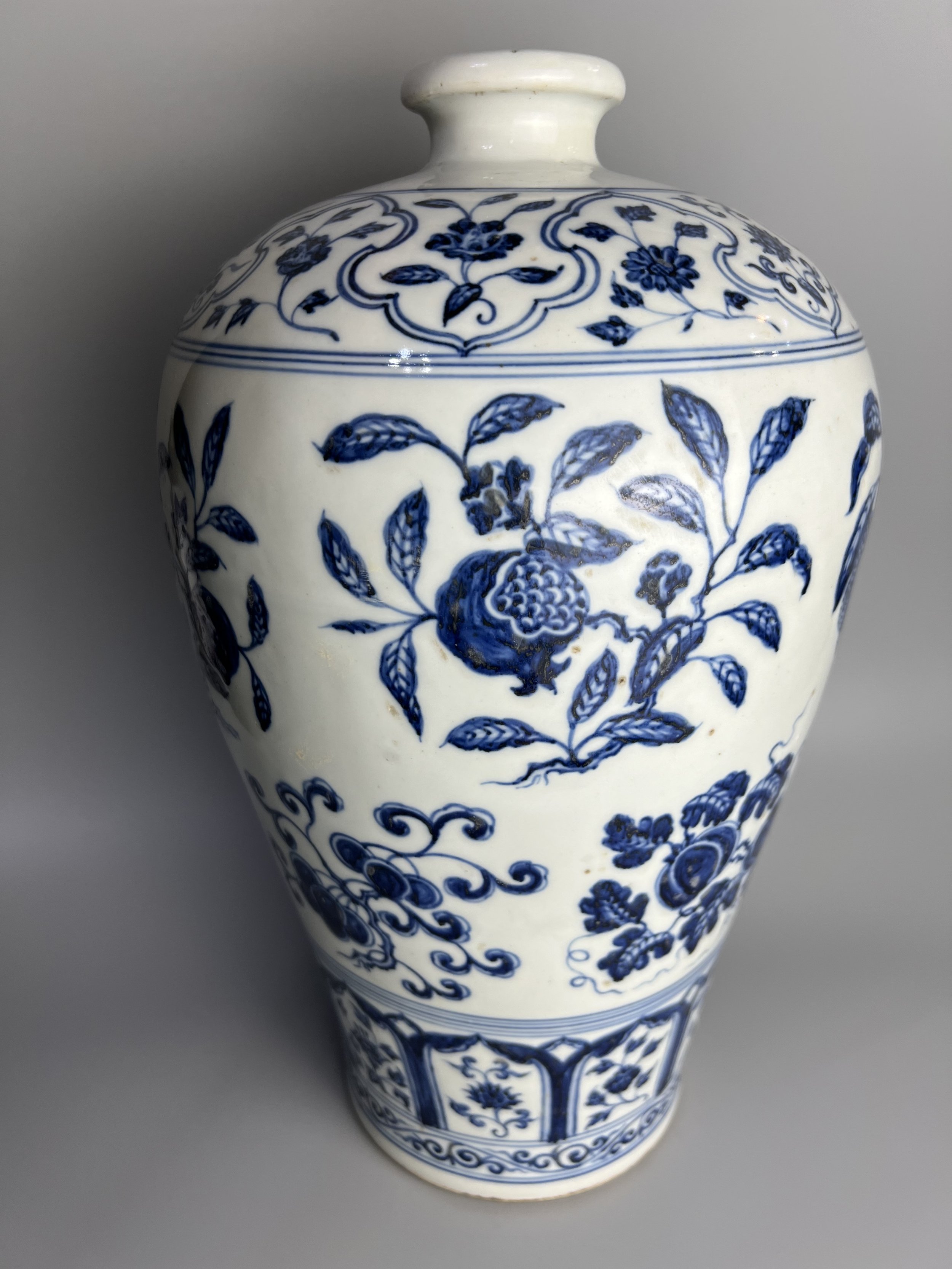 Image 1 of 15
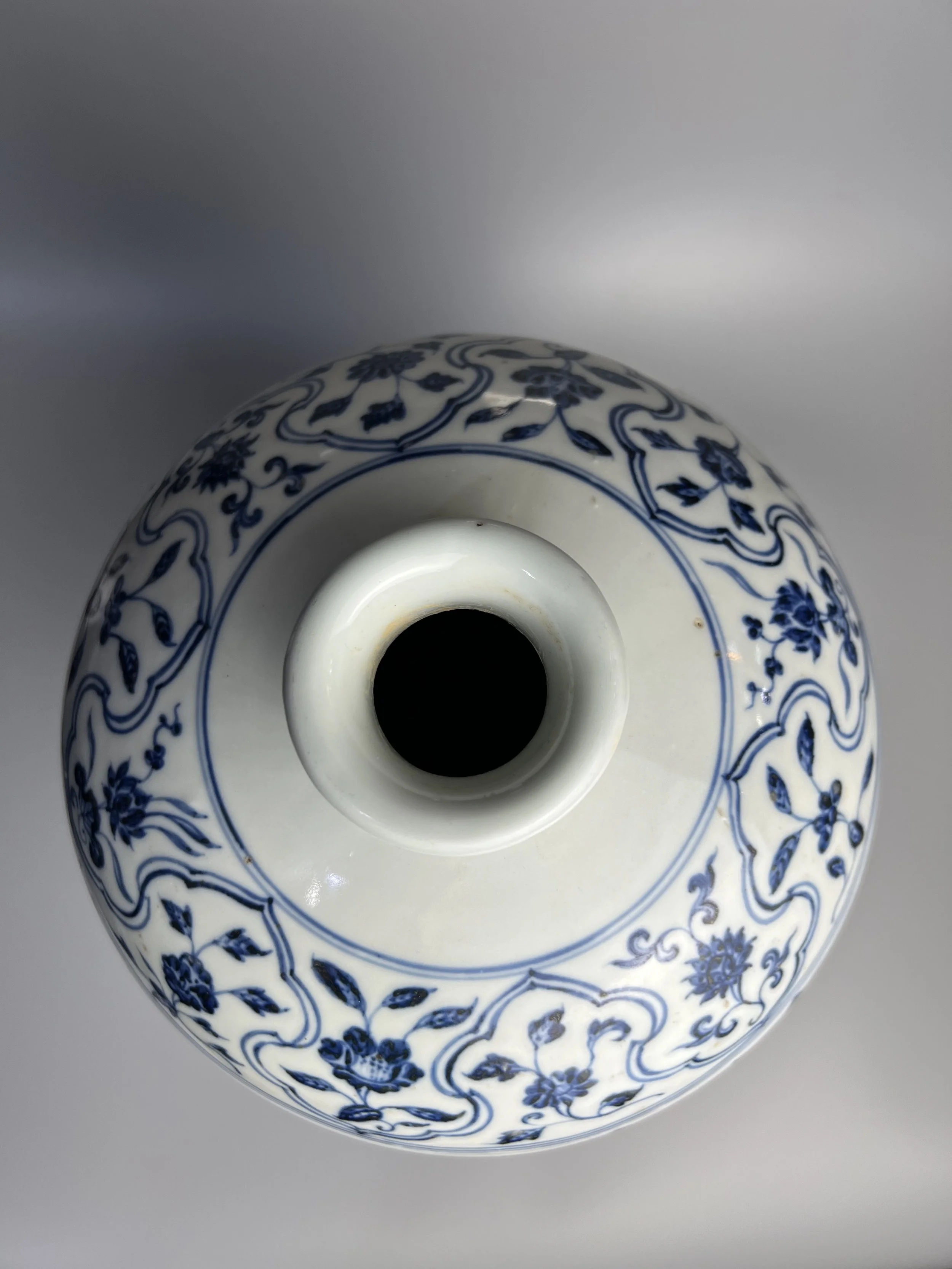 Image 2 of 15
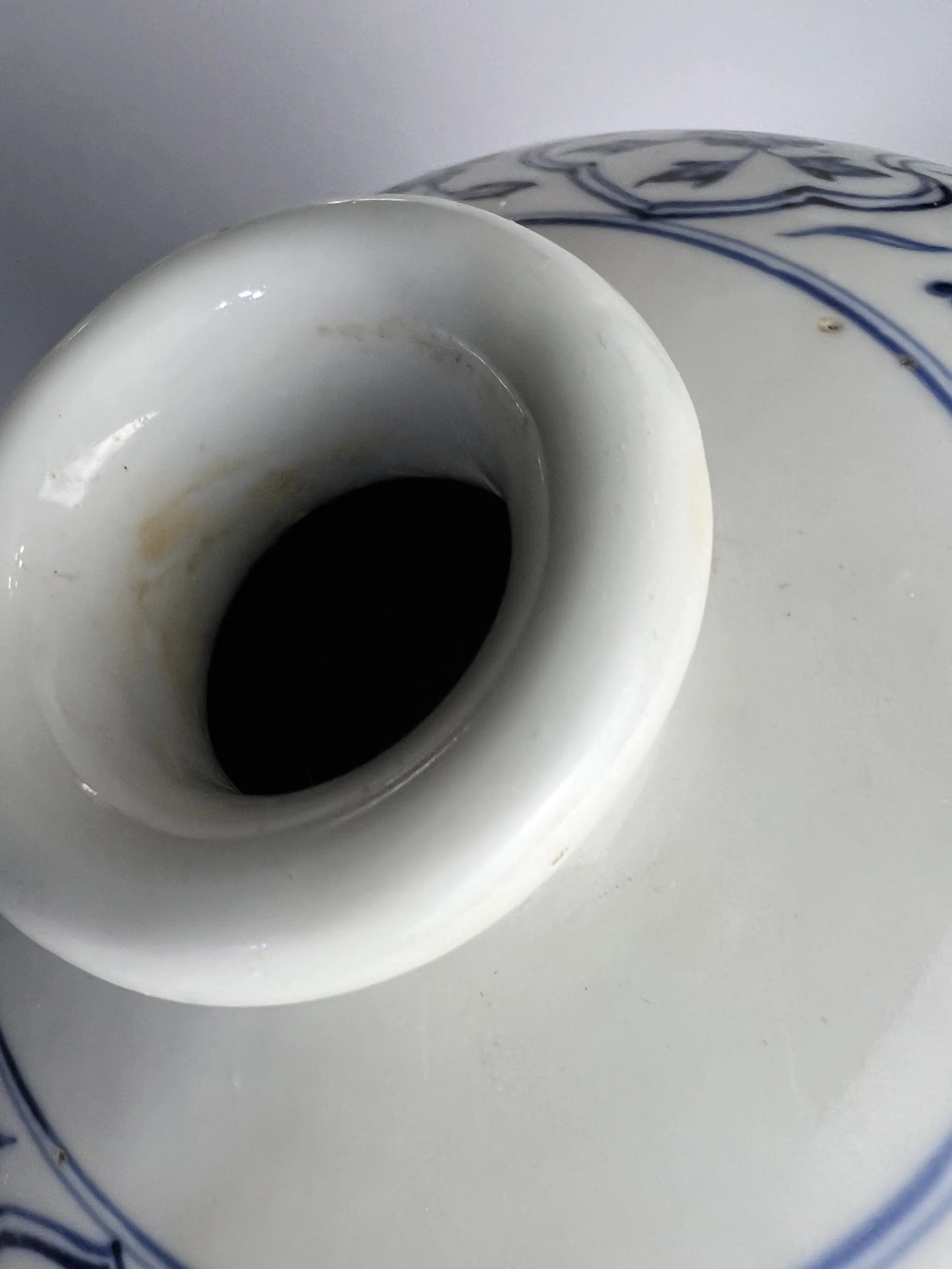 Image 3 of 15
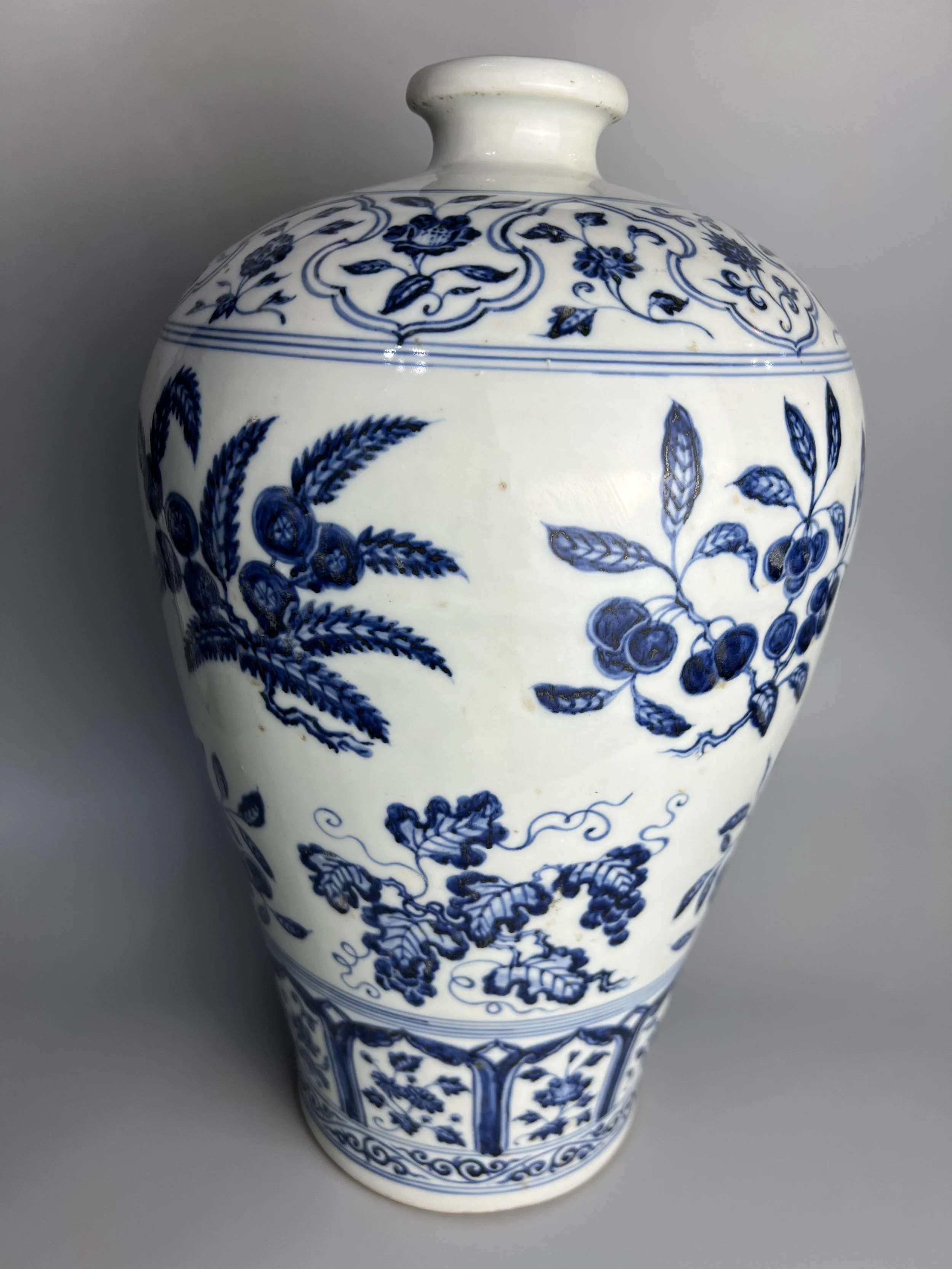 Image 4 of 15
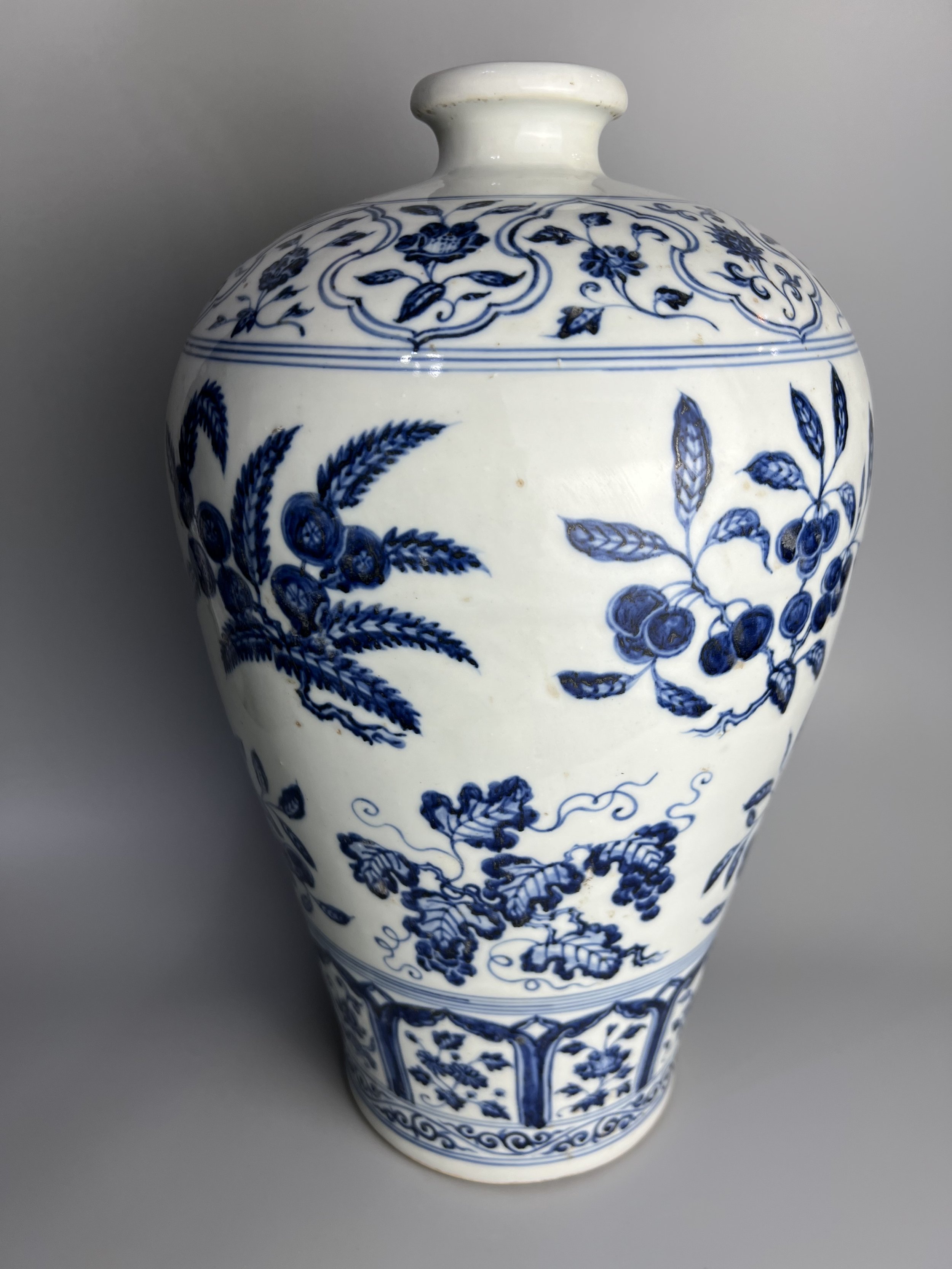 Image 5 of 15
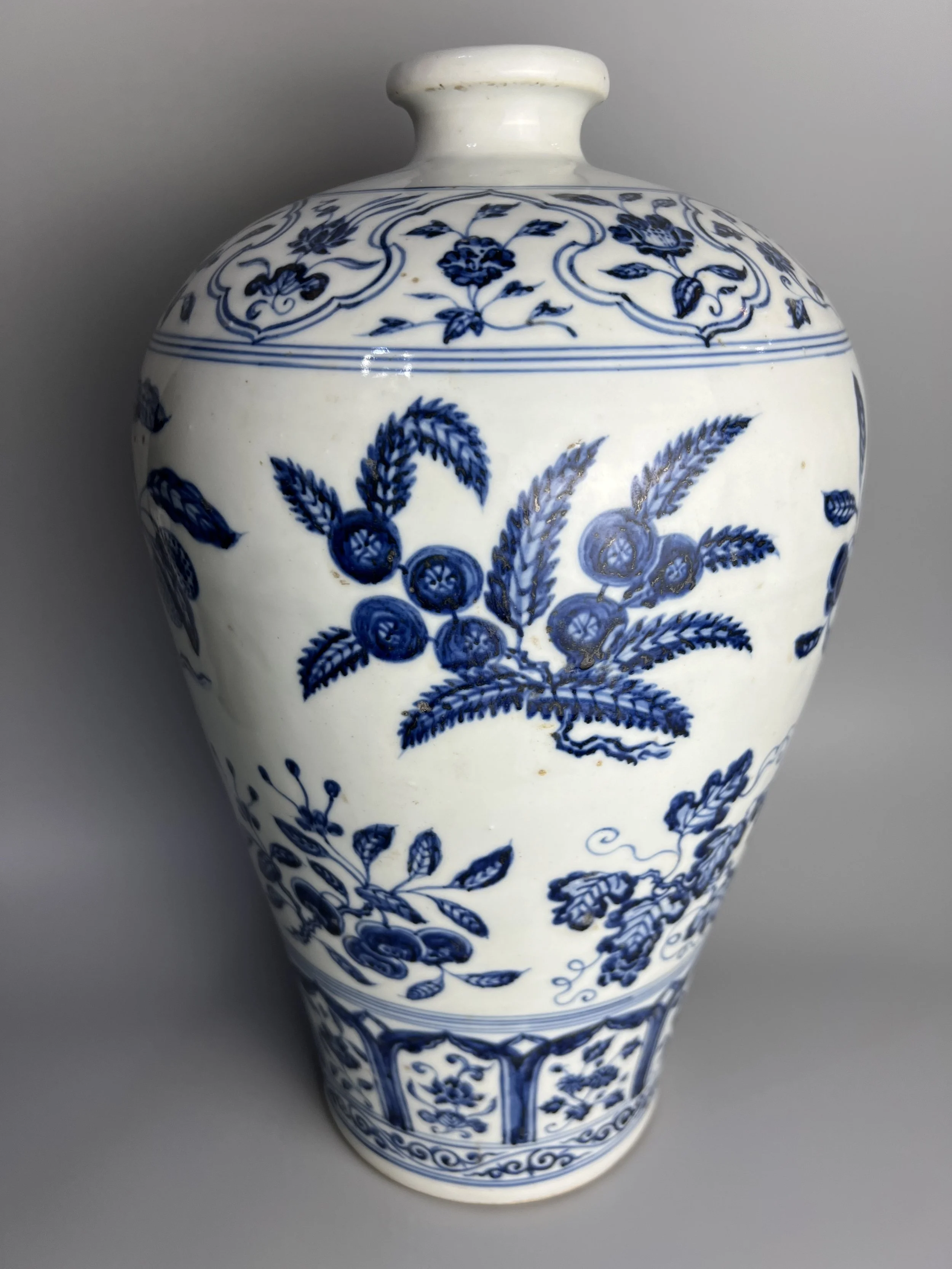 Image 6 of 15
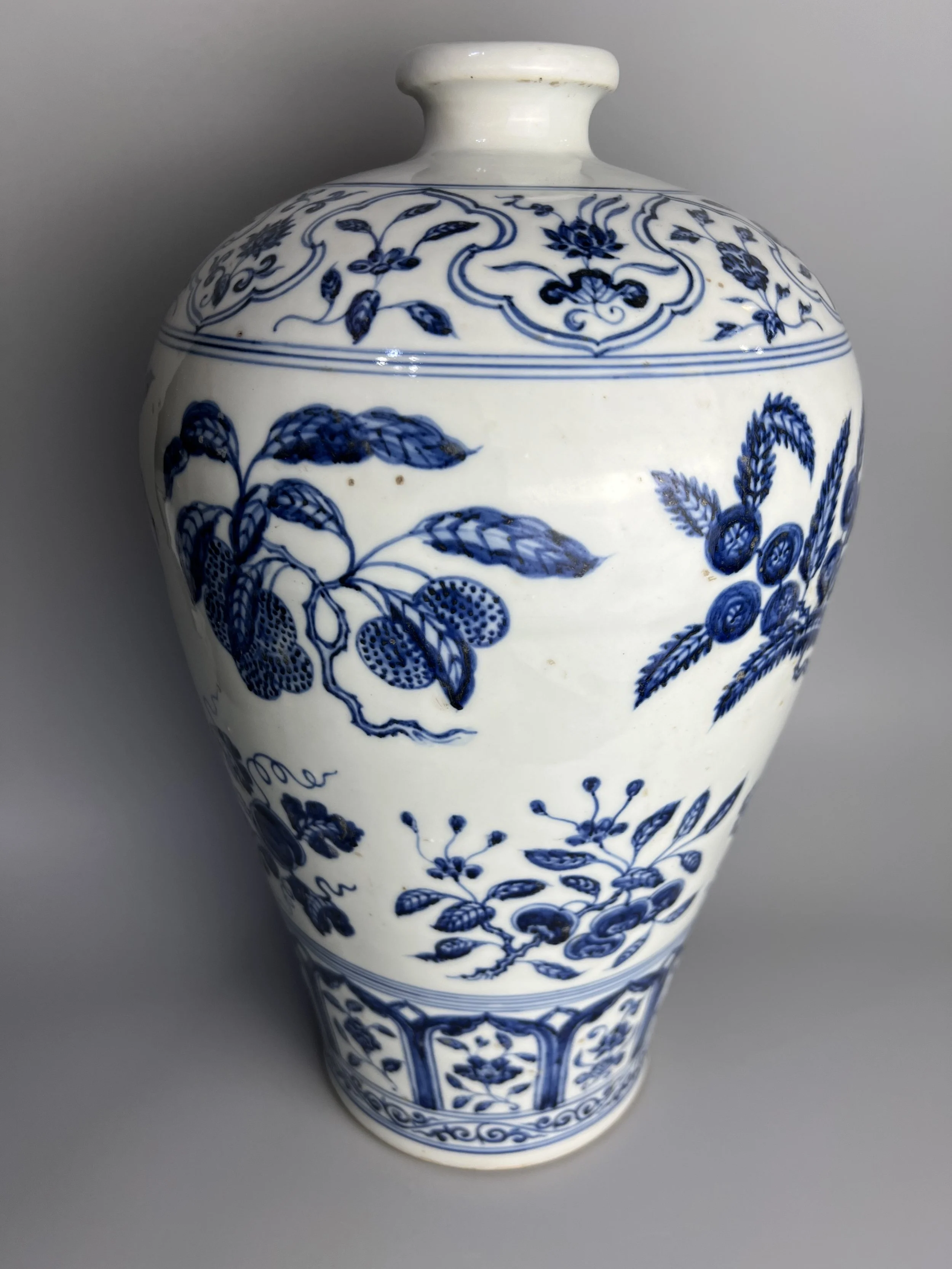 Image 7 of 15
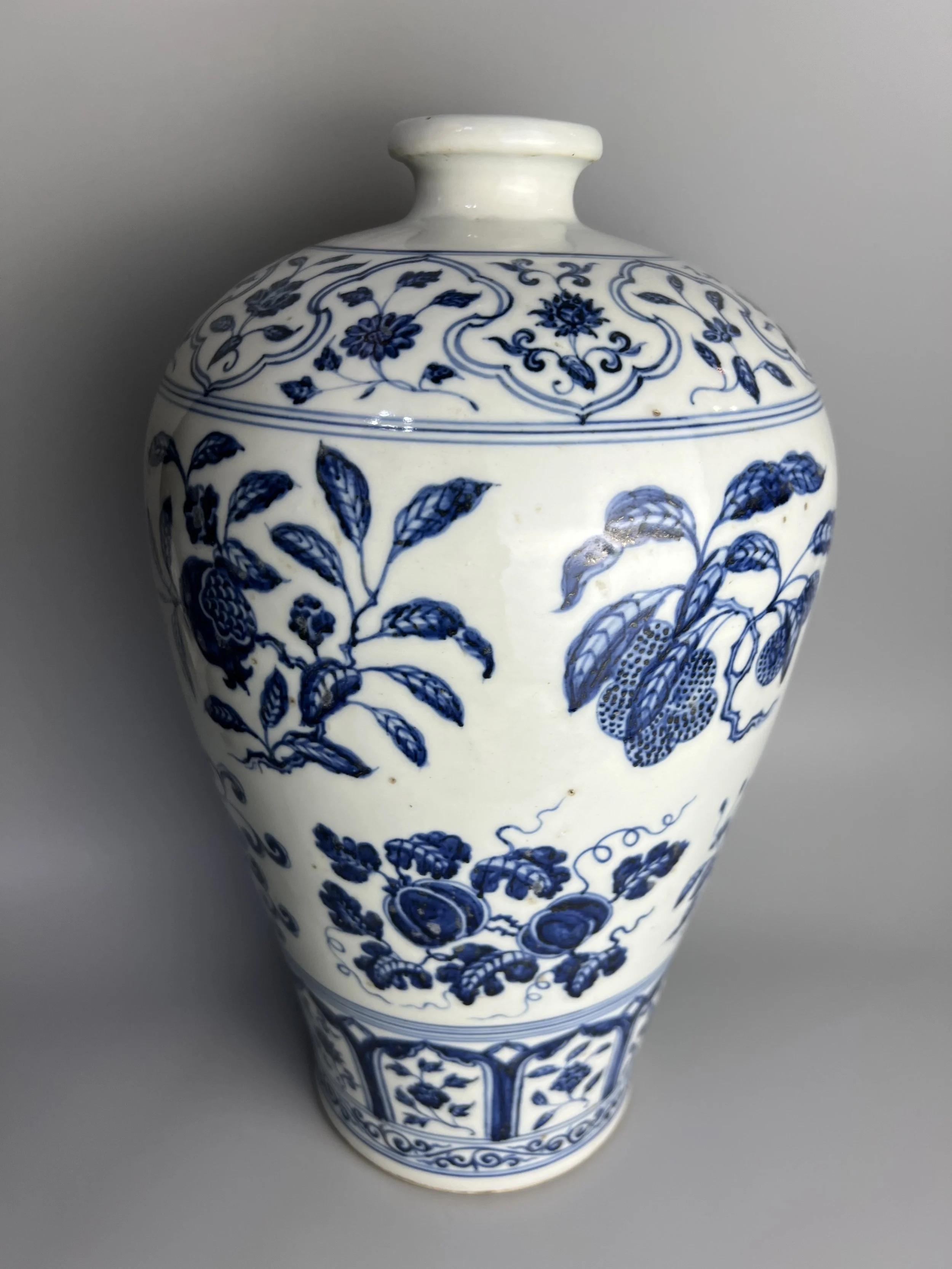 Image 8 of 15
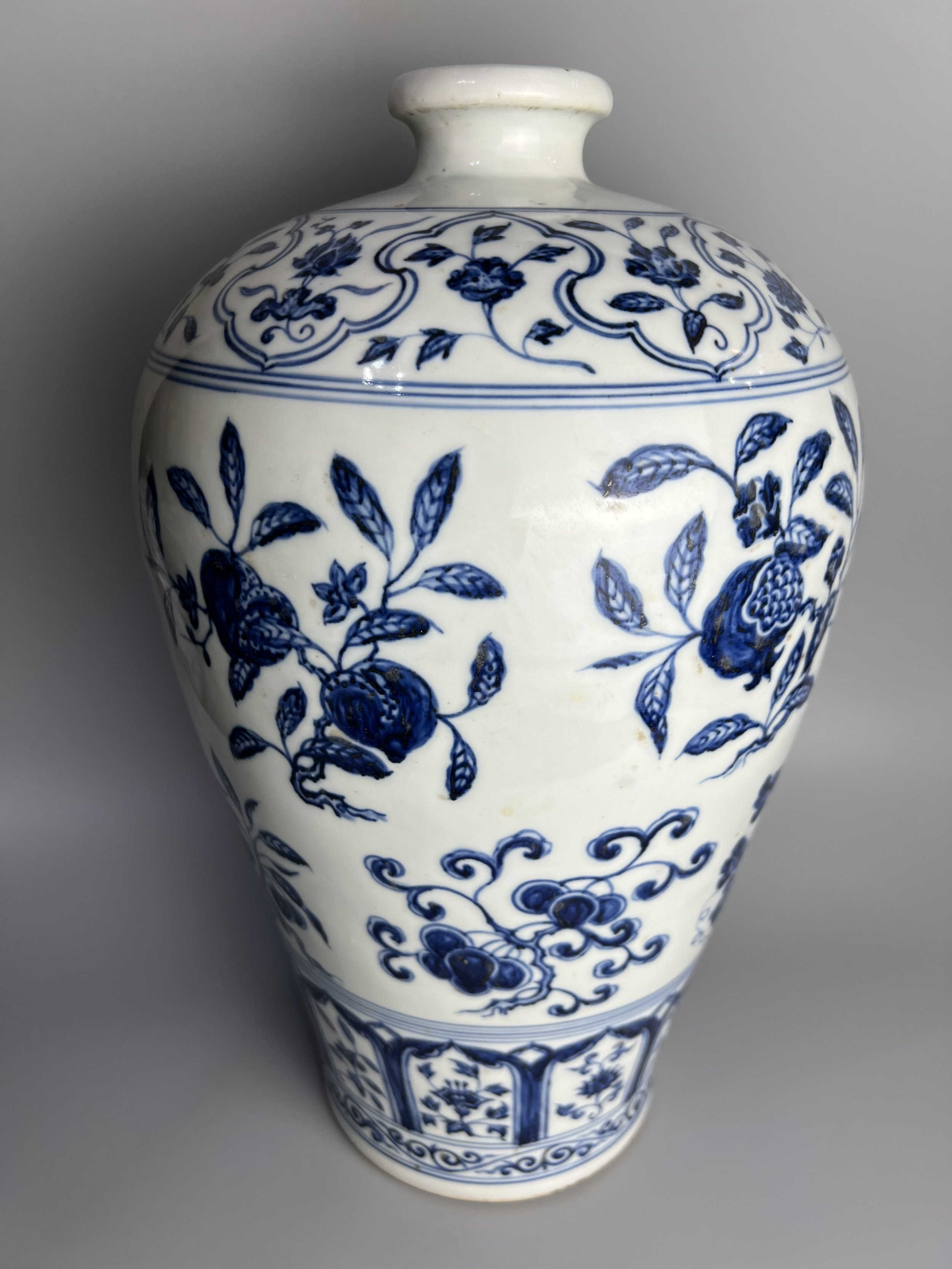 Image 9 of 15
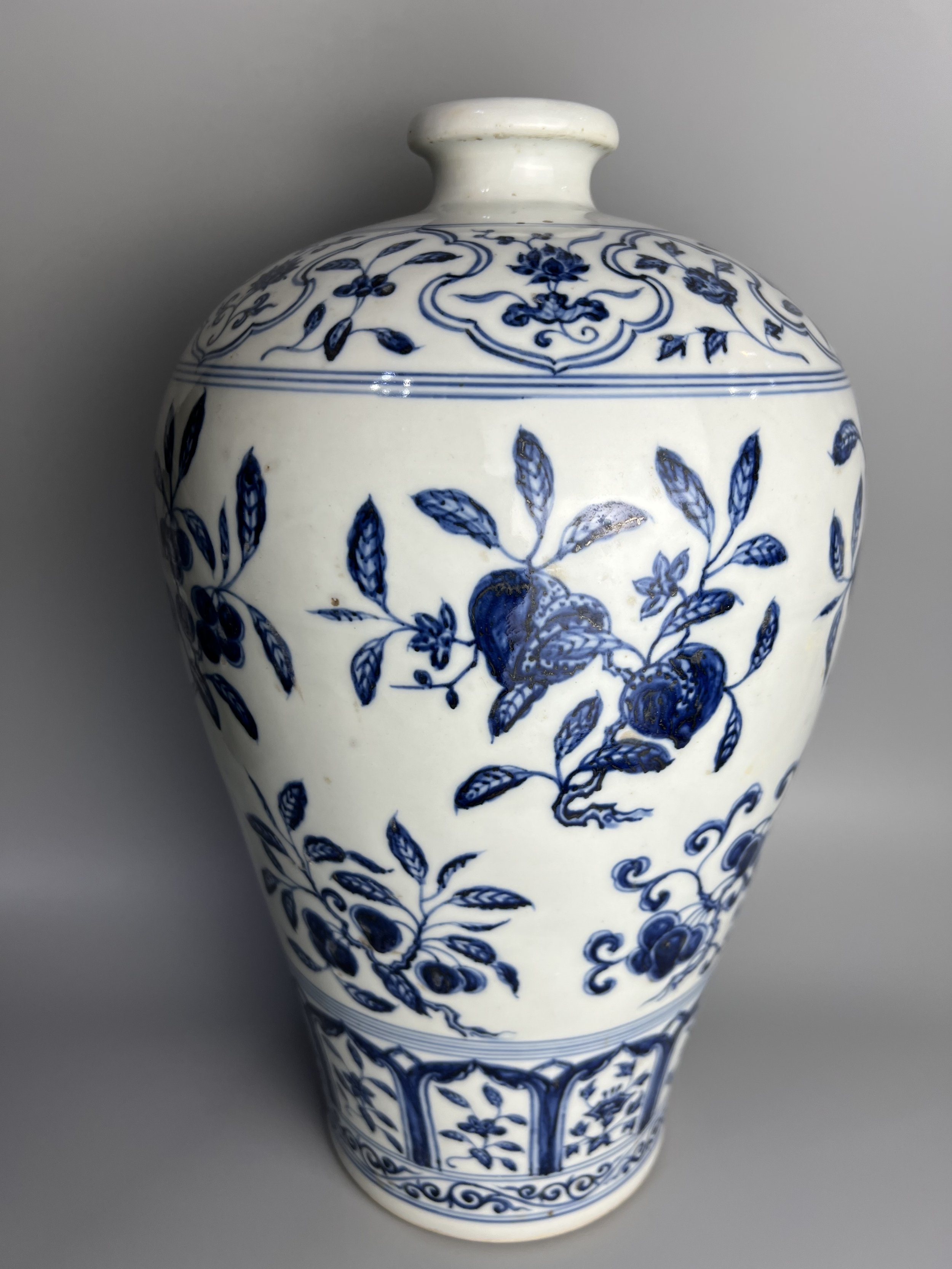 Image 10 of 15
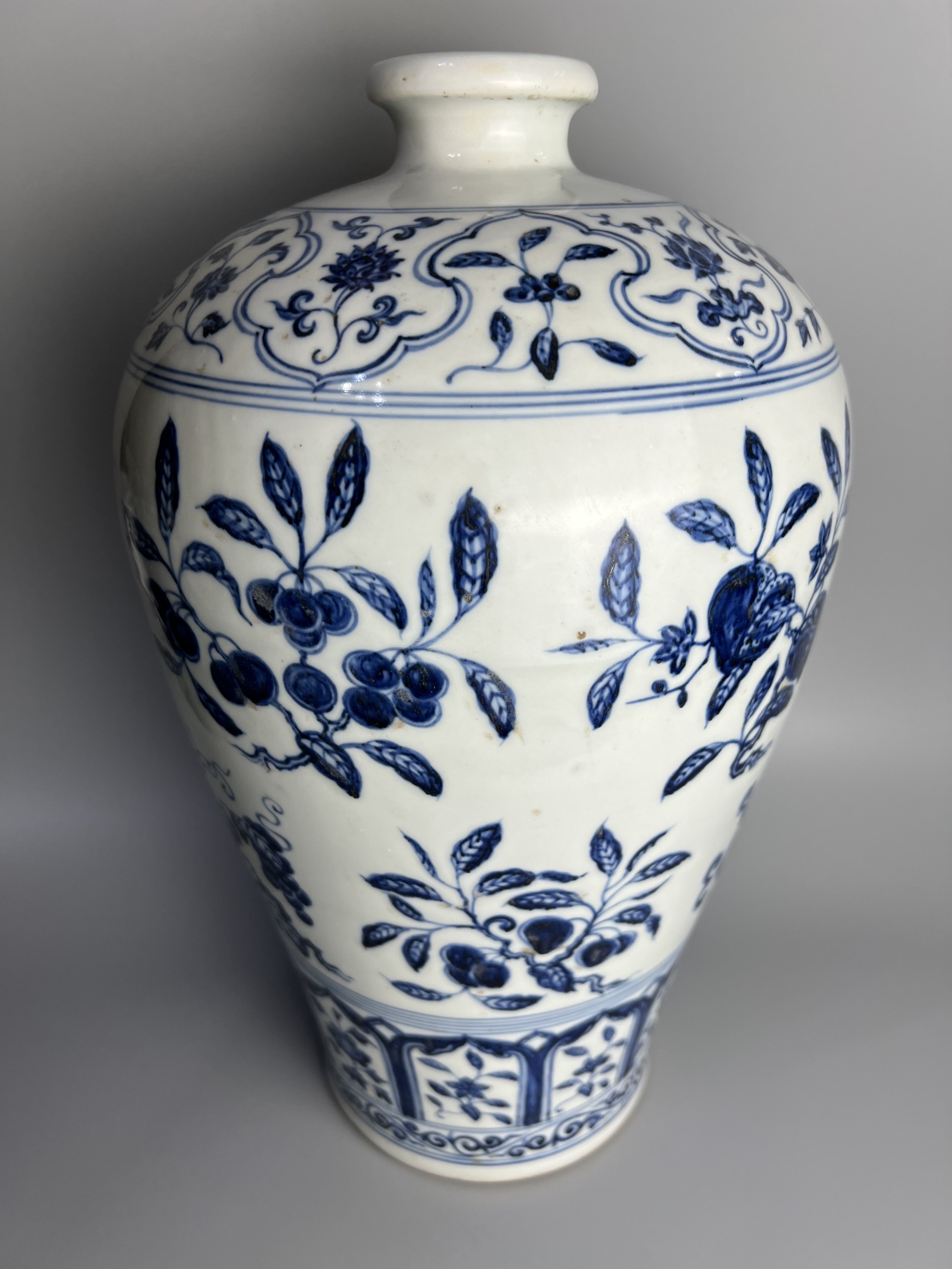 Image 11 of 15
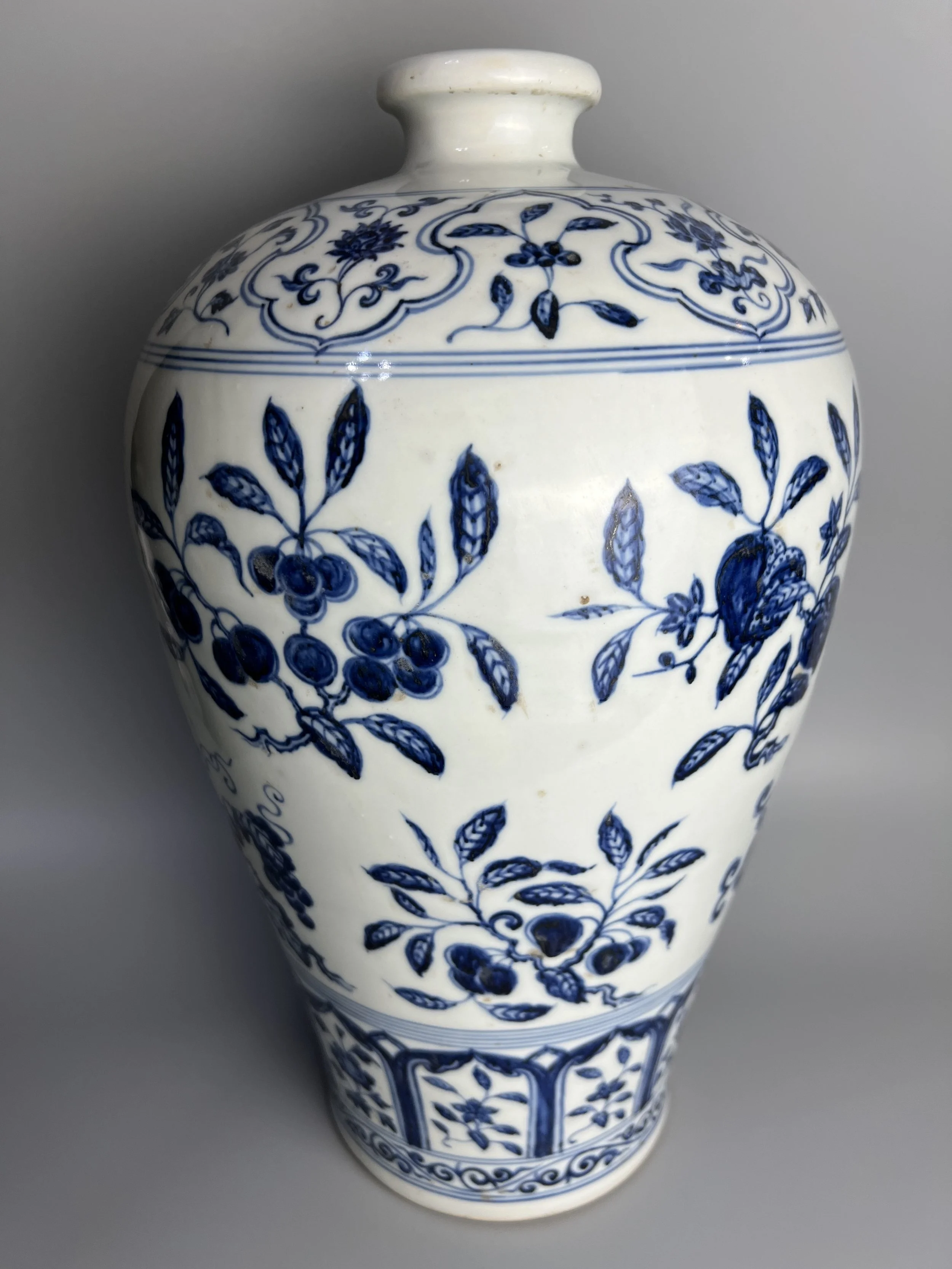 Image 12 of 15
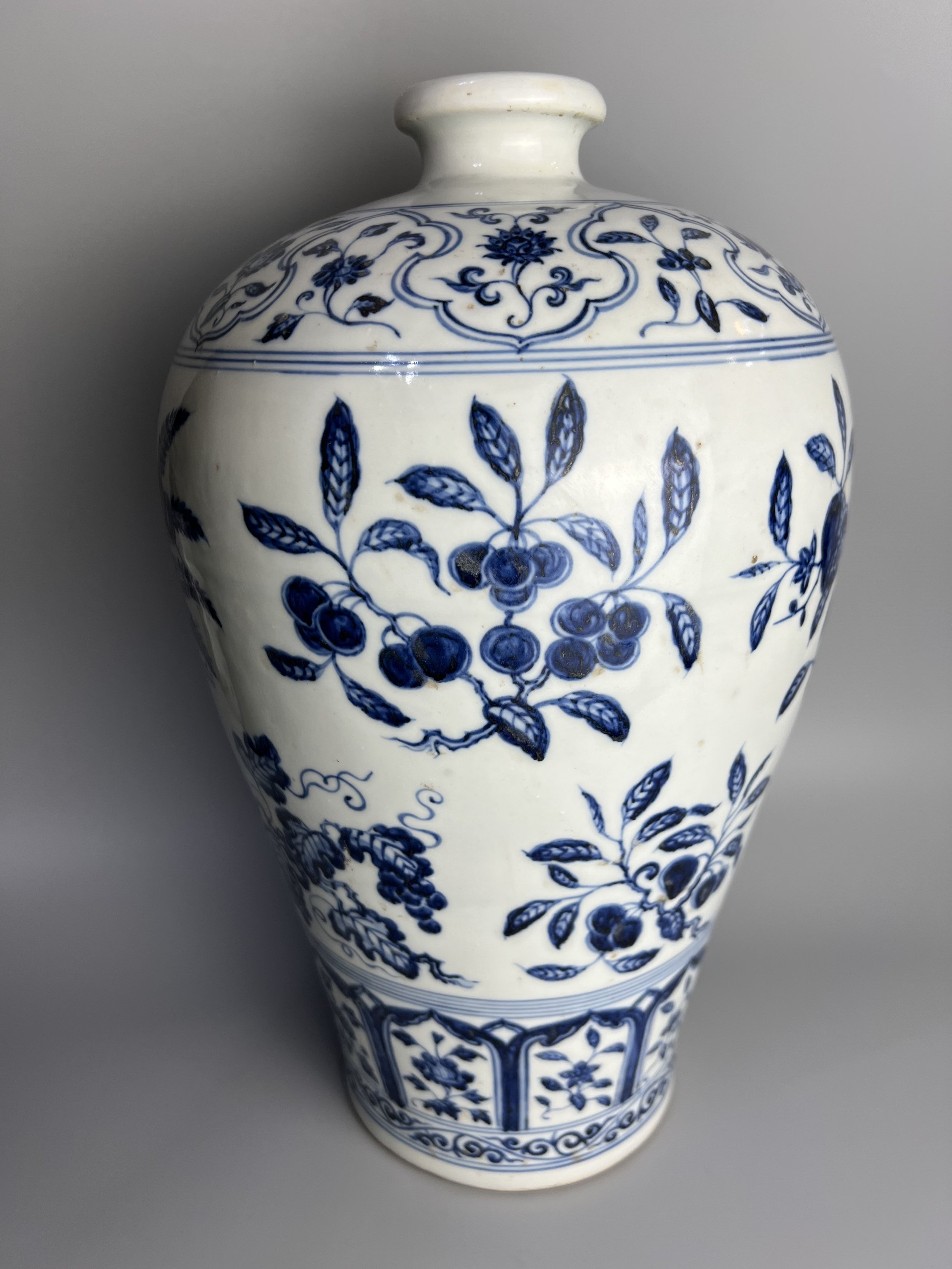 Image 13 of 15
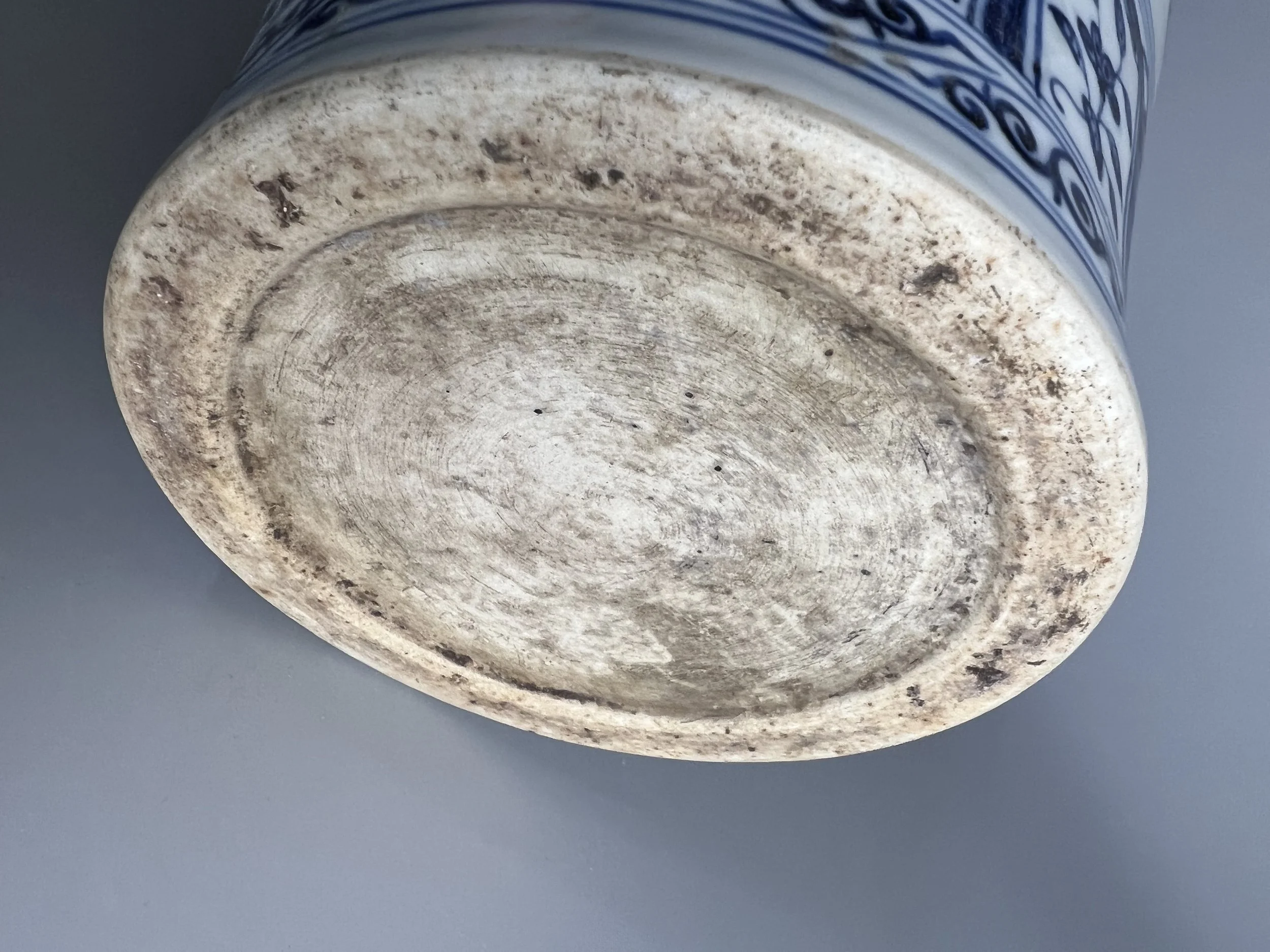 Image 14 of 15
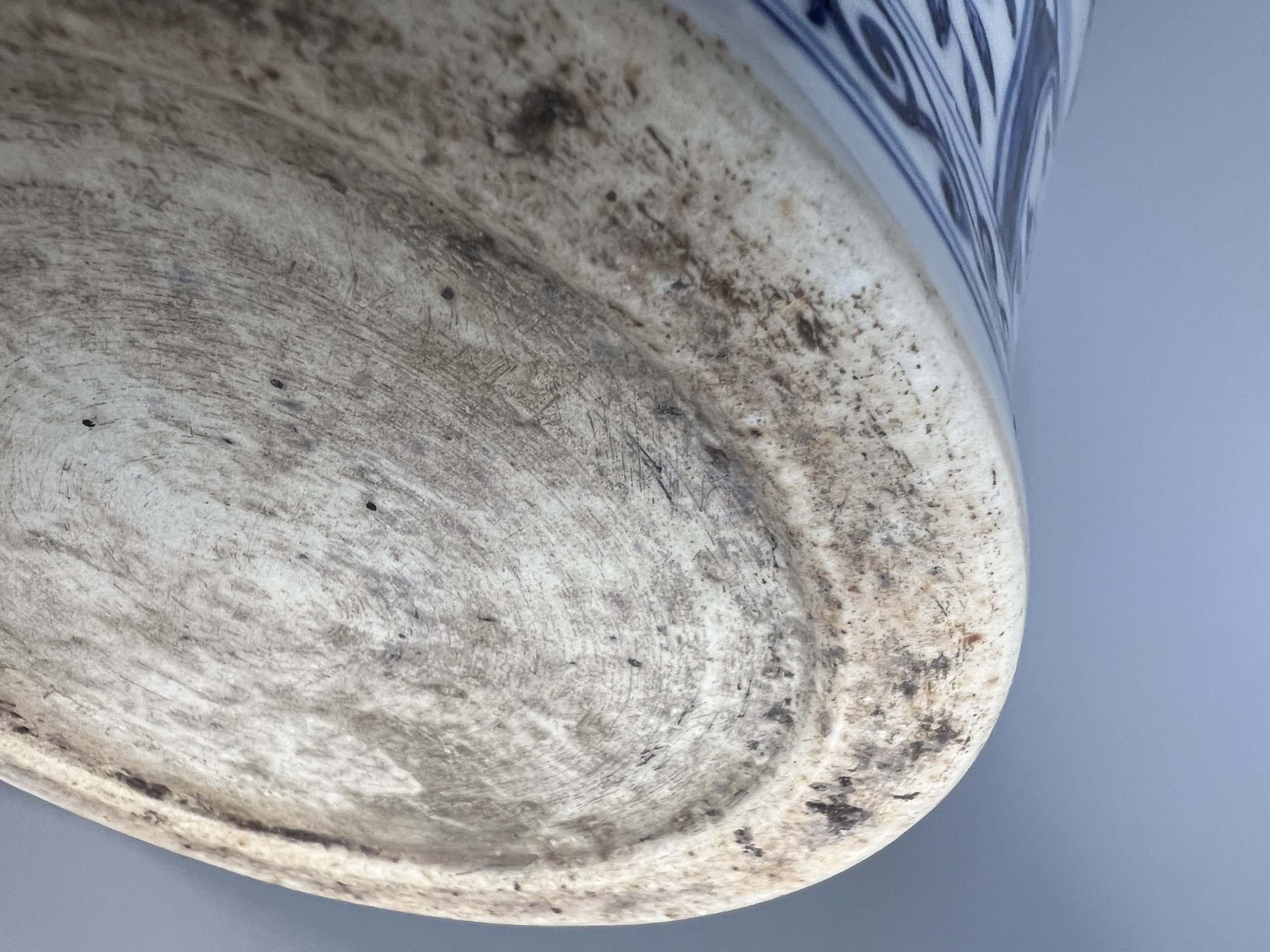 Image 15 of 15