In the brilliant constellation of Chinese ceramic art, doucai porcelain from the Chenghua period (1465-1487) of the Ming dynasty stands out with its exquisite elegance and subtle, refreshing style, revered by later generations as a benchmark. Among these, small cups are particularly refined, representing the pinnacle of Chenghua kiln artistry. The "Da Ming Chenghua Nian Zhi" (Made in the Great Ming Chenghua reign) marked doucai 'Ruyi' pattern cup discussed herein is a model example from this artistic tradition, within the grasp of a hand, fully displaying imperial grandeur and scholarly refinement.
I. Description of the Object
This cup has a delicate and elegant shape, a classic form of the Chenghua period. Its specific characteristics are detailed in the following table:
Feature CategoryDetailed DescriptionDimensions & FormHeight: 4.8 cm. The form is regular, the body uniformly thin, translucent enough to show the shadow of a finger when held to light, described as "thin as a cicada's wing." The ring foot is fine and the trimming neat.Decoration & CompositionThe four sides of the cup body are painted with pairs of ruyi (wish-granting) cloud-head motifs, one above the other, totaling four pairs (eight motifs). The decoration is sparsely and tastefully arranged, emphasizing symmetry, embodying the typical "spacious and elegant" style of Chenghua doucai. The ruyi patterns feature soft, flowing lines, outlined in underglaze blue and filled with overglaze enamels.Glaze & TechniqueExemplifies the classic "doucai" technique. First, the entire decorative outline was traced with cobalt-blue pigment on the biscuit body. After applying a transparent glaze, it was high-fired to fix the underglaze blue. Then, overglaze enamels in colors such as red, green, yellow, and purple were applied within the blue outlines before a second, lower-temperature firing in the enamel kiln. The glaze surface is lush, glossy, and moist, resembling fine jade or fat.Underglaze BlueUses the typical "Pingtangqing" cobalt pigment of the Chenghua period, resulting in a pale, soft, elegant blue with a greyish tinge, lacking the iron-rust spots of Yongle-Xuande period blues. Against the warm white glaze, it creates a hazy, mist-shrouded beauty.MarkThe base bears a six-character underglaze-blue regular script (kaishu) mark in two columns: "Da Ming Chenghua Nian Zhi," enclosed within a double-blue square frame. The calligraphy is vigorous and the characters upright, a standard form for Chenghua imperial ware marks.
II. Essence of Craftsmanship and Era Characteristics
Though small, this cup synthesizes the highest ceramic achievements of its time, reflecting the ultimate pursuits of the Chenghua imperial kilns.
The Wonder of 'Doucai': The name "doucai" means "contending colors" or "joined colors," referring to the interplay between the underglaze blue and the overglaze enamels. This cup perfectly embodies this principle. The underglaze blue forms the skeleton of the design, defining its layout and spirit; the overglaze enamels then "complete the whole" by filling in with vivid reds, greens, yellows, etc., creating a visual effect that combines static (blue) and dynamic (enamels) elements with contrasts of warm and cool tones. Chenghua doucai primarily uses the filling technique, often applying three to four colors on a single piece, with exquisite color application balancing elegance and brilliance.
The Refinement of Body and Glaze: The exceptional value of Chenghua doucai is inseparable from its body and glaze quality. The clay was refined to an extreme degree, resulting in a pure white, fine-grained body of "exquisite crystallinity." The applied white glaze comes in two types: one bluish-white and one pure white. This cup likely has the latter, a warm and soft pure white providing an ideal background for the enamels. The glaze on the base is of the same quality as on the body, an important period characteristic.
The Soul of Color: Chenghua doucai colors are rich and unique. The red is bright and eye-catching, the iron-red沉稳 (steady); the yellows, from delicate to goose-yellow, are transparent and tender; the greens vary in shade, often bright with a yellowish flash. Particularly famed is that unique "chazi" (often called "dull purple") color—deep, intense, and lacking gloss—unique to the Chenghua period and never successfully replicated later. The enamels filling the ruyi patterns on this cup undoubtedly include these classic colors.
The Elegance of Painting: In painting style, Chenghua doucai shifted from the vigorous boldness of the Yongle-Xuande periods towards exquisite, graceful refinement. Motifs were outlined using a double-line contour-filling method, with slender, soft lines. The style is described as "flowers without shaded sides, leaves without reverse sides," with patterns lacking chiaroscuro or foreshortening, appearing古朴雅致 (archaic and elegant). The ruyi, a traditional auspicious motif, is simple in form yet elastic, symbolizing "everything as you wish" (shishi ruyi), aligning with the overall trend of Chenghua porcelain decoration towards motifs full of life's pleasures and auspicious meaning.
III. Historical Context and Cultural Significance
This cup is not ordinary utilitarian ware but an artistic product deeply rooted in a specific historical and cultural milieu.
Projection of Imperial Taste: The Chenghua Emperor Zhu Jianshen had an introverted, artistic personality. His personal preferences profoundly influenced imperial ware style. Compared to the grand ritual vessels of earlier reigns, the Chenghua Emperor favored small, exquisite objects for desk appreciation. This type of small cup, fitting comfortably in the palm, suited his细腻敏感 (subtle and sensitive) aesthetic, moving imperial porcelain from solemn halls to quiet studies, imbuing it with a strong literati and personal character.
A Slice of Palace Life: Four pairs of ruyi motifs encircling the cup are simple yet auspicious. This decoration does not seek visual complexity but rather rewards contemplation during handling, appreciating the rhythm of its lines and harmony of colors. It was likely a "master's cup" (zhuren bei) for drinking tea or wine in the palace or among the imperial nobility, a material witness to refined court life. Holding this cup connects one across five centuries to that restrained, fastidious attitude towards living.
Symbol of Technical Pinnacle: Chenghua doucai technique reached maturity based on the underglaze-red and overglaze enamels (wucai) of the Xuande period. Its production demands were extremely high. From body and glaze preparation, underglaze-blue painting, to multiple kiln firings, the slightest error at any stage could ruin the piece, resulting in a very low success rate. Therefore, every surviving Chenghua doucai piece represents the crystallized wisdom and effort of countless skilled craftsmen at the Jingdezhen Imperial Kilns, embodying the highest level of world ceramic craftsmanship in the latter half of the 15th century.
IV. Artistic Value and Status in Collecting
In collecting circles, "Da Ming Chenghua Nian Zhi" doucai porcelain remains the jewel in the crown. This ruyi-pattern cup is no exception.
Status as "Treasure among Porcelains": Chenghua doucai has been treasured since the Ming dynasty. The Shenzong Shilu (Veritable Records of the Wanli Emperor) from the Wanli period records that "a pair of Chenghua wine cups could fetch a hundred taels of silver." Its scarcity (mostly small-batch imperial production), artistry, and imperial provenance jointly establish its unparalleled status. This cup's form, decoration, and mark all align with authentic Chenghua characteristics, making it a precious physical specimen for studying the period's ceramic art.
Benchmark of Market Value: In today's global top-tier art auction market, well-preserved Chenghua doucai pieces with clear provenance are major highlights, repeatedly setting record prices. Their value transcends ordinary antiques, becoming significant cultural assets and investment vehicles. This cup's appearance on the market would undoubtedly attract intense attention.
Timeless Aesthetic Appeal: The beauty of this cup lies in its overall harmony and perfect details. It does not overwhelm with technical display but moves with its含蓄温润 (subtle and warm) character. That "quietly majestic, full of graceful charm" (dan dan mu mu, rao you feng zhi) quality was anciently described as "like eating an olive—it leaves a lasting aftertaste." This is precisely why Chenghua doucai, across centuries, still resonates deeply with modern viewers: it embodies an Eastern aesthetic spirit that pursues ultimate intrinsic quality and champions优雅简约 (elegance and simplicity).
Conclusion
This Chenghua doucai 'Ruyi' pattern cup, a mere 4.8 cm high, is like a concentrated essence of time. Within its slender body, pale blue outlines, and bright enamels are frozen a fragment of palace history, an emperor's aesthetic, and the technical limits of an era. It is not merely a drinking vessel but a three-dimensional painting to be held in the palm and appreciated with understanding, an irreproducible artistic典范 (paradigm) in the history of Chinese ceramics, whose brilliance endures.
掌中乾坤,案上清玩:明成化斗彩如意纹杯鉴析
在中国陶瓷艺术的璀璨星空中,明代成化年间的斗彩瓷器,以其玲珑秀雅、淡雅清新的风格,独树一帜,被后世奉为圭臬。其中,小件杯皿尤为精绝,堪代表成窑艺术的巅峰成就。本文所述之“大明成化年制”款斗彩如意纹杯,便是这一艺术传统中的一件典范之作,于盈握之间,尽显皇家气象与文人雅趣。
一、 器物本体描述
此杯造型纤巧俊秀,为成化时期经典的杯式之一。其具体特征如下表所示:
特征类别具体描述尺寸形制高4.8厘米。器型规整,胎体匀薄,迎光透视可见指影,有“薄如蝉翼”之感。圈足细腻,修胎工整。纹饰构图杯身四面绘饰上下成对的如意云头纹,共计四对八只。纹饰布局疏朗有致,讲究对称,体现了成化斗彩画面“疏朗秀丽”的典型风格。如意纹线条柔和流畅,以青花双勾轮廓,内填彩料。釉彩工艺属典型的“斗彩”工艺。先于胎体上以青料勾勒全部纹饰轮廓,施透明釉后经高温烧成釉下青花;再于釉上在青花轮廓内填绘红、绿、黄、紫等彩料,复入彩炉低温焙烧而成。釉面肥厚莹润,如脂似玉。青花特征所用青料为成化时期典型的“平等青”(亦称“陂塘青”),发色淡雅柔和,蓝中闪灰,无永宣青花的铁锈斑点,与温润的白釉相映,呈云遮雾罩之朦胧美。款识杯底心书青花楷体“大明成化年制”六字双行款,外围青花双方框。款字笔法遒劲,字体挺拔,为成化官窑标准款识形制之一。
二、 工艺精粹与时代烙印
此杯虽小,却集当时制瓷工艺之大成,处处体现成化官窑的极致追求。
“斗彩”之妙:“斗彩”之名,取其釉下青花与釉上诸彩“争奇斗艳”之意。此杯的装饰完美诠释了这一工艺精髓。釉下青花作为整个画面的骨架,决定了纹样的布局与神韵;釉上彩则在其基础上“凑其全体”,以鲜明的红、绿、黄等色填充,形成静(青花)动(彩料)兼蓄、冷暖对比的视觉效果。成化斗彩的施彩技法以填彩为主,且一件器物上常施用三至四种彩,设色精当,素雅与鲜丽兼具。
胎釉之精:成化斗彩之所以名贵,与其胎釉质地密不可分。其胎土淘洗极为精细,胎质洁白细腻,达到了“细腻晶莹”的程度。所施白釉有两种,一种白中闪青,一种洁白纯正,此杯釉色应属后者,温润柔和,为彩绘提供了绝佳的底色。器物底部釉质与器身一致,亦是重要时代特征。
色彩之魂:成化斗彩的色彩丰富且独具特色。其红色鲜艳耀目,油红沉稳;娇黄、鹅黄透明娇嫩;绿色深浅不一,多透亮闪黄;尤以那抹独特的“姹紫”(或作“差紫”)色最为后世称道,其色浓而无光,为成化朝所独有,后世仿制均难及神韵。此杯如意纹中所填彩料,必包含这些典型色彩。
画意之雅:在绘画风格上,成化斗彩一改永宣时期的雄健豪放,转向精巧秀逸。纹饰勾勒采用双线平涂之法,线条纤细柔和。所谓“花无阴面,叶无反侧”,图案不分阴阳向背,显得古朴雅致。如意纹作为传统吉祥纹样,造型简约而富有弹性,寓意“事事如意”,符合成化时期瓷器纹饰充满生活意趣与祥瑞气息的总体趋势。
三、 历史语境与人文内涵
此杯并非普通的日用器,而是深植于特定历史与文化土壤中的艺术产物。
帝王审美的投射:成化皇帝朱见深性格内敛,富有艺术气质,他的个人喜好深刻影响了官窑瓷器的风格。相较于前朝的恢弘礼器,成化帝更偏爱小巧精致、可供案头玩赏的器物。这类高不足盈掌的小杯,正契合了他细腻敏感的审美情趣,使官窑瓷器从庄严的庙堂走向幽静的斋阁,沾染了浓厚的文人化和私人化色彩。
宫廷生活的切片:四对如意纹环绕杯身,简洁而寓意吉祥。这种装饰不追求视觉的繁复冲击,而讲究在持续的把玩与凝视中,体会其线条的韵律与色彩的和谐。它很可能就是当时宫廷或皇室贵族用于品茗、饮酒的“主人杯”,是精致宫廷生活的物质见证。手握此杯,仿佛能跨越时空,感受到五百年前那份内敛而考究的生活态度。
技术巅峰的象征:成化斗彩工艺在宣德时期青花五彩的基础上臻于成熟。其制作要求极高,从胎釉配制、青花描绘到多次入窑烧造,任何环节的微小失误都会导致前功尽弃,成品率极低。因此,每一件流传下来的成化斗彩,都是当时景德镇御窑厂无数巧匠智慧与心血的结晶,代表了十五世纪下半叶世界陶瓷手工艺的最高水平。
四、 艺术价值与收藏地位
在收藏界,“大明成化年制”斗彩瓷器始终是皇冠上的明珠,此如意纹杯亦不例外。
“瓷中珍品”的定位:成化斗彩自明代起就已被视为珍宝。万历朝《神宗实录》便有“成窑酒杯,每对至博银百金”的记载。其稀缺性(多为官窑小批量烧造)、艺术性及帝王背景,共同奠定了其无与伦比的地位。此杯造型、纹饰、款识均符合成化真品特征,是研究该时期陶瓷艺术的珍贵实物资料。
市场价值的标杆:在当今全球顶级艺术品拍卖市场,品相完好、来源清晰的成化斗彩器物是绝对的重器,屡次刷新成交纪录。其价值已超越一般古玩,成为重要的文化资产和投资标的。此杯若现身市场,必将引发高度关注。
永恒的美学魅力:此杯之美,在于其整体的和谐与细节的完美。它不靠炫技夺人,而以含蓄温润的气质动人。那种“淡淡穆穆,饶有风致”的韵味,被古人形容为“如食橄榄,颇有回味”。这正是成化斗彩穿越数百年时光,依然能引起现代人深切共鸣的原因——它诠释了一种追求极致内在品质、崇尚优雅简约的东方美学精神。
结语
这枚高仅4.8厘米的成化斗彩如意纹杯,犹如一滴浓缩的时光精华。在其纤薄的胎体、淡雅的青花与明艳的彩料之间,凝固了一段宫廷的往事、一位帝王的审美、一个时代的工艺极限。它不仅是饮器,更是可执于掌中、会心欣赏的立体画卷,是中华陶瓷史上不可复制的艺术典范,其光芒历久弥新。
In the brilliant constellation of Chinese ceramic art, doucai porcelain from the Chenghua period (1465-1487) of the Ming dynasty stands out with its exquisite elegance and subtle, refreshing style, revered by later generations as a benchmark. Among these, small cups are particularly refined, representing the pinnacle of Chenghua kiln artistry. The "Da Ming Chenghua Nian Zhi" (Made in the Great Ming Chenghua reign) marked doucai 'Ruyi' pattern cup discussed herein is a model example from this artistic tradition, within the grasp of a hand, fully displaying imperial grandeur and scholarly refinement.
I. Description of the Object
This cup has a delicate and elegant shape, a classic form of the Chenghua period. Its specific characteristics are detailed in the following table:
Feature CategoryDetailed DescriptionDimensions & FormHeight: 4.8 cm. The form is regular, the body uniformly thin, translucent enough to show the shadow of a finger when held to light, described as "thin as a cicada's wing." The ring foot is fine and the trimming neat.Decoration & CompositionThe four sides of the cup body are painted with pairs of ruyi (wish-granting) cloud-head motifs, one above the other, totaling four pairs (eight motifs). The decoration is sparsely and tastefully arranged, emphasizing symmetry, embodying the typical "spacious and elegant" style of Chenghua doucai. The ruyi patterns feature soft, flowing lines, outlined in underglaze blue and filled with overglaze enamels.Glaze & TechniqueExemplifies the classic "doucai" technique. First, the entire decorative outline was traced with cobalt-blue pigment on the biscuit body. After applying a transparent glaze, it was high-fired to fix the underglaze blue. Then, overglaze enamels in colors such as red, green, yellow, and purple were applied within the blue outlines before a second, lower-temperature firing in the enamel kiln. The glaze surface is lush, glossy, and moist, resembling fine jade or fat.Underglaze BlueUses the typical "Pingtangqing" cobalt pigment of the Chenghua period, resulting in a pale, soft, elegant blue with a greyish tinge, lacking the iron-rust spots of Yongle-Xuande period blues. Against the warm white glaze, it creates a hazy, mist-shrouded beauty.MarkThe base bears a six-character underglaze-blue regular script (kaishu) mark in two columns: "Da Ming Chenghua Nian Zhi," enclosed within a double-blue square frame. The calligraphy is vigorous and the characters upright, a standard form for Chenghua imperial ware marks.
II. Essence of Craftsmanship and Era Characteristics
Though small, this cup synthesizes the highest ceramic achievements of its time, reflecting the ultimate pursuits of the Chenghua imperial kilns.
The Wonder of 'Doucai': The name "doucai" means "contending colors" or "joined colors," referring to the interplay between the underglaze blue and the overglaze enamels. This cup perfectly embodies this principle. The underglaze blue forms the skeleton of the design, defining its layout and spirit; the overglaze enamels then "complete the whole" by filling in with vivid reds, greens, yellows, etc., creating a visual effect that combines static (blue) and dynamic (enamels) elements with contrasts of warm and cool tones. Chenghua doucai primarily uses the filling technique, often applying three to four colors on a single piece, with exquisite color application balancing elegance and brilliance.
The Refinement of Body and Glaze: The exceptional value of Chenghua doucai is inseparable from its body and glaze quality. The clay was refined to an extreme degree, resulting in a pure white, fine-grained body of "exquisite crystallinity." The applied white glaze comes in two types: one bluish-white and one pure white. This cup likely has the latter, a warm and soft pure white providing an ideal background for the enamels. The glaze on the base is of the same quality as on the body, an important period characteristic.
The Soul of Color: Chenghua doucai colors are rich and unique. The red is bright and eye-catching, the iron-red沉稳 (steady); the yellows, from delicate to goose-yellow, are transparent and tender; the greens vary in shade, often bright with a yellowish flash. Particularly famed is that unique "chazi" (often called "dull purple") color—deep, intense, and lacking gloss—unique to the Chenghua period and never successfully replicated later. The enamels filling the ruyi patterns on this cup undoubtedly include these classic colors.
The Elegance of Painting: In painting style, Chenghua doucai shifted from the vigorous boldness of the Yongle-Xuande periods towards exquisite, graceful refinement. Motifs were outlined using a double-line contour-filling method, with slender, soft lines. The style is described as "flowers without shaded sides, leaves without reverse sides," with patterns lacking chiaroscuro or foreshortening, appearing古朴雅致 (archaic and elegant). The ruyi, a traditional auspicious motif, is simple in form yet elastic, symbolizing "everything as you wish" (shishi ruyi), aligning with the overall trend of Chenghua porcelain decoration towards motifs full of life's pleasures and auspicious meaning.
III. Historical Context and Cultural Significance
This cup is not ordinary utilitarian ware but an artistic product deeply rooted in a specific historical and cultural milieu.
Projection of Imperial Taste: The Chenghua Emperor Zhu Jianshen had an introverted, artistic personality. His personal preferences profoundly influenced imperial ware style. Compared to the grand ritual vessels of earlier reigns, the Chenghua Emperor favored small, exquisite objects for desk appreciation. This type of small cup, fitting comfortably in the palm, suited his细腻敏感 (subtle and sensitive) aesthetic, moving imperial porcelain from solemn halls to quiet studies, imbuing it with a strong literati and personal character.
A Slice of Palace Life: Four pairs of ruyi motifs encircling the cup are simple yet auspicious. This decoration does not seek visual complexity but rather rewards contemplation during handling, appreciating the rhythm of its lines and harmony of colors. It was likely a "master's cup" (zhuren bei) for drinking tea or wine in the palace or among the imperial nobility, a material witness to refined court life. Holding this cup connects one across five centuries to that restrained, fastidious attitude towards living.
Symbol of Technical Pinnacle: Chenghua doucai technique reached maturity based on the underglaze-red and overglaze enamels (wucai) of the Xuande period. Its production demands were extremely high. From body and glaze preparation, underglaze-blue painting, to multiple kiln firings, the slightest error at any stage could ruin the piece, resulting in a very low success rate. Therefore, every surviving Chenghua doucai piece represents the crystallized wisdom and effort of countless skilled craftsmen at the Jingdezhen Imperial Kilns, embodying the highest level of world ceramic craftsmanship in the latter half of the 15th century.
IV. Artistic Value and Status in Collecting
In collecting circles, "Da Ming Chenghua Nian Zhi" doucai porcelain remains the jewel in the crown. This ruyi-pattern cup is no exception.
Status as "Treasure among Porcelains": Chenghua doucai has been treasured since the Ming dynasty. The Shenzong Shilu (Veritable Records of the Wanli Emperor) from the Wanli period records that "a pair of Chenghua wine cups could fetch a hundred taels of silver." Its scarcity (mostly small-batch imperial production), artistry, and imperial provenance jointly establish its unparalleled status. This cup's form, decoration, and mark all align with authentic Chenghua characteristics, making it a precious physical specimen for studying the period's ceramic art.
Benchmark of Market Value: In today's global top-tier art auction market, well-preserved Chenghua doucai pieces with clear provenance are major highlights, repeatedly setting record prices. Their value transcends ordinary antiques, becoming significant cultural assets and investment vehicles. This cup's appearance on the market would undoubtedly attract intense attention.
Timeless Aesthetic Appeal: The beauty of this cup lies in its overall harmony and perfect details. It does not overwhelm with technical display but moves with its含蓄温润 (subtle and warm) character. That "quietly majestic, full of graceful charm" (dan dan mu mu, rao you feng zhi) quality was anciently described as "like eating an olive—it leaves a lasting aftertaste." This is precisely why Chenghua doucai, across centuries, still resonates deeply with modern viewers: it embodies an Eastern aesthetic spirit that pursues ultimate intrinsic quality and champions优雅简约 (elegance and simplicity).
Conclusion
This Chenghua doucai 'Ruyi' pattern cup, a mere 4.8 cm high, is like a concentrated essence of time. Within its slender body, pale blue outlines, and bright enamels are frozen a fragment of palace history, an emperor's aesthetic, and the technical limits of an era. It is not merely a drinking vessel but a three-dimensional painting to be held in the palm and appreciated with understanding, an irreproducible artistic典范 (paradigm) in the history of Chinese ceramics, whose brilliance endures.
掌中乾坤,案上清玩:明成化斗彩如意纹杯鉴析
在中国陶瓷艺术的璀璨星空中,明代成化年间的斗彩瓷器,以其玲珑秀雅、淡雅清新的风格,独树一帜,被后世奉为圭臬。其中,小件杯皿尤为精绝,堪代表成窑艺术的巅峰成就。本文所述之“大明成化年制”款斗彩如意纹杯,便是这一艺术传统中的一件典范之作,于盈握之间,尽显皇家气象与文人雅趣。
一、 器物本体描述
此杯造型纤巧俊秀,为成化时期经典的杯式之一。其具体特征如下表所示:
特征类别具体描述尺寸形制高4.8厘米。器型规整,胎体匀薄,迎光透视可见指影,有“薄如蝉翼”之感。圈足细腻,修胎工整。纹饰构图杯身四面绘饰上下成对的如意云头纹,共计四对八只。纹饰布局疏朗有致,讲究对称,体现了成化斗彩画面“疏朗秀丽”的典型风格。如意纹线条柔和流畅,以青花双勾轮廓,内填彩料。釉彩工艺属典型的“斗彩”工艺。先于胎体上以青料勾勒全部纹饰轮廓,施透明釉后经高温烧成釉下青花;再于釉上在青花轮廓内填绘红、绿、黄、紫等彩料,复入彩炉低温焙烧而成。釉面肥厚莹润,如脂似玉。青花特征所用青料为成化时期典型的“平等青”(亦称“陂塘青”),发色淡雅柔和,蓝中闪灰,无永宣青花的铁锈斑点,与温润的白釉相映,呈云遮雾罩之朦胧美。款识杯底心书青花楷体“大明成化年制”六字双行款,外围青花双方框。款字笔法遒劲,字体挺拔,为成化官窑标准款识形制之一。
二、 工艺精粹与时代烙印
此杯虽小,却集当时制瓷工艺之大成,处处体现成化官窑的极致追求。
“斗彩”之妙:“斗彩”之名,取其釉下青花与釉上诸彩“争奇斗艳”之意。此杯的装饰完美诠释了这一工艺精髓。釉下青花作为整个画面的骨架,决定了纹样的布局与神韵;釉上彩则在其基础上“凑其全体”,以鲜明的红、绿、黄等色填充,形成静(青花)动(彩料)兼蓄、冷暖对比的视觉效果。成化斗彩的施彩技法以填彩为主,且一件器物上常施用三至四种彩,设色精当,素雅与鲜丽兼具。
胎釉之精:成化斗彩之所以名贵,与其胎釉质地密不可分。其胎土淘洗极为精细,胎质洁白细腻,达到了“细腻晶莹”的程度。所施白釉有两种,一种白中闪青,一种洁白纯正,此杯釉色应属后者,温润柔和,为彩绘提供了绝佳的底色。器物底部釉质与器身一致,亦是重要时代特征。
色彩之魂:成化斗彩的色彩丰富且独具特色。其红色鲜艳耀目,油红沉稳;娇黄、鹅黄透明娇嫩;绿色深浅不一,多透亮闪黄;尤以那抹独特的“姹紫”(或作“差紫”)色最为后世称道,其色浓而无光,为成化朝所独有,后世仿制均难及神韵。此杯如意纹中所填彩料,必包含这些典型色彩。
画意之雅:在绘画风格上,成化斗彩一改永宣时期的雄健豪放,转向精巧秀逸。纹饰勾勒采用双线平涂之法,线条纤细柔和。所谓“花无阴面,叶无反侧”,图案不分阴阳向背,显得古朴雅致。如意纹作为传统吉祥纹样,造型简约而富有弹性,寓意“事事如意”,符合成化时期瓷器纹饰充满生活意趣与祥瑞气息的总体趋势。
三、 历史语境与人文内涵
此杯并非普通的日用器,而是深植于特定历史与文化土壤中的艺术产物。
帝王审美的投射:成化皇帝朱见深性格内敛,富有艺术气质,他的个人喜好深刻影响了官窑瓷器的风格。相较于前朝的恢弘礼器,成化帝更偏爱小巧精致、可供案头玩赏的器物。这类高不足盈掌的小杯,正契合了他细腻敏感的审美情趣,使官窑瓷器从庄严的庙堂走向幽静的斋阁,沾染了浓厚的文人化和私人化色彩。
宫廷生活的切片:四对如意纹环绕杯身,简洁而寓意吉祥。这种装饰不追求视觉的繁复冲击,而讲究在持续的把玩与凝视中,体会其线条的韵律与色彩的和谐。它很可能就是当时宫廷或皇室贵族用于品茗、饮酒的“主人杯”,是精致宫廷生活的物质见证。手握此杯,仿佛能跨越时空,感受到五百年前那份内敛而考究的生活态度。
技术巅峰的象征:成化斗彩工艺在宣德时期青花五彩的基础上臻于成熟。其制作要求极高,从胎釉配制、青花描绘到多次入窑烧造,任何环节的微小失误都会导致前功尽弃,成品率极低。因此,每一件流传下来的成化斗彩,都是当时景德镇御窑厂无数巧匠智慧与心血的结晶,代表了十五世纪下半叶世界陶瓷手工艺的最高水平。
四、 艺术价值与收藏地位
在收藏界,“大明成化年制”斗彩瓷器始终是皇冠上的明珠,此如意纹杯亦不例外。
“瓷中珍品”的定位:成化斗彩自明代起就已被视为珍宝。万历朝《神宗实录》便有“成窑酒杯,每对至博银百金”的记载。其稀缺性(多为官窑小批量烧造)、艺术性及帝王背景,共同奠定了其无与伦比的地位。此杯造型、纹饰、款识均符合成化真品特征,是研究该时期陶瓷艺术的珍贵实物资料。
市场价值的标杆:在当今全球顶级艺术品拍卖市场,品相完好、来源清晰的成化斗彩器物是绝对的重器,屡次刷新成交纪录。其价值已超越一般古玩,成为重要的文化资产和投资标的。此杯若现身市场,必将引发高度关注。
永恒的美学魅力:此杯之美,在于其整体的和谐与细节的完美。它不靠炫技夺人,而以含蓄温润的气质动人。那种“淡淡穆穆,饶有风致”的韵味,被古人形容为“如食橄榄,颇有回味”。这正是成化斗彩穿越数百年时光,依然能引起现代人深切共鸣的原因——它诠释了一种追求极致内在品质、崇尚优雅简约的东方美学精神。
结语
这枚高仅4.8厘米的成化斗彩如意纹杯,犹如一滴浓缩的时光精华。在其纤薄的胎体、淡雅的青花与明艳的彩料之间,凝固了一段宫廷的往事、一位帝王的审美、一个时代的工艺极限。它不仅是饮器,更是可执于掌中、会心欣赏的立体画卷,是中华陶瓷史上不可复制的艺术典范,其光芒历久弥新。
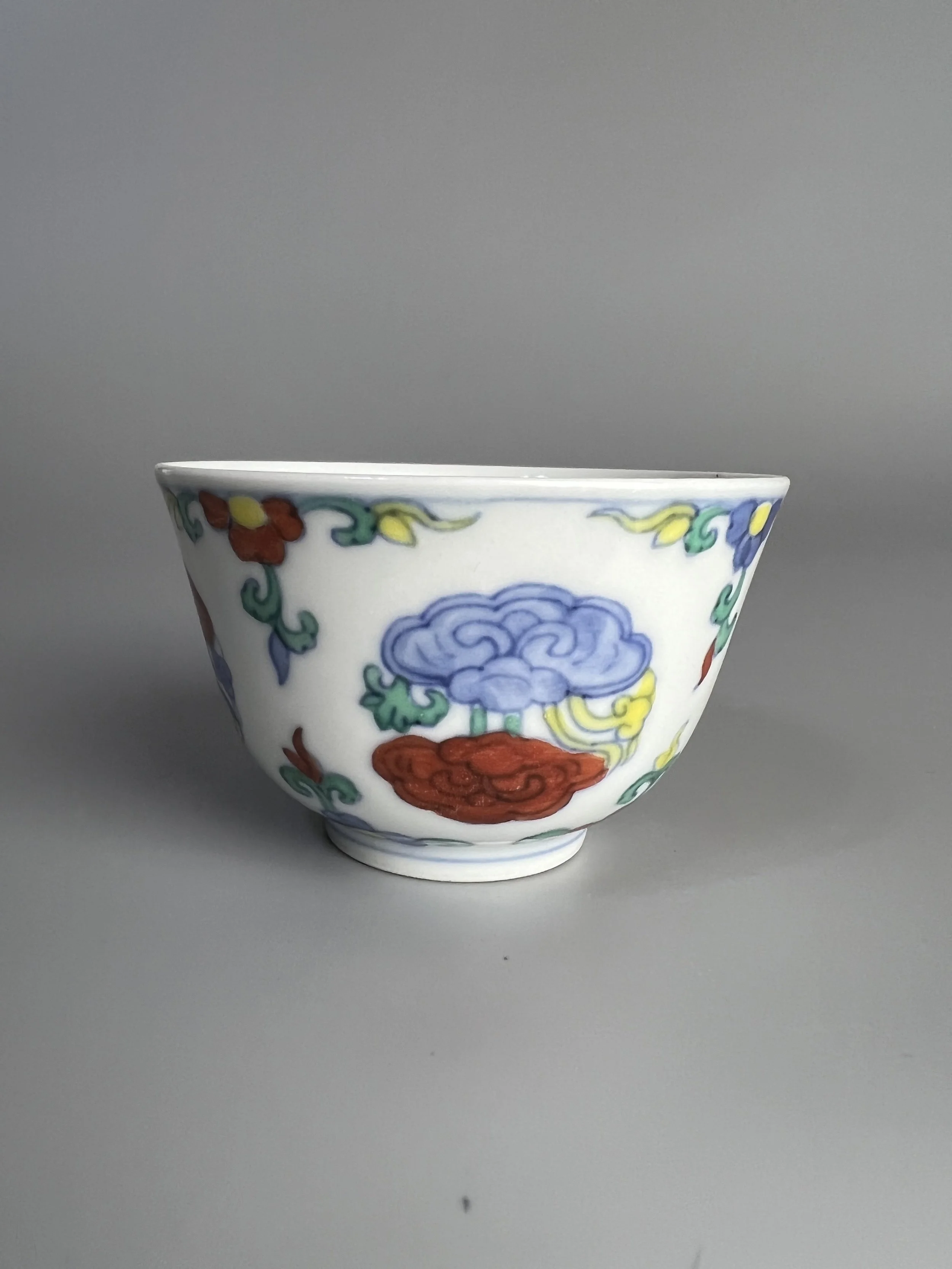 Image 1 of 18
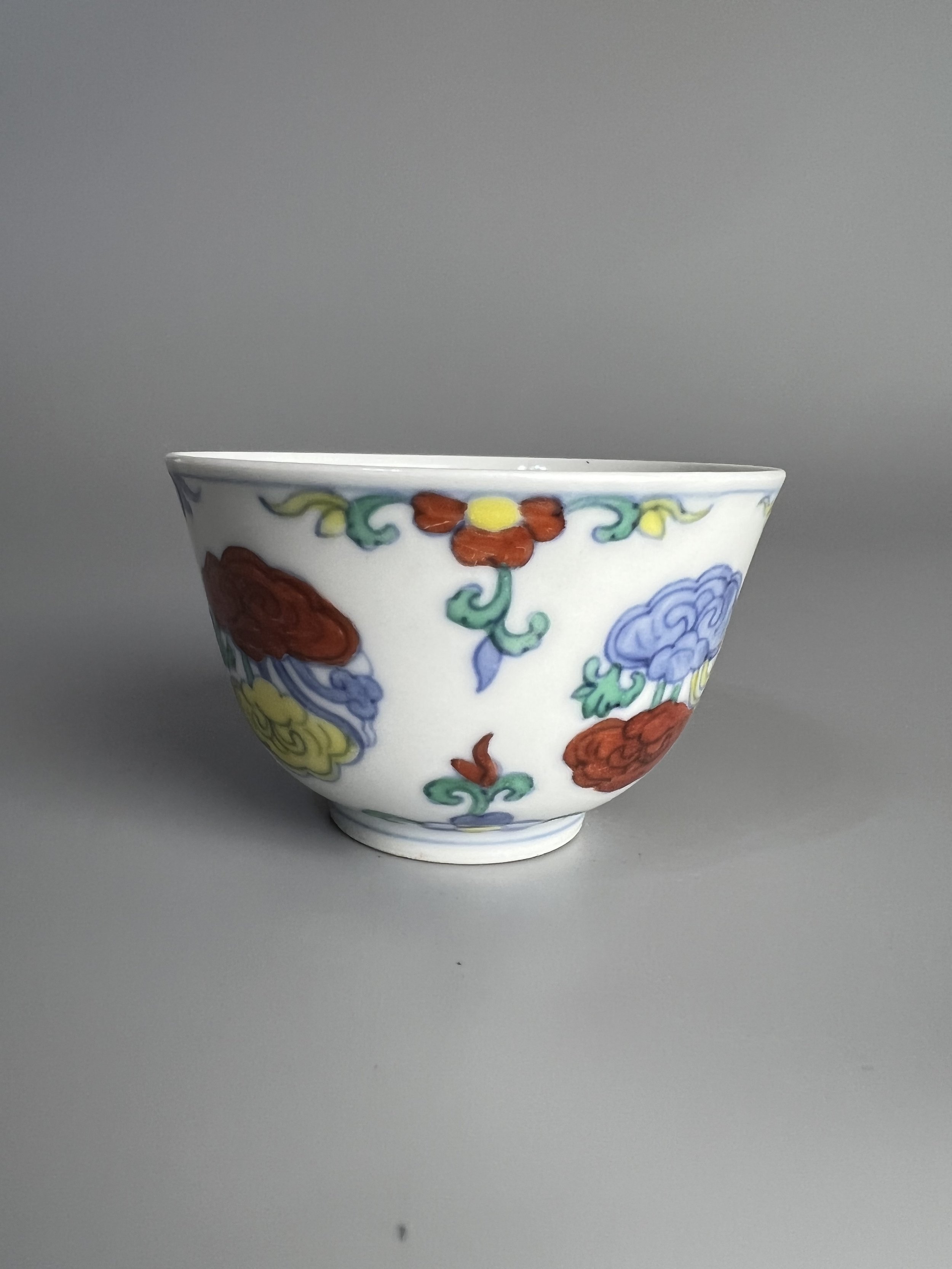 Image 2 of 18
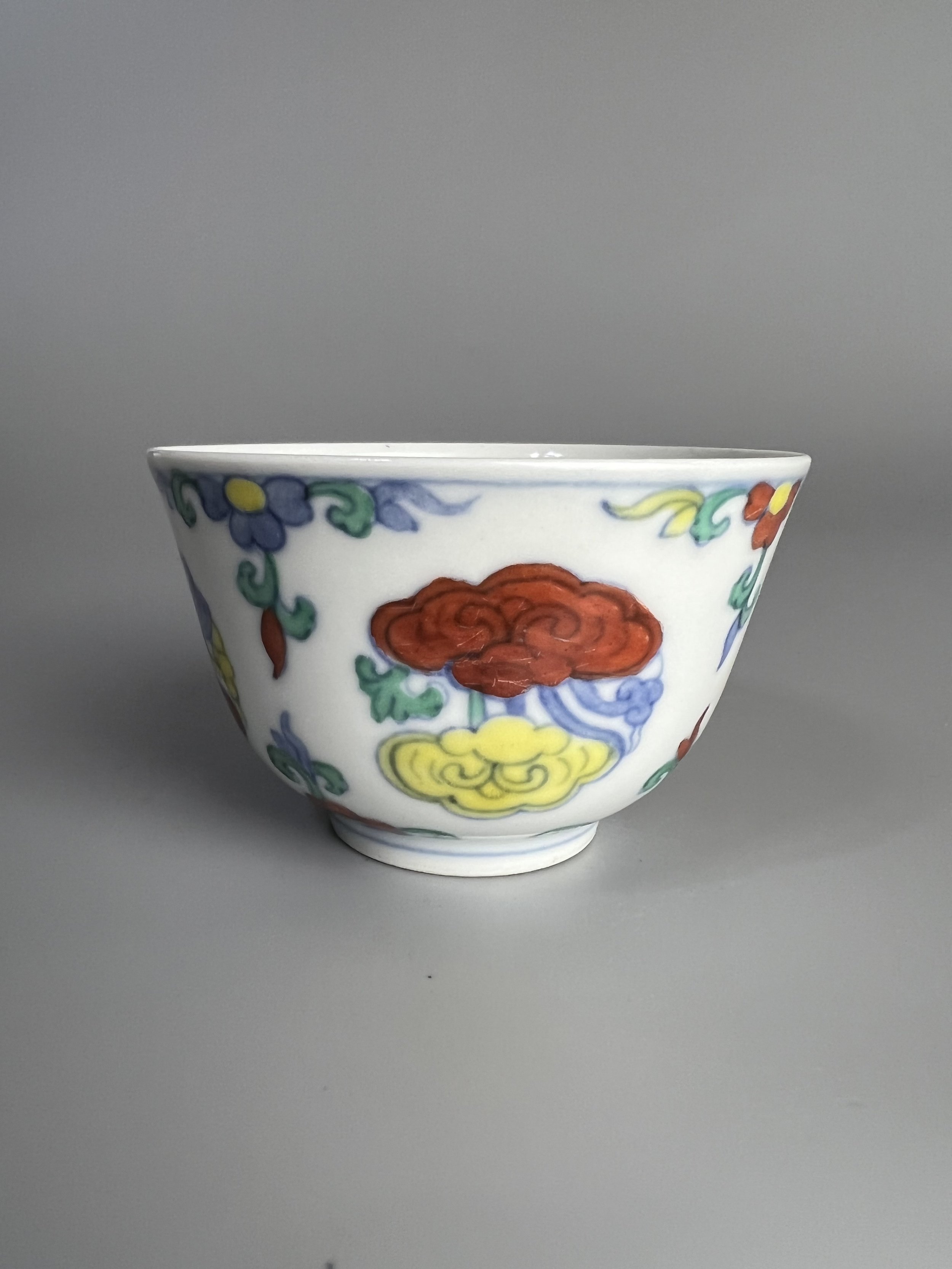 Image 3 of 18
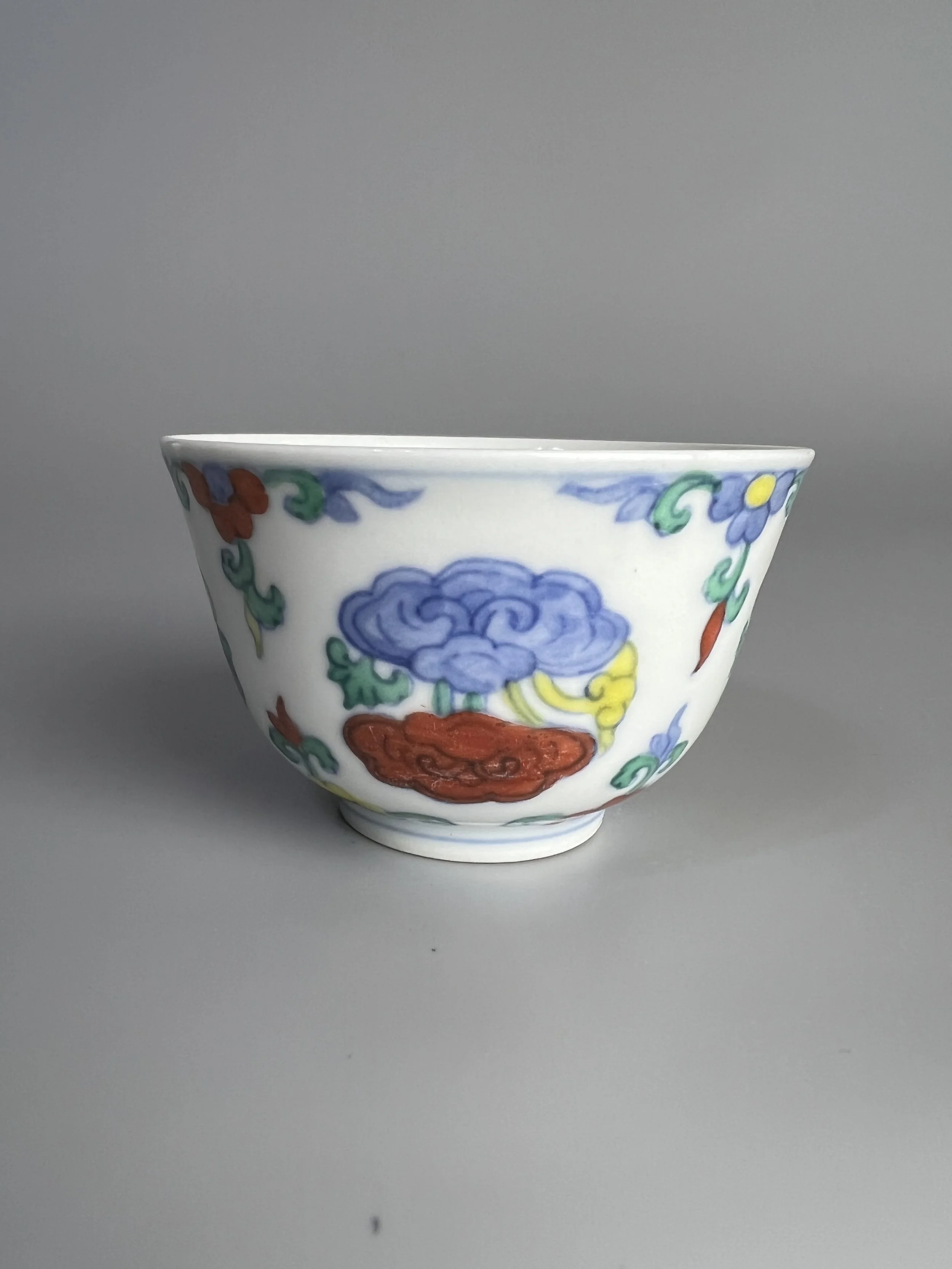 Image 4 of 18
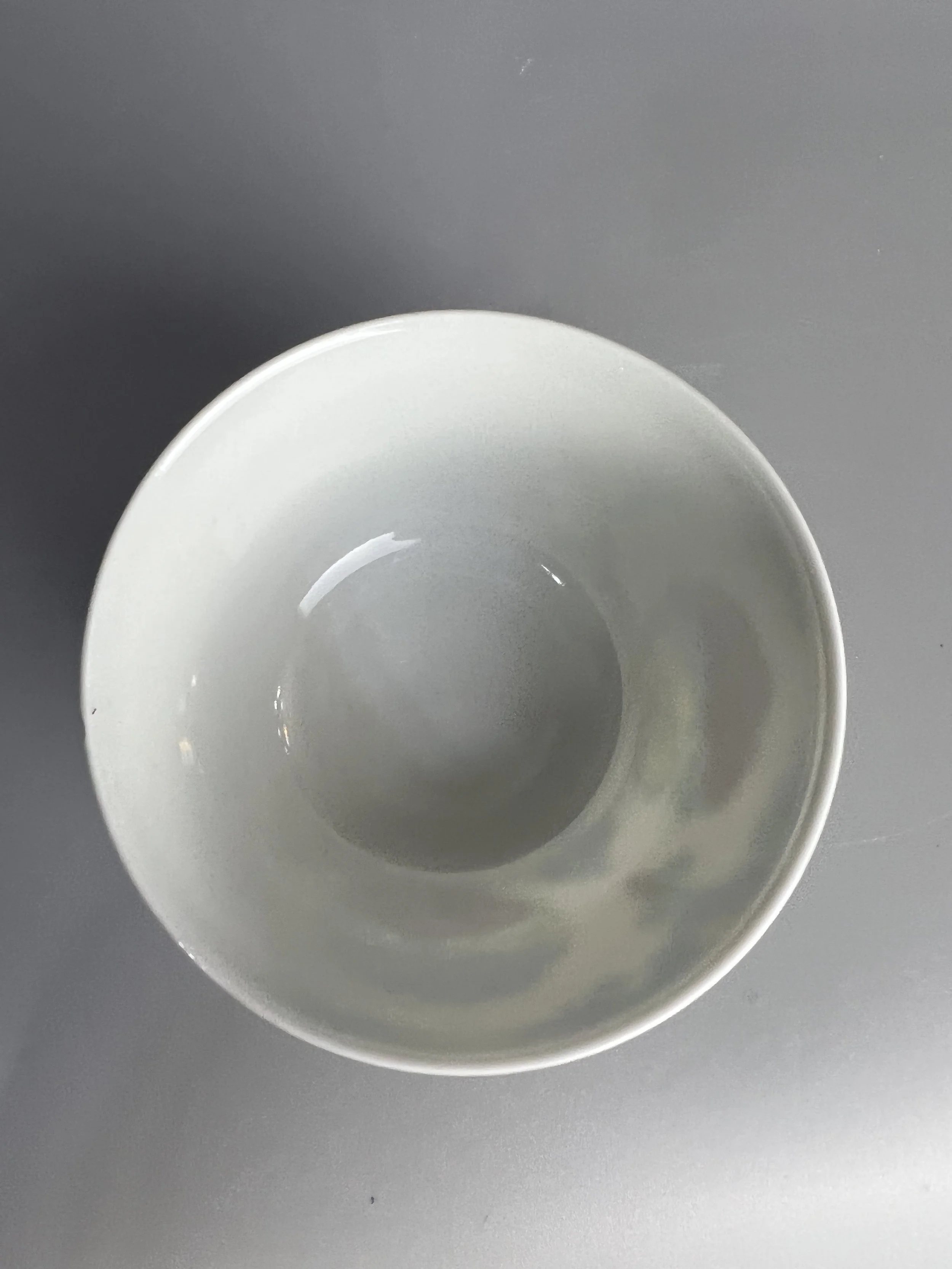 Image 5 of 18
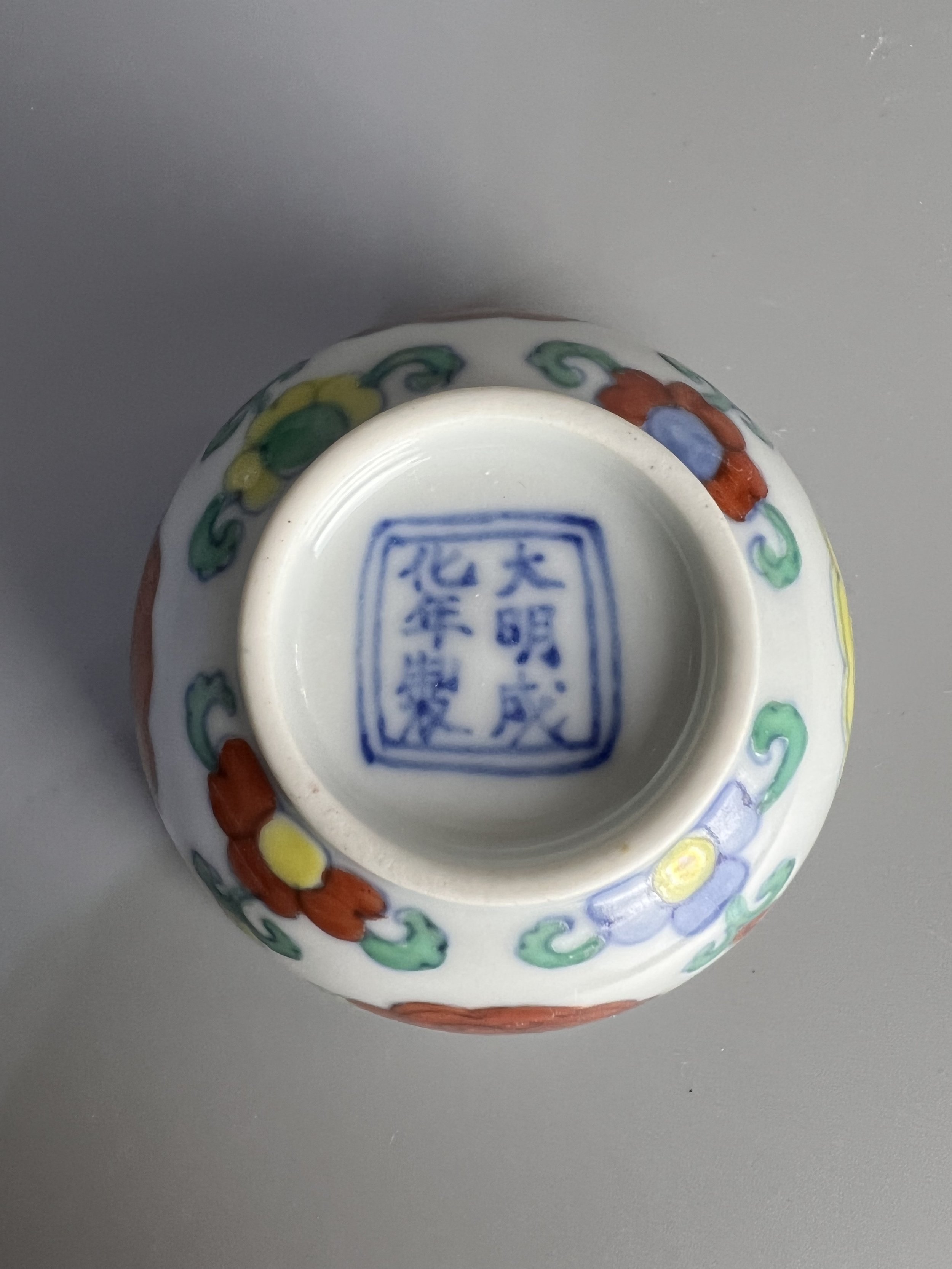 Image 6 of 18
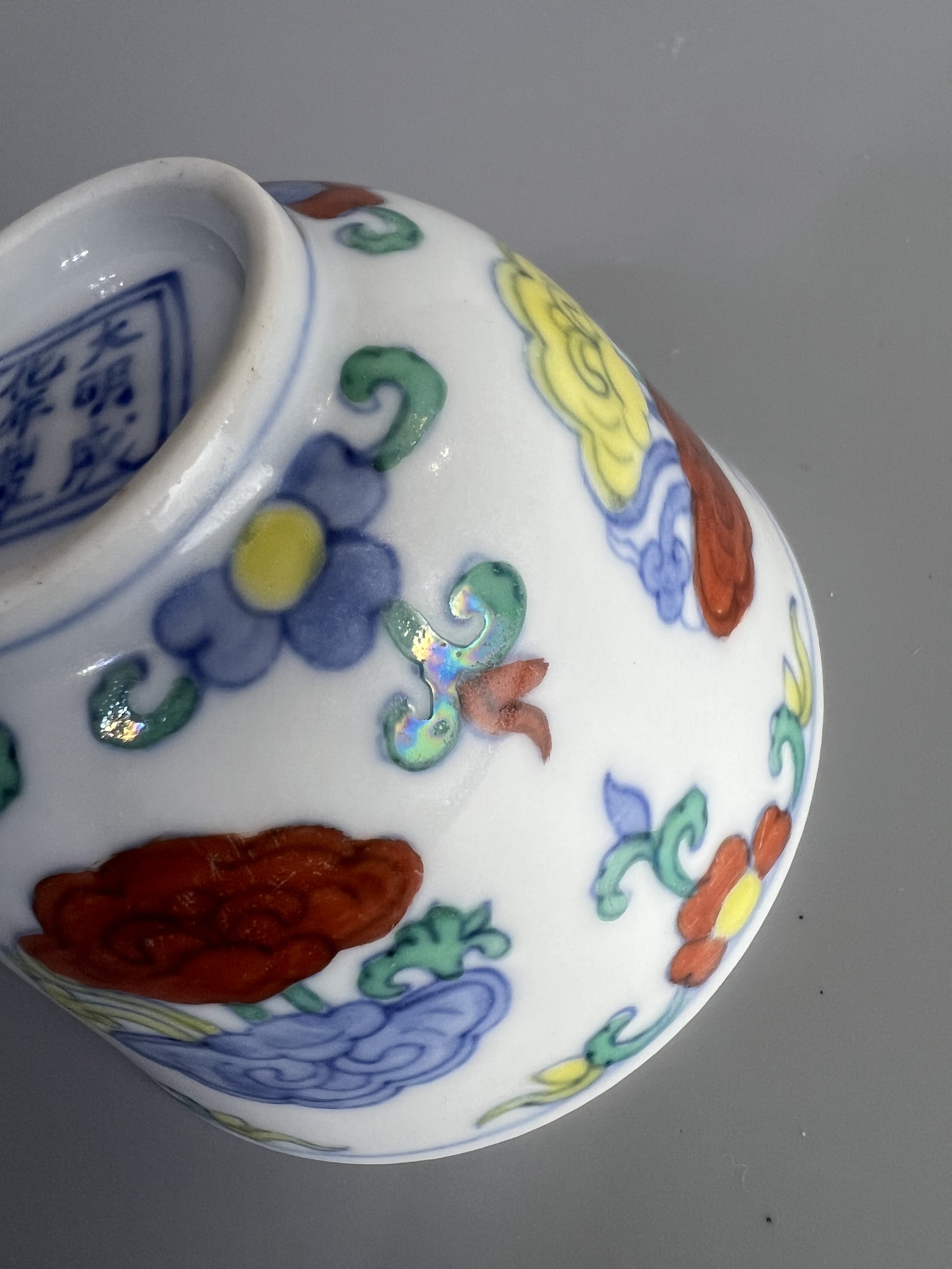 Image 7 of 18
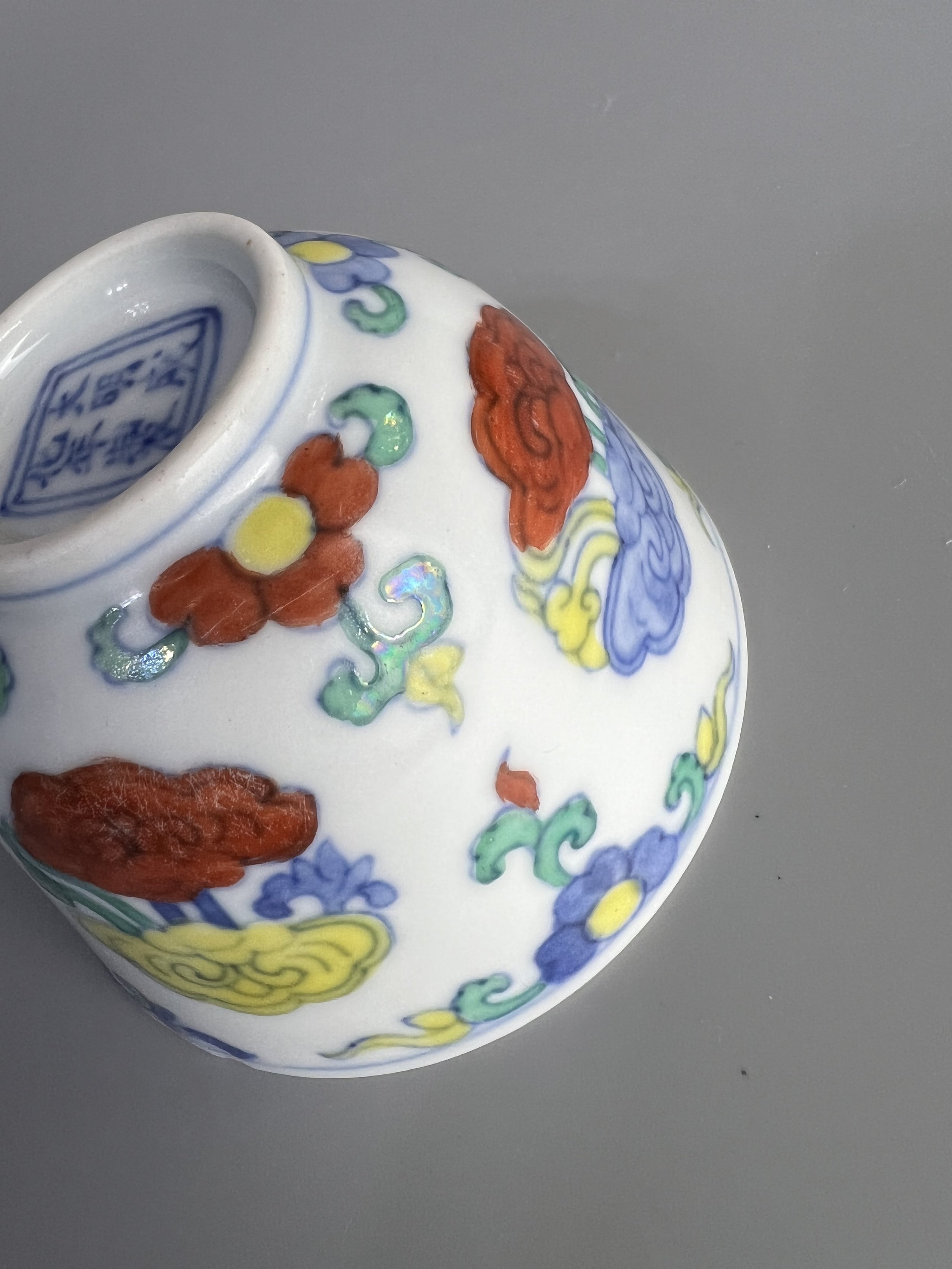 Image 8 of 18
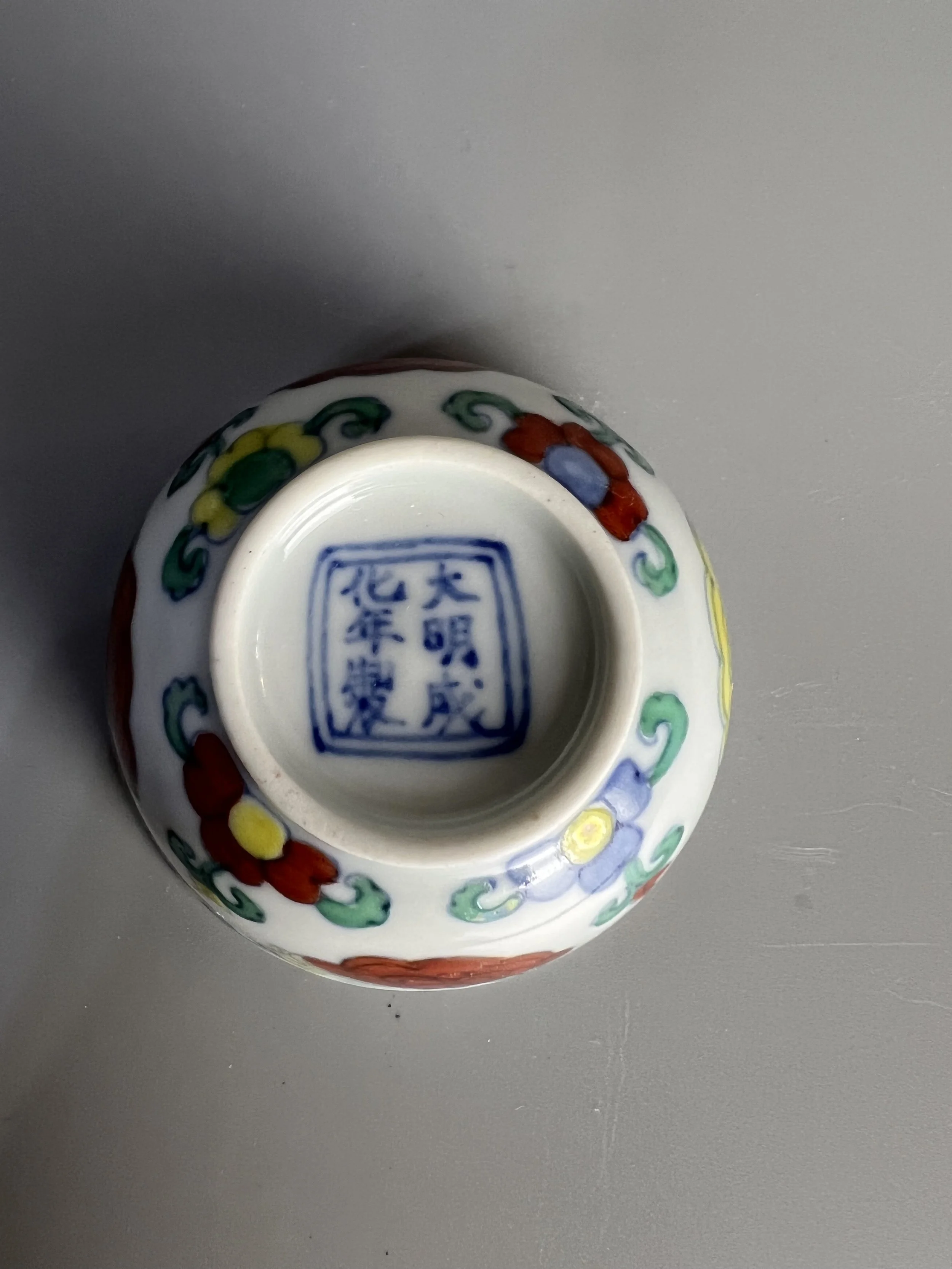 Image 9 of 18
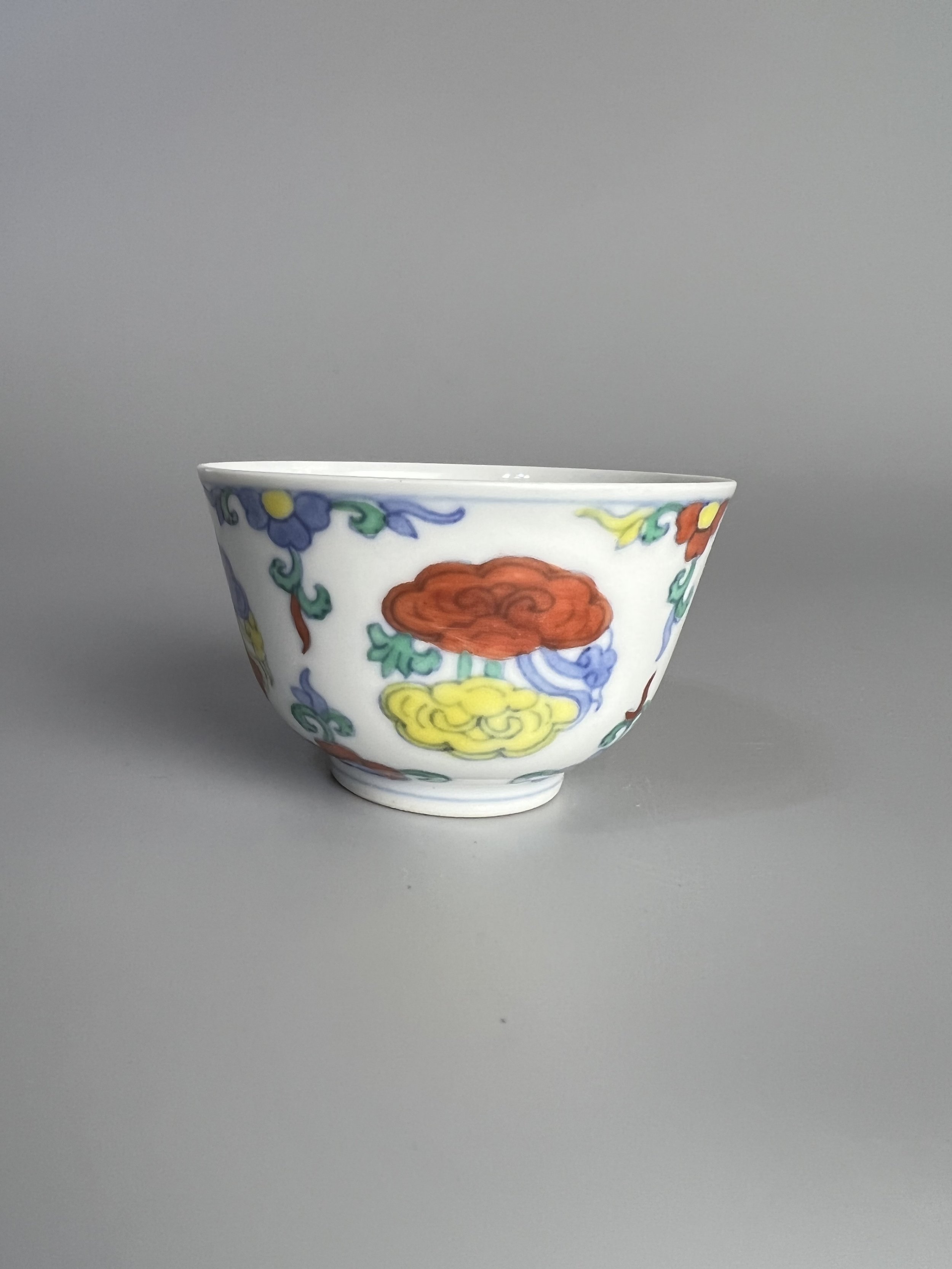 Image 10 of 18
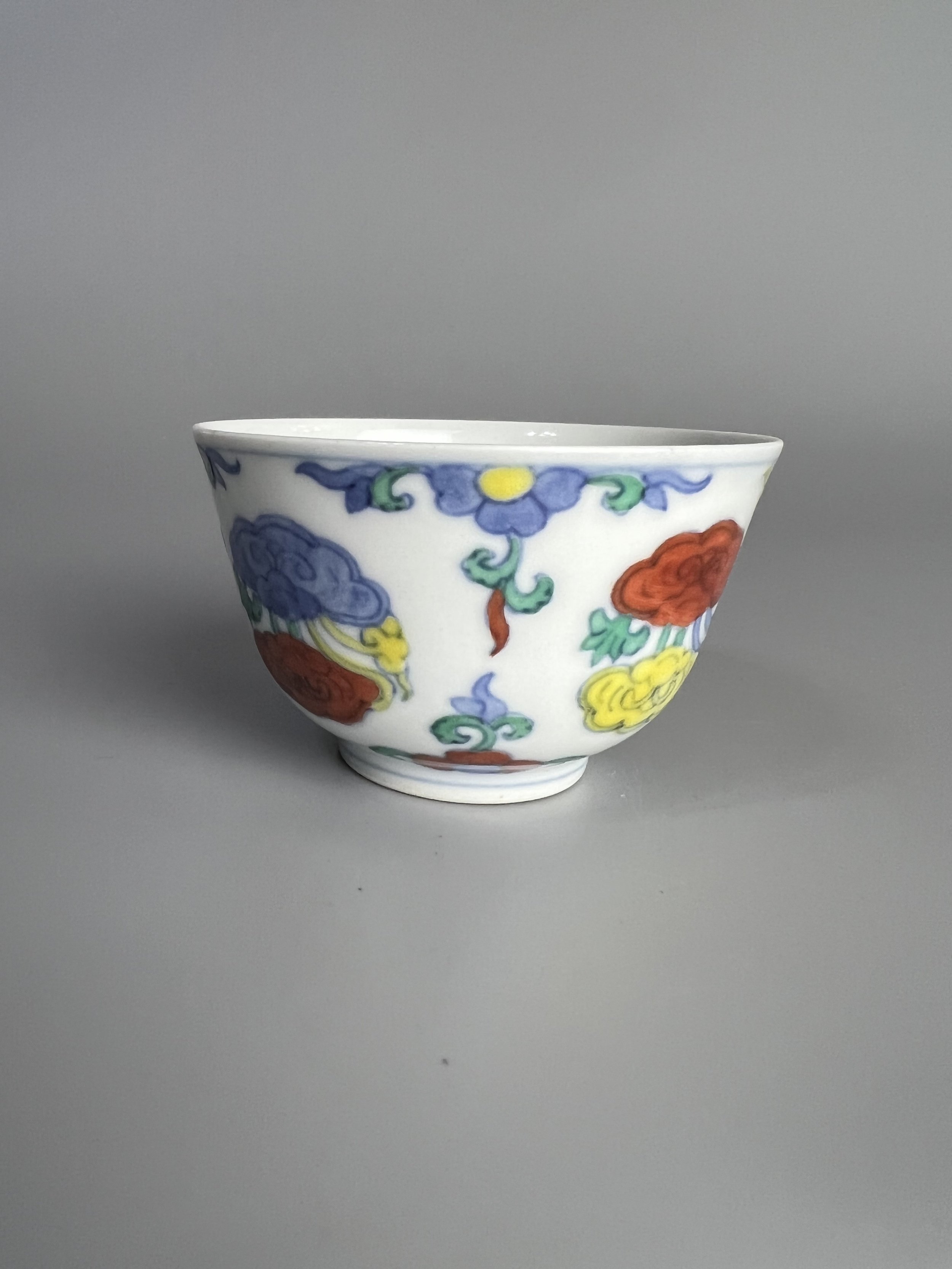 Image 11 of 18
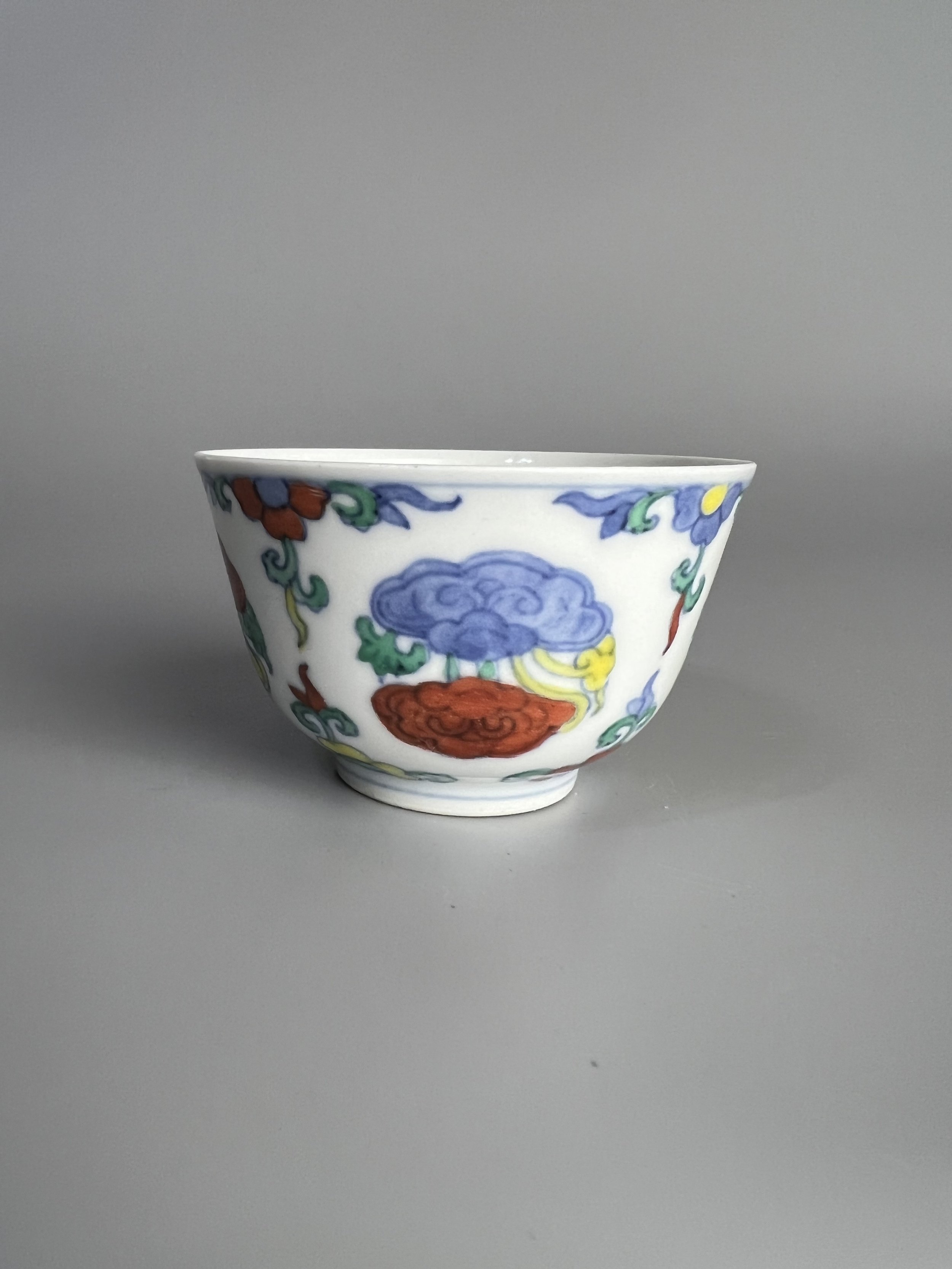 Image 12 of 18
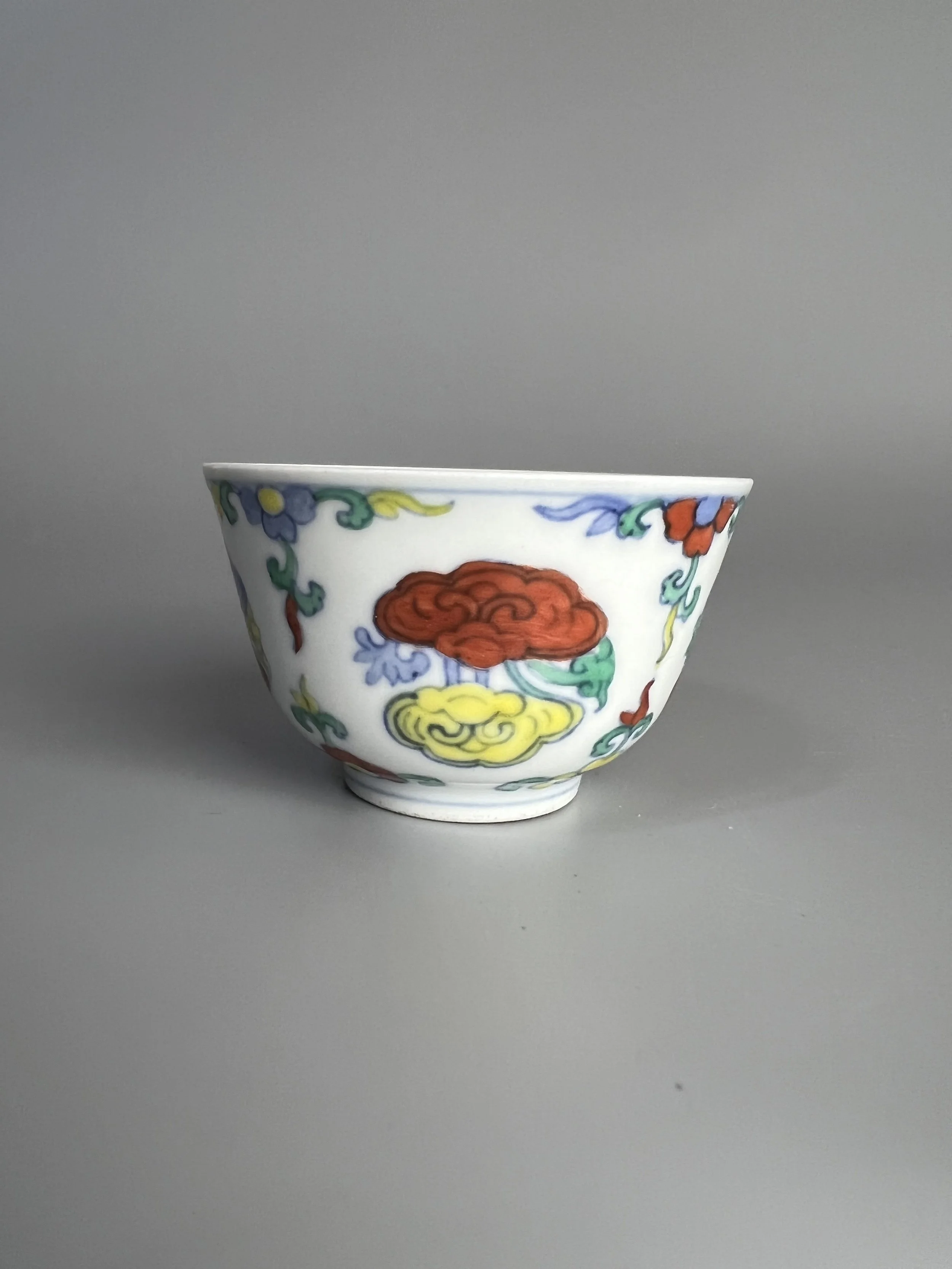 Image 13 of 18
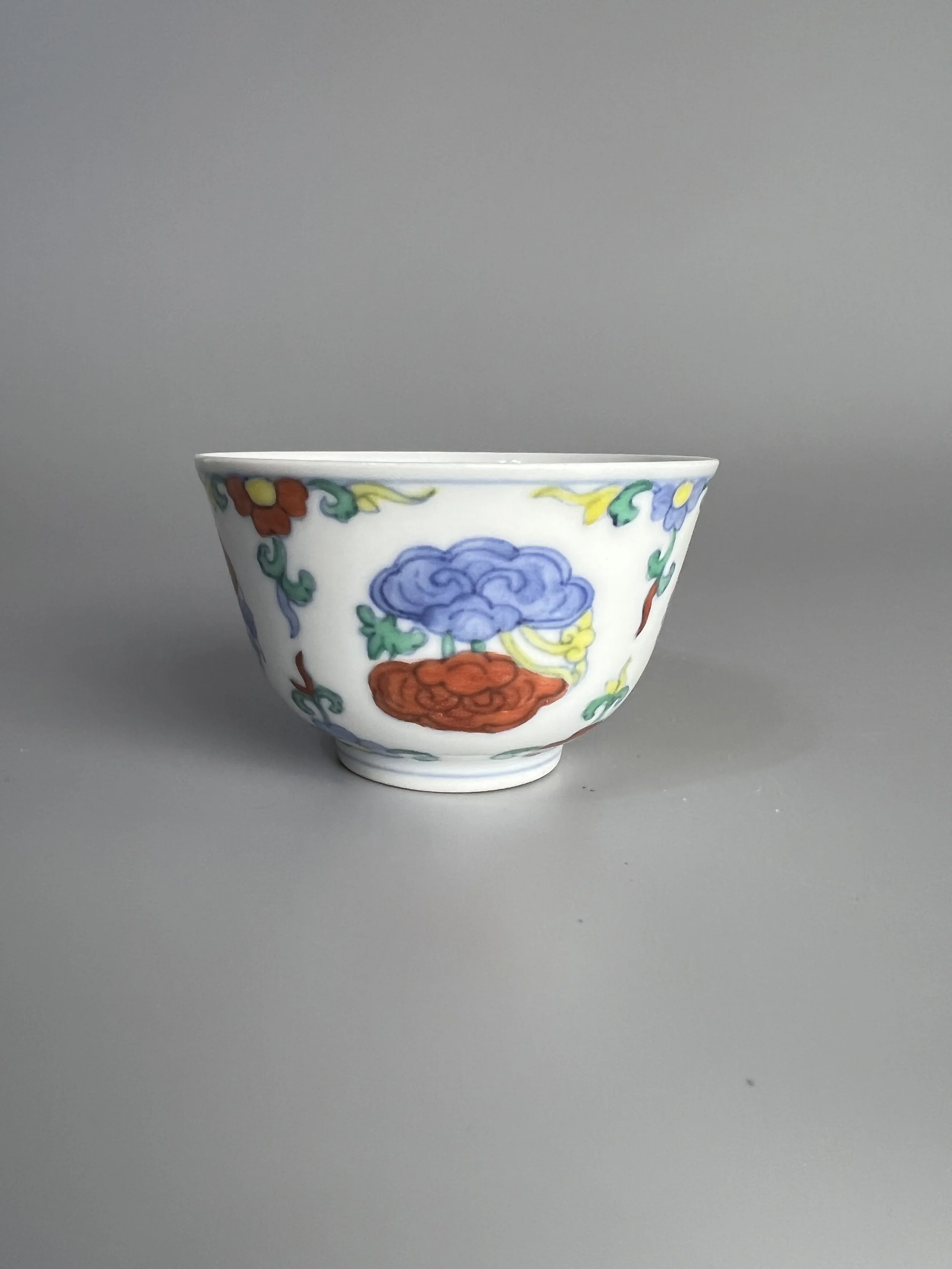 Image 14 of 18
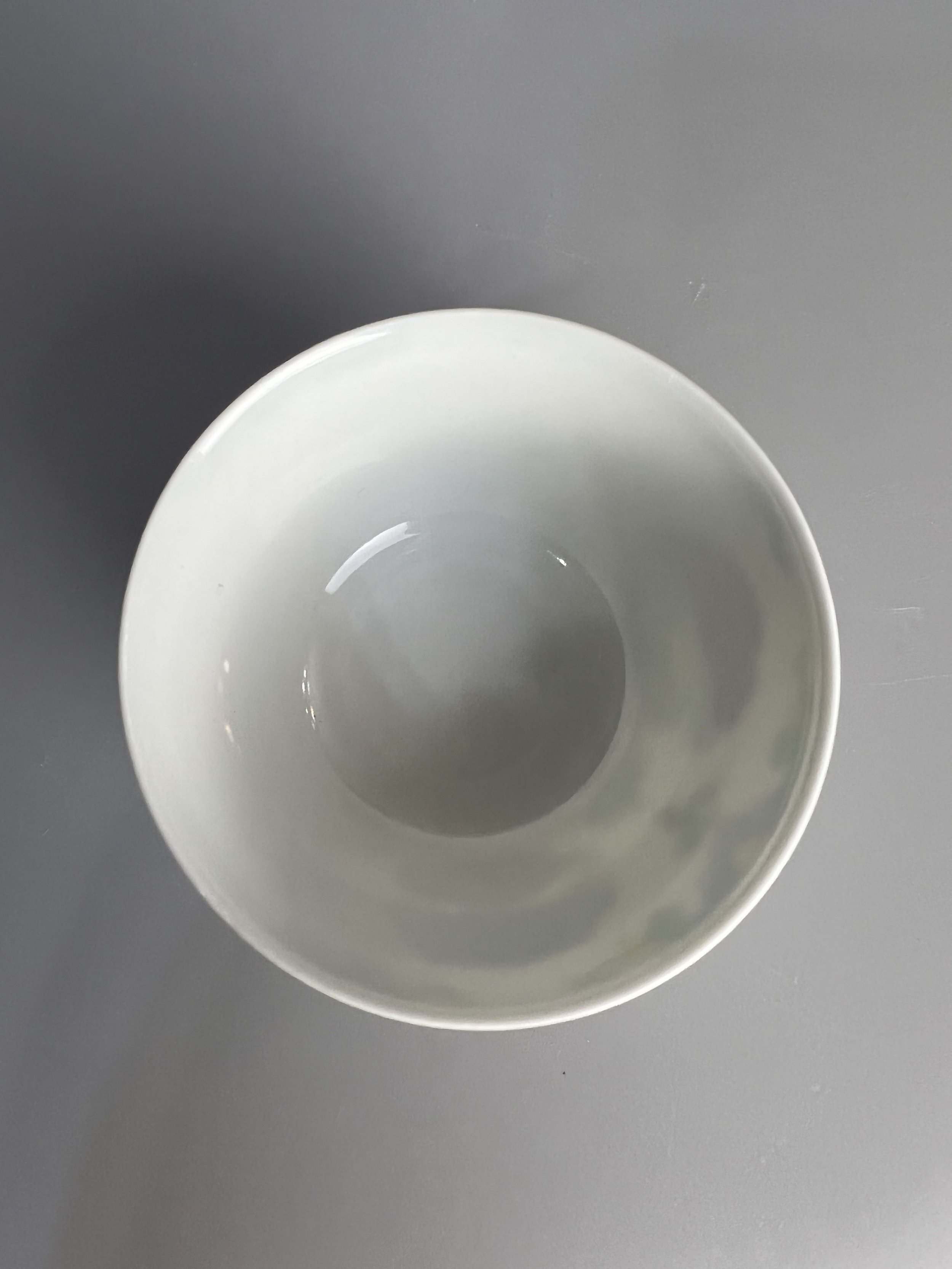 Image 15 of 18
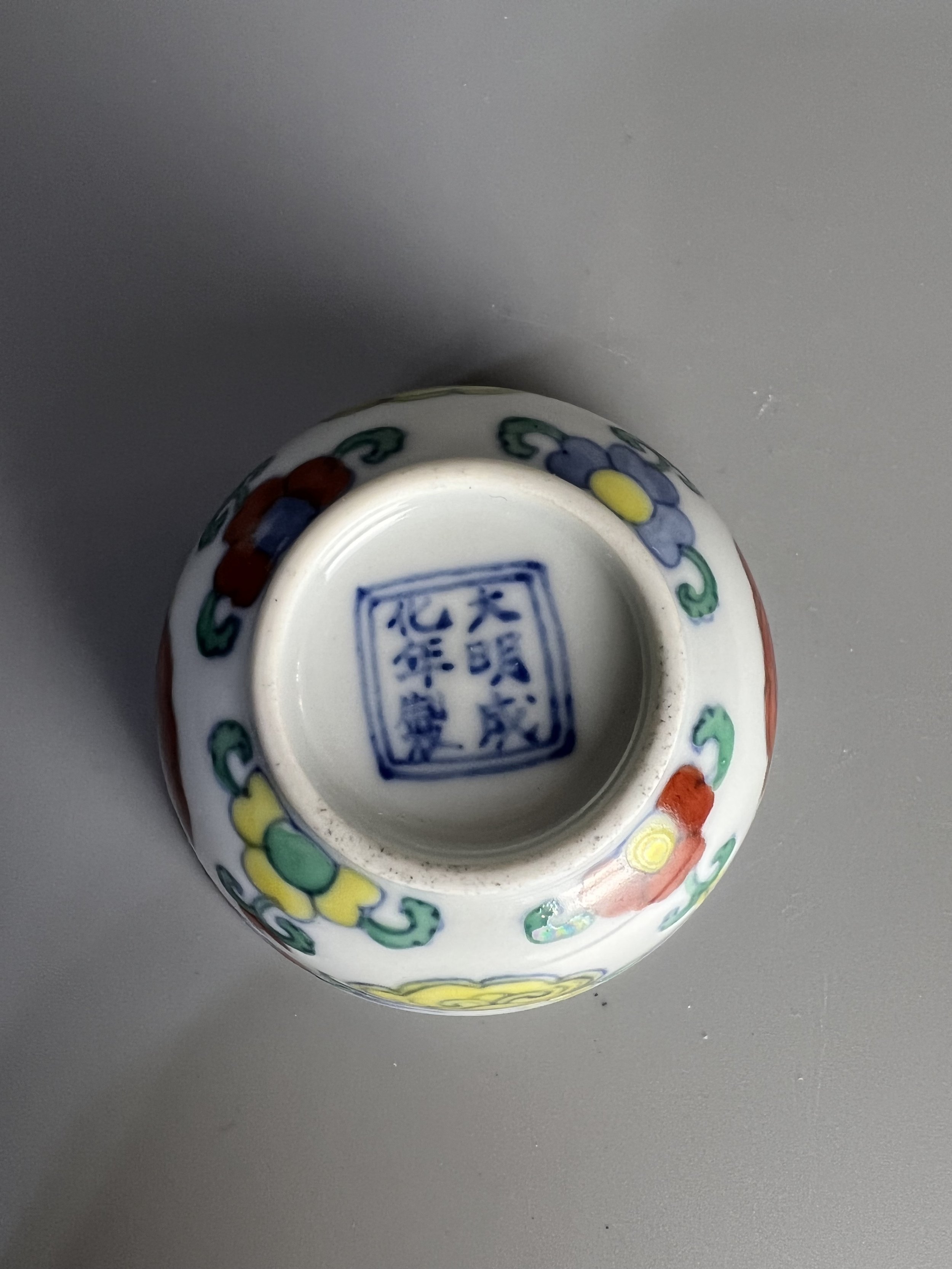 Image 16 of 18
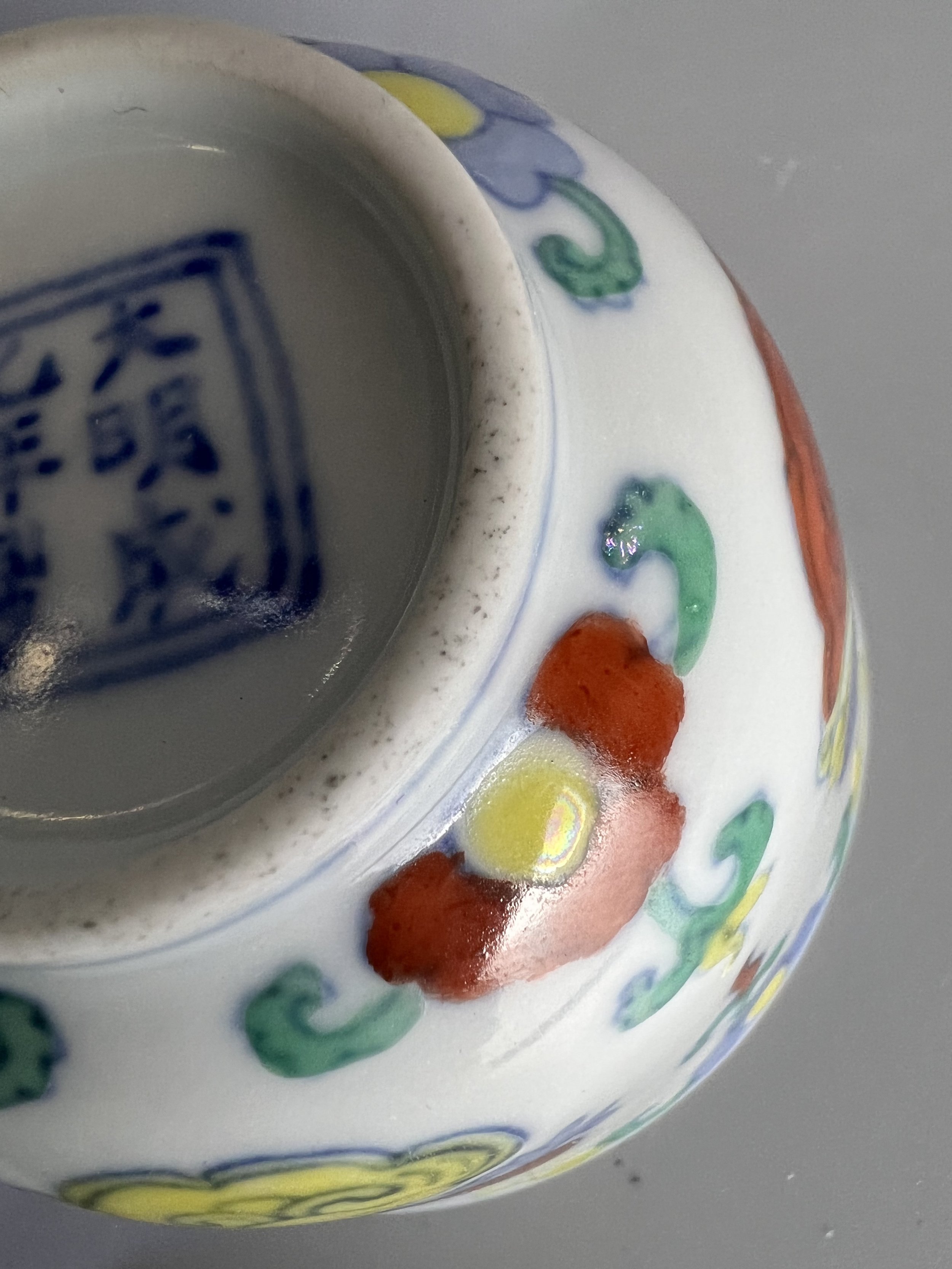 Image 17 of 18
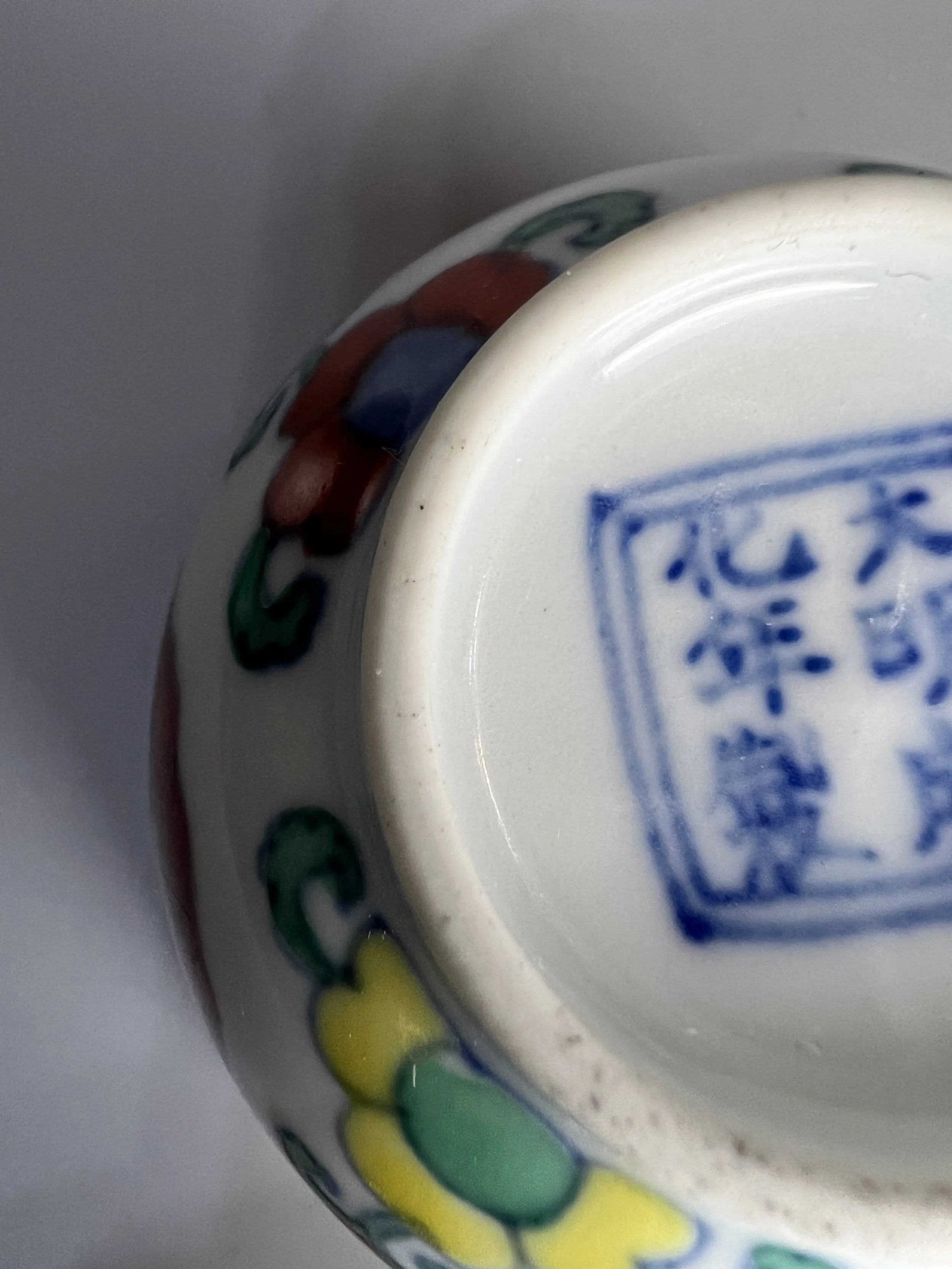 Image 18 of 18