Overview
This Ming Chenghua doucai "lion dance" Yuhuchun vase, standing 20 cm tall, exhibits an elegant and dignified form with a jade-like, lustrous glaze. It represents the finest of official kiln porcelain from the Chenghua period of the Ming Dynasty. The body is adorned with a doucai design depicting a lively scene of "lions frolicking with a brocade ball." The base bears an underglaze-blue six-character mark in regular script within a double rectangle, reading "Da Ming Chenghua Nian Zhi" (Made in the Chenghua reign of the Great Ming). The brushwork is vigorous and distinct, displaying clear characteristics of the period, making it a treasure among Chenghua imperial colored porcelain.
Form and Craftsmanship
The Yuhuchun vase form originated in the Song Dynasty and was particularly favored by the Ming court. This piece features fluid lines, a slender neck, a rounded belly, and a lowered center of gravity—full-bodied yet refined. Its 20 cm height makes it ideal for display on a desk, aligning with the delicate and timeless aesthetic of Chenghua-era porcelain. The body is fine and pure white, with a moist, glossy glaze that shows a faint flesh-toned pink when held to light, a typical characteristic of Chenghua official ware.
Decoration and Symbolism
The vase is painted overall with a doucai "lion dance" motif. The dynamic scene of lions playing with a ball is first outlined in underglaze blue, then filled with overglaze colors such as iron-red, pale yellow, and watery green. Two lions leap and frolic, their manes flowing, while colored ribbons from the brocade ball flutter around them, creating a vibrant and joyous image. The lion dance pattern on Ming court objects symbolizes "auspiciousness in a prosperous age" and "peace and stability for the nation," combining decorative appeal with auspicious meaning. The colors are pure and bright: the red is vivid yet not garish, the green is transparent and soft. The overglaze enamels and underglaze blue complement each other, showcasing the uniquely elegant and subdued quality of Chenghua doucai.
Mark Analysis
The base carries an underglaze-blue six-character mark in two lines of regular script within a double-rectangle border: "Da Ming Chenghua Nian Zhi." The characters are upright and rounded, with restrained brushstrokes and a subtle, serene blue tone. Such double-rectangle marks are commonly seen on Chenghua official wares and serve as an important reference for later authentication. The writing is neat, without exaggerated flourishes, consistent with the features of extant Chenghua imperial porcelain marks, reflecting the strict standards of official kiln production.
Historical and Artistic Value
Chenghua doucai is renowned as the pinnacle of porcelain art, famous for its exquisite enamels and delicate painting. This piece combines the classic Yuhuchun form, doucai technique, and auspicious decoration, making it exceptionally rare and precious. Its lively and unusual design, distinct from common floral or child-play motifs, adds to its collectible value. The vase not only demonstrates the peak of ceramic craftsmanship during the Chenghua period but also reflects the cultural life and artistic tastes of the Ming court, serving as an indispensable artifact for the study of Ming official kiln porcelain.
Conclusion
This Chenghua doucai "lion dance" Yuhuchun vase, though small in size, embodies grandeur; its craftsmanship is superb and its charm lively. It represents a perfect fusion of Chinese ceramic art in form, decoration, and cultural symbolism. Its delicate and exquisite presence is like a miniature epic of Chenghua ceramic art, offering viewers a glimpse into the aesthetic splendor and technical mastery of the Ming court over five centuries ago.
明成化斗彩舞狮纹玉壶春瓶
概述
此件明成化斗彩舞狮纹玉壶春瓶,高20厘米,造型秀雅端庄,釉色温润如玉,为明代成化官窑之精粹。瓶身以斗彩工艺绘“舞狮戏绣球”纹样,生动传神,底部青花书“大明成化年制”双框六字楷书款,笔法劲健,时代特征鲜明,堪称成化御窑彩瓷之珍品。
形制与工艺
玉壶春瓶器型肇始于宋代,至明代尤受宫廷青睐。本品器形线条流畅,颈细腹圆,重心下沉,体态丰腴而不失隽秀,高20厘米的尺寸宜于案头陈设,契合成化朝瓷器轻巧隽永的审美意趣。胎质细腻洁白,釉面莹润似脂,迎光视之泛淡淡肉红色,此乃成化官窑胎釉典型特征。
纹饰与寓意
瓶身通景绘斗彩舞狮纹饰,以青花勾勒狮子戏球之动态,再以矾红、鹅黄、水绿等彩料填绘。双狮腾跃嬉戏,鬃毛飘拂,绣球彩带飞舞,画面活泼欢快。舞狮纹样在明代宫廷器物中寓意“盛世呈祥”“国泰民安”,兼具装饰性与吉祥内涵。彩料发色纯正,红彩鲜而不艳,绿彩透亮柔和,釉上彩与釉下青花相互映衬,呈现成化斗彩独有的清雅气质。
款识考据
底部青花双圈内落“大明成化年制”六字双行楷书款,字体挺拔圆润,笔道含蓄内敛,青花发色淡雅静谧。成化官窑款识多见此类双框款,为后世鉴识重要依据。此款书写工整,无顿挫修饰,与传世成化御瓷款识特征一致,彰显官窑规整之制。
历史与价值
成化斗彩素为瓷中翘楚,以其彩釉精妙、画工婉约闻名于世。本品集玉壶春瓶经典形制、斗彩工艺、祥瑞纹饰于一体,存世稀少,尤显珍贵。其纹样活泼罕见,区别于常见花卉婴戏题材,更添收藏价值。此瓶不仅体现成化朝制瓷技艺之巅峰,亦映射明代宫廷文化生活情趣,是研究明代官窑瓷器不可或缺的实物例证。
结语
此成化斗彩舞狮纹玉壶春瓶,器虽小而气象万千,工艺卓绝而意趣盎然,堪称中国陶瓷艺术从造型、彩绘到文化寓意的完美融合。其轻巧玲珑之姿,犹如成化一朝瓷器艺术的微缩史诗,令观者窥见五百年前大明宫廷的审美风华与工艺神韵。
Overview
This Ming Chenghua doucai "lion dance" Yuhuchun vase, standing 20 cm tall, exhibits an elegant and dignified form with a jade-like, lustrous glaze. It represents the finest of official kiln porcelain from the Chenghua period of the Ming Dynasty. The body is adorned with a doucai design depicting a lively scene of "lions frolicking with a brocade ball." The base bears an underglaze-blue six-character mark in regular script within a double rectangle, reading "Da Ming Chenghua Nian Zhi" (Made in the Chenghua reign of the Great Ming). The brushwork is vigorous and distinct, displaying clear characteristics of the period, making it a treasure among Chenghua imperial colored porcelain.
Form and Craftsmanship
The Yuhuchun vase form originated in the Song Dynasty and was particularly favored by the Ming court. This piece features fluid lines, a slender neck, a rounded belly, and a lowered center of gravity—full-bodied yet refined. Its 20 cm height makes it ideal for display on a desk, aligning with the delicate and timeless aesthetic of Chenghua-era porcelain. The body is fine and pure white, with a moist, glossy glaze that shows a faint flesh-toned pink when held to light, a typical characteristic of Chenghua official ware.
Decoration and Symbolism
The vase is painted overall with a doucai "lion dance" motif. The dynamic scene of lions playing with a ball is first outlined in underglaze blue, then filled with overglaze colors such as iron-red, pale yellow, and watery green. Two lions leap and frolic, their manes flowing, while colored ribbons from the brocade ball flutter around them, creating a vibrant and joyous image. The lion dance pattern on Ming court objects symbolizes "auspiciousness in a prosperous age" and "peace and stability for the nation," combining decorative appeal with auspicious meaning. The colors are pure and bright: the red is vivid yet not garish, the green is transparent and soft. The overglaze enamels and underglaze blue complement each other, showcasing the uniquely elegant and subdued quality of Chenghua doucai.
Mark Analysis
The base carries an underglaze-blue six-character mark in two lines of regular script within a double-rectangle border: "Da Ming Chenghua Nian Zhi." The characters are upright and rounded, with restrained brushstrokes and a subtle, serene blue tone. Such double-rectangle marks are commonly seen on Chenghua official wares and serve as an important reference for later authentication. The writing is neat, without exaggerated flourishes, consistent with the features of extant Chenghua imperial porcelain marks, reflecting the strict standards of official kiln production.
Historical and Artistic Value
Chenghua doucai is renowned as the pinnacle of porcelain art, famous for its exquisite enamels and delicate painting. This piece combines the classic Yuhuchun form, doucai technique, and auspicious decoration, making it exceptionally rare and precious. Its lively and unusual design, distinct from common floral or child-play motifs, adds to its collectible value. The vase not only demonstrates the peak of ceramic craftsmanship during the Chenghua period but also reflects the cultural life and artistic tastes of the Ming court, serving as an indispensable artifact for the study of Ming official kiln porcelain.
Conclusion
This Chenghua doucai "lion dance" Yuhuchun vase, though small in size, embodies grandeur; its craftsmanship is superb and its charm lively. It represents a perfect fusion of Chinese ceramic art in form, decoration, and cultural symbolism. Its delicate and exquisite presence is like a miniature epic of Chenghua ceramic art, offering viewers a glimpse into the aesthetic splendor and technical mastery of the Ming court over five centuries ago.
明成化斗彩舞狮纹玉壶春瓶
概述
此件明成化斗彩舞狮纹玉壶春瓶,高20厘米,造型秀雅端庄,釉色温润如玉,为明代成化官窑之精粹。瓶身以斗彩工艺绘“舞狮戏绣球”纹样,生动传神,底部青花书“大明成化年制”双框六字楷书款,笔法劲健,时代特征鲜明,堪称成化御窑彩瓷之珍品。
形制与工艺
玉壶春瓶器型肇始于宋代,至明代尤受宫廷青睐。本品器形线条流畅,颈细腹圆,重心下沉,体态丰腴而不失隽秀,高20厘米的尺寸宜于案头陈设,契合成化朝瓷器轻巧隽永的审美意趣。胎质细腻洁白,釉面莹润似脂,迎光视之泛淡淡肉红色,此乃成化官窑胎釉典型特征。
纹饰与寓意
瓶身通景绘斗彩舞狮纹饰,以青花勾勒狮子戏球之动态,再以矾红、鹅黄、水绿等彩料填绘。双狮腾跃嬉戏,鬃毛飘拂,绣球彩带飞舞,画面活泼欢快。舞狮纹样在明代宫廷器物中寓意“盛世呈祥”“国泰民安”,兼具装饰性与吉祥内涵。彩料发色纯正,红彩鲜而不艳,绿彩透亮柔和,釉上彩与釉下青花相互映衬,呈现成化斗彩独有的清雅气质。
款识考据
底部青花双圈内落“大明成化年制”六字双行楷书款,字体挺拔圆润,笔道含蓄内敛,青花发色淡雅静谧。成化官窑款识多见此类双框款,为后世鉴识重要依据。此款书写工整,无顿挫修饰,与传世成化御瓷款识特征一致,彰显官窑规整之制。
历史与价值
成化斗彩素为瓷中翘楚,以其彩釉精妙、画工婉约闻名于世。本品集玉壶春瓶经典形制、斗彩工艺、祥瑞纹饰于一体,存世稀少,尤显珍贵。其纹样活泼罕见,区别于常见花卉婴戏题材,更添收藏价值。此瓶不仅体现成化朝制瓷技艺之巅峰,亦映射明代宫廷文化生活情趣,是研究明代官窑瓷器不可或缺的实物例证。
结语
此成化斗彩舞狮纹玉壶春瓶,器虽小而气象万千,工艺卓绝而意趣盎然,堪称中国陶瓷艺术从造型、彩绘到文化寓意的完美融合。其轻巧玲珑之姿,犹如成化一朝瓷器艺术的微缩史诗,令观者窥见五百年前大明宫廷的审美风华与工艺神韵。
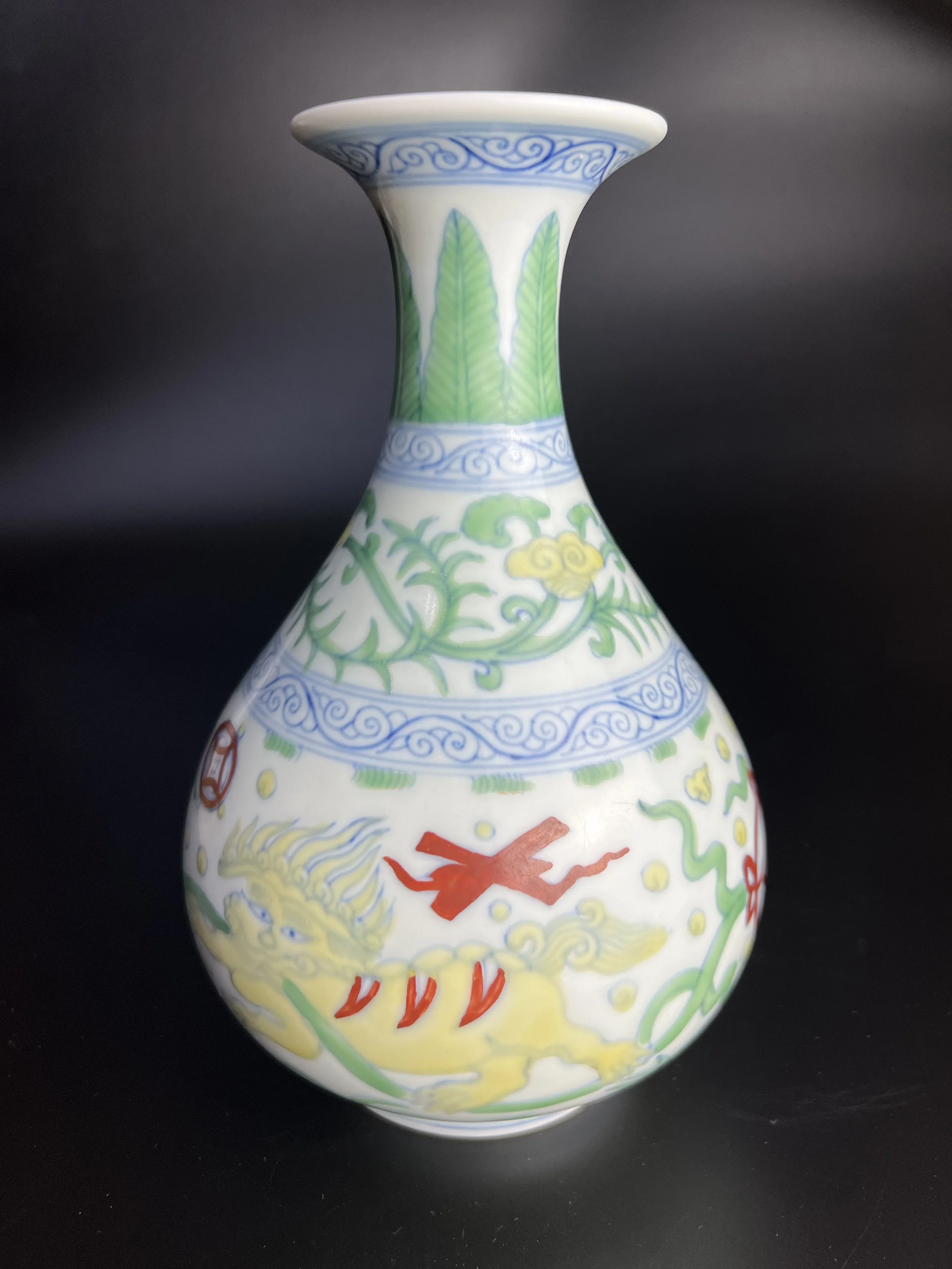 Image 1 of 13
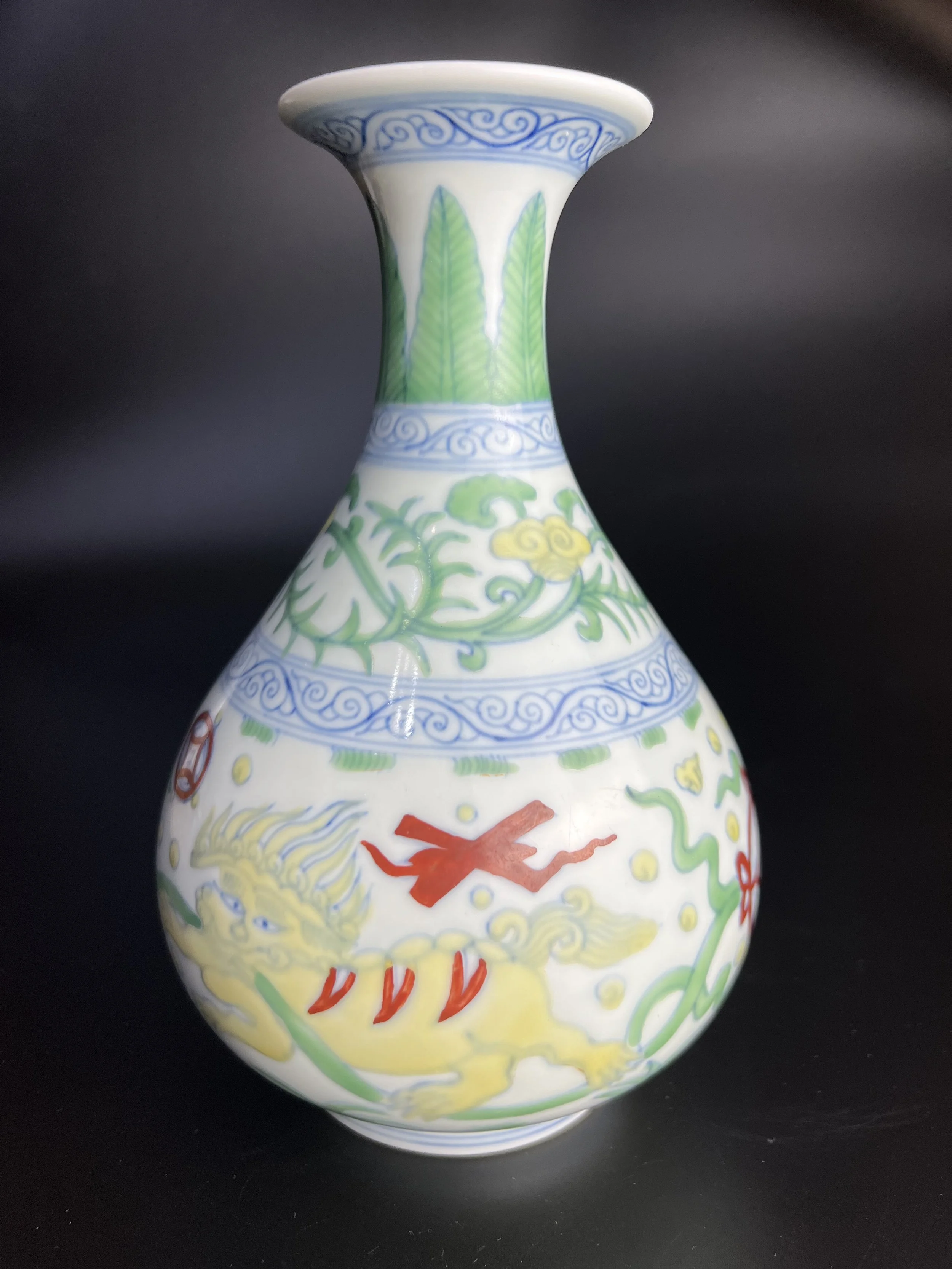 Image 2 of 13
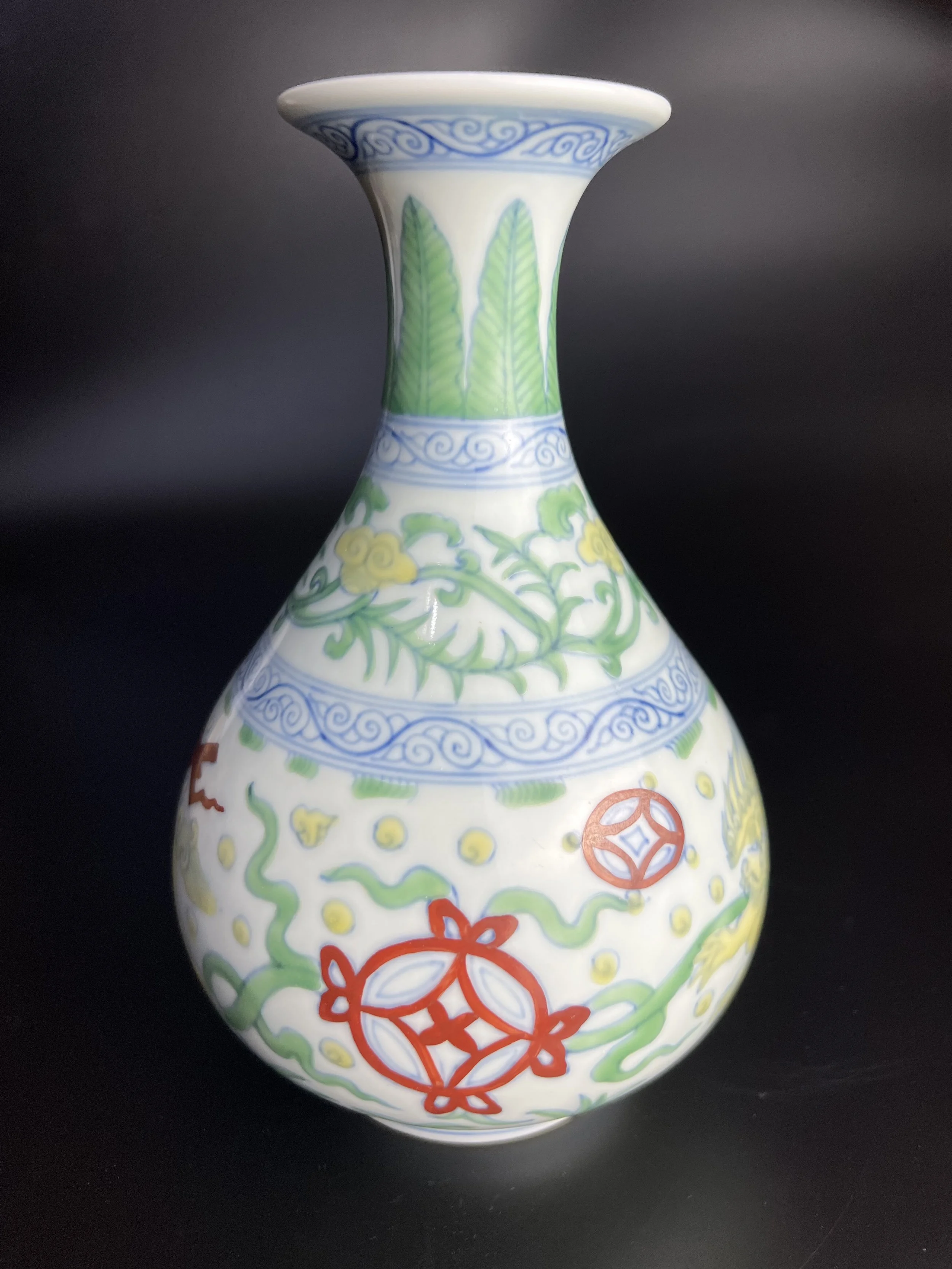 Image 3 of 13
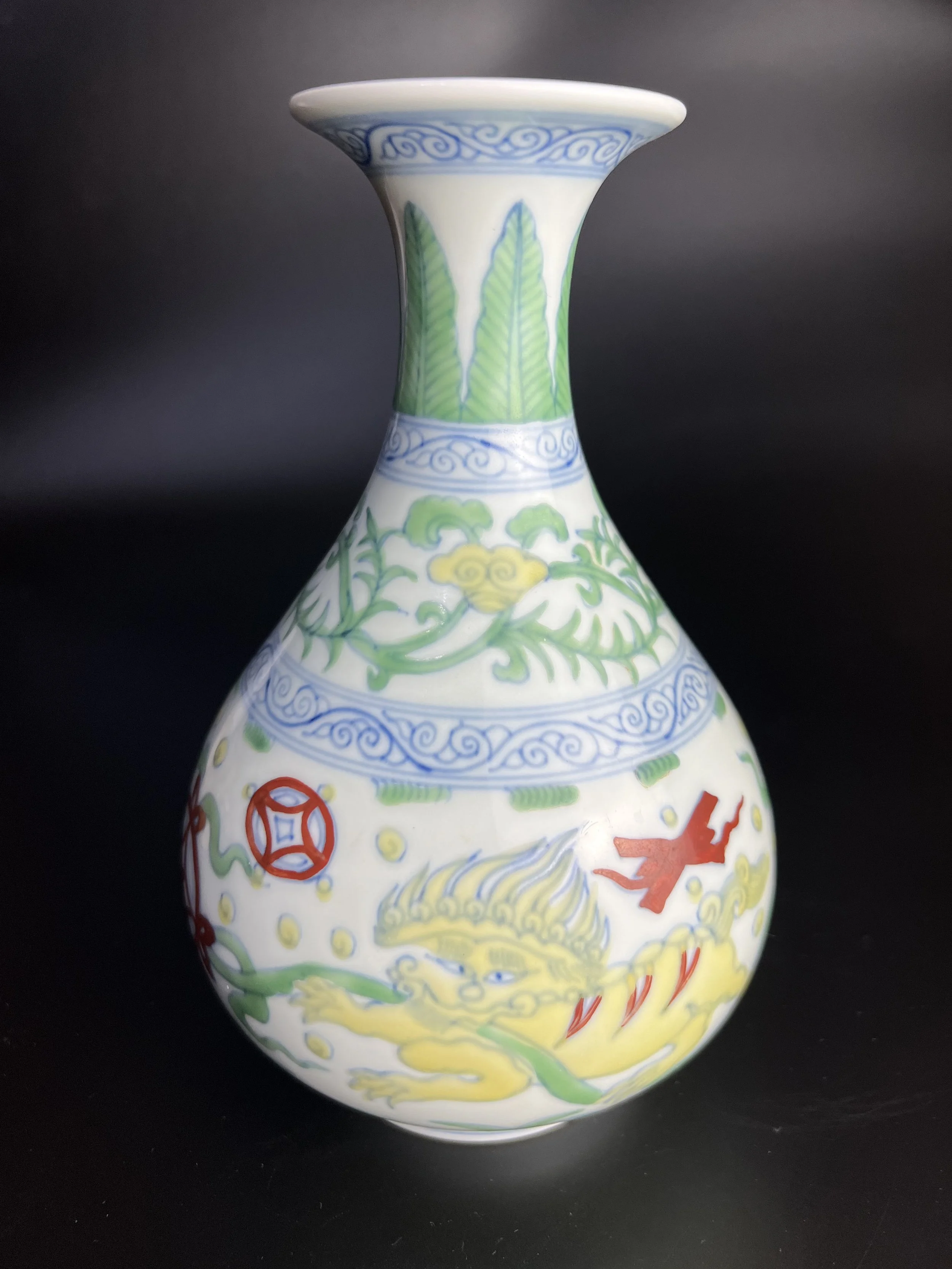 Image 4 of 13
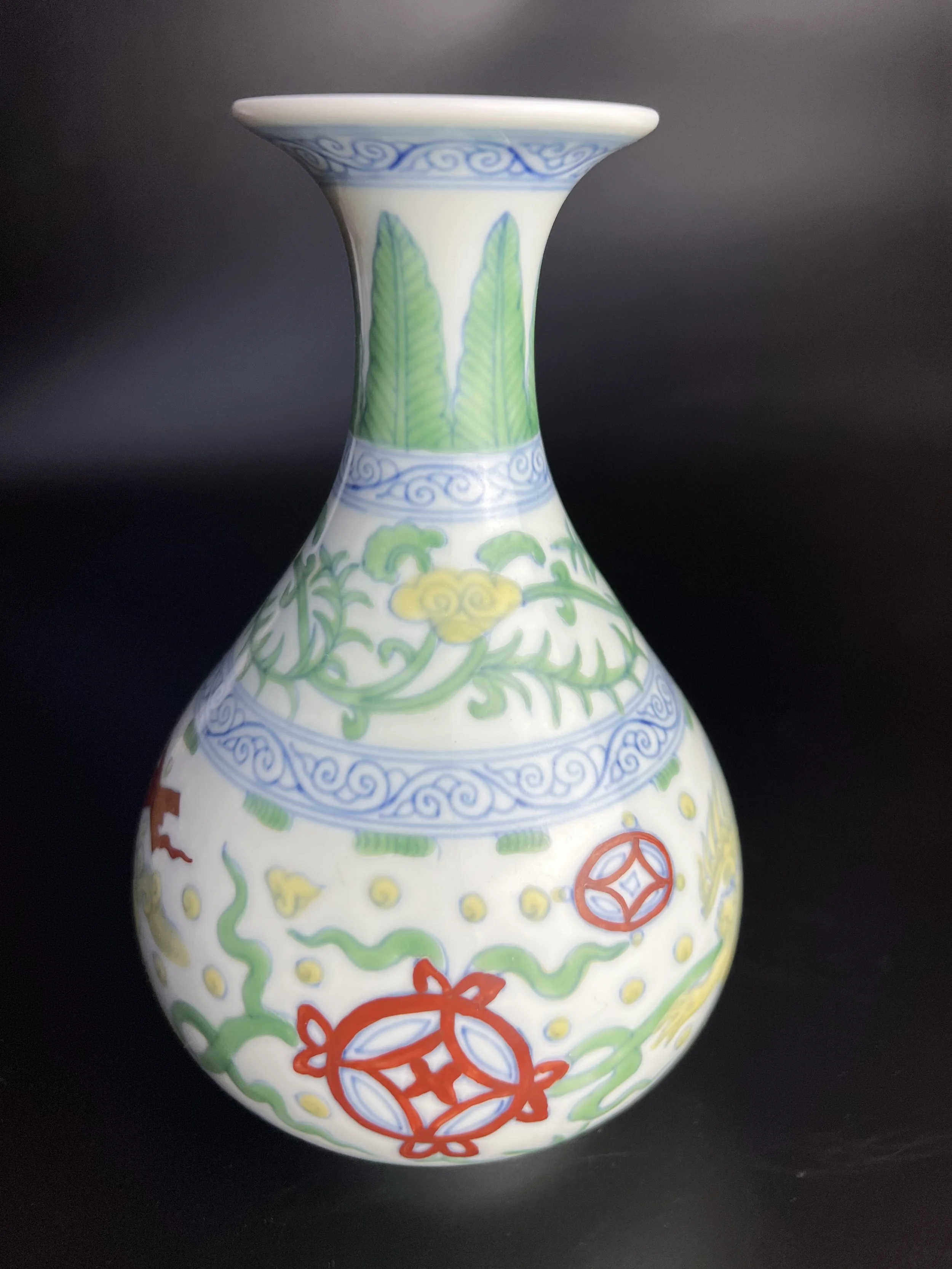 Image 5 of 13
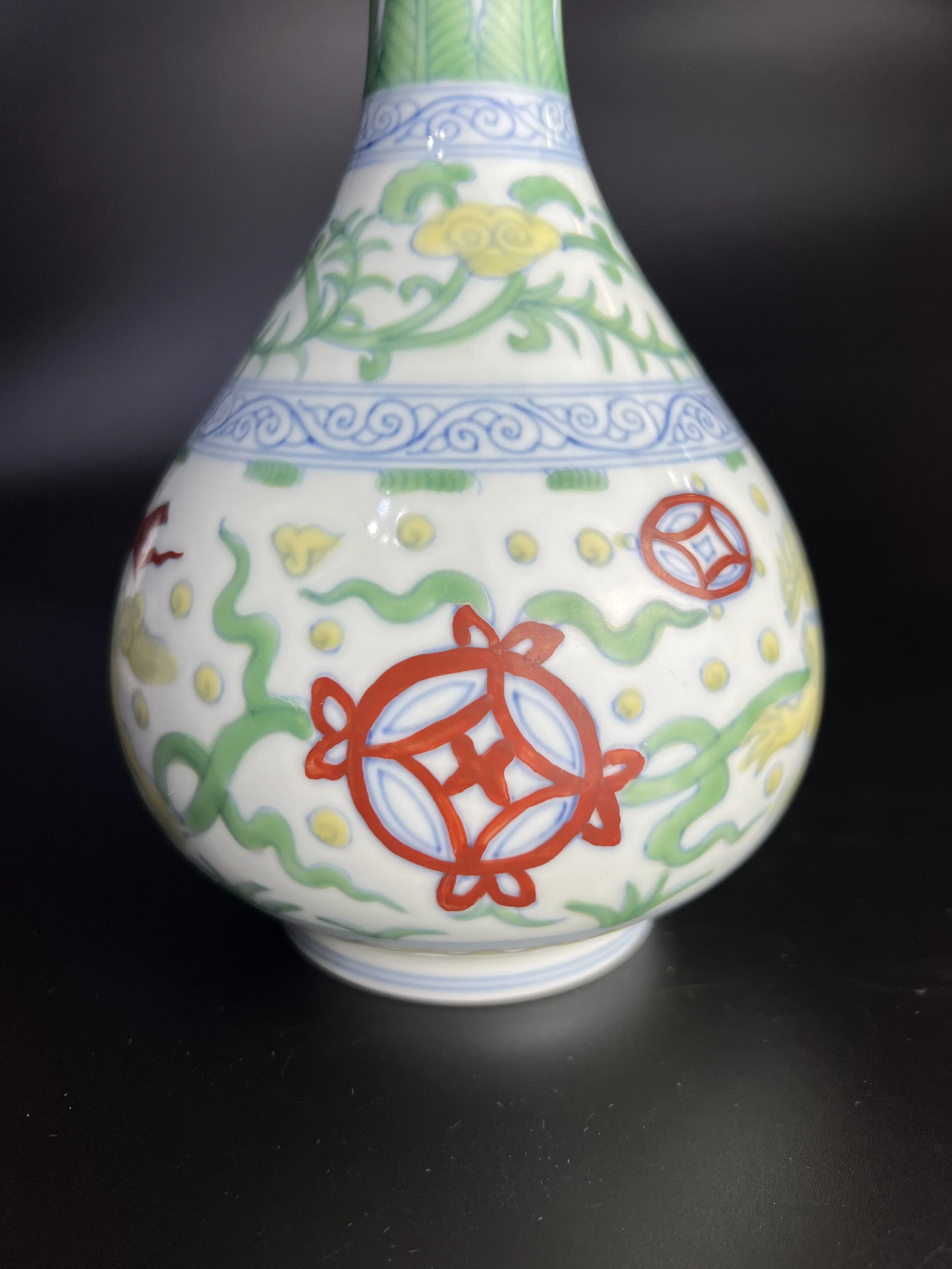 Image 6 of 13
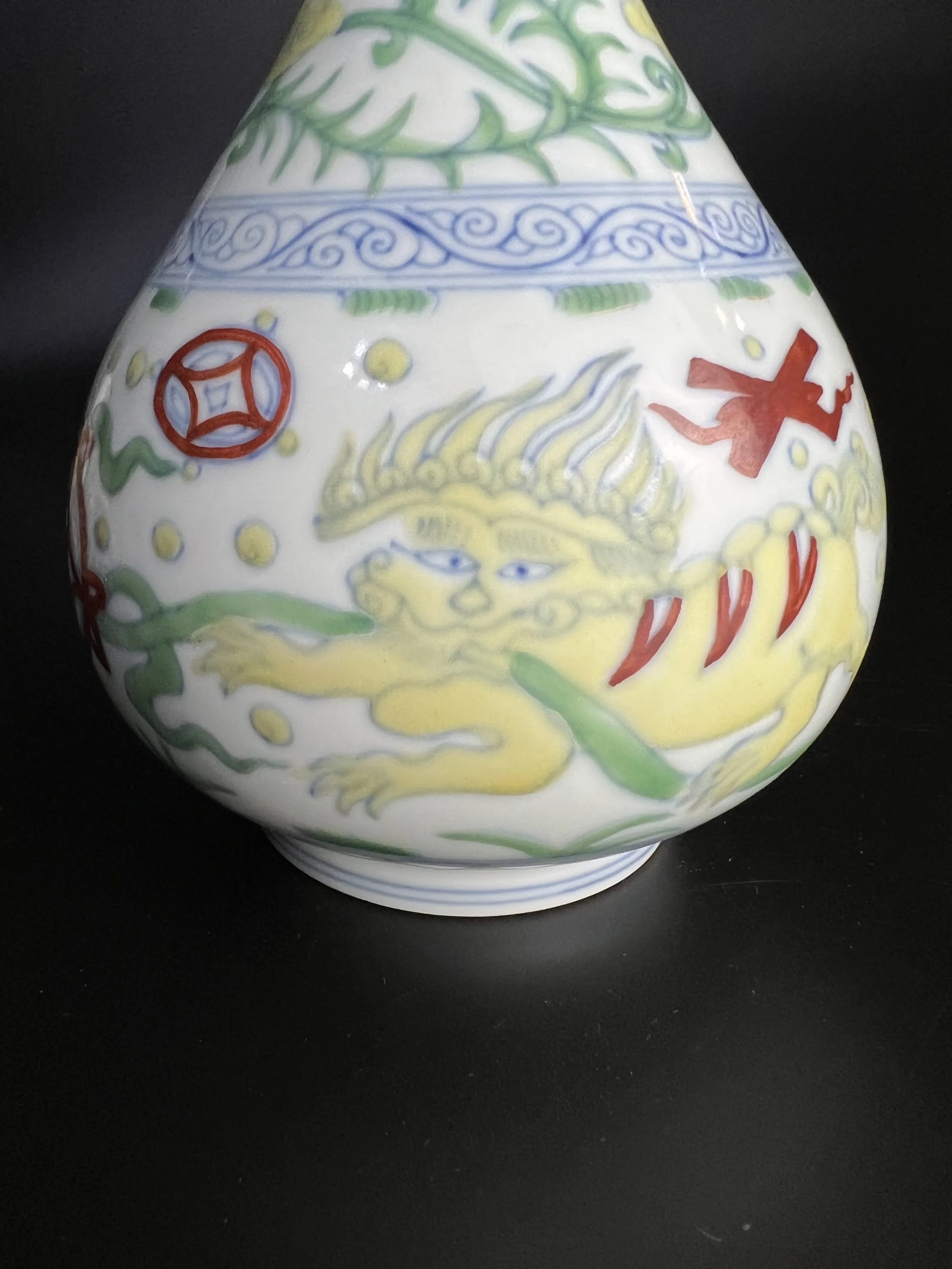 Image 7 of 13
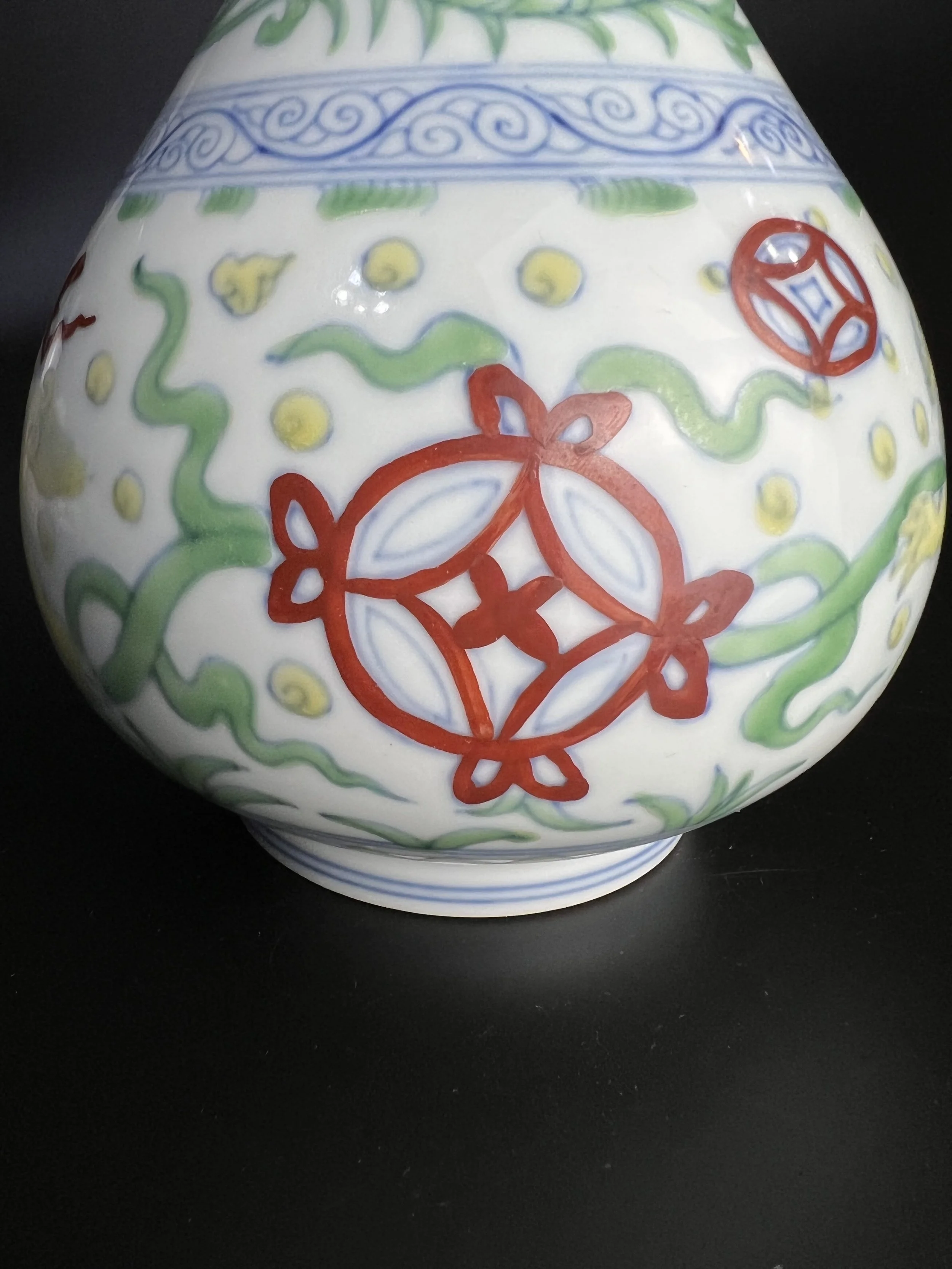 Image 8 of 13
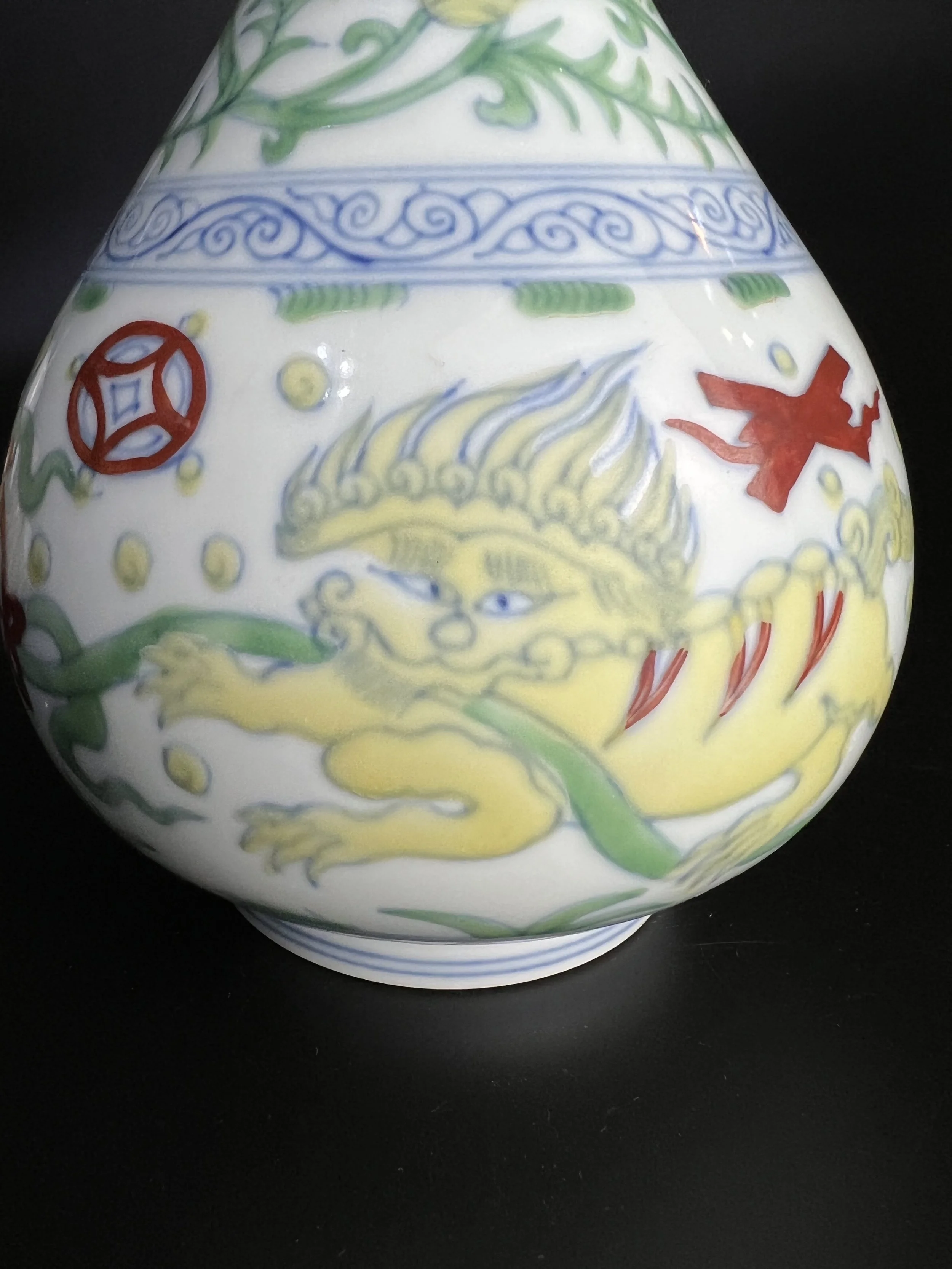 Image 9 of 13
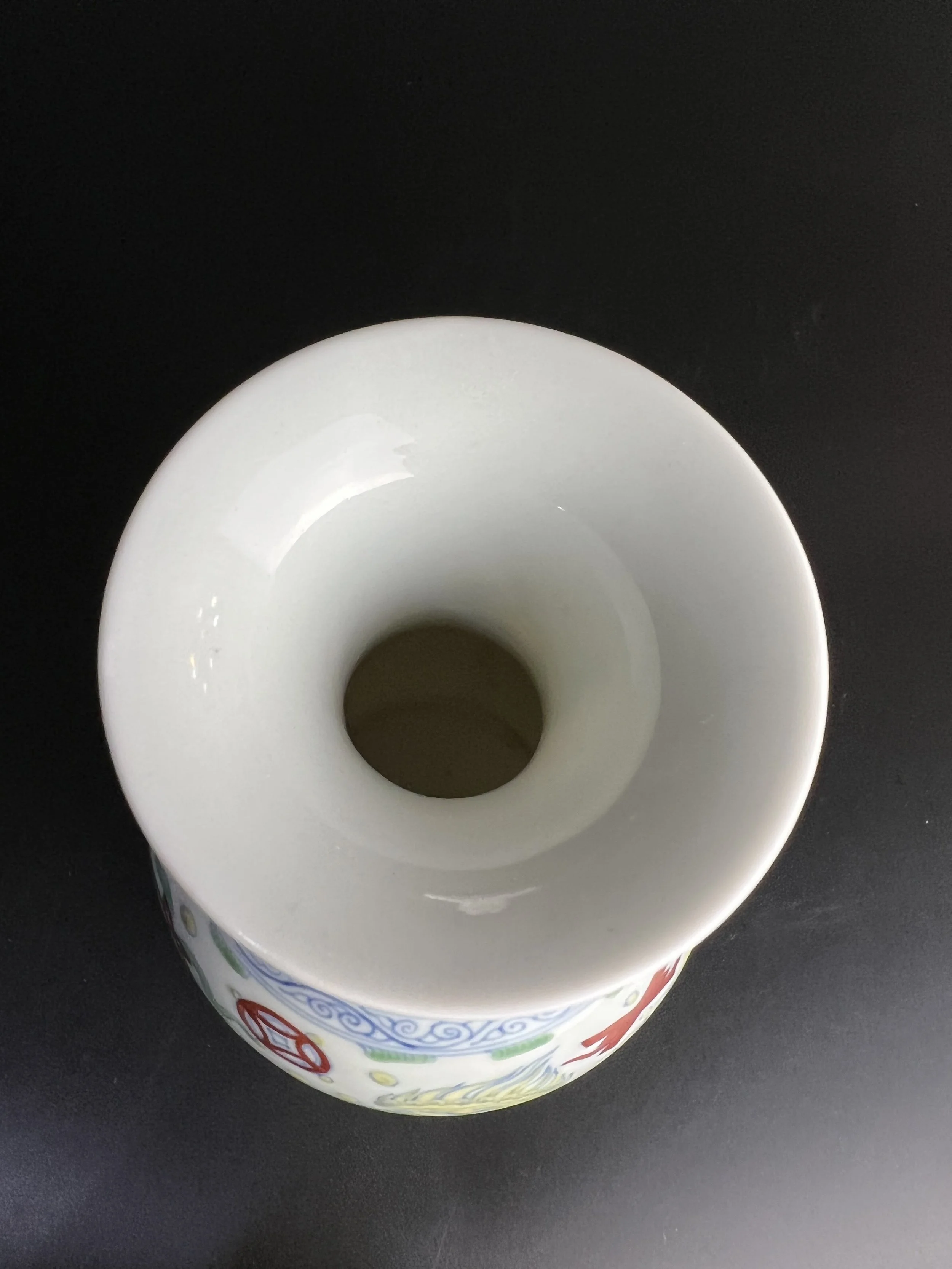 Image 10 of 13
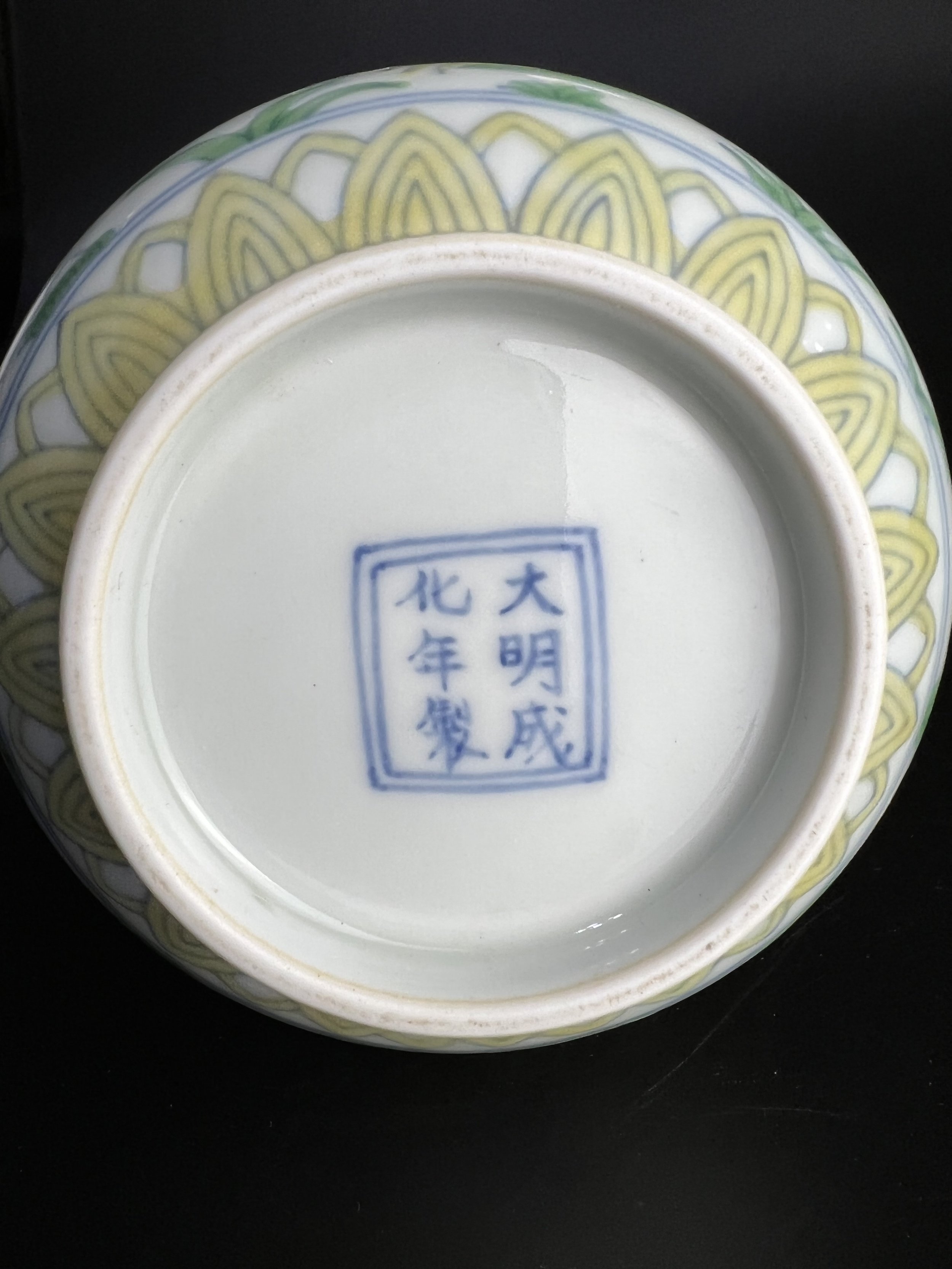 Image 11 of 13
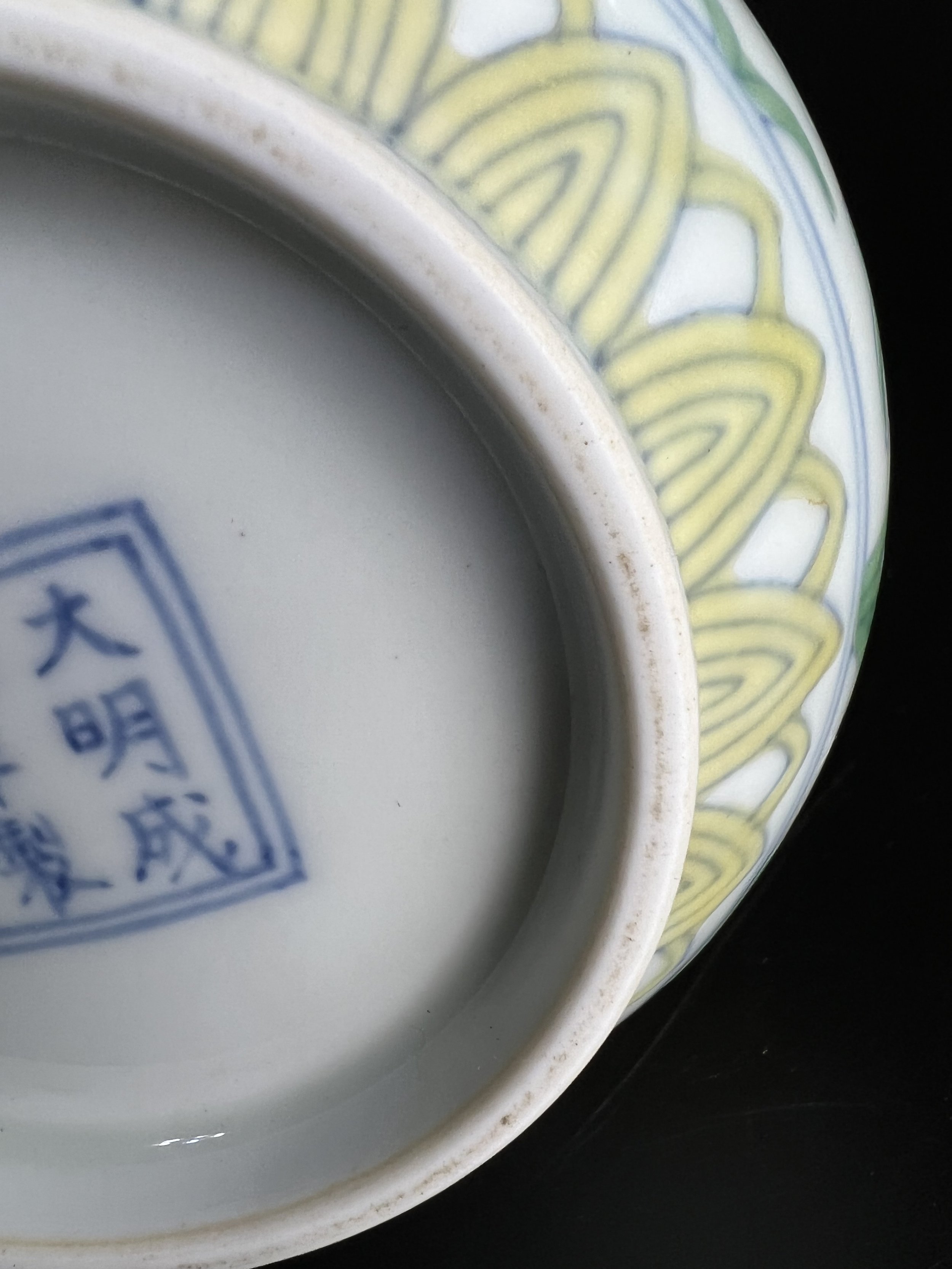 Image 12 of 13
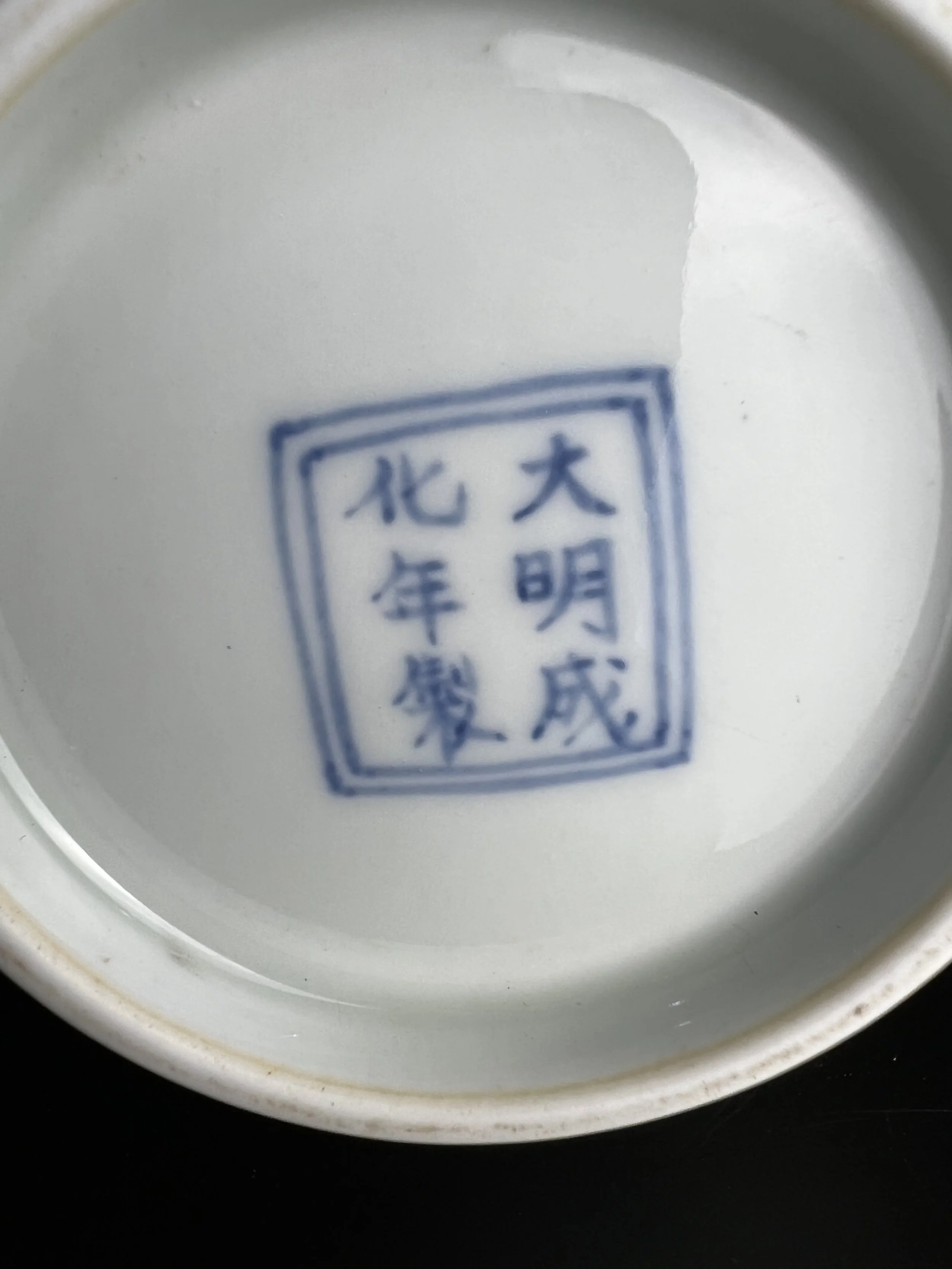 Image 13 of 13