This piece is a highly creative and technically demanding kiln masterpiece from the Yongle period of the Ming Dynasty, notable for its rare form and distinctive glaze combination. The censer stands 20 cm in total height and is ingeniously constructed from two separate parts joined together, uniting the lustrous purity of Yongle 'sweet white' glaze with the archaic elegance of soy-brown glaze in a single object. The upper section is a bowl-shaped cover, approximately 11 cm in diameter, with a central vent hole. It is covered inside and out with sweet white glaze, and its exterior is decorated with molded or incised designs of scrolling flowers. The lower section is the bowl-shaped body of the censer, featuring a constricted waist (shuyao). Its exterior is carved in relief with lotus petal motifs and covered in a soy-brown glaze (also known as 'purple-gold' glaze). The base is unglazed and has a central hole. Three rounded feet, each about one Chinese inch tall and glazed in sweet white, are evenly spaced around the base. The piece bears no reign mark, yet its body and glaze characteristics, along with its imposing form, deeply embody the stylistic hallmarks of Yongle imperial ware. It was likely a special object commissioned for palace Buddhist rituals or scholarly studio display. Extremely rare, it stands as a remarkably innovative work among Yongle monochrome-glazed porcelains.
---
### I. Analysis of Form: A Composite Structure of Distinctive Conception
The most striking feature of this censer is its composite, two-part structure, which represents an organic integration of function and form, not a simple join:
1. Upper Bowl-Shaped Cover: Shaped like an inverted bowl with a central hole, this serves as the smoke vent. The pure, flawless sweet white glaze imparts a sense of lightness and ascent. While the specific exterior motifs are not detailed, based on Yongle style, they can be surmised to be molded designs of auspicious patterns such as scrolling lotus, Indian lotus, or lingzhi fungus, executed with fluid and fine lines. This section combines utility (directing smoke) with ornament.
2. Lower Main Body: The constricted waist design creates an elegant transition from the upper part. The lotus petal motifs in relief on the exterior are a common decorative theme in the Yongle period, frequently used on objects associated with Buddhism. The petals are plump and raised from the surface, appearing even more three-dimensional and profound under the soy-brown glaze, creating a solemn and dignified visual effect. The central hole in the base likely corresponds to the upper vent, serving to ventilate and aid combustion or connect to an internal structure.
3. The Three Feet and Overall Resonance: The three rounded feet at the base stand like a ding tripod, providing stable support. Glazed in sweet white, they echo the upper cover, creating a visual connection through glaze color at both ends. The entire object's form is clearly articulated in layers, presenting a visual rhythm from top to bottom of "white (cover) — transition (waist) — brown (body) — white (feet)." This breaks the monotony of a single glaze, showcasing the Yongle kiln craftsmen's bold conceptualization and masterful control of spatial composition.
### II. Glazes and Technique: Dual Glazes in Harmony, Exemplary Craftsmanship
The core artistic value of this piece lies in the perfect combination of sweet white and soy-brown glazes, which demanded the highest level of technical skill:
*Yongle Sweet White Glaze**: Praised as "as white as congealed fat, as pure as accumulated snow." The sweet white glaze on the upper part should possess the classic characteristics of Yongle sweet white—**an extremely lustrous, glossy texture**. On the thinly potted, semi-eggshell body (the cover is likely quite thin), it would appear particularly translucent, warm, and elegant, with a faint bluish tinge where pooled, presenting an ivory-like softness under light. Its "sweet" quality lies precisely in the warm luster and serene aura contained within the glaze color.
*Soy-Brown Glaze (Purple-Gold Glaze)**: The glaze on the body is a high-temperature iron-based glaze. Building on earlier traditions, Yongle soy-brown glaze achieved a more even, stable, and brilliant coloration, resembling chestnut shells or rich soy sauce—deep, restrained, and introspective, often with a slight orange-peel texture and an inner radiance. It forms a stark contrast with the purity of the white: one light, one dark; one airy, one weighty—a highly potent visual effect.
*Difficulty of Composite Technique**: This object is not a simple case of two-color glaze decoration. It required separate firing of the parts and flawless joining, while ensuring both glaze types achieved perfect color in their respective sections. This demanded near-perfect control of kiln placement and firing temperature. Particularly challenging was controlling the flow of the sweet white glaze at the junctions of the feet and the body. On the unglazed footrims, one would expect to see the fine, white porcelain body, smooth to the touch like glutinous rice paste—a characteristic of high-quality Yongle porcelain clay.
### III. Function, Period, and Analysis of the Lack of Mark
1. Function Hypothesis: Judging from its design with a perforated cover, a bowl body, and a base vent, this object was undoubtedly intended for burning incense as a ding-style censer. The upper cover would contain and channel smoke while preventing ash from escaping; the lotus petal motifs suggest possible use as a Buddhist altar vessel or for refined literati appreciation. The two-part design also facilitates cleaning of ash, showing thoughtful practical consideration.
2. Yongle Period Attribution (Despite No Mark): The attribution is well-supported:
*Form**: The composite tripod censer form and lotus petal decoration find parallels within the Yongle-Xuande period. The overall imposing bearing, with full, rounded contours, is typical of early Ming forms.
*Body and Glaze**: The quality of both the sweet white and soy-brown glazes reaches the pinnacle, closely matching the characteristics of Yongle imperial products. The specific texture of the sweet white glaze, in particular, was difficult for later periods to replicate.
*Technique**: The complex joining and dual-glaze application align with the Yongle kilns' context of innovation and sparing no expense.
3. Interpretation of the Lack of a Reign Mark: The absence of a mark is not uncommon among early Yongle imperial wares, especially possibly for:
*Specially Commissioned Pieces**: Not mass-produced, perhaps made for a specific palace or purpose.
*Technical Experiments**: Such composite-technique objects might themselves have been experimental.
*Earlier Date**: Possibly made before the standardized reign mark system was firmly established later in the Yongle reign. The lack of a mark in no way diminishes its value; instead, it adds an aura of mystery and uniqueness.
### IV. Conclusion: Unique Refinement, a Chapter of its Era
This Yongle sweet white and soy-brown glazed tripod censer is an artistic masterpiece that transcends ordinary utility. It is not only tangible evidence of the peak technical achievements of early Ming porcelain-making—demonstrating multiple high-difficulty skills like separate part forming, precise joining, dual-glaze application, and carved decoration—but also a material embodiment of the diverse aesthetic and spiritual pursuits of the Yongle court. The purity of the sweet white symbolizes cleanliness and transcendence; the steadiness of the soy-brown implies serenity and archaism; the form of the lotus petals conveys Buddhist devotion and auspiciousness. In this single vessel, technical exploration and aesthetic expression merge into one. Strength resides within its stillness, and profound meaning lies in its simplicity. It stands like a wordless poem, crystallizing the brilliance, confidence, and elegant sensibility of the great Ming Yongle court six hundred years ago within the transformative fusion of water, clay, and fire, allowing later viewers a glimpse into the radiant splendor of that distant age.
## 明永乐甜白酱釉三足鼎式炉鉴赏
本品为明永乐时期一件极具创意与工艺难度的窑作佳器,形制罕见,釉色别致。炉体通高二十厘米,由上下两部分巧妙接合而成,融合了**永乐甜白釉之莹润**与**酱釉之古雅**于一身。上部为碗形罩盖,口径约十一厘米,中心开圆孔,内外满施甜白釉,外壁模印或刻划缠枝花卉纹;下部为承盘式炉身,束腰,外壁浮雕莲瓣纹,施酱釉(紫金釉),底足露胎,中心有一圆孔,底周等距设三圆足,足高一寸许,外施甜白釉。全器无款,然其胎釉特质、造型气度,皆深具永乐官窑之时代风范,似为宫廷礼佛或书斋陈设之特制器用,存世稀少,堪称永乐颜色釉瓷中别开生面之作。
---
### 一、形制解析:分体复合,意匠独具
此炉最显著特征在于其**分体式结构**,这并非简单拼接,而是功能与形式的有机结合:
1. 上部碗形罩盖:其形如覆碗,中开圆孔,实为**出烟口**。甜白釉纯净无瑕,赋予其轻盈升腾之感。外壁纹饰虽未见详述,然结合永乐风格,推测为模印的缠枝莲、番莲或灵芝等**祥瑞图案**,线条流畅精细。此部分集实用(导烟)与装饰于一体。
2. 下部炉身主体:承接上部的束腰设计,形成优雅的过渡。外壁浮雕的**莲瓣纹**,是永乐时期常见的装饰母题,常用于佛教相关器物,瓣形丰腴,凸起于器表,在酱釉的掩映下更显立体深邃,营造出庄重肃穆的视觉效果。底部中心的圆孔,应与上部气孔对应,起到**通风助燃**或连接内部结构的作用。
3. 三足与整体气韵:底部三圆足如鼎而立,提供稳定支撑。足部施以甜白釉,与上部罩盖呼应,形成釉色上的**首尾衔接**。全器造型层次分明,由上至下经历了“白(盖)—过渡(束腰)—褐(身)—白(足)”的视觉韵律,打破了单色釉的单调,展现了永乐窑工在造型上的大胆构思与卓越的空间把控能力。
### 二、釉色与工艺:双釉辉映,技艺卓绝
本器的核心艺术价值,在于**甜白釉与酱釉的完美结合**,这需要极高的工艺水准:
*永乐甜白釉**:被誉为“白如凝脂,素犹积雪”。本品上部所施甜白釉,应具备永乐甜白的典型特征——**釉质极度莹润**,在半脱胎的薄胎上(推测罩盖胎体较薄)更显通透温雅,积釉处微泛淡青色,光线下呈现**象牙般柔和的质感**。其“甜”之感,正在于釉色中蕴含的温润光泽与恬静气息。
*酱釉(紫金釉)**:炉身所施酱釉,是以铁为呈色剂的高温釉。永乐酱釉承前代而来,发色更为**匀净、稳定、莹亮**,色如栗壳,又似醇酱,深沉内敛,釉面往往带有橘皮般的轻微凹凸感,宝光内含。与甜白的洁净形成鲜明对比,一明一暗,一轻一重,视觉效果极为强烈。
*复合工艺的难度**:此器并非简单的双色釉装饰。其**分体烧造、接胎无误**,且需保证两种釉色在各自部位均呈色完美,对窑位、火候的控制要求近乎苛刻。尤其是三足与炉底接合处,甜白釉的流淌控制需格外精准。底足露胎处,可见胎土细腻洁白,抚之有糯米感,此为永乐优质瓷胎特征。
### 三、功能、年代与无款探析
1. 功能推测:从其带孔罩盖、炉身及底部气孔的设计判断,此器当为**焚香之用**的鼎式炉。上部罩盖可集烟、导烟,兼防尘逸散;莲瓣纹饰则暗示其可能用于**佛前供器**或文人清赏。分体式设计亦便于清洁香灰,实用考量周全。
2. 永乐风格定年:虽无款识,然其判断依据充分:
*造型**:分体式三足炉、莲瓣纹装饰,在永宣时期均有脉络可寻,整体气度雄伟,线条圆润饱满,是明早期造型的典型特征。
*胎釉**:甜白釉与酱釉的质量达到顶尖水平,与永乐御窑产品特征高度吻合。特别是甜白釉的质感,后世难以企及。
*工艺**:复杂的接胎与双釉施工艺,符合永乐朝不惜工本、锐意创新的窑作背景。
3. 无款现象解读:永乐官窑早期器物中无款者并不鲜见,尤其可能见于:
*特殊定烧器**:非批量生产,或为特定宫殿、用途烧造。
*工艺实验品**:此类复合工艺器物本身可能带有试验性质。
*时代较早**:或早于永乐后期形成固定署款制度之前。无款丝毫不减其价值,反而增添了神秘性与独特性。
### 四、总结:孤标雅韵,时代华章
此永乐甜白酱釉三足炉,是一件超越了普通实用功能的艺术杰作。它不仅是明代早期制瓷**巅峰技术的实物见证**——展示了分体制坯、精准接胎、双釉兼施、纹饰雕琢等多重高难度技艺;更是**永乐宫廷多元审美与精神追求的物质载体**——甜白之净,象征纯洁与超脱;酱釉之稳,寓意沉静与古朴;莲瓣之形,寄托着佛教的虔诚与美好。一器之上,技术的探索与美的表达浑然一体,静穆中蕴藏着力量,简练处可见深意。它仿佛一首无言的诗歌,将六百年前大明永乐朝的辉煌、自信与优雅情怀,凝固于水火交融的窑变之中,令后世观者,得以窥见那远去时代的璀璨光华。
This piece is a highly creative and technically demanding kiln masterpiece from the Yongle period of the Ming Dynasty, notable for its rare form and distinctive glaze combination. The censer stands 20 cm in total height and is ingeniously constructed from two separate parts joined together, uniting the lustrous purity of Yongle 'sweet white' glaze with the archaic elegance of soy-brown glaze in a single object. The upper section is a bowl-shaped cover, approximately 11 cm in diameter, with a central vent hole. It is covered inside and out with sweet white glaze, and its exterior is decorated with molded or incised designs of scrolling flowers. The lower section is the bowl-shaped body of the censer, featuring a constricted waist (shuyao). Its exterior is carved in relief with lotus petal motifs and covered in a soy-brown glaze (also known as 'purple-gold' glaze). The base is unglazed and has a central hole. Three rounded feet, each about one Chinese inch tall and glazed in sweet white, are evenly spaced around the base. The piece bears no reign mark, yet its body and glaze characteristics, along with its imposing form, deeply embody the stylistic hallmarks of Yongle imperial ware. It was likely a special object commissioned for palace Buddhist rituals or scholarly studio display. Extremely rare, it stands as a remarkably innovative work among Yongle monochrome-glazed porcelains.
---
### I. Analysis of Form: A Composite Structure of Distinctive Conception
The most striking feature of this censer is its composite, two-part structure, which represents an organic integration of function and form, not a simple join:
1. Upper Bowl-Shaped Cover: Shaped like an inverted bowl with a central hole, this serves as the smoke vent. The pure, flawless sweet white glaze imparts a sense of lightness and ascent. While the specific exterior motifs are not detailed, based on Yongle style, they can be surmised to be molded designs of auspicious patterns such as scrolling lotus, Indian lotus, or lingzhi fungus, executed with fluid and fine lines. This section combines utility (directing smoke) with ornament.
2. Lower Main Body: The constricted waist design creates an elegant transition from the upper part. The lotus petal motifs in relief on the exterior are a common decorative theme in the Yongle period, frequently used on objects associated with Buddhism. The petals are plump and raised from the surface, appearing even more three-dimensional and profound under the soy-brown glaze, creating a solemn and dignified visual effect. The central hole in the base likely corresponds to the upper vent, serving to ventilate and aid combustion or connect to an internal structure.
3. The Three Feet and Overall Resonance: The three rounded feet at the base stand like a ding tripod, providing stable support. Glazed in sweet white, they echo the upper cover, creating a visual connection through glaze color at both ends. The entire object's form is clearly articulated in layers, presenting a visual rhythm from top to bottom of "white (cover) — transition (waist) — brown (body) — white (feet)." This breaks the monotony of a single glaze, showcasing the Yongle kiln craftsmen's bold conceptualization and masterful control of spatial composition.
### II. Glazes and Technique: Dual Glazes in Harmony, Exemplary Craftsmanship
The core artistic value of this piece lies in the perfect combination of sweet white and soy-brown glazes, which demanded the highest level of technical skill:
*Yongle Sweet White Glaze**: Praised as "as white as congealed fat, as pure as accumulated snow." The sweet white glaze on the upper part should possess the classic characteristics of Yongle sweet white—**an extremely lustrous, glossy texture**. On the thinly potted, semi-eggshell body (the cover is likely quite thin), it would appear particularly translucent, warm, and elegant, with a faint bluish tinge where pooled, presenting an ivory-like softness under light. Its "sweet" quality lies precisely in the warm luster and serene aura contained within the glaze color.
*Soy-Brown Glaze (Purple-Gold Glaze)**: The glaze on the body is a high-temperature iron-based glaze. Building on earlier traditions, Yongle soy-brown glaze achieved a more even, stable, and brilliant coloration, resembling chestnut shells or rich soy sauce—deep, restrained, and introspective, often with a slight orange-peel texture and an inner radiance. It forms a stark contrast with the purity of the white: one light, one dark; one airy, one weighty—a highly potent visual effect.
*Difficulty of Composite Technique**: This object is not a simple case of two-color glaze decoration. It required separate firing of the parts and flawless joining, while ensuring both glaze types achieved perfect color in their respective sections. This demanded near-perfect control of kiln placement and firing temperature. Particularly challenging was controlling the flow of the sweet white glaze at the junctions of the feet and the body. On the unglazed footrims, one would expect to see the fine, white porcelain body, smooth to the touch like glutinous rice paste—a characteristic of high-quality Yongle porcelain clay.
### III. Function, Period, and Analysis of the Lack of Mark
1. Function Hypothesis: Judging from its design with a perforated cover, a bowl body, and a base vent, this object was undoubtedly intended for burning incense as a ding-style censer. The upper cover would contain and channel smoke while preventing ash from escaping; the lotus petal motifs suggest possible use as a Buddhist altar vessel or for refined literati appreciation. The two-part design also facilitates cleaning of ash, showing thoughtful practical consideration.
2. Yongle Period Attribution (Despite No Mark): The attribution is well-supported:
*Form**: The composite tripod censer form and lotus petal decoration find parallels within the Yongle-Xuande period. The overall imposing bearing, with full, rounded contours, is typical of early Ming forms.
*Body and Glaze**: The quality of both the sweet white and soy-brown glazes reaches the pinnacle, closely matching the characteristics of Yongle imperial products. The specific texture of the sweet white glaze, in particular, was difficult for later periods to replicate.
*Technique**: The complex joining and dual-glaze application align with the Yongle kilns' context of innovation and sparing no expense.
3. Interpretation of the Lack of a Reign Mark: The absence of a mark is not uncommon among early Yongle imperial wares, especially possibly for:
*Specially Commissioned Pieces**: Not mass-produced, perhaps made for a specific palace or purpose.
*Technical Experiments**: Such composite-technique objects might themselves have been experimental.
*Earlier Date**: Possibly made before the standardized reign mark system was firmly established later in the Yongle reign. The lack of a mark in no way diminishes its value; instead, it adds an aura of mystery and uniqueness.
### IV. Conclusion: Unique Refinement, a Chapter of its Era
This Yongle sweet white and soy-brown glazed tripod censer is an artistic masterpiece that transcends ordinary utility. It is not only tangible evidence of the peak technical achievements of early Ming porcelain-making—demonstrating multiple high-difficulty skills like separate part forming, precise joining, dual-glaze application, and carved decoration—but also a material embodiment of the diverse aesthetic and spiritual pursuits of the Yongle court. The purity of the sweet white symbolizes cleanliness and transcendence; the steadiness of the soy-brown implies serenity and archaism; the form of the lotus petals conveys Buddhist devotion and auspiciousness. In this single vessel, technical exploration and aesthetic expression merge into one. Strength resides within its stillness, and profound meaning lies in its simplicity. It stands like a wordless poem, crystallizing the brilliance, confidence, and elegant sensibility of the great Ming Yongle court six hundred years ago within the transformative fusion of water, clay, and fire, allowing later viewers a glimpse into the radiant splendor of that distant age.
## 明永乐甜白酱釉三足鼎式炉鉴赏
本品为明永乐时期一件极具创意与工艺难度的窑作佳器,形制罕见,釉色别致。炉体通高二十厘米,由上下两部分巧妙接合而成,融合了**永乐甜白釉之莹润**与**酱釉之古雅**于一身。上部为碗形罩盖,口径约十一厘米,中心开圆孔,内外满施甜白釉,外壁模印或刻划缠枝花卉纹;下部为承盘式炉身,束腰,外壁浮雕莲瓣纹,施酱釉(紫金釉),底足露胎,中心有一圆孔,底周等距设三圆足,足高一寸许,外施甜白釉。全器无款,然其胎釉特质、造型气度,皆深具永乐官窑之时代风范,似为宫廷礼佛或书斋陈设之特制器用,存世稀少,堪称永乐颜色釉瓷中别开生面之作。
---
### 一、形制解析:分体复合,意匠独具
此炉最显著特征在于其**分体式结构**,这并非简单拼接,而是功能与形式的有机结合:
1. 上部碗形罩盖:其形如覆碗,中开圆孔,实为**出烟口**。甜白釉纯净无瑕,赋予其轻盈升腾之感。外壁纹饰虽未见详述,然结合永乐风格,推测为模印的缠枝莲、番莲或灵芝等**祥瑞图案**,线条流畅精细。此部分集实用(导烟)与装饰于一体。
2. 下部炉身主体:承接上部的束腰设计,形成优雅的过渡。外壁浮雕的**莲瓣纹**,是永乐时期常见的装饰母题,常用于佛教相关器物,瓣形丰腴,凸起于器表,在酱釉的掩映下更显立体深邃,营造出庄重肃穆的视觉效果。底部中心的圆孔,应与上部气孔对应,起到**通风助燃**或连接内部结构的作用。
3. 三足与整体气韵:底部三圆足如鼎而立,提供稳定支撑。足部施以甜白釉,与上部罩盖呼应,形成釉色上的**首尾衔接**。全器造型层次分明,由上至下经历了“白(盖)—过渡(束腰)—褐(身)—白(足)”的视觉韵律,打破了单色釉的单调,展现了永乐窑工在造型上的大胆构思与卓越的空间把控能力。
### 二、釉色与工艺:双釉辉映,技艺卓绝
本器的核心艺术价值,在于**甜白釉与酱釉的完美结合**,这需要极高的工艺水准:
*永乐甜白釉**:被誉为“白如凝脂,素犹积雪”。本品上部所施甜白釉,应具备永乐甜白的典型特征——**釉质极度莹润**,在半脱胎的薄胎上(推测罩盖胎体较薄)更显通透温雅,积釉处微泛淡青色,光线下呈现**象牙般柔和的质感**。其“甜”之感,正在于釉色中蕴含的温润光泽与恬静气息。
*酱釉(紫金釉)**:炉身所施酱釉,是以铁为呈色剂的高温釉。永乐酱釉承前代而来,发色更为**匀净、稳定、莹亮**,色如栗壳,又似醇酱,深沉内敛,釉面往往带有橘皮般的轻微凹凸感,宝光内含。与甜白的洁净形成鲜明对比,一明一暗,一轻一重,视觉效果极为强烈。
*复合工艺的难度**:此器并非简单的双色釉装饰。其**分体烧造、接胎无误**,且需保证两种釉色在各自部位均呈色完美,对窑位、火候的控制要求近乎苛刻。尤其是三足与炉底接合处,甜白釉的流淌控制需格外精准。底足露胎处,可见胎土细腻洁白,抚之有糯米感,此为永乐优质瓷胎特征。
### 三、功能、年代与无款探析
1. 功能推测:从其带孔罩盖、炉身及底部气孔的设计判断,此器当为**焚香之用**的鼎式炉。上部罩盖可集烟、导烟,兼防尘逸散;莲瓣纹饰则暗示其可能用于**佛前供器**或文人清赏。分体式设计亦便于清洁香灰,实用考量周全。
2. 永乐风格定年:虽无款识,然其判断依据充分:
*造型**:分体式三足炉、莲瓣纹装饰,在永宣时期均有脉络可寻,整体气度雄伟,线条圆润饱满,是明早期造型的典型特征。
*胎釉**:甜白釉与酱釉的质量达到顶尖水平,与永乐御窑产品特征高度吻合。特别是甜白釉的质感,后世难以企及。
*工艺**:复杂的接胎与双釉施工艺,符合永乐朝不惜工本、锐意创新的窑作背景。
3. 无款现象解读:永乐官窑早期器物中无款者并不鲜见,尤其可能见于:
*特殊定烧器**:非批量生产,或为特定宫殿、用途烧造。
*工艺实验品**:此类复合工艺器物本身可能带有试验性质。
*时代较早**:或早于永乐后期形成固定署款制度之前。无款丝毫不减其价值,反而增添了神秘性与独特性。
### 四、总结:孤标雅韵,时代华章
此永乐甜白酱釉三足炉,是一件超越了普通实用功能的艺术杰作。它不仅是明代早期制瓷**巅峰技术的实物见证**——展示了分体制坯、精准接胎、双釉兼施、纹饰雕琢等多重高难度技艺;更是**永乐宫廷多元审美与精神追求的物质载体**——甜白之净,象征纯洁与超脱;酱釉之稳,寓意沉静与古朴;莲瓣之形,寄托着佛教的虔诚与美好。一器之上,技术的探索与美的表达浑然一体,静穆中蕴藏着力量,简练处可见深意。它仿佛一首无言的诗歌,将六百年前大明永乐朝的辉煌、自信与优雅情怀,凝固于水火交融的窑变之中,令后世观者,得以窥见那远去时代的璀璨光华。
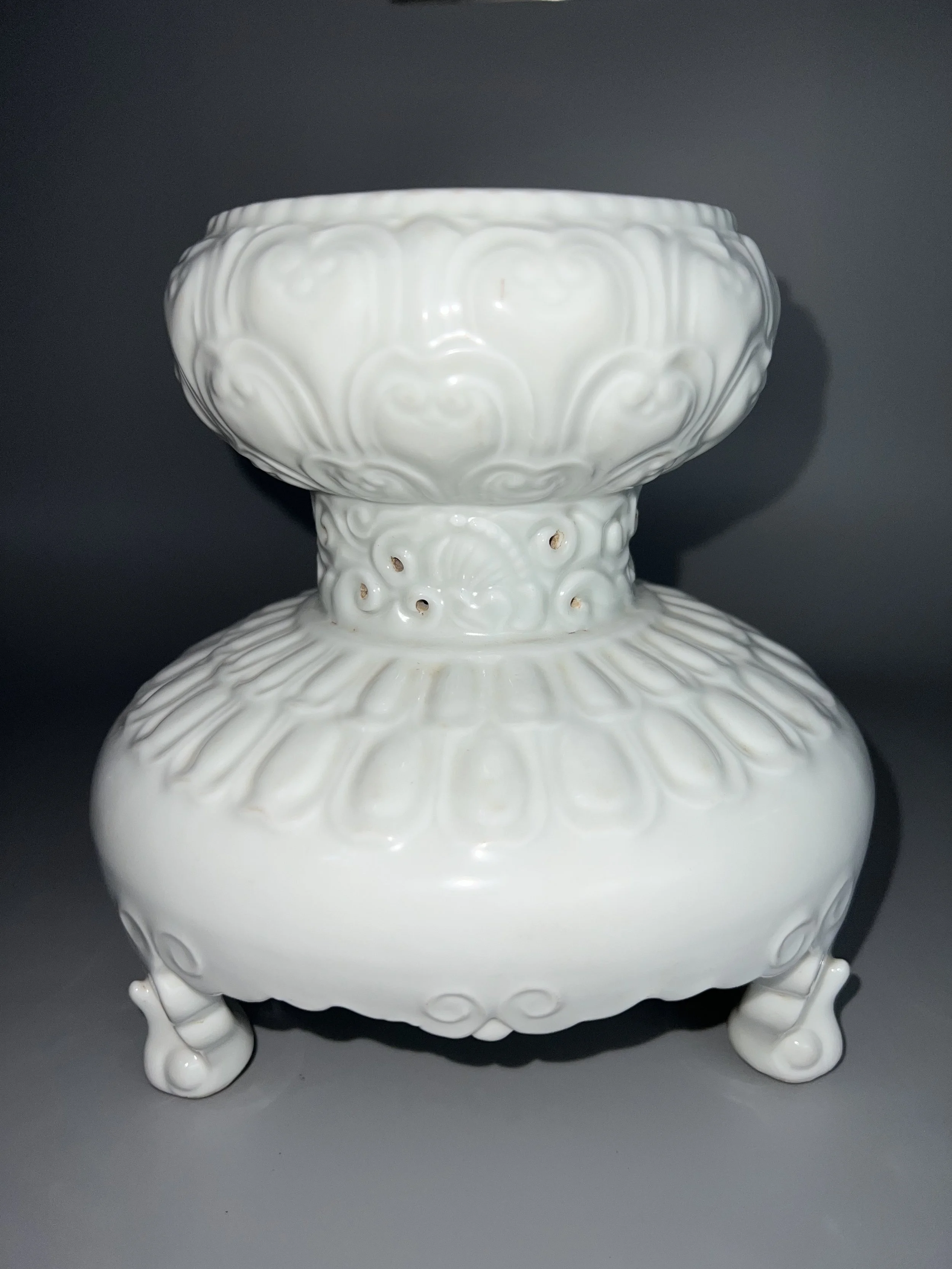 Image 1 of 19
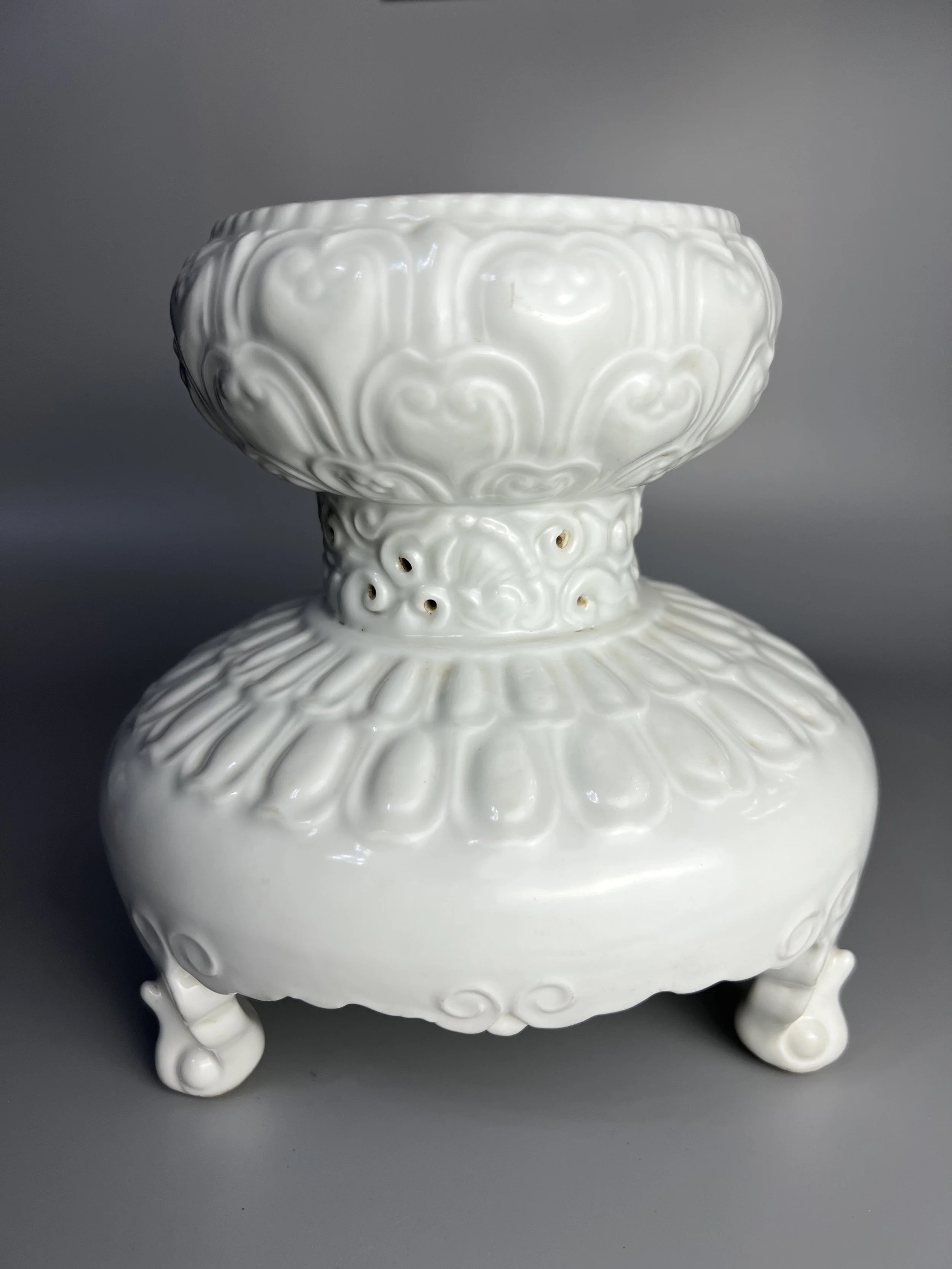 Image 2 of 19
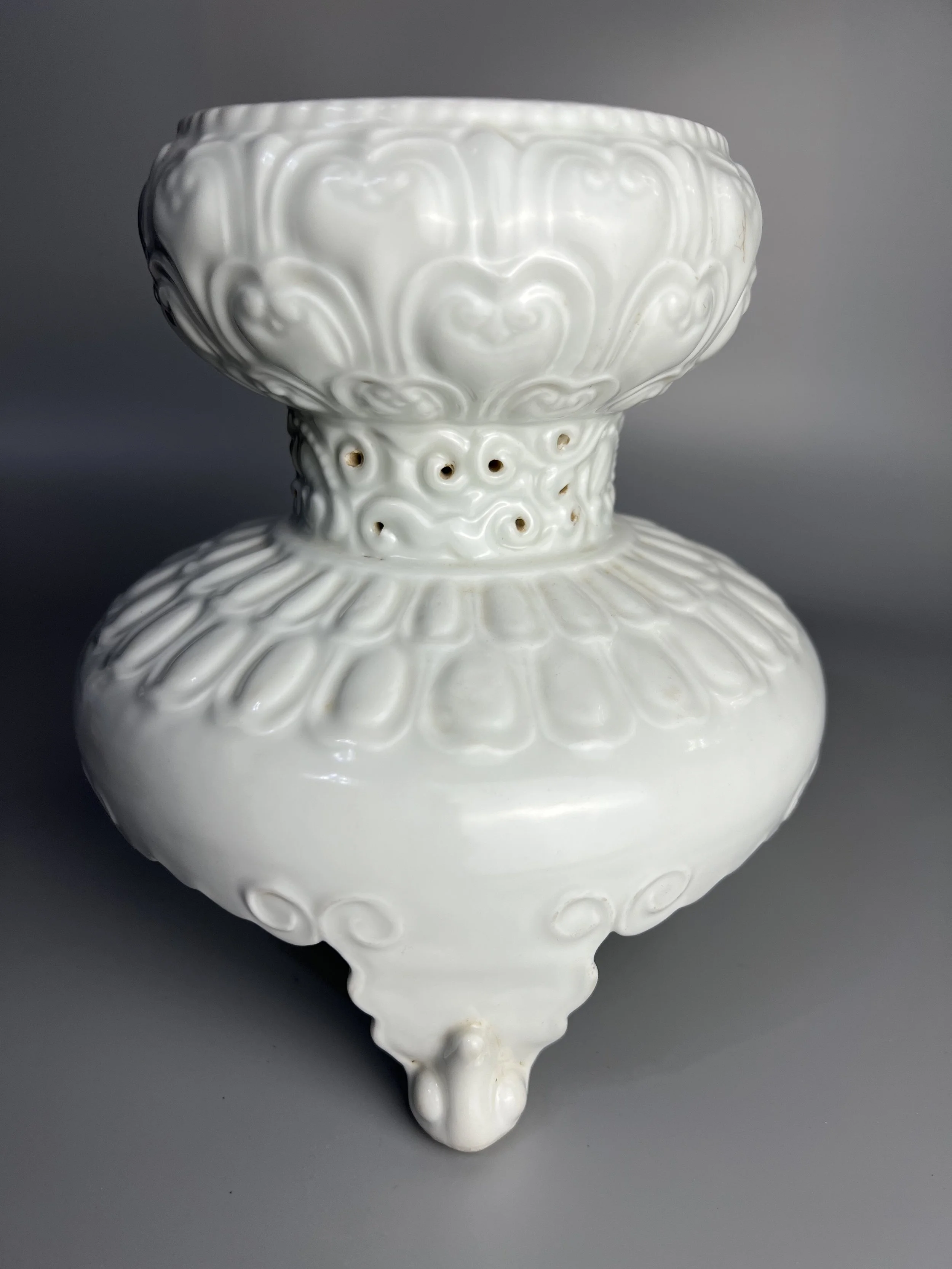 Image 3 of 19
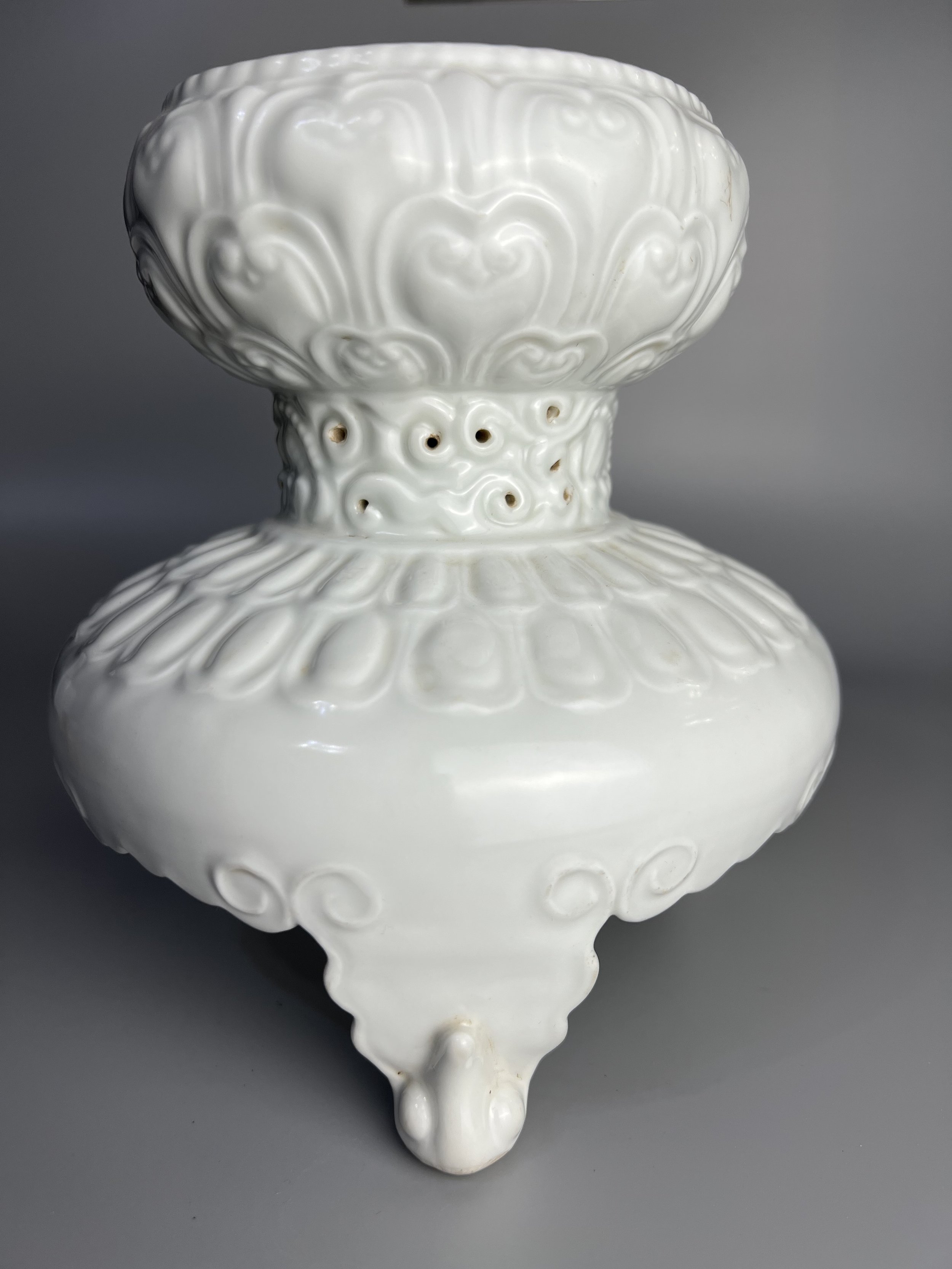 Image 4 of 19
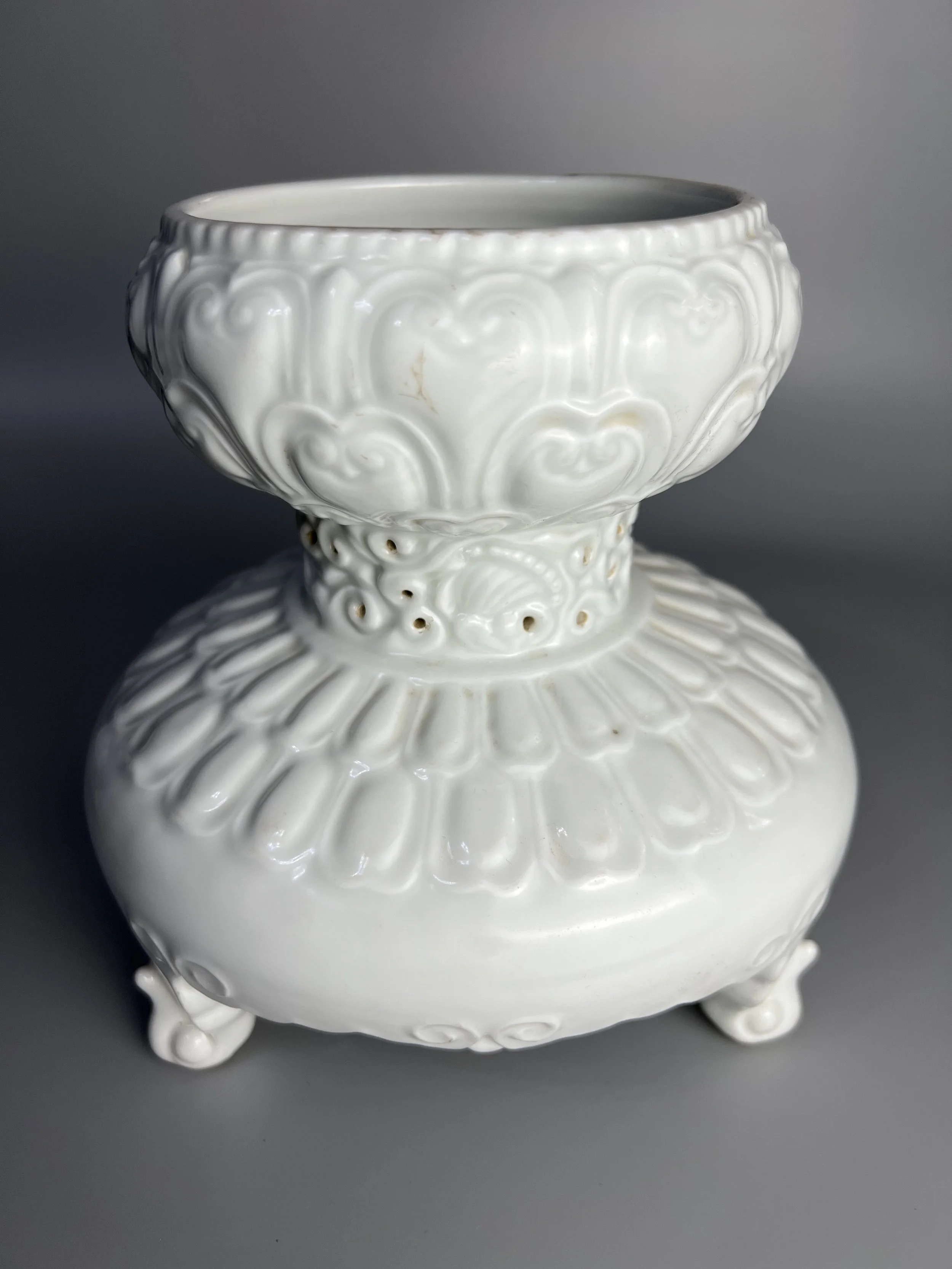 Image 5 of 19
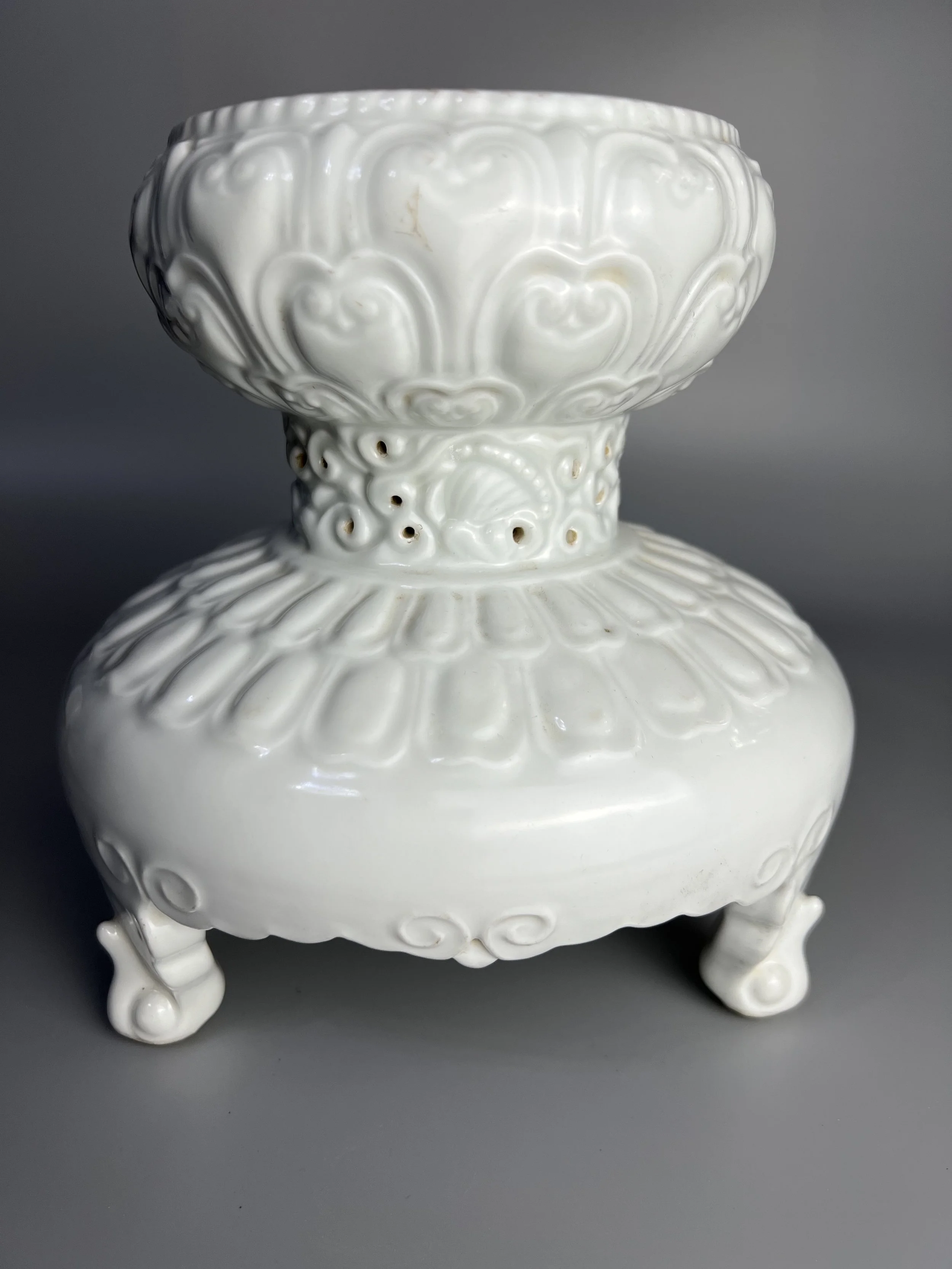 Image 6 of 19
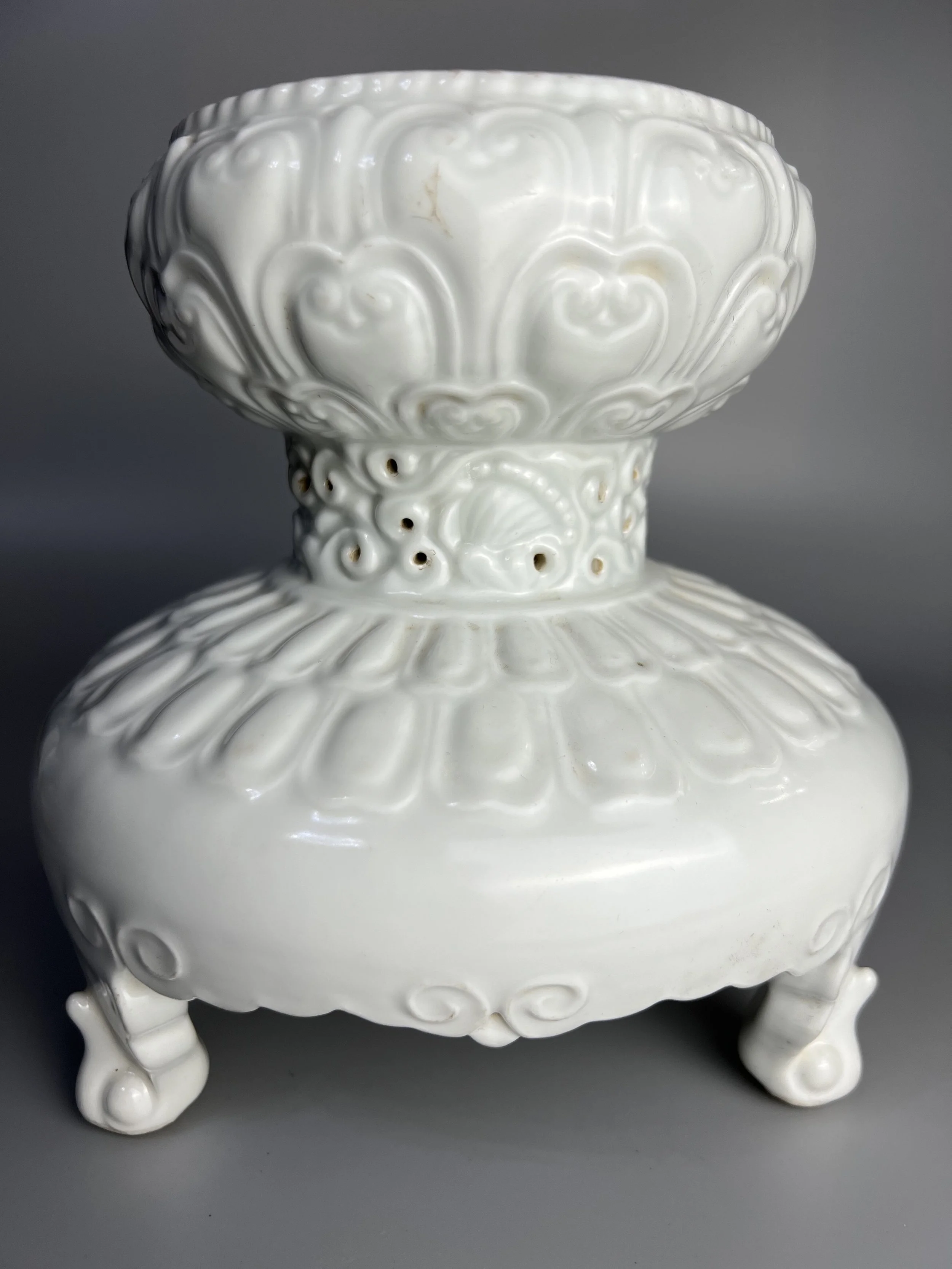 Image 7 of 19
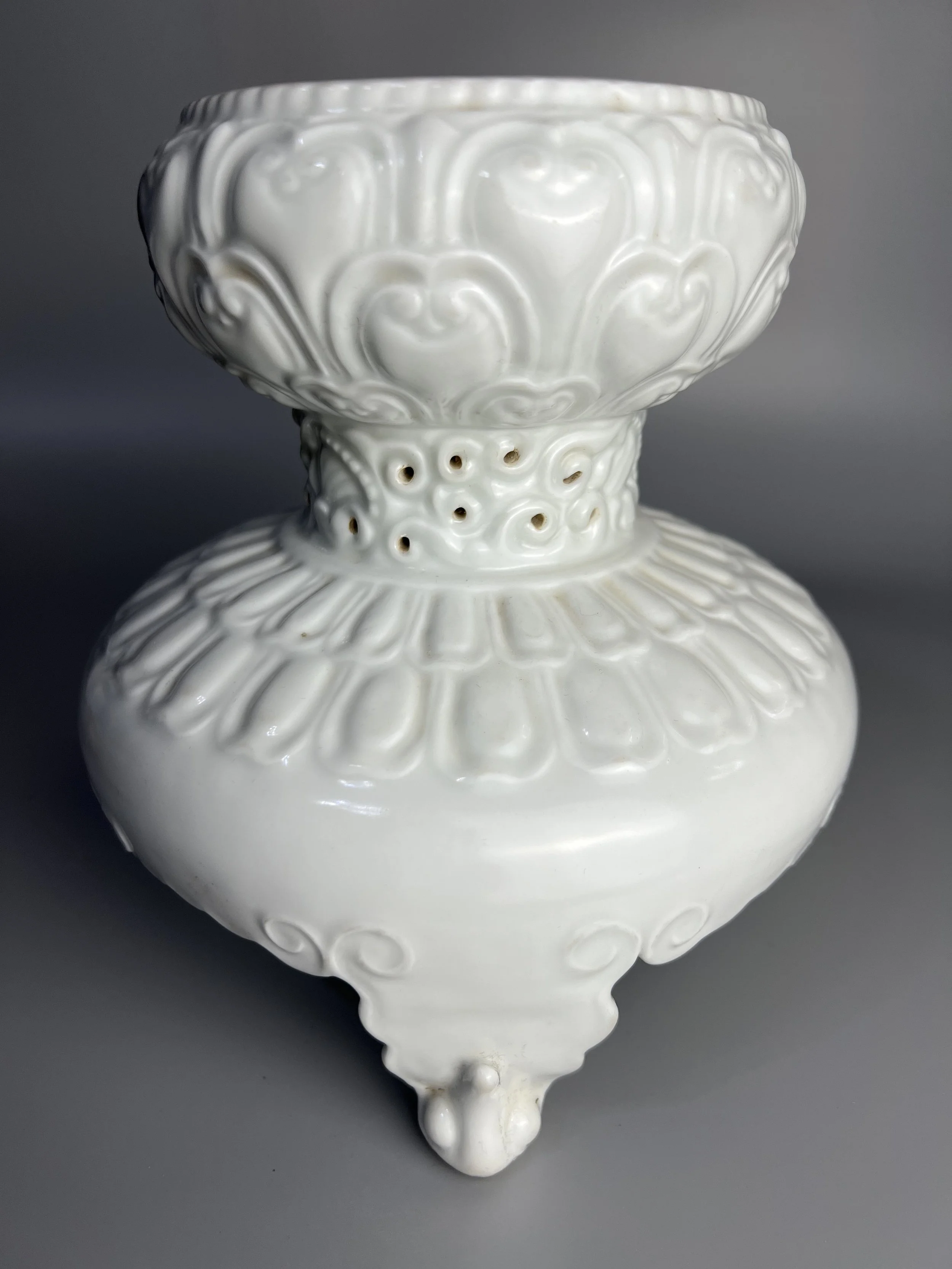 Image 8 of 19
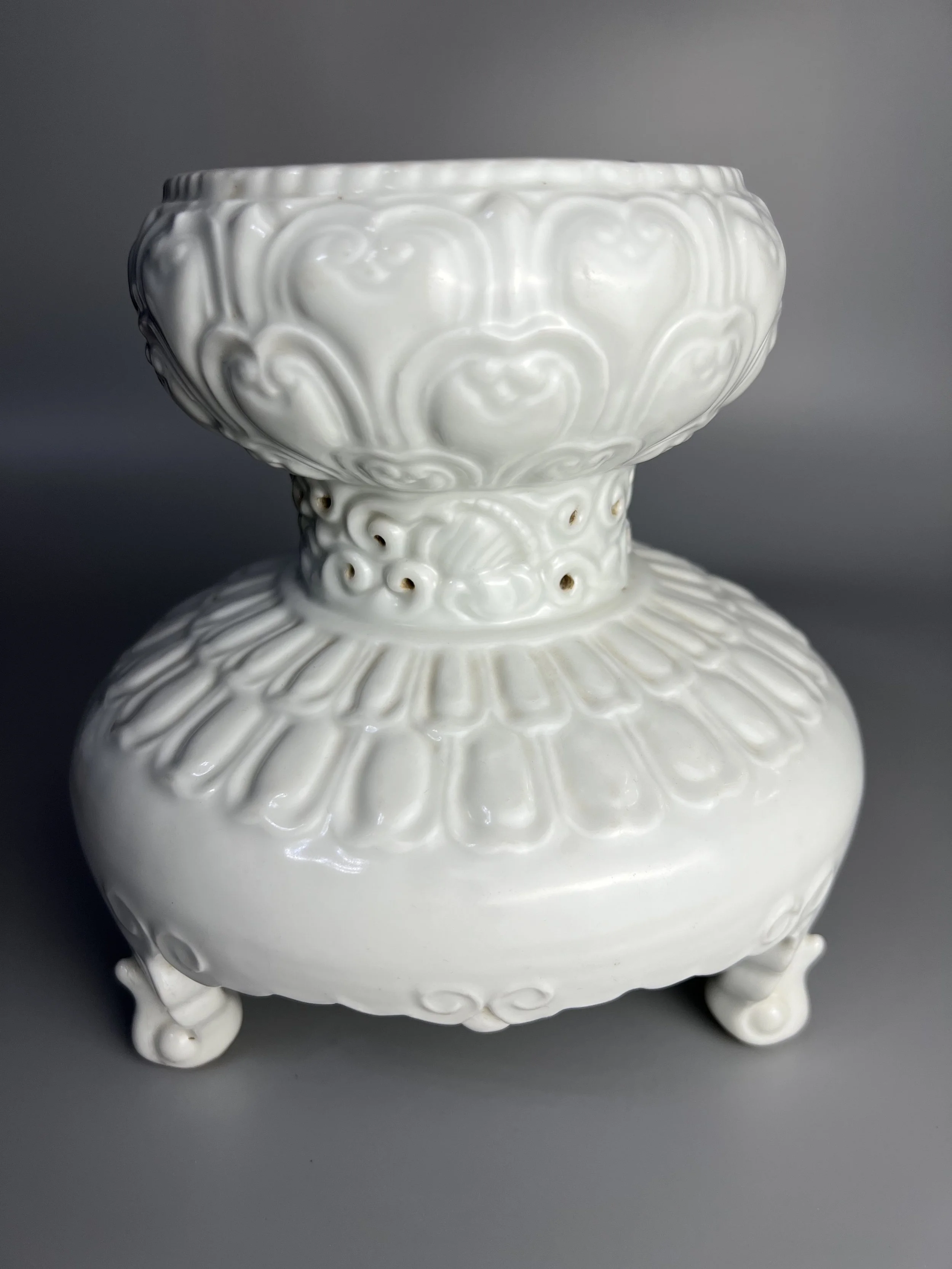 Image 9 of 19
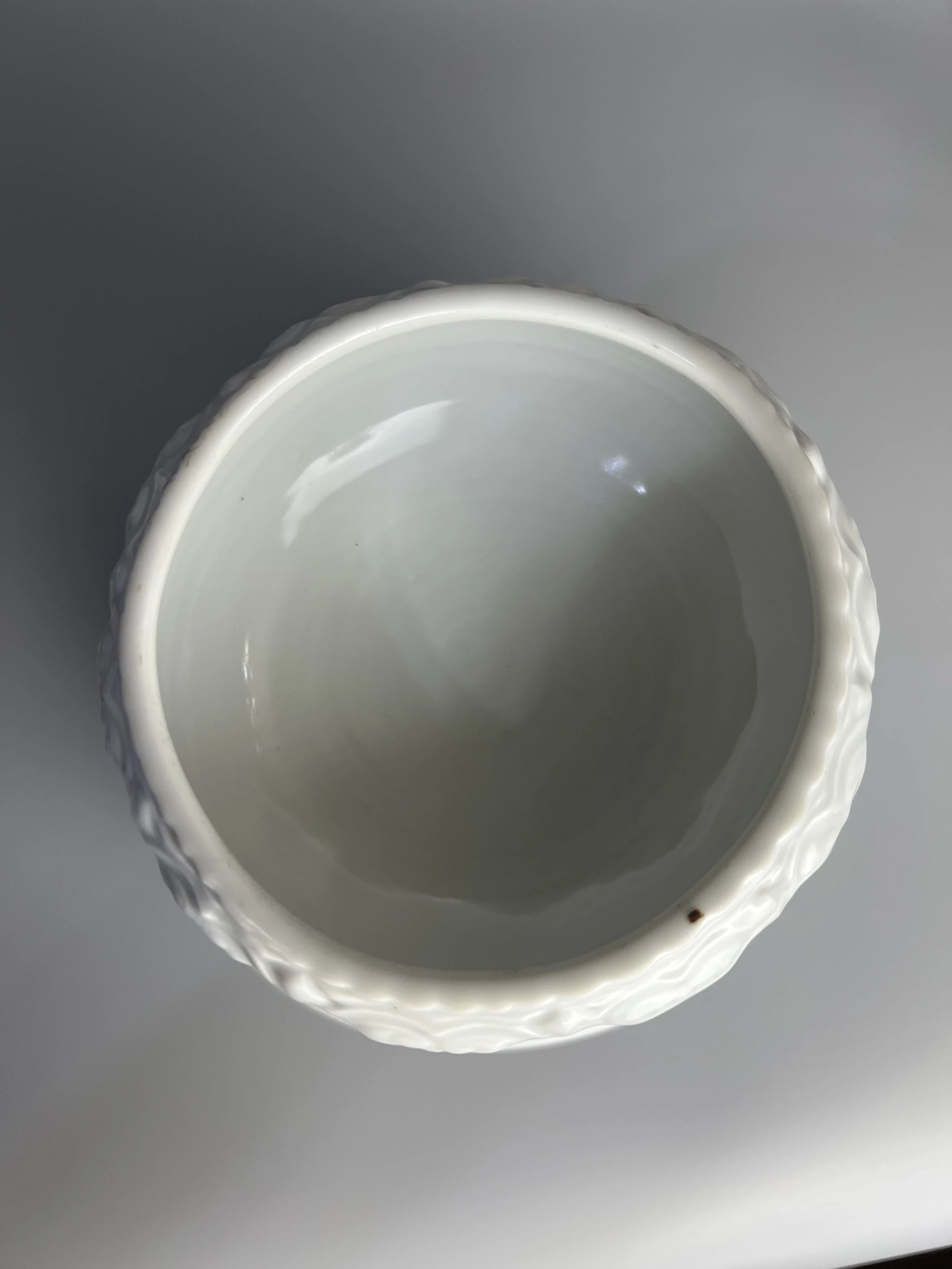 Image 10 of 19
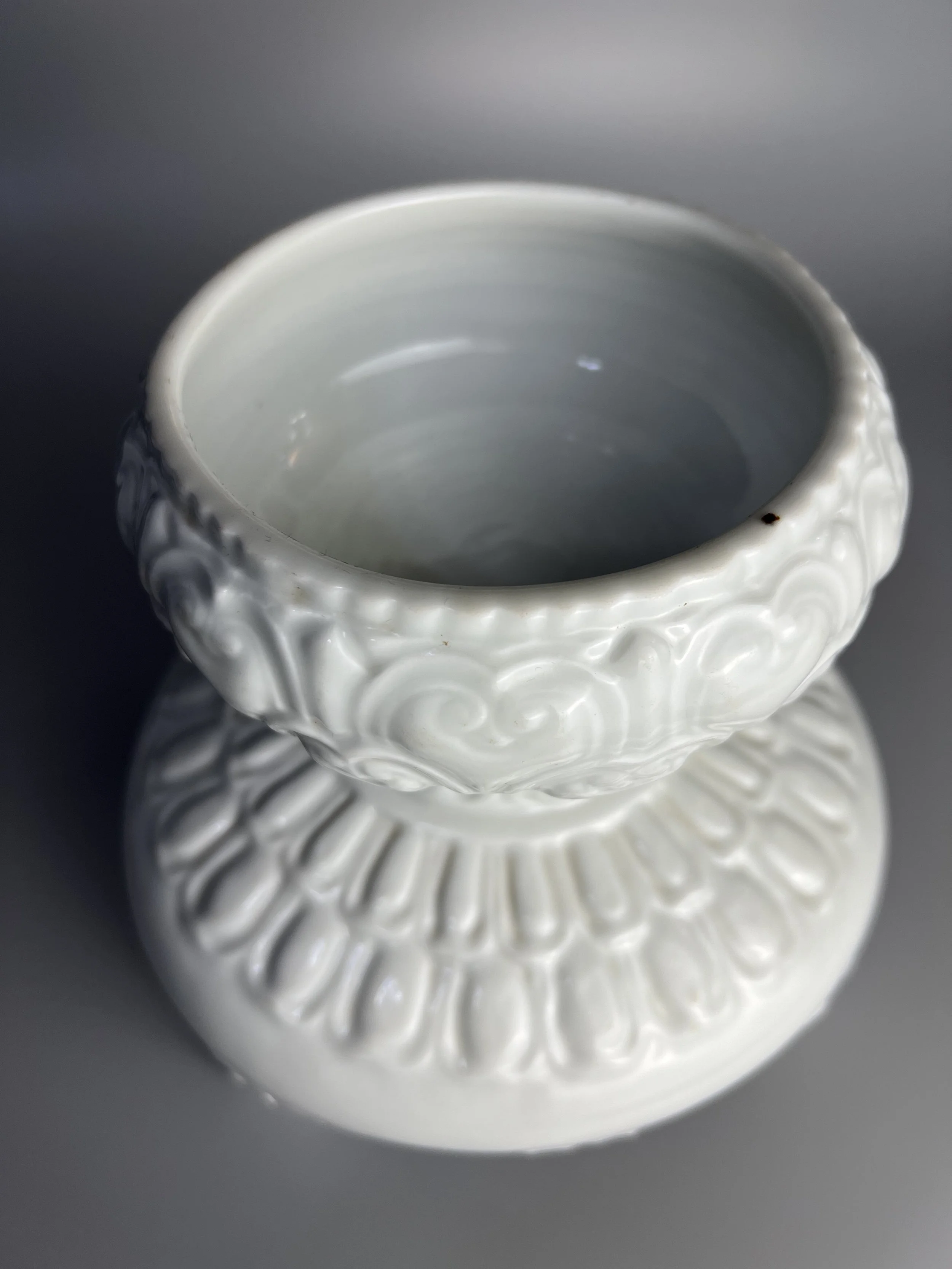 Image 11 of 19
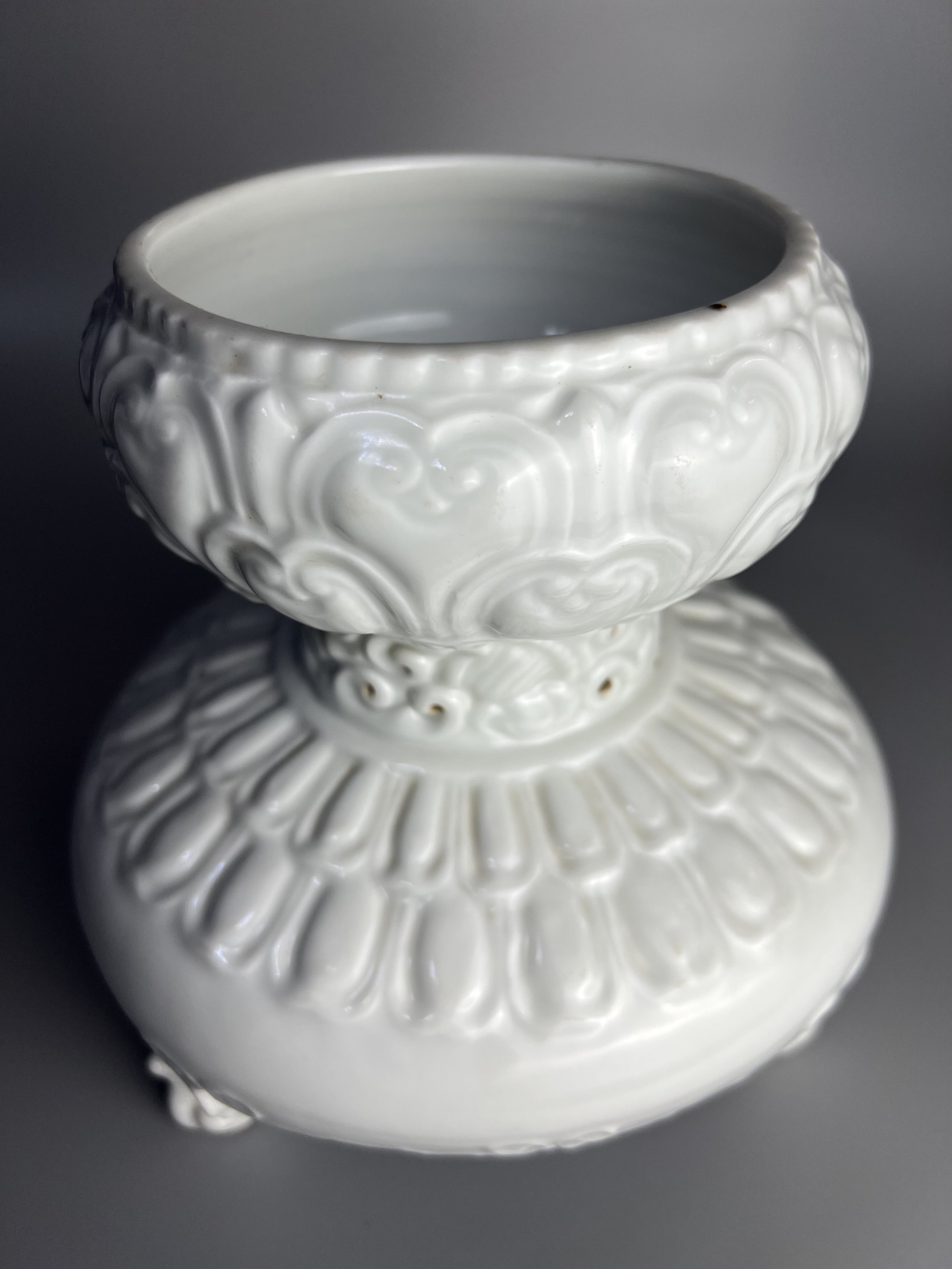 Image 12 of 19
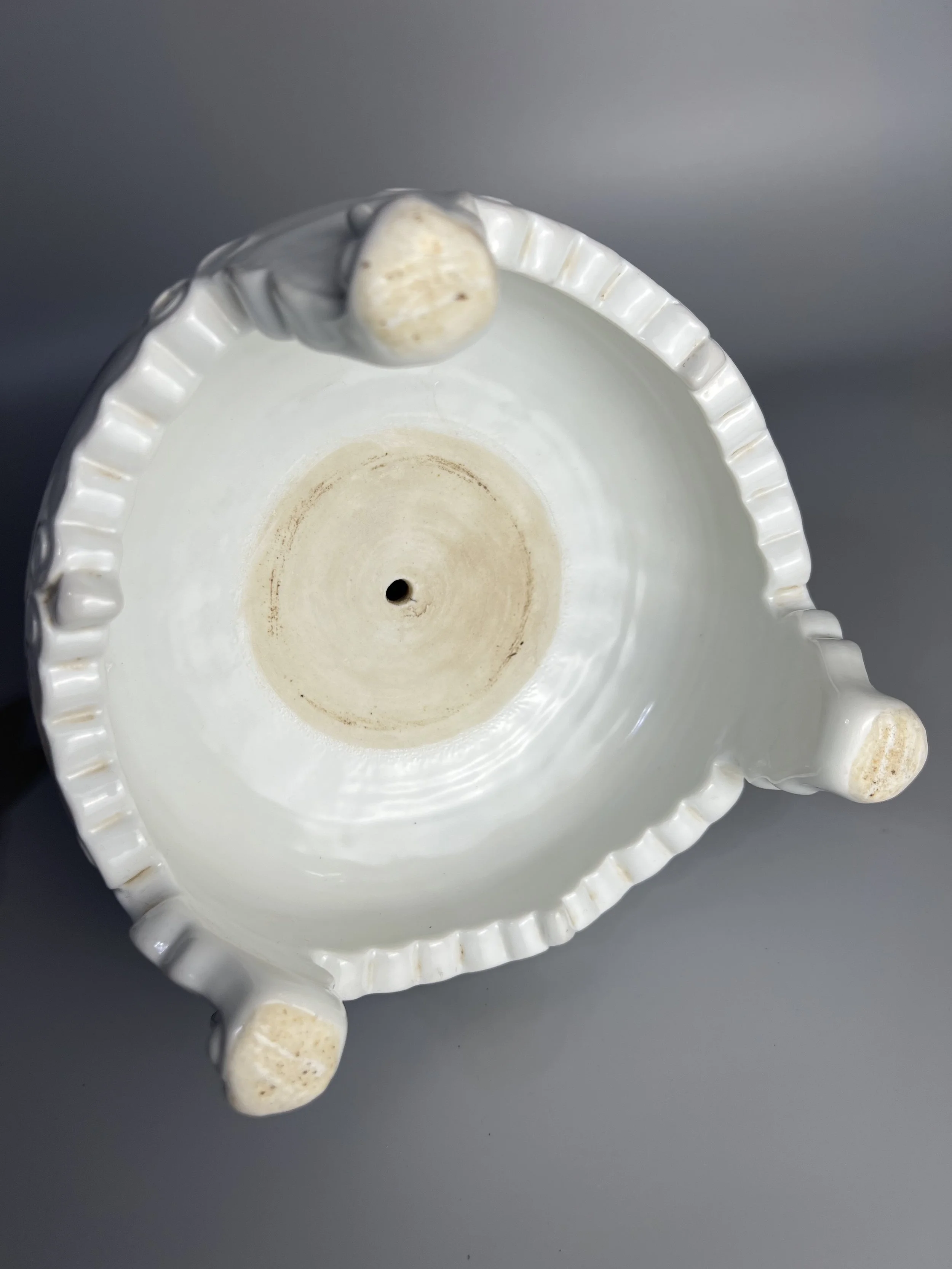 Image 13 of 19
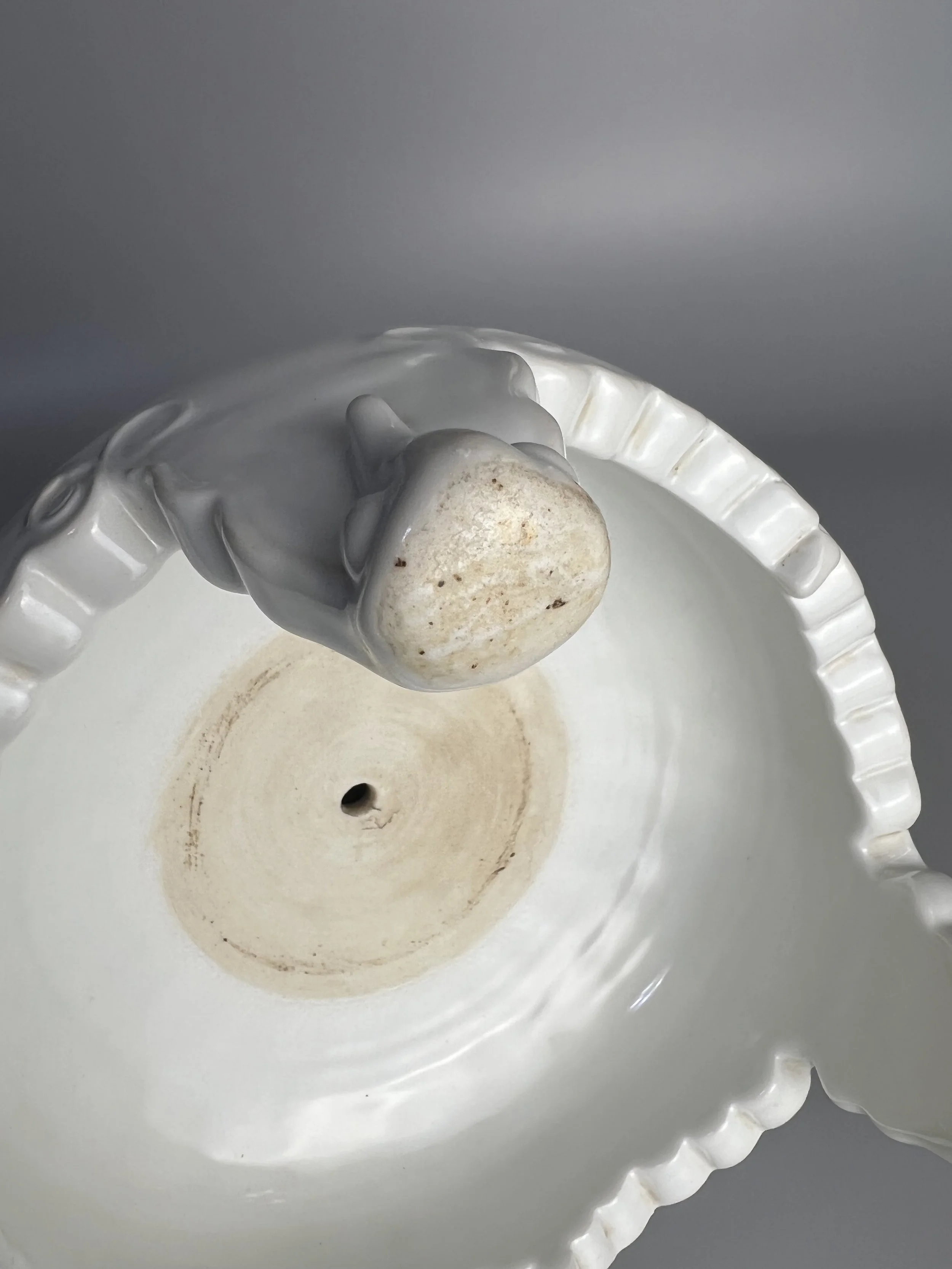 Image 14 of 19
 Image 15 of 19
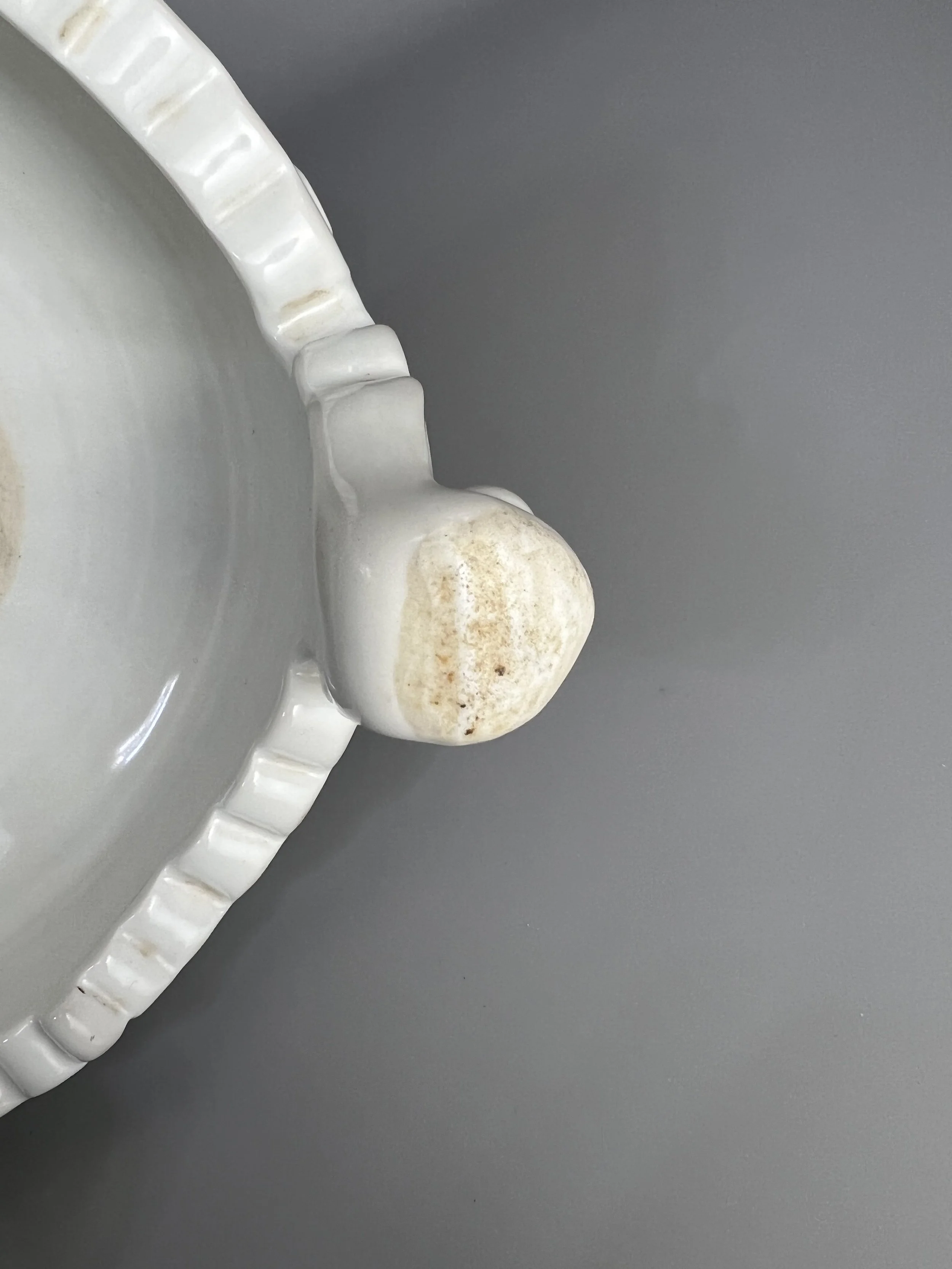 Image 16 of 19
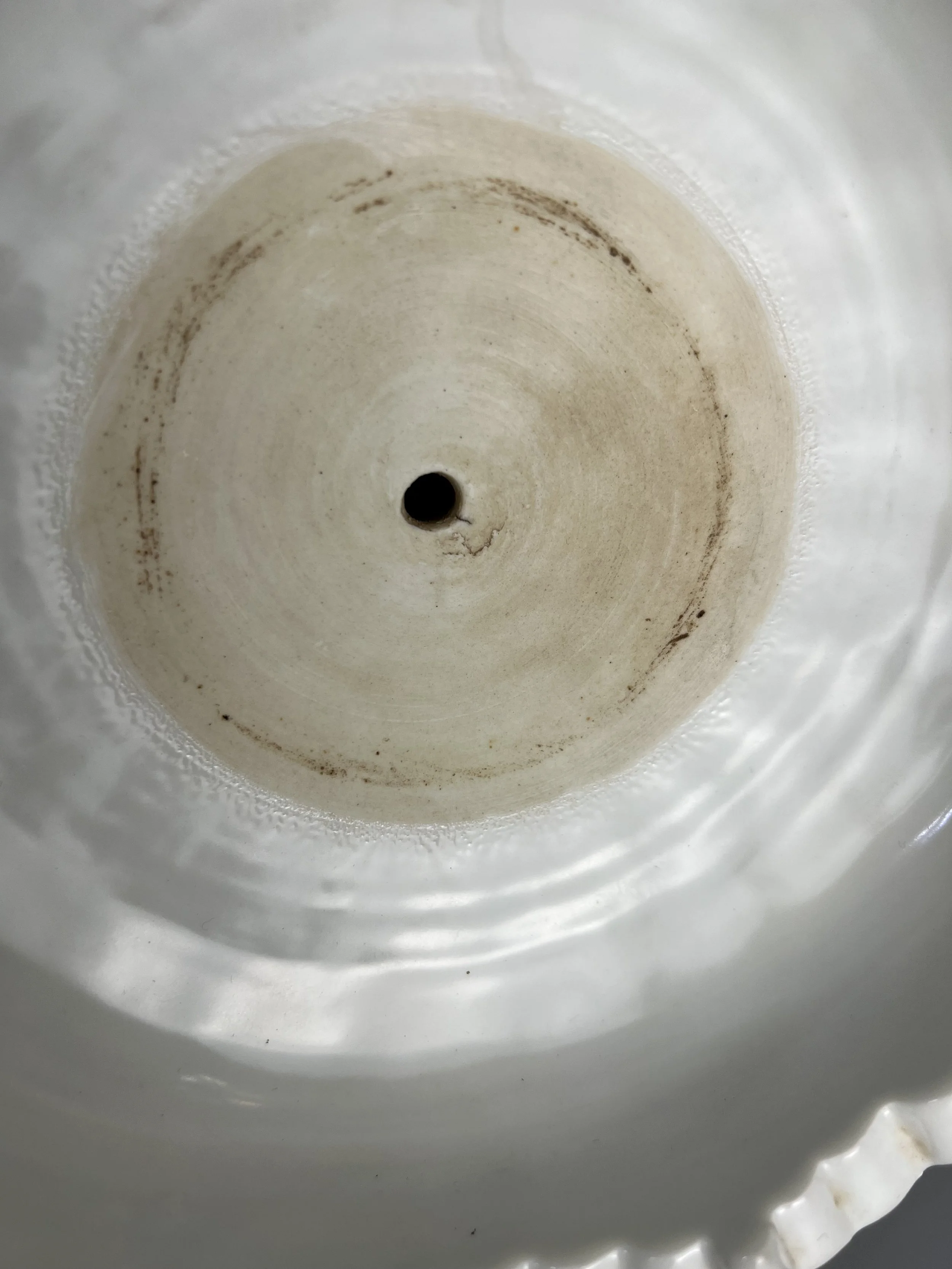 Image 17 of 19
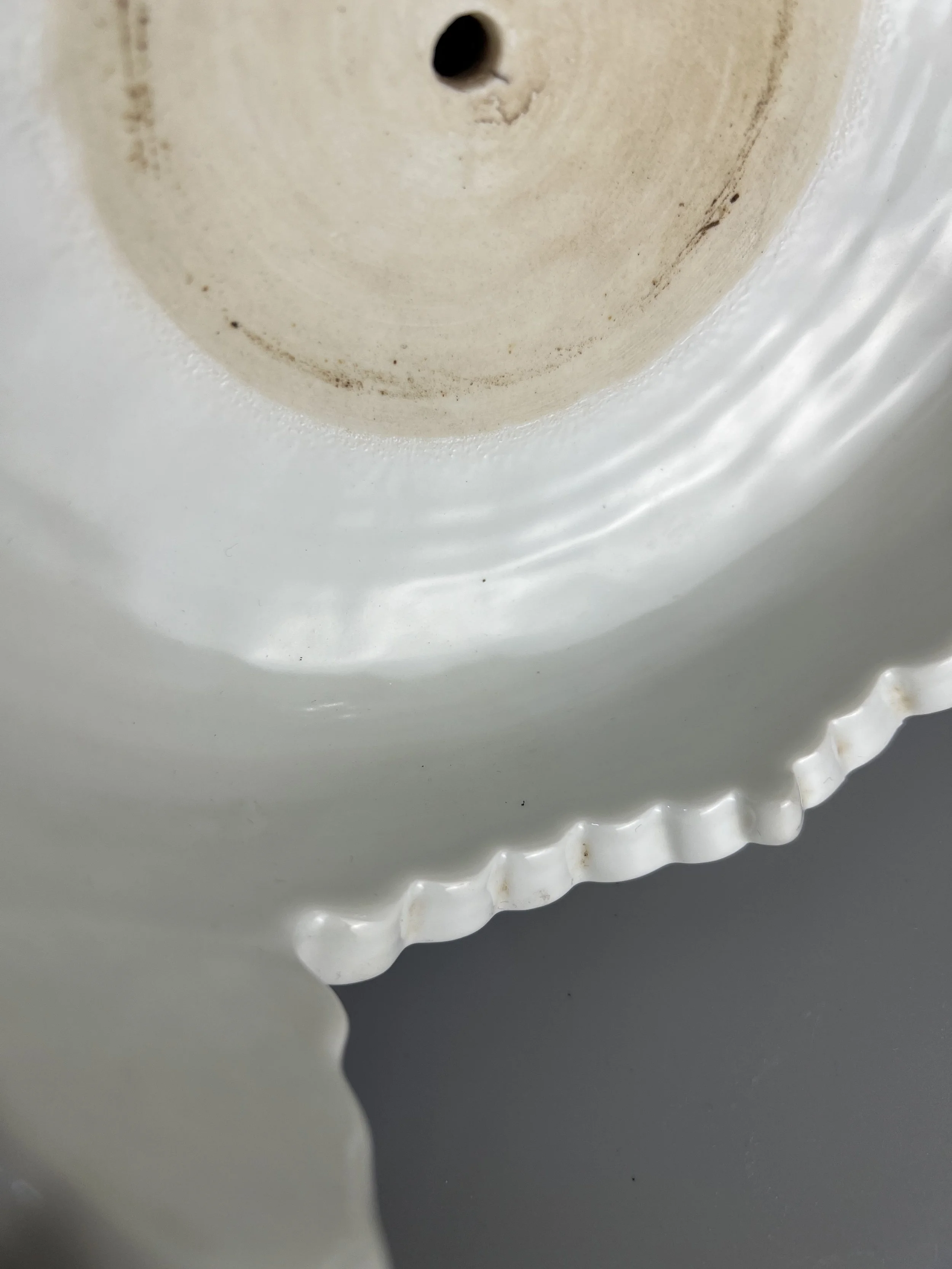 Image 18 of 19
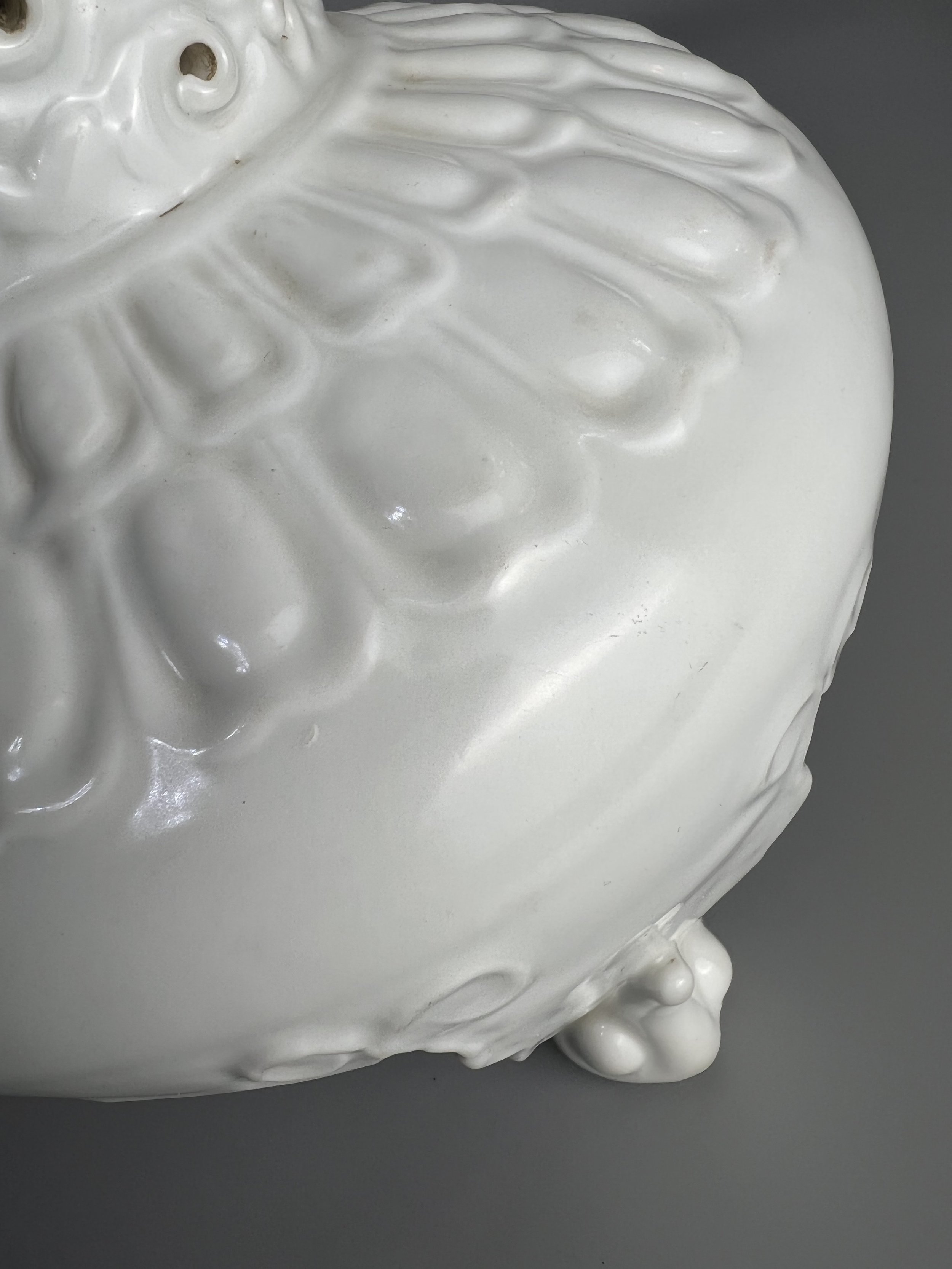 Image 19 of 19