In the resplendent history of Ming dynasty ceramics, Chenghua imperial doucai wares are renowned as the pinnacle of Ming porcelain, celebrated for their "superb quality, brilliant colours, and jade-like" unique character. Among them, the Kui dragon (a stylised, one-legged dragon) motif stands as one of the most representative and significant decorations of the Chenghua era, carrying profound religious connotations and the aesthetic spirit of the time. This pair of Chenghua doucai 'Kui Dragon Roundel' cups, each measuring 4.5 cm in both diameter and height, possesses a delicate, slender form with a remarkably thin and light body. Often poetically compared to "a beauty from the southern lands beneath the waning moon and gentle breeze," they are rare objects likely made specifically for imperial appreciation or court rituals.
Form and Mark: The Essence of Imperial Kilns
This pair of cups is exquisitely and regularly potted. They feature a slightly flared mouth, deep, gently curving walls, and a recessed foot ring. The entirety is covered with a lustrous, unctuous white glaze, feeling warm and smooth to the touch, as fine as jade. When held up to the light, the translucent body subtly reveals the faint, characteristic pinkish-tinged tone unique to Chenghua porcelain.
The base bears an underglaze blue inscription of "Da Ming Chenghua Nian Zhi" (大明成化年制 - Made in the Chenghua era of the Great Ming) in six characters arranged in two vertical lines, enclosed within a double square frame (双方框) . This calligraphy has an archaic charm that belies an underlying innocence—a distinctive style with pronounced period features. Scholarly research suggests it may have been modelled on the youthful handwriting of the Chenghua Emperor himself, Zhu Jianshen. The lines of the double square frame are elegantly pale, yet the brushwork is strong and vigorous, characteristic of the late Chenghua imperial kilns.
Decorative Layout: Dancing Kui Dragons in Roundels
The decorative scheme on the exterior walls is ingeniously composed. Outlines were first painted in underglaze blue, after which overglaze enamels were filled in. In total, four Kui dragons are depicted, each curled into a roundel (团状夔龙纹) . These roundels are interspersed and connected by motifs of sacred lingzhi fungi, auspicious clouds, or floral sprigs, creating a composition that is at once full and spacious. This "roundel Kui dragon" design cleverly entwines the dragon's body into a medallion shape, preserving the creature's inherent majesty while enhancing its decorative, patterned quality. It represents a creative reinterpretation of the traditional Kui dragon motif by the Chenghua imperial kilns.
Characteristics of the Kui Dragon: Elephant Trunk and Wings
The Chenghua Kui dragon possesses a unique form, distinctly different from traditional dragon depictions and highly recognisable:
Dragon Head: The upper lip is curled upwards, resembling an elephant's trunk, which is why it is also commonly known as the "incense grass dragon" (香草龙). Its mouth is wide open, holding a blooming lotus flower or a trailing floral spray. The lotus, a sacred Buddhist emblem, imbues the design with strong Tibetan Buddhist connotations.
Body Structure: The dragon's body is curved into a stylised, patterned form. It has wings sprouting from its shoulders but only a pair of front legs, lacking rear claws. The three claws are as sharp and powerful as sickles, while the tail curls into an elegant, trailing scroll-like shape.
Overall Expression: Although a mythical beast, it possesses less ferocity and more softness and agility, embodying the characteristic "elegant, gentle, and refined" style of the Chenghua period.
Ingenious Design: Two Distinct Colour Schemes
The most exquisitely remarkable feature of this pair lies in the fact that the Kui dragon roundels on each of the two cups were filled using two distinct colour palettes. This creates a complementary "Yin-Yang pair" of cups that harmonise yet are individually unique. Such a design is exceptionally rare in Chenghua doucai and demonstrates the imperial kilns' ultimate pursuit of perfection in detail.
Taking one dragon as an example, its colour configuration might be as follows:
First Scheme: The head and body of the Kui dragon are rendered in underglaze blue, presenting an elegant and pure blue tone, while its wings are filled with bright iron-red enamel.
Second Scheme: The colour configuration for the corresponding dragon on the companion cup is precisely reversed—the head and body are outlined and filled in iron-red, while the wings are rendered in underglaze blue.
This same principle of colour swapping is applied to the lotus flower held in the dragon's mouth: one lotus flower features a yellow enamel centre with blue petals; the other features a blue centre with yellow petals. This ingeniously conceived "paired colour" design means each small cup is perfect when viewed alone, yet when displayed together, they create a delightful dialogue. The understated elegance of the blue, the calm depth of the red, and the brilliance of the yellow complement each other, forming a harmonious and vibrant composition.
Technical Challenge: Fired Three Times
The value of Chenghua doucai is inseparable from its complex manufacturing process. This is especially true for pieces like this one, which extensively use iron-red enamel, resulting in a very low success rate. According to scholarly research, such wares required three separate firings: first, a high-temperature firing to set the underglaze blue outline; second, a medium-temperature firing for the yellow and green enamels; and finally, a low-temperature firing for the iron-red. The iron-red is extremely sensitive to kiln temperature—too high, and it would affect the already-fired yellow and green enamels; too low, and the red would fail to achieve its brilliant colour. Success depended entirely on the skill and experience of the kiln workers, and fewer than one in ten pieces were deemed worthy of imperial use. That this pair of small cups has survived perfectly intact to this day, and has been handed down together as a pair, speaks to their unsurpassed rarity.
Conclusion
This pair of Ming Chenghua doucai 'Kui Dragon Roundel' cups, though diminutive in size, encapsulates the pinnacle of Chenghua imperial kiln craftsmanship and extraordinary creativity. They take the archaic Kui dragon form as their structural foundation, clothe it with the subtle elegance of underglaze blue and the brilliance of overglaze enamels, and ultimately imbue the objects with soul through the ingenious design of two distinct colour schemes. They serve not only as a material testament to the Chenghua Emperor's Buddhist faith but also as a microcosm of the zenith of the doucai technique—"using underglaze blue for outlines and overglaze enamels for filling." Having weathered over five centuries, they still radiate splendour, standing as exemplary models of "peerless, timeless treasures."
明成化 斗彩夔龙团纹对杯赏析
在璀璨的明代陶瓷史上,成化御窑斗彩以其"质精色良、如脂似玉"的独特风貌,被誉为明清彩瓷之冠。其中,夔龙纹作为成化时期最具代表性的纹饰之一,承载着深厚的宗教意蕴与时代审美。这对口径与高度均为4.5厘米的成化斗彩夔龙团纹对杯,造型隽秀,胎薄体轻,恰如"晓风残月"的南国佳人,是专为御前把玩或宫廷祭祀所制的稀有之器。
造型与款识:御窑风范
此对小杯造型规整精巧,口部微侈,深壁弧腹,下承圈足。通体施以肥润的洁白釉面,抚之温润如玉,迎光透视胎体,可隐见成化瓷特有的淡淡肉红色泽。
器物底部书有青花 "大明成化年制"六字双行楷书款,外罩双方框。此款识字体稚拙中见古朴,风格别致,具有鲜明的时代特征,据学者考证可能以宪宗少时墨迹为范本。双框栏线色泽淡雅,笔力遒劲,为成化晚期御窑之典型款识。
纹饰布局:夔龙团舞
杯身外壁纹饰布局精妙,以釉下青花勾勒轮廓,再填釉上彩料,共绘四组团状夔龙纹。团纹之间以灵芝、祥云或折枝花卉间隔呼应,构图饱满而疏朗有致。此种"团花夔龙"的设计,将夔龙的身躯巧妙地蟠绕成团花形状,既保留了龙纹的威严,又增添了图案化的装饰美感,是成化御窑对传统夔龙纹的创造性演绎。
夔龙特征:象鼻飞翼
成化夔龙纹造型独特,与传统龙纹迥异,具有极高的辨识度:
龙首造型:嘴唇上翘卷曲,宛如大象的长鼻,故也被称为"香草龙"。龙口大张,衔一枝盛开的莲花或串串花枝,莲花为佛教圣物,赋予了器物浓郁的藏传佛教意涵。
身躯结构:龙身弯曲成图案化,肩生双翼(飞翼),仅有前肢双足而不见后爪,三爪如镰,刚劲有力,尾部则卷曲成飘逸的卷草状。
整体神态:虽为神兽,却少了几分凶猛,多了几分柔美与灵动,呈现出成化时期特有的"幽雅婉柔"之风。
匠心独运:两组不同色调的斗彩
此对杯最为精妙绝伦之处,在于两只杯身的夔龙团纹采用了两组不同色调的填彩搭配,形成一对既相互呼应又色彩各异的"阴阳双杯"。这种设计在成化斗彩中极为罕见,体现了御窑厂对细节的极致追求。
以其中一龙为例,其色彩配置往往如下:
相同的色彩互换规则也应用于夔龙口中的莲花:一朵莲花花蕊填鹅黄,花瓣为青花;另一朵则为青花花蕊,鹅黄花瓣。此种别具匠心的"对色"设计,使两只小杯单独观赏时各自完美,成对陈列时又相映成趣,青花之淡雅与红彩之沉着、黄彩之明丽交相辉映,构成一幅和谐而生动的画面。
工艺之难:三次入火
成化斗彩之所以名贵,与其复杂的烧制工艺密不可分。特别是如本品大量使用矾红彩的斗彩器,成品率极低。据学者考证,此类器物需经三次入窑乃成:首先高温烧成青花轮廓;其次中温烧制黄、绿彩;最后低温烧制矾红彩。矾红彩对窑温极为敏感,温度稍高则影响已烧成的黄绿彩,温度稍低则红彩难以呈色鲜艳,烧成与否全凭窑工经验,可供御用者十不足一二。这对小杯能完美保存至今,且成对流传,其珍罕程度不言而喻。
结语
这对明成化斗彩夔龙团纹对杯,尺寸虽小,却汇聚了成化御窑的顶级工艺与非凡创意。它以源自青铜器的夔龙为骨,以淡雅的青花与明丽的釉上彩为肉,更以两组不同色调的匠心设计赋予了器物灵魂。它不仅是成化皇帝佛教信仰的物证,更是中国陶瓷史上"以釉下青花为轮廓,釉上彩填色"这一斗彩工艺登峰造极的缩影。历经五百余年沧桑,依然光彩照人,堪称"旷世奇珍"中的典范。
In the resplendent history of Ming dynasty ceramics, Chenghua imperial doucai wares are renowned as the pinnacle of Ming porcelain, celebrated for their "superb quality, brilliant colours, and jade-like" unique character. Among them, the Kui dragon (a stylised, one-legged dragon) motif stands as one of the most representative and significant decorations of the Chenghua era, carrying profound religious connotations and the aesthetic spirit of the time. This pair of Chenghua doucai 'Kui Dragon Roundel' cups, each measuring 4.5 cm in both diameter and height, possesses a delicate, slender form with a remarkably thin and light body. Often poetically compared to "a beauty from the southern lands beneath the waning moon and gentle breeze," they are rare objects likely made specifically for imperial appreciation or court rituals.
Form and Mark: The Essence of Imperial Kilns
This pair of cups is exquisitely and regularly potted. They feature a slightly flared mouth, deep, gently curving walls, and a recessed foot ring. The entirety is covered with a lustrous, unctuous white glaze, feeling warm and smooth to the touch, as fine as jade. When held up to the light, the translucent body subtly reveals the faint, characteristic pinkish-tinged tone unique to Chenghua porcelain.
The base bears an underglaze blue inscription of "Da Ming Chenghua Nian Zhi" (大明成化年制 - Made in the Chenghua era of the Great Ming) in six characters arranged in two vertical lines, enclosed within a double square frame (双方框) . This calligraphy has an archaic charm that belies an underlying innocence—a distinctive style with pronounced period features. Scholarly research suggests it may have been modelled on the youthful handwriting of the Chenghua Emperor himself, Zhu Jianshen. The lines of the double square frame are elegantly pale, yet the brushwork is strong and vigorous, characteristic of the late Chenghua imperial kilns.
Decorative Layout: Dancing Kui Dragons in Roundels
The decorative scheme on the exterior walls is ingeniously composed. Outlines were first painted in underglaze blue, after which overglaze enamels were filled in. In total, four Kui dragons are depicted, each curled into a roundel (团状夔龙纹) . These roundels are interspersed and connected by motifs of sacred lingzhi fungi, auspicious clouds, or floral sprigs, creating a composition that is at once full and spacious. This "roundel Kui dragon" design cleverly entwines the dragon's body into a medallion shape, preserving the creature's inherent majesty while enhancing its decorative, patterned quality. It represents a creative reinterpretation of the traditional Kui dragon motif by the Chenghua imperial kilns.
Characteristics of the Kui Dragon: Elephant Trunk and Wings
The Chenghua Kui dragon possesses a unique form, distinctly different from traditional dragon depictions and highly recognisable:
Dragon Head: The upper lip is curled upwards, resembling an elephant's trunk, which is why it is also commonly known as the "incense grass dragon" (香草龙). Its mouth is wide open, holding a blooming lotus flower or a trailing floral spray. The lotus, a sacred Buddhist emblem, imbues the design with strong Tibetan Buddhist connotations.
Body Structure: The dragon's body is curved into a stylised, patterned form. It has wings sprouting from its shoulders but only a pair of front legs, lacking rear claws. The three claws are as sharp and powerful as sickles, while the tail curls into an elegant, trailing scroll-like shape.
Overall Expression: Although a mythical beast, it possesses less ferocity and more softness and agility, embodying the characteristic "elegant, gentle, and refined" style of the Chenghua period.
Ingenious Design: Two Distinct Colour Schemes
The most exquisitely remarkable feature of this pair lies in the fact that the Kui dragon roundels on each of the two cups were filled using two distinct colour palettes. This creates a complementary "Yin-Yang pair" of cups that harmonise yet are individually unique. Such a design is exceptionally rare in Chenghua doucai and demonstrates the imperial kilns' ultimate pursuit of perfection in detail.
Taking one dragon as an example, its colour configuration might be as follows:
First Scheme: The head and body of the Kui dragon are rendered in underglaze blue, presenting an elegant and pure blue tone, while its wings are filled with bright iron-red enamel.
Second Scheme: The colour configuration for the corresponding dragon on the companion cup is precisely reversed—the head and body are outlined and filled in iron-red, while the wings are rendered in underglaze blue.
This same principle of colour swapping is applied to the lotus flower held in the dragon's mouth: one lotus flower features a yellow enamel centre with blue petals; the other features a blue centre with yellow petals. This ingeniously conceived "paired colour" design means each small cup is perfect when viewed alone, yet when displayed together, they create a delightful dialogue. The understated elegance of the blue, the calm depth of the red, and the brilliance of the yellow complement each other, forming a harmonious and vibrant composition.
Technical Challenge: Fired Three Times
The value of Chenghua doucai is inseparable from its complex manufacturing process. This is especially true for pieces like this one, which extensively use iron-red enamel, resulting in a very low success rate. According to scholarly research, such wares required three separate firings: first, a high-temperature firing to set the underglaze blue outline; second, a medium-temperature firing for the yellow and green enamels; and finally, a low-temperature firing for the iron-red. The iron-red is extremely sensitive to kiln temperature—too high, and it would affect the already-fired yellow and green enamels; too low, and the red would fail to achieve its brilliant colour. Success depended entirely on the skill and experience of the kiln workers, and fewer than one in ten pieces were deemed worthy of imperial use. That this pair of small cups has survived perfectly intact to this day, and has been handed down together as a pair, speaks to their unsurpassed rarity.
Conclusion
This pair of Ming Chenghua doucai 'Kui Dragon Roundel' cups, though diminutive in size, encapsulates the pinnacle of Chenghua imperial kiln craftsmanship and extraordinary creativity. They take the archaic Kui dragon form as their structural foundation, clothe it with the subtle elegance of underglaze blue and the brilliance of overglaze enamels, and ultimately imbue the objects with soul through the ingenious design of two distinct colour schemes. They serve not only as a material testament to the Chenghua Emperor's Buddhist faith but also as a microcosm of the zenith of the doucai technique—"using underglaze blue for outlines and overglaze enamels for filling." Having weathered over five centuries, they still radiate splendour, standing as exemplary models of "peerless, timeless treasures."
明成化 斗彩夔龙团纹对杯赏析
在璀璨的明代陶瓷史上,成化御窑斗彩以其"质精色良、如脂似玉"的独特风貌,被誉为明清彩瓷之冠。其中,夔龙纹作为成化时期最具代表性的纹饰之一,承载着深厚的宗教意蕴与时代审美。这对口径与高度均为4.5厘米的成化斗彩夔龙团纹对杯,造型隽秀,胎薄体轻,恰如"晓风残月"的南国佳人,是专为御前把玩或宫廷祭祀所制的稀有之器。
造型与款识:御窑风范
此对小杯造型规整精巧,口部微侈,深壁弧腹,下承圈足。通体施以肥润的洁白釉面,抚之温润如玉,迎光透视胎体,可隐见成化瓷特有的淡淡肉红色泽。
器物底部书有青花 "大明成化年制"六字双行楷书款,外罩双方框。此款识字体稚拙中见古朴,风格别致,具有鲜明的时代特征,据学者考证可能以宪宗少时墨迹为范本。双框栏线色泽淡雅,笔力遒劲,为成化晚期御窑之典型款识。
纹饰布局:夔龙团舞
杯身外壁纹饰布局精妙,以釉下青花勾勒轮廓,再填釉上彩料,共绘四组团状夔龙纹。团纹之间以灵芝、祥云或折枝花卉间隔呼应,构图饱满而疏朗有致。此种"团花夔龙"的设计,将夔龙的身躯巧妙地蟠绕成团花形状,既保留了龙纹的威严,又增添了图案化的装饰美感,是成化御窑对传统夔龙纹的创造性演绎。
夔龙特征:象鼻飞翼
成化夔龙纹造型独特,与传统龙纹迥异,具有极高的辨识度:
龙首造型:嘴唇上翘卷曲,宛如大象的长鼻,故也被称为"香草龙"。龙口大张,衔一枝盛开的莲花或串串花枝,莲花为佛教圣物,赋予了器物浓郁的藏传佛教意涵。
身躯结构:龙身弯曲成图案化,肩生双翼(飞翼),仅有前肢双足而不见后爪,三爪如镰,刚劲有力,尾部则卷曲成飘逸的卷草状。
整体神态:虽为神兽,却少了几分凶猛,多了几分柔美与灵动,呈现出成化时期特有的"幽雅婉柔"之风。
匠心独运:两组不同色调的斗彩
此对杯最为精妙绝伦之处,在于两只杯身的夔龙团纹采用了两组不同色调的填彩搭配,形成一对既相互呼应又色彩各异的"阴阳双杯"。这种设计在成化斗彩中极为罕见,体现了御窑厂对细节的极致追求。
以其中一龙为例,其色彩配置往往如下:
相同的色彩互换规则也应用于夔龙口中的莲花:一朵莲花花蕊填鹅黄,花瓣为青花;另一朵则为青花花蕊,鹅黄花瓣。此种别具匠心的"对色"设计,使两只小杯单独观赏时各自完美,成对陈列时又相映成趣,青花之淡雅与红彩之沉着、黄彩之明丽交相辉映,构成一幅和谐而生动的画面。
工艺之难:三次入火
成化斗彩之所以名贵,与其复杂的烧制工艺密不可分。特别是如本品大量使用矾红彩的斗彩器,成品率极低。据学者考证,此类器物需经三次入窑乃成:首先高温烧成青花轮廓;其次中温烧制黄、绿彩;最后低温烧制矾红彩。矾红彩对窑温极为敏感,温度稍高则影响已烧成的黄绿彩,温度稍低则红彩难以呈色鲜艳,烧成与否全凭窑工经验,可供御用者十不足一二。这对小杯能完美保存至今,且成对流传,其珍罕程度不言而喻。
结语
这对明成化斗彩夔龙团纹对杯,尺寸虽小,却汇聚了成化御窑的顶级工艺与非凡创意。它以源自青铜器的夔龙为骨,以淡雅的青花与明丽的釉上彩为肉,更以两组不同色调的匠心设计赋予了器物灵魂。它不仅是成化皇帝佛教信仰的物证,更是中国陶瓷史上"以釉下青花为轮廓,釉上彩填色"这一斗彩工艺登峰造极的缩影。历经五百余年沧桑,依然光彩照人,堪称"旷世奇珍"中的典范。
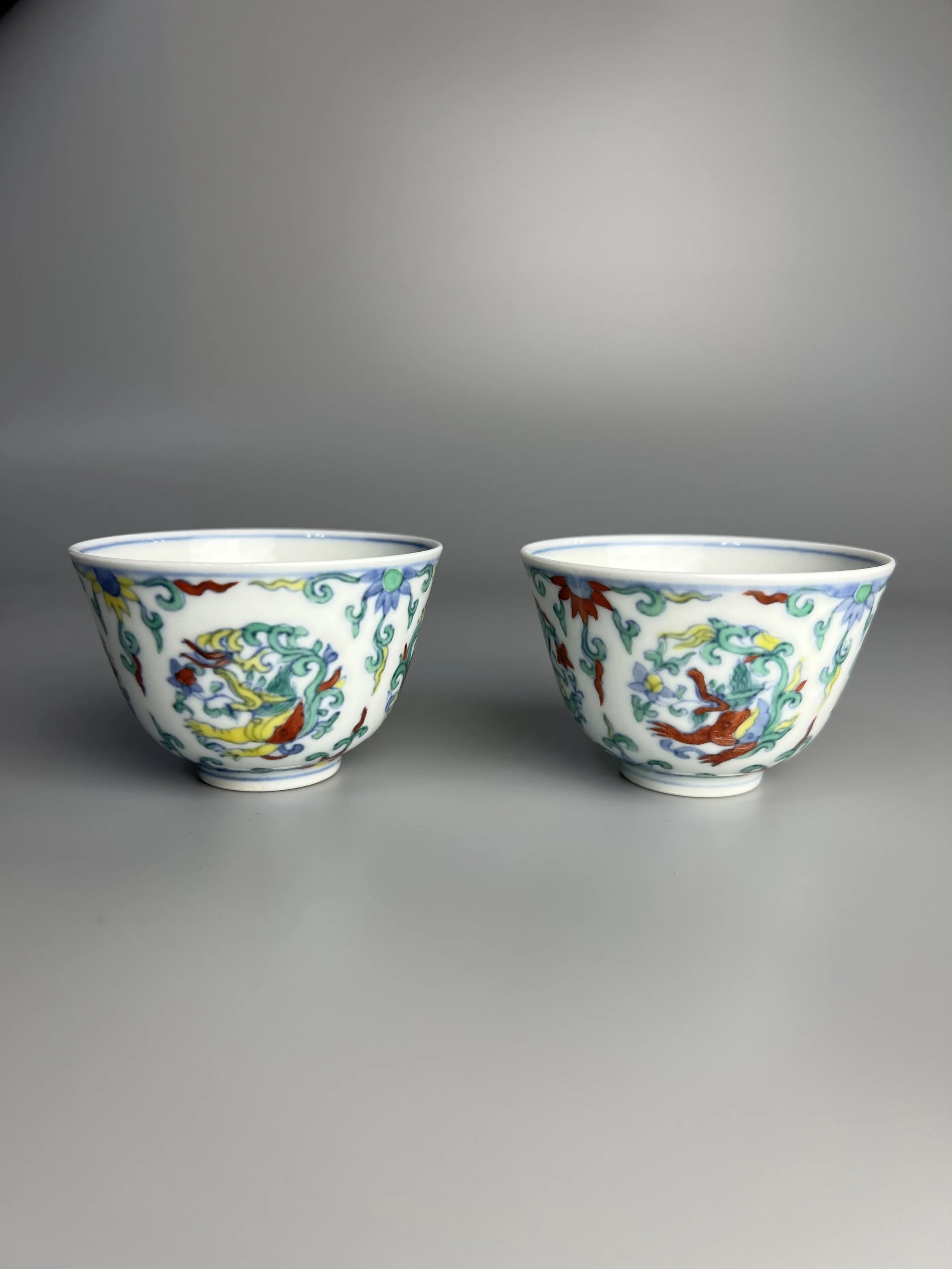 Image 1 of 24
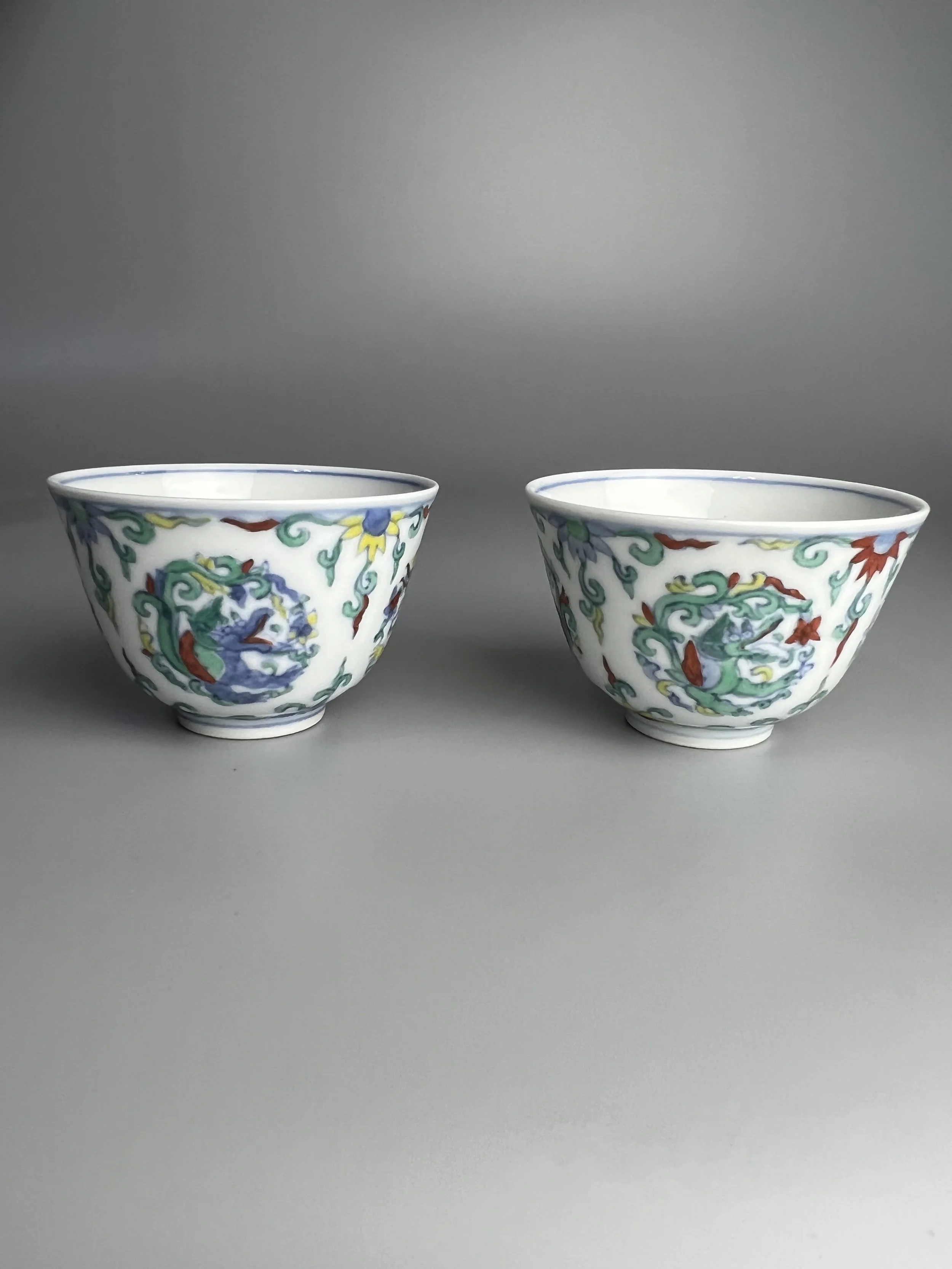 Image 2 of 24
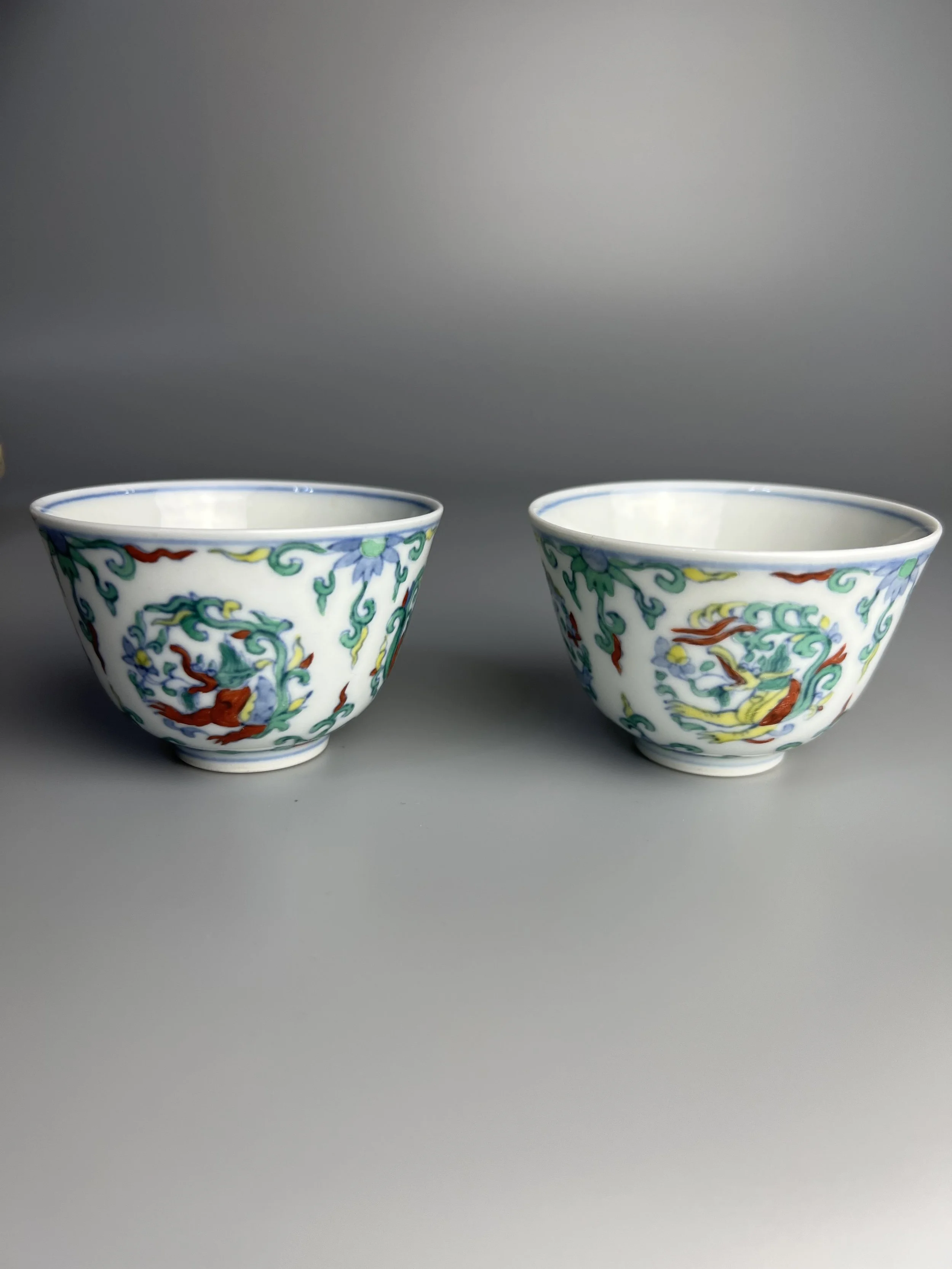 Image 3 of 24
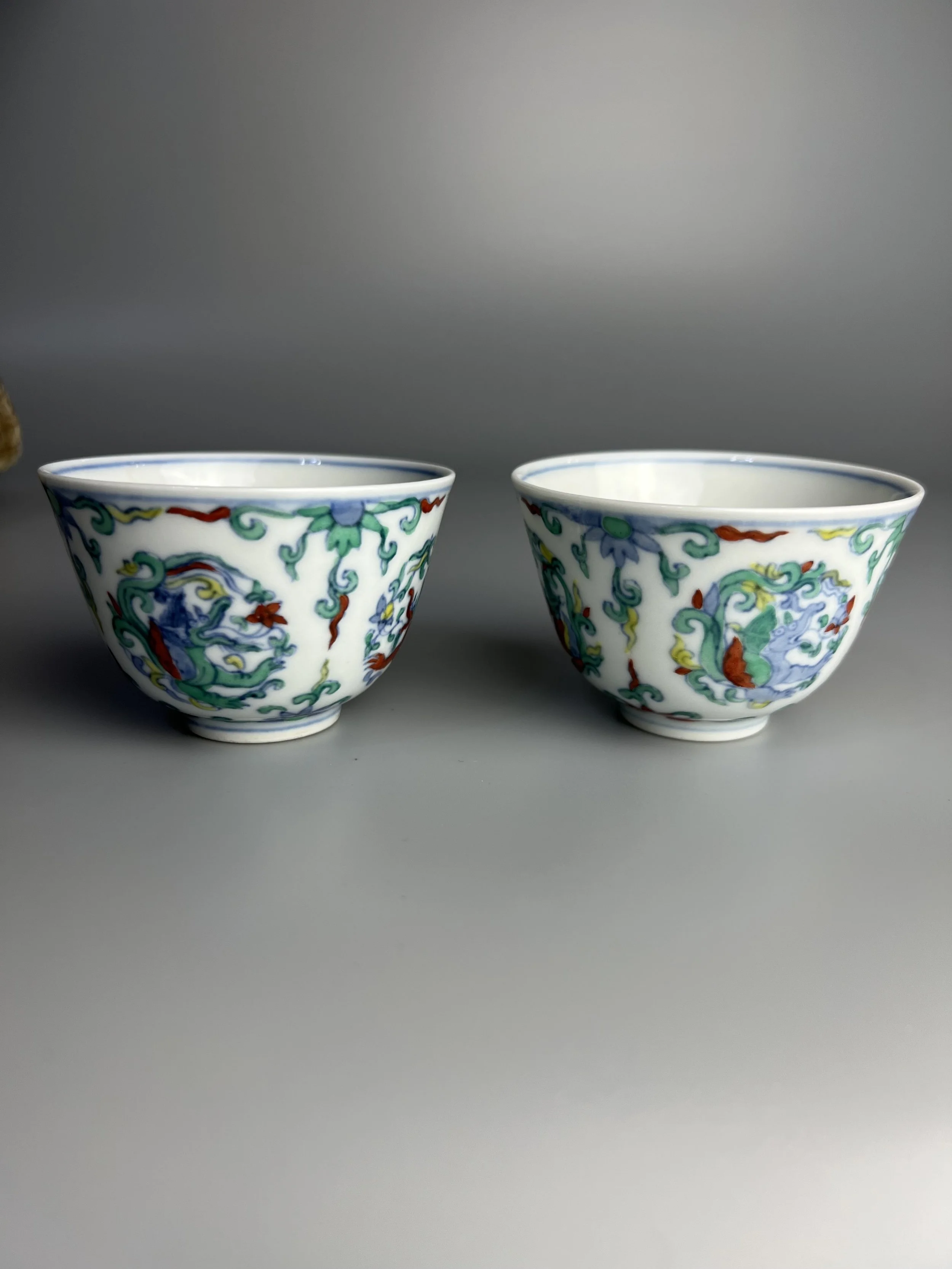 Image 4 of 24
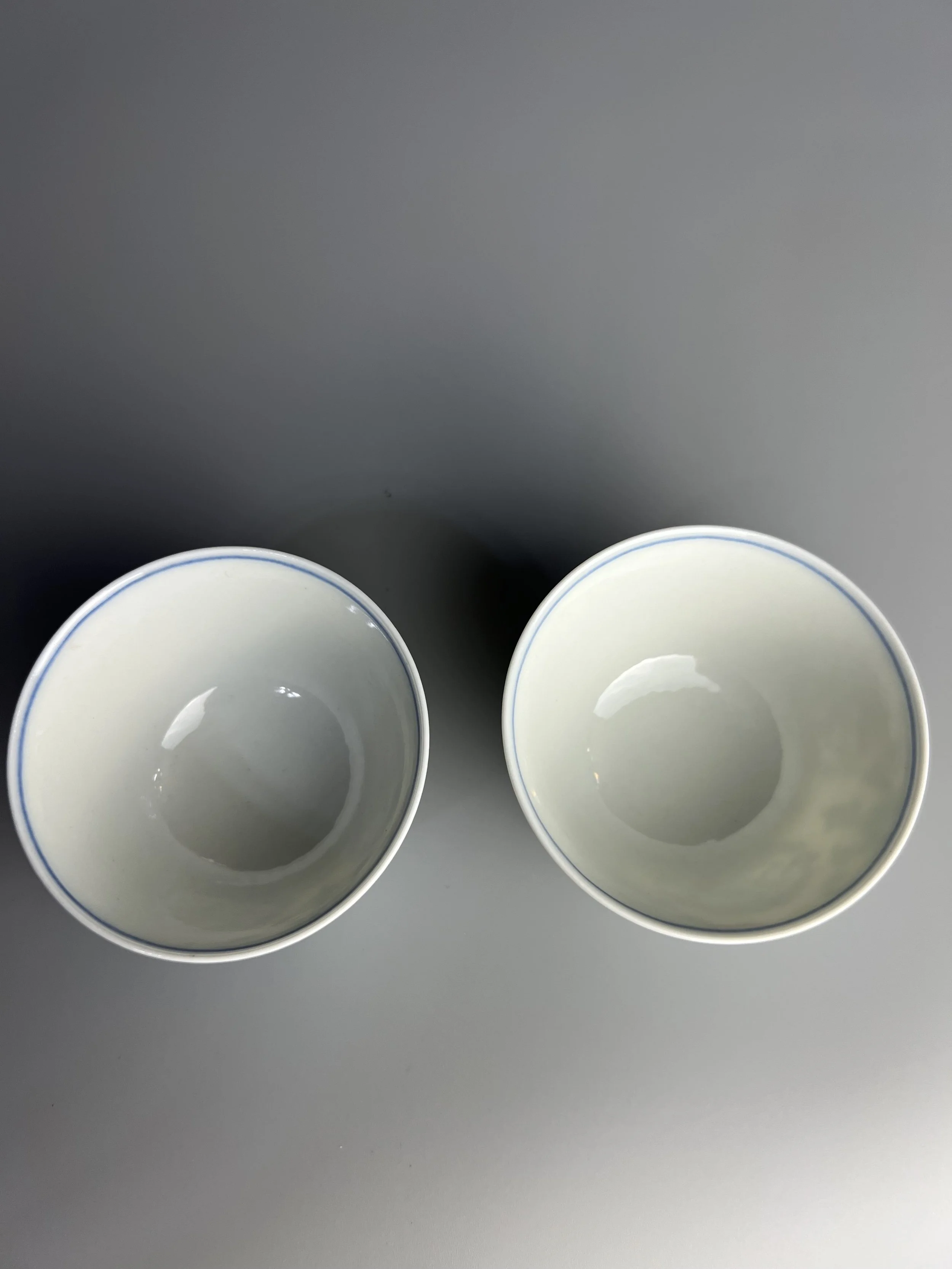 Image 5 of 24
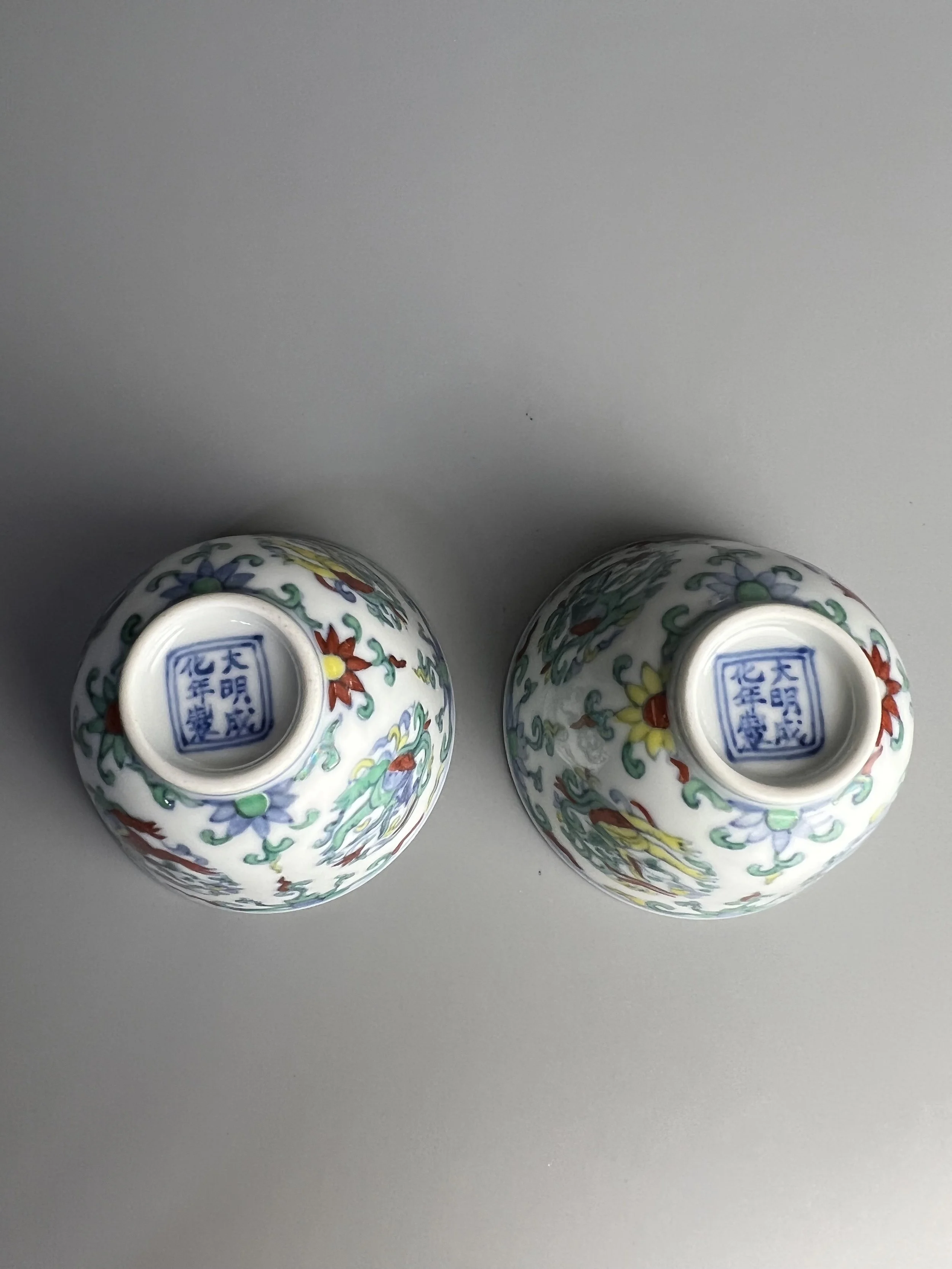 Image 6 of 24
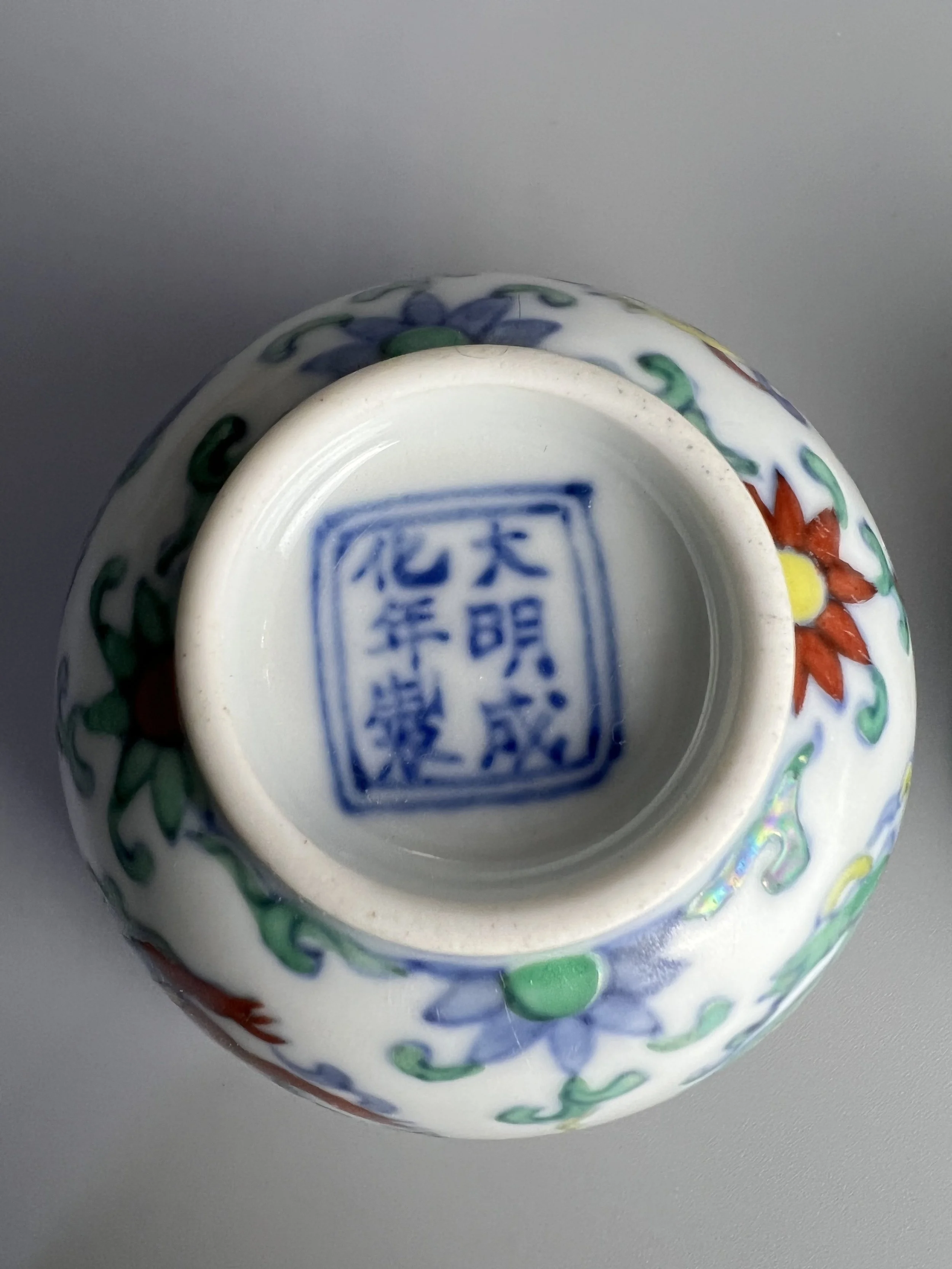 Image 7 of 24
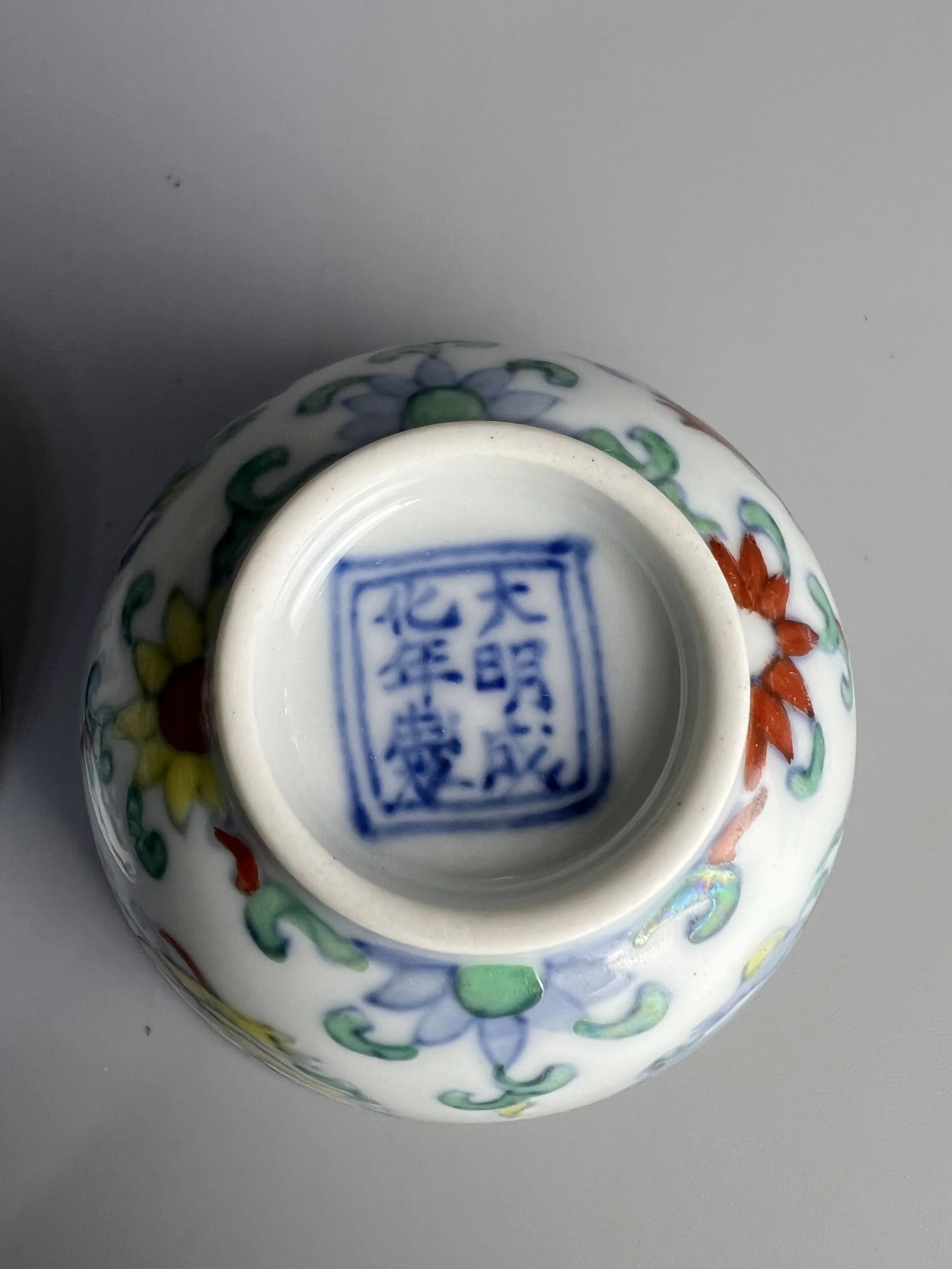 Image 8 of 24
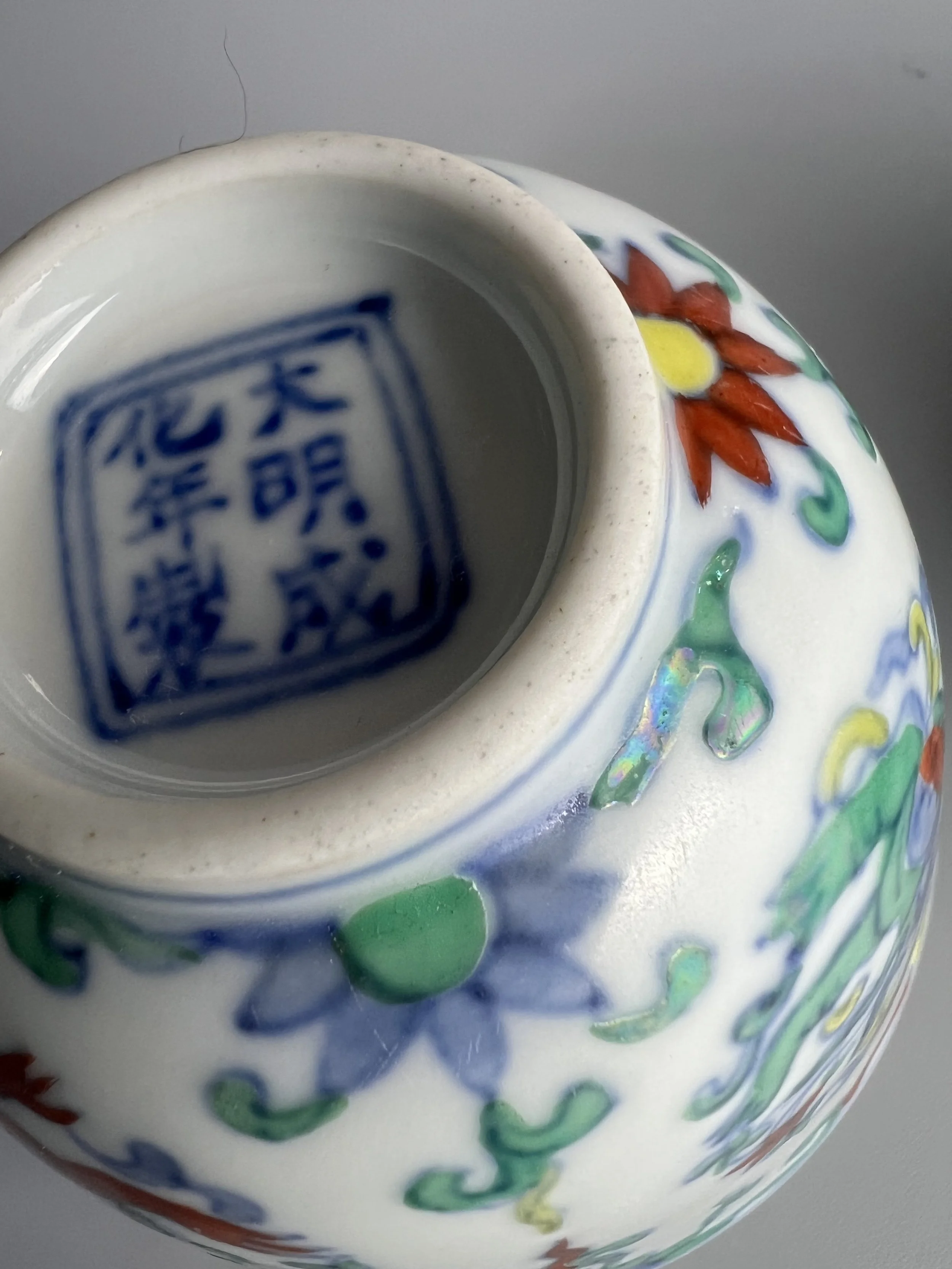 Image 9 of 24
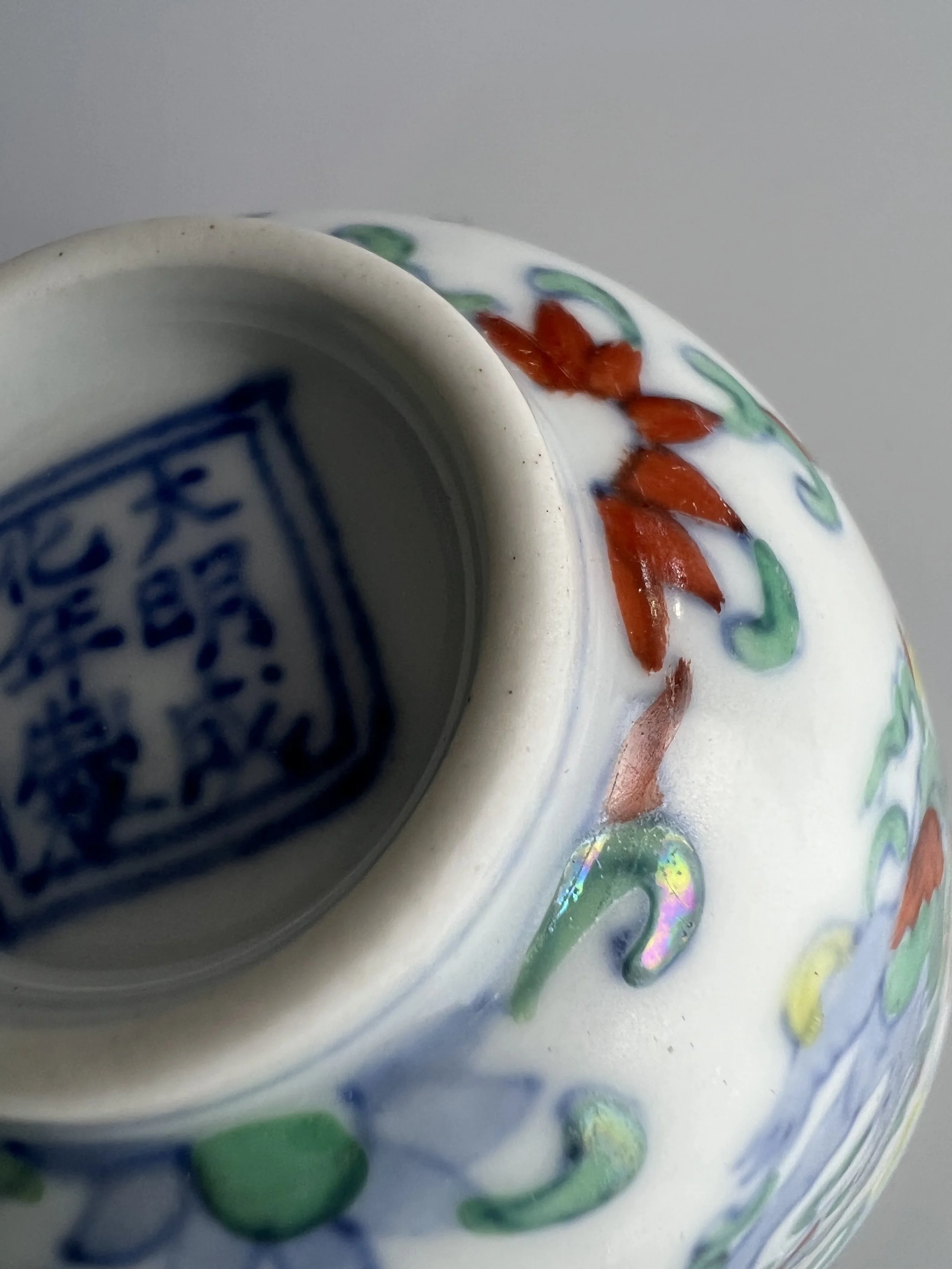 Image 10 of 24
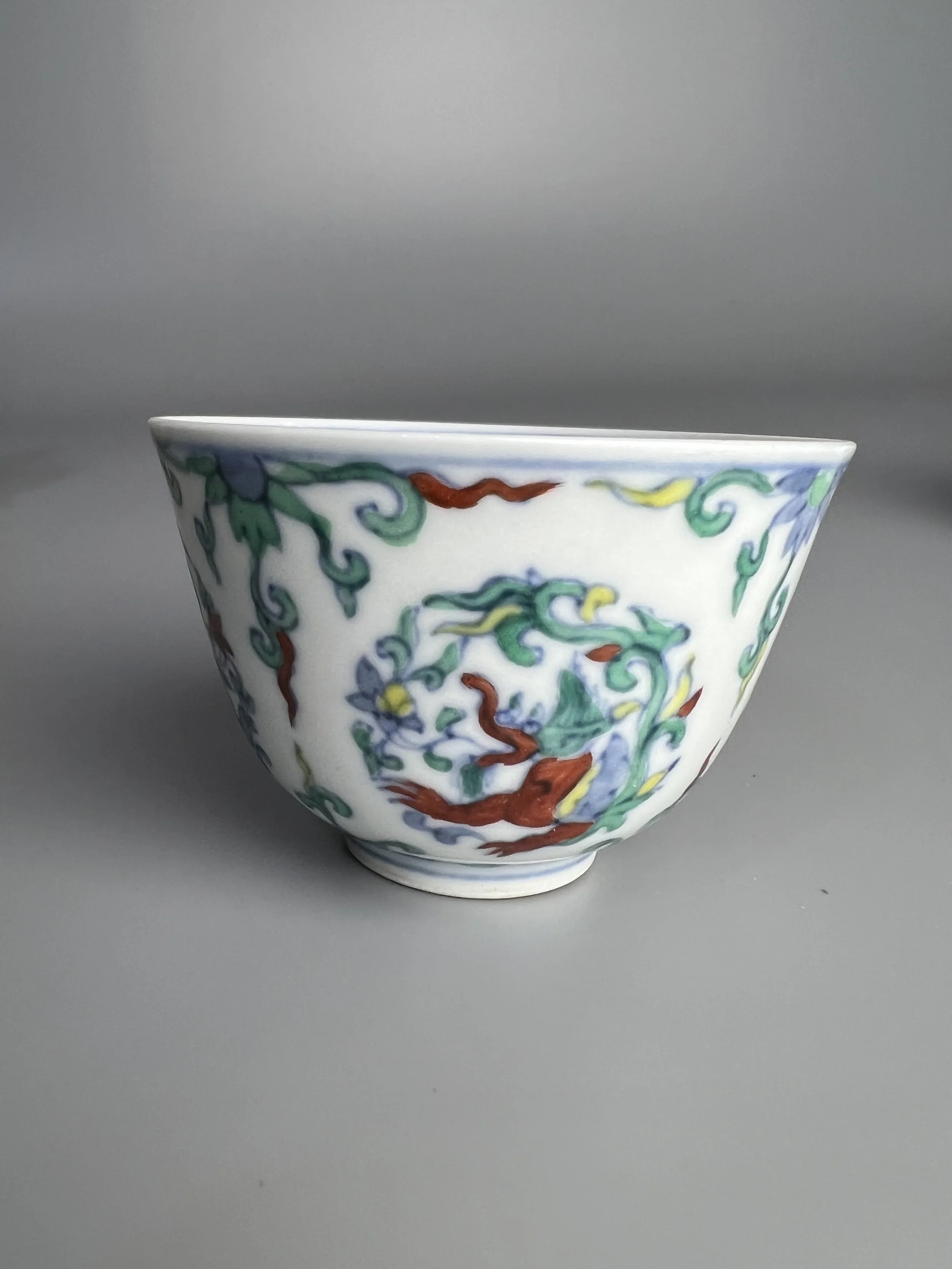 Image 11 of 24
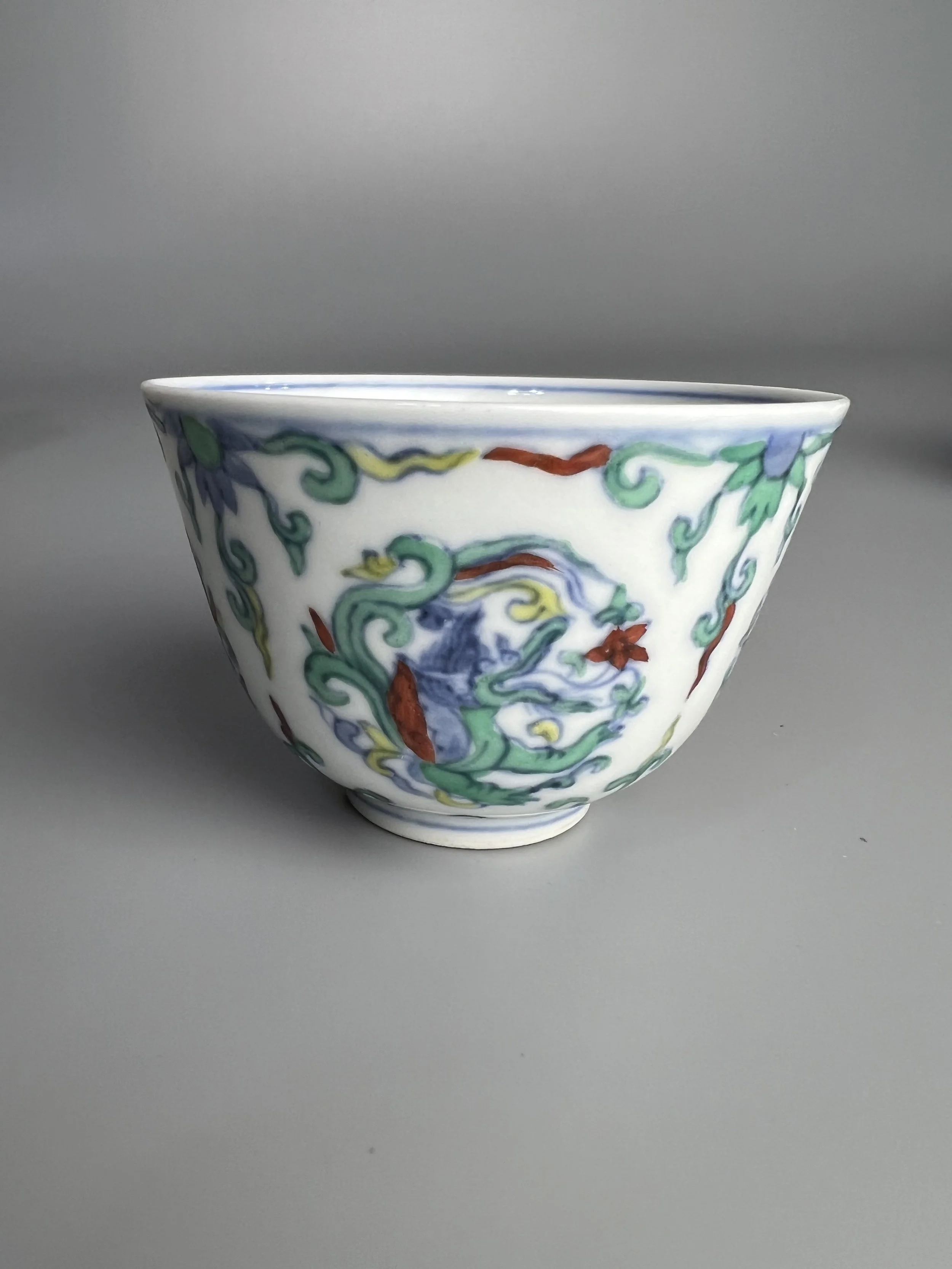 Image 12 of 24
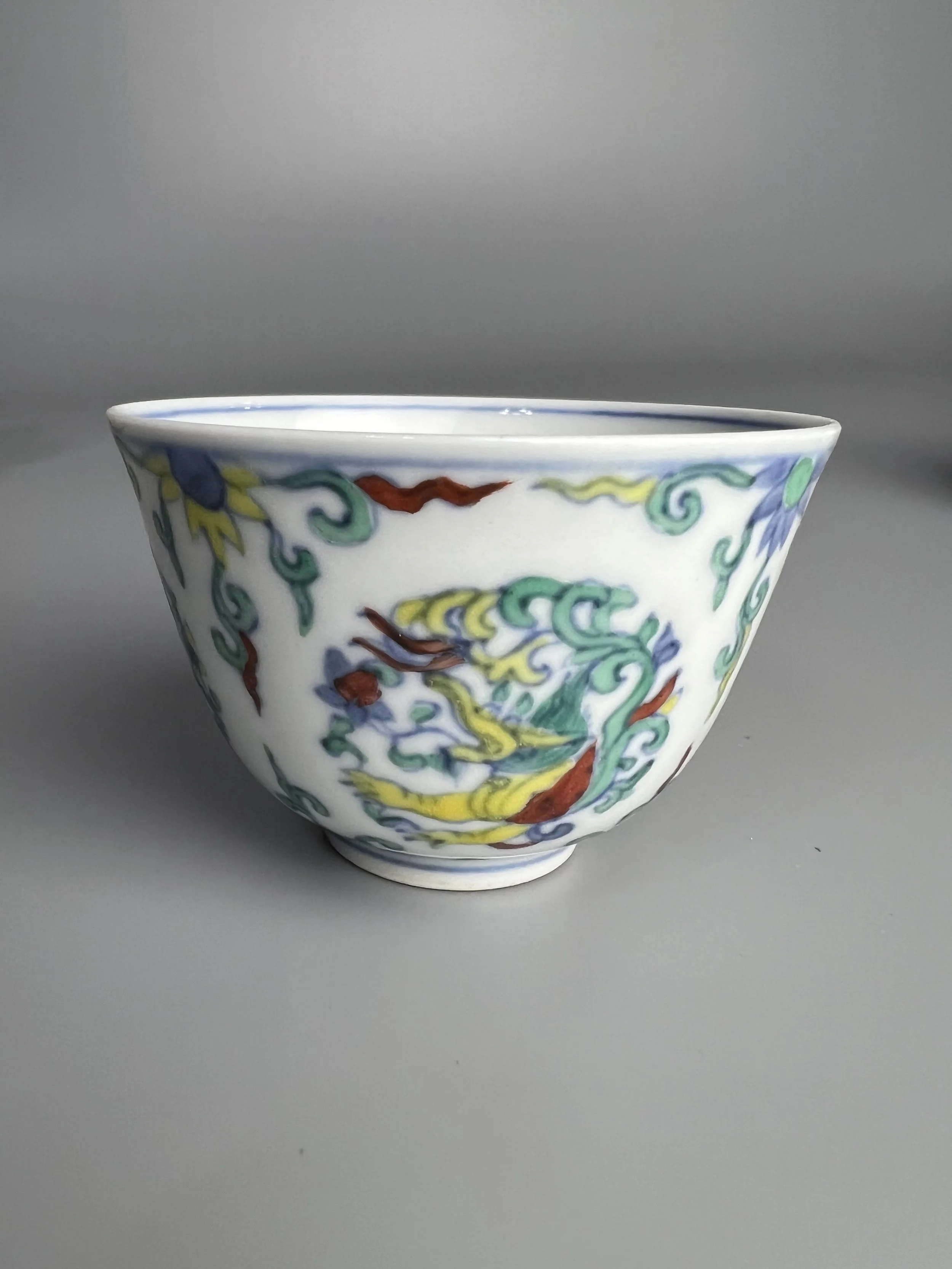 Image 13 of 24
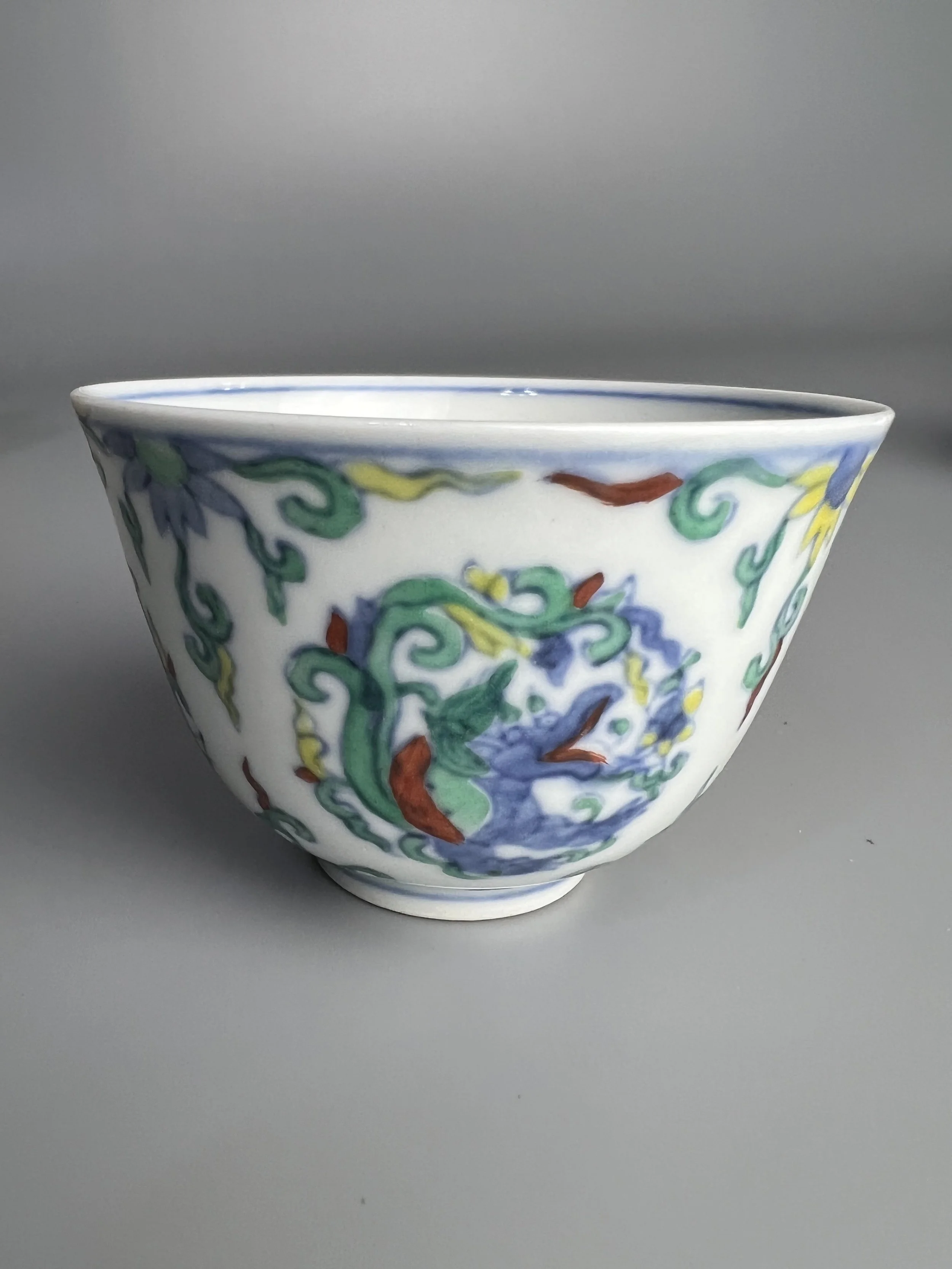 Image 14 of 24
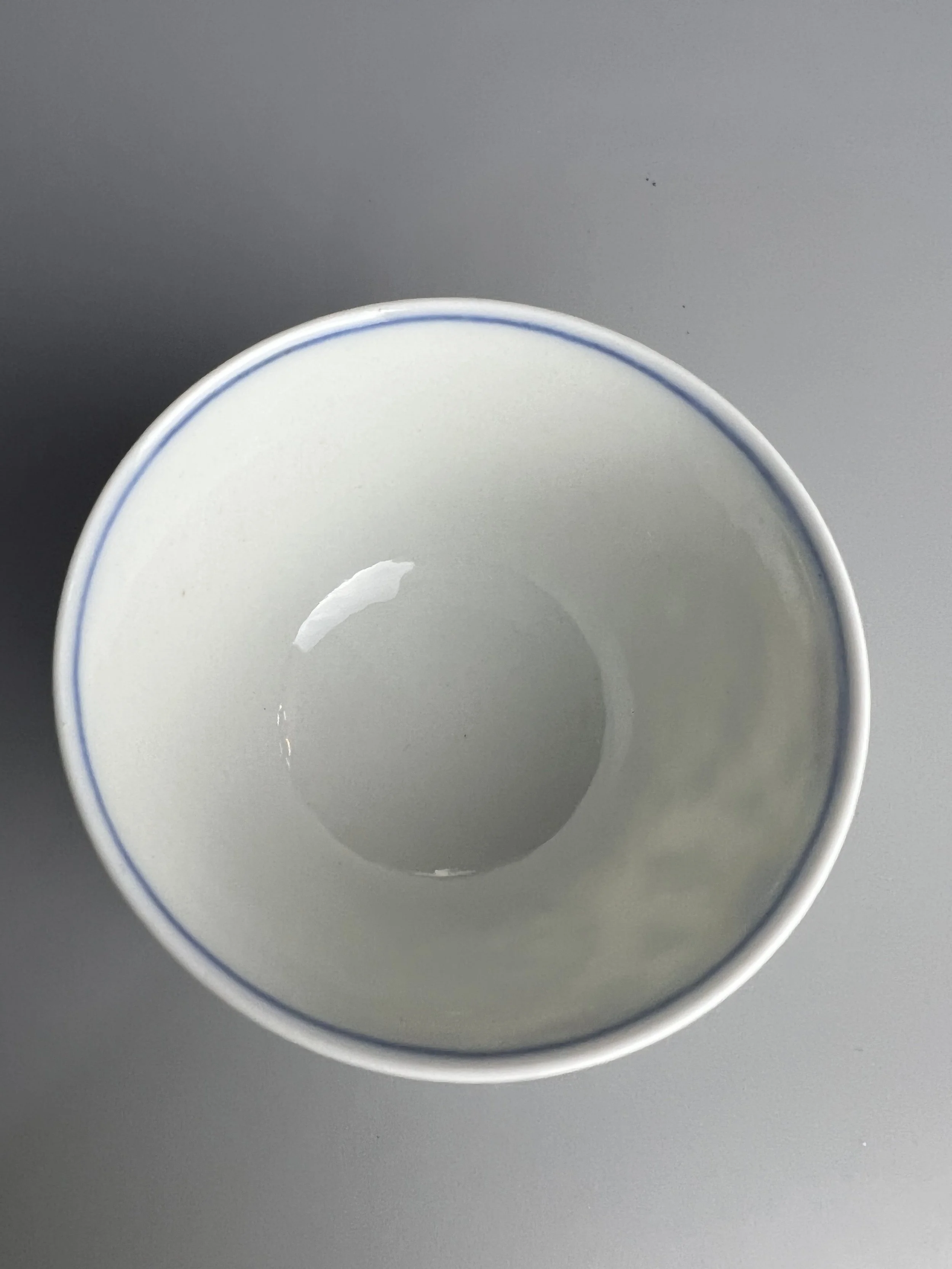 Image 15 of 24
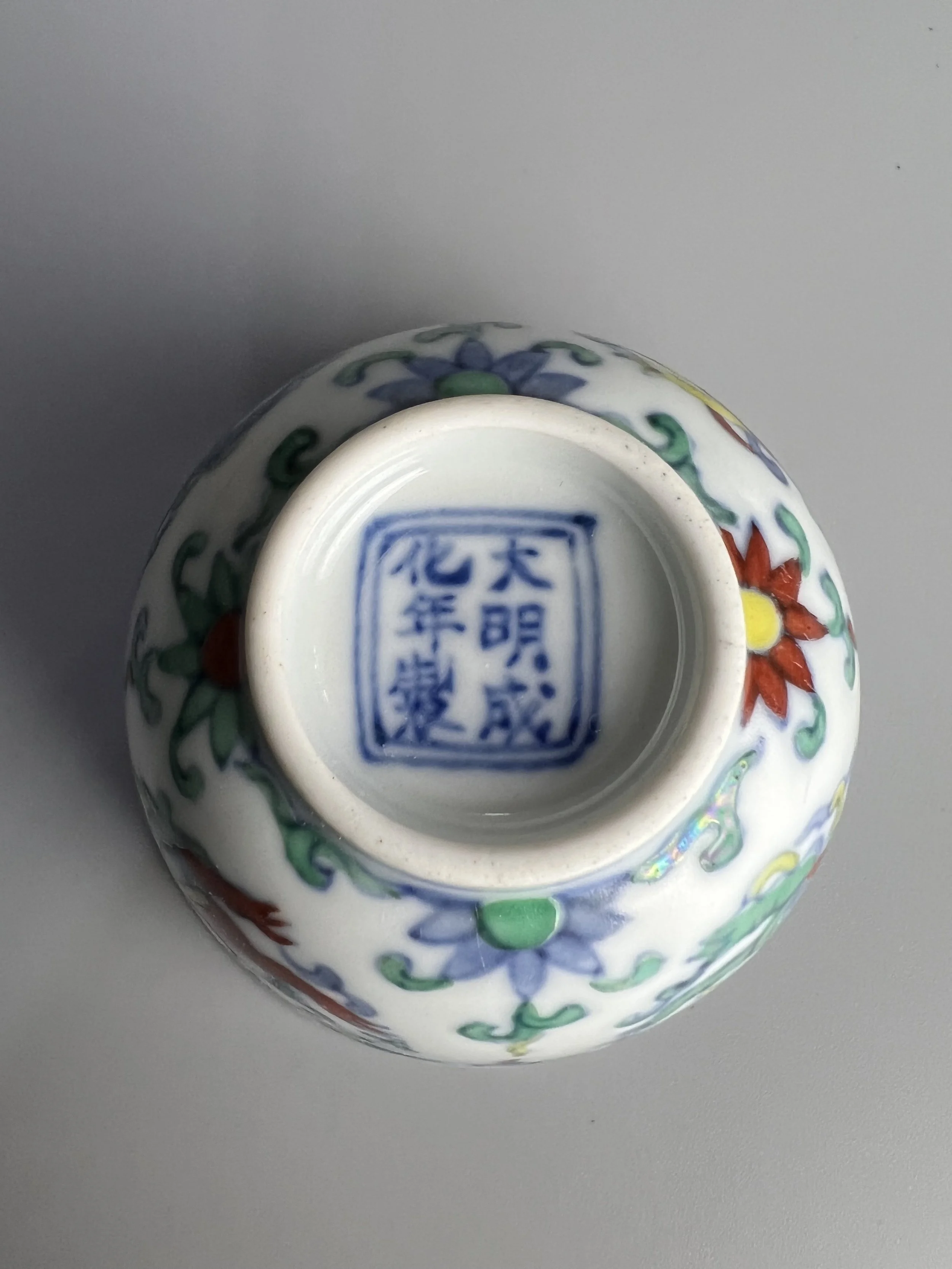 Image 16 of 24
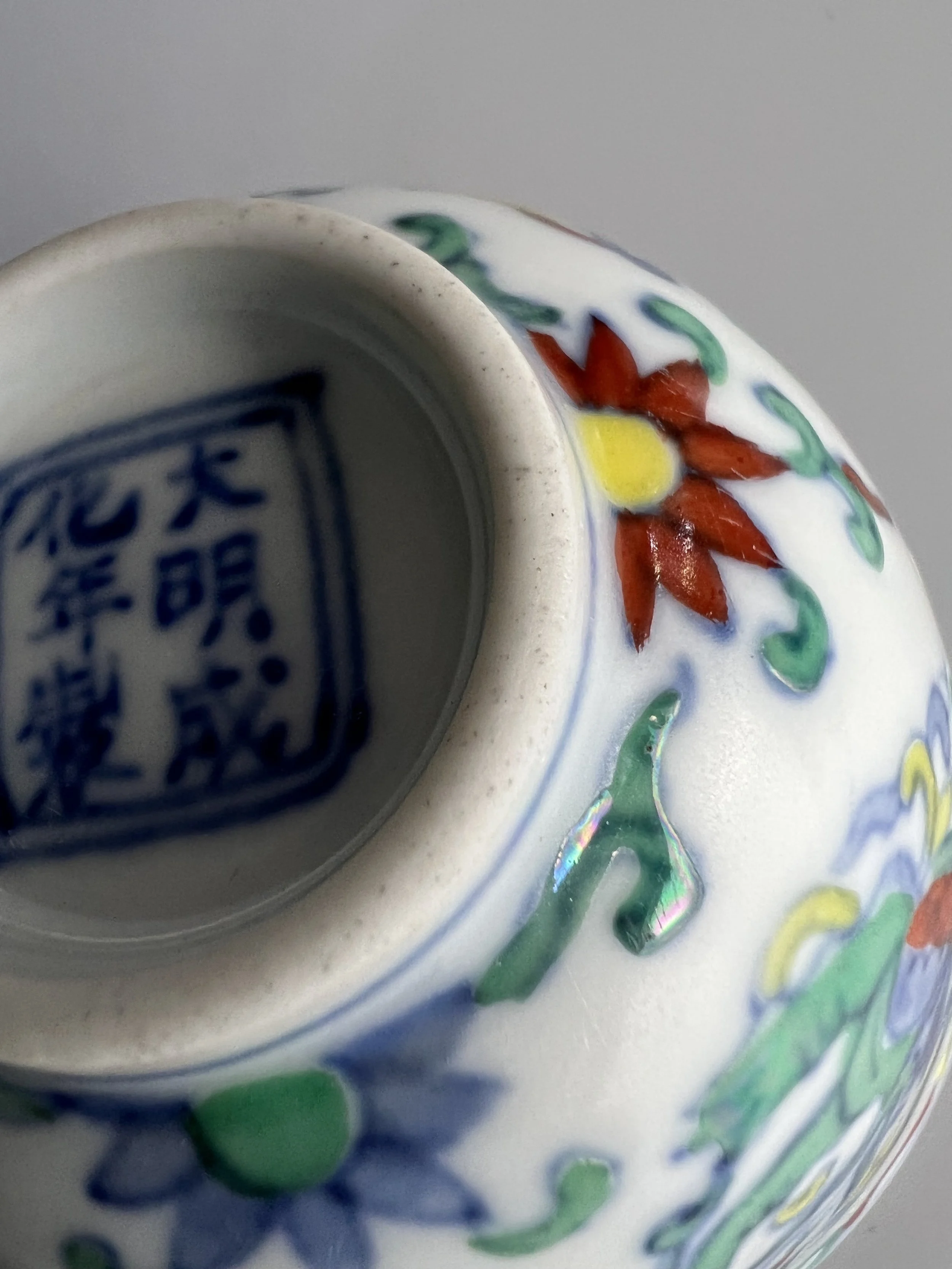 Image 17 of 24
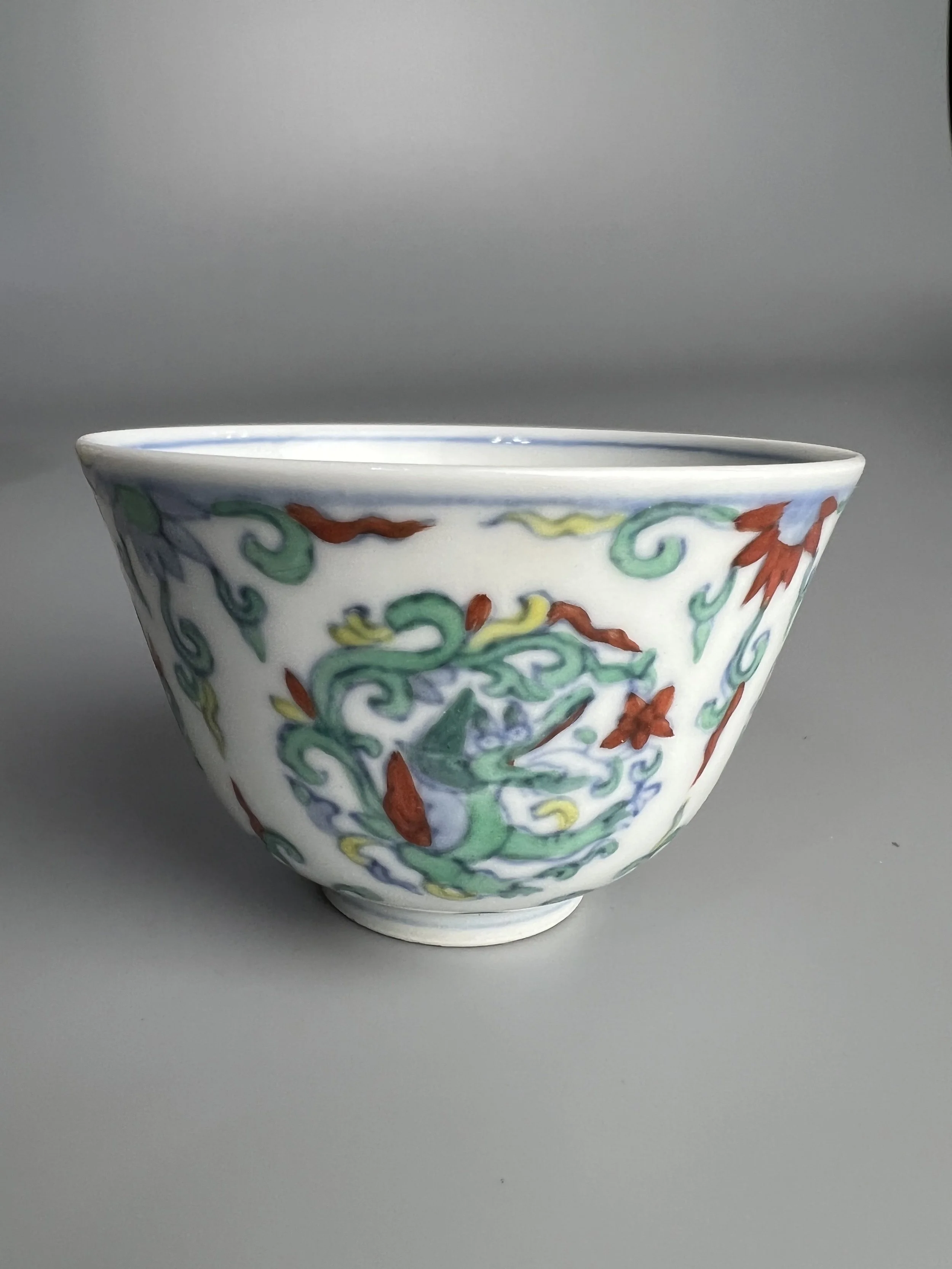 Image 18 of 24
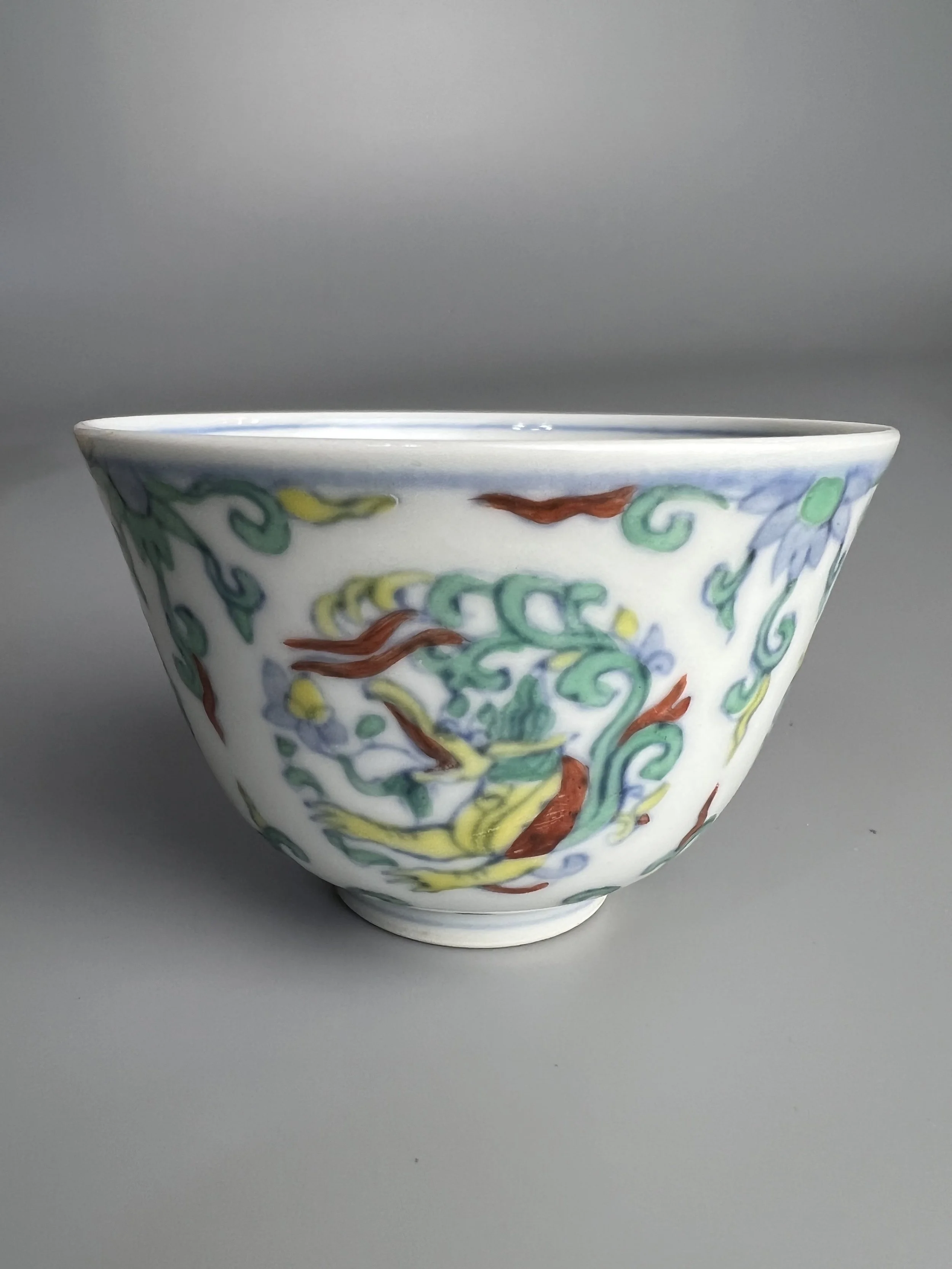 Image 19 of 24
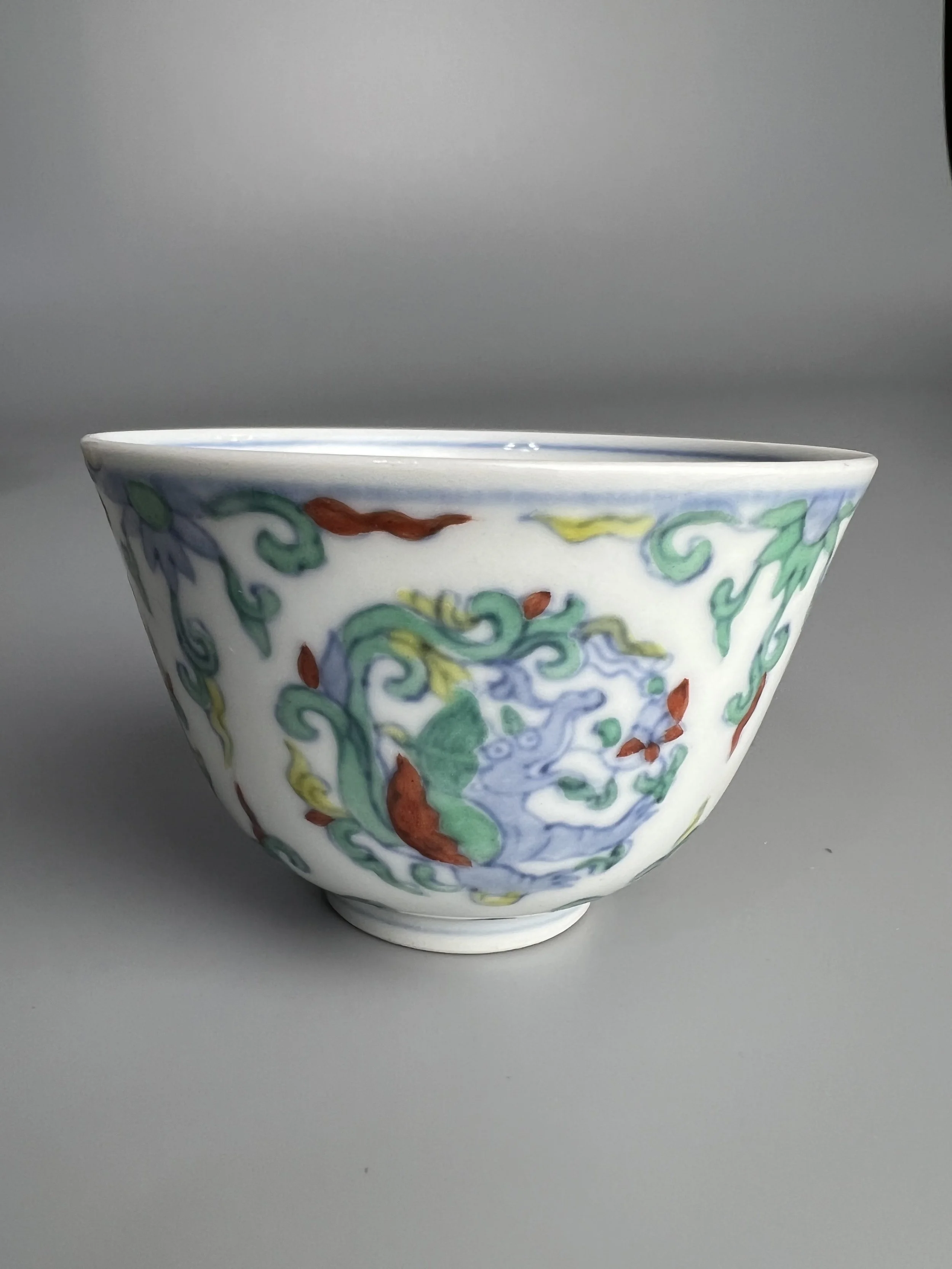 Image 20 of 24
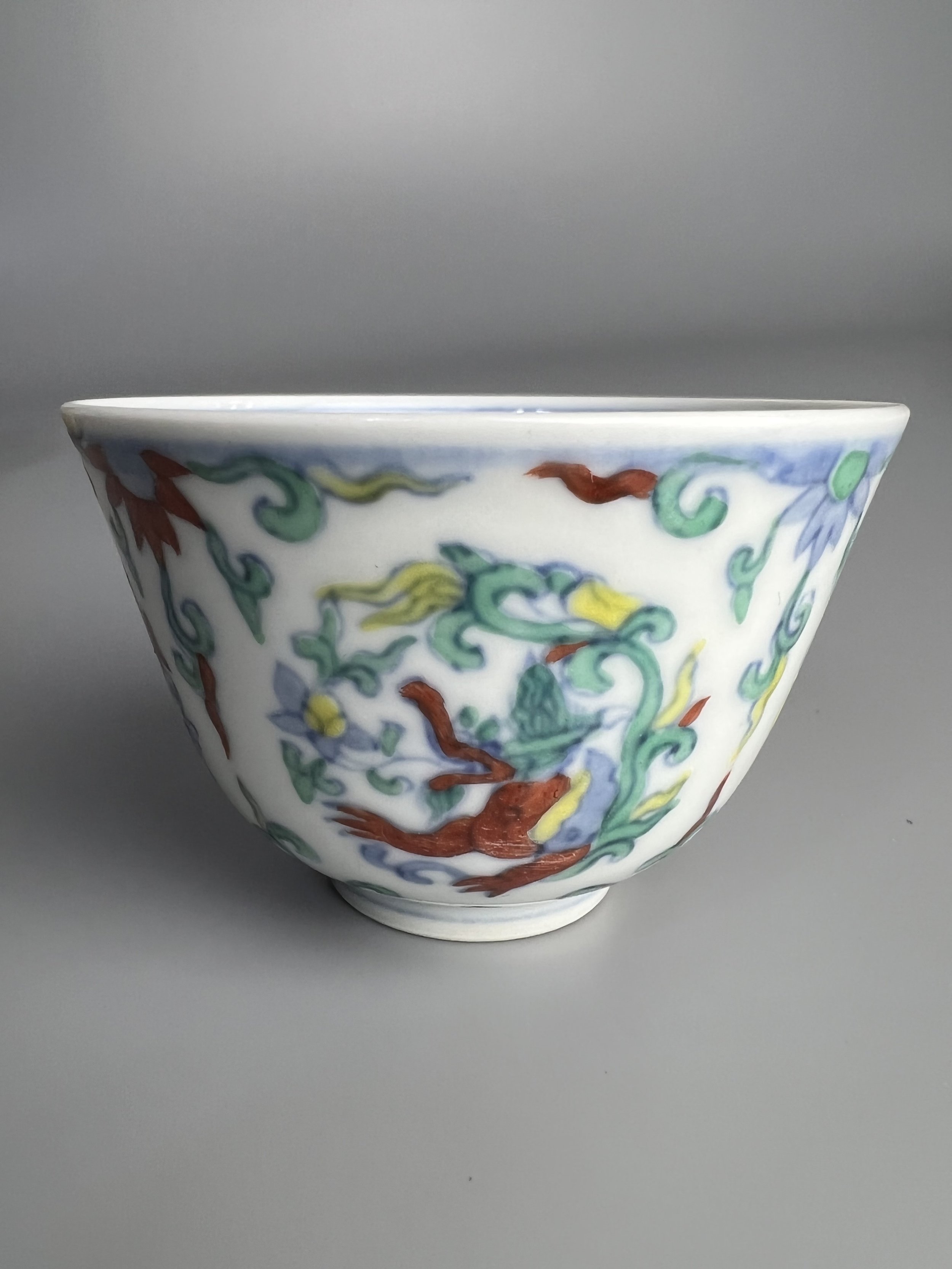 Image 21 of 24
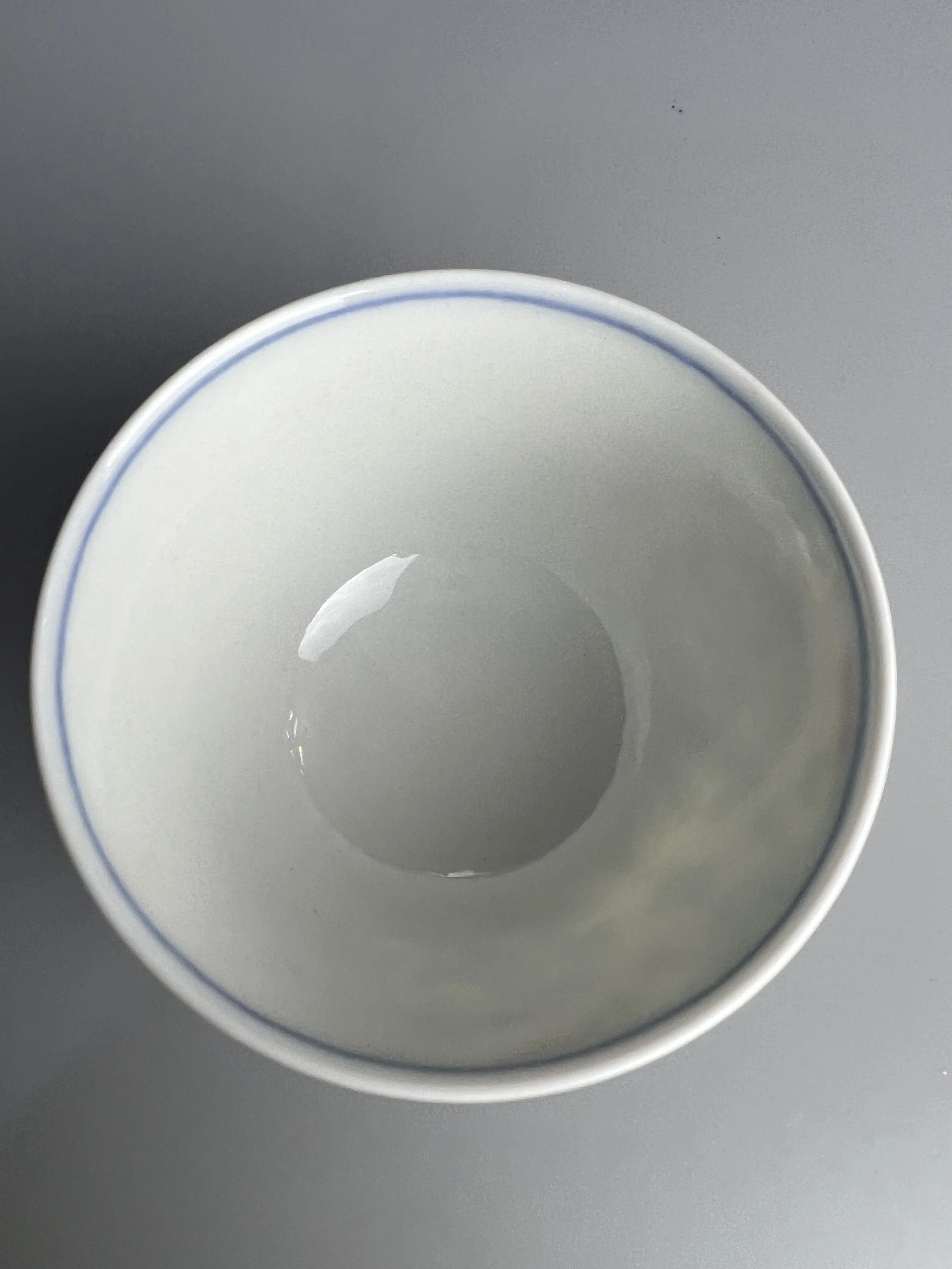 Image 22 of 24
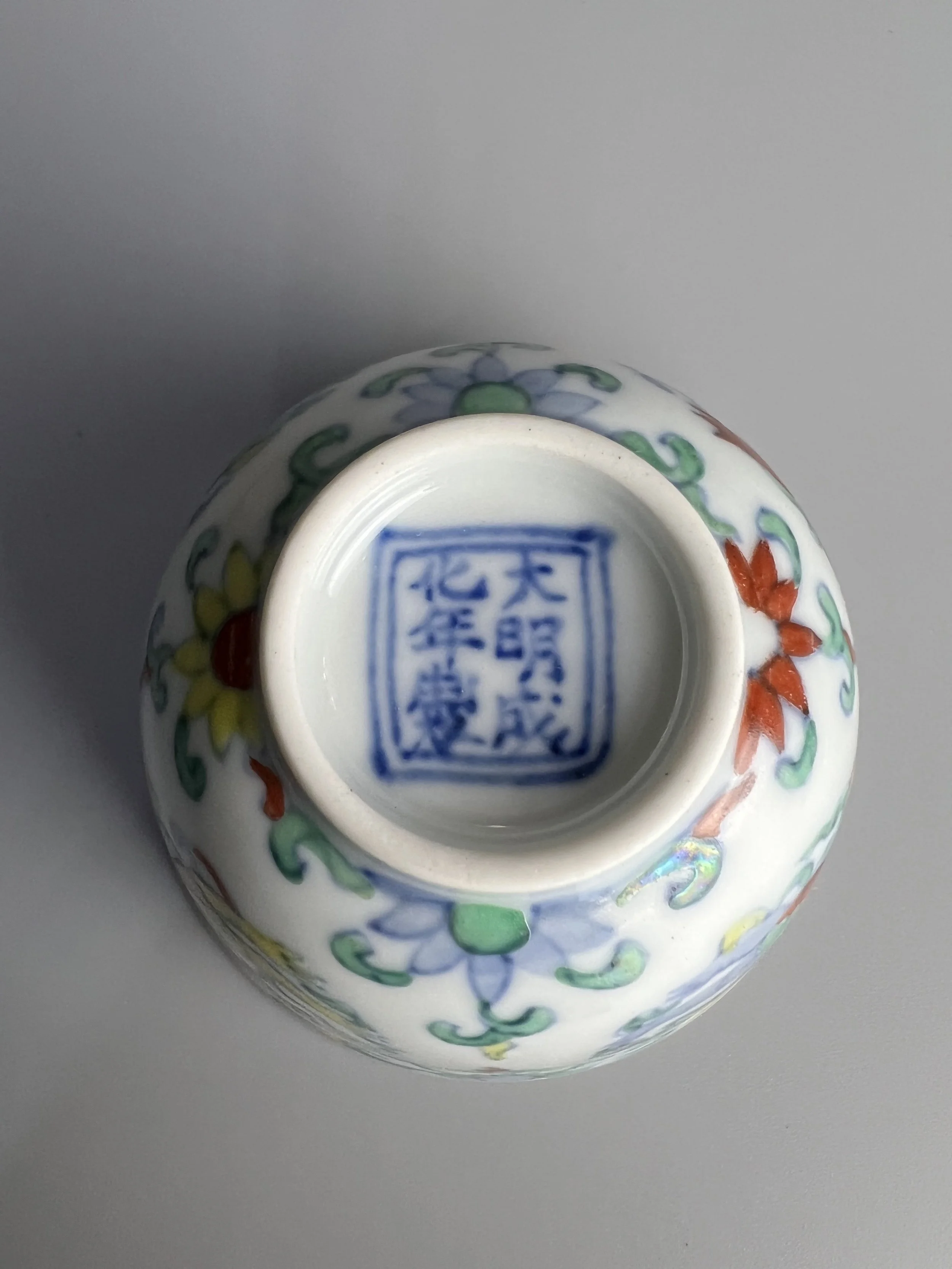 Image 23 of 24
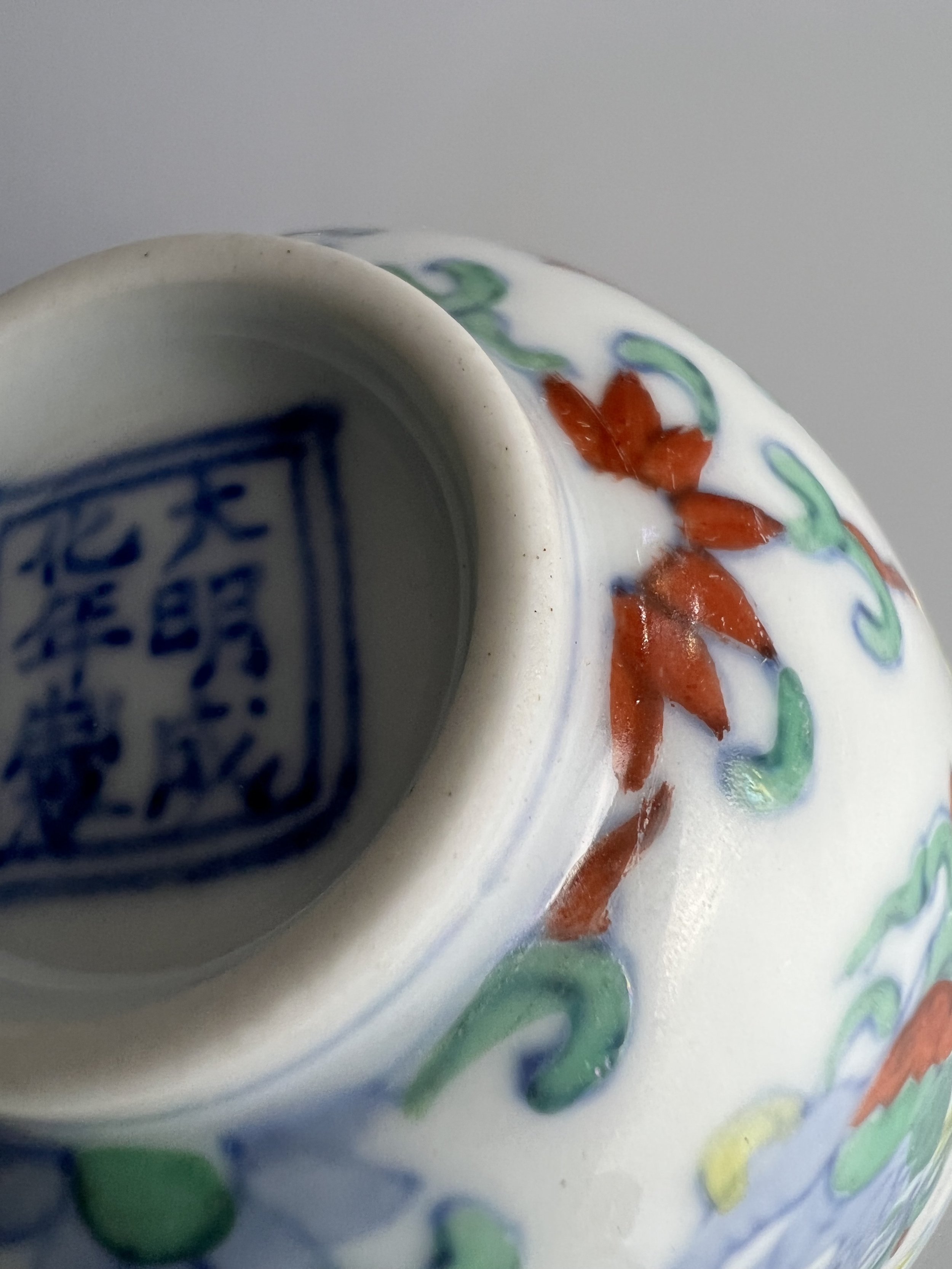 Image 24 of 24