Among the three great porcelain-producing reigns of the Qing Dynasty, the Yongzheng Emperor's reverence for the Ming-era Chenghua porcelain reached its zenith. Historical records indicate that the Yongzheng Emperor repeatedly issued edicts ordering the imperial kilns to fire imitations of Chenghua doucai wares. He even went so far as to commission replacement lids (historically referred to as "qiao gai" 峭盖) for authentic Chenghua pieces in the palace collection that were missing their originals. His demands were so meticulous that the replacements were required to be "extremely close to the original in both colour and form." This Yongzheng-era imitation of a Chenghua doucai jar with butterfly, flower, and rock design, measuring 16 cm in mouth diameter and 10.2 cm in height, is a quintessential product of this historical context.
Emulating Antique Charm: Decorative Motifs and Painting Style
What is most commendable about this jar is its precise capture of the unique Chenghua doucai style—characterized by its "childlike innocence and archaic simplicity" (稚趣古拙)—while simultaneously incorporating the "exquisite refinement and delicate beauty" (精细秀美) characteristic of the Yongzheng reign's craftsmanship.
The main decoration on the jar's belly centers on a rock (often referred to as "scholar's rock" or "grotto rock"), surrounded by blossoming flowering branches. The painter skillfully outlines the rugged contours of the rock and the winding stems of the flowers using delicate underglaze cobalt blue (qinghua). This feature closely mimics the "wave-like, stepped depiction" of rocks found in authentic Chenghua originals. Subsequently, bright overglaze enamels in shades of yellow, green, and reddish-brown are applied within the outlines. The most evocative details are the ethereal butterflies depicted among the flowers; they are rendered with vivid lifelikeness, appearing to flutter gracefully, creating a dynamic scene in perfect harmony with the static rock and flora.
Compared to similar Kangxi-era imitations, the decorative composition on this Yongzheng jar appears more spacious and elegant. Moreover, the tone of the underglaze blue is exceptionally light and refined, moving away from the intense, layered washes of the "Zhuming" cobalt used in the Kangxi period, instead pursuing a softer, more ethereal visual effect. This masterful fusion of the underglaze blue's understated elegance with the rich beauty of the overglaze enamels is the core aesthetic principle of Yongzheng doucai: "pure, refined, light, and elegant" (清逸、淡雅).
Exquisite Form: Shape, Body, and Glaze
Though small in size, the vessel possesses a grand presence. The form is dignified yet delicate: a small mouth, a short, straight neck, rounded shoulders, a扁圆腹 (flattened globular body) that gently tapers down to a recessed, neatly carved foot ring (内挖式圈足). It is paired with its original circular lid, the surface of which is often decorated with motifs echoing those on the body, such as auspicious lingzhi fungi or scrolling clouds, creating a sense of completeness.
The quality of the body and glaze achieved at the Jingdezhen imperial kilns during the Yongzheng period reached an unprecedented peak. The jar's body is made of extremely fine, dense porcelain, as white and smooth as jade, with highly standardized finishing. The glaze surface is smooth, glossy, and substantial, exhibiting the typical Yongzheng characteristic of appearing "white with a hint of blue" (白中闪青), providing an ideal canvas for the doucai enamels. This commitment to perfection, sparing no expense, ensured that these archaistic works not only imitated the form but also captured the very essence of their ancient prototypes.
The Finishing Touch: The Six-Character Recessed Double-Circle Mark
The base provides direct evidence of the jar's Yongzheng-era production. Covered in a white glaze, the base bears an inscription in underglaze blue: six characters arranged in two vertical lines reading "Da Ming Chenghua Nian Zhi" (大明成化年制 - Made in the Chenghua era of the Great Ming), enclosed within a double blue circle. This is known as a "recessed mark" (寄托款), signifying it is a later piece respectfully bearing an earlier reign's mark.
This inscription is executed with great care. The calligraphy is elegant and upright, possessing the distinctive refined style of the Yongzheng court. Unlike Kangxi-era imitations of Chenghua marks (which often featured the simpler four-character "Chenghua Nian Zhi" and were frequently unenclosed), this Yongzheng jar's mark meticulously strives to imitate the calligraphic spirit and style of the original Chenghua ware. Yet, it subtly reveals the stylistic hallmarks of its own time. This serves both as a tribute by the Yongzheng Emperor to the artistry of the preceding dynasty and as a profound impression of his own artistic taste left upon these porcelains.
Conclusion
This small doucai jar, standing a mere 10.2 cm tall, encapsulates the shared artistic sensibilities of two emperors separated by over two centuries—the Chenghua Emperor and the Yongzheng Emperor: the pursuit of detail, elegance, and refined beauty. It is not only a masterpiece of "official imitation of official ware" (官仿官) but also a testament to the pinnacle of ceramic technology achieved during the Yongzheng period of the Qing Dynasty. As Qing court archives record, the Yongzheng Emperor once commented on a Chenghua jar sample, ordering that it be "painted more exquisitely" (往精细里改画). This butterfly, flower, and rock design jar may well be the rare, treasured object born from such an imperial directive.
清雍正 仿成化斗彩蝶花山石纹盖罐赏析
在清一代三朝中,雍正皇帝对明代成化瓷器的推崇可谓达到了极致。史料记载,雍正帝曾多次下旨命御窑厂仿烧成化斗彩器,甚至为宫中所藏缺少盖子(古时称“峭盖”)的成化真品补配原样之盖,其要求之严苛,达到了“与原器无论是色彩还是形状都十分接近”的程度。这件口径16厘米,高10.2厘米的雍正仿成化斗彩蝶花山石纹盖罐,正是这一历史背景下的绝佳产物。
慕古神韵:纹饰与画风
此罐最令人称道之处,在于其精准捕捉了成化斗彩“稚趣古拙”的独特画风,同时又融入了雍正一朝“精细秀美”的工艺处理。
罐腹主纹饰以山石(洞石)为中心,四周环绕盛开的折枝花卉。画师以细腻的青花勾勒出山石嶙峋的轮廓与花卉的枝蔓,这一特征极为接近成化原作中“呈海浪状阶梯分布”的山石绘法。随后,在釉上填以明丽的黄、绿、赭红等彩料。最传神之处在于花间的灵蝶,其描绘生动活泼,仿佛翩然飞舞,与静立的山石花卉形成了动静皆宜的画面。
相较于康熙朝的同类仿品,雍正此罐的纹饰布局更显舒朗,且青花发色极为清淡雅致,不再使用康熙时期浓重的“珠明料”分水法,转而追求一种更为柔和、清逸的视觉效果。这种将青花之素雅与釉上彩之秾丽完美融合的技法,正是雍正斗彩“清逸、淡雅”的核心美学。
制器尚韵:造型与胎釉
器物虽小,气韵自成。此罐造型敦厚而不失秀美:小口、矮直颈、丰肩,扁圆腹下渐收,内挖式圈足。配以原装的圆形盖子,盖面往往绘有与腹部相呼应的折枝灵芝或祥云纹,使得整器浑然一体。
雍正御窑的胎釉质量在这一时期达到了历史的最高水平。罐体胎质坚致细腻,洁白似玉,修胎极其规整。釉面光润肥厚,呈现出雍正时期典型的“白中闪青”效果,为斗彩的呈现提供了绝佳的画布。这种不惜工本、精益求精的工艺,确保了仿古之作不仅形似,更得其神髓。
点睛之笔:双圈六字寄托款
器物底部是鉴定其为雍正仿古的直接证据。器底施白釉,正中以青花书“大明成化年制”六字双行楷书寄托款,外围青花双圈。
这行款识写得极为用心,字体秀丽挺拔,具有雍正朝特有的清雅之风,与康熙仿成化款(常见“成化年制”四字且多无圈)不同,雍正此罐无论从字体结构还是运笔风格,都竭力模仿成化原器的神韵,却又在不经意间流露出本朝的时代特征。这既是雍正帝对前朝艺术的致敬,也是其本人艺术审美在瓷器上的深刻烙印。
结语
这件高仅10.2厘米的斗彩小罐,浓缩了两位相隔两百余年的帝王——成化帝与雍正帝——共通的艺术品位:追求细致、文雅、秀气。它不仅是“官仿官”的杰作,更是清代雍正时期陶瓷工艺登峰造极的见证。正如清宫档案所载,雍正帝曾对成窑罐样批示“往精细里改画”,这件蝶花山石纹盖罐,或许正是那一纸御旨下诞生的稀世珍品。
Among the three great porcelain-producing reigns of the Qing Dynasty, the Yongzheng Emperor's reverence for the Ming-era Chenghua porcelain reached its zenith. Historical records indicate that the Yongzheng Emperor repeatedly issued edicts ordering the imperial kilns to fire imitations of Chenghua doucai wares. He even went so far as to commission replacement lids (historically referred to as "qiao gai" 峭盖) for authentic Chenghua pieces in the palace collection that were missing their originals. His demands were so meticulous that the replacements were required to be "extremely close to the original in both colour and form." This Yongzheng-era imitation of a Chenghua doucai jar with butterfly, flower, and rock design, measuring 16 cm in mouth diameter and 10.2 cm in height, is a quintessential product of this historical context.
Emulating Antique Charm: Decorative Motifs and Painting Style
What is most commendable about this jar is its precise capture of the unique Chenghua doucai style—characterized by its "childlike innocence and archaic simplicity" (稚趣古拙)—while simultaneously incorporating the "exquisite refinement and delicate beauty" (精细秀美) characteristic of the Yongzheng reign's craftsmanship.
The main decoration on the jar's belly centers on a rock (often referred to as "scholar's rock" or "grotto rock"), surrounded by blossoming flowering branches. The painter skillfully outlines the rugged contours of the rock and the winding stems of the flowers using delicate underglaze cobalt blue (qinghua). This feature closely mimics the "wave-like, stepped depiction" of rocks found in authentic Chenghua originals. Subsequently, bright overglaze enamels in shades of yellow, green, and reddish-brown are applied within the outlines. The most evocative details are the ethereal butterflies depicted among the flowers; they are rendered with vivid lifelikeness, appearing to flutter gracefully, creating a dynamic scene in perfect harmony with the static rock and flora.
Compared to similar Kangxi-era imitations, the decorative composition on this Yongzheng jar appears more spacious and elegant. Moreover, the tone of the underglaze blue is exceptionally light and refined, moving away from the intense, layered washes of the "Zhuming" cobalt used in the Kangxi period, instead pursuing a softer, more ethereal visual effect. This masterful fusion of the underglaze blue's understated elegance with the rich beauty of the overglaze enamels is the core aesthetic principle of Yongzheng doucai: "pure, refined, light, and elegant" (清逸、淡雅).
Exquisite Form: Shape, Body, and Glaze
Though small in size, the vessel possesses a grand presence. The form is dignified yet delicate: a small mouth, a short, straight neck, rounded shoulders, a扁圆腹 (flattened globular body) that gently tapers down to a recessed, neatly carved foot ring (内挖式圈足). It is paired with its original circular lid, the surface of which is often decorated with motifs echoing those on the body, such as auspicious lingzhi fungi or scrolling clouds, creating a sense of completeness.
The quality of the body and glaze achieved at the Jingdezhen imperial kilns during the Yongzheng period reached an unprecedented peak. The jar's body is made of extremely fine, dense porcelain, as white and smooth as jade, with highly standardized finishing. The glaze surface is smooth, glossy, and substantial, exhibiting the typical Yongzheng characteristic of appearing "white with a hint of blue" (白中闪青), providing an ideal canvas for the doucai enamels. This commitment to perfection, sparing no expense, ensured that these archaistic works not only imitated the form but also captured the very essence of their ancient prototypes.
The Finishing Touch: The Six-Character Recessed Double-Circle Mark
The base provides direct evidence of the jar's Yongzheng-era production. Covered in a white glaze, the base bears an inscription in underglaze blue: six characters arranged in two vertical lines reading "Da Ming Chenghua Nian Zhi" (大明成化年制 - Made in the Chenghua era of the Great Ming), enclosed within a double blue circle. This is known as a "recessed mark" (寄托款), signifying it is a later piece respectfully bearing an earlier reign's mark.
This inscription is executed with great care. The calligraphy is elegant and upright, possessing the distinctive refined style of the Yongzheng court. Unlike Kangxi-era imitations of Chenghua marks (which often featured the simpler four-character "Chenghua Nian Zhi" and were frequently unenclosed), this Yongzheng jar's mark meticulously strives to imitate the calligraphic spirit and style of the original Chenghua ware. Yet, it subtly reveals the stylistic hallmarks of its own time. This serves both as a tribute by the Yongzheng Emperor to the artistry of the preceding dynasty and as a profound impression of his own artistic taste left upon these porcelains.
Conclusion
This small doucai jar, standing a mere 10.2 cm tall, encapsulates the shared artistic sensibilities of two emperors separated by over two centuries—the Chenghua Emperor and the Yongzheng Emperor: the pursuit of detail, elegance, and refined beauty. It is not only a masterpiece of "official imitation of official ware" (官仿官) but also a testament to the pinnacle of ceramic technology achieved during the Yongzheng period of the Qing Dynasty. As Qing court archives record, the Yongzheng Emperor once commented on a Chenghua jar sample, ordering that it be "painted more exquisitely" (往精细里改画). This butterfly, flower, and rock design jar may well be the rare, treasured object born from such an imperial directive.
清雍正 仿成化斗彩蝶花山石纹盖罐赏析
在清一代三朝中,雍正皇帝对明代成化瓷器的推崇可谓达到了极致。史料记载,雍正帝曾多次下旨命御窑厂仿烧成化斗彩器,甚至为宫中所藏缺少盖子(古时称“峭盖”)的成化真品补配原样之盖,其要求之严苛,达到了“与原器无论是色彩还是形状都十分接近”的程度。这件口径16厘米,高10.2厘米的雍正仿成化斗彩蝶花山石纹盖罐,正是这一历史背景下的绝佳产物。
慕古神韵:纹饰与画风
此罐最令人称道之处,在于其精准捕捉了成化斗彩“稚趣古拙”的独特画风,同时又融入了雍正一朝“精细秀美”的工艺处理。
罐腹主纹饰以山石(洞石)为中心,四周环绕盛开的折枝花卉。画师以细腻的青花勾勒出山石嶙峋的轮廓与花卉的枝蔓,这一特征极为接近成化原作中“呈海浪状阶梯分布”的山石绘法。随后,在釉上填以明丽的黄、绿、赭红等彩料。最传神之处在于花间的灵蝶,其描绘生动活泼,仿佛翩然飞舞,与静立的山石花卉形成了动静皆宜的画面。
相较于康熙朝的同类仿品,雍正此罐的纹饰布局更显舒朗,且青花发色极为清淡雅致,不再使用康熙时期浓重的“珠明料”分水法,转而追求一种更为柔和、清逸的视觉效果。这种将青花之素雅与釉上彩之秾丽完美融合的技法,正是雍正斗彩“清逸、淡雅”的核心美学。
制器尚韵:造型与胎釉
器物虽小,气韵自成。此罐造型敦厚而不失秀美:小口、矮直颈、丰肩,扁圆腹下渐收,内挖式圈足。配以原装的圆形盖子,盖面往往绘有与腹部相呼应的折枝灵芝或祥云纹,使得整器浑然一体。
雍正御窑的胎釉质量在这一时期达到了历史的最高水平。罐体胎质坚致细腻,洁白似玉,修胎极其规整。釉面光润肥厚,呈现出雍正时期典型的“白中闪青”效果,为斗彩的呈现提供了绝佳的画布。这种不惜工本、精益求精的工艺,确保了仿古之作不仅形似,更得其神髓。
点睛之笔:双圈六字寄托款
器物底部是鉴定其为雍正仿古的直接证据。器底施白釉,正中以青花书“大明成化年制”六字双行楷书寄托款,外围青花双圈。
这行款识写得极为用心,字体秀丽挺拔,具有雍正朝特有的清雅之风,与康熙仿成化款(常见“成化年制”四字且多无圈)不同,雍正此罐无论从字体结构还是运笔风格,都竭力模仿成化原器的神韵,却又在不经意间流露出本朝的时代特征。这既是雍正帝对前朝艺术的致敬,也是其本人艺术审美在瓷器上的深刻烙印。
结语
这件高仅10.2厘米的斗彩小罐,浓缩了两位相隔两百余年的帝王——成化帝与雍正帝——共通的艺术品位:追求细致、文雅、秀气。它不仅是“官仿官”的杰作,更是清代雍正时期陶瓷工艺登峰造极的见证。正如清宫档案所载,雍正帝曾对成窑罐样批示“往精细里改画”,这件蝶花山石纹盖罐,或许正是那一纸御旨下诞生的稀世珍品。
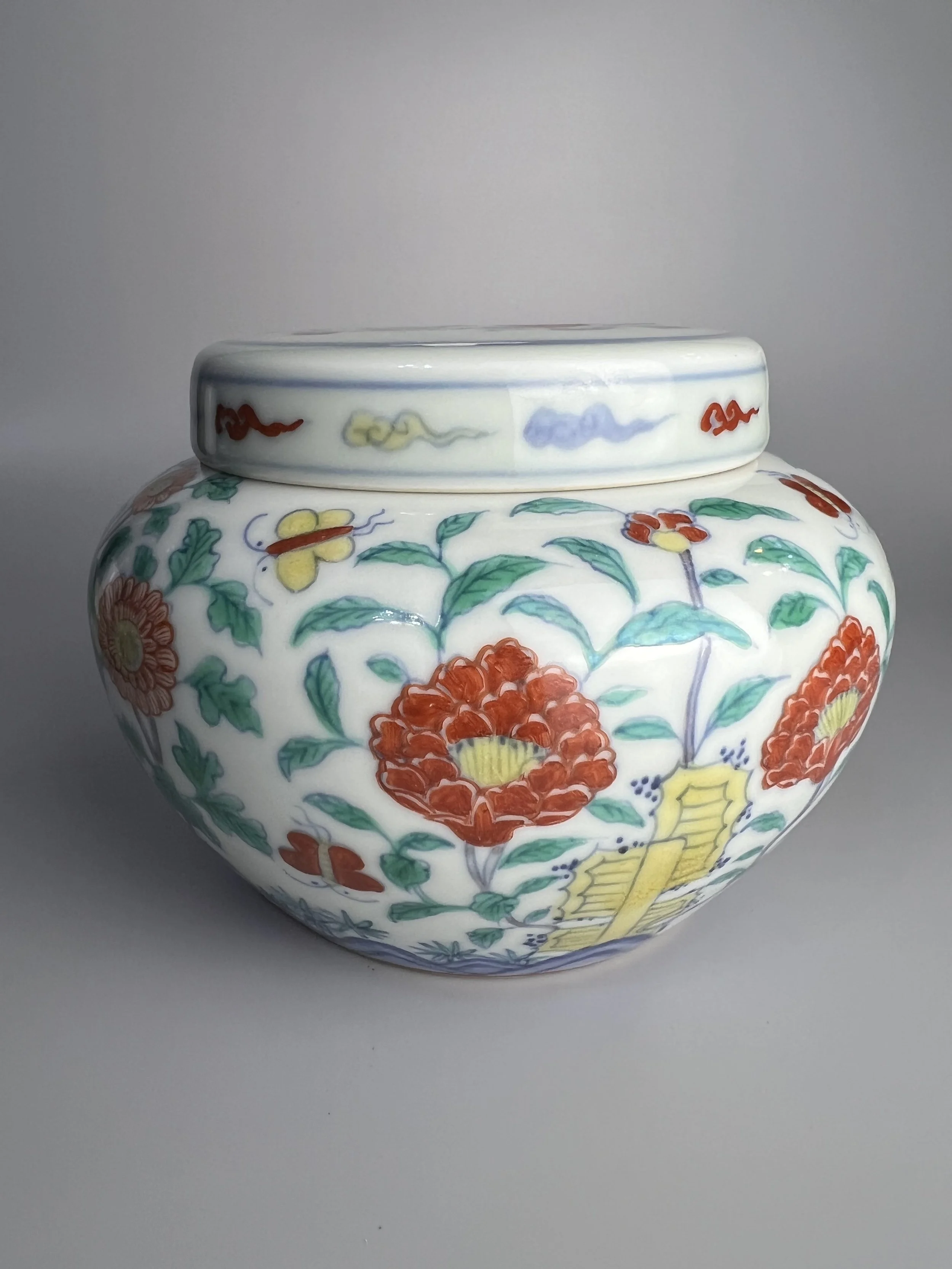 Image 1 of 15
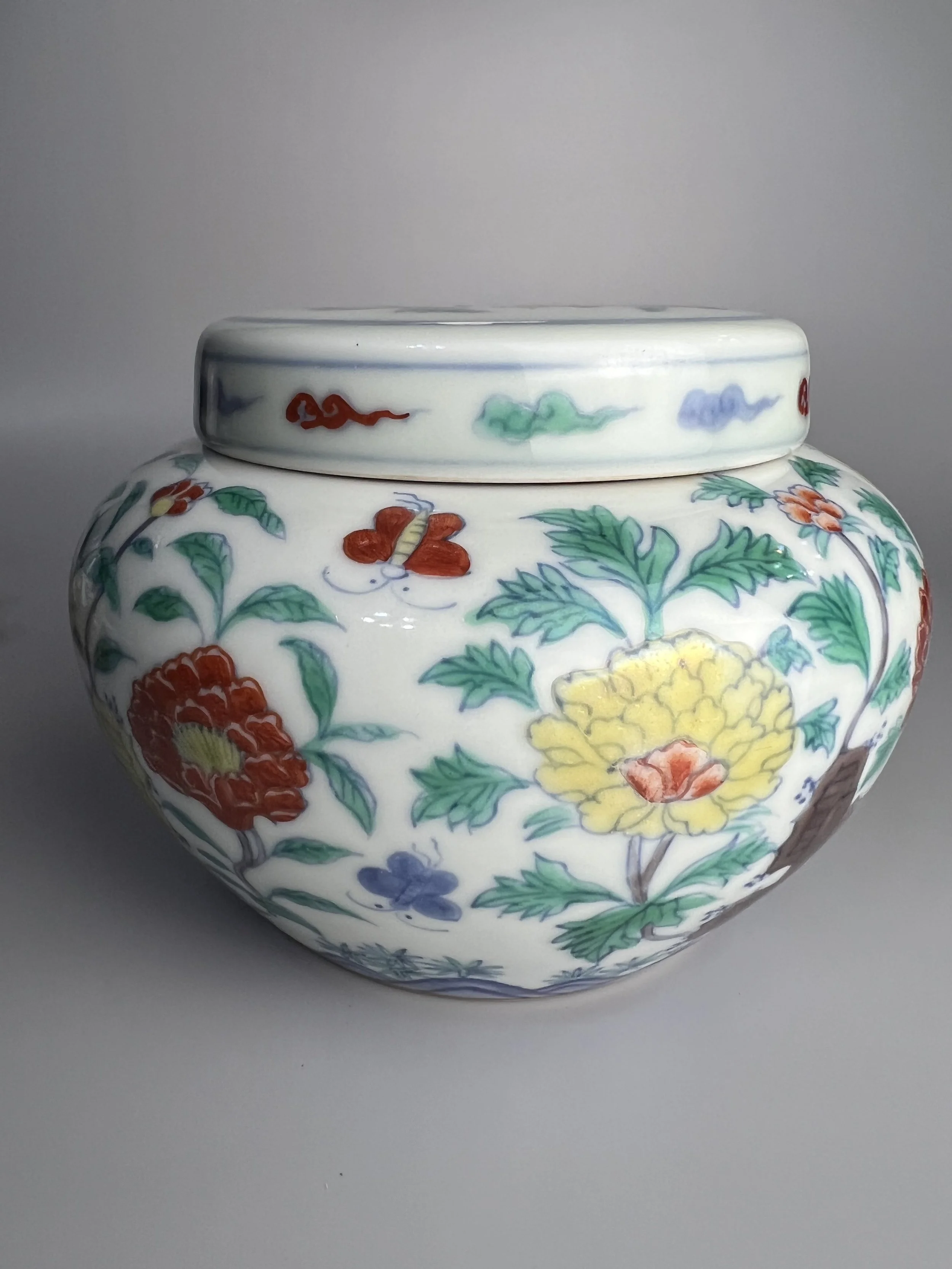 Image 2 of 15
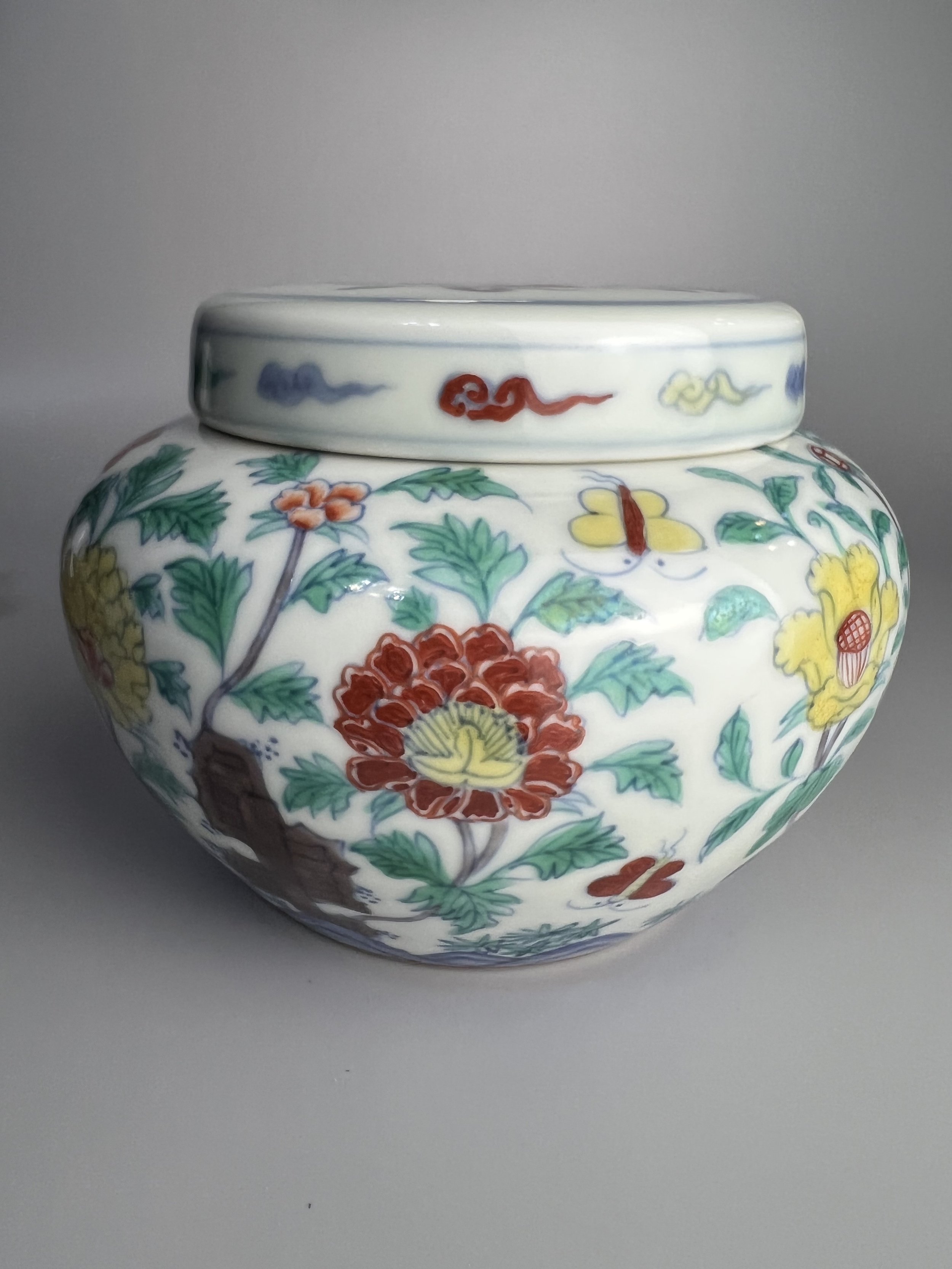 Image 3 of 15
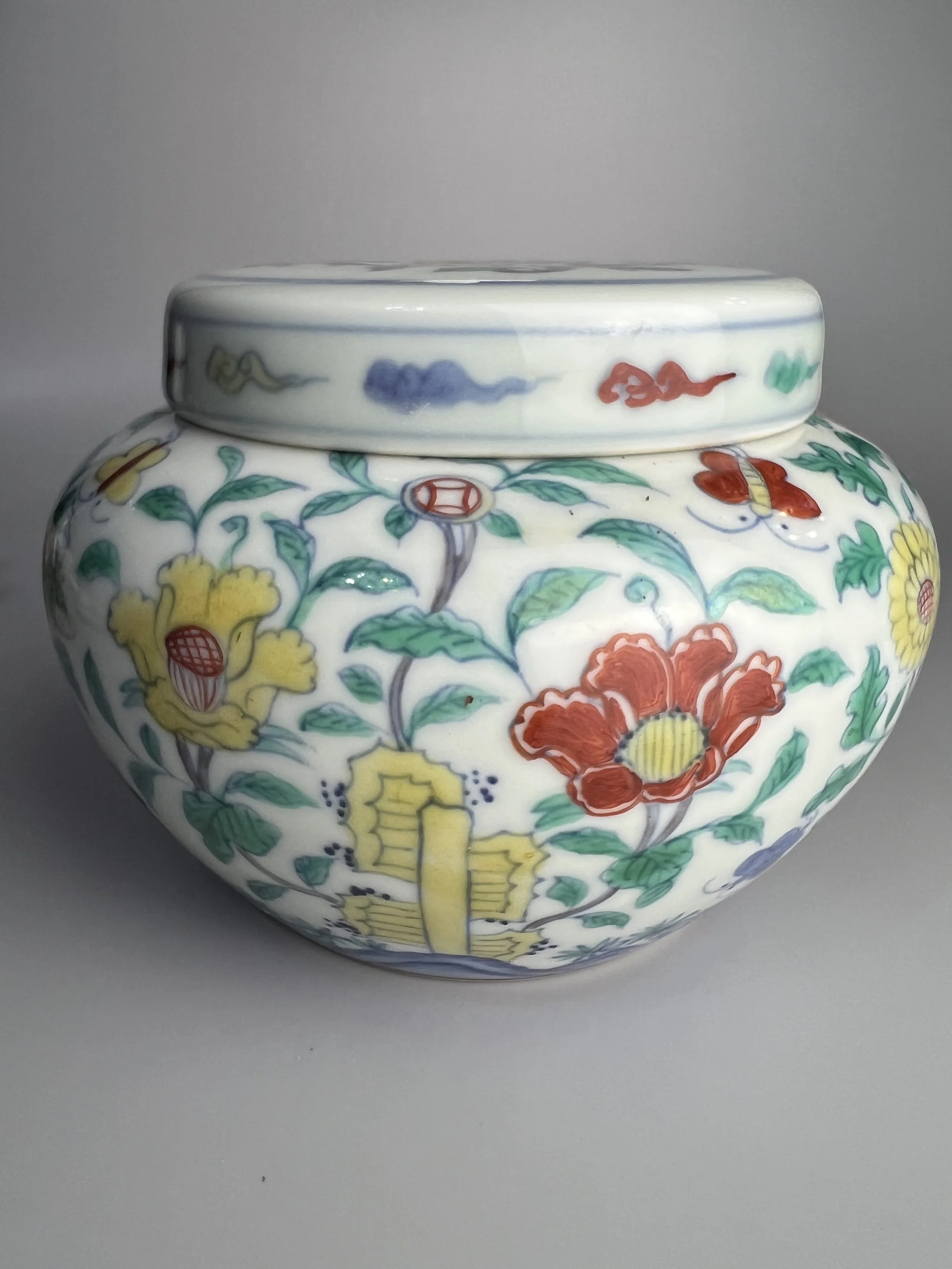 Image 4 of 15
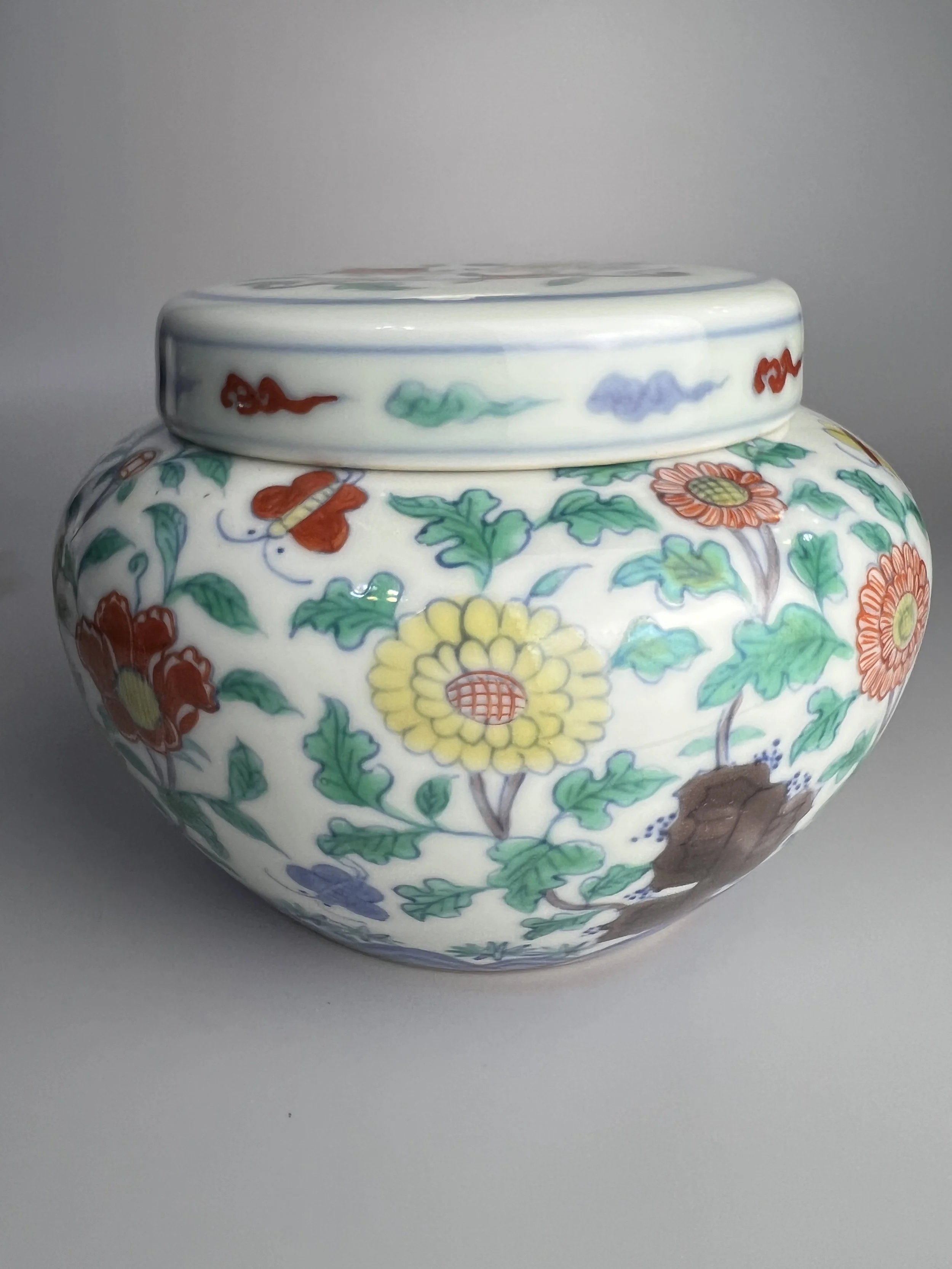 Image 5 of 15
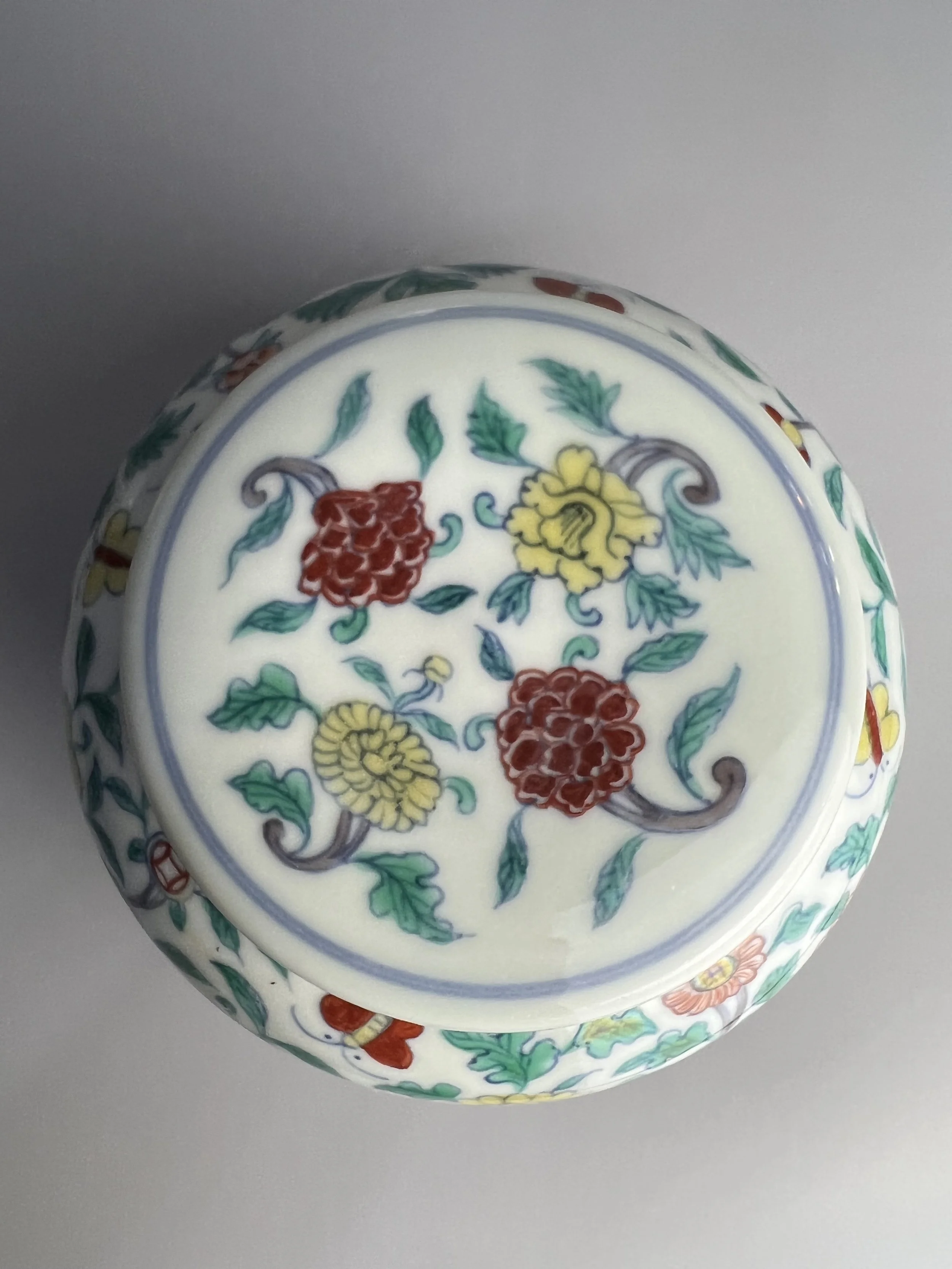 Image 6 of 15
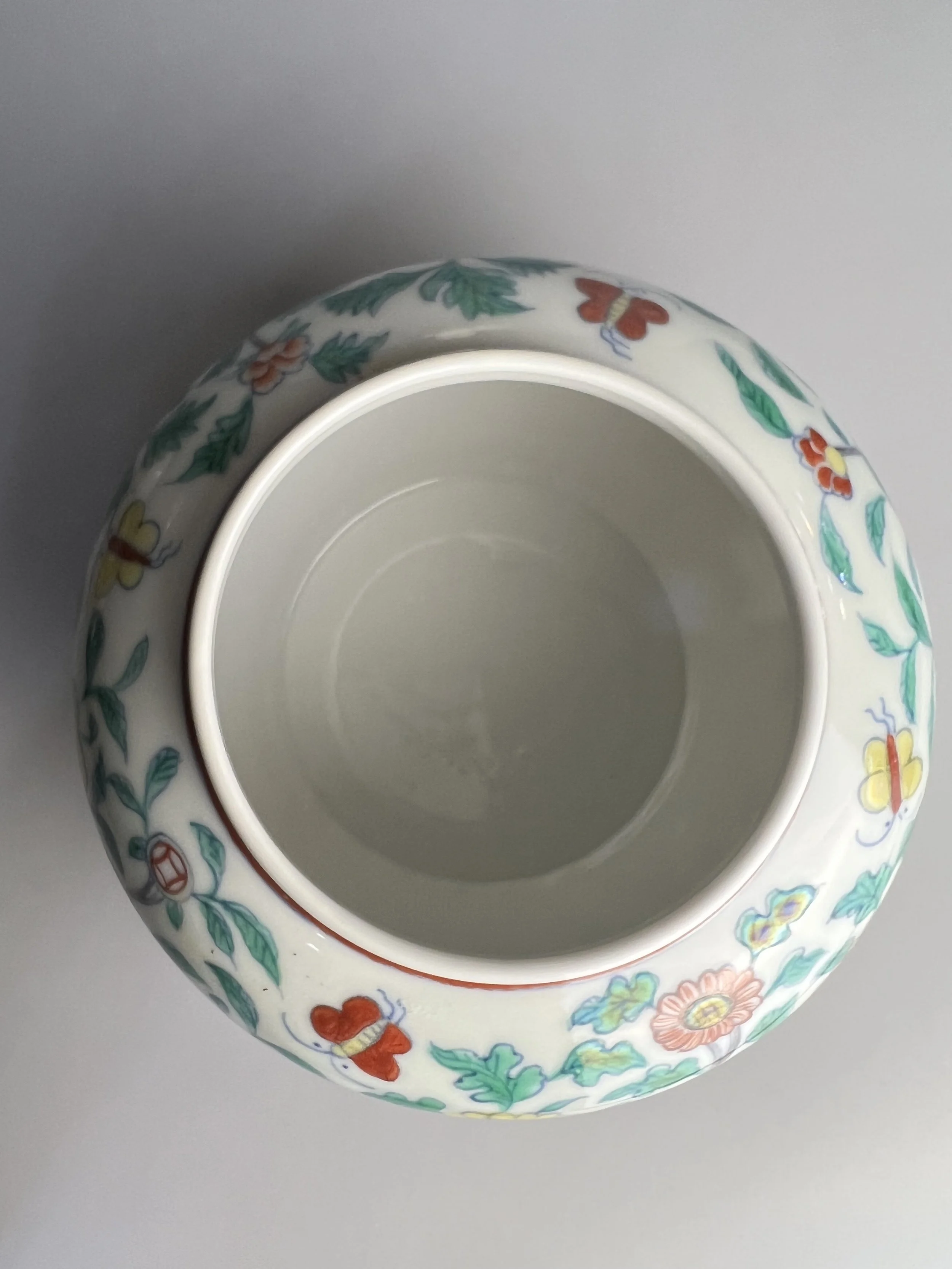 Image 7 of 15
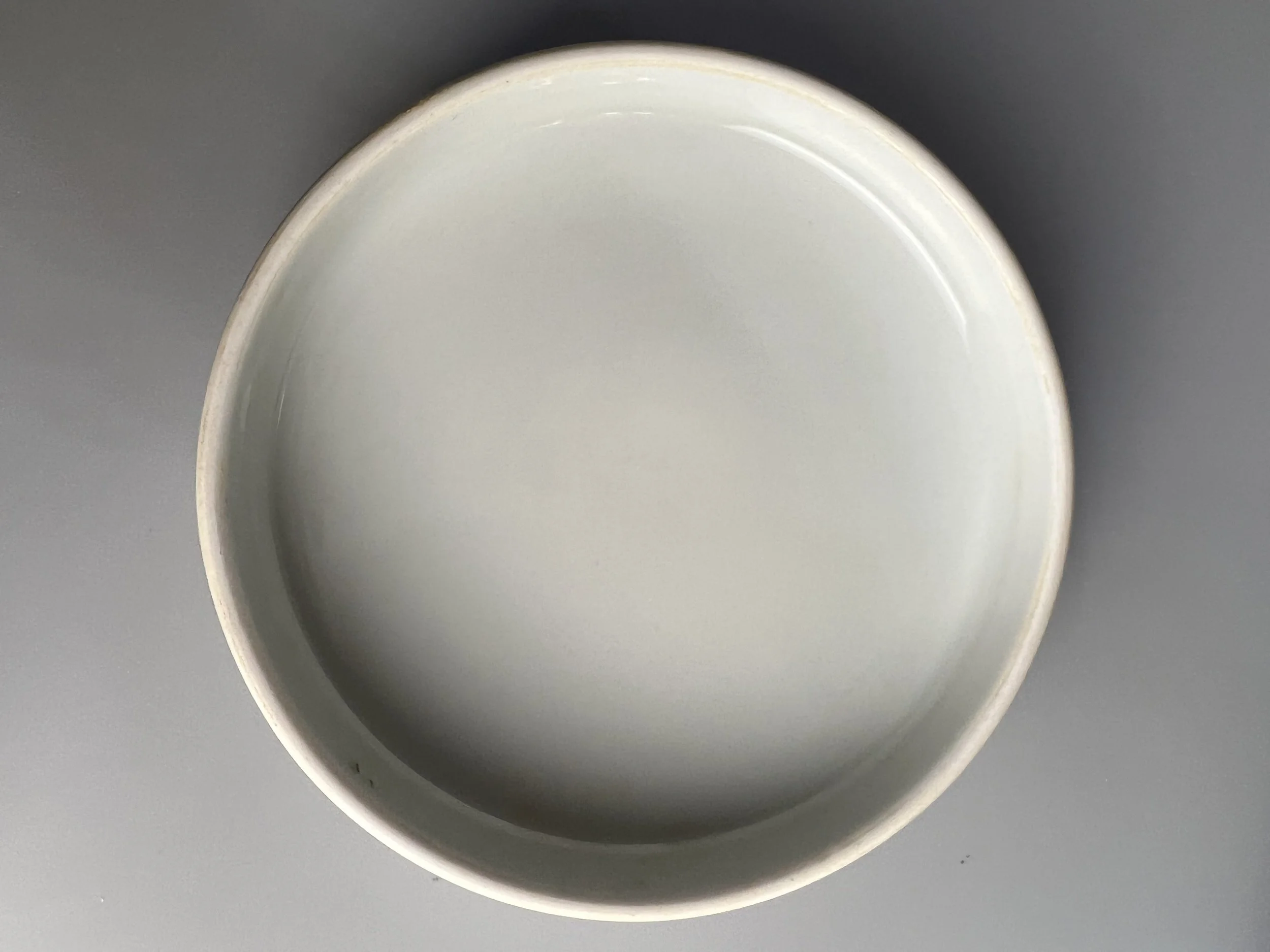 Image 8 of 15
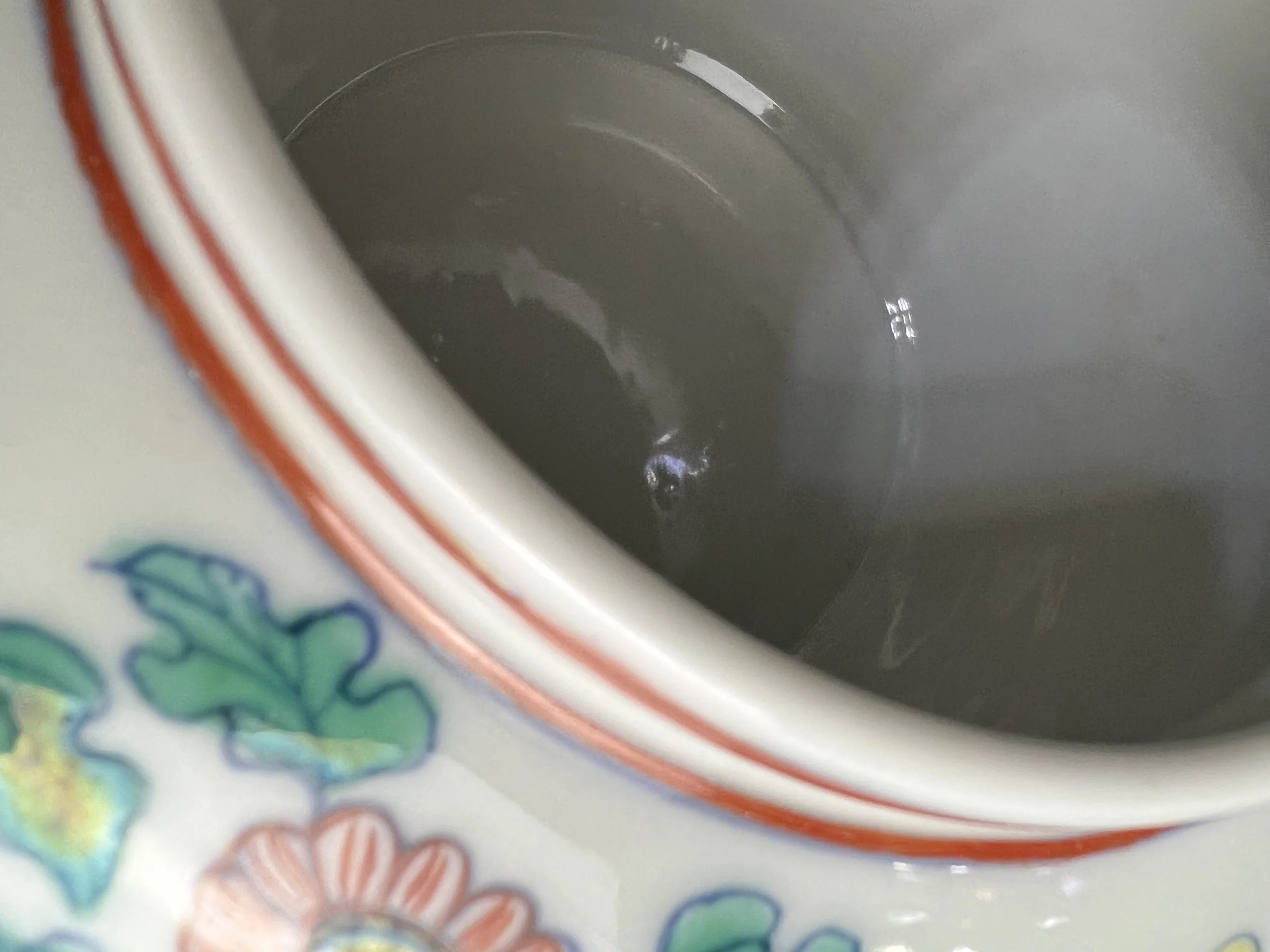 Image 9 of 15
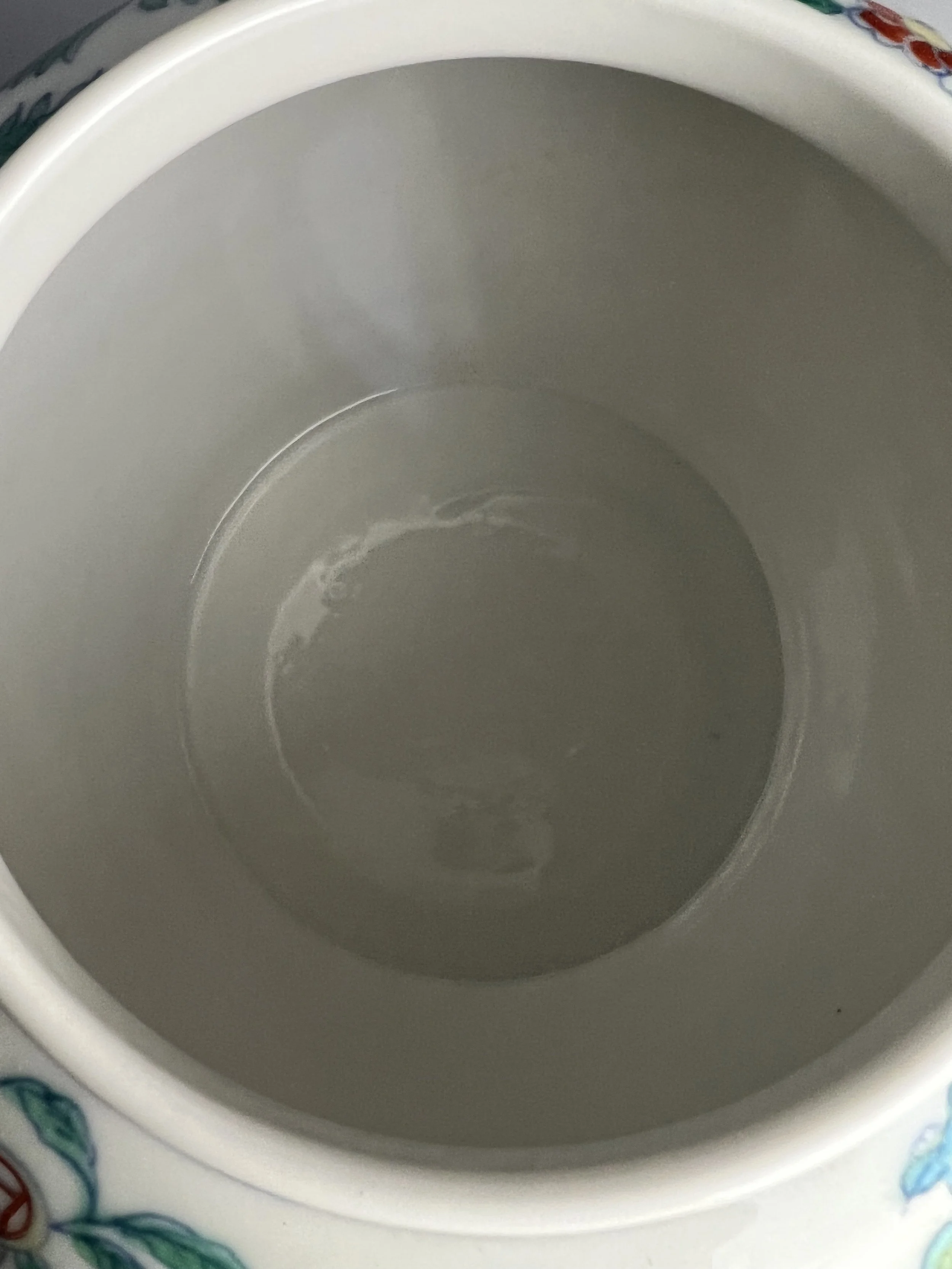 Image 10 of 15
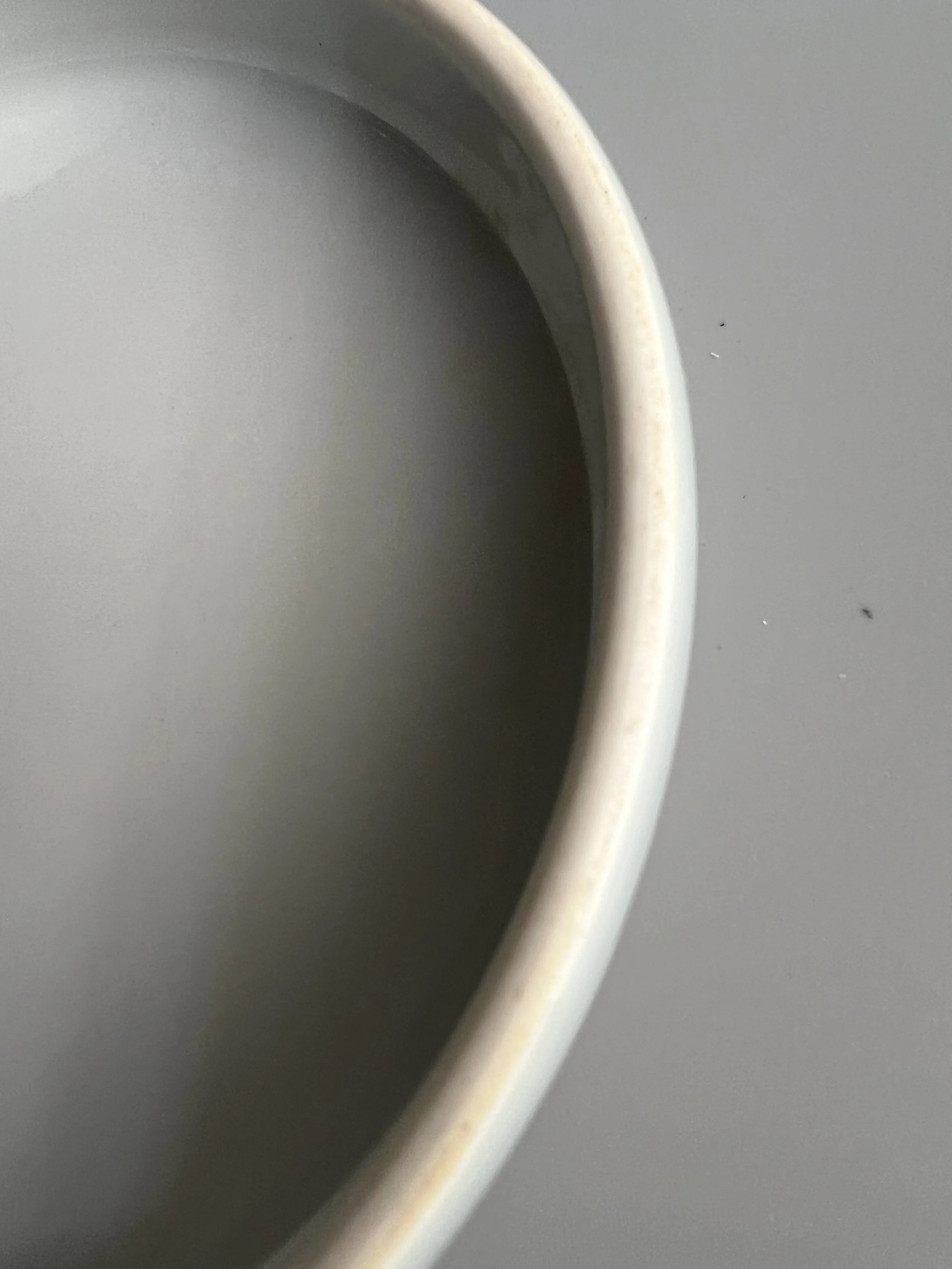 Image 11 of 15
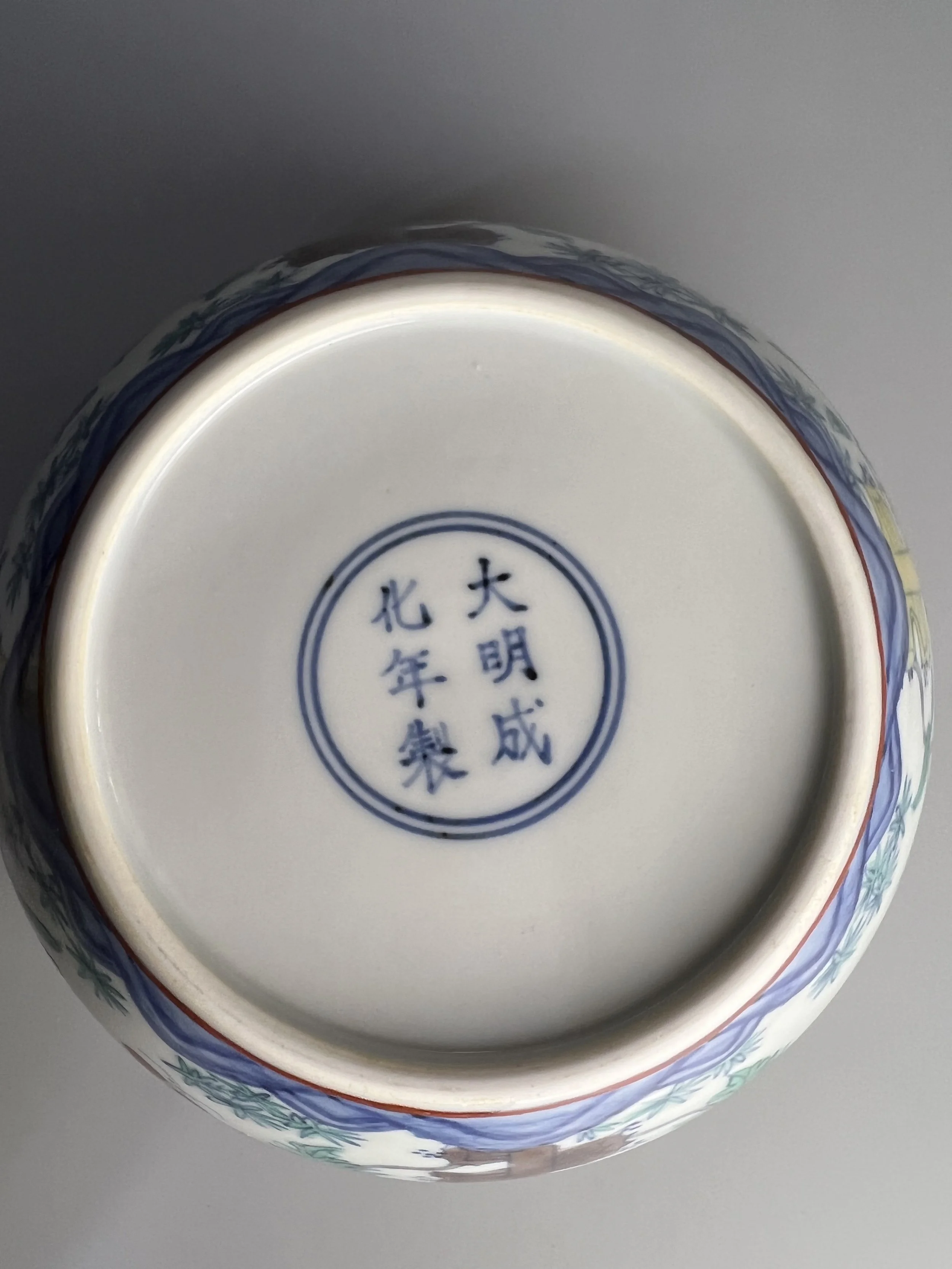 Image 12 of 15
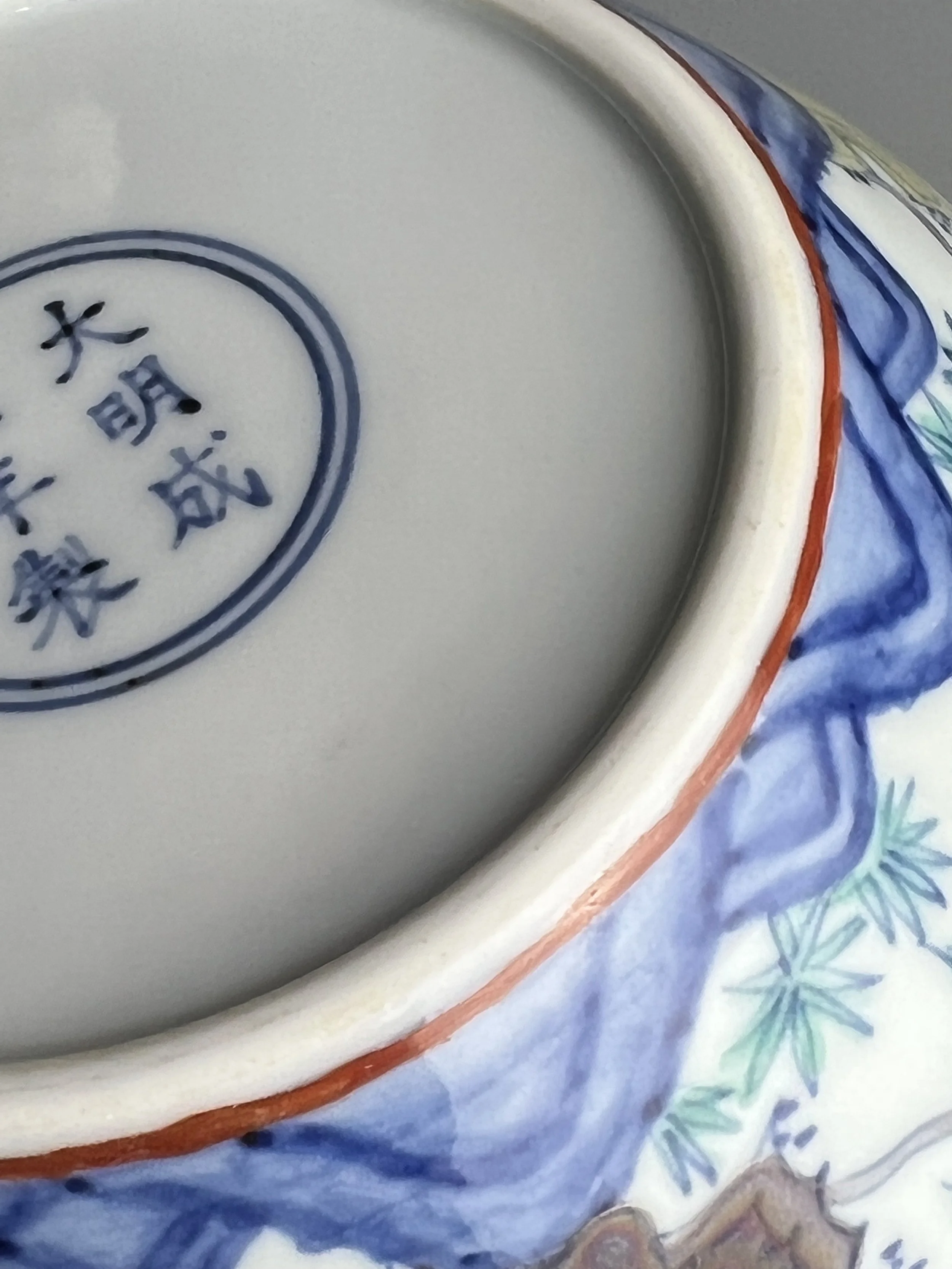 Image 13 of 15
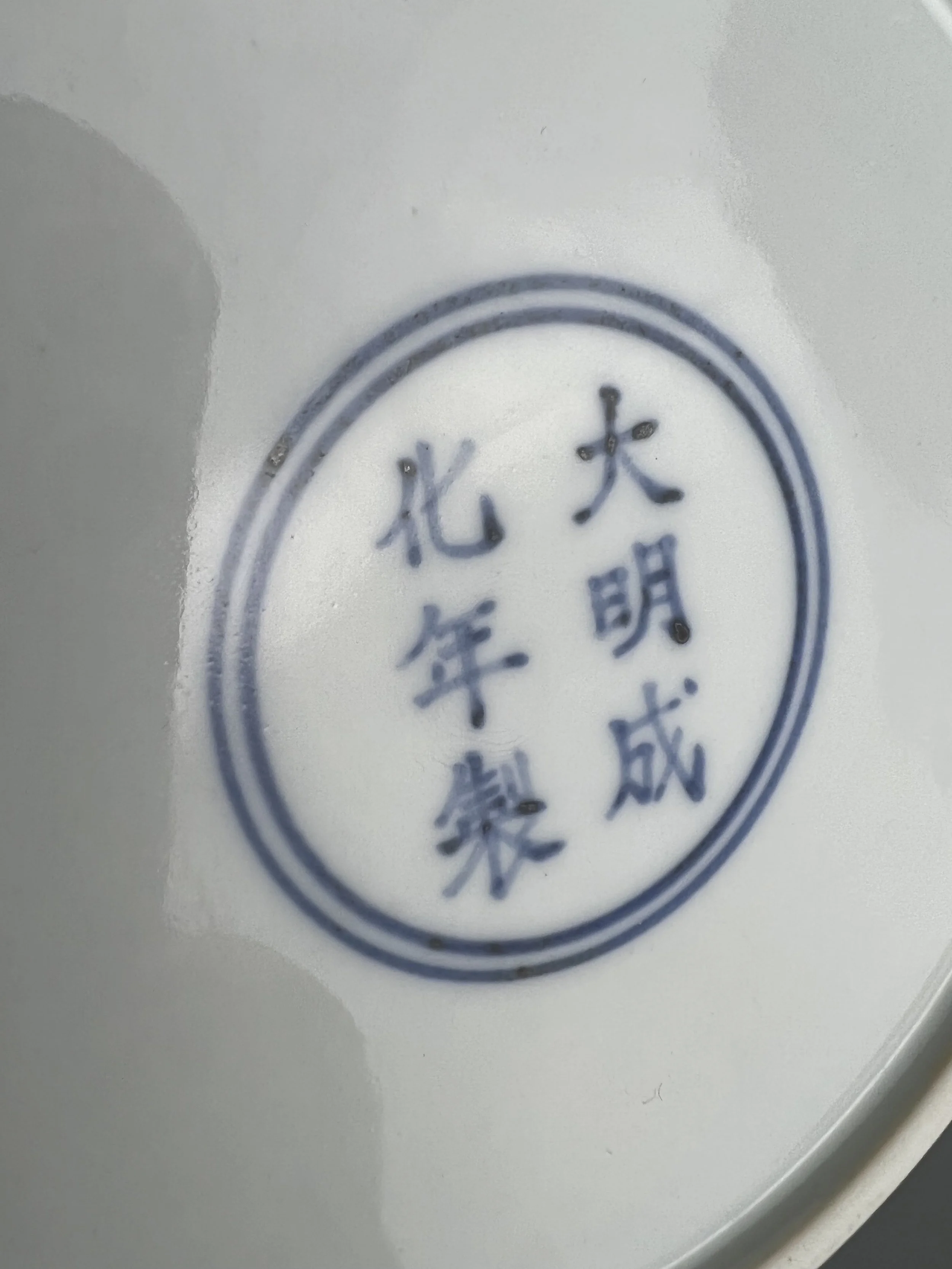 Image 14 of 15
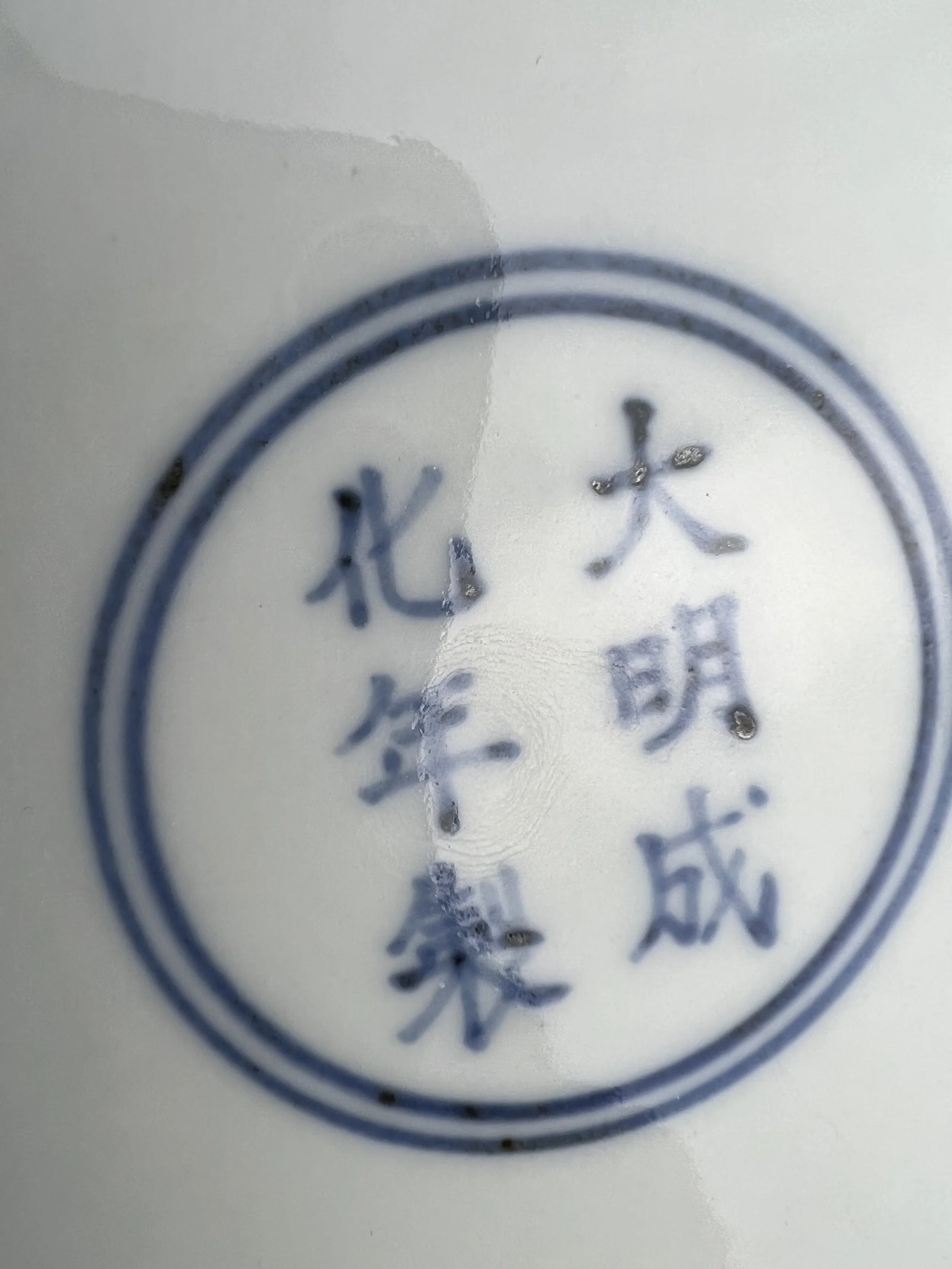 Image 15 of 15