 Image 1 of 12
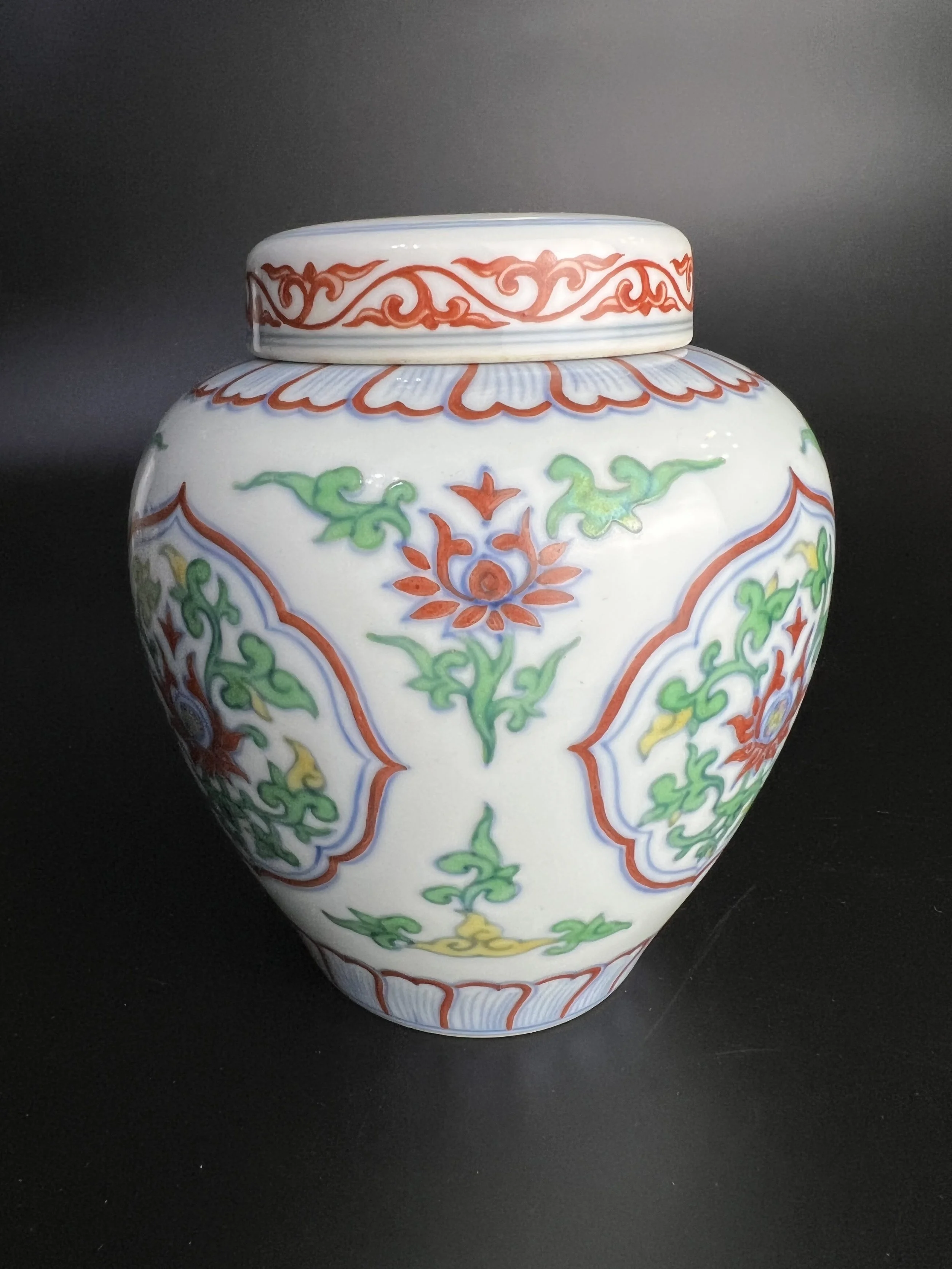 Image 2 of 12
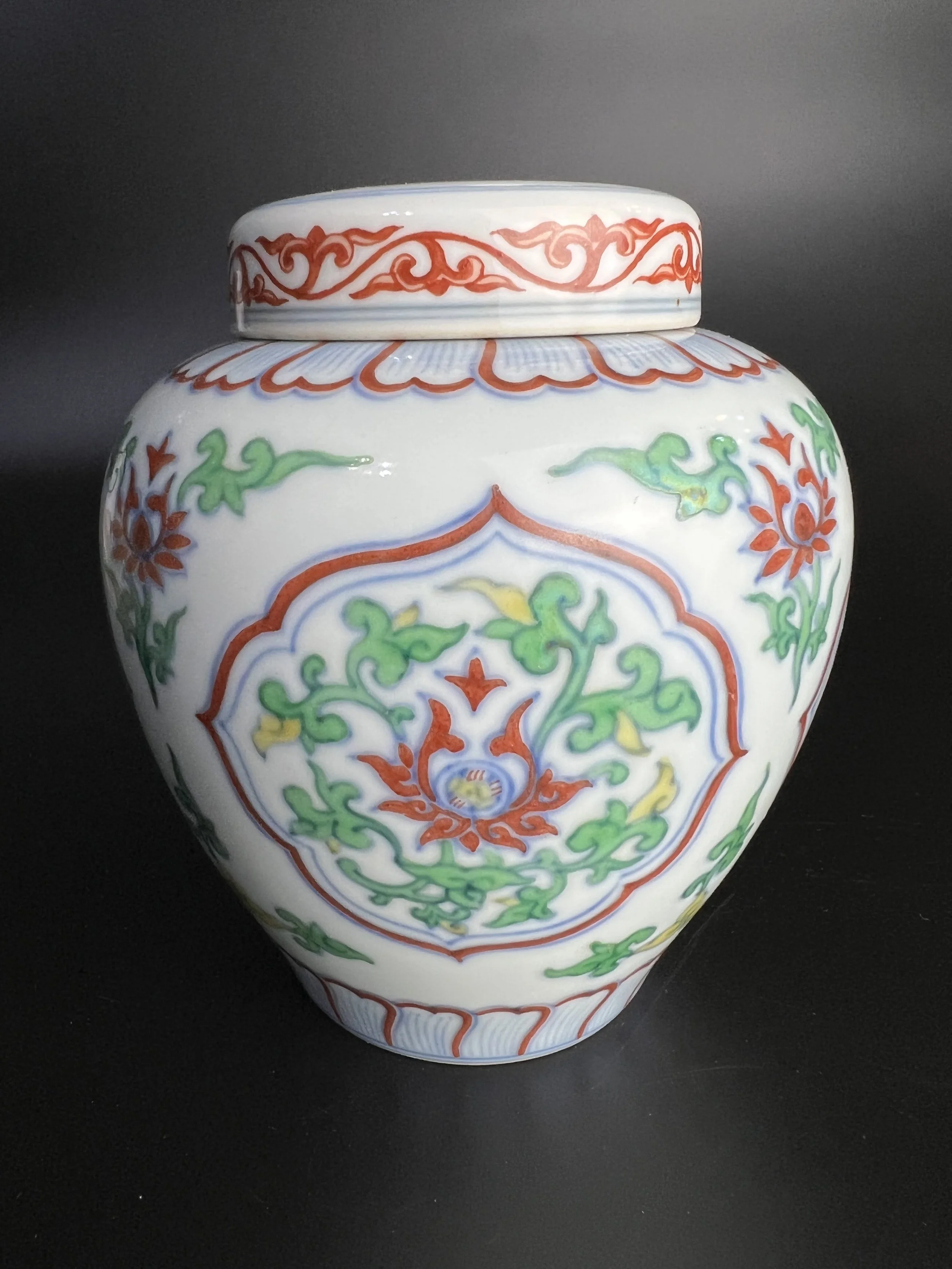 Image 3 of 12
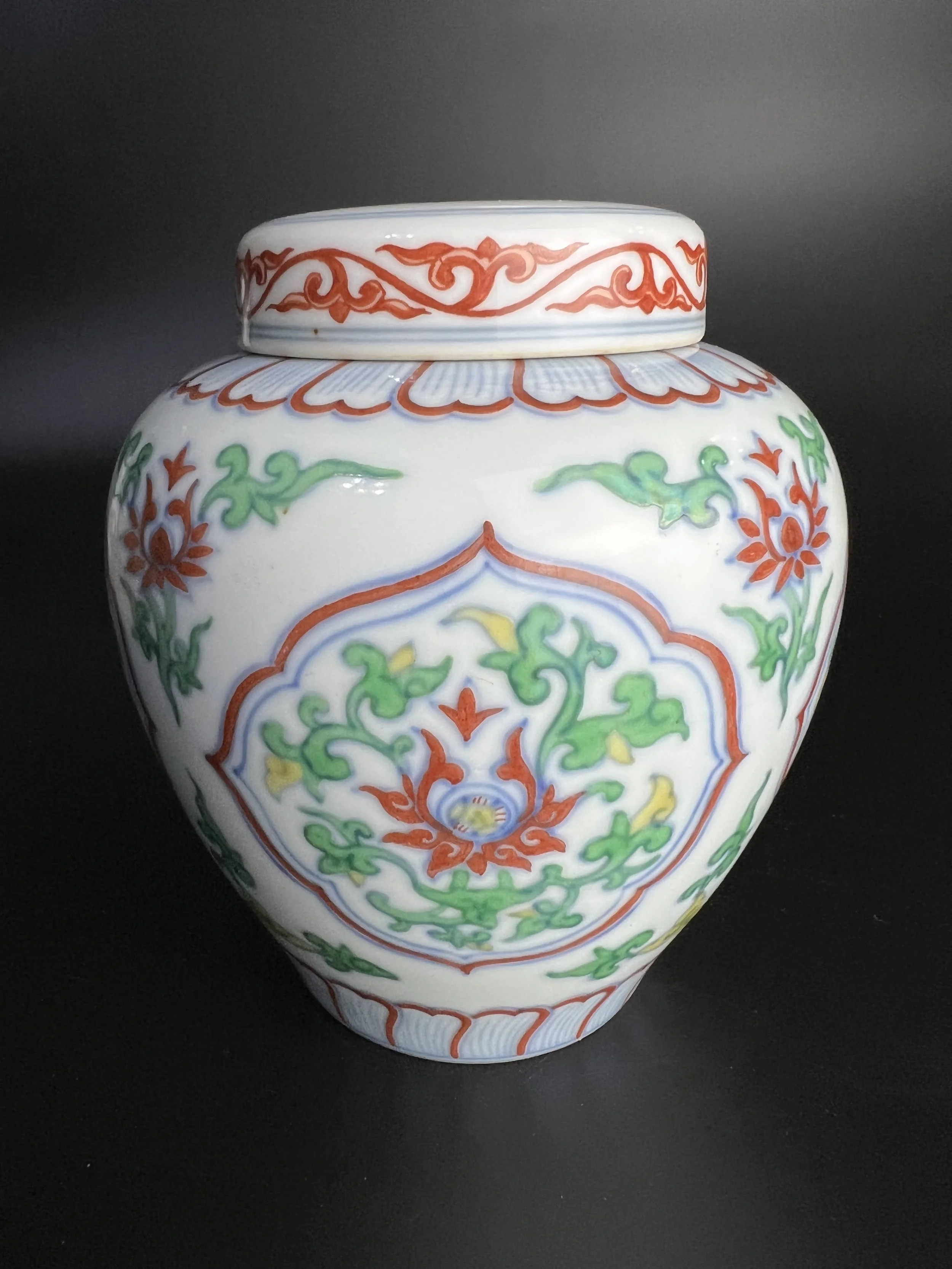 Image 4 of 12
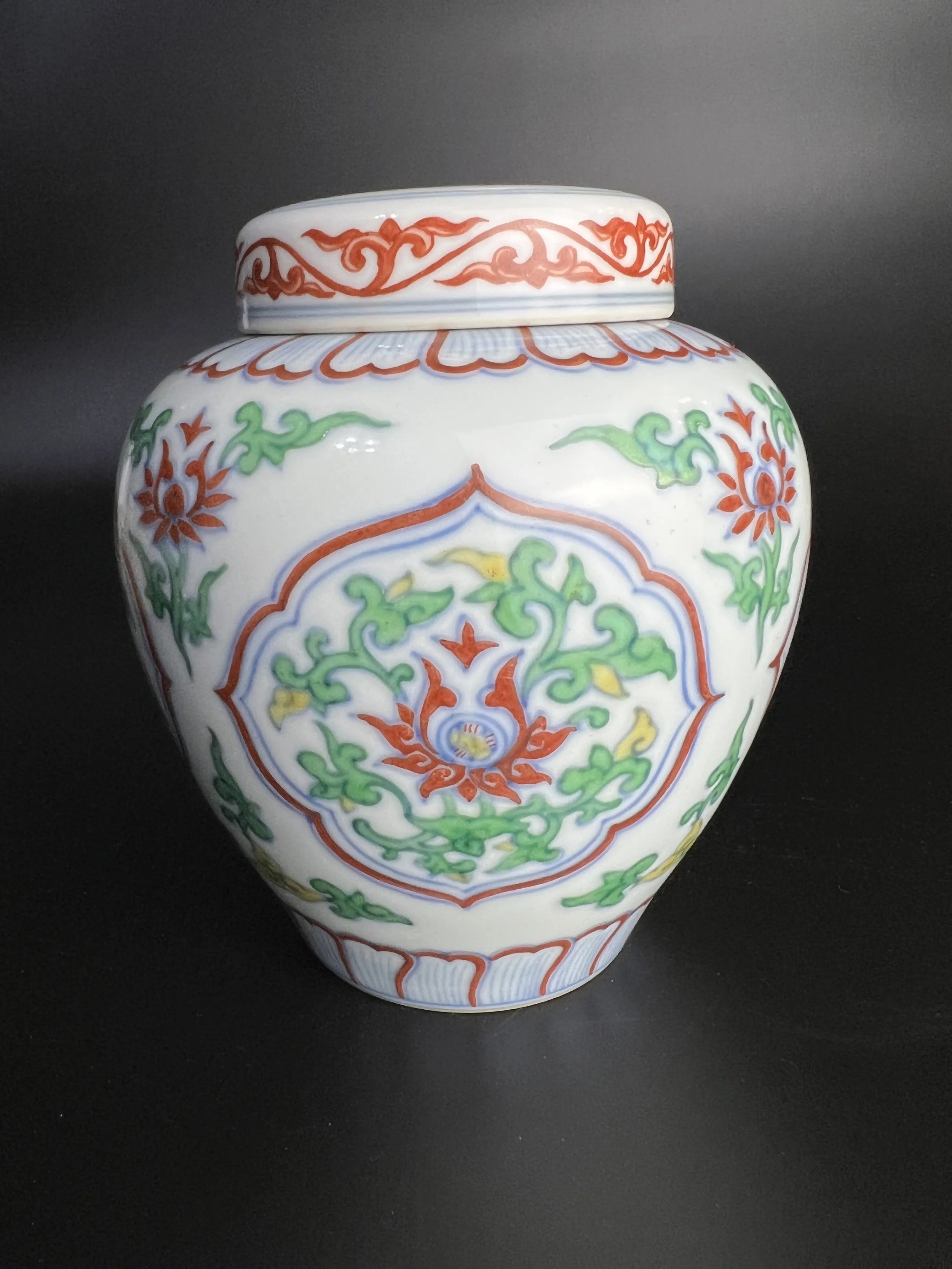 Image 5 of 12
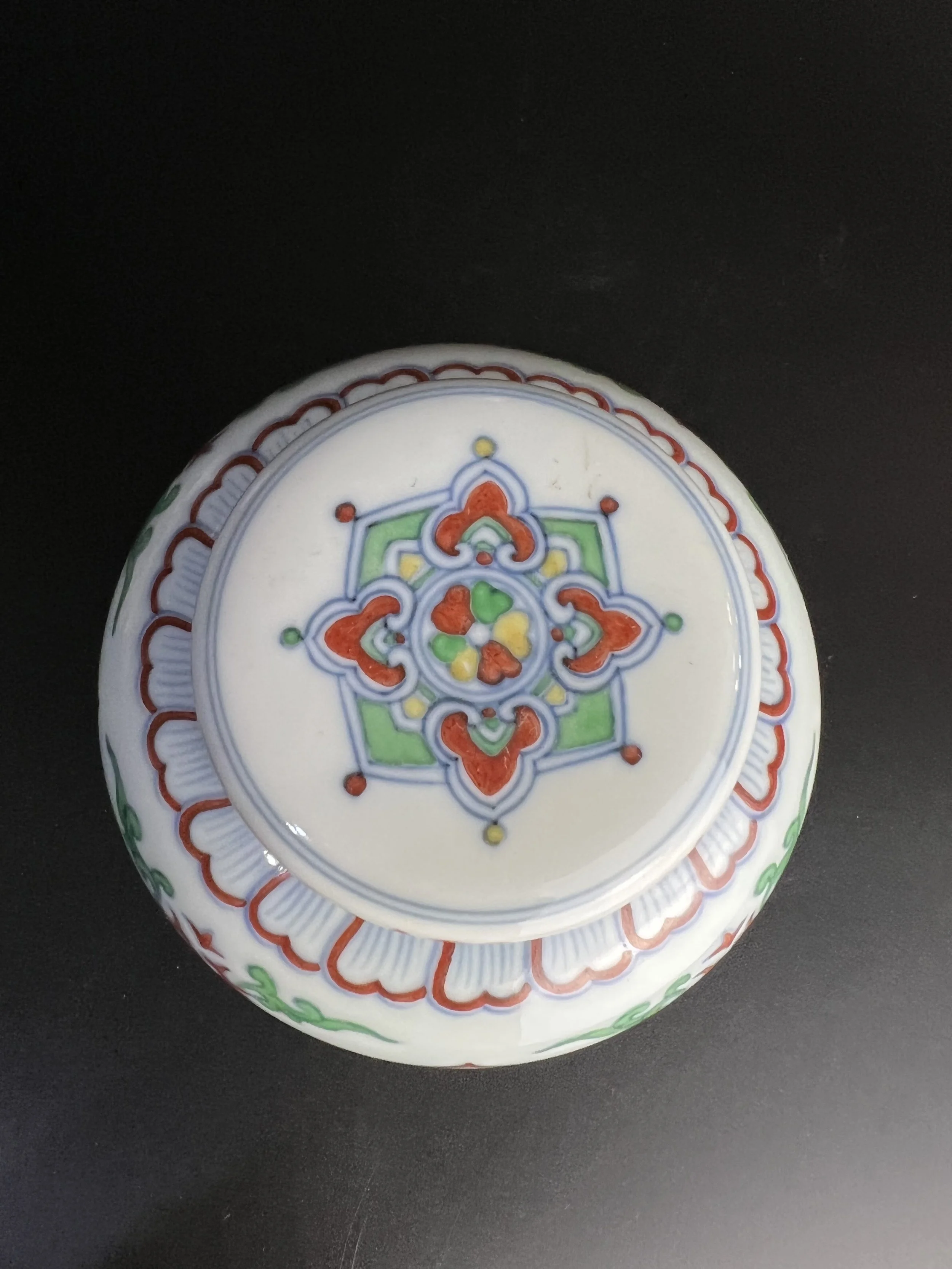 Image 6 of 12
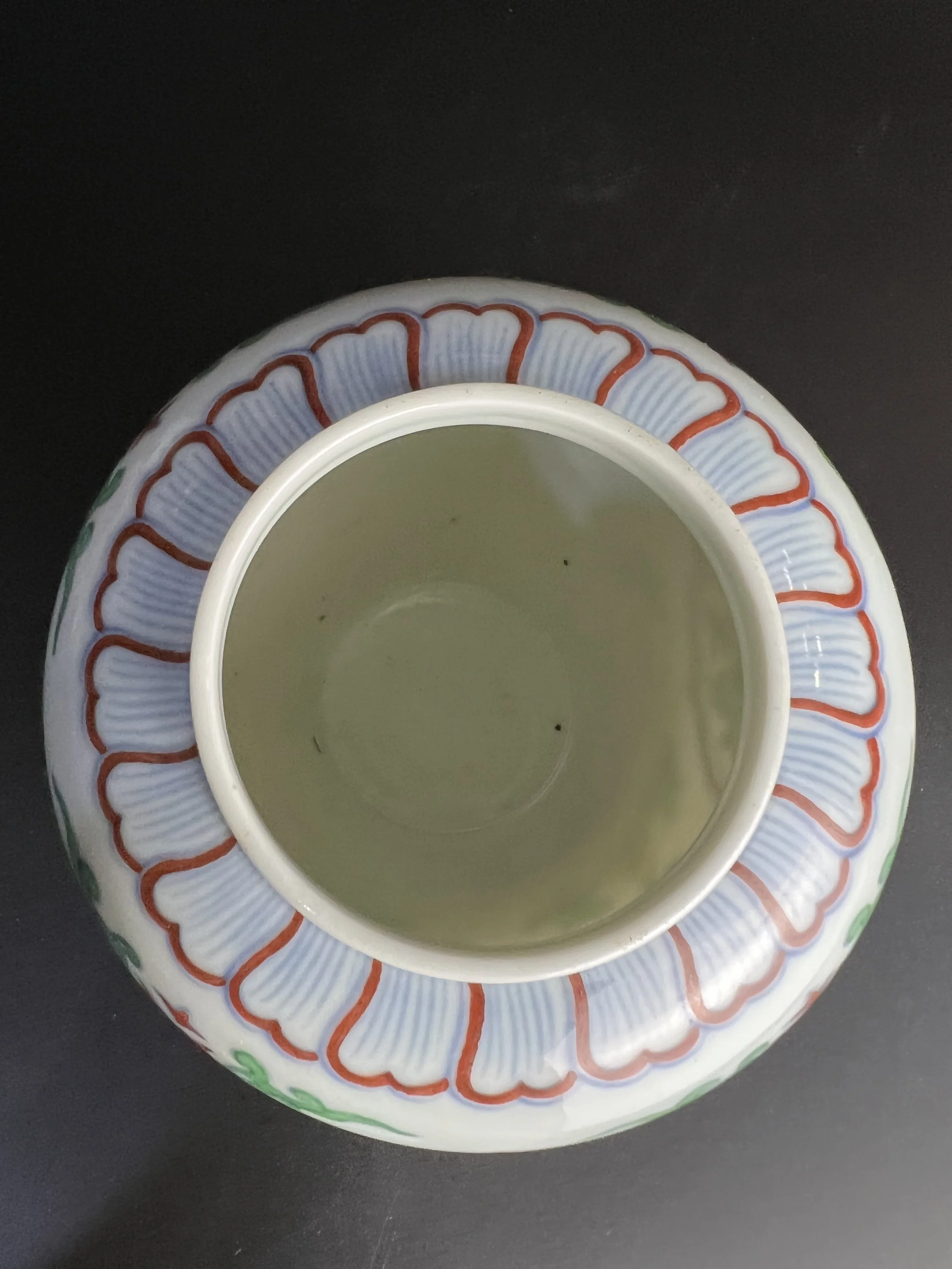 Image 7 of 12
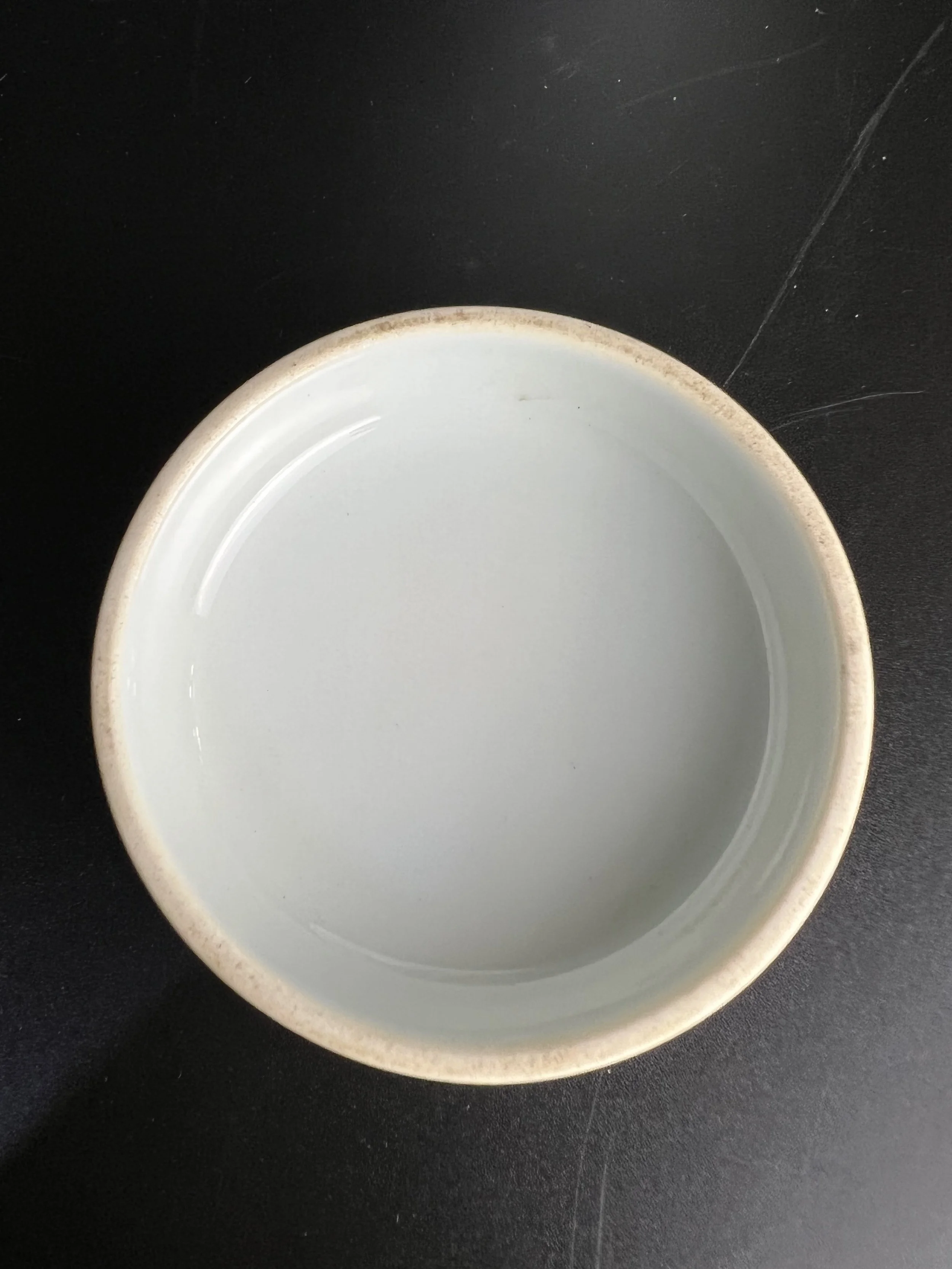 Image 8 of 12
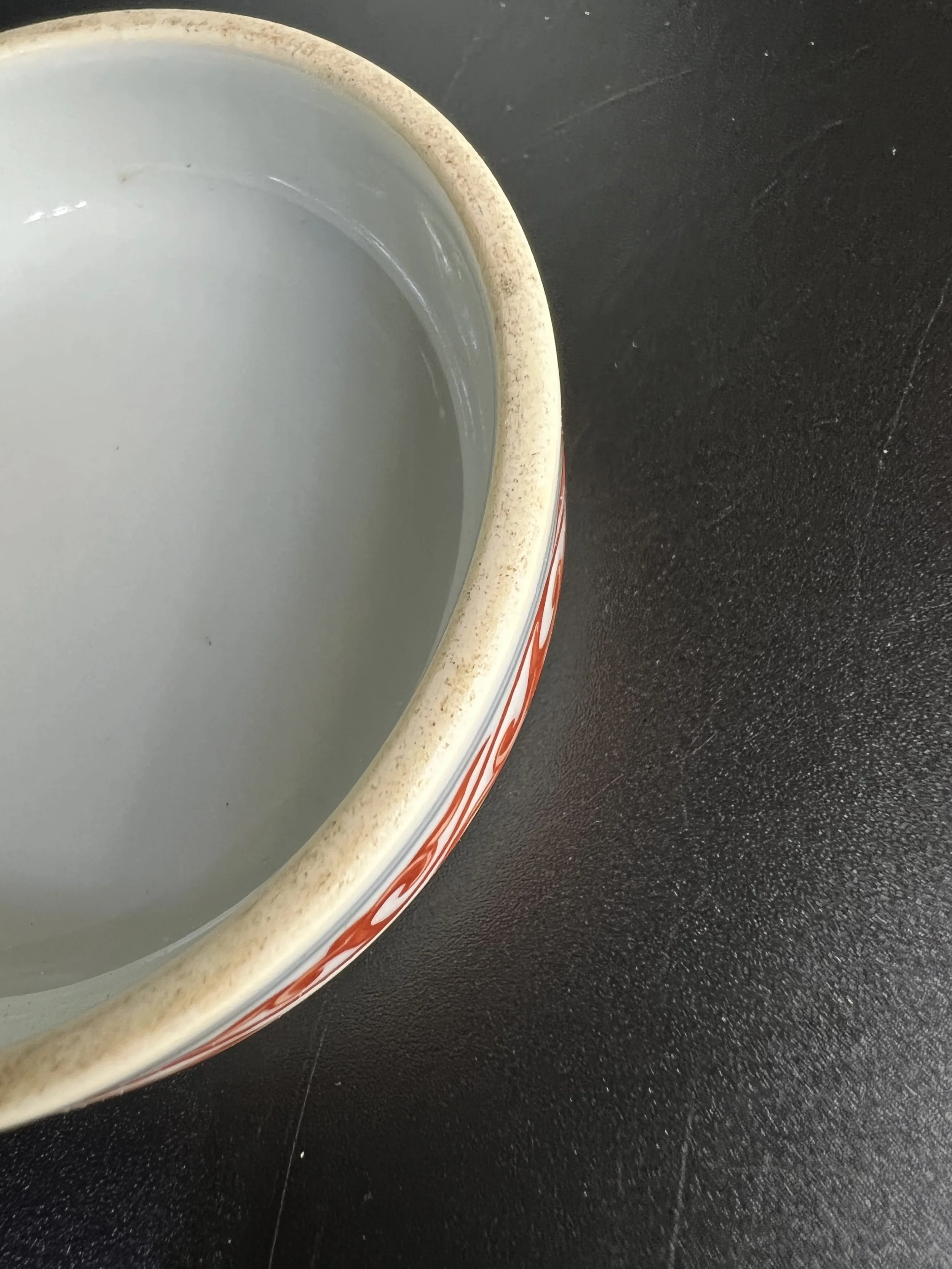 Image 9 of 12
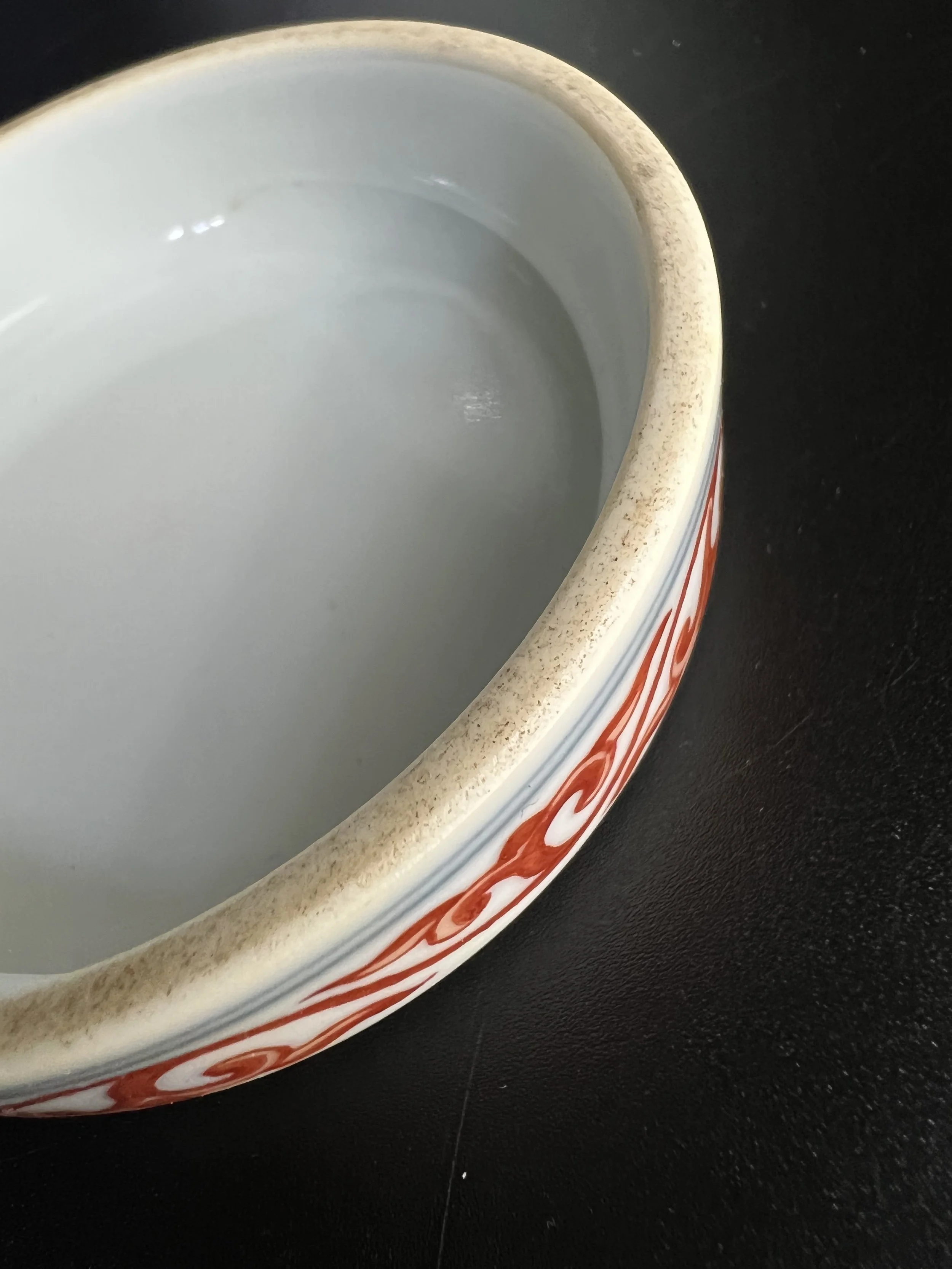 Image 10 of 12
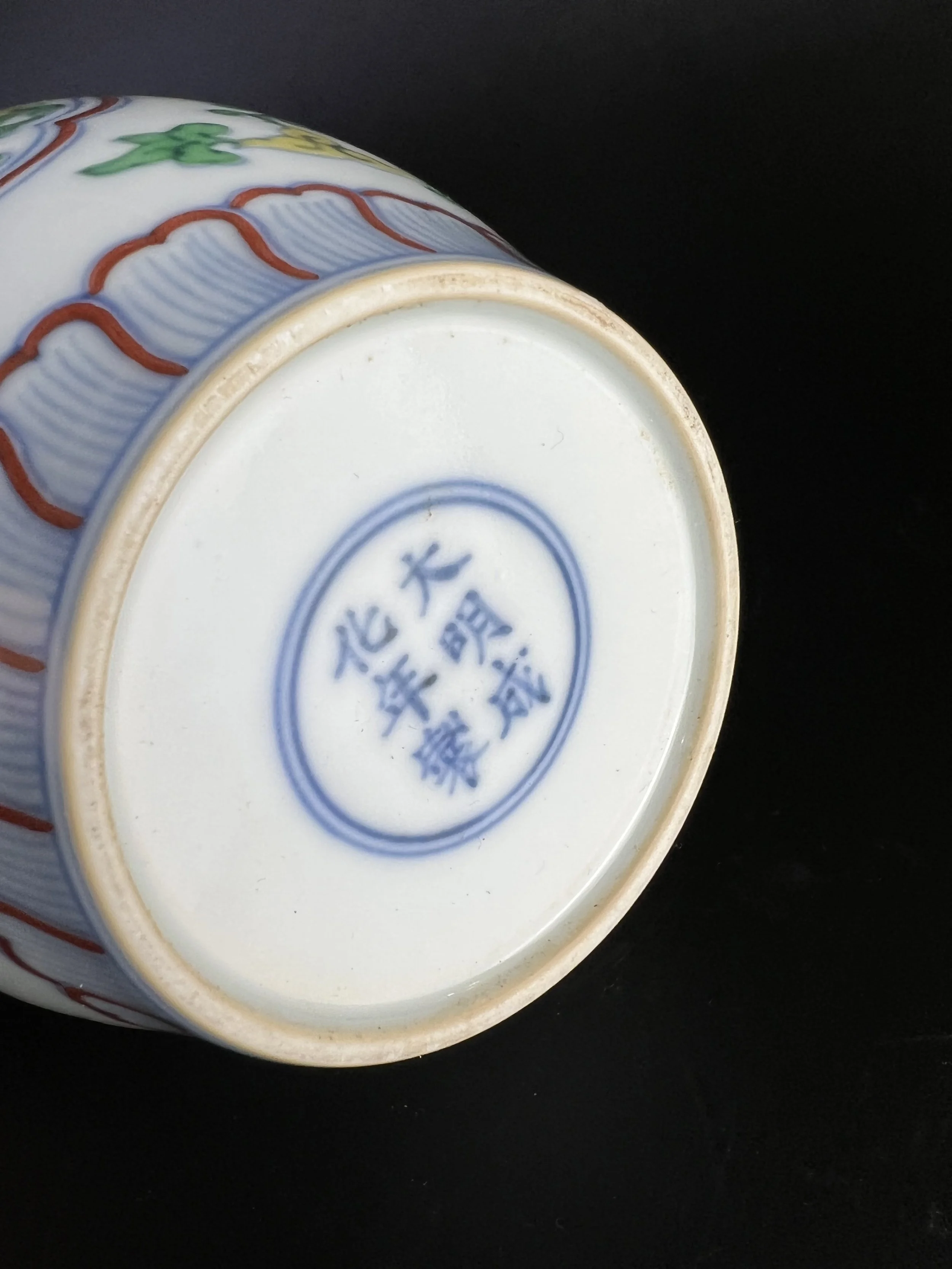 Image 11 of 12
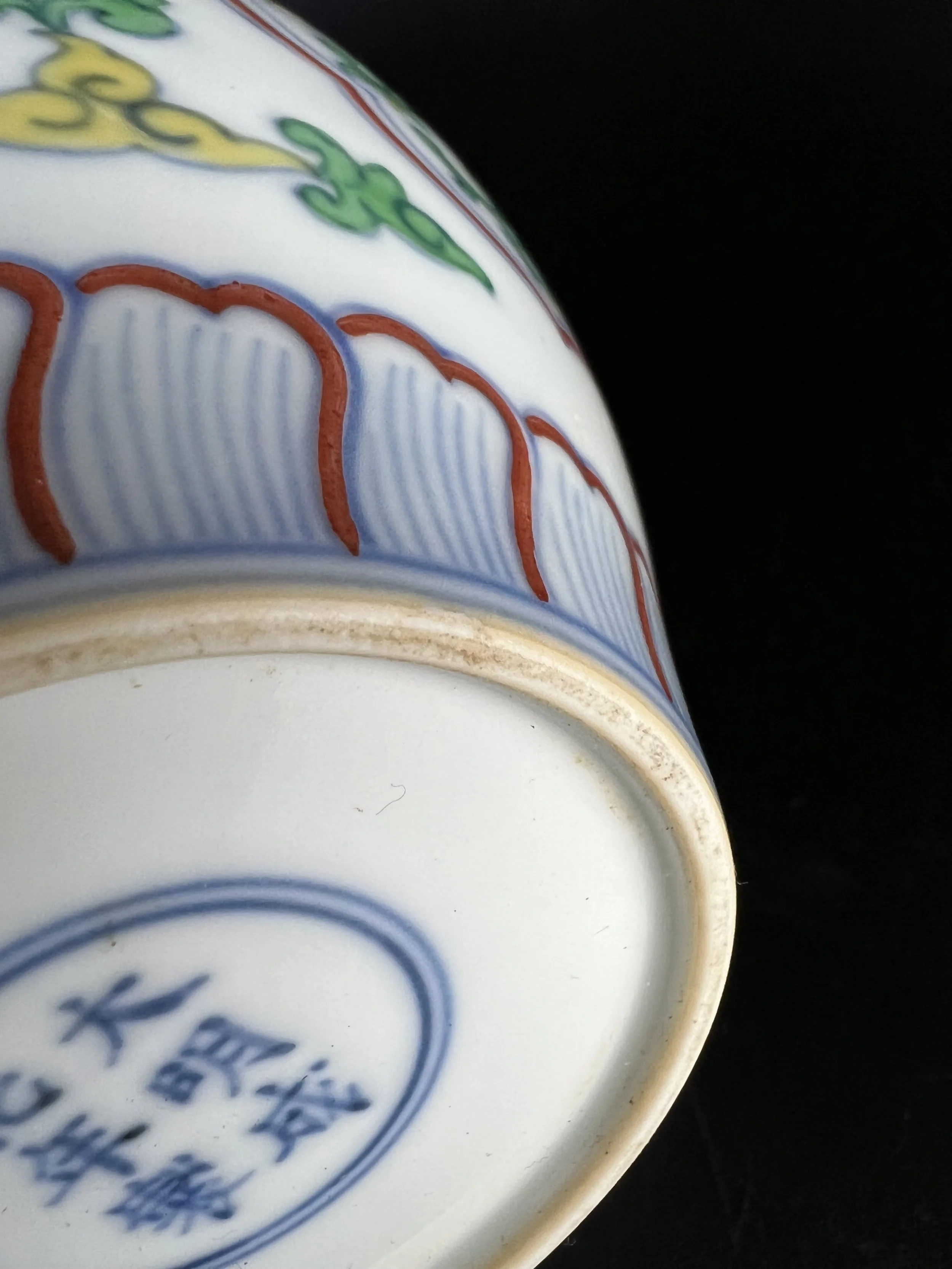 Image 12 of 12
Appreciation of a Ming Dynasty Chenghua Doucai Covered Jar with Begonia-Shaped Mouth and Baoxiang Floral Pattern
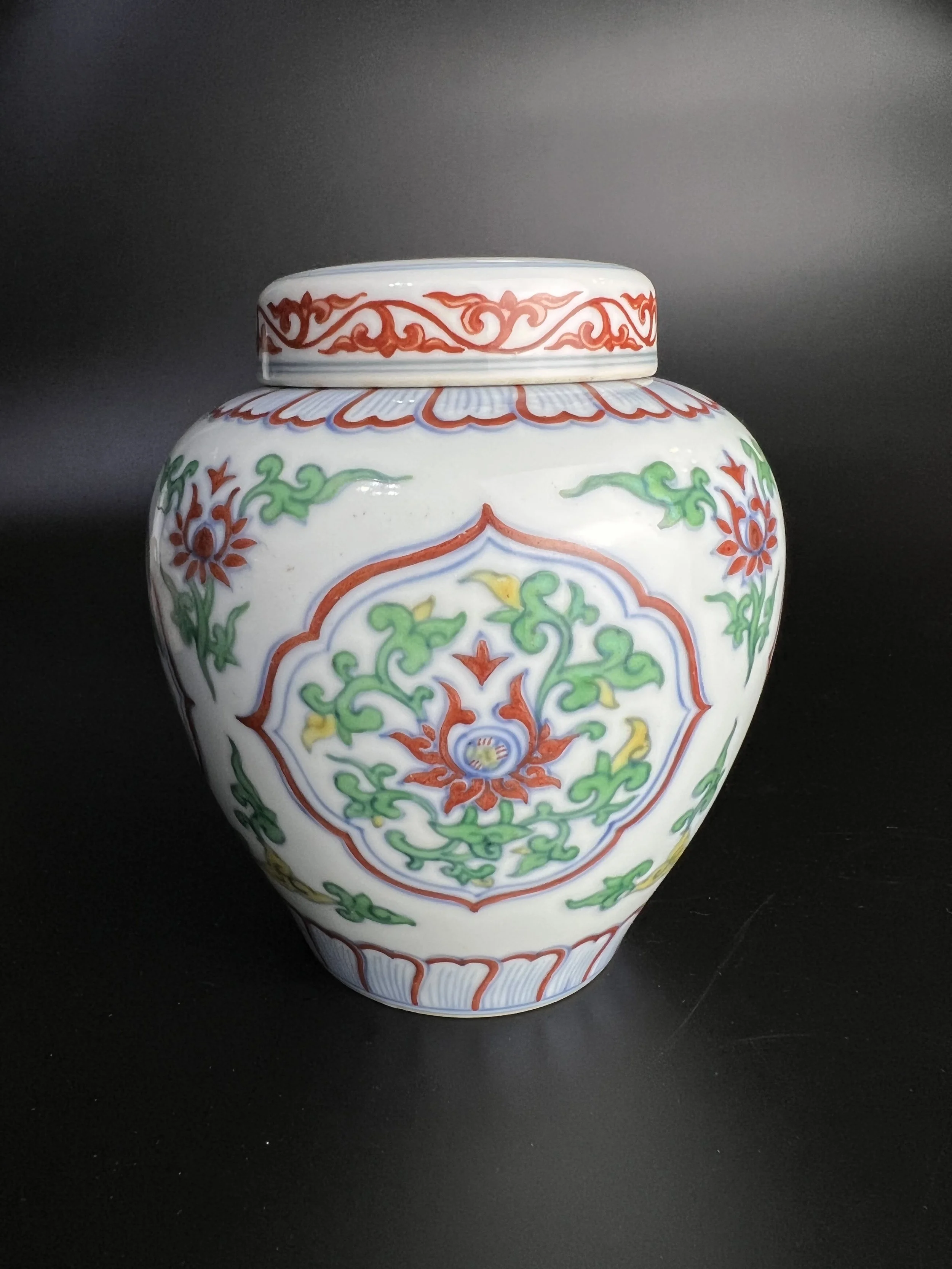
This jar is a珍罕 masterpiece of Ming Dynasty Chenghua official kiln Doucai porcelain. With a body diameter of twelve centimeters and a total height of sixteen centimeters, its form is端庄秀美, its decoration繁丽精妙. It features begonia-shaped panels as the framework for its imagery, with baoxiang flowers as the soul of its ornamentation. The red, yellow, and green enamels complement each other brilliantly. The composition is rigorous yet ingeniously conceived. On the base, within a double blue circle, is inscribed the six-character regular script reign mark "Da Ming Chenghua Nian Zhi" (Made in the Chenghua reign of the Great Ming). This jar can be considered a典范 that unites the beauty of form, the richness of decoration, and the vibrancy of color within Chenghua Doucai.
I. Form and Structure: The Begonia as Mouth, Concealing Precious Radiance
The jar's form is elegantly slender, its lines流畅圆润. The shoulders are丰腴, the belly gradually tapers, and it rests on a shallow ring foot. The overall proportions are well-balanced, embodying the typical character of Chenghua porcelain: "exquisite and灵秀."
Jar Body: The most captivating feature of the body lies in its panel design. The main decoration on the belly consists of four groups of red begonia-shaped panels. The begonia curves are柔美, their outlines traced in red enamel, resembling four open painted windows that draw the viewer's eye into the meticulously painted begonia scenes within. This "window panel" technique creates distinct decorative layers and highlights the central theme.
Jar Lid: The lid design is equally exquisite. The top is painted with four groups of 'Ruyi' cloud-head motifs arranged in a band, symbolizing "auspiciousness as one wishes." At the very center of the lid, a five-petaled flower is painted using red, green, and yellow enamels—some petals colored in red, others tinged with yellow, and leaves set off in green. The colors are bright and vivid, echoing the decoration on the jar body.
Size Comparison: With a body diameter of 12 cm and a height of 16 cm, its proportions are slightly smaller than the Chenghua Doucai baoxiang floral covered jar (height 19.7 cm) in the collection of the Palace Museum, placing it in the medium range for Chenghua Doucai jars, which further emphasizes its exquisite elegance.
II. Decorative Layout: Distinct Layers, Profound Meaning
The jar's decoration is divided into four horizontal registers from top to bottom, each separated by blue-and-white弦纹 or painted borders, creating an orderly composition.
(A) Shoulder and Base: Lotus Petal Borders, Enclosing the Theme
The shoulder area and the area near the base are adorned with stylized lotus petal bands. The lotus petal outlines are traced in red enamel, and within the petals, blue-and-white stripes are interspersed, forming decorative bands alternating in red and blue. The lotus petal motif is a classic pattern influenced by Buddhist art, widely used in ceramic decoration since the Northern and Southern Dynasties. Here, it serves both to frame the main theme and to carry the connotation of purity, "emerging unstained from the mud."
(B) Central Belly: Begonia Panels, Complementary Baoxiang Flowers
The belly forms the core of the entire vessel's decoration, composed of four red begonia-shaped panels and the triangular decorations between them:
Inside the Panels: Within each begonia-shaped panel is painted a branch of red begonia flowers. The begonia petals are colored with iron-red enamel, varying in浓淡 intensity. Beside the flowers are green leaves, filled in with green enamel, with the leaf tips touched in yellow enamel—this detail of "green leaves with yellow tips" imbues the foliage with vivid life, as if bathed in spring breeze. The begonia flower is known as the "goddess of flowers," symbolizing beauty and wealth, complementing the sanctity of the baoxiang flowers.
Between the Panels: In the spaces above and below the four begonia panels, four groups of baoxiang flowers are painted, forming a triangular decorative composition. The baoxiang flower is not a flower found in nature but an idealized motif融合 the characteristics of various auspicious flowers like the lotus, peony, and chrysanthemum. Its petals are layered and complex, and the flower center is adorned with jewel-like dots, symbolizing "baoxiang solemnity," representing splendor, preciousness, and sanctity. The baoxiang flowers on this jar come in two colors: red and yellow—the red ones colored with iron-red enamel, the yellow ones tinged in yellow enamel, each set off by green leaves. The alternation of red and yellow, warm and cool tones, makes the body decoration both饱满丰富 and distinctly layered.
This compositional technique of "four groups of baoxiang flowers above and below between the panels" echoes the design principle seen on the Chenghua Doucai baoxiang floral covered jar in the Palace Museum, where "between the six floral medallions on the belly, stylized cloud motifs are painted symmetrically above and below." It reflects the precise control of the Chenghua imperial kilns over spatial division and visual rhythm.
III. Color and Technique: Doucai Splendor, 'Chazi' as a Marker
Doucai Technique: This jar was fired using the classic Chenghua Doucai method—first, outlines of the design were painted on the biscuit body using underglaze blue. After applying a transparent glaze and a high-temperature firing, the outlines were filled with overglaze enamels in red, yellow, and green, then fired again at a lower temperature. The underglaze blue and overglaze enamels complement each other, hence the name "Doucai" (contrasting colors), meaning "the underglaze blue and overglaze colors vie in brilliance."
Enamel Characteristics:
Red Enamel (Iron-Red): Used for the begonia panel outlines, begonia petals, red baoxiang flowers, and lotus petal edges. Its hue is鲜艳 yet沉稳.
Yellow Enamel: Used for begonia flower centers, leaf tips, and yellow baoxiang flowers. Its hue is娇嫩 and bright, a typical feature of Chenghua polychrome porcelain.
Green Enamel: Used for the leaves. Its tone is清雅柔和, forming a contrast with the red and yellow.
Of particular note is that among the red enamels used on this jar, there may be Chenghua Doucai's unique "chazi" (姹紫)—a type of purple enamel that is intensely colored but lacks luster, resembling熟铁. This purple is extremely difficult for later periods to imitate. Although the user's description does not separately list this purple, renowned Chenghua Doucai pieces often use "chazi" to dot flower centers or局部 details. If this jar possesses this feature, its鉴定 value increases significantly.
IV. Reign Mark and Foot: Six-Character Mark in Double Circle, Authentic Official Kiln Lineage
The base is covered in white glaze. At its center, in underglaze blue, is the six-character double-line regular script reign mark "Da Ming Chenghua Nian Zhi", encircled by a double blue circle.
Mark Characteristics: Chenghua official kiln marks are predominantly in underglaze blue regular script. The calligraphy is forceful yet含蓄, the character structure严谨, and the blue tone is淡雅柔和, exhibiting the typical "cloudy-hazy" (云朦) effect. The mark on this jar should belong to this category, representing the standard format for Chenghua official kilns.
Foot Rim Craftsmanship: The unglazed part of the foot ring reveals that the body paste is坚致细腻, with a洁白 color. The foot rim is neatly trimmed. Chenghua porcelain bodies are renowned for being "thin as paper, white as jade." Although this jar is not as extremely thin as small cups, the fineness of its body and the莹润 of its glaze place it among high-quality Chenghua official wares.
V. Historical Significance and Collectible Value
Chenghua Doucai is considered supreme across all ages, unparalleled for its exquisite body and glaze, precious enamel materials,妙 painting skill, and雅 artistic conception. This covered jar with a begonia-shaped mouth and baoxiang floral pattern集 begonia panels, baoxiang flowers, red, yellow, and green enamels, triangular decoration, lotus petal borders, and a six-character official reign mark into a single object. Its繁丽 decoration and精巧 composition make it a distinctive piece among Chenghua Doucai jars.
Survival Status: Chenghua Doucai covered jars are extremely rare. The Palace Museum collection includes one Doucai baoxiang floral covered jar (height 19.7 cm), which is a larger example among Chenghua Doucai jars. Its current lid was made under Tang Ying's supervision during the Qianlong reign. This indicates that Chenghua Doucai jars with their original lids are even rarer. If the jar described by the user is complete with its lid and features such intricate, detailed decoration, it would be an exceptionally珍罕 piece among Chenghua Doucai.
Artistic Value: This jar breaks from the convention of traditional circular panels by using begonia-shaped panels. It employs red and yellow baoxiang flowers to create a triangular decorative arrangement, demonstrating unique ingenuity within Chenghua Doucai. Its decoration融合 the solemnity of Buddhist art (baoxiang flowers) with the auspiciousness and wealth of secular aesthetics (begonia flowers), reflecting the Chenghua court's pursuit of an aesthetic that appealed to both refined and popular tastes.
Conclusion
This Ming Chenghua Doucai covered jar with a begonia-shaped mouth and baoxiang floral pattern uses the begonia form for its panels, enclosing baoxiang flowers within. Its red enamel is like sunset clouds, its yellow enamel like gold, its green enamel like jadeite. The composition is rigorous yet富于变化, the reign mark is端庄, providing ample evidence of its official kiln origin. It is not only an outstanding representative of Chenghua Doucai craftsmanship but also a precious material witness to the融合 of Ming court aesthetics and Buddhist art. Surviving examples are as rare as stars in the sky, and its collectible value is self-evident.
明成化斗彩海棠口宝相花纹盖罐品鉴
此罐为明代成化官窑斗彩之珍罕杰构,身径十二厘米,通高十六厘米,器形端庄秀美,纹饰繁丽精妙。其以海棠口为开光之形,以宝相花为装饰之魂,红、黄、绿彩交相辉映,布局严谨而富有巧思,底部青花双圈内书“大明成化年制”六字楷书款,堪称成化斗彩中集造型之美、纹饰之富、色彩之艳于一体的典范之作。
一、器型结构:海棠为口,宝光内蕴
罐体造型娟秀挺拔,线条流畅圆润,肩部丰腴,腹部渐敛,下承浅圈足,整体比例匀停,体现了成化瓷器“精巧灵秀”的典型风貌。
罐身:器身最引人注目之处,在于开光设计。罐体腹部以四组红色海棠形开光为主体装饰,海棠曲线柔美,轮廓以红彩勾勒,如四扇洞开的画窗,将观者视线引向窗内精绘的海棠花景。此“开窗”技法使纹饰层次分明,主题突出。
罐盖:盖面设计同样精妙。盖顶绘有四组如意云头纹,环绕成一周,寓意“吉祥如意”。盖心正中以红、绿、黄三彩绘五瓣花纹——花瓣或为红彩敷色,或为黄彩点染,叶以绿彩衬托,色彩明丽,与罐身纹饰遥相呼应。
尺寸对比:身径12厘米、高16厘米的比例,较故宫博物院所藏成化斗彩宝相花纹盖罐(高19.7厘米)略小,属成化斗彩罐中适中的尺寸,更显精巧雅致。
二、纹饰布局:层次分明,寓意深远
此罐纹饰自上而下分为四个层次,每层之间以青花弦纹或彩绘边饰相隔,秩序井然。
(一)肩颈与底足:莲瓣为边,护持主题
肩部及近底处饰以变体莲瓣纹,莲瓣轮廓以红彩勾勒,瓣内间以青花条纹,形成红蓝相间的装饰带。莲瓣纹是佛教艺术影响下的经典纹样,自南北朝以来便广泛应用于瓷器装饰,在此既起到框定主题的边界作用,亦寓含“出淤泥而不染”的高洁之意。
(二)腹部核心:海棠开窗,宝花相映
腹部为全器纹饰的核心,由四组红色海棠形开窗与开窗之间的三角形装饰共同构成:
开窗之内:每扇海棠形开窗中,绘有一枝红色海棠花。海棠花瓣以矾红彩敷色,浓淡有致;花旁配以绿叶,叶片以绿彩填绘,叶尖点以黄彩——这一“绿叶黄尖”的细节,使枝叶顿生鲜活之态,如沐春风。海棠花素有“花中神仙”之称,寓意佳人、富贵,与宝相花的圣洁相映成趣。
开窗之间:四组海棠开窗之间的上下空隙处,饰以四组宝相花纹,形成三角形装饰布局。宝相花并非自然界实有之花,而是融合了莲花、牡丹、菊花等诸多花卉特征的理想化纹样,其花瓣层叠繁复,花心饰以宝珠状圆点,象征“宝相庄严”,寓意富丽、珍贵、圣洁。此罐所绘宝相花分红、黄二色——红色宝相花以矾红敷彩,黄色宝相花以黄彩点染,花旁均衬以绿叶。红黄相间,冷暖互补,使器身纹饰既饱满丰富,又层次分明。
此“开窗之间上下四组宝相花”的布局方式,与故宫博物院藏成化斗彩宝相花纹盖罐腹部“六组团花间隔处上下间绘对称朵云纹”的构图手法异曲同工,体现了成化官窑对空间分割与视觉节奏的精准把控。
三、色彩与工艺:斗彩争妍,姹紫为识
斗彩工艺:此罐以典型的成化斗彩技法烧造——先以青花在胎上勾勒纹饰轮廓,施透明釉高温烧成后,再于釉上填绘红、黄、绿等彩,二次入窑低温焙烧。釉下青花与釉上彩料相互映衬,故称“斗彩”,取“釉下青花与釉上诸彩争奇斗艳”之意。
彩料特征:
红彩(矾红):用于海棠开光轮廓、海棠花瓣、红色宝相花及莲瓣边缘,呈色鲜艳而沉稳。
黄彩:用于海棠花蕊、花瓣叶尖、黄色宝相花,呈色娇嫩明丽,为成化彩瓷典型特征。
绿彩:用于叶片,色调清雅柔和,与红、黄形成对比。
尤为值得注意的是,此罐所用红彩中,或含成化斗彩独有的“姹紫”——一种色浓而无光、如熟铁般的紫彩,后世仿品极难效仿。此种紫色虽未在用户描述中单独列出,但成化斗彩名品常以“姹紫”点染花心或局部细节,若此罐有此特征,则鉴定价值更增。
四、款识与底足:六字双圈,官窑正脉
罐底施白釉,中心以青花书“大明成化年制”六字双行楷书款,外围青花双线圈。
款识特征:成化官窑款识以青花楷书为主,笔法遒劲含蓄,字体结构严谨,青花发色淡雅柔和,具有典型的“云朦”感。此罐款识当属此类,为成化官窑标准制式。
圈足工艺:底部露胎处可见胎骨坚致细腻,胎色洁白,足端修削规整。成化瓷器胎体以“薄如纸、白如玉”著称,此罐虽不及薄胎小杯之纤薄,但胎质之细腻、釉面之莹润,当属成化官窑中品。
五、历史地位与收藏价值
成化斗彩冠绝古今,以其胎釉之精、彩料之珍、画工之妙、意境之雅独步天下。此件海棠口宝相花纹盖罐,集海棠开窗、宝相花纹、红黄绿彩、三角形装饰、莲瓣护持、六字官款于一身,纹饰之繁丽、布局之精巧,在成化斗彩罐中别具一格。
存世情况:成化斗彩盖罐存世稀少,故宫博物院所藏一件斗彩宝相花纹盖罐(高19.7厘米)为成化斗彩罐中形体较大者,其盖为乾隆年间唐英奉旨所配。由此可知,带原盖的成化斗彩罐更为罕见。用户所描述之器若盖罐完整、纹饰如此精细繁复,当属成化斗彩中珍罕之品。
艺术价值:此罐以海棠形开窗打破传统圆形开光的常规,以红黄宝相花构成三角形装饰,在成化斗彩中别出心裁。其纹饰融合了佛教艺术的宝相庄严(宝相花)与世俗审美的富贵吉祥(海棠花),体现了成化时期宫廷审美对“雅俗共赏”的追求。
结语
此明成化斗彩海棠口宝相花纹盖罐,以海棠之形开窗,纳宝相之花于内,红彩如霞、黄彩似金、绿彩若翠,布局严谨而富于变化,款识端庄而足证官窑。它不仅是成化斗彩工艺的杰出代表,更是明代宫廷审美与佛教艺术相融合的珍贵物证。存世稀若星凤,收藏价值不言而喻。
This jar is a珍罕 masterpiece of Ming Dynasty Chenghua official kiln Doucai porcelain. With a body diameter of twelve centimeters and a total height of sixteen centimeters, its form is端庄秀美, its decoration繁丽精妙. It features begonia-shaped panels as the framework for its imagery, with baoxiang flowers as the soul of its ornamentation. The red, yellow, and green enamels complement each other brilliantly. The composition is rigorous yet ingeniously conceived. On the base, within a double blue circle, is inscribed the six-character regular script reign mark "Da Ming Chenghua Nian Zhi" (Made in the Chenghua reign of the Great Ming). This jar can be considered a典范 that unites the beauty of form, the richness of decoration, and the vibrancy of color within Chenghua Doucai.
I. Form and Structure: The Begonia as Mouth, Concealing Precious Radiance
The jar's form is elegantly slender, its lines流畅圆润. The shoulders are丰腴, the belly gradually tapers, and it rests on a shallow ring foot. The overall proportions are well-balanced, embodying the typical character of Chenghua porcelain: "exquisite and灵秀."
Jar Body: The most captivating feature of the body lies in its panel design. The main decoration on the belly consists of four groups of red begonia-shaped panels. The begonia curves are柔美, their outlines traced in red enamel, resembling four open painted windows that draw the viewer's eye into the meticulously painted begonia scenes within. This "window panel" technique creates distinct decorative layers and highlights the central theme.
Jar Lid: The lid design is equally exquisite. The top is painted with four groups of 'Ruyi' cloud-head motifs arranged in a band, symbolizing "auspiciousness as one wishes." At the very center of the lid, a five-petaled flower is painted using red, green, and yellow enamels—some petals colored in red, others tinged with yellow, and leaves set off in green. The colors are bright and vivid, echoing the decoration on the jar body.
Size Comparison: With a body diameter of 12 cm and a height of 16 cm, its proportions are slightly smaller than the Chenghua Doucai baoxiang floral covered jar (height 19.7 cm) in the collection of the Palace Museum, placing it in the medium range for Chenghua Doucai jars, which further emphasizes its exquisite elegance.
II. Decorative Layout: Distinct Layers, Profound Meaning
The jar's decoration is divided into four horizontal registers from top to bottom, each separated by blue-and-white弦纹 or painted borders, creating an orderly composition.
(A) Shoulder and Base: Lotus Petal Borders, Enclosing the Theme
The shoulder area and the area near the base are adorned with stylized lotus petal bands. The lotus petal outlines are traced in red enamel, and within the petals, blue-and-white stripes are interspersed, forming decorative bands alternating in red and blue. The lotus petal motif is a classic pattern influenced by Buddhist art, widely used in ceramic decoration since the Northern and Southern Dynasties. Here, it serves both to frame the main theme and to carry the connotation of purity, "emerging unstained from the mud."
(B) Central Belly: Begonia Panels, Complementary Baoxiang Flowers
The belly forms the core of the entire vessel's decoration, composed of four red begonia-shaped panels and the triangular decorations between them:
Inside the Panels: Within each begonia-shaped panel is painted a branch of red begonia flowers. The begonia petals are colored with iron-red enamel, varying in浓淡 intensity. Beside the flowers are green leaves, filled in with green enamel, with the leaf tips touched in yellow enamel—this detail of "green leaves with yellow tips" imbues the foliage with vivid life, as if bathed in spring breeze. The begonia flower is known as the "goddess of flowers," symbolizing beauty and wealth, complementing the sanctity of the baoxiang flowers.
Between the Panels: In the spaces above and below the four begonia panels, four groups of baoxiang flowers are painted, forming a triangular decorative composition. The baoxiang flower is not a flower found in nature but an idealized motif融合 the characteristics of various auspicious flowers like the lotus, peony, and chrysanthemum. Its petals are layered and complex, and the flower center is adorned with jewel-like dots, symbolizing "baoxiang solemnity," representing splendor, preciousness, and sanctity. The baoxiang flowers on this jar come in two colors: red and yellow—the red ones colored with iron-red enamel, the yellow ones tinged in yellow enamel, each set off by green leaves. The alternation of red and yellow, warm and cool tones, makes the body decoration both饱满丰富 and distinctly layered.
This compositional technique of "four groups of baoxiang flowers above and below between the panels" echoes the design principle seen on the Chenghua Doucai baoxiang floral covered jar in the Palace Museum, where "between the six floral medallions on the belly, stylized cloud motifs are painted symmetrically above and below." It reflects the precise control of the Chenghua imperial kilns over spatial division and visual rhythm.
III. Color and Technique: Doucai Splendor, 'Chazi' as a Marker
Doucai Technique: This jar was fired using the classic Chenghua Doucai method—first, outlines of the design were painted on the biscuit body using underglaze blue. After applying a transparent glaze and a high-temperature firing, the outlines were filled with overglaze enamels in red, yellow, and green, then fired again at a lower temperature. The underglaze blue and overglaze enamels complement each other, hence the name "Doucai" (contrasting colors), meaning "the underglaze blue and overglaze colors vie in brilliance."
Enamel Characteristics:
Red Enamel (Iron-Red): Used for the begonia panel outlines, begonia petals, red baoxiang flowers, and lotus petal edges. Its hue is鲜艳 yet沉稳.
Yellow Enamel: Used for begonia flower centers, leaf tips, and yellow baoxiang flowers. Its hue is娇嫩 and bright, a typical feature of Chenghua polychrome porcelain.
Green Enamel: Used for the leaves. Its tone is清雅柔和, forming a contrast with the red and yellow.
Of particular note is that among the red enamels used on this jar, there may be Chenghua Doucai's unique "chazi" (姹紫)—a type of purple enamel that is intensely colored but lacks luster, resembling熟铁. This purple is extremely difficult for later periods to imitate. Although the user's description does not separately list this purple, renowned Chenghua Doucai pieces often use "chazi" to dot flower centers or局部 details. If this jar possesses this feature, its鉴定 value increases significantly.
IV. Reign Mark and Foot: Six-Character Mark in Double Circle, Authentic Official Kiln Lineage
The base is covered in white glaze. At its center, in underglaze blue, is the six-character double-line regular script reign mark "Da Ming Chenghua Nian Zhi", encircled by a double blue circle.
Mark Characteristics: Chenghua official kiln marks are predominantly in underglaze blue regular script. The calligraphy is forceful yet含蓄, the character structure严谨, and the blue tone is淡雅柔和, exhibiting the typical "cloudy-hazy" (云朦) effect. The mark on this jar should belong to this category, representing the standard format for Chenghua official kilns.
Foot Rim Craftsmanship: The unglazed part of the foot ring reveals that the body paste is坚致细腻, with a洁白 color. The foot rim is neatly trimmed. Chenghua porcelain bodies are renowned for being "thin as paper, white as jade." Although this jar is not as extremely thin as small cups, the fineness of its body and the莹润 of its glaze place it among high-quality Chenghua official wares.
V. Historical Significance and Collectible Value
Chenghua Doucai is considered supreme across all ages, unparalleled for its exquisite body and glaze, precious enamel materials,妙 painting skill, and雅 artistic conception. This covered jar with a begonia-shaped mouth and baoxiang floral pattern集 begonia panels, baoxiang flowers, red, yellow, and green enamels, triangular decoration, lotus petal borders, and a six-character official reign mark into a single object. Its繁丽 decoration and精巧 composition make it a distinctive piece among Chenghua Doucai jars.
Survival Status: Chenghua Doucai covered jars are extremely rare. The Palace Museum collection includes one Doucai baoxiang floral covered jar (height 19.7 cm), which is a larger example among Chenghua Doucai jars. Its current lid was made under Tang Ying's supervision during the Qianlong reign. This indicates that Chenghua Doucai jars with their original lids are even rarer. If the jar described by the user is complete with its lid and features such intricate, detailed decoration, it would be an exceptionally珍罕 piece among Chenghua Doucai.
Artistic Value: This jar breaks from the convention of traditional circular panels by using begonia-shaped panels. It employs red and yellow baoxiang flowers to create a triangular decorative arrangement, demonstrating unique ingenuity within Chenghua Doucai. Its decoration融合 the solemnity of Buddhist art (baoxiang flowers) with the auspiciousness and wealth of secular aesthetics (begonia flowers), reflecting the Chenghua court's pursuit of an aesthetic that appealed to both refined and popular tastes.
Conclusion
This Ming Chenghua Doucai covered jar with a begonia-shaped mouth and baoxiang floral pattern uses the begonia form for its panels, enclosing baoxiang flowers within. Its red enamel is like sunset clouds, its yellow enamel like gold, its green enamel like jadeite. The composition is rigorous yet富于变化, the reign mark is端庄, providing ample evidence of its official kiln origin. It is not only an outstanding representative of Chenghua Doucai craftsmanship but also a precious material witness to the融合 of Ming court aesthetics and Buddhist art. Surviving examples are as rare as stars in the sky, and its collectible value is self-evident.
明成化斗彩海棠口宝相花纹盖罐品鉴
此罐为明代成化官窑斗彩之珍罕杰构,身径十二厘米,通高十六厘米,器形端庄秀美,纹饰繁丽精妙。其以海棠口为开光之形,以宝相花为装饰之魂,红、黄、绿彩交相辉映,布局严谨而富有巧思,底部青花双圈内书“大明成化年制”六字楷书款,堪称成化斗彩中集造型之美、纹饰之富、色彩之艳于一体的典范之作。
一、器型结构:海棠为口,宝光内蕴
罐体造型娟秀挺拔,线条流畅圆润,肩部丰腴,腹部渐敛,下承浅圈足,整体比例匀停,体现了成化瓷器“精巧灵秀”的典型风貌。
罐身:器身最引人注目之处,在于开光设计。罐体腹部以四组红色海棠形开光为主体装饰,海棠曲线柔美,轮廓以红彩勾勒,如四扇洞开的画窗,将观者视线引向窗内精绘的海棠花景。此“开窗”技法使纹饰层次分明,主题突出。
罐盖:盖面设计同样精妙。盖顶绘有四组如意云头纹,环绕成一周,寓意“吉祥如意”。盖心正中以红、绿、黄三彩绘五瓣花纹——花瓣或为红彩敷色,或为黄彩点染,叶以绿彩衬托,色彩明丽,与罐身纹饰遥相呼应。
尺寸对比:身径12厘米、高16厘米的比例,较故宫博物院所藏成化斗彩宝相花纹盖罐(高19.7厘米)略小,属成化斗彩罐中适中的尺寸,更显精巧雅致。
二、纹饰布局:层次分明,寓意深远
此罐纹饰自上而下分为四个层次,每层之间以青花弦纹或彩绘边饰相隔,秩序井然。
(一)肩颈与底足:莲瓣为边,护持主题
肩部及近底处饰以变体莲瓣纹,莲瓣轮廓以红彩勾勒,瓣内间以青花条纹,形成红蓝相间的装饰带。莲瓣纹是佛教艺术影响下的经典纹样,自南北朝以来便广泛应用于瓷器装饰,在此既起到框定主题的边界作用,亦寓含“出淤泥而不染”的高洁之意。
(二)腹部核心:海棠开窗,宝花相映
腹部为全器纹饰的核心,由四组红色海棠形开窗与开窗之间的三角形装饰共同构成:
开窗之内:每扇海棠形开窗中,绘有一枝红色海棠花。海棠花瓣以矾红彩敷色,浓淡有致;花旁配以绿叶,叶片以绿彩填绘,叶尖点以黄彩——这一“绿叶黄尖”的细节,使枝叶顿生鲜活之态,如沐春风。海棠花素有“花中神仙”之称,寓意佳人、富贵,与宝相花的圣洁相映成趣。
开窗之间:四组海棠开窗之间的上下空隙处,饰以四组宝相花纹,形成三角形装饰布局。宝相花并非自然界实有之花,而是融合了莲花、牡丹、菊花等诸多花卉特征的理想化纹样,其花瓣层叠繁复,花心饰以宝珠状圆点,象征“宝相庄严”,寓意富丽、珍贵、圣洁。此罐所绘宝相花分红、黄二色——红色宝相花以矾红敷彩,黄色宝相花以黄彩点染,花旁均衬以绿叶。红黄相间,冷暖互补,使器身纹饰既饱满丰富,又层次分明。
此“开窗之间上下四组宝相花”的布局方式,与故宫博物院藏成化斗彩宝相花纹盖罐腹部“六组团花间隔处上下间绘对称朵云纹”的构图手法异曲同工,体现了成化官窑对空间分割与视觉节奏的精准把控。
三、色彩与工艺:斗彩争妍,姹紫为识
斗彩工艺:此罐以典型的成化斗彩技法烧造——先以青花在胎上勾勒纹饰轮廓,施透明釉高温烧成后,再于釉上填绘红、黄、绿等彩,二次入窑低温焙烧。釉下青花与釉上彩料相互映衬,故称“斗彩”,取“釉下青花与釉上诸彩争奇斗艳”之意。
彩料特征:
红彩(矾红):用于海棠开光轮廓、海棠花瓣、红色宝相花及莲瓣边缘,呈色鲜艳而沉稳。
黄彩:用于海棠花蕊、花瓣叶尖、黄色宝相花,呈色娇嫩明丽,为成化彩瓷典型特征。
绿彩:用于叶片,色调清雅柔和,与红、黄形成对比。
尤为值得注意的是,此罐所用红彩中,或含成化斗彩独有的“姹紫”——一种色浓而无光、如熟铁般的紫彩,后世仿品极难效仿。此种紫色虽未在用户描述中单独列出,但成化斗彩名品常以“姹紫”点染花心或局部细节,若此罐有此特征,则鉴定价值更增。
四、款识与底足:六字双圈,官窑正脉
罐底施白釉,中心以青花书“大明成化年制”六字双行楷书款,外围青花双线圈。
款识特征:成化官窑款识以青花楷书为主,笔法遒劲含蓄,字体结构严谨,青花发色淡雅柔和,具有典型的“云朦”感。此罐款识当属此类,为成化官窑标准制式。
圈足工艺:底部露胎处可见胎骨坚致细腻,胎色洁白,足端修削规整。成化瓷器胎体以“薄如纸、白如玉”著称,此罐虽不及薄胎小杯之纤薄,但胎质之细腻、釉面之莹润,当属成化官窑中品。
五、历史地位与收藏价值
成化斗彩冠绝古今,以其胎釉之精、彩料之珍、画工之妙、意境之雅独步天下。此件海棠口宝相花纹盖罐,集海棠开窗、宝相花纹、红黄绿彩、三角形装饰、莲瓣护持、六字官款于一身,纹饰之繁丽、布局之精巧,在成化斗彩罐中别具一格。
存世情况:成化斗彩盖罐存世稀少,故宫博物院所藏一件斗彩宝相花纹盖罐(高19.7厘米)为成化斗彩罐中形体较大者,其盖为乾隆年间唐英奉旨所配。由此可知,带原盖的成化斗彩罐更为罕见。用户所描述之器若盖罐完整、纹饰如此精细繁复,当属成化斗彩中珍罕之品。
艺术价值:此罐以海棠形开窗打破传统圆形开光的常规,以红黄宝相花构成三角形装饰,在成化斗彩中别出心裁。其纹饰融合了佛教艺术的宝相庄严(宝相花)与世俗审美的富贵吉祥(海棠花),体现了成化时期宫廷审美对“雅俗共赏”的追求。
结语
此明成化斗彩海棠口宝相花纹盖罐,以海棠之形开窗,纳宝相之花于内,红彩如霞、黄彩似金、绿彩若翠,布局严谨而富于变化,款识端庄而足证官窑。它不仅是成化斗彩工艺的杰出代表,更是明代宫廷审美与佛教艺术相融合的珍贵物证。存世稀若星凤,收藏价值不言而喻。