This Chenghua doucai cup, with a delicate diameter and height of 4.5 cm, is an exquisite piece that fits comfortably in the palm. As an excavated artifact, it not only showcases the classic decorative patterns of the Chenghua imperial kilns through its refined form but also bears unique traces of time on its vibrant doucai surface, shaped by centuries of erosion from the soil.
Delicate Form and Texture of the Body
The cup's form follows the quintessential style of the Chenghua imperial kilns: a flared mouth, a deep, curved wall, and a softly elegant yet sturdy silhouette. With its diameter and height both measuring 4.5 cm, the proportions are harmonious, lending the piece an exceptionally delicate and endearing presence. The body is made of finely textured, pure white porcelain that is translucent when held against light. The glaze is as warm and smooth as lard, pleasing to the touch. Due to prolonged burial, the glaze likely emits a subtle, understated luster under natural light, far from the sharp brightness of a new piece—a characteristic "patina of age" unique to artifacts that have spent centuries underground.
Medallions of the Kui Dragon: A Duo of Color Variations
The main decoration on the belly of the cup consists of four medallions featuring the kui dragon. The kui dragon is a mythical creature from ancient Chinese legend, often depicted in the Chenghua period in a stylized, elegantly archaic form. A particularly noteworthy aspect of the dragons on this cup is that the four medallions are not identical; instead, they are composed of two sets of doucai patterns in different color schemes, arranged alternately. This reflects the ingenious artistry of Chenghua imperial kiln craftsmen, who sought variation within unity, thereby avoiding a monotonous composition.
Technical Characteristics: All decorative motifs were first outlined with fine underglaze cobalt blue (qinghua). After the first firing at a high temperature, various overglaze enamels—such as yellows, reds, and greens—were filled within the cobalt outlines. A second low-temperature firing then created the brilliant, contending effect known as "doucai" (meaning "joined colors" or "contending colors").
Changes in Color: As an excavated object, the enamels have been subjected to long-term erosion by acids and alkalis in the soil, resulting in a markedly different appearance from that of transmitted heirlooms. The overglaze green enamel may have partially lost its transparency, presenting a mottled, deep, "melon-skin green" or "lake water green" tone. The red enamel has likely become subdued, with its surface perhaps retaining stubborn "earthy accretions," creating a subtle transition where the red takes on an orange hue or appears locally darkened. Even the underglaze blue may appear more restrained due to the slight alteration of the body and glaze, no longer as bright as that on newly made porcelain, yet this very quality adds a layer of unsophisticated charm and historical depth.
Base Mark and Imprints of Burial
The base bears the six-character Chenghua imperial reign mark, "大明成化年制" (Da Ming Chenghua Nian Zhi), written in underglaze blue within a double-square frame. This six-character mark in standard script (kaishu) serves as the "identity card" of Chenghua imperial porcelain. Its calligraphy is characterized by an artful blend of apparent naivety and underlying skill, with rounded, powerful strokes, and has long been highly prized by collectors. On this excavated cup, the blue of the mark has also undergone the baptism of time; minute traces of soil may have permeated the beginnings and endings of the strokes, lending these six-century-old characters an even greater sense of沧桑 (vicissitudes) and authenticity.
Conclusion
Although diminutive in size, this Chenghua doucai cup with kui dragon medallions masterfully combines beautiful form, exquisite decoration, and a genuine reign mark. What makes it particularly special is its status as an excavated artifact, offering us a glimpse into the interaction between porcelain and the natural environment over a long period. The color variations resulting from soil erosion are not flaws but a unique "patina" bestowed upon this artwork by nature itself. They endow the piece with richer historical information than its transmitted counterparts, making it a precious material specimen for studying the craftsmanship of Ming dynasty doucai ware and the evolution of its materials.
这件直径与高度均为4.5厘米的成化斗彩杯,尺寸精巧,恰可置于掌中观赏。作为一件出土器物,它不仅在玲珑的造型上展现了成化御窑的经典纹饰,更因数百年的泥土侵蚀,在其斗彩缤纷的表面留下了独特的时光印记。
玲珑之态与胎骨之韵
此杯造型遵循成化御窑的典型风格,侈口,深壁,轮廓线条柔美而不失挺秀。其口径与高度均为4.5厘米,比例匀称,显得分外娇小可人。杯身胎体细腻洁白,迎光可透,釉面温润如脂,触手光滑。因长期埋藏于地下,釉面在自然光下可能呈现出一种含蓄的、而非崭新刺目的光泽,这是出土器物在历经岁月后特有的“宝光”。
夔龙团纹:两组色彩的变奏
器物腹部主体纹饰为四个夔龙团纹。夔龙是古代传说中的神异动物,在成化时期常被简化为一种抽象而古雅的形态。此杯上的夔龙纹饰尤其值得关注,其构成并非单一重复,而是两组不同颜色的斗彩图案交替出现。这体现了成化御窑工匠在统一中追求变化的巧思,避免了构图的呆板。
工艺特征:所有纹饰均先以细腻的釉下青花勾勒出轮廓线,入窑高温烧成后,再在釉上依据轮廓填绘黄、红、绿等各色彩料,最后经低温二次烧造,形成争奇斗艳的“斗彩”效果。
色彩变化:作为出土器物,彩料受泥土中酸碱物质的长期侵蚀,其呈色已与传世品迥异。釉上绿彩可能部分失去透明感,呈现出略带斑驳的“瓜皮绿”或“湖水绿”的深沉变化;红彩则可能变得内敛,表面或许附着有难以洗净的“土沁”,形成红中泛橙或局部微暗的过渡。即便是釉下青花,其蓝色也因胎釉的受沁而可能变得更加含蓄,不再如新瓷般明艳,反而平添了几分古拙之趣。
底款与出土印记
杯底书有“大明成化年制”六字青花款,外罩双方框。这六字楷书款识是成化御窑的“身份证”,字体稚拙中见功力,笔道圆润,历来为藏家所重。在这件出土杯上,款识的青花发色同样经历了时间的洗礼,笔画的起落转折处可能沁入了细微的土痕,使得这六百年前的文字更显沧桑与真实。
结语
这件成化斗彩夔龙团纹杯,虽尺寸小巧,却集造型美、纹饰精、款识正于一身。尤为特殊的是,它的“出土”身份使得我们得以窥见瓷器在漫长时光中与自然环境互动的结果。那些因泥土侵蚀而产生的色彩变化,并非是瑕疵,而是大自然赋予这件艺术品的独特“包浆”,让它承载了比传世品更为丰富的历史信息,成为研究明代斗彩工艺及其材料变迁的珍贵实物标本。
This Chenghua doucai cup, with a delicate diameter and height of 4.5 cm, is an exquisite piece that fits comfortably in the palm. As an excavated artifact, it not only showcases the classic decorative patterns of the Chenghua imperial kilns through its refined form but also bears unique traces of time on its vibrant doucai surface, shaped by centuries of erosion from the soil.
Delicate Form and Texture of the Body
The cup's form follows the quintessential style of the Chenghua imperial kilns: a flared mouth, a deep, curved wall, and a softly elegant yet sturdy silhouette. With its diameter and height both measuring 4.5 cm, the proportions are harmonious, lending the piece an exceptionally delicate and endearing presence. The body is made of finely textured, pure white porcelain that is translucent when held against light. The glaze is as warm and smooth as lard, pleasing to the touch. Due to prolonged burial, the glaze likely emits a subtle, understated luster under natural light, far from the sharp brightness of a new piece—a characteristic "patina of age" unique to artifacts that have spent centuries underground.
Medallions of the Kui Dragon: A Duo of Color Variations
The main decoration on the belly of the cup consists of four medallions featuring the kui dragon. The kui dragon is a mythical creature from ancient Chinese legend, often depicted in the Chenghua period in a stylized, elegantly archaic form. A particularly noteworthy aspect of the dragons on this cup is that the four medallions are not identical; instead, they are composed of two sets of doucai patterns in different color schemes, arranged alternately. This reflects the ingenious artistry of Chenghua imperial kiln craftsmen, who sought variation within unity, thereby avoiding a monotonous composition.
Technical Characteristics: All decorative motifs were first outlined with fine underglaze cobalt blue (qinghua). After the first firing at a high temperature, various overglaze enamels—such as yellows, reds, and greens—were filled within the cobalt outlines. A second low-temperature firing then created the brilliant, contending effect known as "doucai" (meaning "joined colors" or "contending colors").
Changes in Color: As an excavated object, the enamels have been subjected to long-term erosion by acids and alkalis in the soil, resulting in a markedly different appearance from that of transmitted heirlooms. The overglaze green enamel may have partially lost its transparency, presenting a mottled, deep, "melon-skin green" or "lake water green" tone. The red enamel has likely become subdued, with its surface perhaps retaining stubborn "earthy accretions," creating a subtle transition where the red takes on an orange hue or appears locally darkened. Even the underglaze blue may appear more restrained due to the slight alteration of the body and glaze, no longer as bright as that on newly made porcelain, yet this very quality adds a layer of unsophisticated charm and historical depth.
Base Mark and Imprints of Burial
The base bears the six-character Chenghua imperial reign mark, "大明成化年制" (Da Ming Chenghua Nian Zhi), written in underglaze blue within a double-square frame. This six-character mark in standard script (kaishu) serves as the "identity card" of Chenghua imperial porcelain. Its calligraphy is characterized by an artful blend of apparent naivety and underlying skill, with rounded, powerful strokes, and has long been highly prized by collectors. On this excavated cup, the blue of the mark has also undergone the baptism of time; minute traces of soil may have permeated the beginnings and endings of the strokes, lending these six-century-old characters an even greater sense of沧桑 (vicissitudes) and authenticity.
Conclusion
Although diminutive in size, this Chenghua doucai cup with kui dragon medallions masterfully combines beautiful form, exquisite decoration, and a genuine reign mark. What makes it particularly special is its status as an excavated artifact, offering us a glimpse into the interaction between porcelain and the natural environment over a long period. The color variations resulting from soil erosion are not flaws but a unique "patina" bestowed upon this artwork by nature itself. They endow the piece with richer historical information than its transmitted counterparts, making it a precious material specimen for studying the craftsmanship of Ming dynasty doucai ware and the evolution of its materials.
这件直径与高度均为4.5厘米的成化斗彩杯,尺寸精巧,恰可置于掌中观赏。作为一件出土器物,它不仅在玲珑的造型上展现了成化御窑的经典纹饰,更因数百年的泥土侵蚀,在其斗彩缤纷的表面留下了独特的时光印记。
玲珑之态与胎骨之韵
此杯造型遵循成化御窑的典型风格,侈口,深壁,轮廓线条柔美而不失挺秀。其口径与高度均为4.5厘米,比例匀称,显得分外娇小可人。杯身胎体细腻洁白,迎光可透,釉面温润如脂,触手光滑。因长期埋藏于地下,釉面在自然光下可能呈现出一种含蓄的、而非崭新刺目的光泽,这是出土器物在历经岁月后特有的“宝光”。
夔龙团纹:两组色彩的变奏
器物腹部主体纹饰为四个夔龙团纹。夔龙是古代传说中的神异动物,在成化时期常被简化为一种抽象而古雅的形态。此杯上的夔龙纹饰尤其值得关注,其构成并非单一重复,而是两组不同颜色的斗彩图案交替出现。这体现了成化御窑工匠在统一中追求变化的巧思,避免了构图的呆板。
工艺特征:所有纹饰均先以细腻的釉下青花勾勒出轮廓线,入窑高温烧成后,再在釉上依据轮廓填绘黄、红、绿等各色彩料,最后经低温二次烧造,形成争奇斗艳的“斗彩”效果。
色彩变化:作为出土器物,彩料受泥土中酸碱物质的长期侵蚀,其呈色已与传世品迥异。釉上绿彩可能部分失去透明感,呈现出略带斑驳的“瓜皮绿”或“湖水绿”的深沉变化;红彩则可能变得内敛,表面或许附着有难以洗净的“土沁”,形成红中泛橙或局部微暗的过渡。即便是釉下青花,其蓝色也因胎釉的受沁而可能变得更加含蓄,不再如新瓷般明艳,反而平添了几分古拙之趣。
底款与出土印记
杯底书有“大明成化年制”六字青花款,外罩双方框。这六字楷书款识是成化御窑的“身份证”,字体稚拙中见功力,笔道圆润,历来为藏家所重。在这件出土杯上,款识的青花发色同样经历了时间的洗礼,笔画的起落转折处可能沁入了细微的土痕,使得这六百年前的文字更显沧桑与真实。
结语
这件成化斗彩夔龙团纹杯,虽尺寸小巧,却集造型美、纹饰精、款识正于一身。尤为特殊的是,它的“出土”身份使得我们得以窥见瓷器在漫长时光中与自然环境互动的结果。那些因泥土侵蚀而产生的色彩变化,并非是瑕疵,而是大自然赋予这件艺术品的独特“包浆”,让它承载了比传世品更为丰富的历史信息,成为研究明代斗彩工艺及其材料变迁的珍贵实物标本。
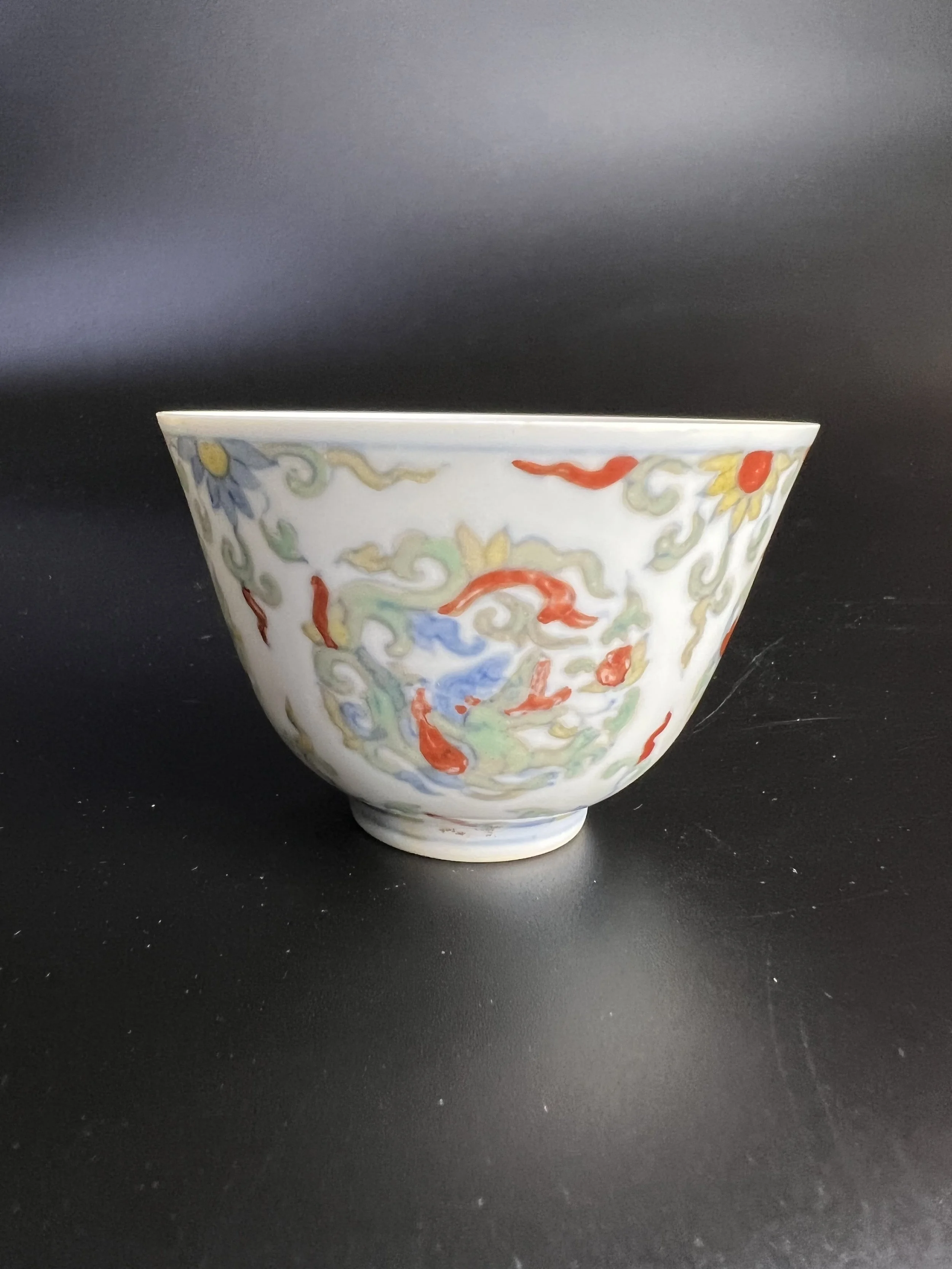 Image 1 of 9
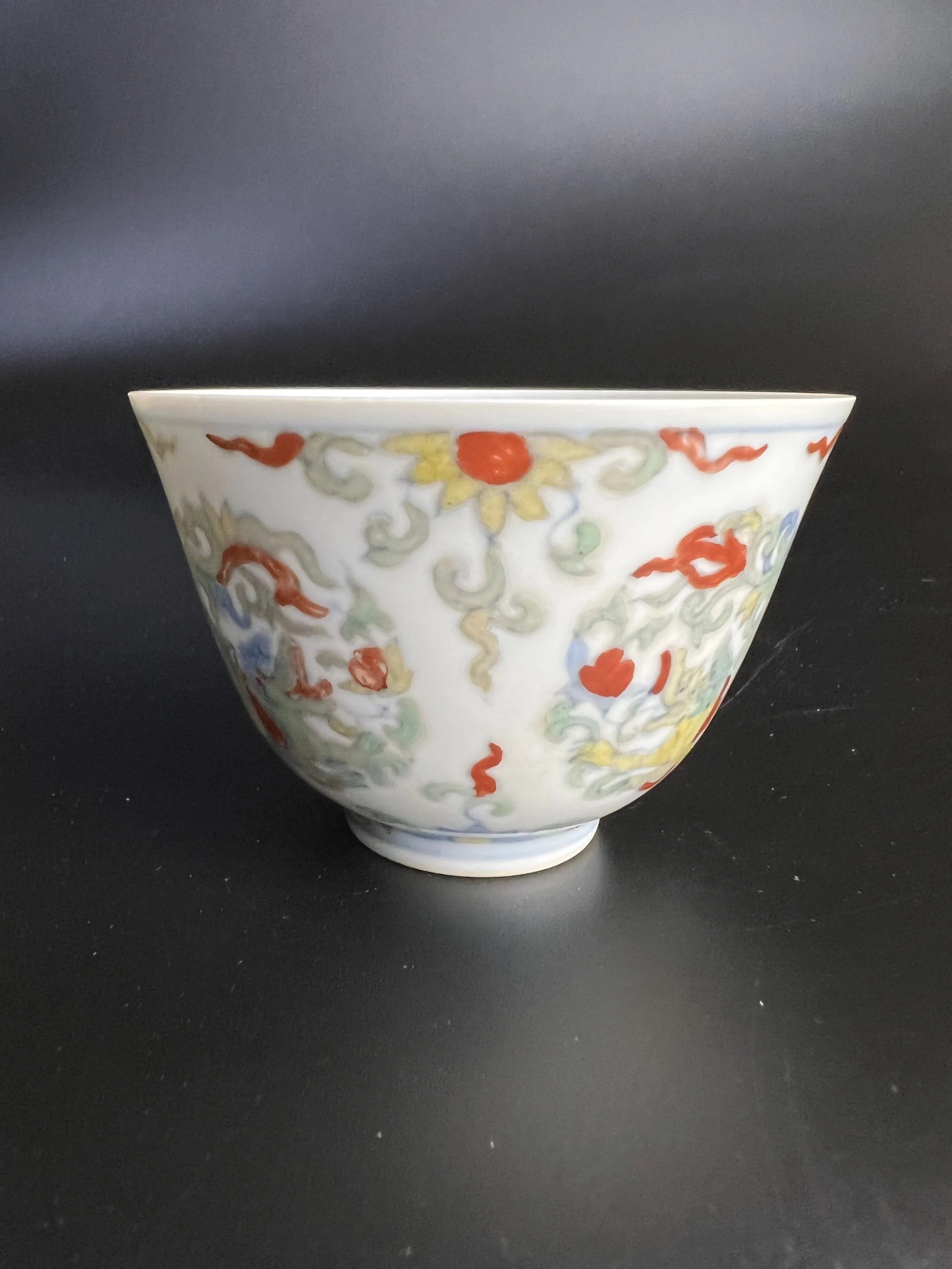 Image 2 of 9
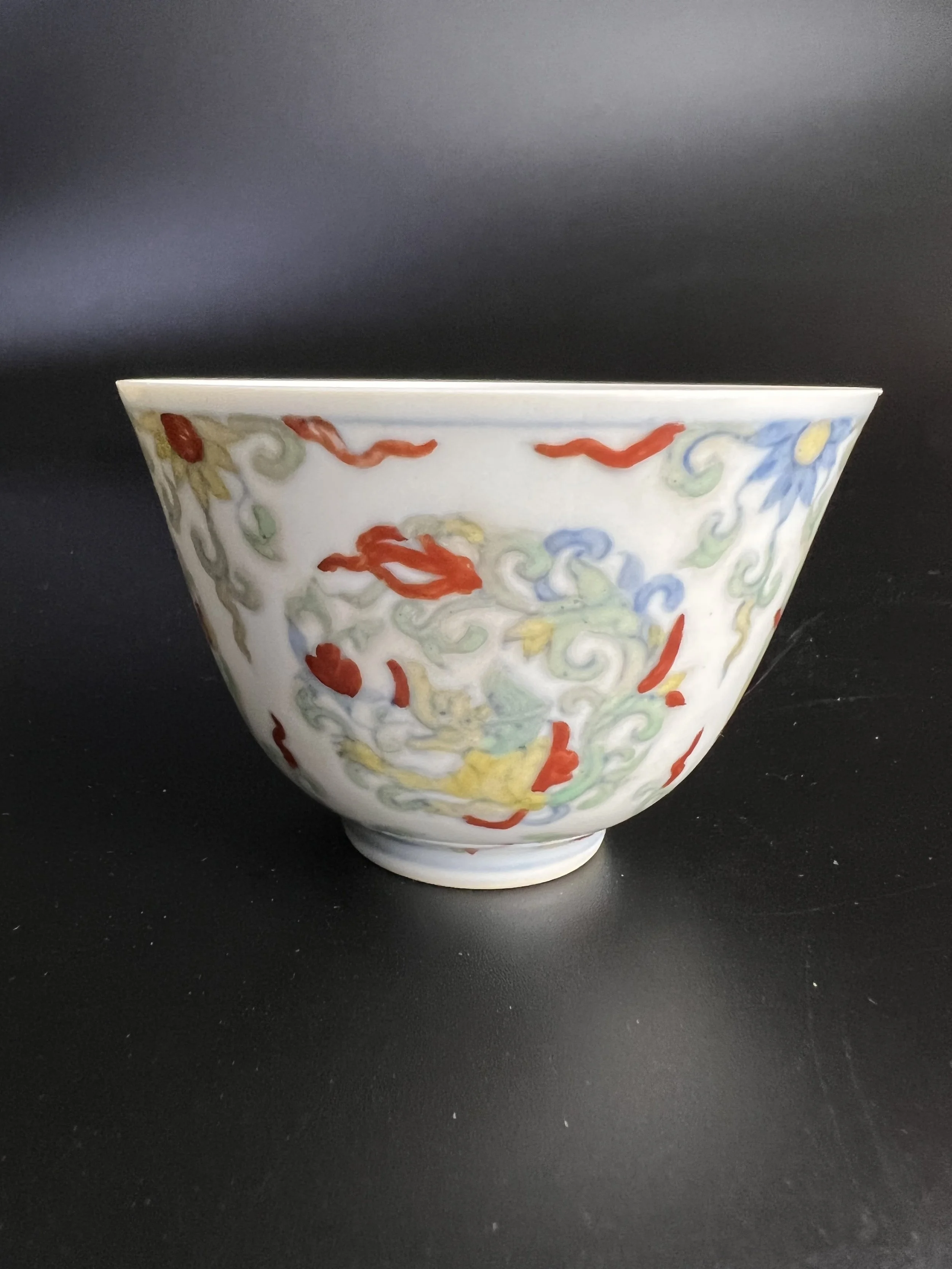 Image 3 of 9
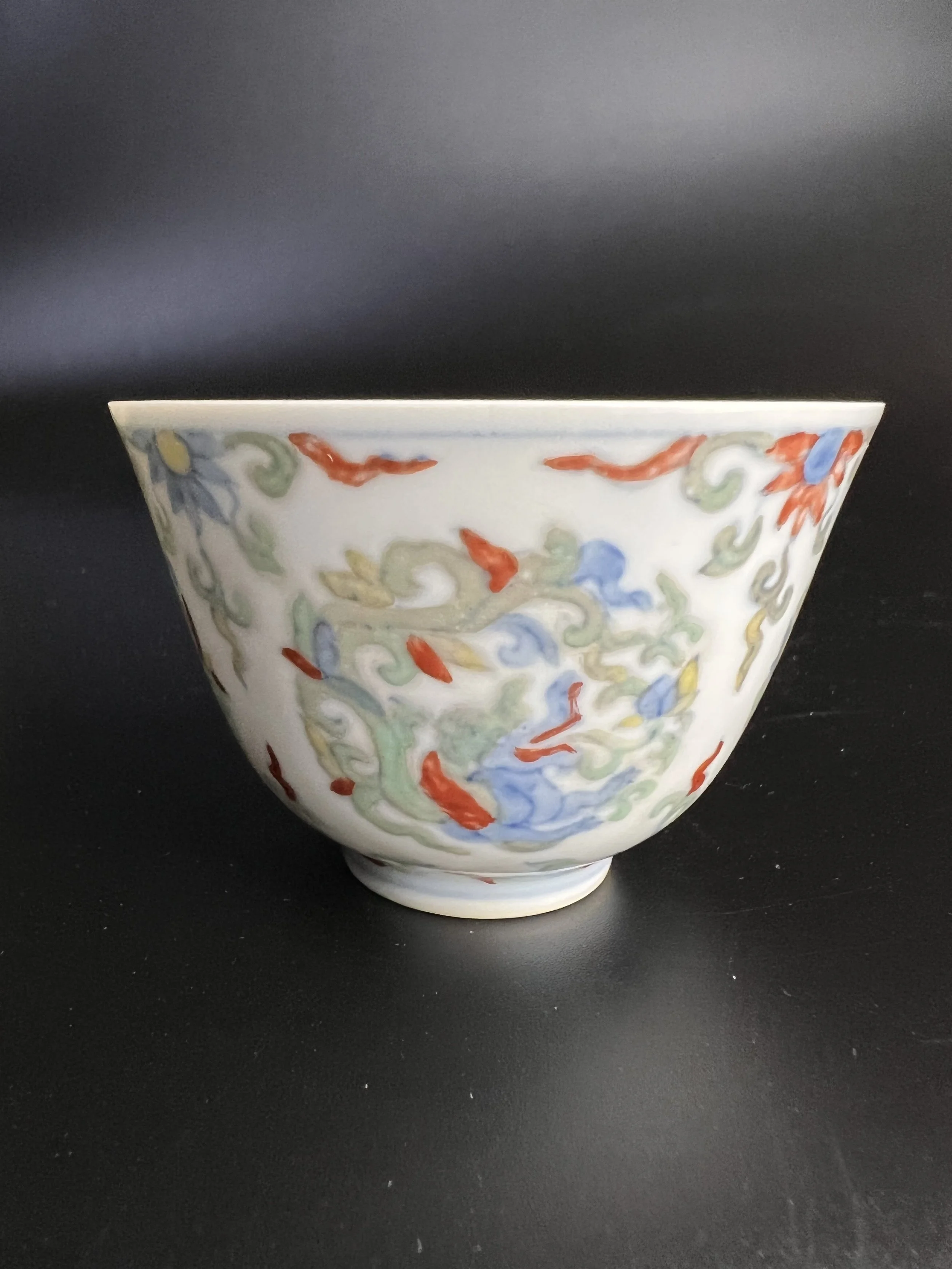 Image 4 of 9
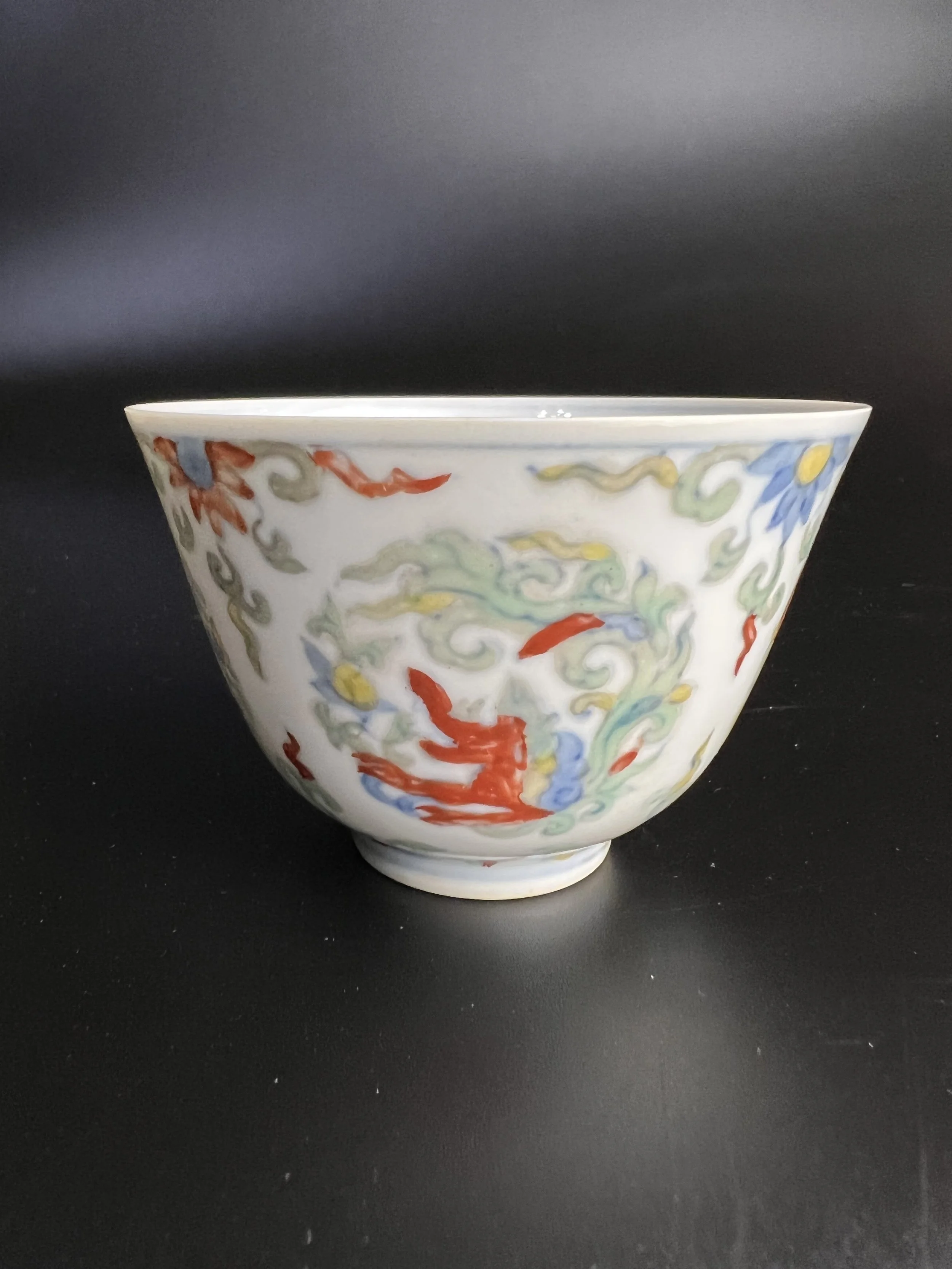 Image 5 of 9
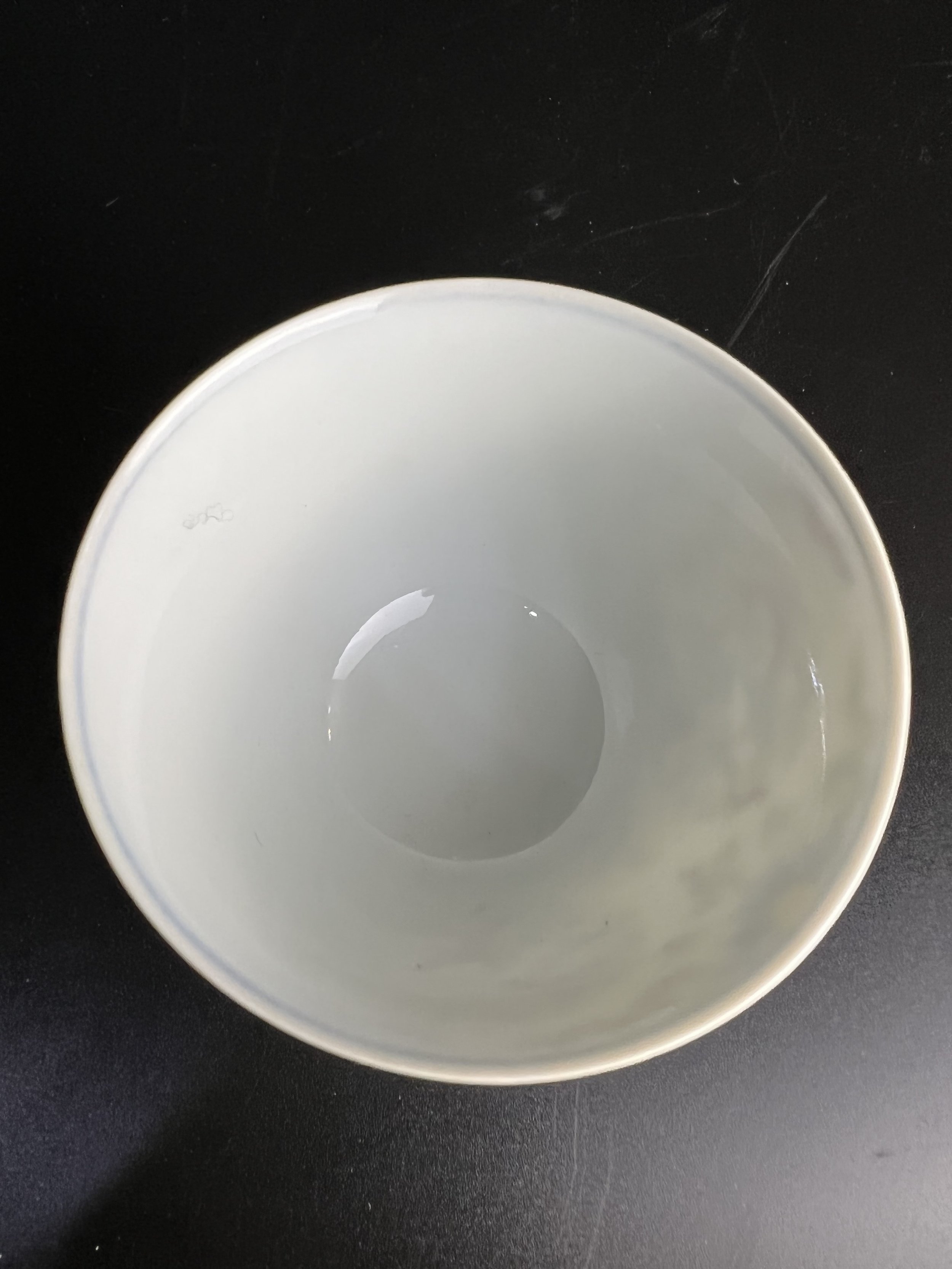 Image 6 of 9
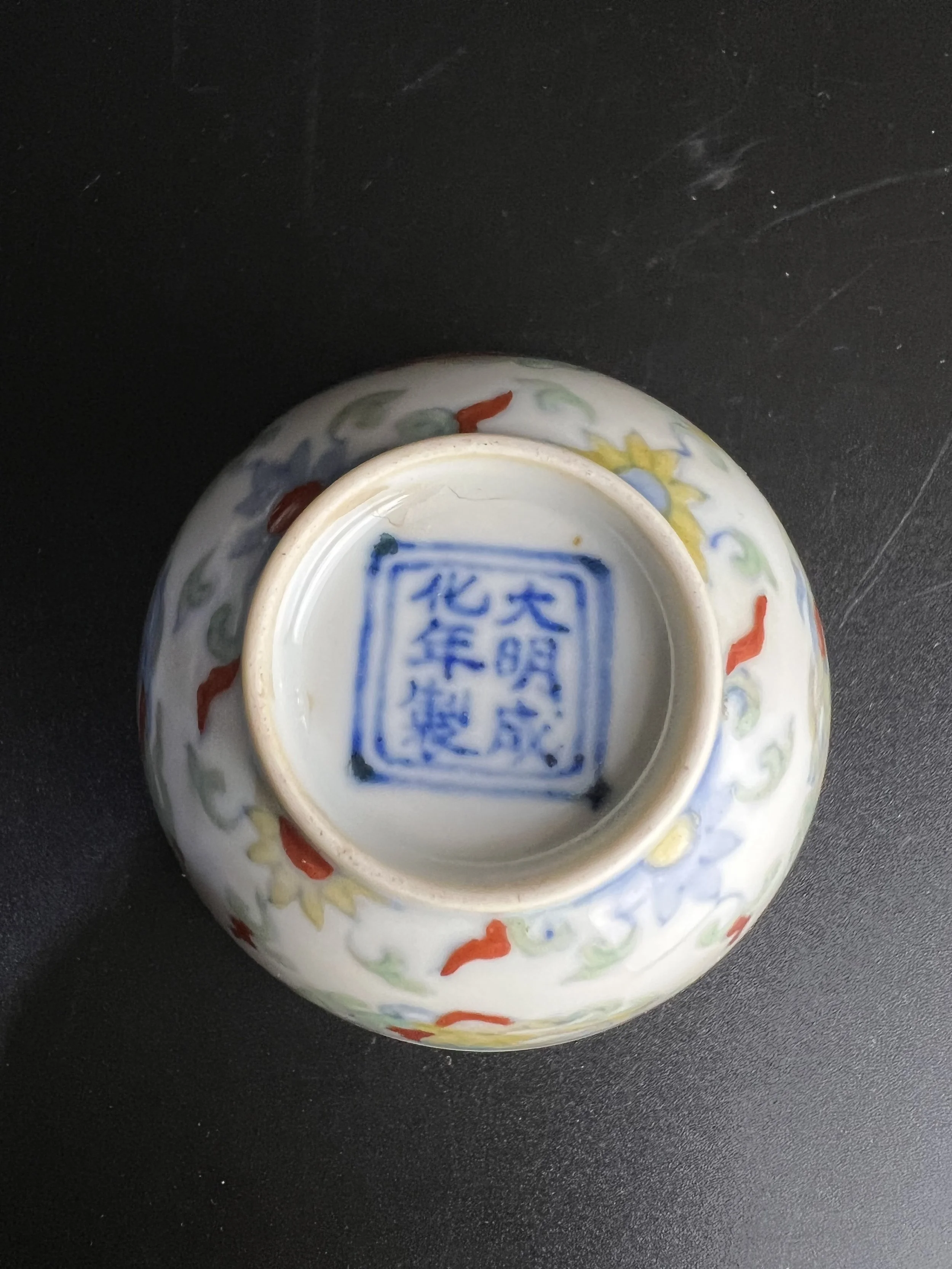 Image 7 of 9
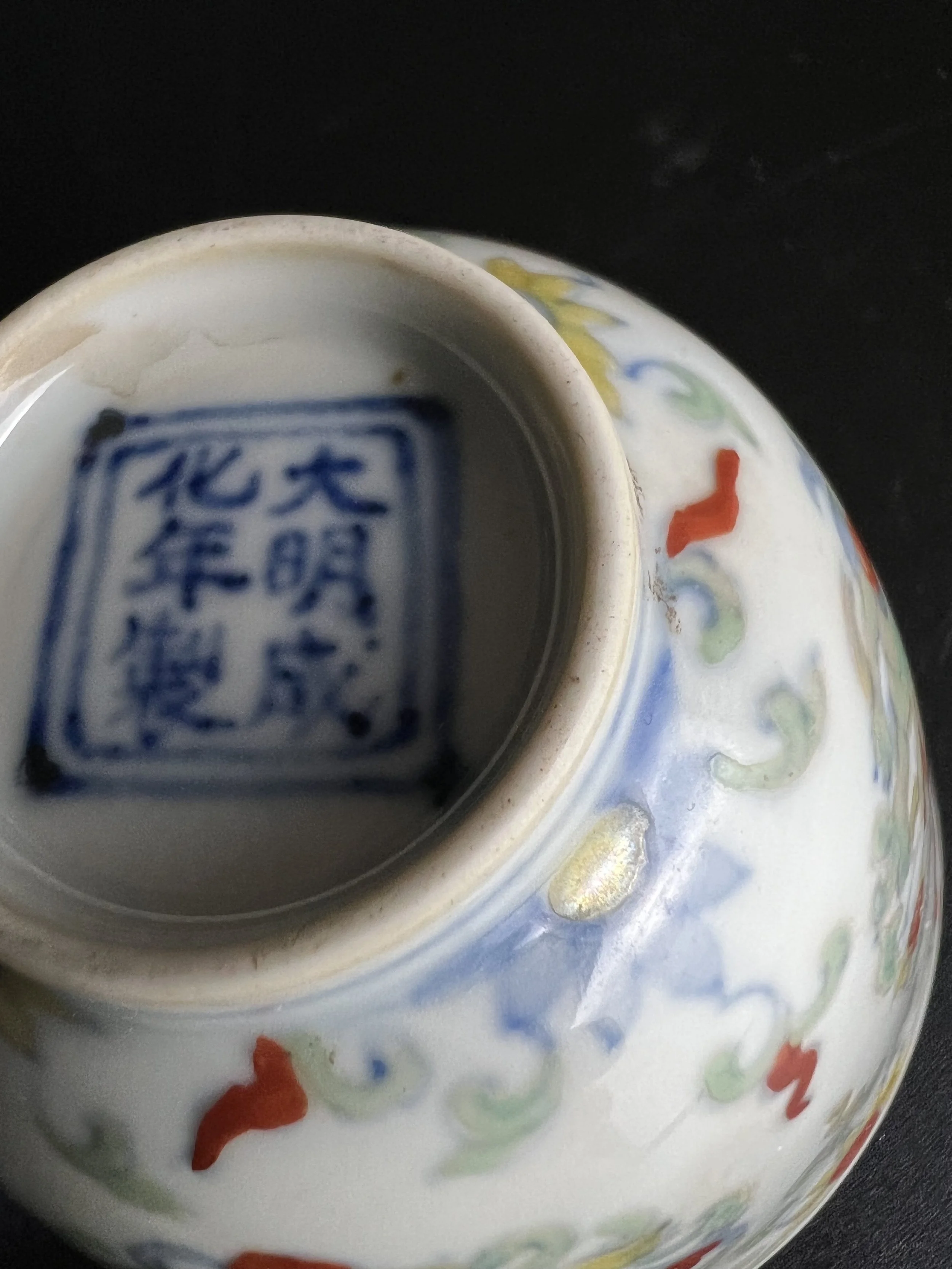 Image 8 of 9
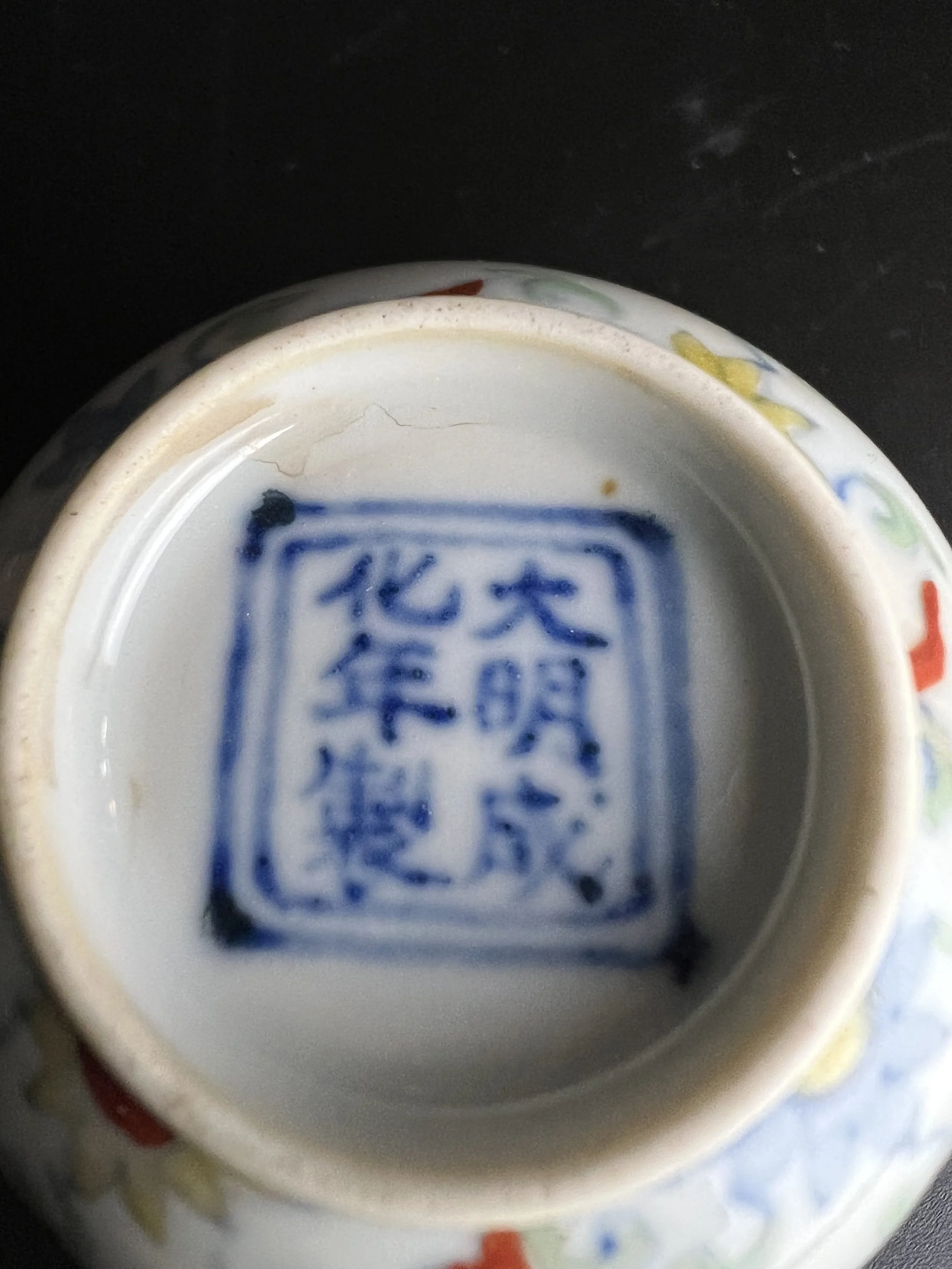 Image 9 of 9