Overview
This Song Dynasty official kiln li-form tripod censer embodies an antique and solemn elegance, serving as a paradigm of the official ware system from the Northern and Southern Song periods. With a diameter of 13 cm and a height of 6 cm, its compact size fits perfectly in the hand, aligning flawlessly with the Song literati aesthetic that prized "antiquity, simplicity, and restraint." The entire body is covered in a thick, soft pinkish-celadon glaze, lustrous and translucent like jade. A naturally occurring, irregular crackle pattern animates its serene surface, fully expressing the Song official kiln's philosophical aesthetic of "cleansing the mind to contemplate the Dao." The base is unmarked; its noble origins are articulated solely through its glaze and form, making it a classic example of a Song Dynasty official kiln object for scholarly display.
Form and Origin
The censer adopts the form of a li, a bronze ritual vessel from the Shang and Zhou dynasties. It features a rounded mouth with a folded rim, a constricted neck, a bulging belly, and rests on three solid, sturdy legs. This design reflects both a reverence for and homage to ancient ritual bronzes, as well as the creative spirit of "emulating antiquity without being constrained by it" that flourished under the influence of Song epigraphy. The stable tripod stance conveys solidity and balance, while its petite size makes it ideal for placement on a desk for incense burning or quiet contemplation. It vividly illustrates the Song transformation of ritual objects into accoutrements of refined daily life. The body is robust, typically appearing dark gray or blackish-brown (often referred to as "iron bone"), creating a subtle contrast with the soft glaze.
Glaze and Crackle
The glaze is a classic official kiln pinkish-celadon, thick and unctuous to the touch. The crackled glaze surface exhibits an interwoven network of lines, varying in density and depth, forming a distinctive "ice crackle" or "crab claw" texture. The most exquisite detail lies in the dark grayish hue (possibly an "iron thread" effect) visible within some of the crackle fissures. This contrasts with the lighter glaze, resembling a naturally formed ink-wash painting and evoking the poetic sentiment of "a lotus emerging clear from the water, adorned naturally without carving." This characteristic likely stems from the iron content in the clay body, which became visible during firing or through natural aging over centuries. It may also result from intentional later maintenance, imbuing the object with a profound, weathered historical patina.
Craftsmanship and Mark
The piece is unmarked, consistent with the common practice of many Song official kiln wares where "the object was valued over the inscription." Its identification relies primarily on classic official kiln characteristics: "purple mouth and iron foot" (where the thin glaze at the rim and foot reveals the dark body color), thick opaque glaze, natural crackle, and an unparalleled jade-like glaze quality. The craftsmanship is superb, with the three legs seamlessly integrated into the body, reflecting the meticulous precision of official kiln production. The piece foregoes ornate decoration, relying instead on the elegance of its form, the beauty of its glaze, and the natural artistry of its crackle to achieve victory—deeply resonant with the Song philosophical and artistic pursuit of "plainness and innate elegance."
Historical Context and Significance
Song Dynasty official kilns, particularly those established under the Southern Song Xiuneisi and Jiaotanxia administrations, produced wares exclusively for the court and elite society, representing the pinnacle of celadon art at the time. This li-form censer was not merely a functional incense burner but a composite art object synthesizing epigraphy, ceramic technology, and literati spirit. Its simple form, jade-like glaze, and heaven-sent crackle together construct a serene yet vibrant aesthetic space, perfectly interpreting the Song literati's approach to self-cultivation through "the investigation of things" (gewu zhizhi) and the creative ideal of "the unity of Dao and object" (daoqi heyi).
Conclusion
Though small in stature, this censer possesses monumental presence. It condenses the core aesthetic code of Song official kilns: innovating within tradition, finding richness in simplicity, and achieving the pinnacle of artifice through natural crackle. Holding this single object in hand offers a glimpse into the cultural heights and spiritual aspirations of an era. It stands not only as an enduring masterpiece in the history of ceramics but also as a silent poem in the transmission of Chinese refined culture.
宋代官窑鬲式三足炉
概述
此件宋代官窑鬲式三足炉,造型古雅端凝,乃两宋官窑体系之典范。炉身直径13厘米,高6厘米,体量精巧,盈手可握,完美契合宋代文人「尚古、简约、内敛」之审美意趣。通体施粉青厚釉,釉质温润如玉,光泽莹澈,开片自然错落,于静谧中见灵动,尽显宋代官窑「澄怀观道」之美学境界。底足无款,仅以釉色与形制言说其高贵出身,为典型宋代官窑陈设雅器。
形制与渊源
炉取商周青铜鬲之形制,圆口折沿,束颈鼓腹,下承三足,足形饱满敦实。此造型既是对上古礼器之追慕与致敬,亦体现了宋代金石学兴盛下「仿古而不泥古」的造物精神。三足鼎立,予人稳重安定之感;尺寸玲珑,则适于案头清供、焚香静观,是宋人将礼仪之器转化为生活雅趣的生动体现。胎骨坚实,呈深灰或黑褐色(俗称「铁骨」),与柔润釉色形成微妙对比。
釉色与开片
釉色为典型的官窑粉青,釉层肥厚,抚之如凝脂。釉面开片纵横交织,疏密有致,裂纹深浅不一,形成独特的「冰裂纹」或「蟹爪纹」肌理。最为精妙之处,在于开裂缝隙间部分呈现暗灰色调(或为「铁线」效果),与浅色釉面相互映衬,宛若天成水墨画卷,深具「清水出芙蓉,天然去雕饰」之韵。此现象或源于胎土中含铁成分在烧造与岁月沉淀中自然显色,亦可能是后世经心养护所形成之沁色,为器物平添一份深邃沧桑的历史质感。
工艺与款识
器身无款,符合宋代多数官窑器物「重器不重款」的惯例。其身份之认定,主要依赖于经典的官窑特征:紫口铁足(因釉薄处微露胎色)、厚釉失透、开片自然以及无可复制的釉质玉感。制作工艺精湛,三足与器身衔接流畅,毫无突兀,体现了官窑严谨至微的制器态度。整器不求纹饰之繁,而以造型、釉色与开片之天然趣味取胜,深合宋代「平淡天真」的哲学与艺术追求。
历史与意蕴
宋代官窑,尤指南宋修内司、郊坛下等官设窑口所出,专供宫廷及上层社会使用,代表了当时青瓷艺术的巅峰。此鬲式炉不仅是实用香具,更是融合了金石学、瓷器工艺与文人精神的综合艺术品。其简约的造型、如玉的釉色与天成开片,共同构筑了一个静穆而富有生命力的美学空间,完美诠释了宋人「格物致知」的修养方式与「道器合一」的造物理念。
结语
此炉虽小,却气象宏大。它凝萃了宋代官窑最核心的美学密码:在仿古中创新,于简约中见丰盈,借天然开片成就人工至境。掌中一器,可窥见一个时代的文化高度与精神向往,不仅是陶瓷史上的不朽杰作,更是中华雅文化传承的无声诗篇。
Overview
This Song Dynasty official kiln li-form tripod censer embodies an antique and solemn elegance, serving as a paradigm of the official ware system from the Northern and Southern Song periods. With a diameter of 13 cm and a height of 6 cm, its compact size fits perfectly in the hand, aligning flawlessly with the Song literati aesthetic that prized "antiquity, simplicity, and restraint." The entire body is covered in a thick, soft pinkish-celadon glaze, lustrous and translucent like jade. A naturally occurring, irregular crackle pattern animates its serene surface, fully expressing the Song official kiln's philosophical aesthetic of "cleansing the mind to contemplate the Dao." The base is unmarked; its noble origins are articulated solely through its glaze and form, making it a classic example of a Song Dynasty official kiln object for scholarly display.
Form and Origin
The censer adopts the form of a li, a bronze ritual vessel from the Shang and Zhou dynasties. It features a rounded mouth with a folded rim, a constricted neck, a bulging belly, and rests on three solid, sturdy legs. This design reflects both a reverence for and homage to ancient ritual bronzes, as well as the creative spirit of "emulating antiquity without being constrained by it" that flourished under the influence of Song epigraphy. The stable tripod stance conveys solidity and balance, while its petite size makes it ideal for placement on a desk for incense burning or quiet contemplation. It vividly illustrates the Song transformation of ritual objects into accoutrements of refined daily life. The body is robust, typically appearing dark gray or blackish-brown (often referred to as "iron bone"), creating a subtle contrast with the soft glaze.
Glaze and Crackle
The glaze is a classic official kiln pinkish-celadon, thick and unctuous to the touch. The crackled glaze surface exhibits an interwoven network of lines, varying in density and depth, forming a distinctive "ice crackle" or "crab claw" texture. The most exquisite detail lies in the dark grayish hue (possibly an "iron thread" effect) visible within some of the crackle fissures. This contrasts with the lighter glaze, resembling a naturally formed ink-wash painting and evoking the poetic sentiment of "a lotus emerging clear from the water, adorned naturally without carving." This characteristic likely stems from the iron content in the clay body, which became visible during firing or through natural aging over centuries. It may also result from intentional later maintenance, imbuing the object with a profound, weathered historical patina.
Craftsmanship and Mark
The piece is unmarked, consistent with the common practice of many Song official kiln wares where "the object was valued over the inscription." Its identification relies primarily on classic official kiln characteristics: "purple mouth and iron foot" (where the thin glaze at the rim and foot reveals the dark body color), thick opaque glaze, natural crackle, and an unparalleled jade-like glaze quality. The craftsmanship is superb, with the three legs seamlessly integrated into the body, reflecting the meticulous precision of official kiln production. The piece foregoes ornate decoration, relying instead on the elegance of its form, the beauty of its glaze, and the natural artistry of its crackle to achieve victory—deeply resonant with the Song philosophical and artistic pursuit of "plainness and innate elegance."
Historical Context and Significance
Song Dynasty official kilns, particularly those established under the Southern Song Xiuneisi and Jiaotanxia administrations, produced wares exclusively for the court and elite society, representing the pinnacle of celadon art at the time. This li-form censer was not merely a functional incense burner but a composite art object synthesizing epigraphy, ceramic technology, and literati spirit. Its simple form, jade-like glaze, and heaven-sent crackle together construct a serene yet vibrant aesthetic space, perfectly interpreting the Song literati's approach to self-cultivation through "the investigation of things" (gewu zhizhi) and the creative ideal of "the unity of Dao and object" (daoqi heyi).
Conclusion
Though small in stature, this censer possesses monumental presence. It condenses the core aesthetic code of Song official kilns: innovating within tradition, finding richness in simplicity, and achieving the pinnacle of artifice through natural crackle. Holding this single object in hand offers a glimpse into the cultural heights and spiritual aspirations of an era. It stands not only as an enduring masterpiece in the history of ceramics but also as a silent poem in the transmission of Chinese refined culture.
宋代官窑鬲式三足炉
概述
此件宋代官窑鬲式三足炉,造型古雅端凝,乃两宋官窑体系之典范。炉身直径13厘米,高6厘米,体量精巧,盈手可握,完美契合宋代文人「尚古、简约、内敛」之审美意趣。通体施粉青厚釉,釉质温润如玉,光泽莹澈,开片自然错落,于静谧中见灵动,尽显宋代官窑「澄怀观道」之美学境界。底足无款,仅以釉色与形制言说其高贵出身,为典型宋代官窑陈设雅器。
形制与渊源
炉取商周青铜鬲之形制,圆口折沿,束颈鼓腹,下承三足,足形饱满敦实。此造型既是对上古礼器之追慕与致敬,亦体现了宋代金石学兴盛下「仿古而不泥古」的造物精神。三足鼎立,予人稳重安定之感;尺寸玲珑,则适于案头清供、焚香静观,是宋人将礼仪之器转化为生活雅趣的生动体现。胎骨坚实,呈深灰或黑褐色(俗称「铁骨」),与柔润釉色形成微妙对比。
釉色与开片
釉色为典型的官窑粉青,釉层肥厚,抚之如凝脂。釉面开片纵横交织,疏密有致,裂纹深浅不一,形成独特的「冰裂纹」或「蟹爪纹」肌理。最为精妙之处,在于开裂缝隙间部分呈现暗灰色调(或为「铁线」效果),与浅色釉面相互映衬,宛若天成水墨画卷,深具「清水出芙蓉,天然去雕饰」之韵。此现象或源于胎土中含铁成分在烧造与岁月沉淀中自然显色,亦可能是后世经心养护所形成之沁色,为器物平添一份深邃沧桑的历史质感。
工艺与款识
器身无款,符合宋代多数官窑器物「重器不重款」的惯例。其身份之认定,主要依赖于经典的官窑特征:紫口铁足(因釉薄处微露胎色)、厚釉失透、开片自然以及无可复制的釉质玉感。制作工艺精湛,三足与器身衔接流畅,毫无突兀,体现了官窑严谨至微的制器态度。整器不求纹饰之繁,而以造型、釉色与开片之天然趣味取胜,深合宋代「平淡天真」的哲学与艺术追求。
历史与意蕴
宋代官窑,尤指南宋修内司、郊坛下等官设窑口所出,专供宫廷及上层社会使用,代表了当时青瓷艺术的巅峰。此鬲式炉不仅是实用香具,更是融合了金石学、瓷器工艺与文人精神的综合艺术品。其简约的造型、如玉的釉色与天成开片,共同构筑了一个静穆而富有生命力的美学空间,完美诠释了宋人「格物致知」的修养方式与「道器合一」的造物理念。
结语
此炉虽小,却气象宏大。它凝萃了宋代官窑最核心的美学密码:在仿古中创新,于简约中见丰盈,借天然开片成就人工至境。掌中一器,可窥见一个时代的文化高度与精神向往,不仅是陶瓷史上的不朽杰作,更是中华雅文化传承的无声诗篇。
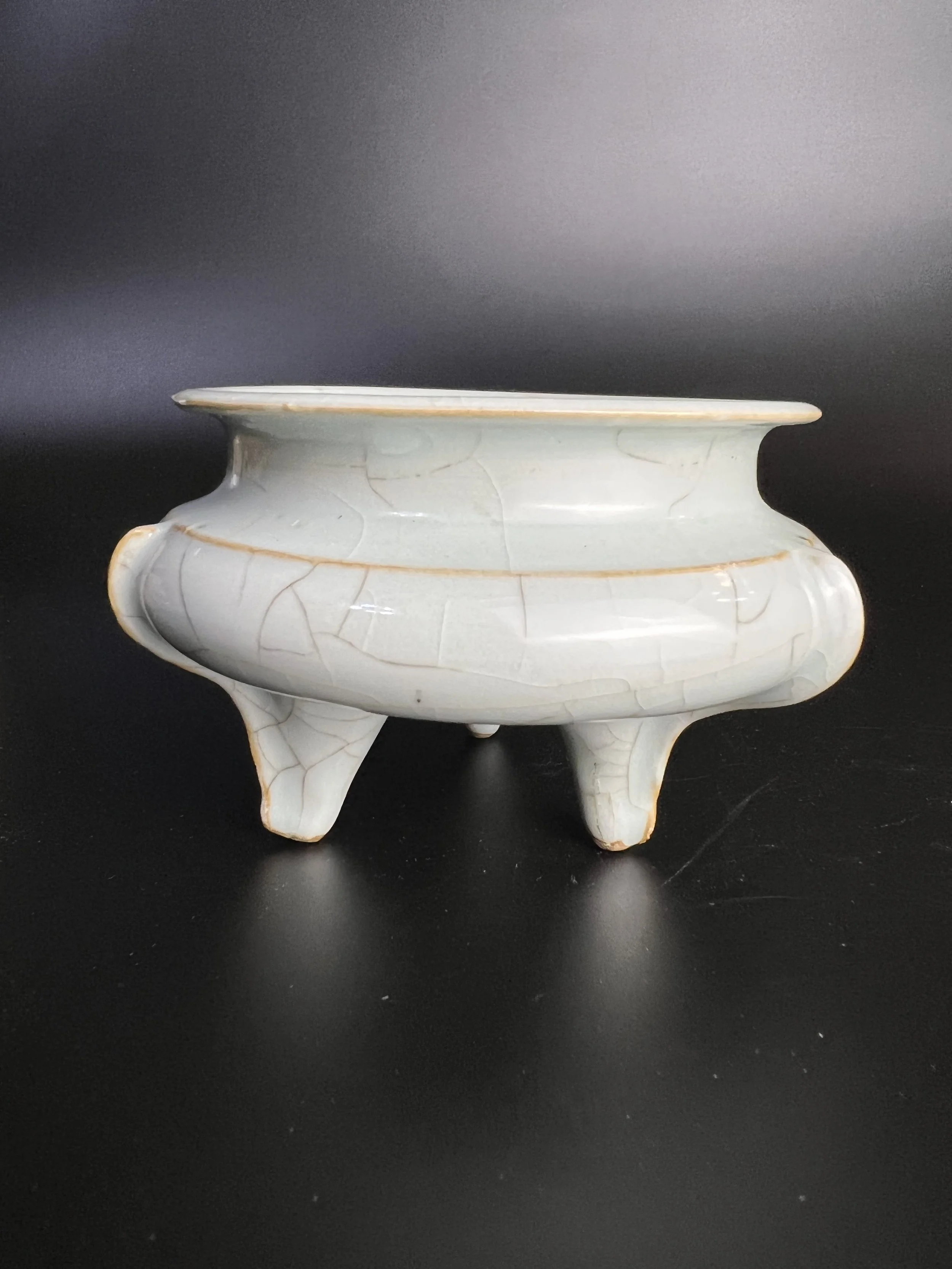 Image 1 of 12
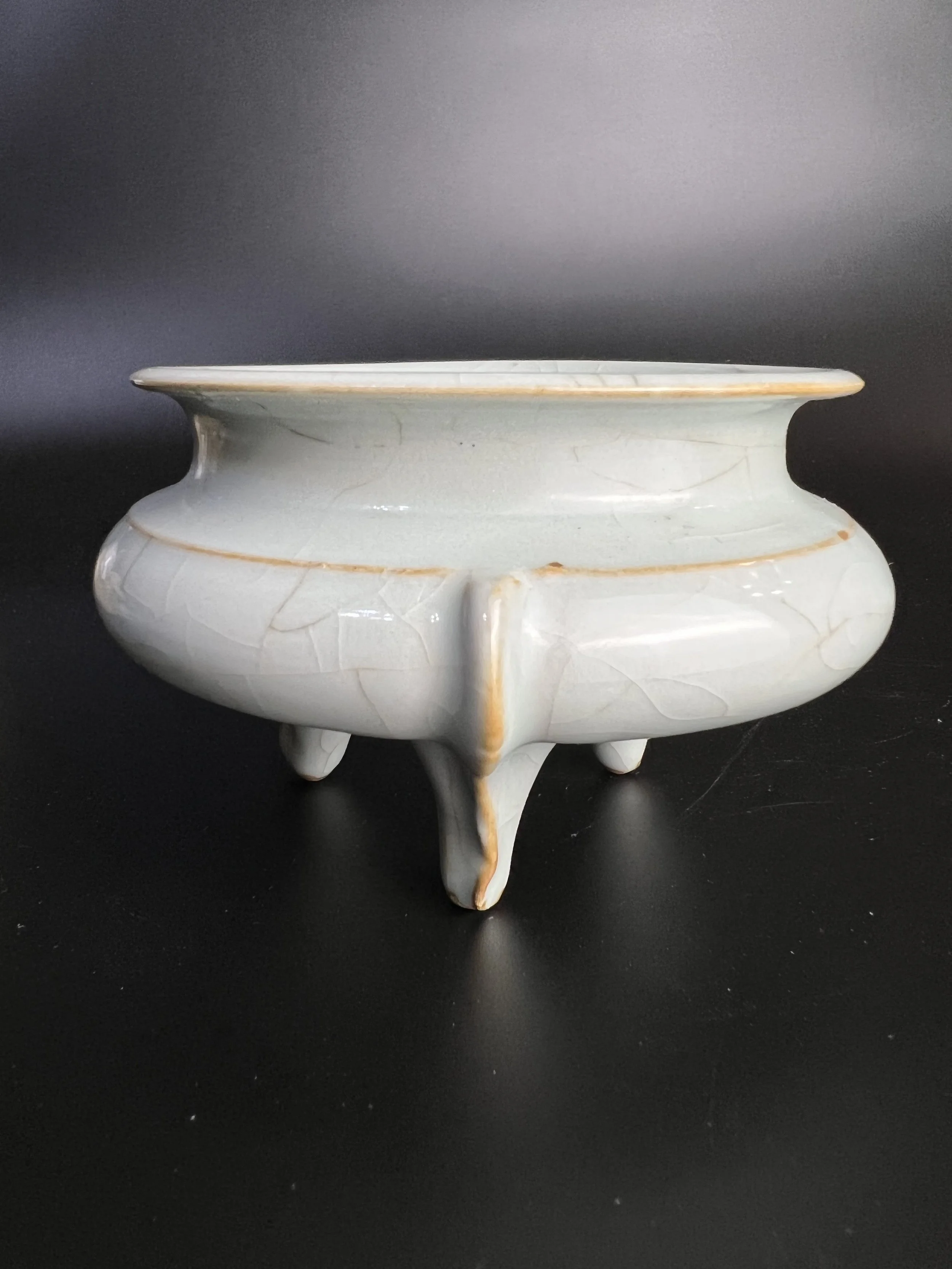 Image 2 of 12
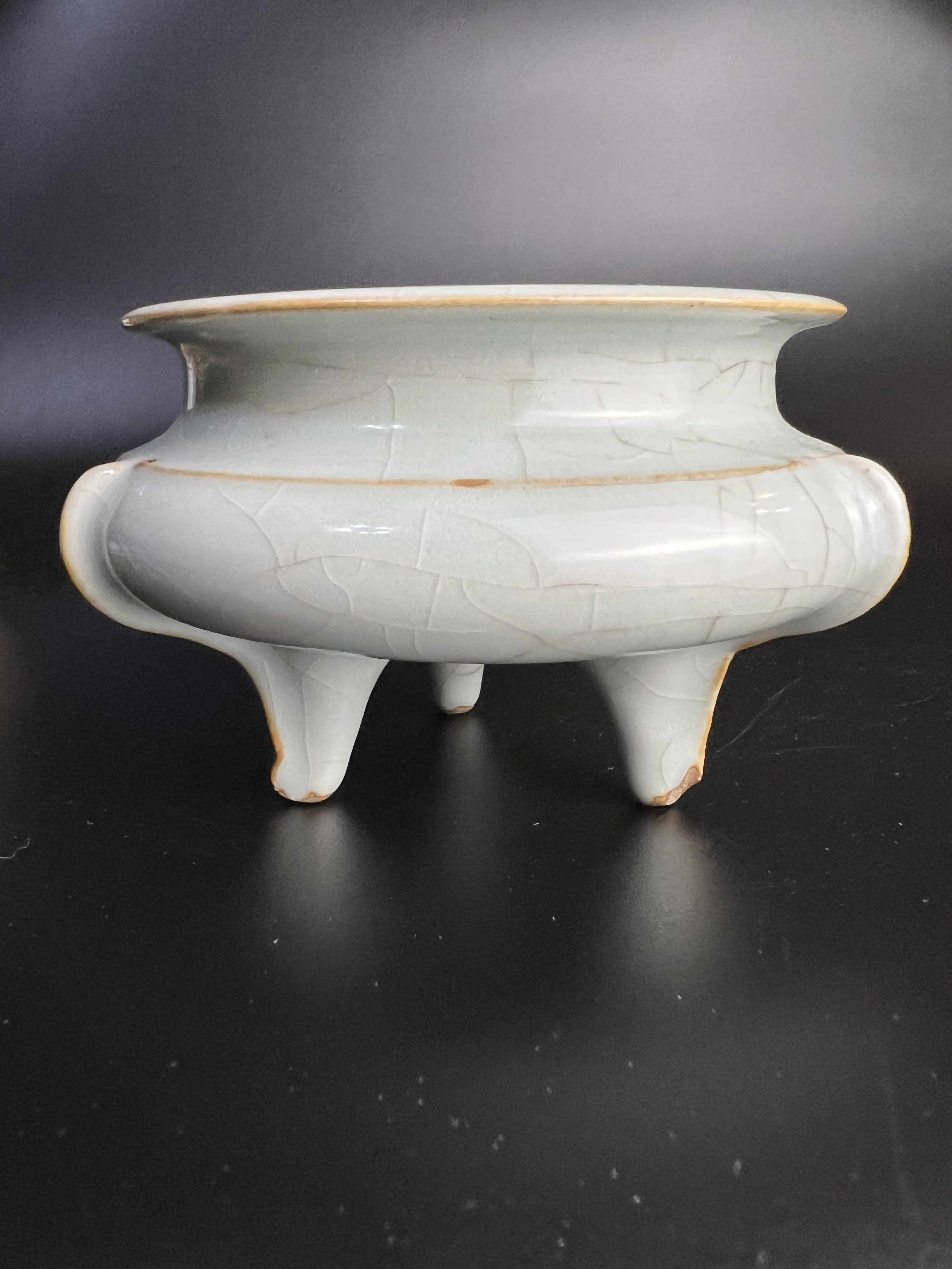 Image 3 of 12
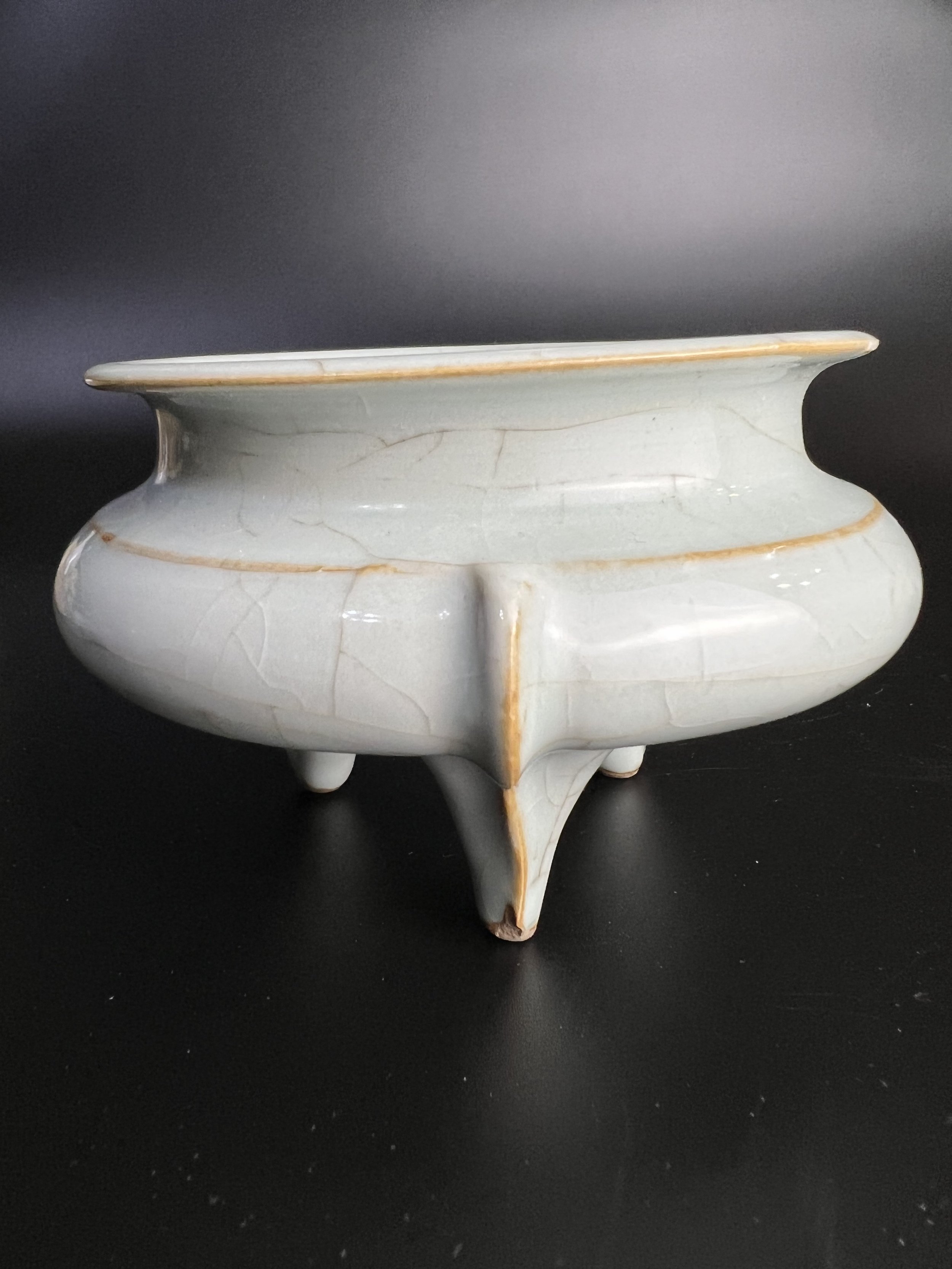 Image 4 of 12
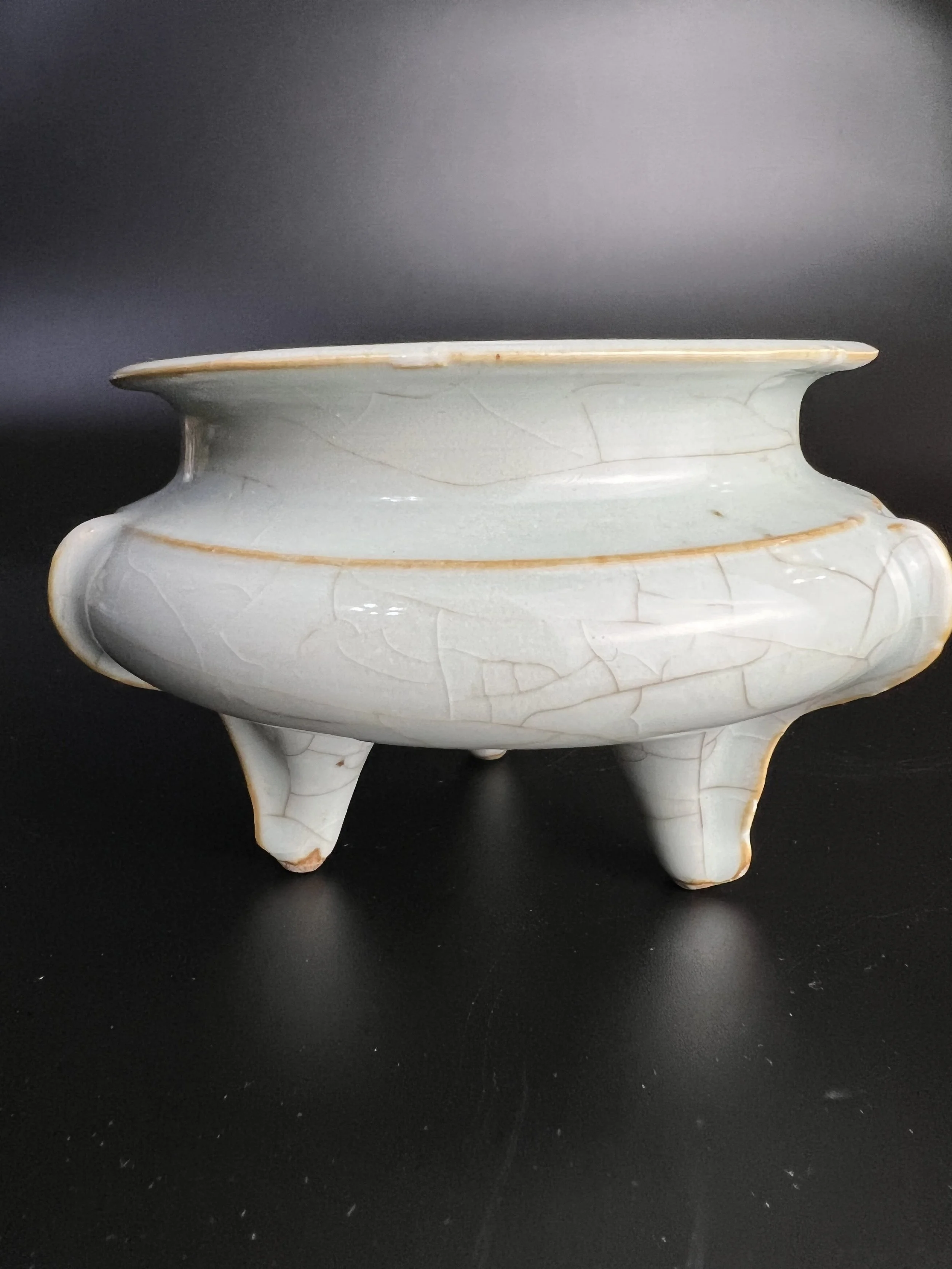 Image 5 of 12
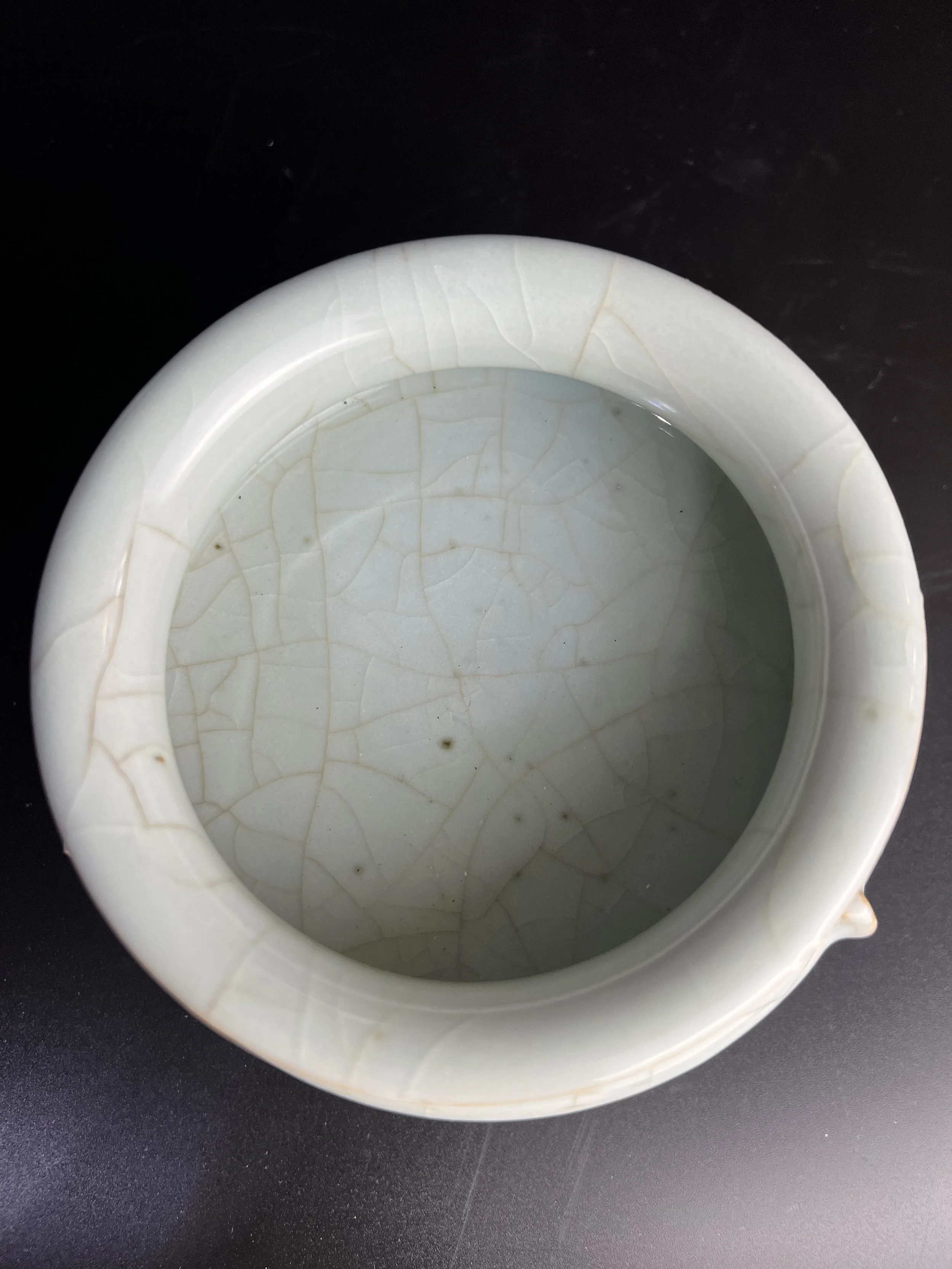 Image 6 of 12
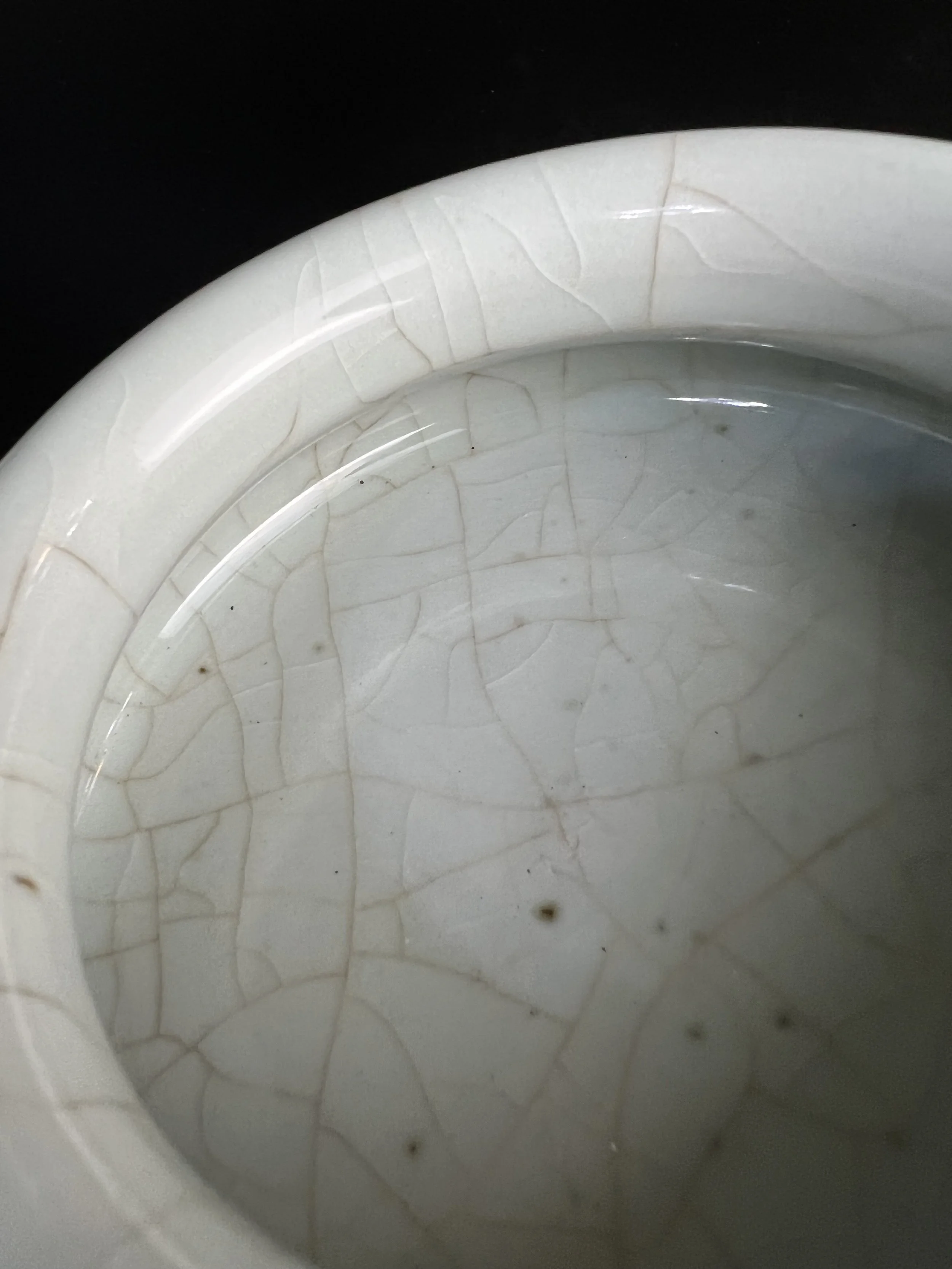 Image 7 of 12
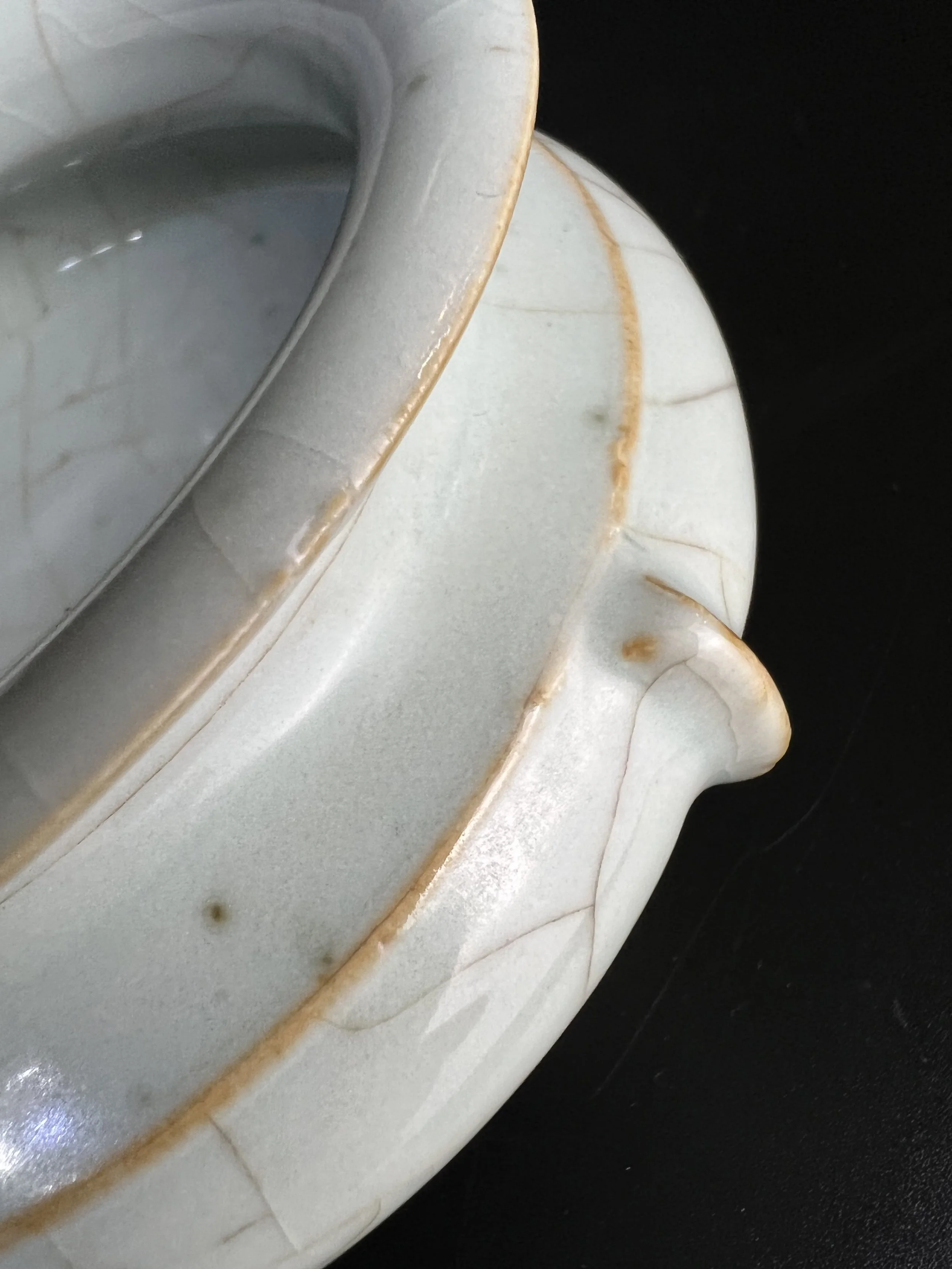 Image 8 of 12
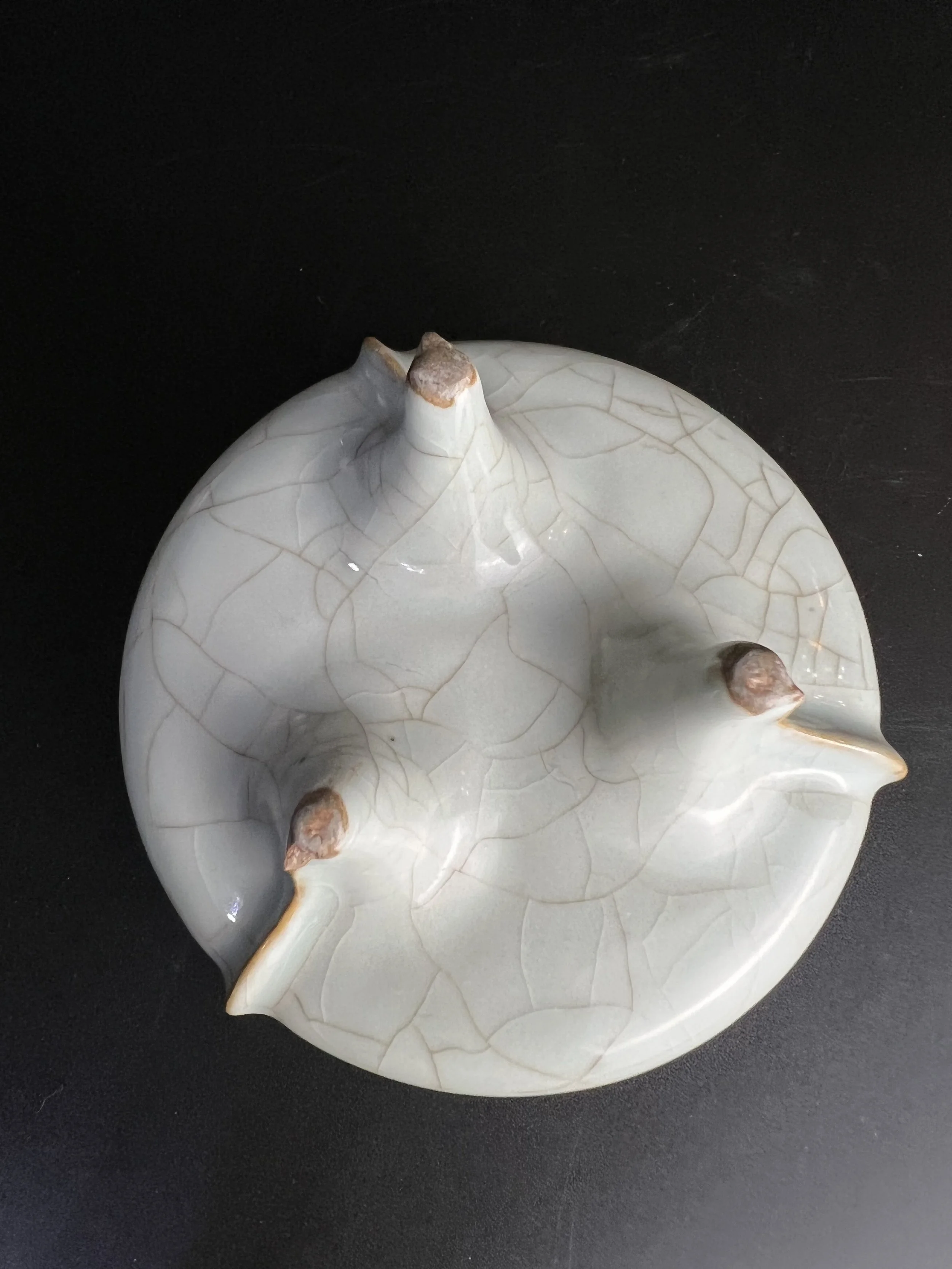 Image 9 of 12
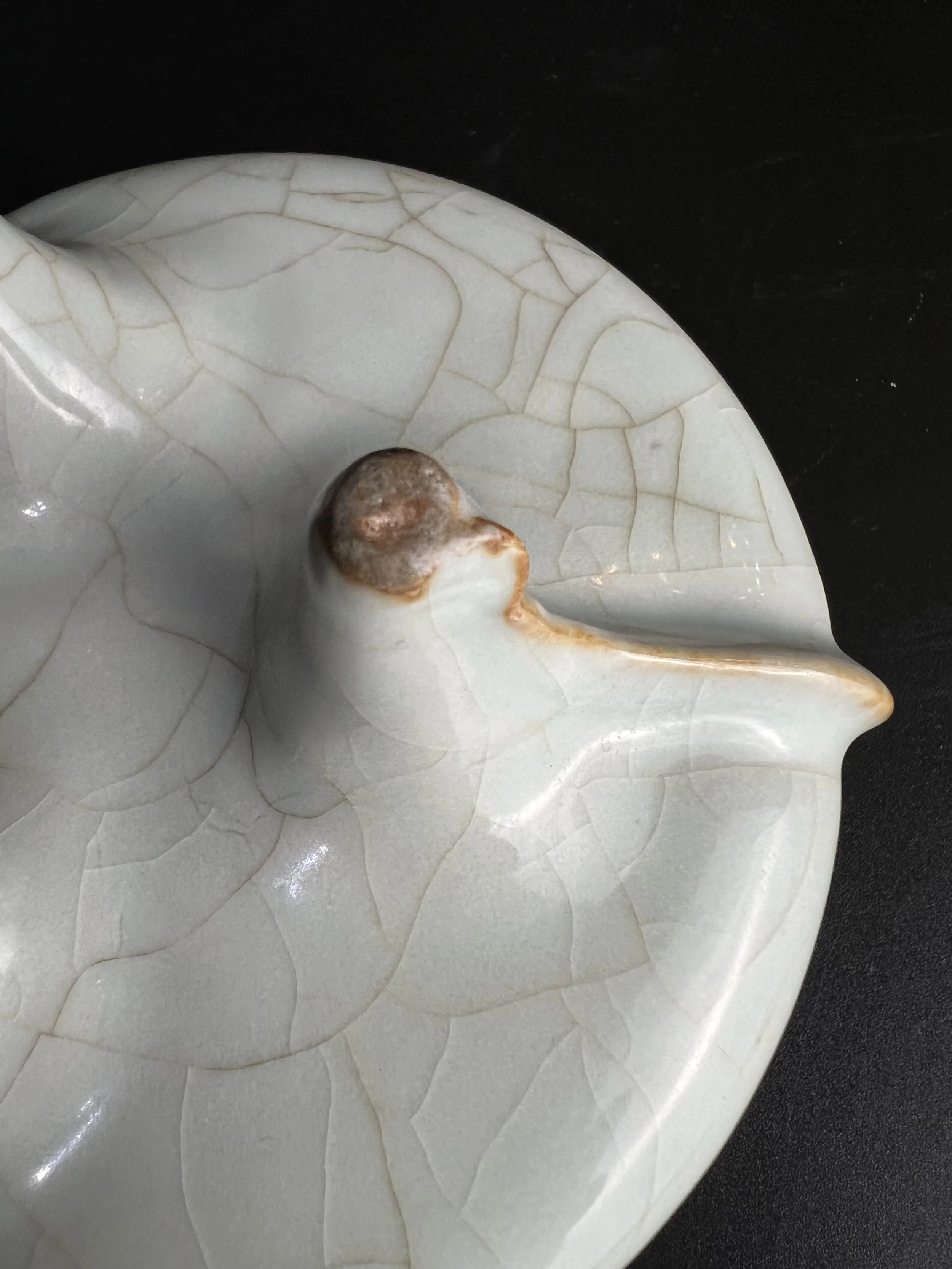 Image 10 of 12
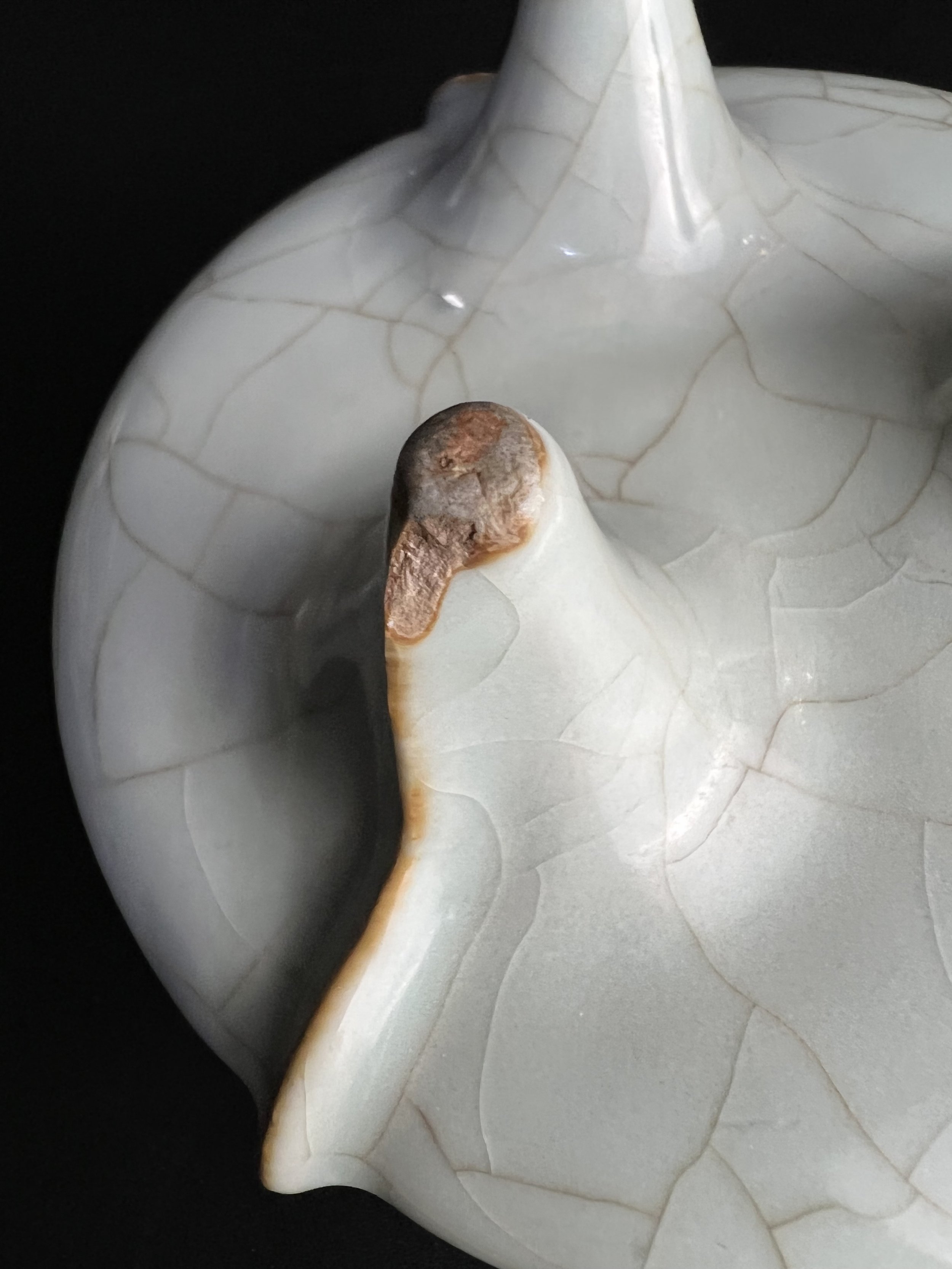 Image 11 of 12
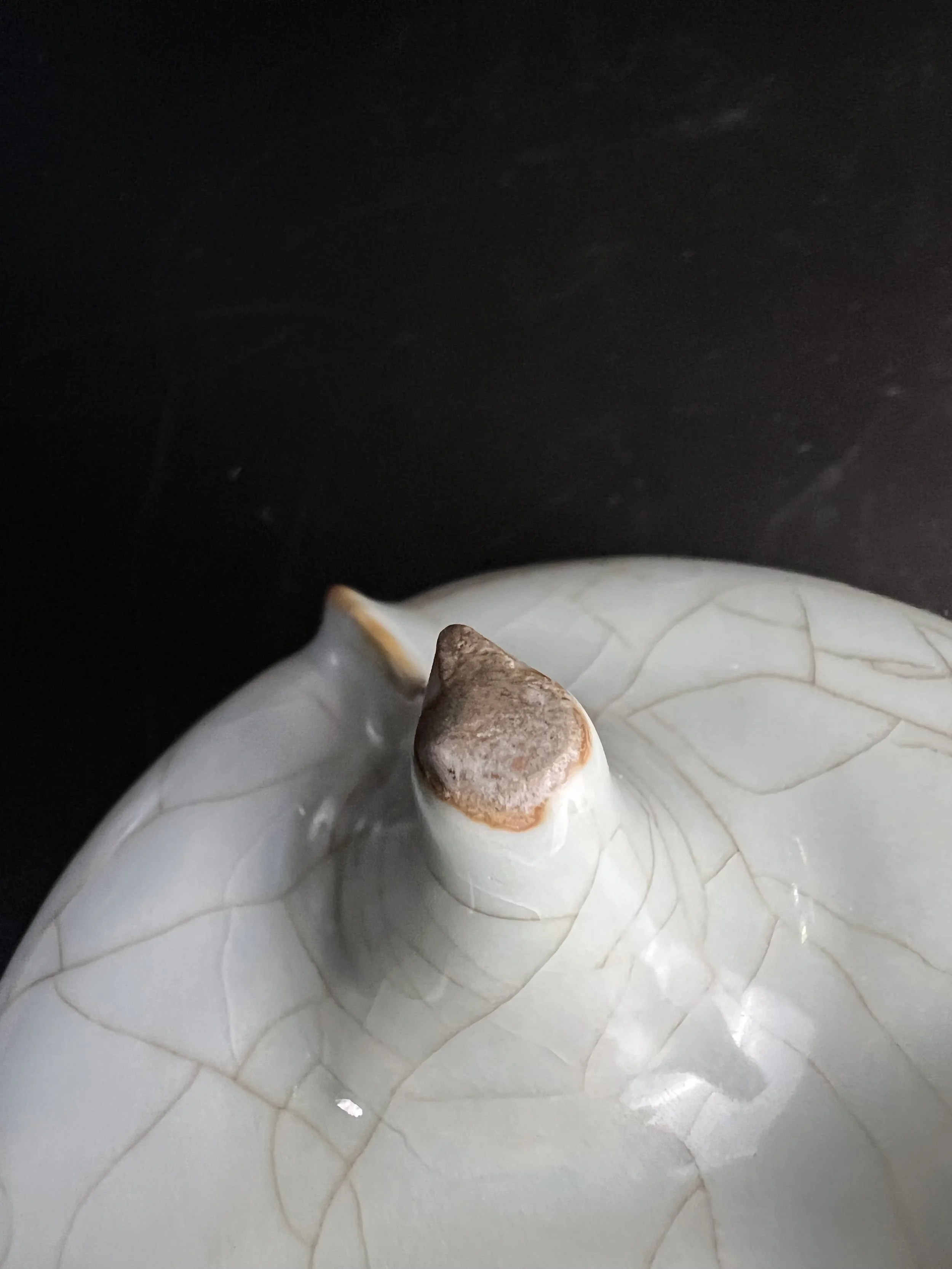 Image 12 of 12