Overview
This blue-and-white jarlet with a 'Dragon' design, bearing the Xuande six-character mark, stands at 18 cm tall. It is a quintessential example of Xuande imperial blue-and-white ware, likely used as a scholar's object or for display. Characterized by a full, rounded form, clearly delineated decorative bands, and the classic theme of three-clawed dragons looking backwards, it exhibits dynamic and unrestrained brushwork, vibrant cobalt-blue hues, and a lustrous glaze. Incorporating many hallmark features of Xuande imperial kilns, it is a representative masterpiece of mid-Xuande blue-and-white style.
I. Overview of Core Characteristics
Feature DimensionSpecific DescriptionObject DesignationBlue-and-white 'Lotus Seed' Jar with Three-Clawed Dragons Looking Backwards, Xuande mark and period (with original cover)Historical PeriodMing Dynasty, Xuande reign (1426-1435 AD)DimensionsTotal height approx. 18 cm (including cover)Basic FormCommonly known as a 'Lotus Seed Jar' (lianzi guan), with a plump, rounded body resembling a lotus seed. It has a domed cover topped with a jewel-shaped knob.Core DecorationBody: A three-clawed dragon looking backwards is painted on the front and back, each leaping through void. Shoulder: A band of ruyi (wish-granting) cloud-head motifs. Lower Body: A band of upward-facing lotus petal panels. Cover: The cover is decorated with cloud scrolls and downward-facing lotus petal panels.Cobalt-blue HueUses imported 'Sumali' blue pigment. The color is rich and vibrant, with intense areas sinking into the body, showing distinct 'iron-rust' speckles and a characteristic hazy, diffused effect.Glaze and BodyThe glaze is thick, lustrous, and moist, exhibiting the slightly bluish-toned 'bright blue glaze' (liangqing you). The body is fine, white, and meticulously finished, feeling substantial in hand.MarkThe base bears the underglaze-blue six-character mark in two columns of regular script (kaishu) within a double circle: "Da Ming Xuande Nian Zhi". The calligraphy is neat and vigorous, a classic Xuande mark.
II. In-Depth Analysis of Artistry and Craftsmanship
1. Elegantly Dynamic Form and Design
'Lotus Seed' Jar Form: The body is a standard lotus seed shape, with smooth, graceful lines and a steady center of gravity, demonstrating the Xuande period's masterful control of rounded forms. This shape was frequently imitated in the later Kangxi reign, but Xuande originals possess a more substantial and archaic simplicity.
Cover and Knob Design: The domed cover and jewel-shaped knob are not only functional but also enhance the object's three-dimensionality and completeness, creating a harmonious and unified overall form.
2. Decor and Painting Style with Distinct Period Characteristics
Dragons Looking Backwards: The main decoration features two dragons in a posture of looking back, seemingly responding to each other. The dragon heads are large, with flattened snouts (colloquially 'pig-snout dragons'), round, staring eyes, and flying manes. Their bodies are long and powerful, with three sharp, wheel-like claws. The backward glance breaks the usual forward-charging motion, adding a sense of lively interest and greater pictorial tension and narrative. Three-clawed dragons were also common in Xuande imperial ware, symbolizing power and agility.
Layout and Secondary Decoration: The decorative layout is spacious and well-ordered, with clear primary and secondary elements. The band of ruyi cloud heads at the shoulder and the band of lotus petal panels at the base (often containing simplified sketches of treasures or flowers within each petal) visually anchor the composition. The cloud scrolls and lotus petals on the cover unify with the body's themes, showcasing ingenious design.
Painting Technique: The painter's brushwork is exceptionally fluid and unrestrained. Dragon scales are outlined with fine, orderly strokes, while whiskers and cloud scrolls are often painted with confident, single mid-touch brushstrokes, displaying the imperial kiln painters' supreme artistry and confidence.
3. Signature 'Sumali' Blue and Body-Glaze Qualities
Cobalt-blue Color: The jarlet's blue is lush and vivid, a classic effect of using superior 'Sumali' blue pigment. Due to its high-iron, low-manganese chemistry, the edges of lines exhibit a natural diffusion effect, akin to ink bleeding on absorbent paper, creating a misty charm. In the densest areas, metallic-looking 'iron-rust' speckles are visible, sunk into the glaze and palpable to the touch—a period characteristic nearly impossible for later imitations to replicate.
Glaze Surface and Manufacture: The glaze is thick, moist, and lustrous, white with a bluish cast (liangqing you), forming a striking and complementary contrast with the vibrant blue. The body material is refined, dense, and heavy, finished with impeccable care. The foot ring is finely smoothed, and the unglazed areas reveal a porcelain body with a texture reminiscent of glutinous rice.
4. Authoritative Xuande Mark
The base mark is the standard Xuande six-character regular script mark. Notably, the character 'De' (德) is written without the horizontal stroke on top of the 'heart' component, a key diagnostic feature of Xuande marks. The calligraphy is powerful and dignified, a model of imperial ware marks.
III. Historical Context and Proposed Function
Reflection of Imperial Taste: The Xuande Emperor Zhu Zhanji possessed exceptionally high artistic cultivation, and court arts flourished during his reign. Exquisitely made small jars like this, with lively decoration, were likely intended for the emperor's personal use or as gifts, used for display in the study or for storing precious incense or tea leaves. They embody the refined court life and literary elegance of the Xuande period.
Symbolism of the Dragon: The dragon motif was an exclusive symbol of imperial authority. Although this jar features three-clawed dragons, they are rendered with formidable spirit. The backward-looking posture adds a layer of artistic whimsy, reflecting the Xuande period's pursuit of artistic expression within the framework of ritual norms.
Pinnacle of Craftsmanship: Xuande blue-and-white is universally acknowledged as one of the golden ages of Chinese blue-and-white porcelain. This jarlet combines top-quality pigment, masterful painting, and perfect body and glaze, serving as direct proof of the imperial kilns' production capabilities at their Xuande peak.
IV. Collecting Value and Authentication Key Points
A Xuande blue-and-white jarlet of this type, complete with its original cover, in excellent condition, and with a clear mark, is an exceptionally rare top-tier collectible in the market. Authentication should focus on:
Cobalt Color and Diffusion: Presence of the characteristic Sumali blue vibrancy, diffusion, and iron-rust speckles.
Decoration and Brushwork Spirit: Whether the dragon painting is fluid, powerful, and full of dynamic movement and period style.
Body and Glaze Texture: Whether the glaze is thick, moist, and lustrous, and the body is firm and fine.
Mark Details: Whether the font, layout, and specific writing of the characters in the "Da Ming Xuande Nian Zhi" mark conform to Xuande standards.
Overall Vitality: Genuine pieces possess a vivid, robust, and archaic elegance that replicas often fail to capture in terms of spirit, brushwork strength, or cobalt color.
Conclusion
This Xuande blue-and-white jarlet with dragons looking backwards, though modest in size, concentrates the essence of Xuande imperial kiln production. Its substantial form, unrestrained dragon motifs, brilliant blue, and warm glaze together constitute an artistic benchmark of an era. It is not merely a utilitarian vessel but a treasured art object to be placed upon a desk for daily appreciation, quietly recounting the brilliance and refined taste of the great Ming Xuande court over five hundred years ago.
大明宣德青花回首龙纹莲子罐
概述
此件 “大明宣德年制”款青花回首龙纹莲子罐,高18厘米,为明代宣德官窑青花之典型文房或陈设佳器。其造型饱满,纹饰层次分明,以经典的三爪回首龙为主题,笔触洒脱灵动,青花发色浓艳,釉色莹润,汇集了宣德官窑的诸多标志性特征,是宣德青花中期风格的代表作。
一、 核心特征总览
特征维度具体描述器物定名大明宣德年制款青花回首三爪龙纹莲子罐(带原盖)历史年代明宣德时期(1426-1435年)器物尺寸通高约18厘米(含盖)基本器型俗称“莲子罐”,罐身似莲子,饱满圆润。带拱顶盖,盖顶设宝珠形钮。核心纹饰罐身:前后各绘一回首三爪龙,腾跃于虚空。肩部饰如意云头纹一周。胫部饰仰莲瓣纹一周。罐盖:盖面饰云纹与覆莲瓣纹。青花发色使用进口“苏麻离青”料,发色浓艳青翠,色浓处深入胎骨,呈现明显的“铁锈斑”结晶斑与晕散效果。釉面胎质釉面肥厚莹润,呈微微闪青的“亮青釉”。胎体细腻洁白,打磨精良,入手沉重。款识罐底心书青花双圈 “大明宣德年制” 六字双行楷书款,字体工整遒劲,为宣德经典款识。
二、 艺术与工艺深度解析
1. 隽永灵动的造型与设计
2. 极具时代特色的纹饰与画意
回首龙纹:罐身主体绘双龙,呈回首呼应之姿。龙首硕大,龙嘴扁平(俗称“猪嘴龙”),双目圆睁,鬃发飞扬,龙身修长矫健,三爪锋利如轮。回首的姿势打破了常见的向前奔腾的动势,显得意趣盎然,画面更具张力与故事性。三爪龙在宣德官窑中亦属常见,象征着力量与 agility。
布局与辅助纹饰:纹饰布局疏朗有致,主次分明。肩部的如意云头纹与胫部的仰莲瓣纹(每瓣内常绘有宝钎、花朵等简笔点缀)上下呼应,稳定了视觉重心。盖上的云纹与莲瓣纹与罐身纹饰主题统一,设计精巧。
绘画笔法:画师运笔极为流畅洒脱,龙鳞以细笔勾勒,排列有序;龙须、云纹等处以中锋一笔绘就,酣畅淋漓,展现了官窑画工极高的艺术造诣与自信。
3. 标志性的“苏麻离青”与胎釉
4. 权威的宣德款识
三、 历史内涵与用途推测
帝王趣味的体现:宣德皇帝朱瞻基艺术修养极高,其统治时期宫廷艺术蓬勃发展。此类制作精良、纹饰生动的小罐,很可能为皇帝御用或赏赐之物,用于书房陈设、存放名贵香料或茶叶,体现了宣德朝精致的宫廷生活与文雅气息。
龙纹的象征:龙纹是皇权的专属象征。此罐龙纹虽为三爪,但气势威猛,回首之姿又带有一丝难得的艺术化情趣,反映了宣德时期在遵循礼制的同时,追求艺术表现力的时代精神。
工艺的巅峰:宣德青花被公认为中国青花瓷器的黄金时代之一。此罐集顶级青料、高超画工、完美胎釉于一身,是宣德官窑鼎盛期生产能力的直接证明。
四、 收藏价值与鉴别要点
此类带有原盖、品相完好、款识清晰的宣德青花小罐,在市场中是极为罕见的顶级收藏品。鉴别时需重点关注:
青花发色与晕散:是否具备苏麻离青料典型的浓艳、晕散与铁锈斑特征。
纹饰笔意:龙纹的绘画是否流畅有力,充满动感与时代风格。
胎釉质感:釉面是否肥厚莹润,胎质是否坚实细腻。
款识细节:“大明宣德年制”六字款的字体、布局及“德”字写法是否符合宣德款识规范。
整体神韵:真品气韵生动,浑厚古雅,仿品往往在神采、笔力或青花发色上难以企及。
结语
这件宣德青花回首龙纹莲子罐,虽尺寸不大,却凝聚了宣德官窑的精华。其浑厚的造型、洒脱的龙纹、艳丽的青花与温润的釉色,共同构成了一个时代的艺术标杆。它不仅是实用的器皿,更是可置于案头朝夕品鉴的艺术珍品,静静诉说着五百多年前大明宣德朝的辉煌与雅趣。
Overview
This blue-and-white jarlet with a 'Dragon' design, bearing the Xuande six-character mark, stands at 18 cm tall. It is a quintessential example of Xuande imperial blue-and-white ware, likely used as a scholar's object or for display. Characterized by a full, rounded form, clearly delineated decorative bands, and the classic theme of three-clawed dragons looking backwards, it exhibits dynamic and unrestrained brushwork, vibrant cobalt-blue hues, and a lustrous glaze. Incorporating many hallmark features of Xuande imperial kilns, it is a representative masterpiece of mid-Xuande blue-and-white style.
I. Overview of Core Characteristics
Feature DimensionSpecific DescriptionObject DesignationBlue-and-white 'Lotus Seed' Jar with Three-Clawed Dragons Looking Backwards, Xuande mark and period (with original cover)Historical PeriodMing Dynasty, Xuande reign (1426-1435 AD)DimensionsTotal height approx. 18 cm (including cover)Basic FormCommonly known as a 'Lotus Seed Jar' (lianzi guan), with a plump, rounded body resembling a lotus seed. It has a domed cover topped with a jewel-shaped knob.Core DecorationBody: A three-clawed dragon looking backwards is painted on the front and back, each leaping through void. Shoulder: A band of ruyi (wish-granting) cloud-head motifs. Lower Body: A band of upward-facing lotus petal panels. Cover: The cover is decorated with cloud scrolls and downward-facing lotus petal panels.Cobalt-blue HueUses imported 'Sumali' blue pigment. The color is rich and vibrant, with intense areas sinking into the body, showing distinct 'iron-rust' speckles and a characteristic hazy, diffused effect.Glaze and BodyThe glaze is thick, lustrous, and moist, exhibiting the slightly bluish-toned 'bright blue glaze' (liangqing you). The body is fine, white, and meticulously finished, feeling substantial in hand.MarkThe base bears the underglaze-blue six-character mark in two columns of regular script (kaishu) within a double circle: "Da Ming Xuande Nian Zhi". The calligraphy is neat and vigorous, a classic Xuande mark.
II. In-Depth Analysis of Artistry and Craftsmanship
1. Elegantly Dynamic Form and Design
'Lotus Seed' Jar Form: The body is a standard lotus seed shape, with smooth, graceful lines and a steady center of gravity, demonstrating the Xuande period's masterful control of rounded forms. This shape was frequently imitated in the later Kangxi reign, but Xuande originals possess a more substantial and archaic simplicity.
Cover and Knob Design: The domed cover and jewel-shaped knob are not only functional but also enhance the object's three-dimensionality and completeness, creating a harmonious and unified overall form.
2. Decor and Painting Style with Distinct Period Characteristics
Dragons Looking Backwards: The main decoration features two dragons in a posture of looking back, seemingly responding to each other. The dragon heads are large, with flattened snouts (colloquially 'pig-snout dragons'), round, staring eyes, and flying manes. Their bodies are long and powerful, with three sharp, wheel-like claws. The backward glance breaks the usual forward-charging motion, adding a sense of lively interest and greater pictorial tension and narrative. Three-clawed dragons were also common in Xuande imperial ware, symbolizing power and agility.
Layout and Secondary Decoration: The decorative layout is spacious and well-ordered, with clear primary and secondary elements. The band of ruyi cloud heads at the shoulder and the band of lotus petal panels at the base (often containing simplified sketches of treasures or flowers within each petal) visually anchor the composition. The cloud scrolls and lotus petals on the cover unify with the body's themes, showcasing ingenious design.
Painting Technique: The painter's brushwork is exceptionally fluid and unrestrained. Dragon scales are outlined with fine, orderly strokes, while whiskers and cloud scrolls are often painted with confident, single mid-touch brushstrokes, displaying the imperial kiln painters' supreme artistry and confidence.
3. Signature 'Sumali' Blue and Body-Glaze Qualities
Cobalt-blue Color: The jarlet's blue is lush and vivid, a classic effect of using superior 'Sumali' blue pigment. Due to its high-iron, low-manganese chemistry, the edges of lines exhibit a natural diffusion effect, akin to ink bleeding on absorbent paper, creating a misty charm. In the densest areas, metallic-looking 'iron-rust' speckles are visible, sunk into the glaze and palpable to the touch—a period characteristic nearly impossible for later imitations to replicate.
Glaze Surface and Manufacture: The glaze is thick, moist, and lustrous, white with a bluish cast (liangqing you), forming a striking and complementary contrast with the vibrant blue. The body material is refined, dense, and heavy, finished with impeccable care. The foot ring is finely smoothed, and the unglazed areas reveal a porcelain body with a texture reminiscent of glutinous rice.
4. Authoritative Xuande Mark
The base mark is the standard Xuande six-character regular script mark. Notably, the character 'De' (德) is written without the horizontal stroke on top of the 'heart' component, a key diagnostic feature of Xuande marks. The calligraphy is powerful and dignified, a model of imperial ware marks.
III. Historical Context and Proposed Function
Reflection of Imperial Taste: The Xuande Emperor Zhu Zhanji possessed exceptionally high artistic cultivation, and court arts flourished during his reign. Exquisitely made small jars like this, with lively decoration, were likely intended for the emperor's personal use or as gifts, used for display in the study or for storing precious incense or tea leaves. They embody the refined court life and literary elegance of the Xuande period.
Symbolism of the Dragon: The dragon motif was an exclusive symbol of imperial authority. Although this jar features three-clawed dragons, they are rendered with formidable spirit. The backward-looking posture adds a layer of artistic whimsy, reflecting the Xuande period's pursuit of artistic expression within the framework of ritual norms.
Pinnacle of Craftsmanship: Xuande blue-and-white is universally acknowledged as one of the golden ages of Chinese blue-and-white porcelain. This jarlet combines top-quality pigment, masterful painting, and perfect body and glaze, serving as direct proof of the imperial kilns' production capabilities at their Xuande peak.
IV. Collecting Value and Authentication Key Points
A Xuande blue-and-white jarlet of this type, complete with its original cover, in excellent condition, and with a clear mark, is an exceptionally rare top-tier collectible in the market. Authentication should focus on:
Cobalt Color and Diffusion: Presence of the characteristic Sumali blue vibrancy, diffusion, and iron-rust speckles.
Decoration and Brushwork Spirit: Whether the dragon painting is fluid, powerful, and full of dynamic movement and period style.
Body and Glaze Texture: Whether the glaze is thick, moist, and lustrous, and the body is firm and fine.
Mark Details: Whether the font, layout, and specific writing of the characters in the "Da Ming Xuande Nian Zhi" mark conform to Xuande standards.
Overall Vitality: Genuine pieces possess a vivid, robust, and archaic elegance that replicas often fail to capture in terms of spirit, brushwork strength, or cobalt color.
Conclusion
This Xuande blue-and-white jarlet with dragons looking backwards, though modest in size, concentrates the essence of Xuande imperial kiln production. Its substantial form, unrestrained dragon motifs, brilliant blue, and warm glaze together constitute an artistic benchmark of an era. It is not merely a utilitarian vessel but a treasured art object to be placed upon a desk for daily appreciation, quietly recounting the brilliance and refined taste of the great Ming Xuande court over five hundred years ago.
大明宣德青花回首龙纹莲子罐
概述
此件 “大明宣德年制”款青花回首龙纹莲子罐,高18厘米,为明代宣德官窑青花之典型文房或陈设佳器。其造型饱满,纹饰层次分明,以经典的三爪回首龙为主题,笔触洒脱灵动,青花发色浓艳,釉色莹润,汇集了宣德官窑的诸多标志性特征,是宣德青花中期风格的代表作。
一、 核心特征总览
特征维度具体描述器物定名大明宣德年制款青花回首三爪龙纹莲子罐(带原盖)历史年代明宣德时期(1426-1435年)器物尺寸通高约18厘米(含盖)基本器型俗称“莲子罐”,罐身似莲子,饱满圆润。带拱顶盖,盖顶设宝珠形钮。核心纹饰罐身:前后各绘一回首三爪龙,腾跃于虚空。肩部饰如意云头纹一周。胫部饰仰莲瓣纹一周。罐盖:盖面饰云纹与覆莲瓣纹。青花发色使用进口“苏麻离青”料,发色浓艳青翠,色浓处深入胎骨,呈现明显的“铁锈斑”结晶斑与晕散效果。釉面胎质釉面肥厚莹润,呈微微闪青的“亮青釉”。胎体细腻洁白,打磨精良,入手沉重。款识罐底心书青花双圈 “大明宣德年制” 六字双行楷书款,字体工整遒劲,为宣德经典款识。
二、 艺术与工艺深度解析
1. 隽永灵动的造型与设计
2. 极具时代特色的纹饰与画意
回首龙纹:罐身主体绘双龙,呈回首呼应之姿。龙首硕大,龙嘴扁平(俗称“猪嘴龙”),双目圆睁,鬃发飞扬,龙身修长矫健,三爪锋利如轮。回首的姿势打破了常见的向前奔腾的动势,显得意趣盎然,画面更具张力与故事性。三爪龙在宣德官窑中亦属常见,象征着力量与 agility。
布局与辅助纹饰:纹饰布局疏朗有致,主次分明。肩部的如意云头纹与胫部的仰莲瓣纹(每瓣内常绘有宝钎、花朵等简笔点缀)上下呼应,稳定了视觉重心。盖上的云纹与莲瓣纹与罐身纹饰主题统一,设计精巧。
绘画笔法:画师运笔极为流畅洒脱,龙鳞以细笔勾勒,排列有序;龙须、云纹等处以中锋一笔绘就,酣畅淋漓,展现了官窑画工极高的艺术造诣与自信。
3. 标志性的“苏麻离青”与胎釉
4. 权威的宣德款识
三、 历史内涵与用途推测
帝王趣味的体现:宣德皇帝朱瞻基艺术修养极高,其统治时期宫廷艺术蓬勃发展。此类制作精良、纹饰生动的小罐,很可能为皇帝御用或赏赐之物,用于书房陈设、存放名贵香料或茶叶,体现了宣德朝精致的宫廷生活与文雅气息。
龙纹的象征:龙纹是皇权的专属象征。此罐龙纹虽为三爪,但气势威猛,回首之姿又带有一丝难得的艺术化情趣,反映了宣德时期在遵循礼制的同时,追求艺术表现力的时代精神。
工艺的巅峰:宣德青花被公认为中国青花瓷器的黄金时代之一。此罐集顶级青料、高超画工、完美胎釉于一身,是宣德官窑鼎盛期生产能力的直接证明。
四、 收藏价值与鉴别要点
此类带有原盖、品相完好、款识清晰的宣德青花小罐,在市场中是极为罕见的顶级收藏品。鉴别时需重点关注:
青花发色与晕散:是否具备苏麻离青料典型的浓艳、晕散与铁锈斑特征。
纹饰笔意:龙纹的绘画是否流畅有力,充满动感与时代风格。
胎釉质感:釉面是否肥厚莹润,胎质是否坚实细腻。
款识细节:“大明宣德年制”六字款的字体、布局及“德”字写法是否符合宣德款识规范。
整体神韵:真品气韵生动,浑厚古雅,仿品往往在神采、笔力或青花发色上难以企及。
结语
这件宣德青花回首龙纹莲子罐,虽尺寸不大,却凝聚了宣德官窑的精华。其浑厚的造型、洒脱的龙纹、艳丽的青花与温润的釉色,共同构成了一个时代的艺术标杆。它不仅是实用的器皿,更是可置于案头朝夕品鉴的艺术珍品,静静诉说着五百多年前大明宣德朝的辉煌与雅趣。
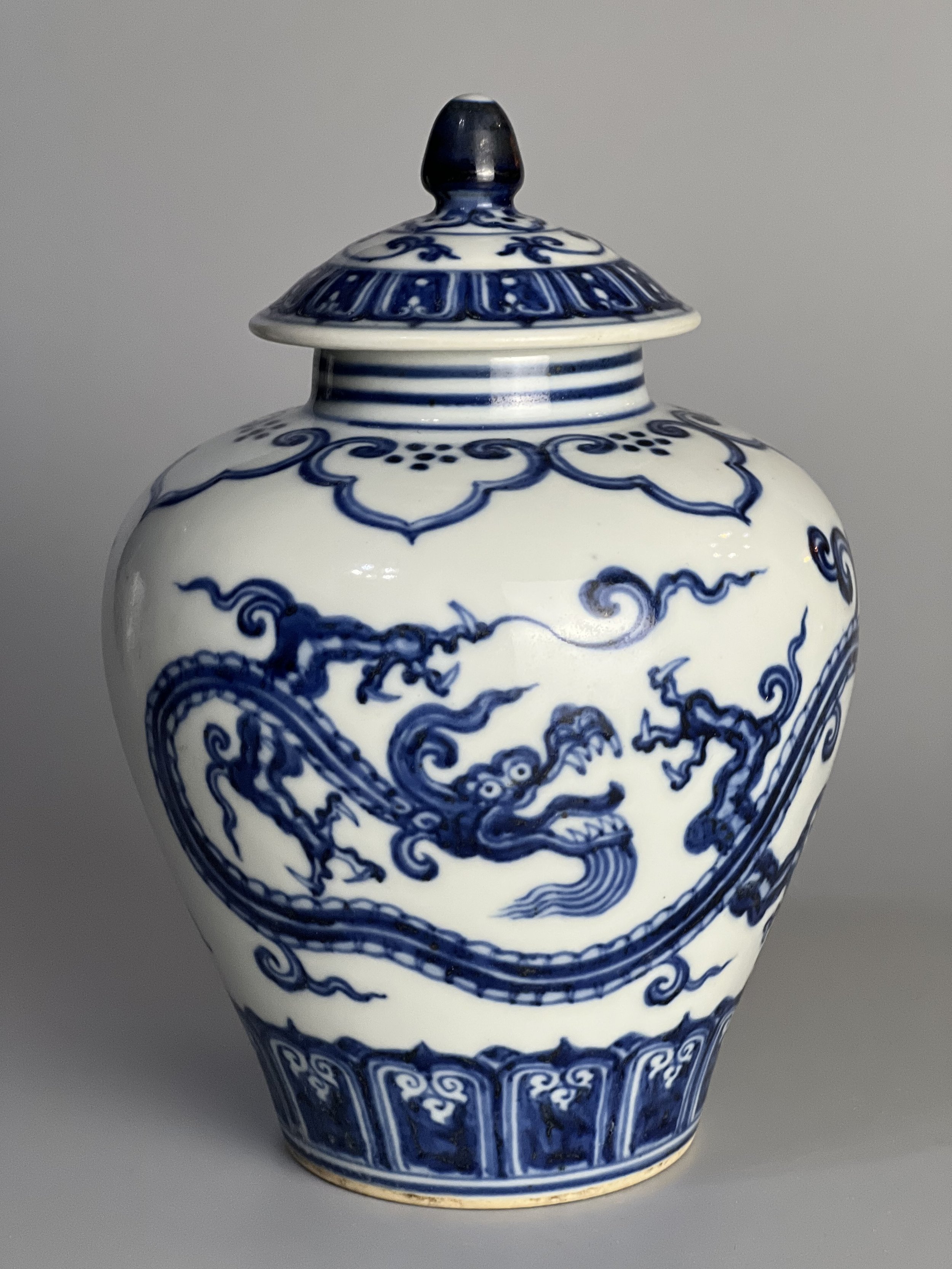 Image 1 of 14
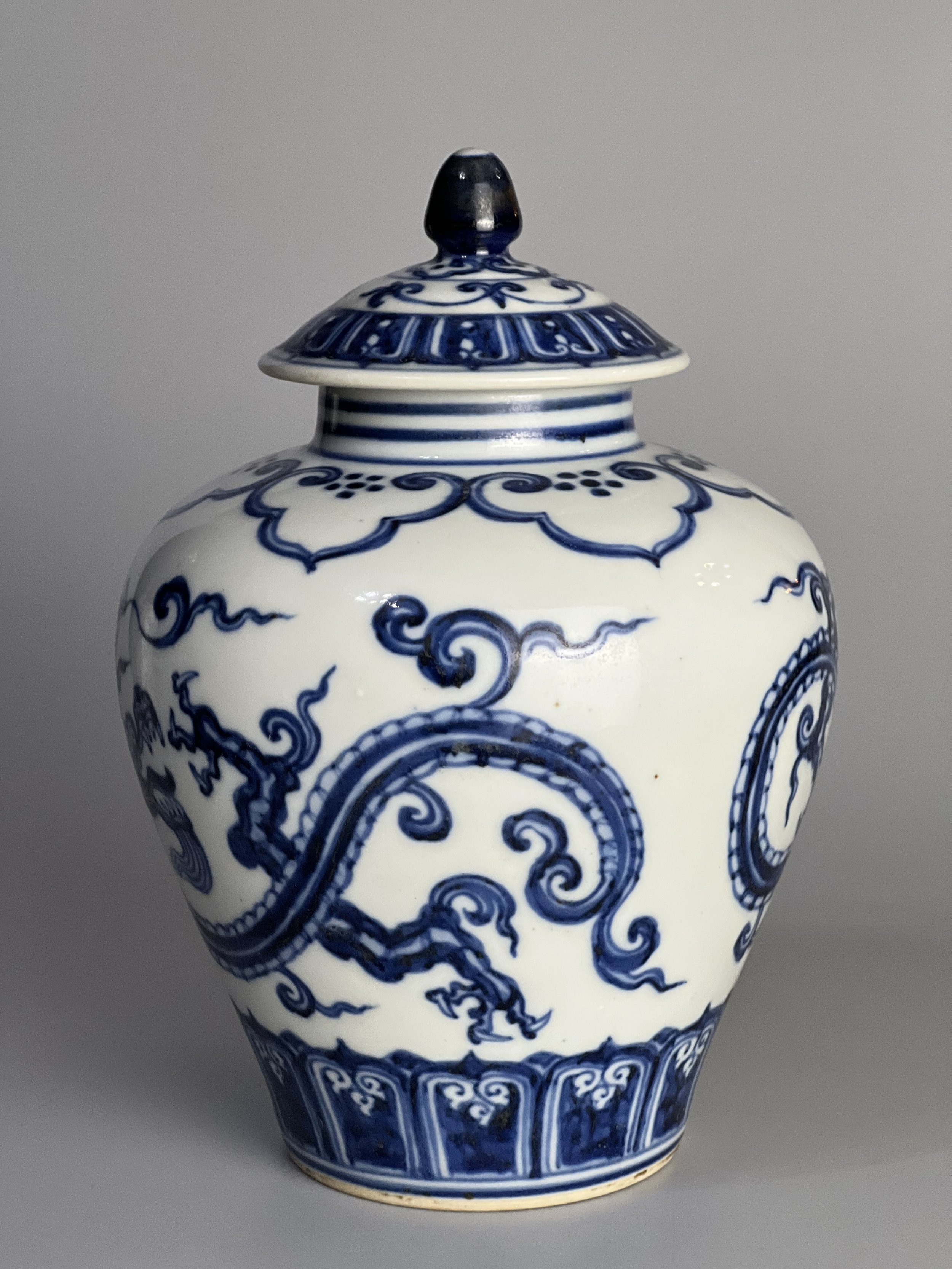 Image 2 of 14
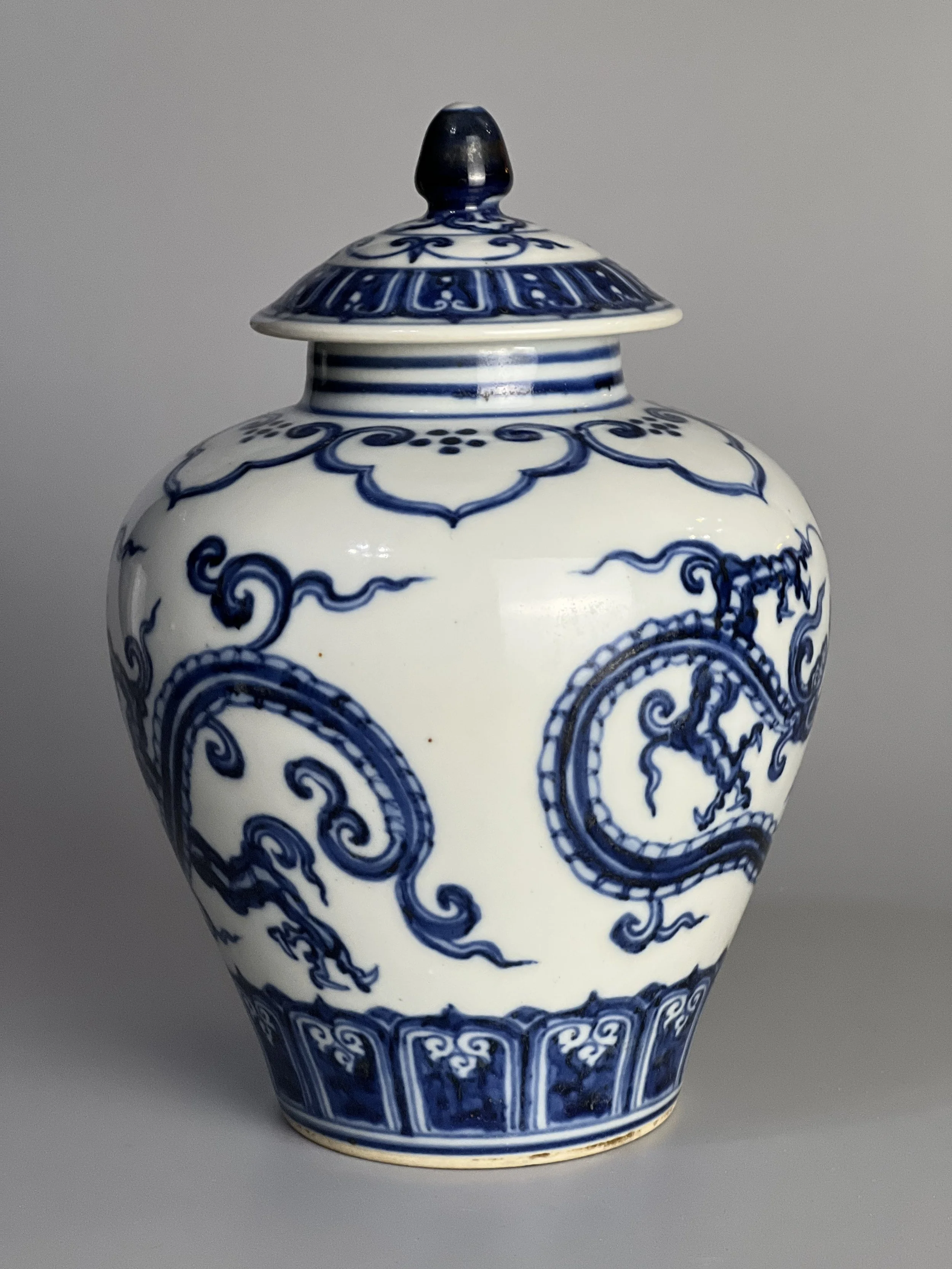 Image 3 of 14
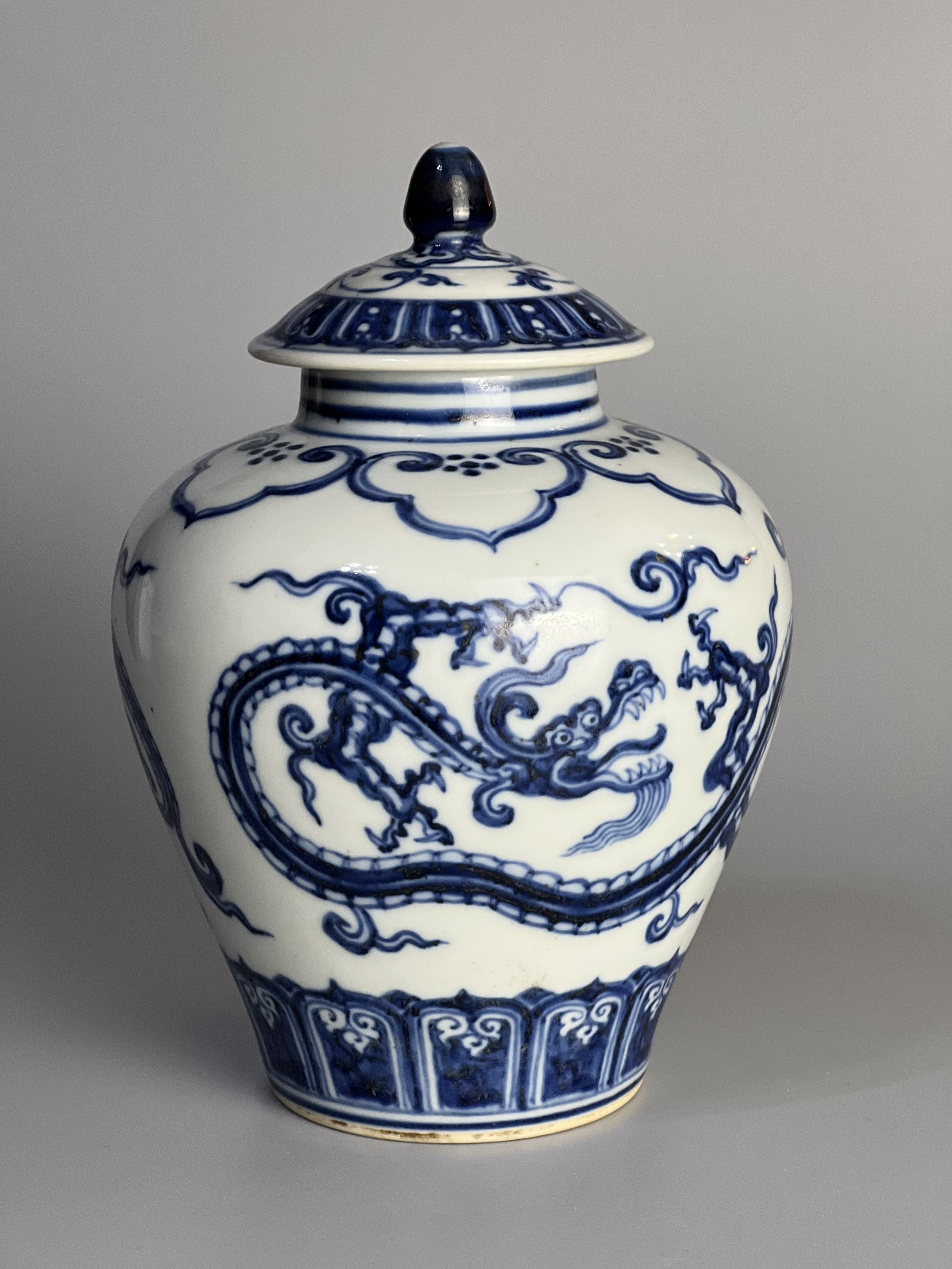 Image 4 of 14
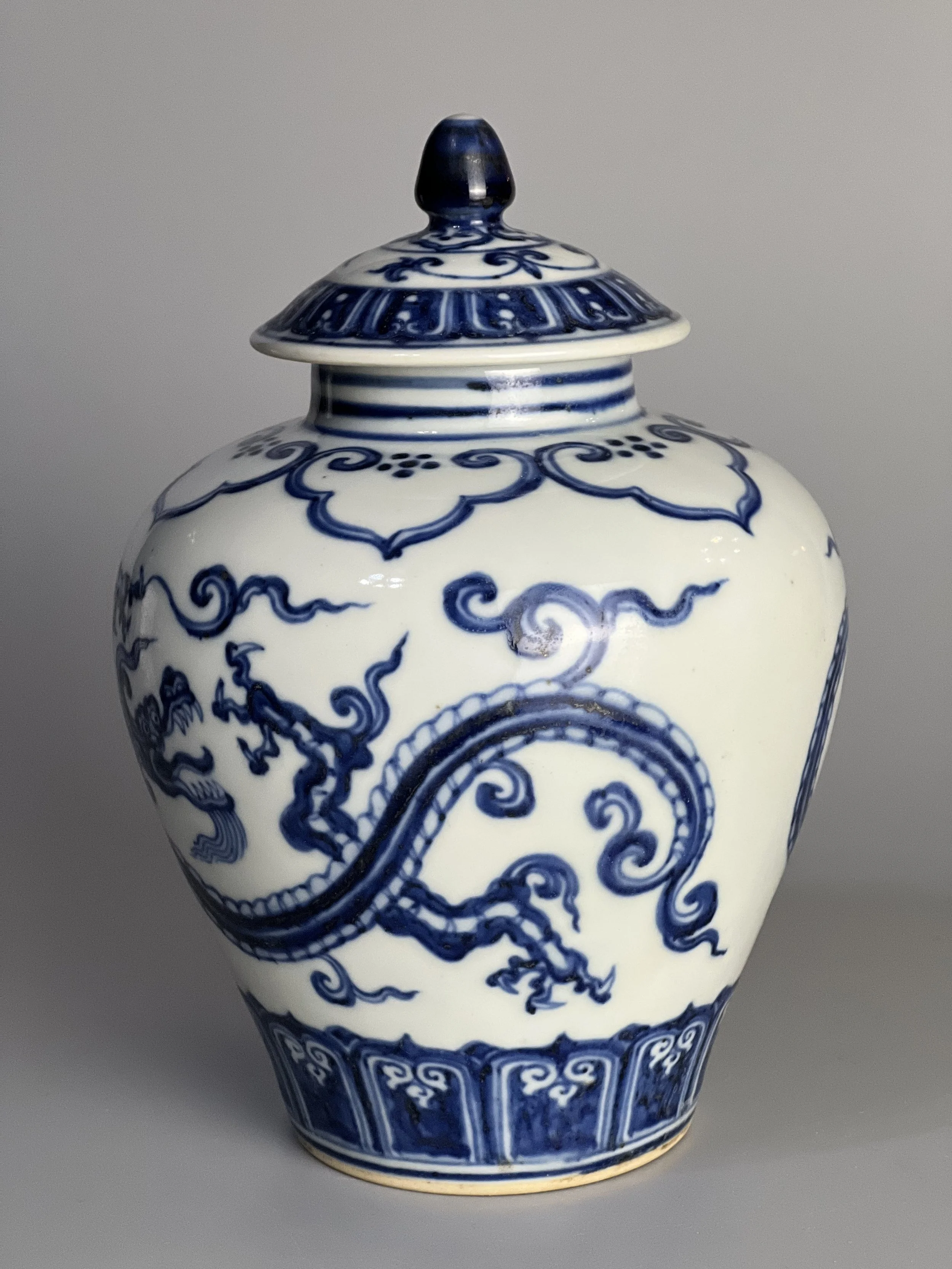 Image 5 of 14
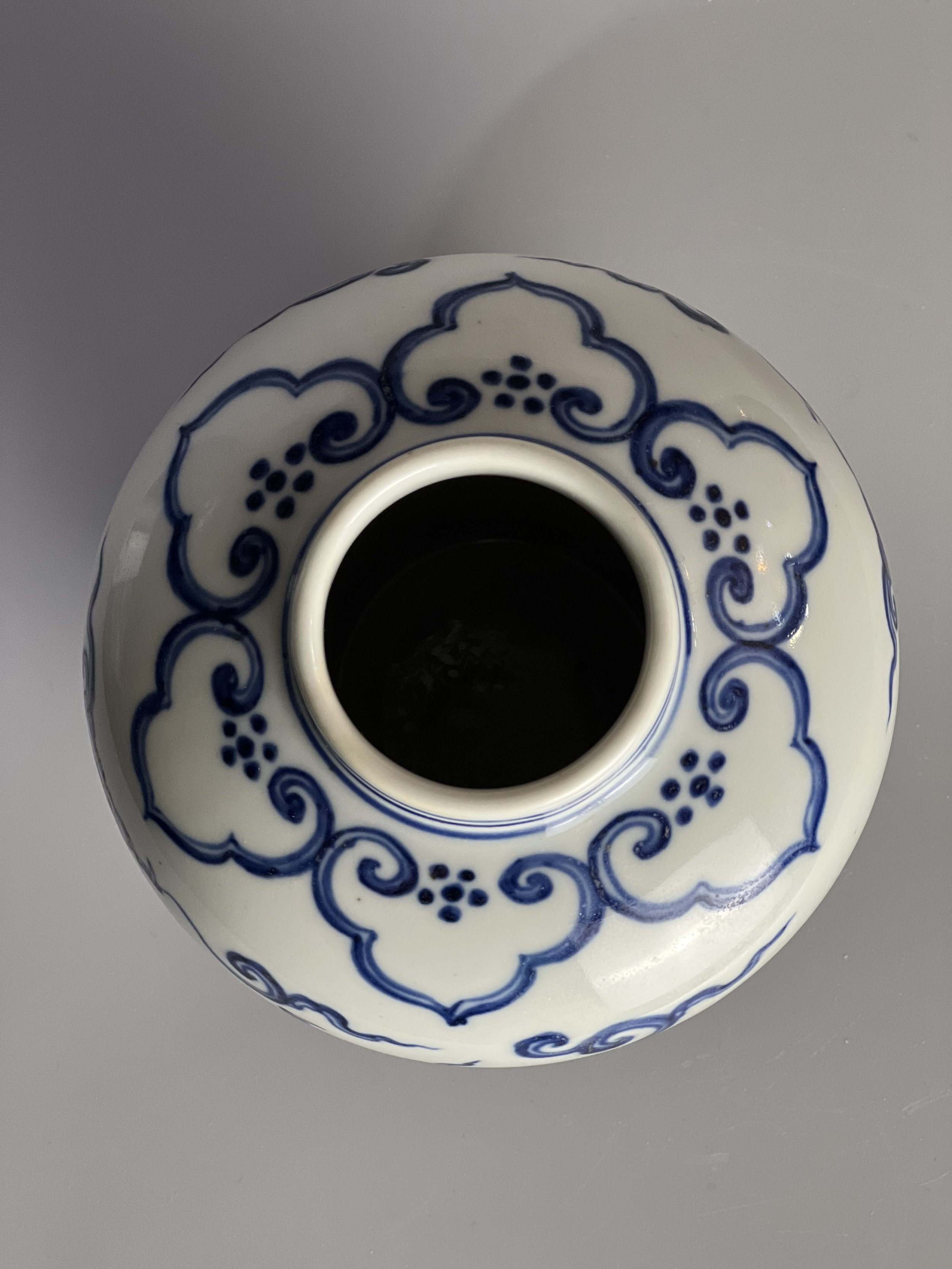 Image 6 of 14
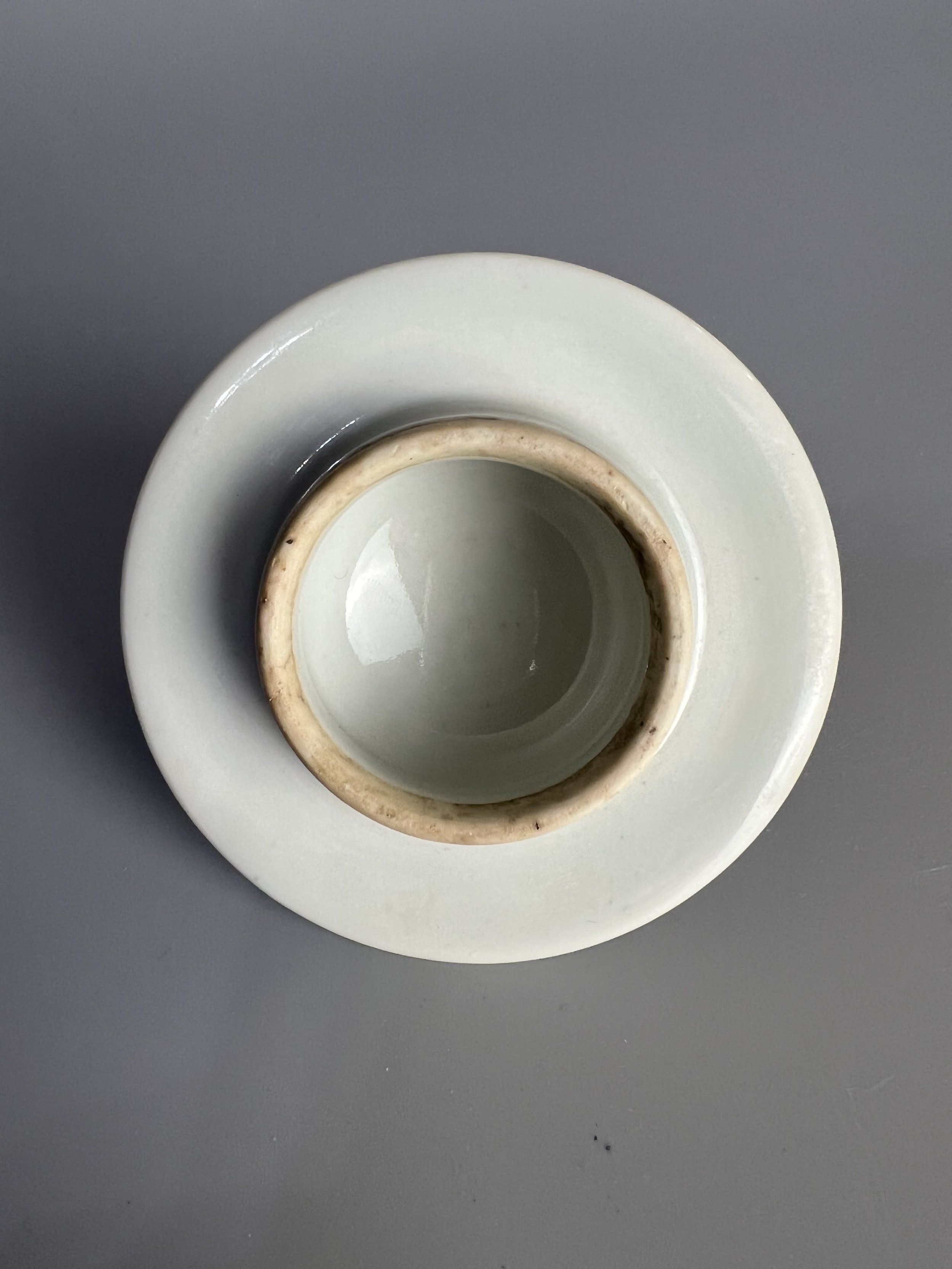 Image 7 of 14
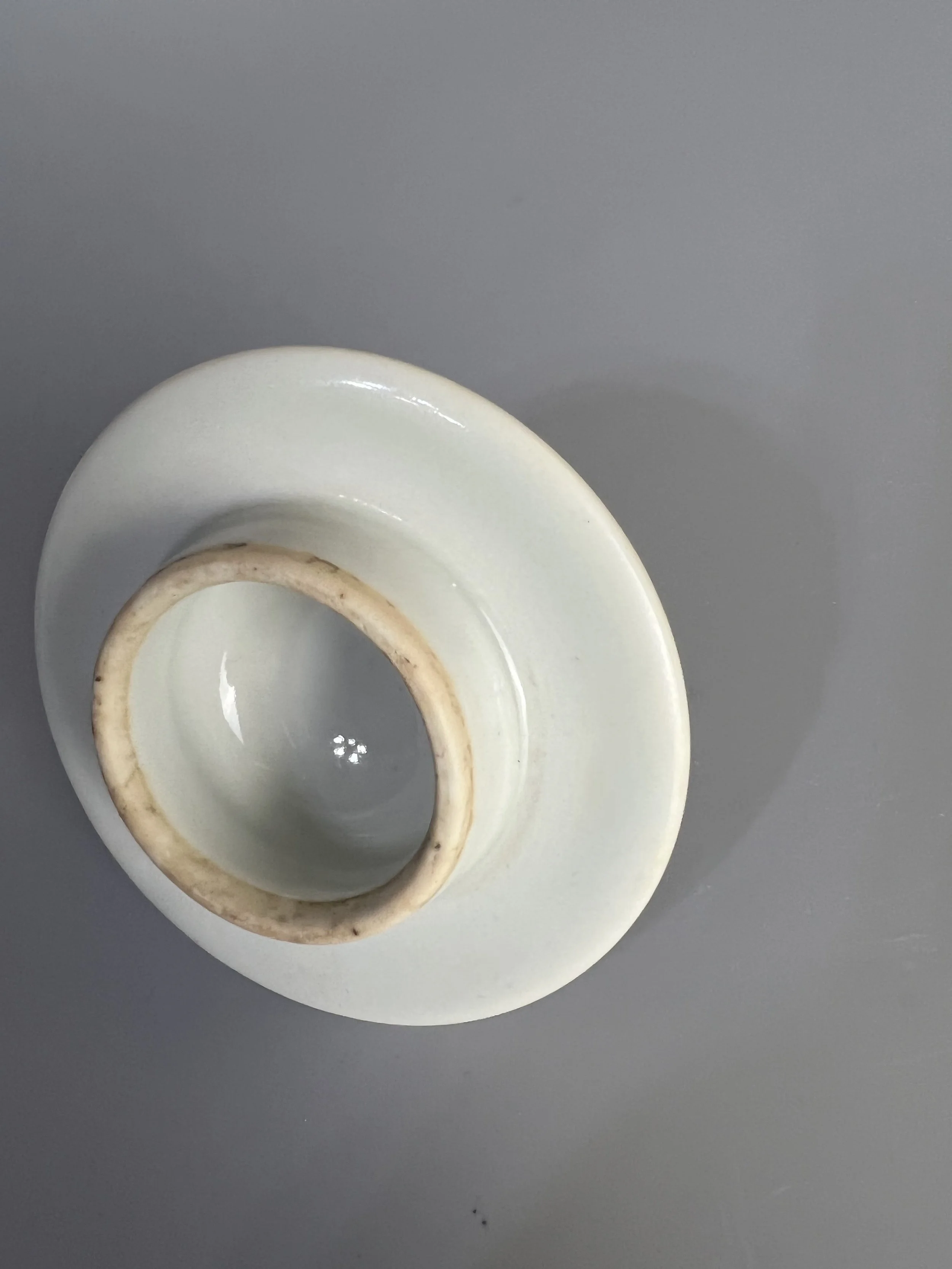 Image 8 of 14
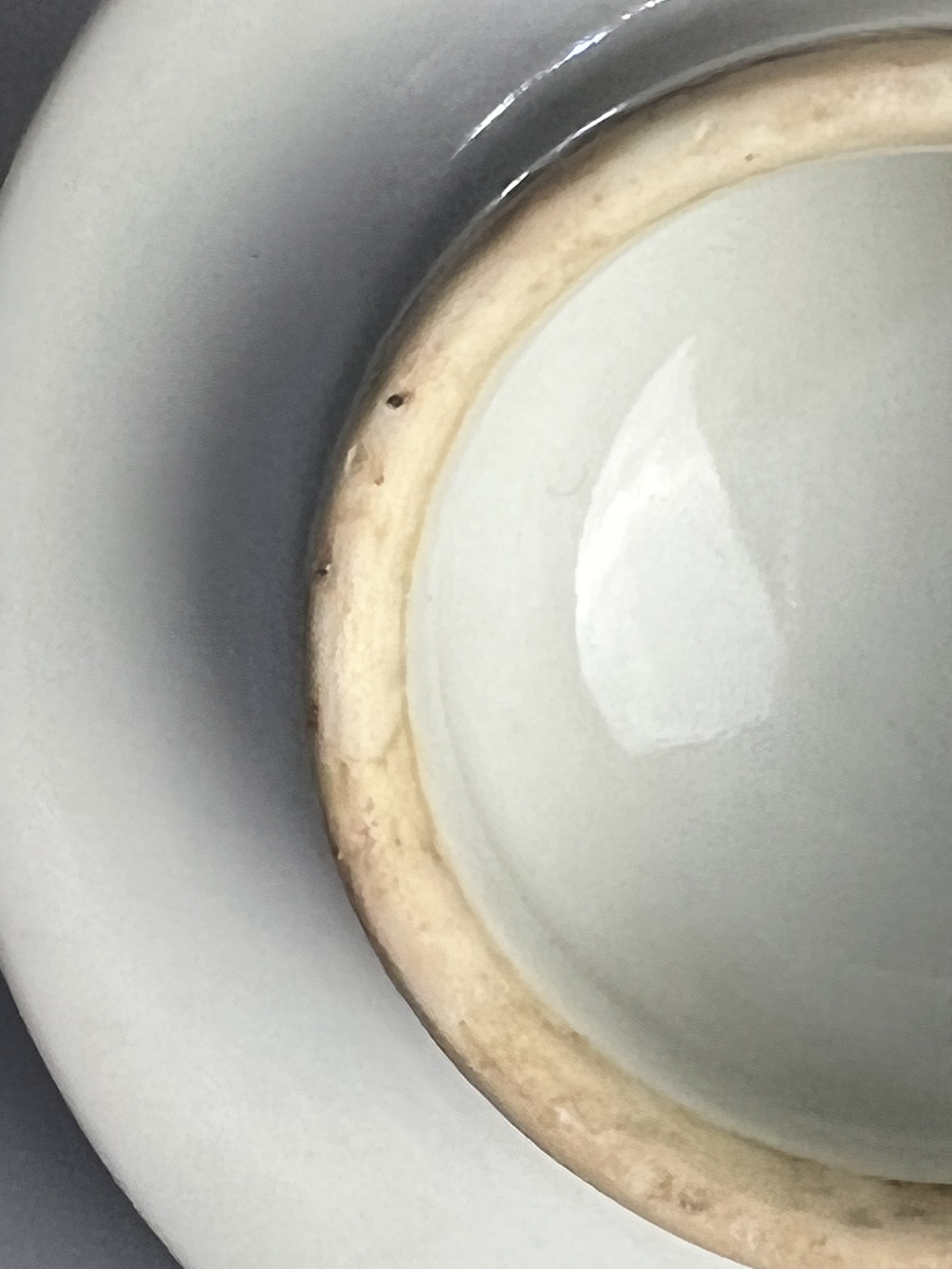 Image 9 of 14
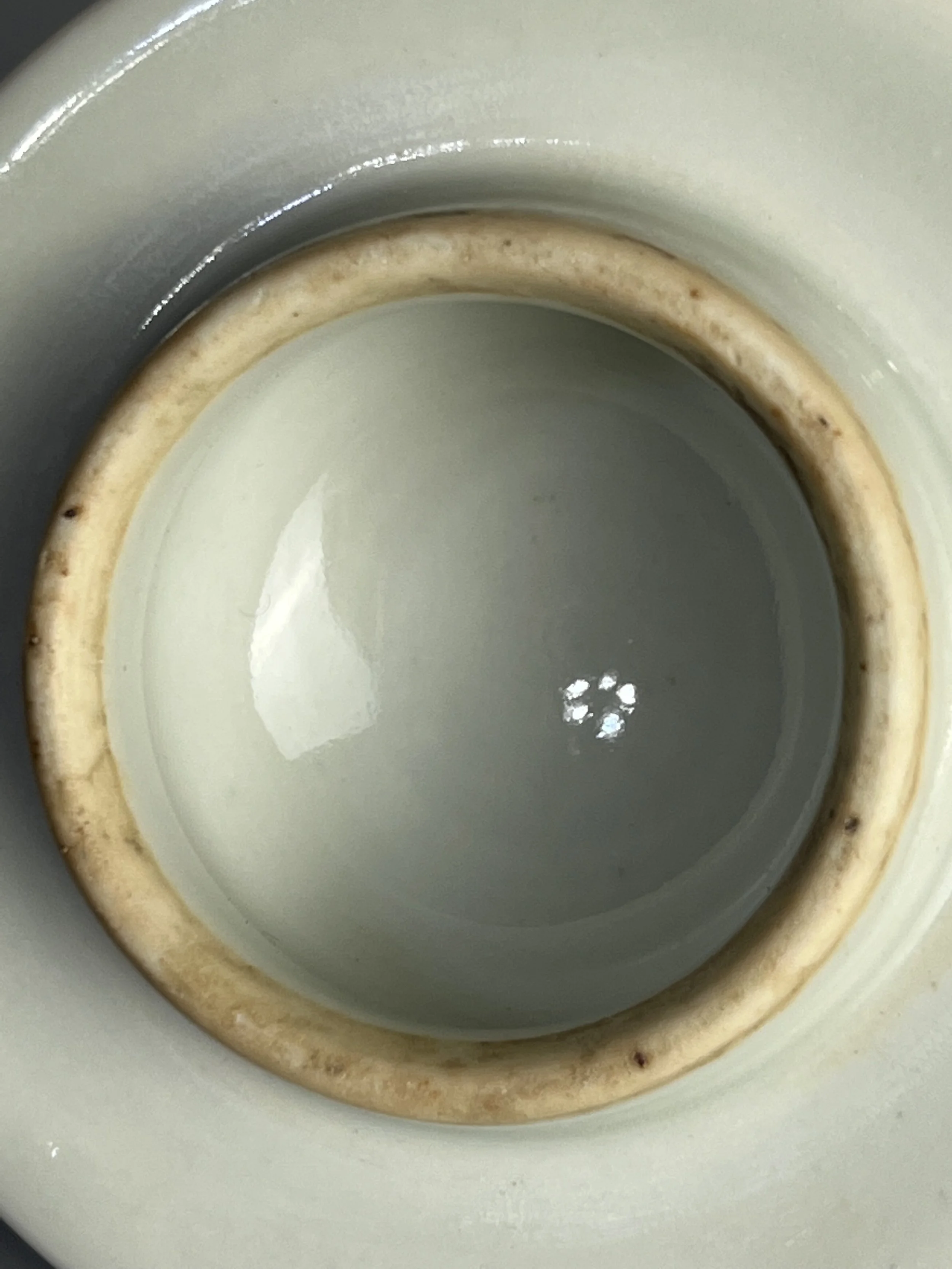 Image 10 of 14
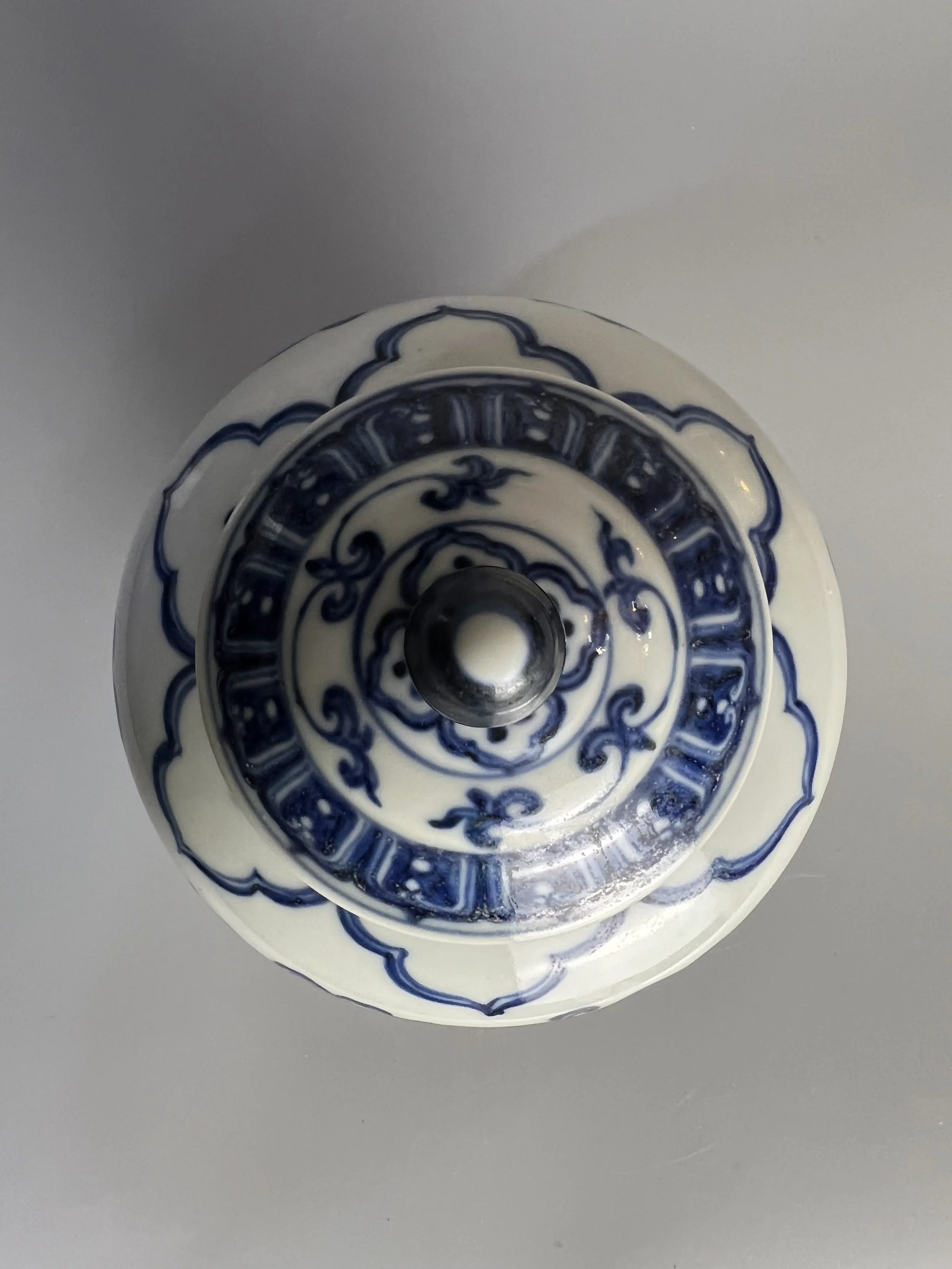 Image 11 of 14
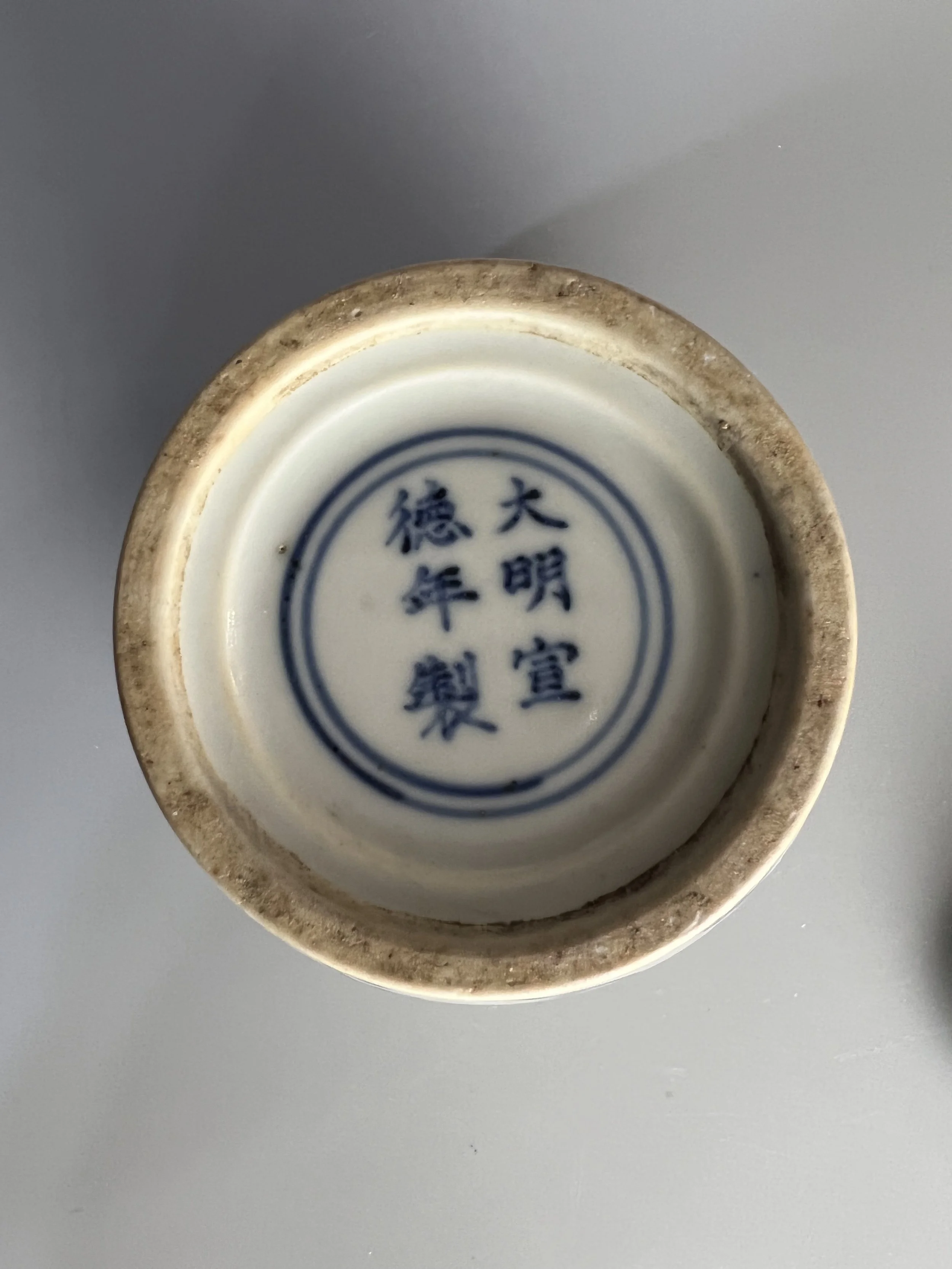 Image 12 of 14
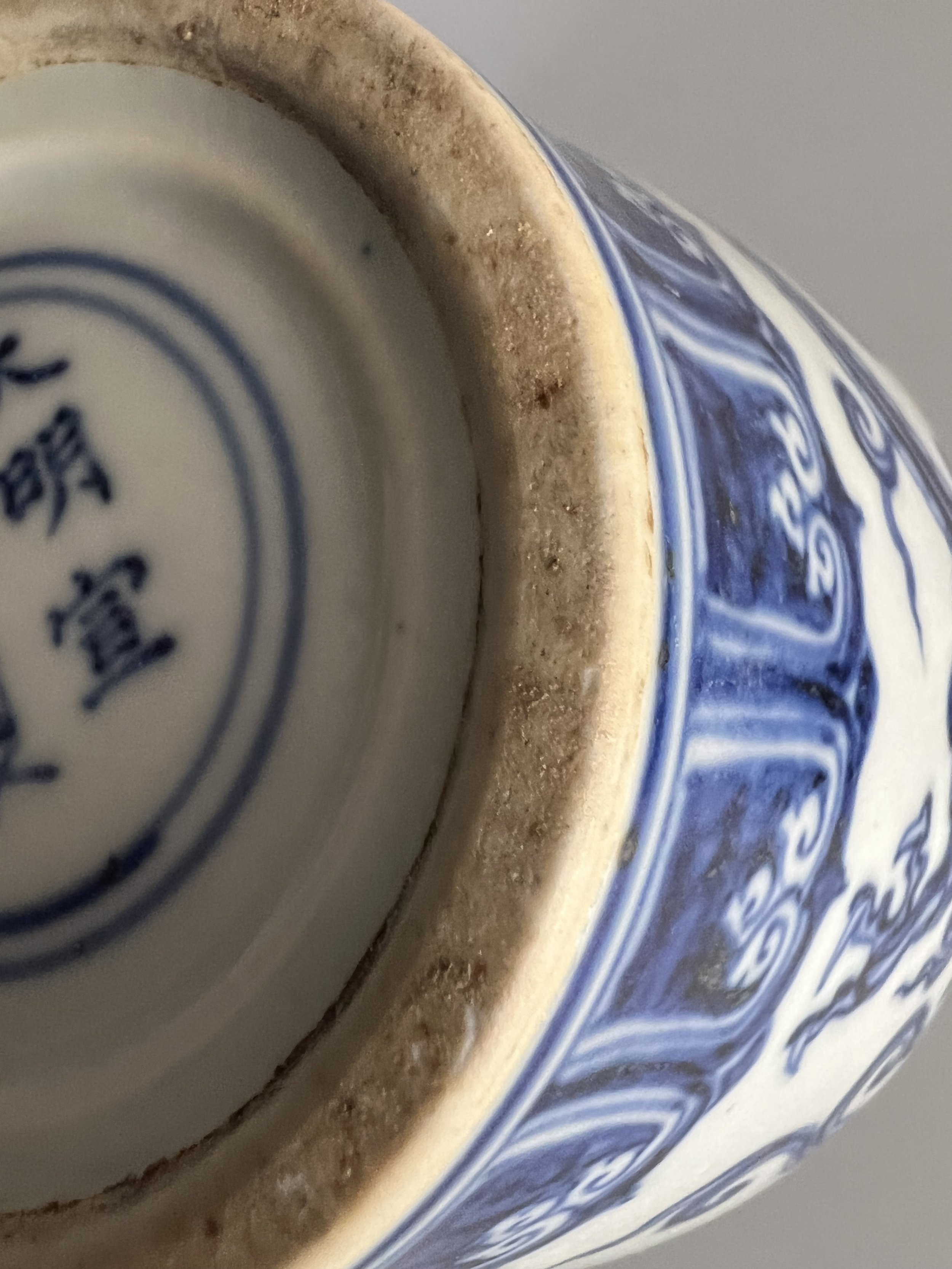 Image 13 of 14
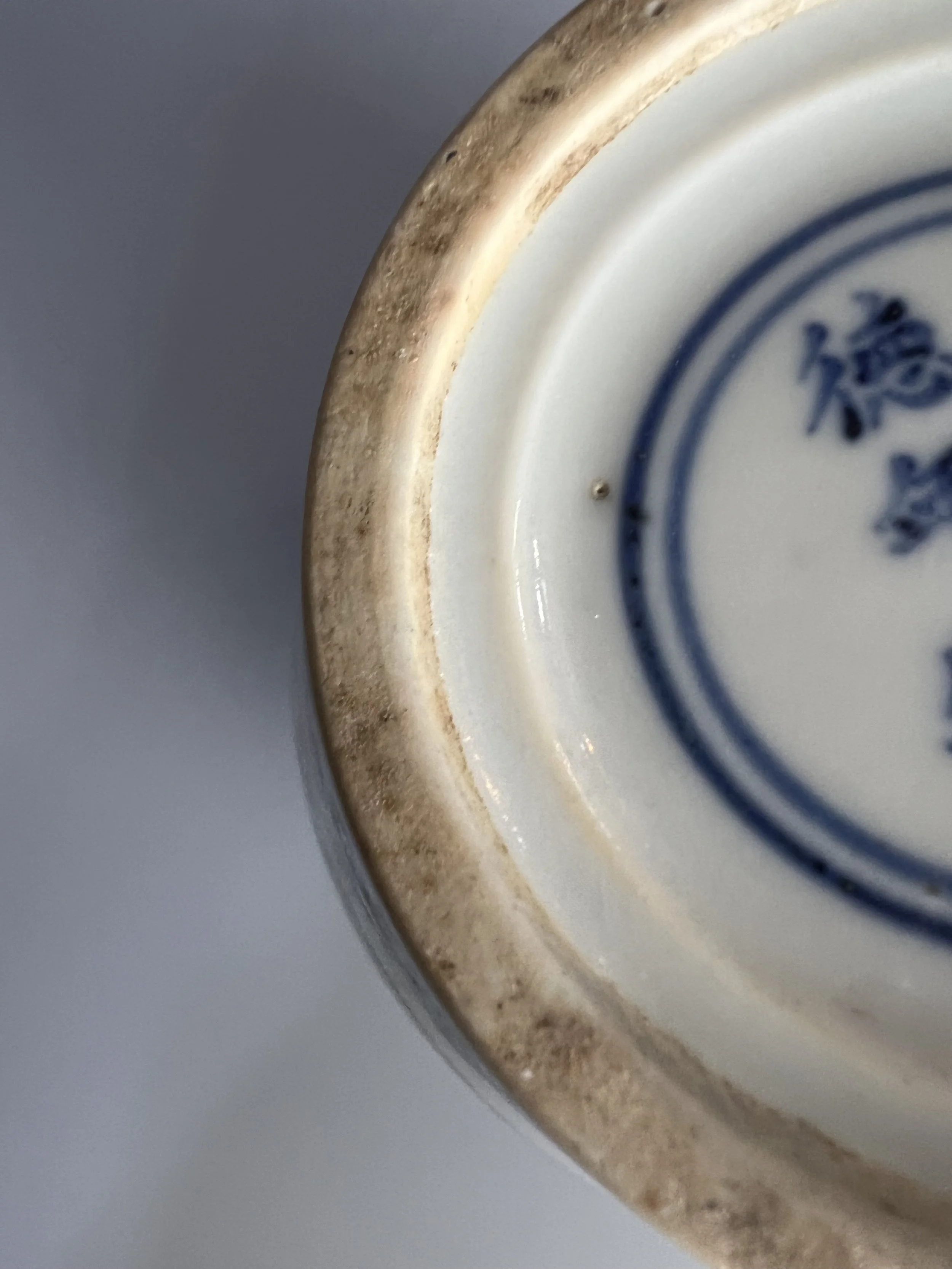 Image 14 of 14